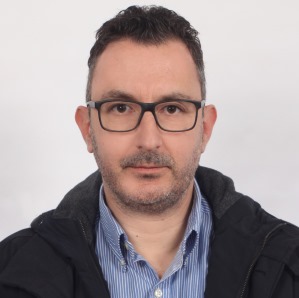
Nikolaos Efremidis is a Professor at the University of Crete, specializing in linear and nonlinear wave dynamics, solitons, and asymptotic methods with applications in optics, lasers, and Bose-Einstein condensates. He obtained his Ph.D. from the National Technical University of Athens in 2001 and maintains an active research program in theoretical and applied photonics. Research Interests His work focuses on the fundamental properties of optical systems, including diffraction-free beams, thermalization dynamics in photonic lattices, and vortex beam propagation through atmospheric turbulence. Key themes include the interplay between thermodynamic and electrodynamic pressures in nonlinear systems and the development of robust beam-shaping techniques. Article Trends Recent publications (2025-2024) emphasize thermodynamic pressures in multimode photonic systems, prethermalization processes, and turbulence-resistant beam designs. Earlier works (2023-2021) explore topological models, vortex generation, and analogies between photonic and quantum systems. Contact Email: nefrem@uoc.gr
Paraskevi Kapetanopoulou is an Assistant Professor at the Department of Mechanical Engineering, University of Western Macedonia (Greece), and a research associate at Aristotle University of Thessaloniki. Her academic journey includes a PhD in Reverse Supply Chain Management and an MSc in Production Systems Management, both from Aristotle University. She has held visiting roles as Associate Professor at Aristotle University and Lecturer at University of Western Macedonia, in addition to postdoctoral research at INSEAD (France). Her teaching spans multiple institutions, including the Open University of Cyprus where she coordinates the Master’s Programme in Management, Technology and Quality. Education: PhD: Operation and Management of Reverse Supply Chains (Aristotle University of Thessaloniki, 2009) MSc: Management of Production Systems (Aristotle University of Thessaloniki, 2003) Mechanical Engineering Diploma (Aristotle University of Thessaloniki, 1996) Research interests focus on Statistics , Statistical Quality Control , and Supply Chain Management , with emphasis on empirical studies in manufacturing industries, transportation safety, and sustainable practices. Her work bridges theoretical methodologies with practical applications in logistics optimization, information systems efficiency, and product recovery strategies. Selected research contributions include analysis of information systems adoption in Greek manufacturing, cost efficiency of supply chain structures, and driver behavior in transportation safety. Her lab, MORSE Lab, focuses on quantitative methods in Operations Research and Engineering Statistics. Grants and advising details are not explicitly mentioned in available texts, but her academic roles suggest active involvement in research coordination and postgraduate supervision. She maintains affiliations across multiple Greek institutions and international collaborations through her postdoctoral work.
Tassis Konstantinos is a Professor in the Department of Physics at the University of Crete. His research focuses on astrophysics, particularly star formation, interstellar matter dynamics, magnetohydrodynamics, and cosmic magnetic fields. He leads the PASIPHAE project (Polar-Areas Stellar-Imaging in Polarization High-Accuracy Experiment), funded by an ERC Consolidator Grant, and contributes to major international collaborations including LiteBIRD and SOFIA. Education: He holds a Ph.D. from the University of Illinois at Urbana-Champaign (2005) and a B.Sc. from Aristotle University of Thessaloniki (1999). Research Interests: His work integrates theoretical modeling, simulations, and observational instrumentation. Key areas include: Magnetic field evolution in star-forming regions Interstellar medium chemistry and turbulence Development of wide-field polarimeters (e.g., WALOP) Cosmic microwave background polarization Publication Trends: Recent articles (2023-2025) emphasize magnetic fields in interstellar clouds, blazar variability, and cosmic polarization experiments. Over 80% involve observational techniques or simulations of magnetized astrophysical systems. Infrastructure: Heads the PASIPHAE research group, developing instrumentation for optical polarimetry and collaborating on space missions like LiteBIRD to study cosmic inflation.
Georgios Tzavelas is an Associate Professor in Probability and Statistics at the Department of Statistics and Insurance Science, University of Piraeus. His academic career includes roles in teaching and research since 1994, with expertise in parametric distribution theory, biased sampling models, and statistical inference methods. PhD in Mathematical Statistics (University of Maryland, 1994) MA in Mathematical Statistics (University of Maryland, 1991) Bachelor’s in Mathematics (University of Patras, 1984) Research focuses on estimation theory, characterization problems, environmental statistics, and biostatistics. Notable contributions include work on failure rate functions, factor analysis rotation effects, and size-biased sampling methodologies. His publications span over 35 peer-reviewed articles in journals like Metrika, Journal of Statistical Computation and Simulation, and Biometrical Journal. Awards include Excellence in Teaching (1993) and top academic performance recognition during undergraduate studies. Serves as a referee for multiple statistical journals. Teaching responsibilities include courses on sampling methods, biostatistics, actuarial science, and clinical trials. Research interests bridge statistical theory and applications in health and environmental sciences, with active participation in interdisciplinary collaborations.
Professor Galetakis Michael is affiliated with the Technical University of Crete , specifically the School of Mineral Resources Engineering and the Mining Technology Department . His research focuses on quality control of mineral raw materials, health and safety in mining, geostatistics, neural networks, and environmental risk assessment. Quality control of aggregates, construction materials, and solid fuels Simulation techniques and stochastic analysis for mining systems Environmental remediation and risk management The recent publications highlight applications in mining rehabilitation , CO2 reduction , and machine learning for mineral resource estimation. Projects funded by the European Commission and other institutions include ecological rehabilitation, pit lake stability, and mining efficiency enhancements. Scientific grants include: REECOL (2023-2026): Ecological rehabilitation of post-mining areas RAFF (2019-2022): Risk assessment of flooded pits BEWEXMIN (2015-2018): Bucket wheel excavator optimization MANNFENI (2013-2015): Mathematical models for mining DURECOBEL (2013-2015): Eco-friendly building materials He is involved in the Research Unit Quality Control-Hygiene and Safety in Mining and teaches Mining Research , Health and Safety in Mining , and Quality Control courses.
Markos Koutras is a Professor in the Department of Statistics and Actuarial Science at the University of Piraeus, where he has been serving since September 2000. He previously held academic positions at the University of Athens, including Scientific Associate (1981-1983, 1985-1986), Lecturer (1986-1989), Assistant Professor (1989-1993), and Associate Professor (1993-2000). He has also served as Visiting Researcher at several international institutions including the University of Manitoba (Canada), Queen Mary and Westfield College (London), and McMaster University (Canada). His educational background includes: 1979: Degree from the University of Athens, Department of Mathematics (Grade: 9 and 6/20) 1981: MSc from the University of Athens, Department of Mathematics, in Computer Science and Operations Research (Grade: 9 and 7/16) 1983: PhD from the University of Athens, Department of Mathematics, with thesis 'Contribution to the theory of Spherical Distributions and related Taxonomic Problems' (Grade: Excellent) Professor Koutras specializes in several key areas of statistics and probability theory. His primary research interests focus on Reliability Theory, where he has made significant contributions to the understanding of system reliability, failure models, and maintenance policies. He has extensively researched Scan Statistics and Run Theory, developing methodologies for pattern recognition in sequences of trials and applications in quality control. His work in Multivariate Analysis has advanced techniques for analyzing complex data structures, while his contributions to Statistical Quality Control have provided new methodologies for process monitoring and improvement. He has also made notable contributions to Combinatorial Distributions, exploring the theoretical properties and applications of specialized probability distributions. With over 70 publications in international peer-reviewed journals (h-index: 16 as of January 2014) and 13 publications in international peer-reviewed volumes totaling more than 700 citations, Professor Koutras has established himself as a leading researcher in his fields. His work shows a clear progression from theoretical foundations in probability and reliability to practical applications in quality control, medical statistics, and risk management. A significant portion of his recent work focuses on scan statistics, run theory, and their applications in statistical process monitoring, demonstrating his continued contribution to advancing methodological frameworks in these areas. Professor Koutras has received significant recognition for his scholarly work: Associate Editor for 8 international journals including Methodology and Computing in Applied Probability and Journal of Statistical Planning and Inference Referee for papers submitted to more than 30 different journals President of the local organizing committee for 3 major international conferences Co-Chair of the International Organizing Committee for 7 International Workshops in Applied Probability Member of the Scientific Committee for 10 international conferences Elected member of the European Regional Committee of the Bernoulli Society (2013-present) Scientific responsible for more than 10 Research and Educational projects, including MarieCurie (2013-2016) and Aristeia (2014-2015) Professor Koutras has supervised 6 doctoral theses (5 completed, 1 in progress) and has been actively involved in research grant management. His leadership extends to administrative roles, having served as Director of Studies for the Postgraduate Program in Applied Statistics (2001-2004, 2007-2011), Chairman of the Department of Statistics and Actuarial Science (2003-2007, 2011-2013), and Dean of the School of Finance and Statistics (2013-2017). He has also been President of the Interdepartmental Committee for the Interuniversity Postgraduate Program in Biostatistics at the University of Athens. Professor Koutras leads a research group focused on reliability theory, scan statistics, and their applications. His team collaborates internationally, particularly through the International Workshops in Applied Probability that he has helped organize since 2002. His research has practical applications in quality control, medical statistics, and risk assessment, contributing to both theoretical advances and real-world problem solving.
Koutras Markos is a Professor at the Department of Statistics and Insurance Science, School of Finance and Statistics, University of Piraeus. With a career spanning over three decades, he has held academic positions at the University of Athens and visiting roles at the University of Manitoba and Queen Mary College, London. His work focuses on reliability theory, scan statistics, multivariate analysis, and quality control. Education : PhD in Probability and Statistics (University of Athens, 1983), MSc in Informatics and Operations Research (University of Athens, 1981), BSc in Mathematics (University of Athens, 1979). Research Interests include: Theory of Reliability (e.g., consecutive-k systems, failure rate analysis) Scan Statistics and Run Lengths Multivariate Analysis Combinatorial Distributions Quality Control via Control Charts and Runs Rules Recent Publications highlight applications in reliability engineering, statistical process control, and combinatorial probability, with keywords spanning Probability, Statistics, and Operations Research. Academic Service includes editorial roles in 8 international journals and referee work for over 30 journals. He has supervised 6 completed PhD theses and 1 ongoing.
Prof. George Karystinos is a Professor at the Technical University of Crete (TUC), School of Electrical and Computer Engineering (ECE), where he leads the Telecommunications Laboratory. His academic journey includes a Ph.D. in Electrical Engineering from SUNY Buffalo (2003) and a Diploma in Computer Engineering from the University of Patras (1997). He previously held a faculty position at Wright State University before joining TUC in 2005. His research focuses on communication theory, coding, adaptive signal processing, wireless systems, and neural networks. Key interests include spreading code design, interference suppression, adaptive antenna arrays, and noncoherent detection techniques. His work has led to advancements in power line communication, MIMO systems, and low-complexity decoding algorithms. Prof. Karystinos has received prestigious awards, including the 2003 IEEE Transactions on Neural Networks Outstanding Paper Award and the 2001 IEEE International Conference on Telecommunications Best Paper Award. He is an active member of IEEE societies in Communications, Signal Processing, and Information Theory. He teaches core courses such as Signals and Systems , Information Theory and Coding , and Probability and Random Processes . His laboratory emphasizes practical applications of theoretical concepts, with recent projects on smart photovoltaic systems and cascaded H-bridge converter control. His research spans 20+ years, yielding over 80 publications in top journals/conferences. Current efforts address challenges in IoT communication, noncoherent detection for RFID, and energy-efficient signal processing. He collaborates internationally on projects funded by Greek and EU research programs.
Prof. Dimitra-Theodora Kaklamani is a Professor at the School of Electrical and Computer Engineering (SCE) of the National Technical University of Athens (NTUA), where she has held roles including Lecturer (1995), Assistant Professor (2000), Associate Professor (2004), and Professor (2009). She specializes in microwave systems, wireless communications, and computational electromagnetism, with over 300 publications and a Springer book on computational techniques. Education: PhD in Electrical & Computer Engineering from NTUA (1992). Research Interests: Focus on microwave theory, antenna design, distributed processing, security, and machine learning applications in telecommunications. Her work includes developing software for modeling information transmission systems, coordinating EU projects, and advancing computational methods for electromagnetic applications. Key Contributions: Published extensively on MIMO systems, federated learning in 5G/6G networks, intelligent metasurfaces, and IoT security. Active in standardization efforts for DVB-T networks and wireless protocols. Labs/Teams: Involved in projects like inCASA (remote healthcare monitoring) and advanced antenna array optimization using stochastic algorithms. Collaborates on interdisciplinary initiatives blending machine learning with telecommunications.
Avraam Zelilidis is a Professor in the Department of Geology at the University of Patras. He holds a BSc and PhD in Geology from the University of Patras. His research focuses on Sedimentary Basin Analysis, Petroleum Geology, Sequence Stratigraphy, Geochemistry, Deep Sea Fans, and Diagenesis of Carbonates. He teaches courses including Geol_002 Planet Earth, Geol_014 Field Trip 1, and advanced modules on Sedimentary Basins and Petroleum Geology. His work integrates field studies, geochemical analyses, and sedimentological interpretations to understand basin evolution, hydrocarbon potential, and diagenetic processes. Recent studies include investigations of Cretaceous to Neogene deposits in the Ionian Basin, Pindos Foreland Basin, and forearc settings in the Hellenic Thrace Basin. Zelilidis has contributed to over 50 peer-reviewed articles, focusing on topics like tectono-stratigraphic evolution, source rock potential, and sedimentation dynamics. His research spans Greece, Australia, and the Mediterranean region, with notable studies on the geochemical characteristics of Miocene sediments in Corfu and organic matter analysis in the Sydney Basin. He collaborates with international teams and actively participates in geopark initiatives, linking geological heritage to education and tourism. His lab work emphasizes quantitative methods, including statistical analysis of sediment thickness and isotopic constraints on depositional environments.
Leonidas Palilis is an Associate Professor at the Department of Physics , University of Patras , Greece, within the School of Natural Sciences . He teaches courses including Physics Laboratory IV (Electromagnetism) , Thermal and Statistical Physics , and Microelectronic Materials and Devices . Previously, he held adjunct positions at ASPETE and TEI institutions. Education : Ph.D. in Experimental Condensed Matter and Materials Physics/Organic Optoelectronics, University of Sheffield (2001) B.Sc. in Physics, National and Kapodistrian University of Athens (1997) Research Interests focus on organic/inorganic semiconductor properties , flexible photonic devices , and charge injection mechanisms . His work spans organic light-emitting diodes , photovoltaic cells , waveguides , and memory devices using molecular materials and nanostructures. Scientific Contributions include 40+ peer-reviewed publications and 85+ conference presentations. Key trends: Development of solution-processed metal oxide interlayers Charge injection optimization in hybrid devices Exciplex emission engineering Self-assembled nanostructures for photovoltaics Carrier recombination zone analysis Awards : White Rose PhD Scholarship (1997-2001) Honored Distinguished Greek Scientist Abroad (2002-2004) Marquis Who's Who in Science and Engineering (2006) H-index=17 with ~1060 citations Professional Experience includes research roles at US Naval Research Laboratory (2001-2005), National Center for Scientific Research 'Demokritos' (2006-2010), and supervisory roles for postgraduate researchers since 2008.
Stathes P. Hadjiefthymiades is Professor at the Department of Informatics and Telecommunications of the National and Kapodistrian University of Athens, where he leads research on large-scale software systems and heads the M.Sc. programme “Management and Economics of Telecommunication Networks and Information Systems”. Since 2002 he has held continuous faculty appointments, previously serving as Assistant Professor at the Hellenic Open University and as Visiting Assistant Professor at the University of the Aegean. Education: B.Sc. (honours) in Computer Science, University of Athens, 1993 M.Sc. (honours) in Computer Science (Advanced Information Systems), University of Athens, 1996 Ph.D. in Computer Science and Telecommunications, University of Athens, 1999 M.Sc. in Engineering-Economics, National Technical University of Athens, 2002 Research interests span distributed/mobile/pervasive computing , networked multimedia , context-aware systems , wireless sensor networks , and Internet experimentation involving road, air and water vehicles. His work combines algorithmic design, system architectures, and techno-economic analysis to enable scalable, adaptive services in next-generation networks. He has authored more than 200 peer-reviewed publications and leads the H2020 RAWFIE project on large-scale IoT experimentation. Recent articles reveal a strong focus on trust and security in ad-hoc networks , content-delivery optimization , augmented-reality monitoring systems , and intelligent analytics for smart-city and healthcare applications . Scientific awards & distinctions: While individual prizes are not explicitly listed, sustained funding from EU Framework Programmes (ACTS, IST, H2020) and repeated keynote invitations attest to international recognition. Advising & grants: Prof. Hadjiefthymiades directs the M.Sc. programme on Telecommunication Network Management and Economics, supervising numerous graduate researchers. He has coordinated or participated in over 20 EU and national projects, securing multi-million-euro funding for experimentation infrastructures and doctoral training. Laboratories & teams: He heads the Pervasive Computing Research Group and is a long-standing member of the Communication Networks Laboratory at the University of Athens, where he steers a team of post-docs, doctoral and master students advancing mobile and pervasive systems.
Professor Dimitrios M. Rekkas is a distinguished academic and researcher in Pharmaceutical Technology, affiliated with the School of Pharmacy at the University of Athens. He holds the position of Professor of Pharmaceutical Technology and serves as Director of the Pharmaceutical Technology Laboratory and the Pharmaceutical Technology Division. His roles include leadership in academic and professional organizations, such as Vice President of the Management Committee of European Program COST 865-Bioencapsulation and Dean of the Department of Pharmacy at NKUA. He has also held visiting professorships at renowned institutions like the University of Vienna and University of Parma, Italy. Prof. Rekkas' education includes a B.Pharm. and PhD in Pharmaceutical Technology from the University of Athens, and an MSc in Total Quality Management from Sheffield Hallam University, UK. His research focuses on Pharmaceutical Technology, Industrial Pharmacy, Dosage Form Design, and Quality by Design (QbD), with a strong emphasis on experimental design, statistical process control, and quality assurance. He has contributed significantly to the development of dry powder inhalers, nasal drug delivery systems, and innovative manufacturing processes using 3D printing and other advanced techniques. Prof. Rekkas has coordinated international projects, including the PHAR-QA initiative for European pharmacy education quality assurance and the SimInhale Cost Action on inhaled medicines. He has authored a textbook on Total Quality Management and holds multiple patents related to pharmaceutical formulations and processes. His work bridges academic research with industrial applications, emphasizing practical solutions for drug delivery and manufacturing excellence.
Orestis Kairis serves as Assistant Professor in the Department of Land Management & Geology at the Agricultural University of Athens (AUA), operating under the School of Environment and Agricultural Engineering. His academic appointment focuses on Land Mapping and Assessment, with teaching responsibilities spanning both undergraduate and postgraduate programs in soil science, land degradation, and geospatial analysis. Kairis maintains active research leadership through his role as elected member of Greece's National Committee for Combating Desertification since 2021. His educational background demonstrates deep institutional roots at AUA: BSc in Natural Resources and Agricultural Engineering (2001), MSc in Soil Resources and Agricultural Engineering (2003), and PhD from the same department (2015) with thesis on land degradation and desertification factors. This progression reflects his specialized expertise in Mediterranean soil systems. Research interests center on critical environmental challenges including soil mapping methodologies (integrating digital and conventional approaches), agricultural suitability assessment , and desertification risk modeling . His work uniquely bridges field soil survey techniques with advanced geospatial analysis, particularly examining soil erosion mechanisms and environmental sensitivity indicators under climate stress. Current projects emphasize practical applications for sustainable land management in vulnerable Mediterranean ecosystems. Publication trends reveal consistent focus on Mediterranean environmental challenges through 15+ recent articles (2017-2025), with increasing emphasis on digital soil mapping validation , climate dataset applications for agriculture , and mining impact assessments . His work demonstrates strong methodological diversity, combining field measurements, remote sensing, and simulation modeling to address land degradation. Kairis has directed significant research infrastructure as scientific director for 2 projects and deputy director for 3 others, participating in over 30 European and Greek State-funded initiatives. His project leadership spans soil health assessment in mining areas, desertification monitoring systems, and agricultural land capability evaluations, demonstrating practical implementation of his research frameworks. His technical capabilities include advanced soil survey methodology, erosion risk modeling using PESERA/RUSLE systems, and integration of CORINE/NDVI data for land sensitivity mapping. Current work focuses on developing decision support tools for land management policy implementation, particularly through the DRAST framework for desertification risk assessment.
Professor Georgios Papadopoulos is a faculty member at the Agricultural University of Athens , where he holds the rank of Professor and serves as the Director of the Institute of Experimental Design and Analysis . His academic career spans over three decades, with a strong focus on statistics, reliability theory, and data analysis in agricultural sciences. Education: Diploma in Mathematics, University of Thessaloniki, Department of Mathematics (1980) M.Sc. in Computer Science and Operations Research, University of Athens, Department of Mathematics (1982) Ph.D. in Reliability Theory, University of Athens, Department of Mathematics (1993) Research Interests: His research spans a wide range of areas including statistical analysis of agricultural experiments , reliability theory , quality control , chemometrics , biometrics , and web-based learning . He has applied statistical modeling to diverse fields such as food science, plant biology, environmental monitoring, and medical diagnostics. Publications and Impact: Professor Papadopoulos has authored or co-authored over 50 peer-reviewed publications, many of which are highly cited. His work includes foundational contributions to reliability systems, statistical methods in agricultural experimentation, and sensory analysis of food products. His recent work increasingly incorporates machine learning and neural networks for predictive modeling in agriculture and environmental science. Teaching and Mentorship: He teaches a wide array of courses including Statistics, Biometrics, Experimental Design, and Statistical Quality Control across multiple departments at the Agricultural University of Athens and the University of Athens. He has also organized and led training seminars and summer schools on experimental design and statistical software. Editorial and Academic Service: He serves as a reviewer for several high-impact journals including IEEE Transactions on Reliability , Communications in Statistics , and Agronomy . His Google Scholar profile indicates over 509 citations, reflecting his significant influence in the statistical and agricultural sciences communities.