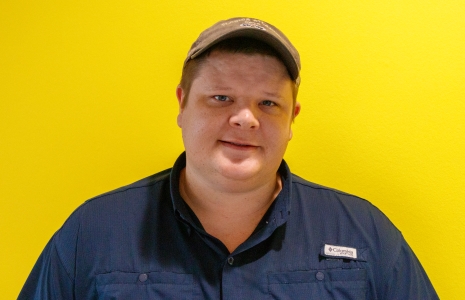
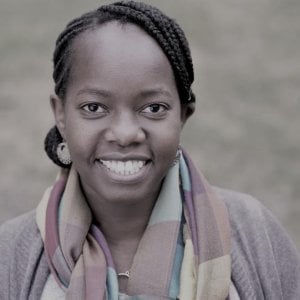
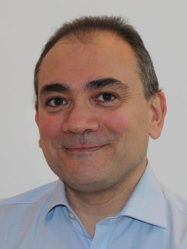
Dr. Corey T. Callaghan is an Assistant Professor in the Department of Wildlife Ecology and Conservation at the University of Florida . Based at the Fort Lauderdale Research and Education Center , his research focuses on global change ecology using big data from citizen science platforms like eBird and iNaturalist, combined with geospatial analyses and macroecological theory . Ph.D. (2019) from UNSW Sydney M.S. (2015) from Florida Atlantic University B.S. + B.S. (2013) from Canisius College His work examines urban ecology , including how species traits influence urban tolerance across birds, amphibians, and butterflies. He develops adaptive sampling frameworks to optimize citizen science data collection while addressing biases. Current projects analyze human-nature interactions through citizen science participation, secondary data in photographs, and machine learning for biodiversity monitoring. He actively contributes to conservation strategies for urban biodiversity and data-driven restoration efforts . Recent publications highlight his expertise in cross-taxa comparisons , continental-scale analyses , and ecosystem service quantification . He leads the Global Ecology Research Group at the University of Florida, emphasizing collaborative science and open-source methodologies .
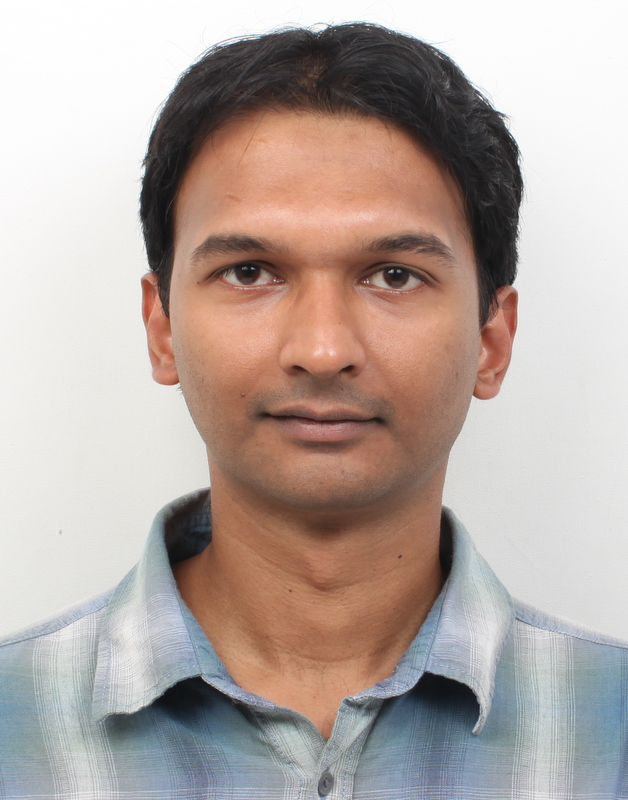
Shivaram Kalyanakrishnan is an Associate Professor at the Department of Computer Science and Engineering , Indian Institute of Technology Bombay , specialising in Artificial Intelligence and Machine Learning . His research spans sequential decision making , multiagent learning , multi-armed bandits , and humanoid robotics , with applications in robot soccer , computer games , and online advertising . He teaches advanced courses like CS 747: Foundations of Intelligent and Learning Agents and CS 748: Advances in Intelligent and Learning Agents , focusing on end-to-end system design and theoretical analysis. His scientific awards include the Best Student Paper Award at RoboCup International Symposium 2006 and nomination for Best Student Paper Award at AAMAS 2007 . His work on reinforcement learning and policy iteration has been published in leading venues such as IJCAI , ICML , and COLT , with recent contributions to railway scheduling and bandit algorithms. While no explicit list of advisees is provided, his research projects and publications suggest mentorship of students in collaborative efforts. Contact : shivaram@cse.iitb.ac.in .
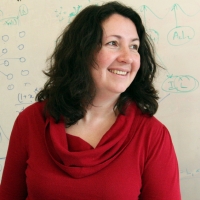
Polina Golland is a Professor in the Department of Electrical Engineering and Computer Science (EECS) at MIT and a Principal Investigator in the Computer Science and Artificial Intelligence Laboratory (CSAIL). Her research focuses on developing novel techniques for biomedical image analysis and understanding, particularly in medical vision, AI/ML, and health care applications. She leads the Medical Vision Group and collaborates with the Vision Group at CSAIL. Her work emphasizes statistical modeling of medical images, shape modeling, and predictive analytics for biological processes. Current projects include fetal MRI analysis, cardiac MRI segmentation, and quantitative assessment of pulmonary edema in chest X-rays. She has secured grants from NIH, MIT-IBM Watson AI Lab, and other institutions to support her research. Dr. Golland teaches courses on inference, probability, and probabilistic systems. She advises graduate students in MIT's EECS program and has mentored numerous postdocs and researchers. Her lab focuses on translating advanced imaging techniques into clinical workflows, with applications in neuroimaging, fetal health monitoring, and cardiovascular disease analysis. Notable collaborations include work with Harvard Medical School affiliates, Brigham and Women's Hospital, and the MIT Jameel Clinic. Her research aims to bridge computational methods with clinical needs, improving diagnostic tools and treatment planning through machine learning and medical imaging innovation.
Adrian Weller is a prominent researcher and academic at the University of Cambridge, serving as a Director of Research in Machine Learning within the Department of Engineering. He holds multiple significant leadership roles including Programme Director for Trust and Society at the Leverhulme Centre for the Future of Intelligence (CFI), and previously served as Programme Director for AI at The Alan Turing Institute, the UK national institute for data science and AI. His work bridges theoretical machine learning research with practical applications and societal implications of artificial intelligence. Weller's research interests span a broad spectrum of AI and machine learning topics with a particular focus on ensuring beneficial societal outcomes. His work encompasses explainability, fairness, robustness, scalability, privacy, safety, and ethics in AI systems. He has made significant contributions to trustworthy machine learning, including developing frameworks for AI governance, certification, and human-AI collaboration. His research group actively investigates neuro-symbolic approaches, privacy-preserving techniques, and methods for improving the reliability and interpretability of AI systems. His recent publications demonstrate a strong trend toward addressing the practical challenges of deploying AI systems in real-world contexts, particularly focusing on certification frameworks, governance mechanisms, and human-centered approaches. His work spans theoretical advances in machine learning architectures while maintaining a strong connection to societal impact, with publications appearing in top venues across AI, machine learning, and interdisciplinary applications. Scientific Awards: MBE for services to digital innovation (2022 Queen's Birthday Honours) Turing AI Fellowship for Trustworthy Machine Learning Weller actively supervises a large group of PhD students and postdocs, with current students including Juyeon Heo, Yanzhi Chen, Katie Collins, Isaac Reid, Yichao Liang, Herbie Bradley, and Shoaib Siddiqui. His former students have gone on to positions at leading institutions including Google DeepMind, ETH Zurich, NYU, and MPI-IS Tübingen. He has served on numerous advisory boards including the Centre for Data Ethics and Innovation, UNESCO's expert group on AI ethics, and the World Economic Forum's Global Future Council on AI. His research has been supported through his Turing AI Fellowship and various collaborative projects focused on safe and ethical AI development. Weller leads a vibrant research group focused on trustworthy machine learning, which actively organizes workshops and conferences including ICML 2024 (where he served as Program Chair), multiple workshops on responsible AI, and events through the ELLIS network. His group collaborates extensively across disciplines, working with researchers in computer science, social sciences, law, and policy to address the multifaceted challenges of developing beneficial AI systems.
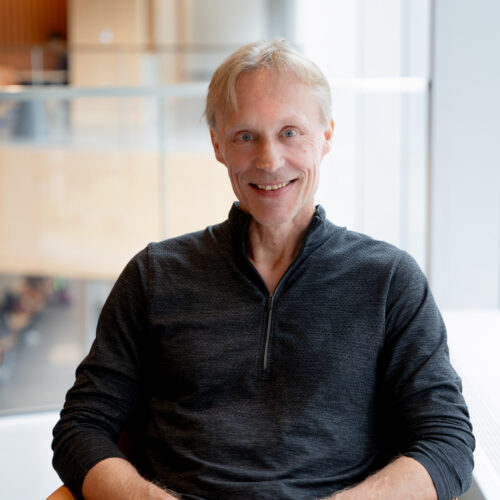
Tommi Jaakkola is the Thomas Siebel Professor of Electrical Engineering and Computer Science and the Institute for Data, Systems, and Society at the Massachusetts Institute of Technology. He received his MSc in theoretical physics from Helsinki University of Technology in 1992 and his PhD from MIT in computational neuroscience in 1997. After completing a postdoctoral position in computational molecular biology as a DOE/Sloan fellow at UCSC, he joined the MIT EECS faculty in 1998. His research advances how machines can learn, predict or control, and do so at scale in an efficient, principled, and interpretable manner. His work in machine learning extends from foundational theory to modern applications, focusing especially on statistical inference and estimation tasks that lie at the heart of complex learning problems. He designs new methods, theory and algorithms to automate the use and generation of semi-structured data such as natural language text, images, molecules, or strategies. Jaakkola applies and develops algorithms to solve multi-faceted recommender, retrieval, or inferential tasks (particularly in biomedical contexts), design and optimize molecules or reactions for drug design, and model strategic, game theoretic interactions. His recent work heavily focuses on diffusion models, protein structure prediction, molecular design, and generative AI, with significant publications in top conferences including ICML, NeurIPS, and ICLR. His scientific contributions span multiple disciplines with significant impact in both theoretical machine learning and practical applications in computational biology and chemistry, including notable work on antibiotic discovery published in Cell. Current advisees: Julia Balla, Bowen Jing, Hannes Stärk, Peter Holderrieth, Chenyu Wang Recent graduates: Gabriele Corso (Boltz PBC), Ezra Erives (DE Shaw), Jason Yim (Xaira) Jaakkola maintains an active research program through MIT's Computer Science and Artificial Intelligence Laboratory (CSAIL) and the Institute for Data, Systems, and Society (IDSS), with his office located in the Stata Center (32-G470). His work bridges theoretical machine learning with practical applications, making significant contributions to both the academic field and potential real-world impact in healthcare and drug discovery.
Sicun Gao is an Associate Professor in the Computer Science and Engineering department at the University of California, San Diego. His research focuses on practical algorithms for NP-hard search and optimization problems in computational systems, emphasizing combinatorial perspectives in numerical and statistical contexts to achieve reliable autonomy. Research Interests: Automated reasoning, Hamilton-Jacobi reachability, safe reinforcement learning, control barrier functions, and optimization in cyber-physical systems. Teaching: Courses on AI search, optimization, and graduate research seminars. The 15 most recent publications highlight advancements in safe AI control, motion planning, and policy optimization, often integrating neural networks with formal verification. Awards include the IEEE Power & Energy Society Technical Committee Prize Paper Award and the IROS RoboCup Best Paper Award. He advises PhD students working on AI-driven control and robotics, with alumni placed at institutions like Seoul National University, Amazon, and Apple. Grants include NSF Career, Air Force Young Investigator, and DARPA Assured Autonomy funding. His lab develops tools like dReal for automated reasoning in nonlinear theories over the reals.
Dr. Camila Aquino serves as Assistant Professor in both the Department of Clinical Neurosciences and Department of Community Health Sciences at the University of Calgary's Cumming School of Medicine, and is a Full Member of the Hotchkiss Brain Institute. As Medical Director of the Deep Brain Stimulation Program, she specializes in Parkinson's disease, essential tremor, dystonia, and chorea management, including EMG-guided botulinum toxin injections. Her educational background includes: M.D. in Medicine from Escola Superior de Ciencias da Santa Casa (2005) M.S. in Neurosciences from Federal University of Sao Paulo (2012) Ph.D. in Neurosciences from Federal University of Sao Paulo (2019) M.S. in Health Research Methods, Clinical Epidemiology from McMaster University (2020) Dr. Aquino's research addresses unmet needs in movement disorders through innovative clinical trial designs for Parkinson's disease, focusing on precision-medicine approaches, early intervention, and outcome optimization. She actively evaluates neuromodulation therapies including Deep Brain Stimulation, Spinal Cord Stimulation, and MRgFUS, with emphasis on expanding indications and improving patient outcomes. As an International Parkinson and Movement Disorder Society member, she chairs the web-based learning committee and serves on evidence-based medicine and outcome measure committees. Analysis of her 15 most recent publications (2021-2025) reveals a cohesive research trajectory centered on Parkinson's disease management, with dominant themes in motor fluctuation treatments, deep brain stimulation methodology, and clinical trial innovation. Her work bridges fundamental clinical practice guidelines with advanced neuromodulation technologies, demonstrating consistent commitment to evidence-based solutions for movement disorders. Her scientific recognition includes: Parkinson Canada research grant Mohammed Al Zaibak Foundation scholarship CAPES scholarship from Brazilian Ministry of Education Dr. Aquino has secured significant research funding supporting clinical trials in Parkinson's disease neuroprotection and neuromodulation therapies. While specific student advisees aren't listed, her leadership of the DBS Program and active clinical trial portfolio indicate substantial mentorship responsibilities. Her grant portfolio emphasizes translational research with direct clinical impact. She directs the University of Calgary's Deep Brain Stimulation Program and contributes to the MRI-guided focused ultrasound initiative. Through her International Parkinson and Movement Disorder Society committee roles, she shapes global educational standards and evidence-based practices in movement disorders.
Bo Dai is an Assistant Professor at the School of Computational Science and Engineering, Georgia Institute of Technology, and a Staff Research Scientist at Google DeepMind. His research focuses on Agent AI, Generative Models, and Representation Learning, aiming to create decision-making agents through world modeling. He holds a Ph.D. from Georgia Tech (2013–2018) and previously worked at Google Brain. Dai has authored numerous influential papers in top conferences like NeurIPS, ICML, and ICLR, and received the AISTATS Best Paper Award (2016). Education: Ph.D., School of Computational Science and Engineering, Georgia Tech (2013–2018) Research Interests: Reinforcement Learning and Representation Learning for decision-making agents Generative Models and their integration with Agent AI Provable and scalable algorithms for real-world applications His work bridges theory and practice, emphasizing spectral representations and provable guarantees in complex systems. Key Article Trends: His recent work emphasizes scalable spectral methods for multi-agent systems, diffusion policies, and representation-based techniques in reinforcement learning. He also explores LLM alignment and sim-to-real transfer learning. Awards: AISTATS Best Paper Award (2016) NeurIPS Workshop Best Paper (2017) Ross Fellowship (2011–2012) Advising & Grants: Supervises 6 current Ph.D. and M.S. students. Active in organizing workshops on reinforcement learning and serves as an Area Chair for top conferences. Labs & Software: Leads development of Representation-based Reinforcement Learning and Repr-Control toolboxes for nonlinear control and stochastic systems.
Sham Kakade is the Rampell Family Professor of Computer Science and Professor of Statistics at Harvard University, co-director of the Kempner Institute. His research focuses on advancing artificial general intelligence through foundational work in reinforcement learning, large-scale learning systems, and autonomous agent architectures. He earned his PhD in 2003 from the Gatsby Computational Neuroscience Unit at University College London. His work emphasizes scalable optimization algorithms, distributed systems for foundation models, and understanding emergent capabilities in neural architectures. Research interests include full-stack training pipelines for foundation models, mathematical principles of large-scale learning systems, and bridging language models with embodied intelligence. He advises prospective students with backgrounds in applied deep learning or theoretical computer science, offering access to the Kempner Institute's computational resources. He serves on committees for the ACM Prize in Computing and Sloan Research Fellowships, co-organizes the Simons Symposium on Theoretical Machine Learning, and chaired COLT 2011. His lab works at the intersection of theory and practice, addressing challenges in AI's societal impact and technical scalability. Labs/Teams: Co-directs the Kempner Institute, fostering collaborations between AI researchers and social scientists. Active in Harvard's SEAS community.
Dr. Amin Keramati is an Assistant Professor of Supply Chain Management at Widener University’s School of Business Administration. He holds a PhD in Transportation & Logistics from North Dakota State University and previously served as a graduate research assistant at the Upper Great Plains Transportation Institute. His work includes federally funded projects like the Mountain-Plains Consortium’s MPC-550 project, focusing on highway-rail grade crossing safety. Dr. Keramati teaches courses in enterprise resource planning, decision analytics, database management, transportation/logistics, project management, and data analytics. Education: PhD in Transportation & Logistics, North Dakota State University Graduate Research Assistant at Upper Great Plains Transportation Institute Research Focus: Dr. Keramati develops mathematical, statistical, and machine learning approaches to solve complex problems in transportation, supply chain, and logistics. Key areas include data mining, big data decision support, transportation network analytics, project scheduling, smart manufacturing, and accident analysis. His interdisciplinary work bridges supply chain optimization with emerging technologies like blockchain for healthcare and clinical trials. Awards & Recognition: Student Paper Award, American Association of State Highway and Transportation Officials (2017) Grants & Projects: Lead researcher on the Mountain-Plains Consortium’s MPC-550 project, which expanded his dissertation work on safety systems for highway-rail crossings. Collaborates on federally funded transportation safety initiatives and supply chain optimization for bioethanol and pharmaceutical industries. Labs/Teams: Active in Widener’s School of Business research groups focusing on supply chain innovation and interdisciplinary projects combining logistics with emerging technologies.
Roger Giner-Sorolla is Professor of Social Psychology at the University of Kent's School of Psychology, where he has been a faculty member since 2001 after completing his PhD at New York University in 1996. He served as Editor-in-Chief of the Journal of Experimental Social Psychology from 2016-2022 and currently leads a Leverhulme Foundation grant examining moral heroism across professions. His academic journey includes a postdoctoral fellowship at the University of Virginia and has established him as a leading figure in social and moral psychology. Professor Giner-Sorolla's research focuses on the social role of emotions, particularly moral emotions including self-condemning emotions (guilt and shame) and other-condemning emotions (anger, contempt, and disgust). His work extends to intergroup apologies, dehumanization, emotionally driven prejudice, and collective moral roles, with a notable side interest in the ironic enjoyment of music and aesthetic experiences. He is a strong advocate for transparency in scientific reporting, having written extensively on improved reporting guidelines, pre-registration, and open science practices. Analysis of his recent publications reveals a consistent focus on moral psychology with expanding interdisciplinary reach. His work bridges traditional social psychology with emerging areas including cross-cultural emotion research, replication science, and historical memory. The trend shows increasing attention to methodological rigor while maintaining core interests in emotion and morality, with growing emphasis on practical applications in conflict resolution and intergroup relations. Fellow of the Association for Psychological Science Member of Rising Stars selection committee (2023-2024) Promising Scholars Award (University of Kent, 2006) Vacation Research Scholarship (Wellcome Trust, 2005) Multiple ESRC grants totaling over £400,000 European Science Foundation Workshop Award (2004) Professor Giner-Sorolla has supervised an impressive number of PhD students, with 17 doctoral candidates listed in the documentation including both current and past students. His grant portfolio demonstrates significant research impact with funding from major organizations including ESRC, Wellcome Trust, and Leverhulme Foundation. His supervision style appears to encourage students to pursue research that aligns with his core interests in moral emotions while allowing exploration of novel applications and contexts. While the documentation doesn't specify laboratory or research team structures, his extensive collaborative work suggests leadership of research groups focused on moral psychology and emotion research. His numerous international collaborations and invited workshops indicate an active research program with global reach, likely involving multiple research teams working on interconnected projects related to his core interests in moral psychology and scientific methodology.
Dr Peninah Murage is an Assistant Professor at the London School of Hygiene & Tropical Medicine in the Department of Public Health, Environments and Society under the Faculty of Public Health and Policy. She specializes in environmental epidemiology with a PhD in Health Geography and focuses on health impacts of environmental changes, particularly climate change mitigation and adaptation strategies. Affiliation: Centre on Climate Change and Planetary Health Her research explores climate change effects on health outcomes like heat-related mortality, cardiovascular diseases, and cognitive development in children. She integrates GIS/spatial analysis with public health and policy frameworks to identify nature-based solutions for sustainable development. Current work examines systemic inequalities in heat risk exposure and interventions such as tree-based strategies in low-income settings. Key grants include: Health Protection Research Unit on Climate Change and Health Security (2025-2030, NIHR) Climate Change and Non-Communicable Diseases in Senegal (2024-2027) Pathfinder 2: Accelerating Climate Action for Health (2023-2026) She actively contributes to the Lancet Pathfinder Commission and serves on the Executive Committee of the International Society of Environmental Epidemiology (African Chapter).
Ariel Pakes is the Thomas Professor of Economics at Harvard University, part of the Faculty of Arts and Sciences and the Department of Economics. He previously held the Charles and Dorothea Dilley Professorship at Yale University and tenured roles at institutions including the University of Wisconsin and the Hebrew University of Jerusalem. His research focuses on industrial organization (I.O.), the economics of technological change, and econometric theory. Pakes has advised notable students who now lead economics departments globally and has received prestigious awards including the Frisch Medal (1986) and election to the American Academy of Arts and Sciences (2002). Education: Pakes earned his Ph.D. in Economics from Harvard University in 1980. His academic journey includes roles as a lecturer at Harvard and positions at the University of Jerusalem. Research Interests: Pakes has pioneered methodologies for analyzing I.O. models, including demand and cost system estimation. Recent work examines AI’s impact on pricing strategies, antitrust policy implications of market dynamics, and healthcare cost structures. His theoretical contributions include simulation estimators and frameworks for dynamic oligopolies. Awards: Frisch Medal (Econometric Society, 1986) Fellow of the Econometric Society (1988) Fellow of the American Academy of Arts and Sciences (2002) Best Graduate Student Advisor Award (Yale University, 1996) Advisory and Grants: Pakes has served on NSF panels, including the Economics Advisory Panel and Presidential Fellow Advisory Board. His consulting work spans government agencies and large firms. He edited the RAND Journal of Economics and co-chaired the AEA Census Advisory Panel. Labs/Teams: Collaborates with NBER as a Research Associate and contributes to interdisciplinary projects like the PNAS issue on 'Science, Technology and the Economy.'
Michael A Osborne is Professor of Machine Learning at the University of Oxford and leads the Bayesian Exploration Lab . He serves as Director of the EPSRC Centre for Doctoral Training in Autonomous Intelligent Machines and Systems and co-directs the Oxford Martin AI Governance Initiative. His research focuses on Bayesian optimization, Gaussian processes, and probabilistic numerics with applications in quantum devices, battery modeling, and AI governance. Key Positions: Professor of Machine Learning, University of Oxford Official Fellow, Exeter College Co-founder of Mind Foundry Lead Researcher, Oxford Martin Programme on Technology and Employment Research Themes: Probabilistic modeling for quantum systems Uncertainty quantification in energy storage AI safety and societal impact analysis Automated experimental design Quantum device calibration Probabilistic numerical methods Technical Contributions: Bridging reality gap in quantum devices Efficient Bayesian quadrature techniques Personalized neurostimulation algorithms Automated measurement protocols Quantum-classical hybrid ML
Alessio Lomuscio is a Professor of Safe Artificial Intelligence at Imperial College London, holding the prestigious Royal Academy of Engineering Chair in Emerging Technologies and recognized as an ACM Distinguished Member. He leads the Safe AI Lab, which focuses on developing methods and tools for the verification of AI systems to ensure their safe and secure deployment in applications of societal importance. His research spans verification and robust learning for neural networks and decision trees, robust machine learning in aviation and finance, monitoring of machine learning systems, assurance for autonomous systems and AI, and verification and validation of neuro-symbolic systems. Lomuscio has made significant contributions to formal verification methods for AI systems, particularly in the context of safety-critical applications. His recent publications demonstrate a strong focus on neural network verification techniques, with applications across multiple domains including finance, aviation, and autonomous systems. His work bridges theoretical advances in formal methods with practical applications in real-world AI systems, addressing critical challenges in AI safety and trustworthiness. Scientific Awards: Royal Academy of Engineering Chair in Emerging Technologies ACM Distinguished Member Lomuscio has served in numerous leadership roles, including as Co-Director (2023-present) and Deputy Director (2019-2023) of the UKRI Centre for Doctoral Training in Safe and Trusted Artificial Intelligence. He has also held positions as Director of Strategy and Planning (2017-2020), Member of Management Committee (2013-2020), and Deputy Head of Department (2016-2017). His editorial service includes roles as Associate Editor for Artificial Intelligence Journal and Editorial Board Member for Journal of Artificial Intelligence Research and Journal of Autonomous Agents and Multi-agent Systems. His research group actively mentors students and researchers, with current openings for PhD and postdoctoral positions focused on AI verification and safety. Lomuscio's work has established him as a leading figure in the field of safe and verifiable AI systems, with significant contributions to both theoretical foundations and practical applications.