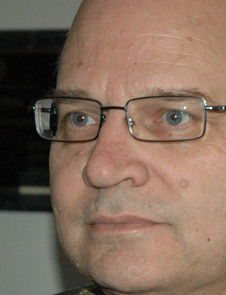
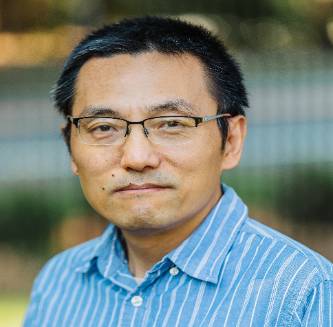
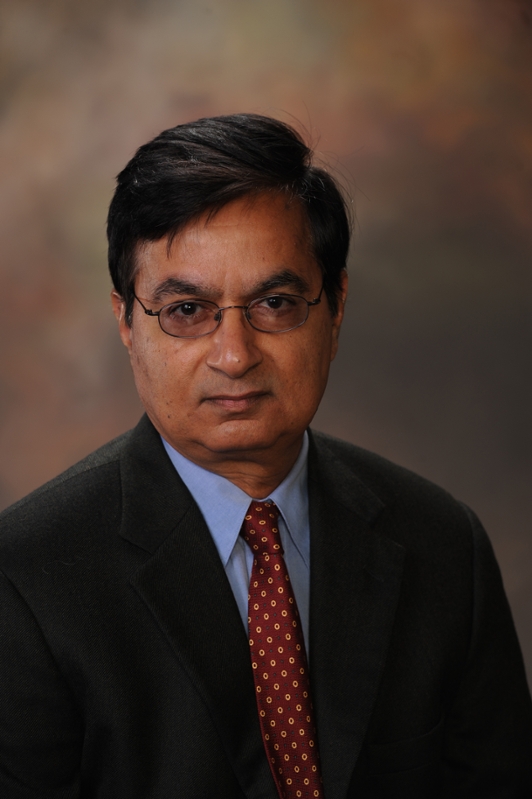
Rami Tabri is a Senior Lecturer in the Department of Econometrics & Business Statistics at Monash University. His research focuses on econometric methodologies, statistical inference, and their applications in poverty analysis, health economics, and social sciences. He has contributed to advancements in stochastic dominance testing, moment inequality models, and bootstrap methods. His work often addresses challenges in survey nonresponse and data imputation. Key collaborations include studies on public institutions in Lebanon and poverty evaluation in Australia. He has published in top journals such as the Journal of Econometrics and Health Economics . Notable contributions include frameworks for testing health concentration curves and methodologies for restricted stochastic dominance. Tabri’s media engagement includes an article analyzing the 2022 Lebanese Elections, which reached multiple platforms. His research aligns with UN Sustainable Development Goals, particularly addressing inequality and economic prosperity.
Stavros Tavoularis is a Professor in the Department of Mechanical Engineering at the University of Ottawa, cross-appointed in the Department of Physics. He holds the HPCVL-Sun Microsystems Chair in Computational Science and Engineering. His academic journey includes degrees from the National Technical University of Athens (Dipl.Eng., 1973), Virginia Tech (M.Sc., 1974), and Johns Hopkins University (Ph.D., 1978). He has served as Department Chair and Director of the Ottawa-Carleton Institute for Mechanical and Aerospace Engineering. Currently, he leads the uOttawa Fluid Mechanics Laboratory, supervising a multidisciplinary team of students and researchers. Education: Dipl.Eng., National Technical University of Athens (1973) M.Sc., Virginia Polytechnic Institute & State University (1974) Ph.D., The Johns Hopkins University (1978) Research interests span fluid mechanics, turbulence, vortex dynamics, aerodynamics, nuclear thermal hydraulics, and biofluid dynamics. His work emphasizes experimental and computational studies, including turbulence modulation, supercritical fluid heat transfer, and flow instrumentation. Notable projects involve CANDU reactor thermal hydraulics, mechanical heart valve fluid dynamics, and flow instability in eccentric channels. He has secured grants from NSERC, NRC, DND, and industry partners like Pratt & Whitney Canada. Publications reflect expertise in supercritical fluids, two-phase flow, and turbulence. Recent trends focus on flow instability mitigation, scalar dispersion optimization, and computational benchmarking for industrial flows. His work bridges fundamental fluid mechanics with engineering applications in energy systems and biomedical devices. Awards include Fellowships from the Canadian Academy of Engineering, Engineering Institute of Canada, and the American Physical Society, alongside the George S. Glinski Award. His advisory roles include supervision of over 50 graduate students and postdoctoral fellows. Current projects involve CFD simulations of nuclear reactor headers and biofluid dynamics in cardiovascular systems. Labs/Teams: Director of the uOttawa Fluid Mechanics Laboratory, collaborating with industry and government on experimental and computational flow analysis. Key facilities include supercritical fluid test loops and advanced PIV/PLIF measurement systems.
Hanwen Huang is an Associate Professor in the Department of Biostatistics and Data Science at the Medical College of Georgia, Augusta University. He holds a PhD in Statistics from the University of North Carolina at Chapel Hill (2011). His research focuses on high-dimensional data analysis, statistical machine learning, and computational methods for dynamical models in infectious diseases. He has developed Bayesian frameworks for ordinary differential equations and computational approaches for HIV recombination regions. Education: PhD (Statistics), University of North Carolina at Chapel Hill, 2011. Research interests include Bayesian statistical methods, high-dimensional inference, and interdisciplinary collaborations. His work bridges theory and application, addressing challenges in epidemiology, oncology, and nutritional studies. Recent publications explore topics such as robust L1-penalized estimators, influenza dynamics modeling, and the impact of vitamins on COVID-19 severity. Teaching areas include Introductory Biostatistics, Linear Models, and Statistical Machine Learning. His research has been applied to diverse fields, including cancer metabolism and public health interventions. Collaborative projects highlight his commitment to solving real-world problems through statistical innovation.
David Spieler is a Professor of Machine Learning at the University of Applied Sciences Munich since September 2018. Previously, he served as a product owner for big data topics at Audi AG (2015–2018), a system developer at Bosch SoftTec (2014–2015), and completed his PhD in Modeling and Simulation at Saarland University (2009–2014). His research focuses on stochastic systems, biochemical modeling, parameter estimation, and oscillatory behavior analysis in Markovian systems. He has contributed to numerical methods for steady-state analysis, formal verification techniques, and applications in systems biology. Research interests include stochastic hybrid systems, sensitivity analysis of biochemical networks, geometric bounds for CTMC steady-state distributions, and oscillatory dynamics in chemical reaction networks. He has published extensively on topics like model checking, parameter estimation, and algorithmic solutions for stochastic processes. His work bridges theoretical computer science with practical applications in bioinformatics and engineering. Spieler has taught courses on data networks, quantitative model checking, and stochastic simulation techniques. He has reviewed manuscripts for over 20 conferences including CAV, CMSB, HSCC, and QEST, contributing to the advancement of formal methods and computational systems biology.
Prof. Steffen Eickemeyer is an Adjunct Professor of Lean Management at the School of Business, Social & Decision Sciences at Constructor University Bremen gGmbH. His research focuses on capacity planning, regeneration of complex capital goods, supply chain optimization, and blockchain applications in logistics. He has contributed to the Belt and Road Initiative through studies on material flow security and has validated mathematical models for demand-driven capacity planning using case studies in global MRO companies. His academic work integrates data mining, statistical analysis, and mathematical modeling to address challenges in industrial asset management, maintenance strategies, and sustainable manufacturing processes. Notable contributions include optimizing regeneration workflows, reducing uncertainty in disassembly processes, and designing decision models for dynamic demand environments. Publications highlight his expertise in blockchain technologies for logistics security, fuzzy data management in maintenance systems, and availability optimization in capacity planning. His research bridges theoretical frameworks with practical applications in global industries, emphasizing cross-regional validation and real-world implementation. Prof. Eickemeyer collaborates with global enterprises to apply lean principles in complex industrial settings, focusing on lifecycle assessment, resource recovery, and cross-functional data integration. His work aligns with industry needs for reliable capacity solutions in fluctuating demand scenarios.
Emilio Gomez Deniz is a Full Professor at the Universidad de Las Palmas de Gran Canaria, specializing in Bayesian statistics and decision-making techniques within economics and business contexts. His research focuses on distribution theory, actuarial statistics (credibility, ruin theory), and robust Bayesian analysis, with significant applications in tourism, insurance, and financial risk modeling. Key Research Areas: Bayesian statistics, asymmetric distributions, credibility theory, risk aggregation, and econometric modeling. Recent Publications: 2024–2025 work includes applications of the Gleser distribution to flood data, Bayesian credibility premiums, skew-unit models, and citation analysis using normalized Bayesian approaches. Projects: Collaborator on Spanish Ministry-funded projects related to Bayesian decision-making in health economics, risk modeling, and actuarial science. Collaborations: Works with interdisciplinary teams on topics like tourist expenditure, aircraft delay modeling, and social challenges. Books Authored: Textbooks on applied statistics for business, generalized beta distributions, and stochastic frontier models.
Matteo Detto is a Research Fellow affiliated with the Department of Ecology and Evolutionary Biology and the High Meadows Environmental Institute (HMEI) at Princeton University. His research focuses on climate-forest interactions, particularly the spatial and temporal complexity of biosphere-atmosphere exchanges, including energy, water, CO₂, and greenhouse gases. He designs automated bio-environmental monitoring systems for diverse ecosystems, from Mediterranean regions to boreal forests, and develops statistical methods to analyze observational data across multiple scales. His work emphasizes understanding ecological complexity in natural and anthropogenic systems, with a focus on how climate change alters forest resource use and carbon dynamics. Detto collaborates with the Pacala Lab and contributes to the Carbon Mitigation Initiative (CMI) within HMEI. He has pioneered methods for analyzing forest structure using LiDAR and drones, and his research spans remote sensing applications, time-series analysis, and spatial modeling. Detto's publications address topics such as tropical forest responses to drought, liana-tree competition, and the integration of physiological data into ecosystem models. He actively engages in global initiatives like the ForestGEO network and has contributed to datasets like FLUXNET-CH4.
Chunsheng Ma is a Professor of Mathematics at Wichita State University, affiliated with the Department of Mathematics, Statistics, and Physics within the Fairmount College of Liberal Arts and Sciences. His research focuses on advanced topics in probability theory, stochastic processes, and spatial statistics, with particular emphasis on random fields, covariance models, and their applications. He holds an office in Jabara Hall and can be reached via email at cma@math.wichita.edu. His teaching responsibilities include courses such as STAT370 and STAT774. Research Interests: Dr. Ma's work spans statistical methodology development, including studies on vector random fields, Lévy processes, and isotropic Gaussian fields. He explores theoretical properties like stochastic orderings, strong local nondeterminism, and covariance structures on complex spaces such as spheres and manifolds. His contributions address both foundational aspects (e.g., metric-dependent covariance functions) and applied challenges in spatial-temporal modeling. Key Trends in Articles: Recent publications emphasize non-Gaussian random field constructions, power-law processes, and stochastic comparisons. Themes include extending classical Brownian motion frameworks to non-Euclidean settings, analyzing covariance matrices on homogeneous spaces, and developing simulation techniques for isotropic fields. His work often bridges pure probability theory with computational methods for practical spatial and temporal data analysis. Funding & Professional Activities: Links to statistical societies (e.g., ASA, IMS) and grant opportunities suggest active engagement in academic networks. His webpage provides access to teaching materials, research resources, and collaborative initiatives in the mathematical sciences. No specific grants or awards are explicitly listed, though his extensive publication record reflects sustained scholarly activity.
Gregor Kastner is Professor and Deputy Head of the Institute of Statistics at the University of Klagenfurt. His research focuses on Bayesian statistics, time series analysis, econometrics, and computational methods, with applications in finance, economics, and environmental modeling. He develops statistical software including packages for stochastic volatility modeling in R. Kastner's methodological work centers on Bayesian inference for high-dimensional problems, developing efficient computational algorithms for complex models. His applied research examines volatility dynamics in financial markets, macroeconomic forecasting, and spatial analysis of economic indicators. Recent projects include Bayesian nonparametric clustering for evaluating agricultural subsidies in Europe, sparse vector autoregressions for high-dimensional forecasting, and stochastic volatility models for commodity markets. He maintains active collaborations across economics, finance, and environmental science disciplines.
Antai Wang is an Associate Professor in the Department of Mathematical Sciences at New Jersey Institute of Technology (NJIT), specializing in biostatistics and survival analysis. His research focuses on developing statistical methodologies for dependent data structures, particularly using Archimedean copula models and frailty models. He has secured funding from the National Science Foundation for projects like 'Analysis of Survival Data Using Copula Models' (2011-2015), which advanced methodologies for analyzing dependent competing risks and semi-competing risks data. Key research areas include survival analysis, copula models, and their applications in medical studies. Wang has contributed to studies on opioid prescribing patterns in trauma patients, breast cancer biomarkers, and post-traumatic seizure prophylaxis. His work bridges statistical theory with clinical applications, addressing real-world health challenges through rigorous quantitative methods. Notable collaborations include studies on tumor proliferation genes in ethnic patient groups and evaluating green tea extract effects on breast cancer biomarkers. Wang’s methodologies have been applied to improve understanding of disease progression and treatment efficacy, with publications in journals like Statistica Sinica and American Surgeon . His grants and projects reflect a commitment to advancing statistical tools for complex survival data, emphasizing identifiability of models and handling dependent censoring. While no formal awards are listed, his extensive publication record and federal funding underscore his impactful contributions to the field.
Maria Burns is an Assistant Professor in the Department of Construction Management/Political Science at the University of Houston’s College of Technology. Her research focuses on the intersection of data science, security, and logistics, with applications in energy, maritime, and homeland security sectors. She specializes in network analysis, AI-driven risk assessment, and policy analysis for critical infrastructure protection. Her work integrates multidisciplinary approaches including machine learning, time-series forecasting, and data visualization to address complex challenges such as human trafficking, cargo security, and port resilience. Key areas include supply chain vulnerability analysis, maritime security protocols, and the economic/environmental impacts of port activities. Burns has contributed to numerous DoS- and DHS-funded training manuals and courses, including 'Global Supply Chain Security' and 'UN Security Resolutions and WMD.' Her research also explores energy security paradoxes, intermodal transport risks, and crisis management strategies. Recent publications highlight innovative applications of AI in security technology and policy-driven solutions for modern security challenges. Her funded projects emphasize practical outcomes, such as optimizing port operations through 5G connectivity and enhancing border management through strategic convergence of trade and immigration policies. Burns’ work bridges academia and industry, offering actionable insights for public and private sector stakeholders.
Jitendra Tugnait is the James B. Davis Professor in the Department of Electrical and Computer Engineering at Auburn University. His research focuses on statistical signal processing and machine learning applications, particularly in high-dimensional graphical models, time series analysis, and non-convex optimization. He holds a Ph.D. in Electrical Engineering from the University of Illinois Urbana-Champaign, an M.S. from Syracuse University, and a B.S. from Punjab Engineering College. His work emphasizes developing robust methods for graphical model selection from dependent and multi-attribute data. Recent studies include conditional independence graph learning, sparse-group penalized estimation, and mitigation of pilot spoofing attacks in wireless systems. He has led projects funded by NSF and authored over 150 peer-reviewed articles since 2012. Key research themes include high-dimensional data analysis, differential graph estimation, and applications in wireless communication security. His contributions span theoretical advancements and practical implementations, such as improving spectrum sensing and combating signal spoofing in multi-antenna systems.
Yuexiao Dong is an Associate Professor in the Department of Statistics, Operations, and Data Science at Temple University's Fox School of Business and Management. He holds a PhD from Pennsylvania State University (2009) and a Bachelor's in Mathematics from Tsinghua University. His research focuses on sufficient dimension reduction, high-dimensional data analysis, and machine learning. Dr. Dong has been funded by the NSF for his work on 'New Developments in Sufficient Dimension Reduction' and serves as a Gilliland Research Fellow. He is an Associate Editor for the Journal of Systems Science and Complexity since 2015. His research is published in top journals such as the Annals of Statistics and Biometrika . Key interests include developing methodologies for efficient data analysis, particularly in handling high-dimensional and non-Euclidean data. He teaches Quantitative Foundations for Data Science at the undergraduate level. Education: Bachelor’s in Mathematics, Tsinghua University PhD in Statistics, Pennsylvania State University Awards: Gilliland Research Fellow NSF Grant: New Developments in Sufficient Dimension Reduction Dr. Dong’s work bridges statistical theory and applications, emphasizing computational efficiency and real-world relevance. Recent projects include Bayesian model averaging, real-time dimension reduction, and expectile-based regression techniques.
Edward C. Rosenthal is a Professor at the Fox School of Business and Management, Temple University, specializing in the Department of Statistics, Operations, and Data Science. He holds a Ph.D. from Northwestern University and has extensive teaching experience in operations management, game theory, and supply chain logistics across undergraduate, graduate, Honors, and Executive MBA programs. His research focuses on game theory applications, logistics optimization, and behavioral decision-making. Rosenthal has received prestigious awards including the Great Teacher Award and Lindback Award for Distinguished Teaching. Education: Ph.D., Northwestern University His research interests span cooperative/noncooperative game theory, mechanism design, logistics systems, and behavioral decision theory. Key contributions include work on interdependent security games, supply chain cost allocation, and pricing models in on-demand services. He authored influential books like The Era of Choice (MIT Press, 2005) and The Complete Idiot’s Guide to Game Theory (2011). Recent articles explore topics such as network security strategies, ride-sharing pricing, and journal ranking methodologies. His work bridges theoretical frameworks with practical applications in logistics, transportation, and market dynamics. Awards: Great Teacher Award, Lindback Award Teaching: Operations Management, Game Theory, SCM Internships Rosenthal’s research also addresses real-world challenges like over-targeting in markets and optimal supply chain policies under disruptions. He collaborates on mechanisms for fair cost allocation in public transit and infrastructure networks.
Bagkavos Dimitrios is an Associate Professor in the Department of Mathematics at the School of Science, University of Ioannina. His research focuses on Mathematical Statistics, Survival Analysis, and Probability Theory Applications, with expertise in nonparametric estimation, statistical inference, and kernel methods. He holds a B.Sc. in Mathematics from the University of Ioannina and an M.Sc. in Mathematics (Statistics) from the University of Birmingham, UK. His work emphasizes hypothesis testing, computational statistics, and applications of martingales and Edgeworth expansions. He has developed R packages such as NPHazardRate and asymmetry.measures , and his research has been published in top journals like Journal of Multivariate Analysis and Computational Statistics and Data Analysis . He actively contributes to the academic community by refereeing for journals including Test , Journal of Statistical Planning and Inference , and Communications in Statistics .