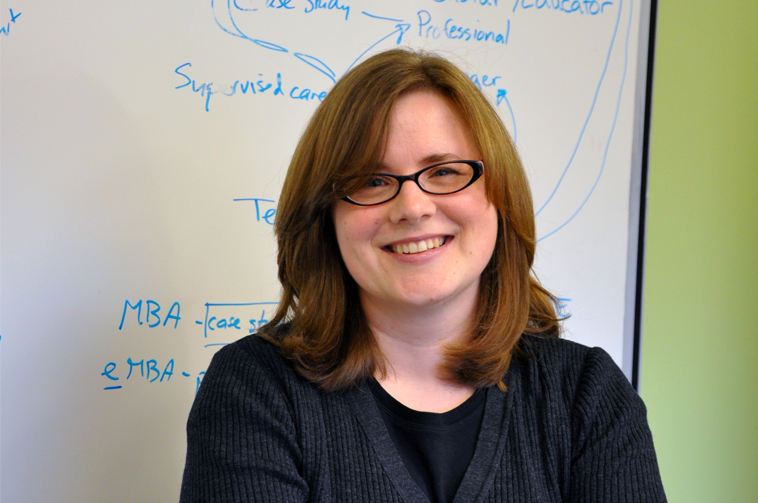
Alison Gibbs is a Teaching Professor and Director of the Centre for Teaching Support and Innovation at the University of Toronto , where she has worked since 2000. Her research focuses on the teaching and learning of statistics and data science at all educational levels, with emphasis on adaptive expertise, curriculum development, and technology integration. Education : B.Math. in Applied Mathematics (University of Waterloo, 1988), B.Ed. (University of Western Ontario, 11989), M.Sc. in Statistics (University of Toronto, 1993), Ph.D. in Statistics (University of Toronto, 2000). Her recent projects include the International Data Science in Schools Project , Census at School Canada , and Introduction to Statistical Ideas and Methods . Her publications highlight innovations in MOOC design, inverted classrooms, and professional identity development in statistics education. Scientific awards include the 3M National Teaching Fellowship , STLHE President’s Teaching Award , and multiple University of Toronto Outstanding Teaching Awards . She collaborates with colleagues like Jen Campbell, Sotirios Damouras, and Nathan Taback on educational research and curriculum reforms.
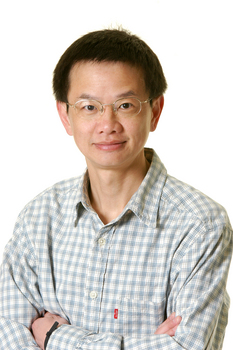
Tore Brattli is a Senior Lecturer and Study Program Manager in Media and Documentation Science at the Department of Language and Culture, UiT The Arctic University of Norway, under the Faculty of Humanities, Social Sciences and Teacher Education. He plays a key role in shaping the BA, MA, and one-year programs in media and documentation science, with a focus on information technology integration. His research interests include: Information Retrieval Search Engines Databases Digitalization Classification and Cataloging Knowledge Organization Semantic Change in Digital Terminology His teaching spans courses such as Databases, Search Engines and Data Modeling (MDV-1004), Document Organization and Retrieval (MDV-1201), Document Institutions in a Digital Age (MDV-1210), and Big Data, Social Media and Retrieval (MDV-3051). His recent publications reflect a strong focus on the evolution of digital concepts, classification systems like Dewey Decimal, and innovations in library services, especially in digital and networked environments. Themes across his work include the transformation of scholarly communication, automatic classification using semantic indexing, and the impact of digital media on traditional library structures. Notable scientific contributions include studies on the semantic expansion of the term "digital," experiments in automatic classification for public libraries, and analyses of digital journal paradigms. His work bridges library science, information systems, and digital humanities. He advises on curriculum development and leads program management but no formal advisees or students are listed. There is no mention of grants, awards, or laboratory affiliations. His research is primarily theoretical and applied within academic and library contexts.
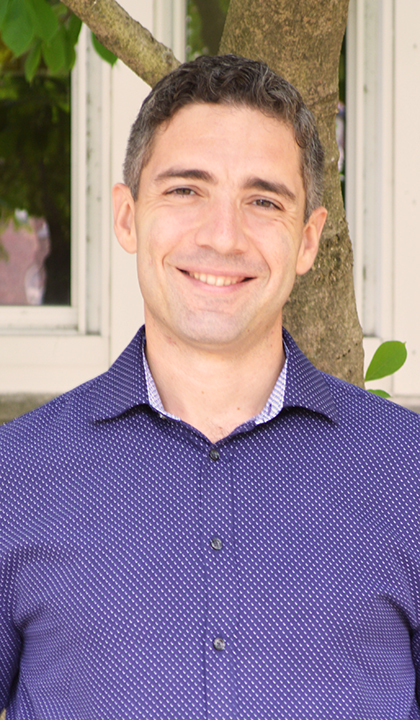
Prof. Dr. Alexander Asteroth is a Professor of Computer Science at the Department of Computer Science , Hochschule Bonn-Rhein-Sieg (H-BRS). His work bridges Machine Learning , Surrogate Modeling , and Aerodynamic Analysis through interdisciplinary collaborations with the Institute of Technology, Resource Conservation, and Energy Efficiency (TREE) . Project leadership roles in GARRULUS (drone-based reforestation), eTa (sustainable mobility), and ELaBoR (EV charging infrastructure). Research themes: Quality Diversity Algorithms for design exploration, Bayesian Optimization , and AI in Sports Science . His publications (2017–2025) demonstrate expertise in evolutionary computation , generative models , and human-AI co-creativity . Collaborations with industry partners like GKN Driveline and academic peers (Houben, Sebastian; Hagg, Alexander) underscore his applied research focus on energy-efficient systems and sports performance modeling.
Prof. Dr. Sebastian Oetzel serves as Vice Dean of the Department of Business at Fulda University of Applied Sciences since 2023. He specializes in General Business Administration with a focus on Marketing, teaching courses in Marketing Management, Market Research, and Applied Marketing Statistics. Professorship in Marketing (since 2018) Visiting lecturer at German Jordanian University (2022) Researcher at Goethe University Frankfurt (2008-2012) His research interests span marketing analytics , pricing strategy , behavioral biases , and retail store performance optimization . Recent work analyzes user-generated content for consumer insights and applies conjoint analysis to shopper decisions. Publications emphasize AI in market research , decoy effects , and price metrics for digital services. Key trends in his 2023-2015 publications include behavioral economics applications, scanner data analysis for retail, and machine learning for marketing optimization. The 2023 book "33 Phänomene der Kaufentscheidung" systematizes consumer decision patterns, while case studies like "Project Perfect Shelf" examine product placement strategies.
Ricardo Jose Gabrielli Barreto Campello is a full Professor in the Department of Mathematics and Computer Science at the University of Southern Denmark (SDU), Faculty of Science and Engineering. He holds a prestigious International Recruit Fellowship from the Novo Nordisk Foundation (2023–2028) and leads advanced research in data mining and machine learning. He has held prior full professorships at the University of Newcastle and James Cook University, and adjunct or visiting roles at the University of Alberta, University of Melbourne, and University of São Paulo. Education: PhD in Electrical and Computer Engineering, University of Campinas (2002) Master in Electrical and Computer Engineering, University of Campinas (1997) Bachelor in Electronics Engineering, State University of São Paulo (Unesp) (1994) His research centers on data mining and machine/statistical learning , with a focus on developing general-purpose algorithms for descriptive and predictive analytics. He emphasizes unsupervised and semi-supervised learning , particularly in clustering, outlier detection, and intrinsic dimensionality estimation . His work bridges conceptual innovation with real-world applications, including gene-expression data analysis under his current NNF-funded project. The recent publications reflect a strong trend in unsupervised and probabilistic methods , particularly in outlier detection, clustering evaluation, and local intrinsic dimensionality. These works appear in high-impact journals and conferences such as Information Systems , Applied Energy , and SIAM SDM, often in collaboration with leading researchers like Arthur Zimek. The research demonstrates a deep integration of statistical rigor and algorithmic innovation. Scientific Awards: Best Research Paper Award, SIAM SDM (2024) 10-year Test of Time Award, PAKDD (2023) International Recruit Fellow, Novo Nordisk Foundation (2023) Runner-Up Best Paper, IEEE Transactions on Big Data (2022) Top 2% Scientist in the World (2020) Ricardo has consistently secured external research funding, including major grants from the Novo Nordisk Foundation and Danish Council for Independent Research. He has successfully advised numerous postgraduate students and led interdisciplinary research teams. His current projects include Advanced Computational Methods for Unsupervised Data Mining and collaborations on Clustering Evaluation Revisited and Reliable Outlier Detection , all based at SDU. He is actively involved in research networks and collaborations across Australia, Canada, and Europe, and maintains affiliations with institutions such as the University of Melbourne and James Cook University. His work continues to shape methodological advances in data science, particularly in foundational areas with broad application potential.
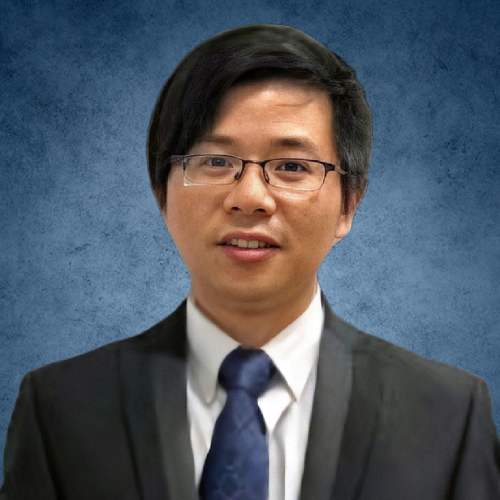
Huajie Zhang is a Professor at the Faculty of Computer Science , University of New Brunswick, with over 14 years of service. He holds a PhD in Computer Science from the University of Western Ontario and an MSc from Harbin Institute of Technology. Research Interests: Machine Learning Data Mining Graphical and Probabilistic Models Intelligent Systems Transfer Learning Semi-supervised Learning Efficient Learning Algorithms for Large Data Publication Trends: Huajie Zhang's work focuses on probabilistic models like Bayesian networks and Naive Bayes, emphasizing accuracy, efficiency, and adaptability in semi-supervised and transfer learning contexts. His recent papers explore scalable algorithms for big data, hybrid classifiers, and optimization techniques. Scientific Awards: Best Paper Award (Second Place) at FLAIRS Conference 2004 Teaching Activities: CS6735 Machine Learning CS3383 Algorithm Design
Professor Efstratios Gallopoulos is a faculty member at the Department of Computer Engineering & Informatics , University of Patras, where he holds the Division of Computer Software . He currently serves as Deputy Department Chair and Director of the High Performance Information Systems Laboratory (HPCLab) . His academic career spans multiple institutions including the University of Illinois at Urbana-Champaign, University of California Santa Barbara, and collaborations with INRIA Rennes and NASA Goddard Space Flight Center. Education : B.Sc. in Mathematics (First Class Honours) from Imperial College London (1979) Ph.D. in Computer Science from University of Illinois at Urbana-Champaign (1985) Research Focus : His work centers on Large-scale Scientific Computing with emphasis on Computational Linear Algebra , Parallel/Distributed Processing , and Data Mining . Recent publications highlight innovations in Randomized Numerical Linear Algebra , Heterogeneous Cluster Scheduling , and GPU-Accelerated Inversion Techniques . Article Trends : His research bridges High-Performance Computing with Data Science , focusing on scalable algorithms for Matrix Computations , Recommender Systems , and Biomarker Analysis . The work spans theoretical advancements (e.g., Givens Rotations ) and practical implementations (e.g., pylspack library). Scientific Awards : NASA Group Achievement Award for Massively Parallel Processor (MPP) development ACM SIGWEB Hypertext Ted Nelson Newcomer Award (2012) Advising and Grants : He has advised numerous research projects funded by European Research Council , Hellenic Foundation for Research and Innovation (HFRI) , and international bodies like the US National Science Foundation. Notably, he co-organized the 2015 Gene Golub SIAM Summer School and served as Chair of the SIAM Gene Golub Summer School Committee (2020-24). Labs and Teams : He leads the High Performance Information Systems Laboratory (HPCLab) and co-directs the interdisciplinary graduate program Data Driven Computing and Decision Making . His teams have contributed to the Cedar vector multiprocessor project at UIUC and Text-to-Matrix Generator (TMG) tools for data mining.
Orhun Aydin is an Assistant Professor at Saint Louis University's School of Science and Engineering , affiliated with the Department of Earth and Atmospheric Sciences and Department of Computer Science (by courtesy) . Ph.D. in Energy Resources Engineering (Geostatistics), Stanford University M.Sc. in Computer Science, Georgia Institute of Technology M.Sc. in Energy Resources Engineering, Stanford University B.Sc. in Petroleum Engineering and Electrical/Electronic Engineering, Middle East Technical University His research spans computational sustainability, spatial artificial intelligence (GeoAI), urban sensing, and integrated human-earth system modeling, with applications in disaster response optimization and open-source geospatial software development. Recent publications focus on spatial clustering algorithms, seagrass habitat conservation modeling, and stochastic regionalization frameworks, reflecting interdisciplinary work at the intersection of geoscience, data science, and environmental management. He teaches courses on Machine Learning in GIS and Remote Sensing and Advanced Programming in GIS and Remote Sensing , leveraging his dual expertise in geospatial analysis and computational methods.
Anne Gégout-Petit is a Professor at the University of Lorraine (UL) within the Faculty of Science and Technology, where she leads significant research initiatives in statistics and its applications. She serves as Director of the Elie Cartan Institute of Lorraine (UMR 7502) and is an active member of the INRIA BIGS team, demonstrating her leadership position in the French statistical research community. Her research expertise spans multiple domains of statistics with strong application components: Applied statistics and biostatistics Statistical modeling for biological and environmental systems High-dimensional data analysis Probability theory applications Epidemiological modeling Algorithm development for medical diagnostics Professor Gégout-Petit's publication record from 2022-2024 reveals a strong interdisciplinary focus, with research spanning forest pathology, cancer biology, pandemic surveillance, and genetic profiling. Her work consistently bridges theoretical statistical methodology with practical applications, particularly in environmental science, medicine, and public health. She has developed novel approaches including the FINE algorithm for medical data analysis and specialized modeling techniques for disease spread in ecosystems. She has demonstrated significant organizational leadership through directing major statistical events including the ENBIS meeting in Nancy (September 2-6, 2018) and the Statistics Days conference in Nancy (June 3-7, 2019), highlighting her standing within the European statistical community. Her professional activities include: Directing the Elie Cartan Institute of Lorraine Collaborating with researchers across biology, medicine, and environmental science Developing statistical methodologies for complex real-world problems Contributing to public health research during the COVID-19 pandemic
Frank Fagan is an Associate Professor at South Texas College of Law Houston and a Research Associate at EDHEC Augmented Law Institute in France. His scholarly work bridges traditional legal scholarship with emerging computational methodologies, positioning him at the forefront of legal technology research. Professor Fagan's research program centers on the transformative impact of artificial intelligence on legal systems. His work spans multiple critical domains: Legal applications of large language models and AI systems Computational law and algorithmic governance frameworks Social media regulation and digital platform accountability Algorithmic decision-making in judicial and regulatory contexts Big data approaches to legal scholarship and practice His publication trajectory reveals an accelerating focus on AI-law intersections, with recent work examining benchmarking methodologies for legal reasoning in LLMs, ownership frameworks for autonomous AI, and the implications of language models for legal practice transformation. Fagan frequently collaborates with prominent scholars including Saul Levmore on projects exploring computational approaches to legal theory and practice. With 34 scholarly papers accumulating over 9,000 downloads and 28 citations, his research demonstrates significant scholarly impact. His work appears in leading venues including the University of Chicago Law Review, Southern California Law Review, and Virginia Journal of Law and Technology, reflecting both interdisciplinary reach and legal academic recognition.
Gabriele Accarino is a Postdoctoral Research Scientist at Columbia University's Learning the Earth with Artificial Intelligence and Physics (LEAP) Science and Technology Center, focusing on machine learning applications in climate science. He previously held a research fellowship at the Department of Engineering for Innovation at the University of Salento and served as an adjunct professor there. His career includes a Junior Scientist role at the CMCC Foundation's Advanced Digital Innovation Center (ADIC), where he led the machine learning research unit and contributed to European projects like Silvanus. Education: Master’s in Computer Engineering (with honors), University of Salento PhD in Environmental Sciences, University of Salento His research spans data-driven climate modeling, spatio-temporal analysis, and machine learning for extreme weather events, pandemics, and environmental conflicts. He specializes in LSTM networks, Transformer architectures, and HPC integration with big data analytics. Recent publications highlight his work on AI applications in aquatic sciences, climate change knowledge transfer, ensemble machine learning for cyclones, and pandemic modeling. His projects address interdisciplinary challenges like environmental-COVID-19 links and pollution-conflict dynamics. Scientific Awards: Research Fellowship at University of Salento's Department of Engineering for Innovation Gabriele co-supervises European research initiatives and maintains affiliations with the CMCC Foundation while advancing postdoctoral work at Columbia University. His expertise bridges climate science, computational methods, and public health analytics.
Michael Ekstrand is an Assistant Professor in the Department of Information Science at Drexel University's College of Computing & Informatics, where he leads the INERTIA Laboratory (Impact, Novation, Effectiveness, and Responsibility of Technology for Information Access). His research blends information retrieval, human-computer interaction, and machine learning to ensure AI-powered information access systems (e.g., recommender systems) promote equity and societal well-being. Previously, he co-led the People and Information Research Team (PIReT) at Boise State University. Education : PhD in Computer Science (University of Minnesota, 2014), BS in Computer Engineering (Iowa State University). Research Focus : Ekstrand's work centers on fairness-aware algorithms, social impact quantification, and ethical AI deployment. Key themes include: Algorithmic bias mitigation in recommender systems User behavior modeling in information access Cross-disciplinary approaches to AI ethics Evaluation methodologies for equitable systems Publication Trends : His recent articles (2020-2025) demonstrate a strong focus on algorithmic fairness, particularly gender bias in information systems, statistical evaluation rigor, and user behavior analysis. Over 50% of his latest works directly address fairness metrics or bias mitigation strategies. Advising & Grants : Actively mentors PhD students (e.g., Samira Vaez Barenji, Sushobhan Parajuli) and has supervised 11+ graduate researchers. Secured NSF CAREER funding for projects on recommender systems' societal impact. Leadership : Maintains LensKit (open-source recommender toolkit), holds roles in ACM RecSys/FAccT conferences, and directs the INERTIA lab focusing on responsible information access technologies.
Zhong Chen is an Assistant Professor in Data Science and Machine Learning at the School of Computing, Southern Illinois University (SIU), where he serves as Director of the Learning, Optimization, and Analysis from Data Lab (LOAD Lab). He holds a Ph.D. in Computer Science from Wuhan University of Technology and has previously worked as a Research Assistant Professor at the University of Kansas Medical Center and as a Computational Scientist at Xavier University of Louisiana. His research focuses on data-centric AI, Large Language Models, machine learning, deep learning, big data mining, online optimization, and anomaly detection, with applications in healthcare and medical physics. His work addresses fundamental challenges in handling streaming data with varying feature spaces, imbalanced classification problems, and developing interpretable AI systems for medical applications. Chen's recent publications demonstrate expertise in online learning frameworks, sparse representation techniques, and applications in healthcare domains including cancer treatment, patient outcome prediction, and medical imaging. His research combines theoretical innovation with practical applications in medical physics and bioinformatics. Excellence Reviewer Award of the 29th ACM SIGKDD Conference on Knowledge Discovery and Data Mining (KDD'23) Outstanding Reviewer Award (top 10% of reviewers) of the 31st ACM SIGKDD Conference on Knowledge Discovery and Data Mining (KDD'25) Chen serves as Associate Editor for Medical Physics and Editorial Member of Computational Biology and Bioinformatics. He is actively involved in the academic community as Program Committee member for major AI conferences including AAAI, IJCAI, KDD, and ECML-PKDD. He has advised numerous research projects and served on thesis committees at SIU, with a focus on developing the next generation of data scientists and AI researchers. His LOAD Lab at SIU focuses on foundational innovation in artificial intelligence and machine learning with emphasis on online optimization, machine learning techniques, and applications in big streaming data, bioinformatics, and medical physics.
Louis-Daniel Pape serves as an Assistant Professor at Télécom Paris within the CREST research center, specializing in Economics. His academic profile positions him as a permanent research member focused on empirical analysis at the intersection of digital platforms, labor markets, and competition policy. Affiliated with both Télécom Paris and CREST (Center for Research in Economics and Statistics), he contributes to France's leading economics research ecosystem. Pape's research centers on industrial organization and labor economics, with particular emphasis on digital economics and competition policy. His methodological approach combines reduced-form and structural modeling techniques applied to administrative datasets, web-scraped information, and firm-provided data. Current investigations examine platform self-preferencing practices, labor market concentration effects, and innovative econometric methodologies for handling zero values in regression analysis. His work demonstrates consistent engagement with real-world policy questions, particularly regarding digital market regulation and antitrust enforcement. Analysis of Pape's publication trajectory reveals a strong focus on digital economy regulation and labor market dynamics. His recent work on the Digital Markets Act's impact on Google Maps represents cutting-edge research in digital competition policy, employing difference-in-differences methodologies to assess regulatory interventions. Parallel investigations into labor market concentration, non-compete clauses, and wage collusion demonstrate methodological versatility across different market contexts. The recurring theme across his publications is the application of rigorous empirical methods to evaluate policy interventions in concentrated markets. Pape maintains active teaching responsibilities across multiple institutions. At Télécom Paris, he delivers courses in Applied Econometrics and Data Collection/Visualization for Master's students, while also teaching Big Data at École Polytechnique. His pedagogical approach integrates machine learning methods with traditional econometric techniques, reflecting the evolving nature of empirical economic research. Course materials demonstrate particular emphasis on instrumental variables, difference-in-differences designs, and structural modeling approaches. Pape's research infrastructure includes collaborations with major institutions including the French Ministry of Public Finances (DGFIP) on VAT fraud analysis for digital platforms. His methodological contributions, particularly the iterated Ordinary Least Squares (iOLS) framework for handling zero values in regression models, have gained recognition in the econometrics community with substantial downloads on SSRN. His software implementations for iOLS/i2SLS and Instrumented Differences-in-Differences (IVDID) methods are publicly available on GitHub, facilitating broader adoption of these techniques.
Gleb Tikhonov is a postdoctoral researcher at the University of Helsinki , affiliated with the Faculty of Biological and Environmental Sciences and the Organismal and Evolutionary Biology Research Programme . He also holds a postdoctoral position at Aalto University in the Department of Computer Science . His work bridges statistical ecology, machine learning, and computational biology. Research Interests : Development of joint species distribution modelling (JSDM) for ecological communities Integration of statistical and machine learning methods High-performance computing implementations Phenological and dispersal pattern analysis Publications demonstrate expertise in applying advanced statistical frameworks to ecological questions, including fungal dispersal mechanisms, microbiome variation, and climate change impacts. His LIFEPLAN project (funded by the European Commission Joint Research Centre) focuses on planetary biodiversity synthesis using big data. Education : PhD in Biological and Environmental Sciences, University of Helsinki (2018) MS in Applied Mathematics, Lomonosov Moscow State University (2014)