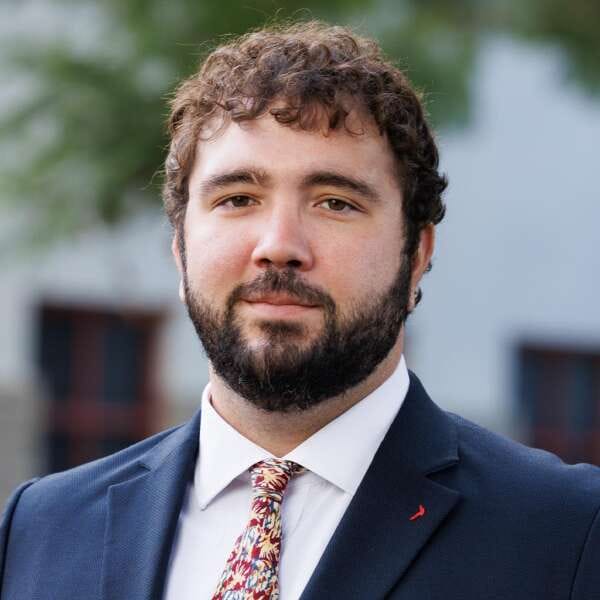
Herbert Hoijtink is a Professor of Methodology and Statistics at Utrecht University's Faculty of Social and Behavioural Sciences. He leads the Hoijtink Methodology and Statistics research group and specializes in Bayesian statistical methods, particularly the evaluation of informative hypotheses. His work focuses on improving empirical research through prior knowledge integration, with applications in psychology, education, and biomedical sciences. Research interests include Bayesian model comparison, multivariate statistics, and structural equation modeling. He has developed the bain software package for Bayesian evaluation of inequality-constrained hypotheses. Key contributions include advancing sample size determination for multilevel models and promoting open science practices through the Open Empirical Cycle . Hoijtink has secured significant grants, including NWO VICI and Gravity grants (€27.6 million), and holds fellowships like the NIAS-KNAW residency (2019). He co-authored influential papers on Bayesian replication studies and contributed to the Redefine Statistical Significance debate. His work bridges methodological innovation with practical applications in clinical, developmental, and educational research. Key Projects: Bayesian sample size calculation for longitudinal data, NWO-funded studies on child development Labs/Teams: Methodology and Statistics group at Utrecht University Awards: Psychometric Society Award (2016), VICI Grant (2005)
Kaylee Litson, Ph.D., is an Assistant Professor in the Department of Psychology at the University of Houston, affiliated with the College of Liberal Arts and Social Sciences and the Industrial-Organizational Program. She is the Director of the Interdisciplinary Quantitative Methods Collaboratory, where she leads research in advanced statistical modeling and psychological measurement. B.S. in Psychology, Utah Tech University (2012) Ph.D. in Quantitative Psychology, Utah State University (2019) Postdoctoral Fellowship in Biostatistics, Temple University (2020) Dr. Litson's research lies at the intersection of quantitative psychology, education, industry, and health. She specializes in structural equation modeling (SEM), latent variable development, and the analysis of longitudinal, nested, and multi-method data. Her work emphasizes both theoretical and statistical rigor in measuring complex psychological constructs such as creativity, cognitive load, and soft skills. Her recent publications highlight trends in methodological innovation, particularly in latent interaction effects, finite mixture modeling, ergodicity in cognitive models, and the measurement of black-box psychological phenomena. She actively develops frameworks for integrating theoretical meaning with statistical best practices in latent variable specification. Dr. Litson has applied her methods to study graduate students' research self-efficacy, working memory models, and the impact of soft skills on career trajectories. While no specific awards are listed, her research program reflects a strong commitment to advancing quantitative methods in psychology. She is currently accepting PhD student applications for the 2025–26 academic year, indicating active mentorship and research supervision. Her lab focuses on improving the capture of variability in complex datasets, with future work likely extending into AI-assisted modeling, real-time cognitive assessment, and cross-domain applications of quantitative methods.
Ester Villalonga Olives is an Associate Professor in the Department of Practice, Sciences, and Health Outcomes Research (P-SHOR) at the University of Maryland School of Pharmacy. She holds a PhD in Biomedicine with specialties in Epidemiology and Public Health and is a tenured social epidemiologist. Her academic affiliations include adjunct appointments at New York University, a joint appointment at the University of Maryland School of Medicine, and visiting roles at Harvard, Yale, and currently as a Visiting Professor at Hôtel-Dieu Hospital in Paris. PhD in Biomedicine, Universitat Pompeu Fabra (with International Doctor Distinction) MsC in Sociology and Health, University of Barcelona BsC in Sociology, University of Barcelona International training at Università degli Studi di Trieste, London School of Economics, and University Medical Center Hamburg-Eppendorf Dr. Villalonga-Olives’ research centers on the social determinants of health, particularly social capital, structural racism, health inequalities, and the development of measurement instruments. She employs mixed methods, structural equation modeling, multilevel modeling, and item response theory to study underserved populations, including immigrants and racial minorities. Her work emphasizes intervention design and psychometric validation in public health contexts. Her recent publications reflect a strong focus on health equity, measurement bias (especially differential item functioning), social capital interventions, health literacy adaptation for Hispanic/Latino populations, and mental health among refugees. The trend shows consistent use of advanced statistical techniques to address structural inequities and improve health outcomes through culturally appropriate instruments and interventions. Scientific awards and recognitions include: Award from the Spanish Society of Epidemiology for training in Florence GLOBALtimore Teaching Fellowship (University of Maryland) Member of the NIH Early Investigators Advancement Program Elected board member, International Epidemiology Association (10 years) Multiple international conference awards for her publications Dr. Villalonga-Olives has secured over $4 million in extramural funding, including an NIH R01 grant to develop a multidimensional measure of structural racism. She serves as Principal Investigator on projects funded by the Prevent Cancer Foundation and Merck Investigator Studies Program, focusing on cancer screening and health literacy among Hispanic/Latino immigrants. She is also a co-investigator on two NIH R01 grants related to social connectedness and shared decision-making in maternity care. She advises students and collaborates with multidisciplinary teams. She serves as an associate editor for Frontiers in Public Health and has reviewed for NIH and the French National Cancer Institute. She is actively involved in research teams focusing on psychometrics, social epidemiology, and health outcomes. Her lab integrates item response theory and measurement development with public health interventions, particularly in vulnerable populations. She leads a research program that bridges methodological rigor with real-world impact, including collaborations with United Nations agencies on social capital in forced displacement contexts.
Andrew B. Duncan is a Senior Lecturer in Statistics and Data-Centric Engineering at Imperial College London's Department of Mathematics, part of the Faculty of Natural Sciences. He also leads the Data Centric Engineering Programme at the Alan Turing Institute. His research integrates applied probability, computational statistics, and machine learning to solve industrial challenges in areas like cellular biology, aerospace, and energy systems. He holds a PhD from the University of Warwick and previously lectured at the University of Sussex. Education: PhD in Mathematics, University of Warwick (2013), supervised by Andrew Stuart and Charlie Elliott Postdoctoral research at Imperial College London and the University of Oxford Research Interests: Focuses on developing statistical methodologies for complex engineering systems, including predictive health monitoring, computational statistics, and interdisciplinary applications. Key areas include uncertainty quantification, Bayesian inference, and energy-based models. Advising & Grants: Supervised multiple PhD students and postdocs, many now in academic and industry roles. Active in securing funding for projects on sensor optimization, digital twins, and data-centric engineering. Labs/Teams: Leads the Data Centric Engineering group at the Alan Turing Institute and collaborates with the Statistics section at Imperial College. His work bridges academia and industry, emphasizing practical applications of statistical methods.
Prof. Dr. Holger Brandt serves as Professor of Psychometrics at the Methods Center within the Department of Social Sciences, Faculty of Economics and Social Sciences, Eberhard Karls University of Tübingen since August 2021. Previously, he held Assistant Professor positions at the University of Zurich (2019-2021) and University of Kansas (2016-2019), following a postdoctoral fellowship at Tübingen's Hector Institute for Empirical Educational Research (2013-2016). His educational background includes a PhD (Promotion) from Goethe University Frankfurt's Institute of Psychology in 2013. Brandt's research pioneers advanced methodological frameworks at the intersection of psychometrics, statistics, and machine learning. He specializes in developing dynamic models for intensive longitudinal data, Bayesian estimation techniques, causal mediator analysis, and identification of inattentive response behaviors in surveys. His work rigorously addresses challenges in measurement invariance, structural equation modeling, and handling complex dependencies in social science data. Analysis of his recent publications reveals a dominant focus on Bayesian approaches for latent variable modeling, particularly spike-and-slab priors and latent class methods. His research consistently targets data quality issues in survey methodology while advancing causal inference techniques that relax traditional no-unmeasured-confounder assumptions. Applications span educational research, psychological assessment, and therapeutic alliance dynamics. As a core member of Tübingen's Methods Center, Brandt provides critical methodological infrastructure for social science research across the university, supporting researchers through statistical consulting and advanced methodology development.
Augustin Kelava is a Professor at the Department of Quantitative Methods, Eberhard Karls University of Tübingen. He has held this position since 2018 and leads the Methods Center as Managing Director. Previously, he was Professor at the Hector Institute for Empirical Educational Research (2013-2018) and Junior Professor at Technical University of Darmstadt (2011-2013). PhD in Psychology (Goethe University Frankfurt, 2009) Diploma in Psychology (Goethe University Frankfurt, 2004) Kelava specializes in latent variable modeling, machine learning in social sciences, and educational research. His work spans dynamic latent class models, Bayesian regularization techniques, and prediction of human behavior using intensive longitudinal data. He contributes to psychometric theory (e.g., item response theory extensions) and applies these methods to diverse fields including sports science and emotion regulation. Editor of "Testtheorie und Fragebogenkonstruktion" (3rd ed., Springer, 2020) Key researcher in the Cluster of Excellence "Machine Learning in Science" Active in methodological conferences (FGME 2017, SEM 2019) Review activities for 20+ journals and foundations including Psychometrika, DFG, and SNSF His recent publications focus on integrating machine learning with psychometrics, addressing identifiability in complex models, and evaluating personality assessment validity for large language models. He collaborates with researchers across psychology, education, and computational fields.
Fernando Martínez Abad is a Professor at the University of Salamanca , affiliated with the Department of Research Methods and Educational Diagnosis. His career spans statistics, psychometrics, and educational assessment, with a focus on digital competencies and quantitative methodologies in social sciences. Doctor in Educational Sciences (Extraordinary Award) Graduate in Statistics Licentiate in Psychopedagogy Master in ICT in Education Research Interests center on quantitative research in education, psychometric validation, and equity in educational systems. He employs large-scale assessments like PISA and integrates educational technologies for data analysis and instructional design. Recent Publications reveal trends in multilevel modeling for academic performance, resilience in compulsory education, digital competence frameworks, and climate change literacy. His work bridges statistical rigor with pedagogical innovation, often utilizing open-source tools like JASP and SPSS Amos. Scientific Awards : Extraordinary Doctoral Award in Educational Sciences Doctoral Students : Supervised 15 theses, including Jorge Joo, Enzo Ferrari, and Li Yang Laboratory : Affiliated with the eFIBIGDATA research group at efibigdata.com
Dakota W. Cintron is an Assistant Professor in the Division of Behavioral and Organizational Sciences at Claremont Graduate University. He specializes in advanced quantitative methods in psychology, focusing on latent variable modeling, measurement theory, and causal inference. Education: BS MS EdM PhD Research interests include studying how psychosocial factors influence well-being and health outcomes over time, particularly in at-risk populations. He applies methods like growth mixture modeling, alignment optimization, and natural language processing to analyze social disparities, emotional dynamics, and long-term health trends. Selected publications highlight his work on heterogeneous treatment effects in social policies, intersectional measurement invariance, and the use of big data for psychological modeling. His methodological contributions address classification accuracy in mixture models and enhance policy evaluation frameworks. Teaching: Psych 315E: Multilevel Modeling Psych 315NN: Bayesian Statistics Psych 302: Research Methods (PhD)
Jamie Parnes is an incoming Assistant Professor in the Department of Psychological and Brain Sciences at the University of Massachusetts Amherst, starting Spring 2026. His research centers on psychosocial determinants of cannabis and substance use, with a strong focus on sexual and gender minoritized (SGM) populations, including LGBTQ+ individuals. He employs diverse methodologies such as self-report, laboratory studies, ecological momentary assessment, and advanced statistical modeling. His research interests include: Individual differences in cannabis use initiation and escalation Minority stress and mental health among SGM individuals Cannabis harm reduction and treatment interventions Policy impacts on substance use behaviors Co-occurring mental health and substance use disorders The available publications highlight a consistent focus on minority stress, real-time behavioral assessment, and the development of psychometric tools in substance use research. His work bridges clinical psychology, public health, and quantitative methods, particularly in understanding how social and psychological factors influence substance use trajectories in vulnerable populations. Scientific awards: No awards explicitly mentioned in the provided text. Dr. Parnes is involved in clinical work focused on evidence-based psychodiagnostic assessment and treatment of substance use and co-occurring mental health conditions in adolescents and young adults. While current advisees are not listed, his research program is poised to train students in clinical science, quantitative methods, and LGBTQ+ health. He has not received mention of external grants in the text, but his publication record suggests active involvement in intervention and observational research. There is no explicit mention of labs or research teams in the provided text, but his methodological approach indicates likely leadership of a research lab focused on substance use and minority mental health upon arrival at UMass Amherst.
Peter M. Steiner is a Professor in the Department of Human Development and Quantitative Methodology at the University of Maryland, specializing in quantitative methodology, measurement, and statistics (QMMS). He previously held faculty positions at the University of Wisconsin-Madison (2010–2019), the Institute for Policy Research at Northwestern University (2007–2010), and the Institute for Advanced Studies in Vienna (1997–2007). He earned a Ph.D. and M.Sc. in Statistics from the University of Vienna and an M.Sc. in Economics from Vienna University of Economics and Business. His research focuses on causal inference methodologies, including causal replication designs, quasi-experimental techniques, and factorial survey methods. Key areas include double robust estimation, propensity score analysis, mediation analysis, and addressing selection bias. He has contributed to improving replication practices in social sciences and developed frameworks for assessing correspondence between experimental and non-experimental results. Education: Ph.D. in Statistics, University of Vienna M.Sc. in Economics, Vienna University of Economics and Business M.Sc. in Statistics, University of Vienna He received the prestigious Causality in Statistics Education Award from the American Statistical Association in 2019. His work emphasizes methodological rigor in evaluating policy interventions and experimental designs, with applications in education and social sciences. Courses taught include Graphical Models for Causal Inference, Causal Inference & Evaluation, and Causal Mediation Analysis. Key Contributions: Pioneered within-study comparison designs for causal replication Developed DAG-based causal modeling frameworks Advanced multilevel propensity score methods His research portfolio includes over 50 peer-reviewed articles in top journals like Psychological Methods , Journal of the American Statistical Association , and Sociological Methods & Research . Current projects focus on integrating machine learning with causal inference and improving reproducibility in social science research.
Professor Andrew Pickles is a leading academic at King's College London's Institute of Psychiatry, Psychology & Neuroscience (IoPPN), holding the position of Professor of Biostatistics and Psychological Methods. He leads the Department of Biostatistics & Health Informatics and directs KCL’s Clinical Trials Unit. His career has spanned UK and US universities, with key roles in Michael Rutter's MRC Unit and collaborations with institutions like the University of Manchester. Research focuses on statistical methods for developmental data, particularly in autism, neurodevelopment, and mental health. Notable contributions include the gllamm software for multilevel structural equation modeling and long-term studies like the PACT trial. Current projects include predicting outcomes for autistic children, the STRATA schizophrenia initiative, and the BIPP Study on preterm birth outcomes. Lifecourse Epidemiology Group : Specializes in longitudinal data methods and developmental change analysis. Mental Health Clinical Trial Group : Designs trials for mental health interventions. Psychometrics & Measurement Lab : Advances psychometric tool development and validation. His work has been recognized with prestigious awards, including Fellowship of the Academy of Medical Sciences and election to Academia Europaea. Recent studies address pandemic impacts on youth mental health, caregiver interventions in autism, and cognitive remediation for psychosis.
Seda Can is a Professor at the Department of Psychology, Izmir University of Economics, Turkey. Her academic career focuses on psychometrics, social psychology, and behavioral science, with methodological expertise in structural equation modeling and measurement equivalence. Ph.D. in Psychometrics from Ege University (2010). Visiting Researcher at Utrecht University (2011-2012) in Methodology and Statistics in Social Sciences. M.A. in Measurement and Evaluation from Middle East Technical University (2003). B.A. in Psychology from Hacettepe University (1999). Her research spans cross-cultural studies on interpersonal touch, infidelity responses, and pro-environmental behaviors. She investigates personality traits influencing risky driving and predictors of physical attractiveness globally. Recent work emphasizes environmental psychology, including waste separation practices and altruistic attitudes toward waste pickers. Methodological contributions involve comparing Bayesian and maximum likelihood estimations in multilevel confirmatory factor analysis and analyzing collinearity in latent variables. Publications from 2010-2025 cover psychometrics, cognitive psychology, and social psychology, with trends toward behavioral science and cross-cultural analysis.
Paolo Ghisletta is a Full Professor of Psychology at the University of Geneva's Faculty of Psychology and Educational Sciences. With a distinguished career spanning over two decades at the university, he has progressed from Assistant Professor to his current position as Full Professor since 2015. His academic journey includes significant research contributions in cognitive aging, methodological approaches to longitudinal data analysis, and the study of individual differences in cognitive development across the lifespan. Ph.D. in Quantitative Psychology and Methodology, University of Virginia (1999) MA in Quantitative Psychology and Methodology, University of Virginia (1996) BA Mathematics and BA Psychology, Clarion University, Pennsylvania (1994) Ghisletta specializes in methodologies for analyzing multivariate data in lifespan development research, with particular expertise in Structural Equation Models and Multilevel Models. His work examines cognitive aging in relation to health, activities, and sensory functioning, as well as the management of psychological resources in adults and the elderly. He has made significant contributions to understanding inter- and intra-individual variability over the lifespan, exploring how these variations relate to cognitive performance, health outcomes, and aging trajectories. An analysis of Ghisletta's recent publications (2022-2025) reveals a strong focus on cognitive aging, particularly examining memory systems, longitudinal changes, and the relationship between cognitive performance and health outcomes. His methodological expertise is evident in numerous papers on statistical approaches for analyzing longitudinal data. A recurring theme is the investigation of individual differences in cognitive aging trajectories and their predictors, including cognitive reserve, social factors, and genetic influences. His research often employs sophisticated statistical techniques to disentangle complex relationships between cognitive variables across time. Ghisletta maintains an active research program with numerous collaborations across international institutions, particularly within European aging research consortia. His work has significant implications for understanding normal cognitive aging processes and identifying factors that may contribute to healthy cognitive aging or vulnerability to decline.
Anubha Rohatgi is a Researcher at the Department of Teacher Education and School Research within the Institute for Teacher Education and School Research (ILS) at the University of Oslo. She has been with the Unit for Quantitative Educational Analyses (EKVA) since 2006, bringing extensive experience in large-scale educational assessments and educational research methodology. Rohatgi's research focuses on digital competence with emphasis on students' use of digital technology and school climate factors. She has extensive expertise in statistical methods including multilevel modeling, IRT models, and structural equation modeling, utilizing tools such as SPSS, Mplus, IDB analyzer, and X-Calibre. Currently serving as project manager for the International Computer and Information Literacy Study (ICILS) 2023, she has worked on multiple international large-scale assessments including TIMSS (2007, 2011), TIMSS Advanced (2008, 2015), ICCS (2009), ICILS (2013), and PISA (2015, 2018, 2022). Her research portfolio demonstrates consistent focus on educational technology, school climate, and assessment methodologies, with recent publications exploring supportive school climates, digital inclusion, and ICT literacy across Nordic educational systems. Before joining ILS, Rohatgi had several years of experience as a science teacher in lower and upper secondary schools, providing her with practical classroom experience that informs her research perspective and methodology.
John Ferron is a Professor in the Department of Educational Measurement and Research at the University of South Florida's College of Education. His expertise lies in applying statistical methods to educational data, including regression, ANOVA, MANOVA, structural equation modeling, interrupted time series analysis, and multilevel modeling. His research focuses on analysis of single-case data growth curve modeling structural equation modeling with applications in educational research and behavioral studies. Recent publications highlight advanced methodologies for data synthesis and intervention design. Article trends indicate a strong emphasis on statistical innovation in educational research, particularly in single-case experimental designs, effect size estimation, and multilevel modeling. Key subfields include methodological rigor, intervention validity, and data structure complexities. Dr. Ferron's teaching portfolio includes courses like EDF 6407 Statistical Analysis for Educational Research I EDF 7408 Statistical Analysis for Educational Research II EDF 7486 Application of Structural Equation Modeling in Education EDF 7489 Applied Multilevel Modeling in Education reflecting his specialized contributions to graduate-level statistical education.