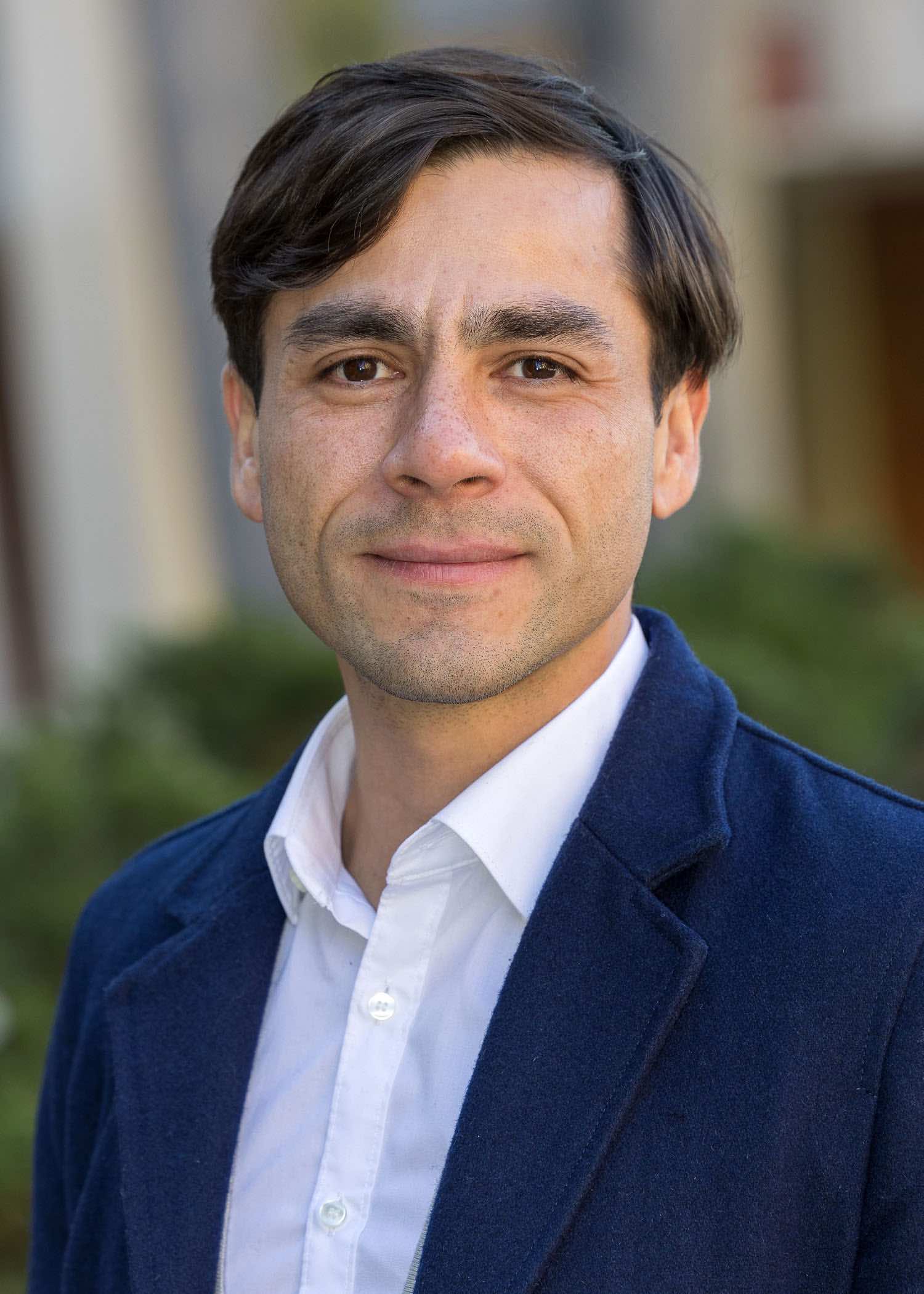
Guido Montúfar is a Professor in the Departments of Mathematics and Statistics & Data Science at the University of California, Los Angeles (UCLA), effective since 2024. He also leads the Mathematical Machine Learning Group at the Max Planck Institute for Mathematics in the Sciences (MPI MIS) in Leipzig, Germany since 2018. His academic journey includes a PhD in Mathematics from Leipzig University (2012), and Diplom degrees in Physics and Mathematics from TU Berlin (2009 and 2007). Montúfar's research focuses on the theoretical foundations of deep learning, mathematical machine learning, and the interplay between geometry and learning. Key areas include neural network architecture theory, optimization landscapes, and information geometry. His work bridges algebraic statistics, graphical models, and topological data analysis. His grants and awards include an ERC Starting Grant (2018-2023), a Sloan Research Fellowship (2022), and an NSF CAREER Award. He has advised numerous PhD students and postdocs, contributing to significant advancements in machine learning theory and applications. Montúfar teaches courses on applied mathematics, optimization, and machine learning at UCLA. His research also explores topics like oversquashing in graph neural networks and the geometry of policy gradients in reinforcement learning.
Ulrich Berger is a Professor of Economics at the Department of Economics of WU Vienna University of Economics and Business (WU Vienna). He serves as Editor-in-Chief of the journal Games and is actively involved in promoting science through the Vienna Skeptics Society. His research focuses on game theory, including non-cooperative, evolutionary, behavioral, and experimental variants. He has been recognized with multiple awards, including the WU Best Paper Award and an Outstanding Reviewer Award. His work explores dynamics of cooperation, reputation systems, and strategic behavior in economic contexts. Key research areas include evolutionary stability in reputation games, indirect reciprocity, and cognitive hierarchies in strategic interactions. His publications span peer-reviewed journals like PLoS ONE and Scientific Reports , as well as popular science articles in outlets like derStandard.at . Berger has led research projects on topics such as cognitive hierarchies in minimizer games and has contributed to policy discussions on access pricing in telecommunications. His academic contributions reflect a blend of theoretical rigor and practical engagement, with recent work emphasizing evolutionary mechanisms of deterrence and experimental validation of equilibrium concepts.
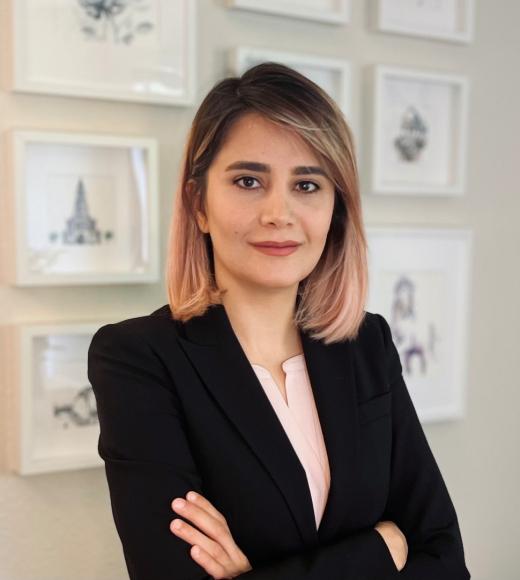
Shima Nazari is an Assistant Professor in the Department of Mechanical and Aerospace Engineering at the University of California, Davis. Her research focuses on dynamics and control with applications to transportation systems, energy systems, and electrified/automated vehicles. She leads the CORE Lab, exploring advancements in hybrid powertrains, autonomous vehicle control, and energy-efficient systems. Education: Ph.D., Mechanical Engineering, University of Michigan (2019) M.S., Electrical Engineering, University of Michigan (2016) M.S., Mechanical Engineering, Sharif University of Technology, Iran (2012) B.S., Mechanical Engineering, Sharif University of Technology, Iran (2009) Her research interests span dynamics and control theory applied to hybrid electric vehicles, powertrain optimization, and autonomous systems. She has contributed to advancements in energy-efficient vehicle designs, regenerative braking, and control strategies for electrified powertrains. Her work often bridges mechanical and electrical engineering disciplines to address real-world challenges in transportation and energy. Recent research trends in her articles emphasize data-driven control methods, hybridization strategies for autonomous systems, and thermal management of energy storage solutions. These studies reflect her commitment to interdisciplinary innovation. Although no scientific awards are explicitly mentioned, her contributions to the field are evident through her active research and publications. She advises students in her lab and collaborates on grants focused on sustainable mobility solutions. Dr. Nazari is affiliated with the UC Davis College of Engineering and actively contributes to graduate programs in Dynamics, Controls, Vehicles, and Robotics. The CORE Lab serves as a hub for experimental and computational research in her areas of expertise.
Yen-Chi Chen is an Associate Professor in the Department of Statistics at the University of Washington. He also holds positions as a Data Science Fellow at the UW eScience Institute and as a co-investigator and statistician at the National Alzheimer's Coordinating Center. His academic career spans multiple interdisciplinary fields including statistics, data science, and astrostatistics. Chen's educational background includes a Ph.D. from Carnegie Mellon University, where he received prestigious awards including the Umesh K. Gavasakar Thesis Award (2017) and the William S. Dietrich II Presidential Ph.D. Fellowship Award (2015). His research focuses on nonparametric statistics, topological data analysis, missing data methodologies, cluster analysis, manifold learning, and applications in large-scale structure analysis and astrostatistics. Chen has made significant contributions to the development of statistical methods for analyzing cosmic web structures, GPS data, and causal inference with continuous treatments. His work bridges theoretical statistics with practical applications in astronomy, neuroscience, and public health. Analysis of his recent publications reveals a strong emphasis on developing novel statistical frameworks for complex data structures, particularly focusing on density-based methods, manifold learning, and approaches that address challenges in missing data and causal inference without standard assumptions. ASA Noether Early Career Scholar Award, American Statistical Association (2022) CAREER Award, National Science Foundation (2022-2027) Umesh K. Gavasakar Thesis Award, Carnegie Mellon University (2017) William S. Dietrich II Presidential Ph.D. Fellowship Award, Carnegie Mellon University (2015) Chen has advised numerous graduate students across multiple publications, with a focus on developing new statistical methodologies. His research has been supported by major funding agencies including the National Science Foundation and the National Institutes of Health. He is actively involved in several research groups including the UW Geometric Data Analysis Group, the UW Center for Statistics and the Social Sciences, and the National Alzheimer's Coordinating Center.
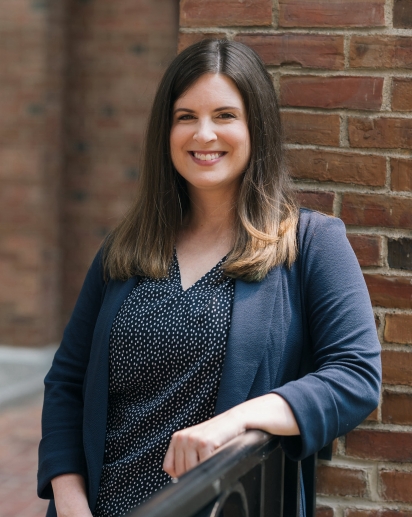
Kimberly B. Rogers is an Associate Professor of Sociology at Dartmouth College , where she has been employed since 2015. She is affiliated with the Quantitative Social Science Program and the Neukom Institute for Computational Science . Her research focuses on how inequalities are produced, maintained, and resisted through behavior and emotion dynamics in social interactions , with particular attention to status and power hierarchies , occupational inequality , and mental health outcomes . She teaches courses such as Introductory Sociology , Research Methods , and Status and Power in Social Interaction , integrating computational tools into her pedagogy. PhD in Sociology, Duke University (2013) MA in Sociology, Duke University (2008) MA in Psychology, Wake Forest University (2005) BA in Psychology, Randolph-Macon Woman's College (2003) Rogers' research spans three key areas: cultural consensus in identity sentiments , behavioral/emotional responses to inequality , and computational modeling of social processes . Her work reveals how micro-social mechanisms perpetuate or disrupt status hierarchies across contexts like occupational roles , racialized interactions , and digital collaboration . Recent publications examine technological co-diffusion , pandemic-induced identity shifts , and gendered occupational perceptions . Her scholarly output follows trends in computational social science and cross-cultural emotion analysis . She employs Bayesian affect control theory to model dynamic identity processes and uncertainty in interactions , while her 2025 work on violence against women demonstrates applications of general strain theory to contemporary social issues. Senior Faculty Grant (2023-24) , Dartmouth College Wilson Fellowship (2021-22) , Dartmouth College Outstanding Article Award (2017) , American Sociological Association Seed Funding Grant (2016-17) , Dartmouth Provost Doctoral Dissertation Grant (2010-11) , National Science Foundation Rogers has received multiple grants for collaborative projects like THEMIS.COG , examining identity and sentiment modeling in groups . She mentors students through engaged scholarship and social impact practicums , though specific advisees aren't listed. Her 2019-2020 involvement with Campus Compact and 2016 DCSI teaching grant highlight her commitment to community-engaged pedagogy .
Karina Gibert is a Full Professor at Universitat Politècnica de Catalunya (UPC), specifically at the Faculty of Computer Science of Barcelona (FIB) in the Department of Statistics and Operations Research. With a permanent teaching position since 1990, she contributes to research and education with a focus on Data Science, Artificial Intelligence, Explainable AI, and Ethics in AI. Full Professor, UPC (since 1990) PhD in Informatics Engineering Postgraduate in Higher Education Teaching Director and co-founder of IDEAI research center Dean of the Official Professional College on Informatics Engineering of Catalonia Active in bridging the gender gap in STEAM through multiple initiatives Her research focuses on extracting strategic knowledge from data and intelligent systems with ethical and explainable perspectives. She has led various projects including Diet4You for personalized diets, INSESS-COVID19 for social vulnerability analysis, Top Rosies Talent for female AI development, and ciutadanIA for AI culture promotion. Her work spans health, environment, sustainability, tourism, and social technology applications. As an editor of Environmental Modeling and Software journal and active academic, she contributes to international conferences, working groups, and research collaborations. Her service includes membership on various ethics and AI strategy committees and advisory boards. Women Tech Award 2023 National Informatics Engineering Award in Digital Dissemination 2022 Ada Byron Award 2022 Honorific Mention of Creu Casas award 2021 donaTIC 2018 Award Finalist at AMETIC Awards 2021 Finalist of European Social Services Awards 2021
Gizem Karaali is a Professor of Mathematics and Statistics and Chair of the Mathematics Department at Pomona College, part of The Claremont Colleges. She holds a Ph.D. in Mathematics from UC Berkeley (2004) and a B.S. in Electrical Engineering and Mathematics from Boğaziçi University. Her research spans algebraic structures like Lie algebras, representation theory, and humanistic mathematics, with a focus on integrating social justice into mathematics education. She co-founded the Journal of Humanistic Mathematics and created innovative courses such as the first-year seminar Can Zombies Do Math? to explore mathematics’ humanistic dimensions. Research Interests: Representation Theory, Algebraic Combinatorics, Quantitative Literacy, Mathematics Education, and the intersection of math with social justice. She has published widely in journals like Advances in Mathematics , Ramanujan Journal , and Journal of Humanistic Mathematics . Awards: NSA Young Investigator Award (2011-2013), NEH Enduring Questions Grant (2014-2016), AMS Project NExT Fellow. Active in editorial roles for Journal of Humanistic Mathematics and Numeracy . Teaching: Courses include Calculus, Linear Algebra, Abstract Algebra, and interdisciplinary topics like Mathematics, Philosophy, and the Real World. Advised senior theses in diverse areas including ethnomathematics and quantitative literacy.
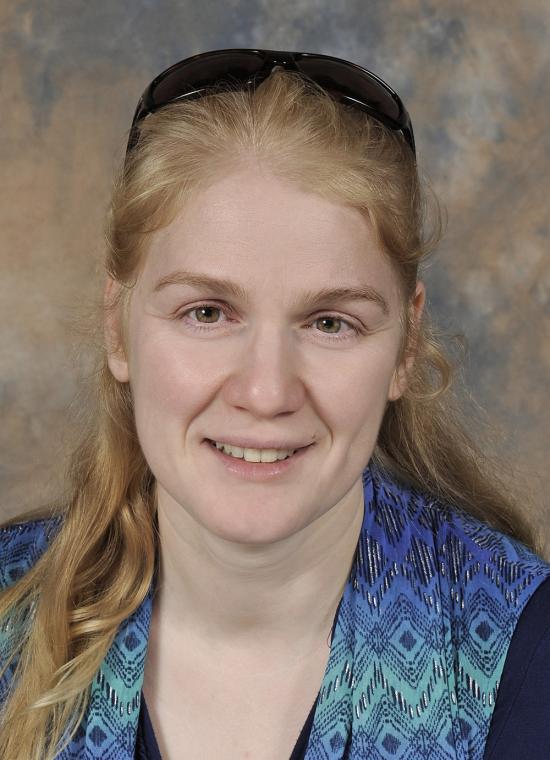
Professor Rosalyn Moran is a Professor of Computational Neuroscience and Deputy Director of King's Institute for Artificial Intelligence at King's College London. She holds roles in the Department of Neuroimaging and School of Neuroscience within the Institute of Psychiatry, Psychology & Neuroscience. Her research focuses on computational neuroscience, computational psychiatry, and neurology, particularly integrating brain connectivity with algorithmic principles like the free energy principle. She explores neurotransmitter roles in decision-making and disease modeling, with applications in artificial intelligence and neurodegenerative disorders. Moran serves as an editor for Neuroimage and collaborates with leading institutions. Key projects include global neuroimaging initiatives (UNITY) and low-field MRI advancements in low-resource settings. Her work bridges Bayesian inference, AI, and neurobiology, with recent emphasis on pediatric neuroimaging and treatment-resistant psychosis. Education & Research Interests Rosalyn Moran's research spans computational psychiatry, neuroimaging techniques, and AI applications in healthcare. Her lab investigates serotonin and dopamine signaling, brain connectivity patterns, and predictive coding frameworks. Notable contributions include modeling NMDA receptor dysfunction in encephalitis and developing super-resolution MRI methods for global health contexts. Grants & Collaborations Funded projects include MRC Human Functional Genomics (2024-2028), NIHR Maudsley BRC (2022-2027), and Gates Foundation initiatives for low-field MRI enhancement. Collaborators include Karl Friston (UCL), Read Montague (Virginia Tech), and Klaas Enno Stephan (University of Zurich). Recent events include presenting the Free Energy Principle's role in generative AI (May 2023). Labs & Teams Her lab focuses on computational psychiatry and AI-driven neuroimaging solutions, collaborating with the King’s Global Health Institute to advance medical imaging accessibility in low-income regions.
Michio Sugeno is a distinguished Professor at Tokyo Institute of Technology's Graduate School of Information Science and Engineering, Department of Computational Intelligence. With a career spanning over four decades, he has established himself as a leading figure in fuzzy systems and computational intelligence. His research interests encompass Fuzzy Systems, Computational Intelligence, Nonlinear Control, Choquet Integral theory, Brain-Computer Interfaces, and Linguistic Computing. Sugeno's work has fundamentally shaped modern fuzzy control theory, particularly through his development of the Takagi-Sugeno fuzzy model which has become a standard approach in industrial applications. Analysis of his recent publications reveals a continued focus on piecewise nonlinear modeling, stability analysis of fuzzy systems, and the application of Choquet calculus to various computational problems. His work demonstrates a consistent trajectory from theoretical foundations to practical implementations in control systems and intelligent computing. IEEE Pioneer Award in Fuzzy Systems IFSA Fellow Emanuel R. Piore Award Sugeno has mentored numerous researchers who have become prominent in their own right, including Tadanari Taniguchi, Luka Eciolaza, and Anh-Tu Nguyen. His laboratory has been instrumental in developing novel approaches to nonlinear control systems using piecewise bilinear models and fuzzy logic. Current research directions include brain-computer interfaces using EEG analysis and the development of everyday language computing systems that enable more natural human-computer interaction.
Tatiana Smirnova-Nagnibeda is an Associate Professor in the Mathematics Section at the University of Geneva, where she obtained her PhD before holding positions at ETH Zurich and KTH Stockholm. She returned to UNIGE where she has established herself as a leading researcher in geometric and combinatorial group theory. Her research focuses on combinatorial, asymptotic and geometric group theory, as well as probabilities on groups and graphs. She has made significant contributions to the understanding of branch groups, self-similar groups, Schreier graphs, and spectral properties of group actions. Her work often bridges algebra, probability, and geometry, revealing deep connections between these areas through the study of Thompson's groups, Grigorchuk's group, and other important group constructions. Her recent publications demonstrate a consistent focus on subgroup structure in various classes of groups, spectral properties of Schreier and Cayley graphs, and connections to dynamical systems. She frequently collaborates with researchers from around the world, particularly with Rostislav Grigorchuk, and has mentored numerous doctoral students who have gone on to successful academic careers. Managing Editor for Groups, Geometry, and Dynamics Editor for L'Enseignement Mathématique Organizer of GAGTA conferences (2022, 2024) Organizer of specialized workshops on high-dimensional expanders (2015, 2016) She leads an active research group comprising postdoctoral fellows and doctoral students working on various aspects of group theory and its applications. Her teaching includes advanced courses on graph theory, random walks on groups, spectral theory of graphs, and amenability at the University of Geneva.
Albert S. Berahas is an Assistant Professor in the Department of Industrial and Operations Engineering at the University of Michigan's College of Engineering. He joined the university in 2020 after completing postdoctoral positions at Lehigh University (2018-2020) and Northwestern University (2018). He holds a PhD in Engineering Sciences and Applied Mathematics from Northwestern University (2018), an MS in Applied Mathematics from Northwestern (2012), and a BSE in Operations Research and Industrial Engineering from Cornell University (2009). His research focuses on designing, developing, analyzing, and implementing algorithms for solving large-scale nonlinear optimization problems. His work spans multiple sub-fields including constrained optimization, optimization for machine learning, stochastic optimization, derivative-free optimization, and decentralized optimization. He is affiliated with the Michigan Institute for Data Science (MIDAS), the Michigan Institute for Computational Discovery and Engineering (MICDE), and the Michigan Center for Applied and Interdisciplinary Mathematics (MCAIM). Berahas has received numerous honors including the Charles Broyden Prize (2025), the Air Force Office of Scientific Research Young Investigator Program award (2025), the IISE Operations Research Division Teaching Award (2024), and the North Campus Dean's MLK Spirit Award for Community Building & Impact (2024). His recent publications demonstrate strong activity in developing novel optimization frameworks with theoretical guarantees for challenging problem settings. His research has been supported by significant grants including from the Office of Naval Research (ONR) and the Air Force Office of Scientific Research. He actively mentors PhD students and has successfully advised Jiahao Shi, who defended his dissertation in March 2025 and joined Amazon. Berahas is also engaged in community outreach, particularly through initiatives like Engage Detroit that aim to empower Detroit's next generation of engineers.
Professor Jason Dykes is a leading figure in the field of information and geovisualization at City, University of London, where he holds the position of Professor in the Department of Computer Science and co-directs the giCentre , a renowned research centre in visualization. He is affiliated with the School of Mathematics, Computer Science and Engineering and maintains an active research and teaching profile. His academic journey includes a PhD in Geography from the University of Leicester and extensive leadership in both research and education. Education: PhD in Geography, University of Leicester, 2000 MSc in Geographic Information Systems, University of Leicester, 1991 BA/MA in Geography, University of Oxford, 1989 Jason Dykes' research is centered on designing visual methods and tools for exploring, analyzing, and presenting information, with a strong emphasis on geographic data. His work integrates cartography, information visualization, GIScience, and human-computer interaction , leading to the development of innovative techniques such as geowigs, ODmaps, BallotMaps, and AttributeSignatures. He has published extensively in top-tier journals like IEEE Transactions on Visualization & Computer Graphics, with over 20 papers in the last decade, and co-authored the seminal book Exploring Geovisualization (2005). His research is supported by major funders including EPSRC and the EU, with projects like RAMP VIS (Covid-19 response) and VALCRI (criminal intelligence). The most recent articles highlight a consistent trend in applied and human-centered visualization , focusing on responsive design, education, pandemic modeling, and novel visual metaphors for complex data. His work increasingly emphasizes methodological rigor, design exposition, and the role of visualization in interdisciplinary and emergency contexts. Scientific Awards and Recognition: National Teaching Fellow, Higher Education Academy (2005) Best Paper Awards at GIS Research UK (consecutive years) Honorable Mentions, IEEE InfoVis (2009, 2010, 2016, 2018) Security Innovation Commercialisation Award (EU, 2022) Research Supervisor of the Year, City Student Union (2020) Innovations in Teaching Award and multiple teaching grants at City Jason Dykes has supervised eight PhD students to completion and advised many others, including notable researchers like Roger Beecham, Sarah Goodwin, and Susanne Bleisch. His teaching includes modules such as Visualizing Society and Data Presentation. He has received significant grant funding from UK research councils and the EU for projects like DIVA, VALCRI, and RAMP VIS. His service to the community includes leadership roles in IEEE VIS, ICA Commission on GeoVisualization, and editorial positions at IEEE TVCG and the Journal of Visualization and Interaction. He leads the giCentre , a dynamic research group that fosters innovation in visualization, and has been instrumental in establishing the field’s educational and methodological foundations through participation in Dagstuhl seminars and publications on visualization pedagogy.
Patrick Ingram is an Associate Professor at the Department of Mathematics and Statistics , Faculty of Science , York University . His research focuses on number theory and diophantine geometry , particularly the arithmetic of elliptic curves and surfaces , and dynamical systems over global fields . His scholarly work includes significant contributions to the study of canonical heights , post-critically finite maps , and primitive divisors in arithmetic dynamics . His research often bridges complex dynamics with number theory, exploring the interplay between Galois representations , Drinfeld modules , and polynomial iterations . Patrick has received the Top Cited Article 2007 - 2011 award from the Journal of Number Theory . He collaborates with leading mathematicians in arithmetic dynamics, including Joseph H. Silverman , and has published extensively in top-tier journals such as the Duke Mathematical Journal , Proceedings of the London Mathematical Society , and Transactions of the American Mathematical Society . His work spans both theoretical advancements and computational techniques in algebraic divisibility sequences and rigidity theorems .
Dylan Small is the Universal Furniture Professor and Chair of the Department of Statistics and Data Science at the Wharton School, University of Pennsylvania. His expertise spans causal inference, observational study design, and statistical applications in public health and policy. PhD in Statistics (Stanford University, 2002) BA in Mathematics (Harvard University, 1997) His research focuses on causal inference methodology, measurement error in longitudinal studies, and health policy applications. He has advanced techniques for sensitivity analysis in observational studies and instrumental variable modeling. Recent publications analyze covariate imbalance in hormone therapy studies, zero-inflated treatment effects, and causal frameworks for global health interventions. His work bridges statistical theory with practical healthcare and policy solutions. Awards include: American Statistical Association Fellow (2013) IMS Medallion Lecturer (2022) He has served as Associate Editor for journals such as the Journal of Causal Inference and founded the journal Observational Studies. Current courses include advanced seminars on causal inference and observational study design.
Donald Spector is Professor of Physics at Hobart and William Smith Colleges (HWS), where he has been a faculty member since 1989. He holds a Ph.D. in Physics from Harvard University (1986) and has taught at Harvard, Cornell, and the University of Utrecht. He is affiliated with the Department of Physics in the School of Natural and Social Sciences and has served as coordinator of the Engineering Program and chair of the Physics Department. Ph.D., Harvard University, 1986 A.M., Harvard University, 1983 A.B., Harvard University, 1981, magna cum laude His research centers on supersymmetry, quantum field theory, and mathematical physics, with significant contributions to Q-balls, magnetic monopoles, and duality in supersymmetric quantum mechanics. He explores the intersection of physics with number theory, set theory, and computational complexity. His interdisciplinary work spans physics and the arts, particularly music (e.g., John Cage, Terry Riley) and theatre (e.g., Waiting for Godot ). His recent publications reveal a strong trend toward foundational questions in physics and information theory, especially the application of set-theoretic forcing to generalize information theory. His work bridges theoretical physics, mathematics, and the humanities, often drawing analogies between physical principles and artistic expression. Scientific awards and honors include: Teaching awards at Harvard and Cornell NSF-NATO Postdoctoral Fellowship KITP Scholar (2005–2008) Japan Society for the Promotion of Science Visiting Fellowship Philip J. Moorad Professor of Science (2005–2010) FQXi Grant (2013–2015) Spector has been regularly funded by the National Science Foundation, FQXi, KITP, and JSPS. He has supervised student research in quantum mechanics and simulated annealing. He is a founding member and board member of the Anacapa Society, which promotes theoretical physics at undergraduate institutions. He teaches courses such as Quantum Computing, Modern Physics, and interdisciplinary seminars like Physics through Star Trek and Time Travel & Multiple Universes . He is involved in multiple labs and collaborative initiatives, including organizing workshops at the Kavli Institute for Theoretical Physics and contributing to interdisciplinary projects at the Institute for Science and Interdisciplinary Studies. His recent work includes performing in plays and providing dramaturgical support for theatre productions.