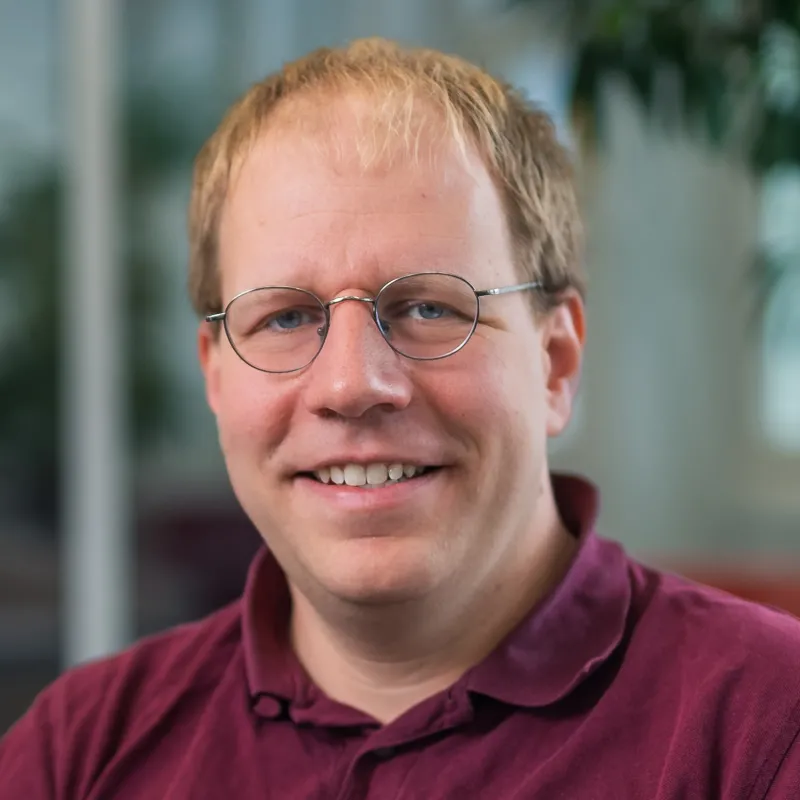
Rafał Karczewski is a Doctoral Researcher in the Department of Computer Science at the School of Science. His research focuses on advanced machine learning techniques, particularly in Graph Neural Networks, Generative Models, and their applications in fields such as drug design and computer vision. His work explores topics like the generalization of equivariant graph neural networks, denoising in diffusion models, and the expressivity challenges in generative drug design. He has contributed to foundational studies on uncertainty estimation in neural networks and statistical regression methods. Rafał's publications reflect a strong emphasis on theoretical and applied machine learning, with recent work addressing cutting-edge issues in model generalization and creative applications of diffusion processes. He has not yet received notable scientific awards, but his research demonstrates significant potential in advancing AI methodologies.
Petri Myllymäki is a Director at Helsinki Institute for Information Technology (HIIT) , Computer Science Adjunct Professors , and Finnish Center for Artificial Intelligence (FCAI) within Aalto University's School of Science, Department of Computer Science . His research focuses on Bayesian networks, information discovery, and interactive intent modeling . Active in ACM Transactions on Information Systems and SIGIR Conference publications Recipient of 2016 CPHC/BCS Academy of Computing Distinguished Dissertation runner-up and 2017 Kone Foundation Rajapinta award Collaborated with institutions like Stockholm University and researchers including Giulio Jacucci and Samuel Kaski His 15 most recent publications (2025-2015) span decision-making under conflicting objectives, machine learning applications in social science, Bayesian network structure learning algorithms , and cognitive modeling for exploratory search . Key technical subfields include hashing techniques, two-dimensional representation, computational efficiency, and user experience optimization . Scientific awards : 2016 CPHC/BCS Academy of Computing Distinguished Dissertation runner-up 2017 Kone Foundation Rajapinta award As an information discovery expert , he has contributed to open-access research through Interactive Visualization and Scinet frameworks, impacting Sustainable Development Goals related to digital innovation and knowledge dissemination.
Kati Vasalampi is an Associate Professor of Special Education at the University of Jyväskylä's Department of Education (Faculty of Education and Psychology). She specializes in educational psychology with a focus on learning support, school attendance, student well-being, and dropout prevention. Her work integrates quantitative and qualitative methods to address systemic educational challenges. Her research emphasizes the interplay between student motivation, teacher-student interactions, and environmental factors influencing academic outcomes. Key projects include the School Path Study (tracking youth educational trajectories), the EDUCA Flagship (future-oriented education solutions), and EduRESCUE (enhancing education system resilience). She has collaborated on national initiatives like the SOSUS project analyzing child and family well-being. Research Themes: School absenteeism patterns, teacher support systems, machine learning for dropout prediction Methodologies: Longitudinal studies, structural equation modeling, person-centered analysis Recent work highlights include developing predictive models for dropout risk using machine learning and analyzing bidirectional effects of parental involvement on adolescent motivation. Her publications span leading journals like Scandinavian Journal of Educational Research and Scientific Reports . Dr. Vasalampi actively participates in educational policy discussions, particularly regarding intervention strategies for vulnerable students. Her research bridges theoretical frameworks like Self-Determination Theory with practical classroom applications.
Dr. Dunwei Wen is Associate Professor and Chair at the School of Computing and Information Systems within Athabasca University's Faculty of Science and Technology. With academic credentials from Ph.D. in Pattern Recognition and Intelligent Systems (Central South University) M.Sc. in Computer Science (Tianjin University) B.Eng. in Electrical Engineering (Hunan University) , he bridges theoretical AI research with practical implementations in information systems. His research program focuses on statistical learning and deep learning for Natural language processing Sequential data analysis Multimodal content understanding with applications spanning education, healthcare, and industrial domains. Publication trends show increasing emphasis on deep learning architectures for medical image analysis (SRTNet 2024), contextual topic modeling in education (2013-2015), and multimodal systems combining text/image analysis (2015-2018). Recent projects (2021-2022) center on self-supervised learning for natural language understanding. Professional engagements include Member, AAAI (Association for the Advancement of Artificial Intelligence) Member, ACM and ACM SIGAI Senior Member, IEEE Former CAAI Board Member (2001-2010) As academic advisor, he has supervised over 25 graduate students and interns, including Co-supervised 4 PhD candidates (Jilin University) Mentored 12+ Master's students (AU, Jilin University) Hosted 6 MITACS Globalink Research Interns with projects spanning from cardiac detection systems to educational data mining.
Fengyu Cong is a Visiting Professor at the Faculty of Information Technology of the University of Jyväskylä (Finland). His research focuses on interdisciplinary computational neuroscience, biomedical signal processing, and machine learning applications in healthcare. Key contributions include EEG/fMRI analysis for mental health disorders such as depression and autism spectrum disorder, as well as federated learning methods for privacy-sensitive medical data. He has presented at major conferences including the 6th Conference on Mismatch Negativity (2012) and ESCAN 2014 , showcasing work on preattentive facial expression processing in neurological populations. His affiliations include the Engineering and Secure Communications Engineering and Signal Processing groups within his faculty. Research interests span neural signal analysis, multimodal imaging techniques, and AI-driven diagnostics. Notable methodologies include tensor decomposition for fMRI preprocessing, HMM-based sleep stage classification, and federated learning frameworks for distributed healthcare applications. His work bridges computer science and clinical neurology, with publications in top-tier journals addressing topics like vascular cognitive impairment, neural oscillations in autism, and artifact removal in biomedical signals.
Lucie Klus is a Postdoctoral Researcher in Electrical Engineering actively advancing indoor positioning systems through innovative wireless signal processing and machine learning techniques. Her work bridges theoretical algorithms with practical applications for indoor localization, focusing on fingerprinting methodologies and real-world dataset optimization. Core research spans Indoor Positioning (100% fingerprint relevance), Wearable Device integration (46%), Radio Map analysis (42%), and K-means clustering (35%) Recent breakthroughs include dynamic localization using Intersection over Union metrics and multidimensional compression of positioning datasets via EWOk framework Key publications demonstrate strong synergy between Wi-Fi fingerprinting, deep learning interpretation, and quality-of-service optimization in constrained environments Her 18 research outputs (2019-2024) reveal consistent focus on solving data sparsity challenges through autoencoders, extreme learning machines, and novel radio map compression techniques, with increasing emphasis on multi-device compatibility and measurement density.
Marijn van Vliet is a Research Fellow at Aalto University's Department of Neuroscience and Biomedical Engineering, specializing in computational neuroscience and brain imaging. He focuses on decoding cognitive processes through advanced analysis of MEG/EEG data. Academy Research Fellow (2021-present) Principal investigator in projects like 'Unraveling language in the brain through biologically plausible modeling' His research combines machine learning with neuroimaging to explore language comprehension, semantic processing, and functional connectivity. Key methodologies include convolutional networks, representational similarity analysis, and beamforming techniques. Active in open science initiatives Developed tools like mne-rsa and mne-faster Recent work investigates cortical dynamics during semantic processing, feedforward/backward visual word recognition, and test-retest reliability of MEG connectivity metrics. His projects are supported by the Academy of Finland and RCF Academy funding.
Tiina Lindh-Knuutila is a Researcher in the Department of Neuroscience and Biomedical Engineering at Aalto University, holding a Doctoral degree in Engineering and Technology (2014) and a Master's degree from Helsinki University of Technology (2005). Her work bridges neuroscience and computational modeling to investigate brain dynamics during language processing. Education: Doctoral degree in Engineering and Technology, Aalto University (2014) Master's degree in Engineering and Technology, Helsinki University of Technology (2005) Research Interests: Her expertise centers on Magnetoencephalography (MEG) and semantic processing , with deep specialization in computational modeling of neural representations . She pioneers methods to decode brain responses to written language using vector space models and unsupervised learning, advancing understanding of how semantic features activate cortical networks during reading and cognitive tasks. Recent Research Trends: Her 2023-2025 publications reveal a cohesive focus on decoding semantic representations from MEG data, particularly examining morphologically complex words, misspelled-word effects, and cross-linguistic semantic norms. This work consistently applies machine learning to neural time-series data, highlighting evidence accumulation dynamics in semantic processing and establishing robust brain-decoding pipelines for linguistic stimuli. Grants and Projects: She contributes to two Academy of Finland-funded initiatives: the active consortium project Salmelin_konsortio: Aivojen, mielen ja taudin kulun toiminnallinen yksilöllisyys (2023-2027) investigating individual brain variability, and the completed Dyslexia: genes, brain functions, interventions project (2015-2019) that integrated MEG with dyslexia research. Collaborative Network: As a core member of Riitta Salmelin's research group, she engages in interdisciplinary collaborations spanning neuroscience, engineering, and computer science, with documented international exchanges including visiting researcher positions in 2008-2009.
Ella Bingham serves as Head of Research Services at Aalto University, leading an 80+ member team that supports researchers in funding acquisition, doctoral education, research data management, and open science initiatives. She concurrently holds the position of Executive Director at the Foundation for Aalto University Science and Technology and previously served as Vice Director for research administration at the Helsinki Institute for Information Technology (HIIT). Education: Doctoral degree in Engineering and Technology, Helsinki University of Technology (2003) Master's degree in Engineering and Technology, Helsinki University of Technology (1998) Docent in Computer Science, University of Helsinki (2009) Her research spans science policy, research funding systems, and data science applications in academic administration. With expertise in statistical analysis and artificial intelligence, she investigates research evaluation methodologies and science-policy interfaces, emphasizing practical implementations in higher education contexts. Her work bridges technical data analysis with institutional research management frameworks. Recent publications (2015-2023) reveal a consistent focus on research administration infrastructure, particularly data management systems and impact assessment methodologies. The works demonstrate increasing emphasis on practical implementation frameworks within Finnish academia, with recurring themes of digital transformation in research support services and evidence-based science policy development. Through her leadership in Research Services, she oversees management of external research funding applications and doctoral education processes. Her unit facilitates multidisciplinary collaboration via the Aalto Networking Platform while advancing research ethics compliance and national research profiling initiatives. External engagements include advisory roles for Finland's Ministry of Education and Culture and the European Commission on research policy matters.
Antti Kanner is a Researcher at the Department of Digital Humanities, University of Helsinki. His work focuses on computational linguistics, historical semantics, and interdisciplinary digital humanities projects. He is affiliated with the Helsinki Computational History Group and has contributed to projects like 'Flows of Power' and 'Formulaic Intertextuality.' Kanner's research explores topics such as modal grammar in political discourse, naming conventions in historical texts, and the evolution of Finnish national identity through language. His awards include the August Ahlqvistin Väitöskirjapalkinto (2023) and the Open Science and Research Award (2016). He collaborates internationally, particularly in Slavic and Finno-Ugrian studies, and has published widely on corpus linguistics, media analysis, and historical text mining. Key Projects: Helsinki Computational History Group (2018–present), Retoriset Ryhmästrategiat (2022–2026) Major Contributions: Developed workflows integrating automated text analysis with close reading, analyzed naming patterns in medieval Novgorod, and studied affectivity in political journalism.
Henning Kirschenmann is a tenured Professor at LUT School of Engineering Sciences and an Academy Research Fellow at the Helsinki Institute of Physics . He specializes in jet-energy corrections , hadronic final states , and machine learning applications for particle physics data analysis. Education Dr. rer. nat. (Physics) from University of Hamburg (2011–2014) Dipl. Phys. (Physics) from University of Hamburg (2010–2014) Research Interests His research focuses on particle physics with emphasis on CMS experiment data analysis. Key areas include jet energy corrections , top quark properties , Higgs boson decays , and quantum entanglement studies. He develops machine learning techniques for detector optimization and trigger systems , while investigating new physics through dark matter signatures and long-lived particles . Scientific Contributions Kirschenmann has contributed to 15+ CMS experiment publications since 2024, covering: Higgs boson and Z boson rare decay analyses Top quark polarization and spin correlations Jet substructure studies in proton-proton and heavy-ion collisions Detector performance evaluations for muon reconstruction and electromagnetic calorimetry Statistical analysis of multijet events and WW production Awards & Grants Research Council of Finland Starting Grant (1.1 million EUR) Academy Research Fellow (2024–present) Leadership Roles He has led multiple CMS subgroups including: Group leader for top quark mass (2022–2023) Group leader for jets and MET (2020–2022) Group leader for jet energy corrections (2016–2018)
Dr. Emy Guilbault is a current Postdoctoral Researcher at the University of Helsinki , affiliated with the Faculty of Biological and Environmental Sciences and the Organismal and Evolutionary Biology Research Programme . Her research bridges statistical methodology with ecological applications, focusing on species distribution modeling, biodiversity analysis, and ecological data uncertainty. Education: Ph.D. in Statistical Ecology (2021, University of Newcastle); M.Sc. in Advanced Agricultural Science (SupAgro/University of Montpellier); B.Sc. in Agronomy Her research interests center on statistical ecology , particularly in developing methodologies for species distribution modeling and addressing data uncertainty in ecological datasets. Recent work examines macro-moth community responses to climate and habitat changes, with applications in biodiversity conservation. Key publication trends show specialization in ecological informatics , statistical modeling , and conservation biology . She contributes to software development for species distribution modeling while addressing observer bias in ecological datasets. Scientific Awards: JB Douglas Award 2nd place (2019) Guilbault actively participates in academic activities including conference organization (e.g., HMSC Starting guidelines 2025, Viikki Postdoctoral Association 2023) and scientific seminars. Her collaborative network spans Finland, Australia, France, and international institutions.
Heidi Mod is a University Lecturer in the Department of Geosciences and Geography at the University of Helsinki , Finland. Her research focuses on biogeography , ecology , and environmental modeling , particularly in mountainous and Arctic-alpine ecosystems.
Tuomo Hartonen is an Academy Postdoctoral Researcher at the Institute for Molecular Medicine Finland (FIMM), Faculty of Medicine, University of Helsinki. His research bridges artificial intelligence, genomics, and population health, focusing on developing and evaluating predictive models using polygenic risk scores and electronic health records. Funded by the Academy of Finland, he leads cutting-edge projects leveraging Finland's unique health register infrastructure. Dr. Hartonen's work centers on critical challenges in biomedical AI: cross-biobank model generalizability, disease prediction accuracy, and ethical implications of algorithmic health markers. His expertise spans polygenic scoring methods, deep learning for mortality prediction, and frameworks for country-specific disease incidence estimation. Recent projects address unfairness in AI-driven aging markers and ensemble learning benefits for genetic risk prediction. His publication trend shows accelerating impact in high-impact venues (Nature Genetics, Nature Communications), with 5 articles in 2024-2025 analyzing data from over 1 million individuals across multiple biobanks. Key themes include model transferability between populations, integration of genomic and clinical data, and bias mitigation in health AI. Scientific recognition includes: Academy Postdoctoral Researcher Fellowship (Academy of Finland) Academy Research Fellow position award (2025-2029) Dr. Hartonen currently manages a major Academy of Finland project on AI-based population health modeling (2025-2029) and contributes to deep learning validation for clinical lab data (2024-2028). His international collaborations span European biobanks, with emphasis on translating genomic research into population health applications. While specific student supervision details aren't public, his Academy Research Fellow role will involve mentoring doctoral researchers. Embedded within FIMM's Research Programs Unit, Dr. Hartonen operates at Finland's genomic medicine frontier. His work leverages national health registers to develop next-generation health prediction tools, with upcoming focus on multi-country AI foundation models that address generalizability and fairness challenges in real-world healthcare settings.
Tellervo Korhonen serves as Associate Professor in Public Health at the University of Helsinki since 2009 and currently holds a Visiting Researcher position at the Finnish Institute for Molecular Medicine (FIMM). Her research integrates genetic epidemiology with population health studies, focusing on twin cohorts to investigate smoking, nicotine dependence, depression, and their physiological consequences. Her academic credentials include: M.Sc. in Public Health, University of Helsinki (1995) Ph.D. in Public Health, University of Kuopio (1999) Research interests span: Genetic epidemiology of complex diseases using twin methodologies Gene-environment interactions in smoking cessation and depression Epigenetic mechanisms linking nicotine dependence to cardiovascular outcomes Cross-ancestry genomic comparisons for mental health disorders Scientific recognition: White Rose of Finland Knight (2019) SRNT Service Award (2018) Kunniakirja (2019) Professor Korhonen has supervised 22 graduate theses (8 doctoral, 14 Master's/Licentiate) and secured continuous funding from the Academy of Finland and major Finnish foundations. Her research leverages the Finnish Twin Cohort infrastructure and collaborates with international consortia on genomic projects. Current work emphasizes trans-ancestry depression genetics and nicotine-obesity interactions through active grants including the DEPIS Consortium.