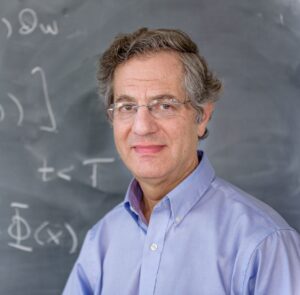
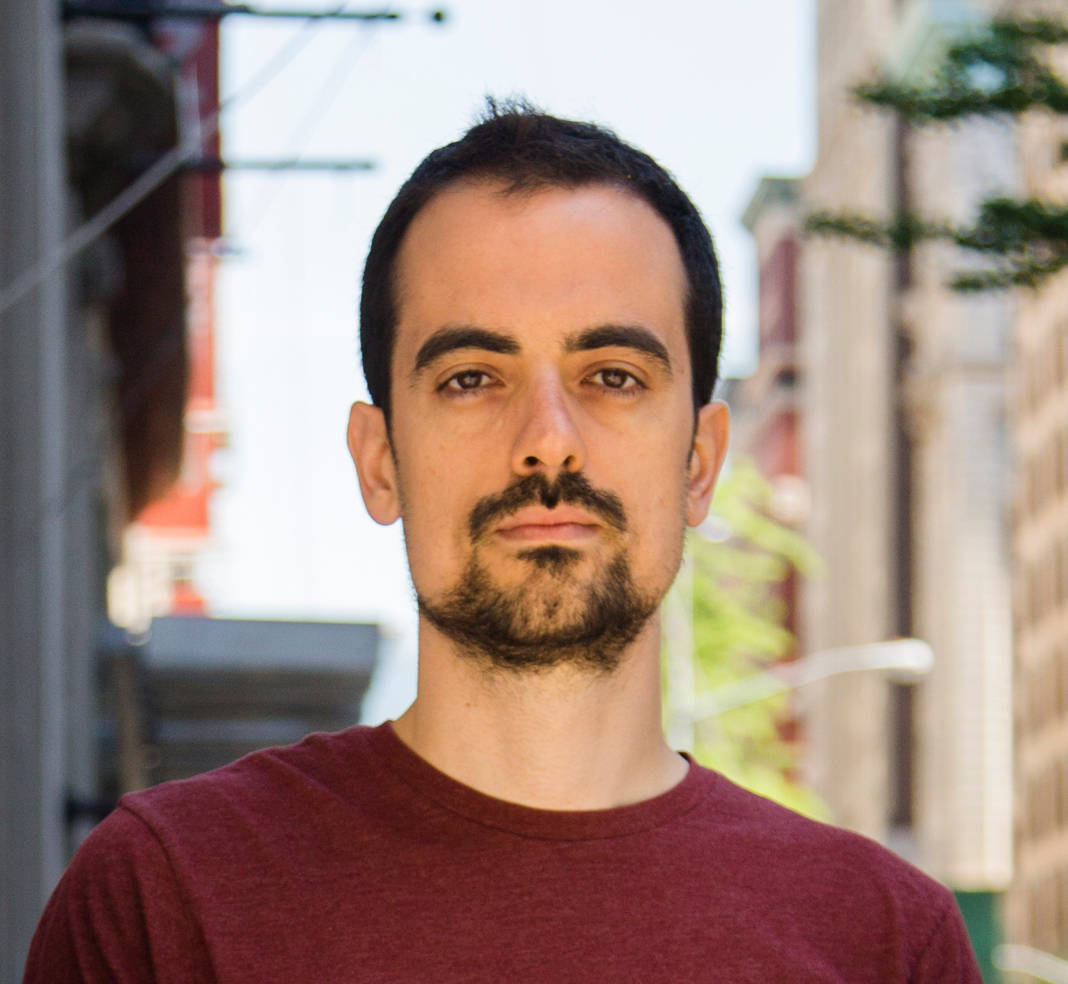
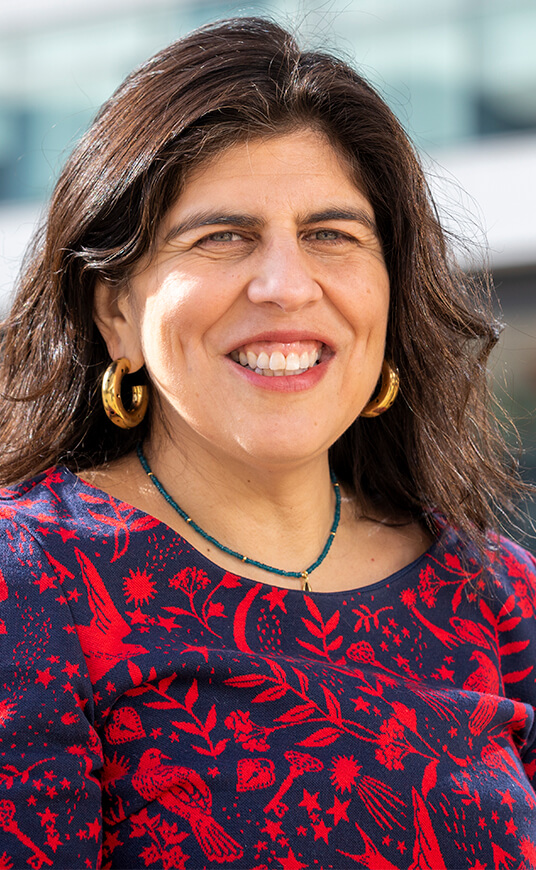
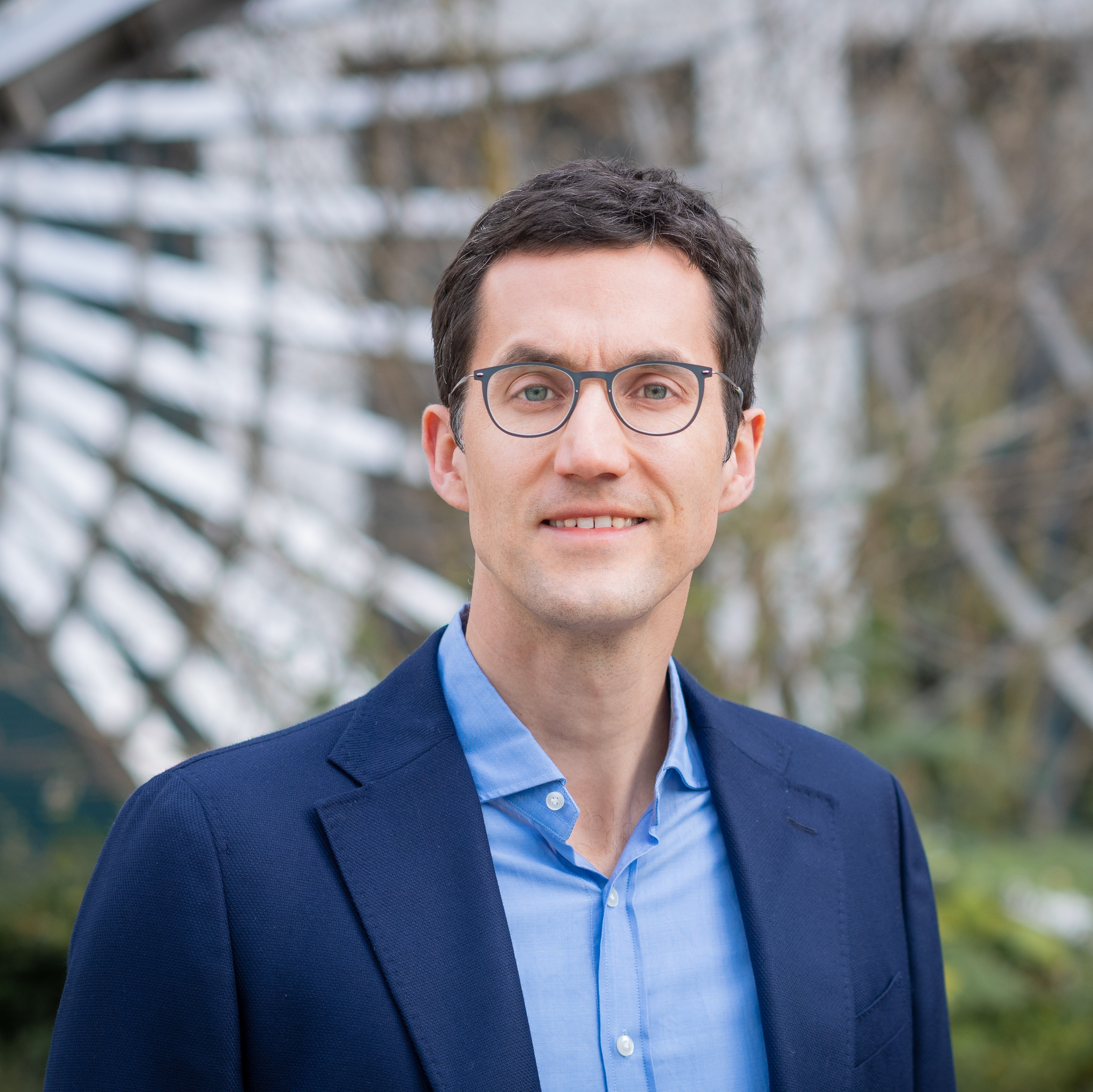
Yian Ma is an Assistant Professor at the University of California San Diego (UCSD). His research focuses on scalable inference methods, time series analysis, and sequential decision making, with an emphasis on developing Bayesian algorithms for uncertainty quantification and establishing their computational-statistical guarantees. Prior to UCSD, he served as a post-doctoral fellow at UC Berkeley. He holds a Ph.D. from the University of Washington and a bachelor’s degree from Shanghai Jiao Tong University. Education: Ph.D., University of Washington Bachelor's, Shanghai Jiao Tong University Research Interests: Yian Ma’s work bridges theoretical foundations and practical scalability in machine learning. He explores advanced Bayesian methodologies to address challenges in dynamic data analysis and decision processes, ensuring rigorous guarantees for both computational efficiency and statistical accuracy.
Anirban Bhattacharya is a Professor at the Department of Statistics, Texas A&M University, and holds the Patricia R. Smith and Dr. William B. Smith Faculty Fellow for Statistics position. His research focuses broadly on statistical inference, Bayesian methodology, and computational statistics. Education Ph.D. in Statistics (2012) from Duke University Master of Statistics (2008) from Indian Statistical Institute Bachelor of Statistics (2006) from Indian Statistical Institute Scientific Awards Patricia R. Smith and Dr. William B. Smith Faculty Fellow for Statistics
Petter N. Kolm serves as a Clinical Professor of Mathematics and Program Director at New York University, with his office located in Warren Weaver Hall (520). He can be contacted at petter.kolm@nyu.edu or 212-998-4855, and holds an editorial board position at the Journal of Portfolio Management. His academic qualifications include: Doctorate in Mathematics from Yale University M.Phil. in Applied Mathematics from the Royal Institute of Technology in Stockholm M.S. in Mathematics from ETH Zurich Dr. Kolm's research centers on quantitative finance, with primary focus areas including quantitative trading strategies, delegated portfolio management, financial econometrics, risk management, and optimal portfolio strategies. His work integrates advanced mathematical modeling with practical investment applications, bridging theoretical frameworks and real-world market dynamics through rigorous empirical analysis. Analysis of his 15 most recent publications reveals consistent emphasis on portfolio optimization techniques—particularly Bayesian methods and the Black-Litterman model—alongside significant contributions to algorithmic trading systems, factor-based equity portfolio construction, and machine learning applications for financial sentiment analysis. His scholarly output demonstrates evolution from foundational portfolio theory toward contemporary computational finance challenges. As Program Director, Dr. Kolm oversees academic programming and likely mentors graduate students in quantitative finance, though specific advisee details are not documented. His prior industry role at Goldman Sachs Asset Management provided direct experience in developing hedge fund strategies, informing his applied research approach. Dr. Kolm's professional trajectory includes significant industry engagement through his tenure in Goldman Sachs' Quantitative Strategies Group, where he developed quantitative investment systems. His current academic leadership position leverages this practical experience to shape quantitative finance education and research at NYU.
Carlos Fernandez-Granda is an Associate Professor of Mathematics and Data Science at New York University, holding joint appointments at the Courant Institute of Mathematical Science and the Center for Data Science. He currently serves as the Interim Director of the Center for Data Science. His academic career spans over a decade at NYU, where he has taught probability and statistics to data-science students. Dr. Fernandez-Granda's research focuses on designing and analyzing data-science methodology, with current emphasis on machine learning applications in medicine, climate science, and scientific imaging. His work bridges theoretical foundations with practical applications across multiple domains. His notable contributions include: Development of the COBRA (COnfidence-Based chaRacterization of Anomalies) score for automatic assessment of impairment and disease severity Applications of machine learning to improve climate projections through the M2LInES project Research on magnetic resonance fingerprinting for quantitative tissue parameter estimation Development of AI systems for medical diagnostics including Alzheimer's detection and breast cancer diagnosis Dr. Fernandez-Granda is the author of the book "Probability and Statistics for Data Science," published by Cambridge University Press. The book serves as a comprehensive guide to the two pillars of data science, featuring real-world datasets and addressing fundamental challenges like overfitting, the curse of dimensionality, and causal inference. His research has been supported by grants from the National Science Foundation (Division of Mathematical Sciences, grants 1616340 and 2009752) and the Alzheimer's Association (grant AARG-NTF-21-848627). Dr. Fernandez-Granda is actively involved in several collaborative projects: M2LInES project: An international collaboration focused on improving climate projections using machine learning to capture unaccounted physical processes at the air-sea-ice interface Math and Data group: Exploring the intersection of mathematical theory and data science applications
Laura Ascenzi-Moreno serves as Professor of Bilingual Education and Bilingual Program Coordinator in the Childhood, Bilingual and Special Education Department at Brooklyn College, City University of New York (CUNY), School of Education. Her academic leadership focuses on developing educators capable of serving linguistically diverse student populations through equity-centered pedagogical frameworks. Her educational foundation includes a B.A. in Anthropology and Education from Swarthmore College (1994), an M.A. in Individualized Studies in Education from Harvard Graduate School of Education (1999), New York State Permanent Certification for PreK-6 (2002), a Bilingual ESL and Teacher Leadership Program from Bank Street College (2004), and a Ph.D. in Urban Education from CUNY Graduate Center (2012). Dr. Ascenzi-Moreno's research pioneers translanguaging applications across literacy instruction, assessment, and computational learning environments. She investigates how emergent bilinguals' linguistic repertoires can transform reading development, teacher knowledge construction, and multimodal assessment practices. Her work consistently centers equity through frameworks like syncretic reasoning and accompáñamiento, challenging deficit ideologies while promoting asset-based approaches to multilingual education. Analysis of her 2020-2024 publications reveals an accelerating interdisciplinary trajectory where translanguaging principles increasingly intersect with computer science education. This evolution demonstrates strategic expansion from foundational literacy research into computational literacies, with growing emphasis on co-design methodologies and teacher agency in developing multilingual CS curricula. Her scientific recognition includes the 2024 NCTE Outstanding Elementary Educator Award, Language Arts Distinguished Article Award, and major NSF grants totaling $1.3 million for computational literacy projects. Additional honors encompass Fulbright Scholarship work in Colombia, PSC-CUNY research awards, and Westinghouse Science Talent Search distinction. As Principal Investigator of NSF-funded PiLa-CS and former CUNY-NYSIEB Associate Investigator, she secures substantial grant support while mentoring teacher candidates. Her service includes NCTE Elementary Steering Committee leadership (2022-2026), journal reviewing, and Brooklyn's New York Teacher Table participation addressing educator recruitment/retention. Dr. Ascenzi-Moreno co-directs the Participating in Literacies in Computer Science project and maintains active collaboration with NYC schools through translanguaging professional development initiatives. Her work with the CUNY-NYSIEB project established foundational frameworks now implemented across New York bilingual programs.
Dr. Daniel Carrión is an Assistant Professor of Epidemiology at the Yale School of Public Health, Department of Environmental Health Sciences. His work bridges climate science , energy transitions , and health equity , focusing on structural inequality’s role in exposure and health disparities. Education: PhD in Environmental Health Sciences (Columbia University, 2019); MPH in Environmental Health Sciences (New York Medical College, 2011); BA in Environmental Studies (Ithaca College, 2008). His research examines how home and neighborhood environments serve as intervention points for climate and health equity . Recent studies include modeling heat vulnerability in U.S. housing, geospatial analysis of lead water lines, and clean cooking interventions in Ghana. Articles span climate change , air pollution , and social determinants , with methodological focus on exposure science and case-crossover designs . Scientific honors include: Senior Fellow, Agents of Change in Environmental Justice (2022) Fellow, New York Academy of Medicine (2022) Senior Fellow, Environmental Leadership Program (2019) He contributes to community service as a member of the New York State Minority Health Council (2016–present) and the International Society for Environmental Epidemiology (2018–present). His work integrates satellite data , machine learning , and policy evaluation to address energy insecurity , racial segregation , and climate justice .
Yize Zhao is an Associate Professor in the Department of Biostatistics at Yale School of Public Health and an Associate Professor in the Department of Biomedical Informatics & Data Science at Yale University. She holds affiliations with multiple Yale research centers including the Yale Center for Analytical Sciences, Yale Alzheimer's Disease Research Center, Yale Wu Tsai Institute, Yale Center for Brain and Mind Health, and Yale Computational Biology and Bioinformatics. Dr. Zhao's research focuses on developing statistical and AI methods to analyze large-scale complex biomedical data including medical imaging, genomics, and electronic health records. Her methodological expertise spans Bayesian statistics, feature selection, predictive modeling, data integration, missing data analysis, and network analysis. Her research interests span multiple biomedical domains with a strong focus on mental health, psychiatry, neurodegenerative diseases, and aging. Her recent work includes brain-to-behavior modeling, multi-layer biomedical networks, imaging genetics and genomics, and the integration of multi-modal biomedical data with real-world data. Dr. Zhao's work has resulted in numerous high-impact publications, with recent research focusing on Alzheimer's disease, brain network analysis, and advanced statistical methods for neuroimaging. Her publications show a strong trend toward integrating multi-modal data sources and developing sophisticated statistical approaches to address complex biomedical questions. Thelma and Marvin Zelen Emerging Women Leaders in Data Science Award from the Institute of Mathematical Statistics (IMS) COPSS Emerging Leader Award from the Committee of Presidents of Statistical Societies (COPSS) YSPH Investigator Research Award Yale Alzheimer's Disease Research Center Research Scholar Award Elected member of the International Statistical Institute Dr. Zhao serves as an Associate Editor for Biometrics and is a standing member of the NIH Biodata Management and Analysis (BDMA) study section. Her research is supported by multiple NIH grants, highlighting the significance and impact of her work in biostatistics and biomedical data science.
Reinhard Heckel is a Tenured Associate Professor (equivalent to Professor) of Machine Learning at the Department of Computer Engineering, Technical University of Munich (TUM), and Adjunct Faculty in Electrical and Computer Engineering at Rice University. He was previously an Assistant Professor at Rice (2017–2019), a postdoc in the Berkeley Artificial Intelligence Research (BAIR) Lab at UC Berkeley, and a researcher at IBM Research Zurich. Education: PhD, 2014 – ETH Zurich Visiting PhD student – Department of Statistics, Stanford University Research Interests: His work centers on machine learning and information processing with three major thrusts: (1) developing algorithms and theoretical foundations for deep learning, especially for accelerated magnetic resonance imaging ; (2) establishing rigorous mathematical and empirical underpinnings for modern machine-learning systems; and (3) leveraging DNA as a digital information-storage medium , including error-correction coding and system design for DNA-based storage. Across more than 100 peer-reviewed papers since 2017, Heckel’s research exhibits a strong interdisciplinary blend of computational imaging , machine-learning theory , and molecular data storage . Recent 2024–2025 publications show intensive focus on robust MRI reconstruction using diffusion priors, evaluation of bias in large web-text corpora, and state-of-the-art error-correcting codes for DNA storage channels. A forthcoming book, Deep Learning for Computational Imaging (Oxford University Press), consolidates his contributions to the field. Outreach & Media: Keynote and panel talks at DLD, TUM, and major ML conferences Op-eds in Frankfurter Allgemeine on ChatGPT and DNA storage Science features on Netflix, BBC, and German television (Galileo, “Gut zu Wissen”) Research Environment: At TUM he leads a group investigating theoretical and applied aspects of deep learning, compressed sensing, and coding for DNA storage. Open-source repositories on GitHub (e.g., dna_data_storage , supplement_deep_decoder ) provide code and data supplements accompanying his publications.
Sylvia Richardson is an MRC Investigator at the MRC Biostatistics Unit and holds a Research Professorship at the University of Cambridge, where she served as Director of the Biostatistics Unit from 2012 to 2021. She is affiliated with the Cambridge Mathematics of Information in Healthcare Hub (CMIH) at the Centre for Mathematical Sciences. Her work bridges advanced statistical methodology with critical healthcare applications, particularly in the analysis of complex biomedical data. Richardson's research spans multiple domains of biostatistics with a strong emphasis on Bayesian approaches. Her work has significantly advanced spatial modeling and disease mapping techniques, developed sophisticated methods for handling measurement error in epidemiological studies, and pioneered mixture and clustering models for integrative analysis of heterogeneous data sources. Her research addresses fundamental challenges in analyzing longitudinal health data, multimorbidity patterns, and complex disease trajectories. Her publication record demonstrates consistent methodological innovation applied to pressing healthcare challenges. Recent work focuses on traumatic brain injury outcomes, multimorbidity progression, genomic analysis, and statistical approaches to pandemic data. The articles reveal a strong pattern of methodological development driven by real-world healthcare challenges, with particular attention to longitudinal analysis, Bayesian computation, and integrative modeling approaches that can handle diverse and complex data structures. While specific awards are not detailed in the available information, Richardson's leadership as Director of the MRC Biostatistics Unit for nearly a decade and her continued Research Professorship reflect significant recognition of her contributions to the field. Her work with major international consortia like CENTER-TBI demonstrates her role in large-scale collaborative research efforts addressing critical health challenges. Richardson's research has substantial implications for healthcare policy and practice, particularly in understanding disease progression, developing predictive models for patient outcomes, and creating methodological frameworks that can integrate diverse data sources to generate meaningful clinical insights. Her work continues to influence both statistical methodology and healthcare applications through ongoing research and leadership in the field.
Laura Toni is an Associate Professor in the Department of Electronic and Electrical Engineering at University College London's Faculty of Engineering Sciences. She serves as the leader of a research team focused on advanced signal processing and machine learning applications, documented at https://lasp-ucl.github.io . Additionally, she holds prestigious affiliations as an ELLIS (European Laboratory for Learning and Intelligent Systems) Member and Turing Fellow Alumni. PhD in Electrical Engineering, University of Bologna (2009) MS in Electrical Engineering, University of Bologna (2005) Professor Toni's research spans theoretical and applied aspects of machine learning with particular emphasis on graph-based approaches. Her work integrates signal processing techniques with modern AI methodologies to address complex problems in communication systems, multimedia processing, and scientific discovery. She has made significant contributions to reinforcement learning theory, graph signal processing, and their applications across diverse domains including drug discovery and immersive technologies. Analysis of her recent publications reveals a strong focus on graph-based machine learning approaches, with increasing emphasis on reinforcement learning applications. Her work demonstrates a progression from theoretical foundations to practical implementations, particularly in multimedia processing, network science, and drug discovery applications. Many of her recent papers combine graph neural networks with diffusion models and reinforcement learning for complex prediction and generation tasks. Professor Toni has received notable recognition through her ELLIS membership and Turing Fellow Alumni status, which represent significant achievements in the European AI research community. ELLIS (European Laboratory for Learning and Intelligent Systems) Member Turing Fellow Alumni As an academic leader, Professor Toni supervises postgraduate students and leads a research team at UCL, focusing on cutting-edge projects at the intersection of signal processing and machine learning. Her team has secured research funding through various channels including European initiatives and industry partnerships, enabling them to pursue ambitious projects in graph learning, reinforcement learning, and multimedia processing. The team actively collaborates with institutions worldwide, including previous connections with UCSD and EPFL. Professor Toni leads the LASP research group at UCL (https://lasp-ucl.github.io), which focuses on Large-scale Adaptive Signal Processing for intelligent systems. The team comprises researchers working on graph signal processing, reinforcement learning, and multimedia applications, with strong connections to both theoretical foundations and practical implementations across various domains including healthcare, communications, and immersive technologies.
Sri Kolla, Ph.D. is a tenured Professor in the Department of Electronics and Computer Engineering Technology at Bowling Green State University (BGSU) , where he has served since August 2002. He also served as a Visiting Professor at the Indian Institute of Science (2017) and as a Fulbright Research Scholar (2008-2009). His academic career spans faculty roles at Penn State University, University of Toledo, and consortium graduate faculty at Indiana State University. Education: Ph.D. in Electrical Engineering and Computer Science (University of Toledo, 1989) M.S. in Electrical and Computer Engineering (University of Saskatchewan, 1986) M.E. in Electrical Engineering (Indian Institute of Science, 1983) B.E. in Electrical Engineering (Andhra University, 1981) Research Interests: Dr. Kolla specializes in Electrical Power and Energy Systems with Smart Grid applications, Control Systems for networked environments, and Machine Learning techniques for power system diagnostics. His work focuses on fault detection in microgrids using LSTM networks, stability robustness of discrete-time systems, and multi-agent protection schemes for power infrastructure. Scientific Contributions: Developed robust control frameworks for microgrid systems under parameter variations (2023-2025) Pioneered AI-based fault identification in induction motors and transformers (1995-2000) Advanced networked control system designs addressing time delays (2002-2012) Published 82+ technical articles in IEEE, ISA Transactions, and conference proceedings Honors and Recognition: Recipient of the Fulbright-Nehru Academic and Professional Excellence Award and Whiteford Scholarship . Senior member of IEEE and ISA , with listings in Marquis Who’s Who and fellowships in The Institute of Engineers (India) .
Yves-Alexandre de Montjoye is an Associate Professor of Applied Mathematics and Computer Science at Imperial College London, where he leads the Computational Privacy Group. He holds a joint affiliation between the Department of Computing and the Data Science Institute. His roles include serving as a Special Adviser on AI and Data Protection to the EC Justice Commissioner Didier Reynders, a Parliament-appointed Commissioner for the Belgian Data Protection Agency, and a Special Adviser to EC Competition Commissioner Margrethe Vestager, co-authoring the 'Competition Policy for the Digital Era' report. He earned his PhD from MIT in 2015 under Alex 'Sandy' Pentland. His master's degrees include an M.Sc. in Applied Mathematics from UCLouvain, an M.Sc. (Centralien) from École Centrale Paris, and an M.Sc. in Mathematical Engineering from KU Leuven. He also holds a B.Sc. in Engineering from UCLouvain. His research interests focus on computational privacy, anonymization techniques, AI safety, and machine learning attacks. He develops methods to 'red team' AI systems and create privacy-preserving mechanisms. His work addresses vulnerabilities such as membership inference, attribute inference, and re-identification risks in datasets, with applications to location tracking, synthetic data, and LLMs. His articles analyze adversarial attacks against privacy systems, emphasizing robustness and practical guarantees. He advocates for privacy-by-design approaches in big data analytics and has explored ethical AI, competition policy in digital markets, and humanitarian uses of mobile data. While no scientific awards are explicitly listed, his contributions have been widely covered in media. He is currently recruiting motivated PhD students for his group at Imperial College. His advising and grants narrative includes work on privacy-preserving technologies and policy implications of AI, with collaborations across academia and public institutions. He is affiliated with the Computational Privacy Group and contributes to platforms like OPAL for privacy analytics. His office is in the ACE Extension building (ACEX 259), accessible via Exhibition Road.
Nikita Zhivotovskiy is an Assistant Professor in the Department of Statistics at the University of California Berkeley within the College of Letters and Science. His research spans the intersection of mathematical statistics, probability theory, and statistical learning theory with particular focus on high-dimensional data analysis and non-parametric inference. His research interests include mathematical statistics, applied probability, statistical learning theory, high-dimensional data analysis, non-parametric inference, and artificial intelligence/machine learning. Zhivotovskiy's work addresses fundamental questions in statistical learning theory, including risk bounds, algorithmic stability, and convergence rates, with applications spanning multiple domains including robust statistics and private learning. His recent publications (2021-2025) demonstrate significant contributions to theoretical machine learning, particularly in statistical learning theory, risk bounds, high-dimensional statistics, and algorithmic stability. These works appear in top venues including NeurIPS, COLT, and FOCS, reflecting the theoretical depth and importance of his contributions to the field. Among his notable achievements is a Best Paper Award at the Conference on Learning Theory (COLT) in 2020 for his work on 'Proper Learning, Helly Number, and an Optimal SVM Bound.' Zhivotovskiy has also contributed to the theoretical foundations of PAC learning, risk minimization, and statistical aggregation. Prior to his current position, Zhivotovskiy was a postdoctoral researcher at ETH Zürich (2021-2022) and Google Research (2019-2020). He completed his PhD at Moscow Institute of Physics and Technology in 2018 under the supervision of Vladimir Spokoiny and Konstantin Vorontsov.
Themistoklis Sapsis is a Professor in the Department of Mechanical Engineering at the Massachusetts Institute of Technology (MIT), where he also holds an affiliation with the MIT Institute for Data, Systems, and Society. He earned his Ph.D. in Mechanical Engineering from MIT in 2011 and previously served as an Assistant Research Scientist at NYU’s Courant Institute of Mathematical Sciences. His research focuses on developing analytical, computational, and data-driven methods to predict and quantify extreme events in high-dimensional nonlinear systems, such as turbulent fluid flows and mechanical systems. Key areas include probabilistic modeling of climate extremes, machine learning for climate simulation corrections, and uncertainty quantification in complex dynamical systems. Recent work emphasizes applications in ocean engineering (e.g., vortex-induced vibrations, wave energy systems) and environmental science (e.g., spatially resolved climate extremes, bias correction in Earth system models). His methodologies combine stochastic emulators, Bayesian experimental design, and neural networks to address challenges in data sparsity and model fidelity. Notable contributions include frameworks for correcting coarse-scale climate simulations using machine learning, real-time ocean temperature reconstruction from satellite data, and data-driven modeling of hydrodynamic interactions in marine risers. His research bridges theoretical developments with practical applications in energy systems, structural monitoring, and autonomous systems. Prof. Sapsis collaborates with interdisciplinary teams and has contributed to initiatives such as FIRSTLING-DIGIMAR (a marine riser digital twin) and multi-fidelity frameworks for autonomous seakeeping. His work is supported by grants focused on advancing machine learning in scientific modeling and extreme event prediction.
Andrea Goldsmith is the Dean of the School of Engineering and Applied Science and the Arthur LeGrand Doty Professor of Electrical and Computer Engineering at Princeton University. Previously, she held the Stephen Harris Professorship at Stanford University and remains Harris Professor Emerita there. Her research focuses on information theory, communication theory, signal processing, and their applications to wireless communications, interconnected systems, and neuroscience. She founded Plume WiFi and Quantenna, Inc., and serves on the boards of Medtronic and Crown Castle Inc. Education: B.S., M.S., and Ph.D. in Electrical Engineering, University of California, Berkeley (1986–1994) Research Interests: Her work bridges theoretical foundations with practical applications in wireless systems, including MIMO communications, cognitive radio, and the integration of machine learning in communication protocols. She also explores the intersection of wireless technology with biomedical systems and neuroscience, emphasizing innovations like smart buildings and in-body networks. Key Contributions: Authored seminal textbooks, including Wireless Communications and MIMO Wireless Communications . Inventor on 29 patents, with significant industry impact through startups. Recipient of prestigious awards such as the IEEE Sumner Award, ACM Athena Lecturer Award, and Marconi Prize. Labs & Leadership: Leads the Wireless Systems Lab at Princeton, advancing cutting-edge wireless technologies. Chair of the IEEE Board of Directors Committee on Diversity, Inclusion, and Ethics.