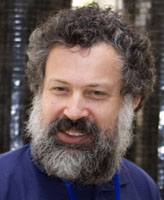
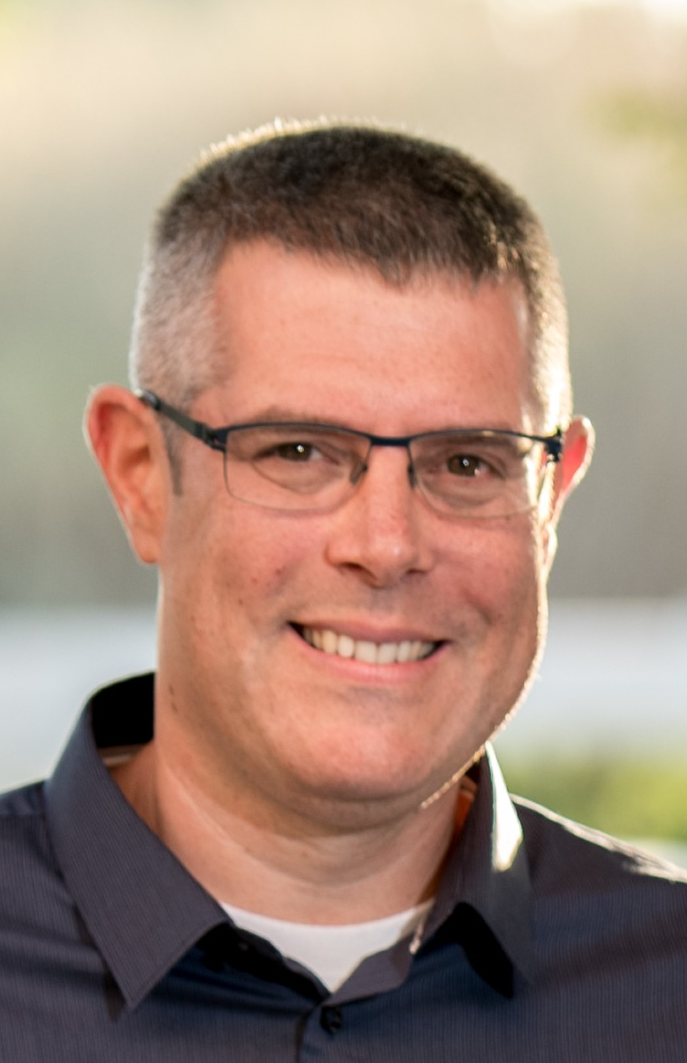
Prof. Yair Weiss is a faculty member at the School of Computer Science and Engineering, The Hebrew University of Jerusalem . He holds a PhD in Brain and Cognitive Sciences from MIT and an MSC in Applied Mathematics from Tel-Aviv University. Education: MSc in Applied Mathematics, Tel-Aviv University (1993) PhD in Brain and Cognitive Sciences, MIT (1998) His research focuses on Human and Machine Vision , Machine Learning , Bayesian Methods , and Neural Computation . Recent work explores adversarial examples, generative models, and robustness in neural networks. Recent publications highlight trends in: Understanding neural network representations Advancements in GANs and adversarial training Image restoration and translation techniques Perceptual distance modeling Bayesian approaches to computer vision Mathematical analysis of deep learning architectures
Aryeh Kontorovich is a Professor in the Computer Science Department at Ben-Gurion University. His research primarily focuses on theoretical machine learning, with expertise in probability, statistics, Markov chains, and metric spaces. His research interests span theoretical machine learning, with particular emphasis on: Probability theory and concentration inequalities Statistical learning theory Markov chains and mixing time estimation Metric space learning Kernel methods Sample compression schemes Professor Kontorovich's recent publications (2021-2025) demonstrate a continued focus on theoretical foundations of machine learning. His work shows strong trends in statistical estimation for Markov processes, distribution learning, metric space analysis, and sample compression. Many papers explore the intersection of probability theory and machine learning, particularly examining concentration inequalities, minimax optimality, and theoretical guarantees for learning algorithms. His research consistently bridges abstract mathematical theory with practical machine learning applications. Scientific awards and recognitions: Distinguished contribution award at MLG 2007 for "A Universal Kernel for Learning Regular Languages" Professor Kontorovich has advised numerous students and collaborated extensively with researchers in theoretical machine learning. His work spans both theoretical foundations and practical applications, with significant contributions to understanding the mathematical limits of learning algorithms. While specific grant information isn't provided in the source material, his extensive publication record in top venues suggests successful funding for his research programs. He maintains active collaborations with researchers worldwide, including prominent names like L. Gottlieb, D. Berend, and S. Hanneke.
Shie Mannor is a Professor at the Technion - Israel Institute of Technology in the Department of Electrical Engineering. He also holds a visiting professorship at Cornell-Tech in New York City and is affiliated with the Technion Machine Learning Center and the Grand Technion Energy Program . Key Research Interests: Machine Learning: Theory, algorithms, and applications to high-dimensional data and dynamics modeling. Reinforcement Learning and Markov Decision Processes: Adaptive control in large stochastic systems. Learning and control under uncertainty: Robust/stochastic optimization frameworks. Game Theory: Stochastic, dynamic, and network games applied to power markets and resource allocation. Multi-agent systems: Online learning and designing economic systems with optimal equilibria. Power Grid: Data-driven reliability, pricing, and decision-making in smart grids (e.g., EU-funded GARPUR project). Applications: Communication network optimization, mobile health, LDPC codes, and large-scale optimization problems. He actively seeks postdocs, graduate, and undergraduate students with strong mathematical or programming skills for projects in mobile phone programming and complex system optimization. Contact: shie.mannor@ee.technion.ac.il | Phone: ++972-4-829-3284
Omri Abend is an Associate Professor at The Hebrew University of Jerusalem, affiliated with the School of Computer Science and Engineering and serving as Chair of the Department of Cognitive and Brain Sciences. His research lies at the intersection of Computational Linguistics, Natural Language Processing, and Cognitive Science, with a focus on semantic representation and language acquisition modeling. His primary research interests include: Computational modeling of child language acquisition Semantic representation frameworks, particularly Universal Conceptual Cognitive Annotation (UCCA) Statistical learning and machine translation Unsupervised grammar learning and lexical relation induction Cross-lingual and cross-domain alignment in language models Evaluation methodologies for NLP systems His recent publications demonstrate a strong trend toward analyzing large language models (LLMs), exploring human-like patterns in AI, improving evaluation metrics, and applying NLP to humanitarian domains such as Holocaust testimony analysis. His work combines theoretical linguistic insights with practical machine learning applications. Scientific awards include: Outstanding Paper Award at ACL 2017 Area Chair Award for Best Paper in the Track at ACL 2023 He has supervised and collaborated with numerous researchers and students across projects in semantic parsing, machine translation, and cognitive modeling. His work has been supported by community-wide initiatives such as the MRP shared tasks, which he co-organized. He also leads research on ethical AI, open human feedback, and the computational analysis of historical narratives. Omri Abend leads several research teams focused on: The development and application of the UCCA framework for semantic annotation Cross-lingual and cross-domain knowledge representation in LLMs Computational modeling of language acquisition Evaluation and improvement of NLP systems Application of NLP to digital humanities and historical testimony analysis
Eran Treister is an Assistant Professor at the Ben Gurion University of the Negev in the Department of Computer Science. He completed his postdoctoral fellowship at the University of British Columbia (2014-2016) and earned his PhD from the Technion in 2014 under Prof. Irad Yavneh. His research spans computational science, numerical methods, and machine learning, with a focus on: Scalable algorithms for inverse problems Graph Neural Networks (GNNs) optimization Seismic and optical imaging via PDE solvers Low-precision deep learning acceleration Multilevel preconditioning techniques Recent work explores: Graph neural networks for PDEs with adaptive meshes Deep learning approaches to Helmholtz equation modeling 3D shape reconstruction via parametric level sets He serves on editorial boards: SIAM Journal on Scientific Computing (2024-) Copper Mountain Conference on Multigrid Methods (2025) International Conference on Machine Learning (ICML) as Area Chair (2025) Current teaching: Optimization Methods for Data Science (Spring 2025) Deep Learning Mini-Project (Winter 2024/5) Advanced Numerical Optimization (Spring 2025)
Shay Moran is an Associate Professor at the Faculty of Mathematics , Technion - Israel Institute of Technology, with affiliations to the Faculties of Computer Science and Data and Decision Sciences . They are also affiliated with Google Research in Tel Aviv . Shay's research interests center on mathematical problems inspired by learning theory and computer science , particularly in areas like machine learning theory, differential privacy, algorithmic stability, and online learning . Their work bridges abstract mathematics with practical algorithm design. Recent publications highlight trends in reductions between learning models, geometric interpretations of learning problems, and privacy-preserving algorithms . Key themes include sample compression, PAC learnability, boosting mechanisms, and adversarial robustness . Best Paper Runner-up , COLT 2021 Best Paper Award , COLT 2020 Final Award for Outstanding Paper in Machine Learning Shay has supervised numerous PhD and Master's students, including Vanessa Kosoy, Liza Nesterova, Hilla Schefler, Alexander Shlimovich, Tom Waknine , and Iska Tsubari . Former advisees include Idan Mehalel (PhD, co-advised with Yuval Filmus) and Zachary Chase (Postdoc) .
Dr. Renana Keydar is an Associate Professor of Law and Digital Humanities at The Hebrew University of Jerusalem, where she serves as Academic Director of the Center for Digital Humanities (DH@HU) and heads the Alfred Landecker Lab for Computational Analysis of Holocaust Testimonies. She holds additional affiliations as a 2024-25 Fellow at Brandeis University's Institute for Advanced Israel Studies and is a core member of Edut 710, Israel's largest civil initiative documenting survivor testimonies of the October 7, 2023 attacks. Her academic credentials include a PhD in Comparative Literature from Stanford University (2015), and magna cum laude degrees in Law and Political Science from Tel Aviv University (2003). Prior to academia, she served as an advocate in Israel's State Attorney's Office - High Court of Justice Department. Keydar's pioneering research bridges computational methods with humanities scholarship, focusing on: Developing AI models for analyzing mass atrocity testimonies using NLP and machine learning Creating trauma-informed digital archives for Holocaust and contemporary crisis documentation Computational analysis of legal narratives in human rights law and international courts Ethical frameworks for applying AI to sensitive historical materials Her scholarly output demonstrates consistent focus on computational jurisprudence, with recent works examining algorithmic analysis of UN human rights recommendations, judicial attitudes toward sexual violence victims, and computational models for Holocaust testimony. Keydar has received the prestigious Alon Fellowship for outstanding young researchers and leads multiple major initiatives: Designing Edut 710's AI-powered testimony platform documenting 1,600+ accounts from October 7 attacks Developing 'distant listening' computational methods for Holocaust testimonies Directing the Future of the Past research group funded by Israel's Ministry of Science
Michael Elad is a Professor of Computer Science at the Technion - Israel Institute of Technology, where he has held a permanent faculty position since 2003. He also holds a courtesy appointment in the Technion's Electrical & Computer Engineering Department. Elad received his B.Sc. (1986), M.Sc. (1988) and D.Sc. (1997) in Electrical Engineering from the Technion, followed by a research associate position at Stanford University (2001-2003). His educational background includes: B.Sc. in Electrical Engineering from the Technion (1986) M.Sc. in Electrical Engineering from the Technion (1988), focusing on video compression algorithms under Prof. David Malah D.Sc. in Electrical Engineering from the Technion (1997), focusing on super-resolution algorithms for image sequences under Prof. Arie Feuer Michael Elad's research spans signal and image processing and machine learning, with specialization in inverse problems, sparse representations, deep learning, and generative models. He is particularly renowned for his work on sparse representations, having created the influential K-SVD algorithm together with Michal Aharon and Bruckstein. His 2010 book "Sparse and Redundant Representations: From Theory to Applications in Signal and Image Processing" is a leading publication in this field. Elad has also made significant contributions to diffusion models and generative AI, applying these concepts to solve complex problems in signal and image processing. His extensive publication record shows a clear evolution from foundational work on sparse representations to more recent applications in deep learning and generative models. While his early work focused on theoretical aspects of sparse coding and dictionary learning, his more recent publications demonstrate an integration of these concepts with modern deep learning techniques, particularly in the areas of image restoration, super-resolution, and generative modeling. Elad's scientific achievements have been recognized with numerous awards: Rothschild Prize in Engineering (2024) Member of the Israel Academy of Sciences and Humanities (2024) Weizmann Award for contributions in Sparse Modeling (2021) IEEE SPS Sustained Impact Paper Award (2018) IEEE SPS Best Paper Award (2018) IEEE SPS Technical Achievement Award (2018) Fellow of the Society for Industrial and Applied Mathematics (SIAM Fellow) (2018) IEEE Fellow (2012) ERC advanced grant (2013) Throughout his career, Elad has been actively involved in academic service and mentorship. He has served as an Associate Editor for several prestigious journals including IEEE Transactions on Image Processing, IEEE Transactions on Information Theory, and Applied Computational Harmonic Analysis. From 2016 to 2021, he was the Editor-in-Chief for SIAM Imaging Sciences. He has advised numerous students, including Michal Aharon and Yaniv Romano. Elad also headed the Rothschild-Technion Program for Excellence from 2015 to 2018, an undergraduate program for exceptional students. Elad maintains an active research laboratory at the Technion focused on advancing the theory and applications of sparse representations, deep learning, and generative models in signal and image processing. His team continues to push the boundaries of what's possible in image restoration, super-resolution, and other inverse problems in imaging.
Professor Noam Goldberg is a faculty member in the Department of Industrial Engineering and Management at the Faculty of Engineering Sciences, Ben-Gurion University of the Negev, joining the university as part of the 2024-2025 academic roster. His appointment marks a return to the Negev region where he spent part of his childhood in Beersheba and Omer. His educational background includes: Undergraduate studies in business administration and computer science at York University and the University of Toronto Master's degree in operations research from Tel Aviv University Doctoral degree from Rutgers University (New Jersey, USA) Postdoctoral research at the Technion, National Institute of Energy (University of Chicago), and Carnegie Mellon University Goldberg's research centers on optimization methods with dual focus on theoretical rigor and practical implementation. His work in sparse optimization develops techniques to identify minimal-variable explanations for complex phenomena, directly applicable to machine learning model simplification and statistical regression analysis. A significant applied focus involves collaborating with oncologists to optimize tumor radiation therapy planning, addressing challenges like biological uncertainty and patient movement through advanced computational models that balance multiple constraints under volatile conditions. He emphasizes the critical synergy between theoretical frameworks and real-world applications, drawing inspiration from Egon Blas' perseverance in mathematical optimization despite extreme adversity. Outside academia, Goldberg values family time and pursues culinary passions including quality coffee, hummus, and wine, occasionally traveling considerable distances for exceptional examples of these specialties.
Associate Professor Tamir Hazan is a faculty member at Technion - Israel Institute of Technology, where he joined in 2015. His research focuses on theoretical and practical aspects of machine learning, with applications spanning computer vision, natural language processing, and computational biology. His work bridges mathematical foundations with real-world problem solving in complex systems. Professor Hazan received his Ph.D. from the Hebrew University in 2009. His academic trajectory has established him as a leading researcher in machine learning theory and its applications, with a particular emphasis on developing mathematically rigorous approaches to modern AI challenges. Professor Hazan's research centers on mathematically founded solutions to problems demonstrating non-traditional statistical behavior. His work encompasses perturbation models for efficient learning of high-dimensional statistics, deep learning of infinite networks, and primal-dual optimization for high-dimensional inference problems. His research program spans three major interconnected areas: attention models that improve prediction interpretability, perturbation frameworks that integrate optimization and sampling through extreme value statistics, and convex duality approaches to message-passing in graphical models. His work demonstrates both theoretical depth and practical relevance across multiple domains. Analysis of Professor Hazan's recent publications reveals an evolving research trajectory with increasing emphasis on interpretable machine learning, causal modeling, and applications in medical imaging and behavioral science. His work consistently bridges theoretical foundations with practical implementations, with recent publications showing strong connections between perturbation theory, attention mechanisms, and optimization frameworks. The interdisciplinary nature of his research is evident in applications ranging from pedestrian navigation using smartphone sensors to video-text matching systems and medical image analysis. Professor Hazan has mentored numerous students throughout his career, including: Alex Schwing, now Assistant Professor at UIUC Alon Cohen, now Associate Professor at Tel Aviv University Idan Schwartz, currently Postdoc at Tel Aviv University Current Ph.D. students: Guy Lorberbom, Itai Gat, and Hedda Cohen Multiple M.Sc. students including Adi Manos, Ram Yazdi, and others Professor Hazan's research group maintains an active program with several key focus areas: Attention models for interpretable and improved prediction processes in visual question answering and multimodal applications Perturbation models that enable efficient statistical reasoning in complex systems with exponential configuration spaces Markov random fields, convex duality, and message-passing algorithms for structured prediction and distributed computing
Offer Lieberman is a Tenured Professor in the Department of Economics at Bar-Ilan University, Ramat Gan, Israel, a position he has held since 2012. Prior to this, he served as a Tenured Associate Professor and Senior Lecturer at the Technion-Israel Institute of Technology (2000-2007, 1999-2000), and as a Tenured Professor at Haifa University (2007-2012). He has also held multiple Visiting Professor roles at Yale University (1999-2002, 2017-2018) and the University of Iowa (2000). His research spans Econometric Theory Time Series Analysis Spatial Econometrics Long Memory Processes Multivariate GARCH Derivative Pricing Behavioral Finance . Education : Ph.D. in Econometrics, Monash University (1993) M.Com. in Economics (First Class Honors), University of Canterbury (1990) B.Com. in Economics, University of Canterbury (1989) Lieberman’s scholarly work focuses on advanced econometric techniques, including Hybrid Stochastic Local Unit Root Models Temporal Aggregation in Financial Indices Similarity-Based Spatial Autoregressive Models High-Dimensional and Nonlinear Time Series . His methodological contributions have been applied to financial volatility, housing markets, and nonlinear dynamics. Scientific Awards and Recognitions : William Gittes Chair in Macroeconomics (2012-present) Research Fellow, Centre de Recherche en Economie et Statistique, Paris, France (1992-1993) Lieberman co-founded the Research Institute for Econometrics (RIE) at Bar-Ilan University (2012-2017) and has served on the program committees of major Econometric Society conferences. He is an Associate Editor for Econometric Theory and The Econometrics Journal , and a member of The Econometric Society since 1996.
Prof. Ran Nathan is a Professor in the Department of Ecology, Evolution & Behavior at The Hebrew University of Jerusalem. His research focuses on movement ecology, spatiotemporal plant population dynamics, and ornithology. He holds a Ph.D. and serves as the Chief Editor of Movement Ecology . His work integrates theoretical and empirical approaches to study dispersal, migration, and animal movement mechanisms. Key research interests include the ecology and evolution of dispersal, mechanisms underlying organism movements, and the application of tracking technologies. Notable contributions include discoveries on cognitive navigation in bats and the role of movement in microbial community composition in barn owls. Prizes & Honors: 2019 Distinguished Scientist Award from the National Academy of Sciences (China) Landau Award Prof. Nathan leads research groups exploring movement ecology paradigms, lifetime tracks of organisms, and invasive plant spread. He actively seeks PhD students for studies on raven psychometrics in desert ecosystems and collaborates on projects involving big data analysis in movement ecology.
Prof. Israel Nelken is a Full Professor at the Hebrew University of Jerusalem, affiliated with the Edmond and Lily Safra Center for Brain Sciences. His research focuses on auditory neurophysiology, specifically the neural mechanisms underlying sound processing, perception-action loops, and statistical learning in audition. He has contributed significantly to understanding how the brain detects deviant sounds and encodes complex auditory information across multiple temporal and spectral scales. Affiliations: Hebrew University of Jerusalem, Edmond and Lily Safra Center for Brain Sciences Roles: Full Professor, Principal Investigator of the Israel Nelken Lab Research Interests Prof. Nelken’s work explores the transformation of sensory signals into meaningful representations in the auditory system. Key areas include: Neuronal responses to complex sounds and their behavioral relevance Stimulus-specific adaptation (SSA) and prediction error detection Integration of auditory information across cortical and subcortical regions Role of auditory cortex in rhythmic motor synchronization and statistical learning Key Contributions His studies on deviance detection in auditory cortex have advanced our understanding of mismatch negativity (MMN) and predictive coding. Recent work highlights rats’ ability to synchronize movements with auditory rhythms, challenging assumptions about species-specific musicality. He has also developed innovative tools like the Rat Interactive Foraging Facility (RIFF) to study neural-behavioral interactions in real-time. Awards & Honors Rector’s Prize for Excellence in Research and Teaching (2015) Landau Prize for Sciences and Research (2015) Michael Bruno Memorial Award (2008) ERC Advanced Grant (2013) Grants & Collaborations Recipient of prestigious grants including the ERC Advanced Grant for studying auditory processing in natural environments. Active collaborations include work on cortical dynamics in Alzheimer’s models and computational frameworks for attentional blink phenomena. Labs & Teams Leads the Israel Nelken Lab, which integrates electrophysiology, computational modeling, and behavioral experiments to dissect auditory processing. The lab collaborates widely, contributing to projects like the dense cortical microcircuit simulations for understanding surprise responses.
Ami Wiesel is a Professor at The Rachel and Selim Benin School of Computer Science and Engineering at The Hebrew University of Jerusalem. His research focuses on statistical signal processing, machine learning, and covariance estimation. Previously, he completed his postdoctoral studies at the University of Michigan with Professor Alfred Hero, earned his PhD in Electrical Engineering from Technion under Professors Yonina Eldar and Shlomo Shamai, and obtained his MSc and BSc in Electrical Engineering from Tel Aviv University. His research interests include robust covariance estimation , statistical learning , signal detection , and MIMO communications . Wiesel has made significant contributions to the field of structured covariance estimation, particularly in elliptical distributions and Tyler's estimator. His work bridges theoretical statistics with practical applications in radar systems, wireless communications, and hyperspectral imaging. Wiesel's publications show a clear trend toward integrating deep learning with traditional statistical signal processing methods. His recent work explores unbiased estimation using neural networks, fair principal component analysis, and deep learning applications for target detection with constant false alarm rate. His research spans theoretical foundations in covariance estimation to practical implementations in radar and communications systems. Among his notable scientific achievements are: Young Author Best Paper Award (2019) for 'Learning to Detect' Young Author Best Paper Award (2006) for 'Linear precoding via conic optimization for fixed MIMO receivers' Student Paper Award (2017) for 'Deep MIMO detection' Wiesel has advised numerous graduate students who have gone on to publish significant work in the field. His research has been supported by various grants focusing on statistical signal processing, machine learning applications, and radar systems. His monograph 'Structured Robust Covariance Estimation' (2015) has become a reference in the field. He maintains an active research group focusing on the intersection of statistical learning and signal processing, with applications in communications, radar, and medical imaging.
Prof. Ram Frost is a Professor in the Department of Psychology at the Faculty of Social Sciences, The Hebrew University of Jerusalem, with office location in the Social Sciences Building (fifth floor, room 26509). He maintains active research fellowships at Haskins Laboratories in New Haven and the Basque Center for Cognition, Brain and Language (BCBL), underscoring his international collaborative networks. His research centers on cognitive mechanisms of visual word recognition across languages and statistical learning as an individual capacity for detecting environmental regularities. He investigates universal versus language-specific aspects of reading processes and individual differences in second language acquisition, with current work focusing on the behavioral and neurobiological underpinnings of statistical learning through an ERC Advanced grant. Recent publications reveal a concentrated research trajectory examining brain signatures of reading proficiency (including beta-band neural activity), theoretical integration of statistical learning into cognitive frameworks, and clinical applications for understanding language impairments. His work bridges cognitive neuroscience, psycholinguistics, and information theory to address fundamental questions about learning mechanisms. Prof. Frost leads an ERC Advanced grant-funded research program examining statistical learning from multidisciplinary perspectives. His laboratory maintains strong collaborative ties with Haskins Laboratories and BCBL, facilitating cross-institutional research on learning mechanisms and their implications for language processing and acquisition.