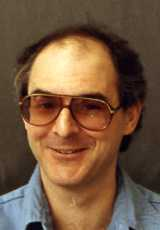
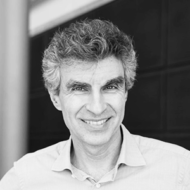
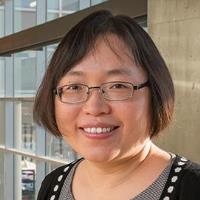
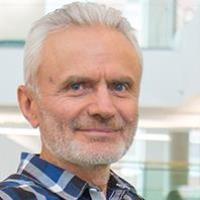
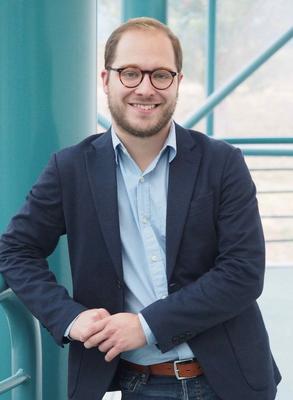
David Brenner is an Associate Professor at the Department of Statistical Sciences, University of Toronto (St. George campus). His research focuses on theoretical statistics, particularly in estimation and inference methods within mathematical statistics. Email: david.brenner@utoronto.ca Campus: Downtown Toronto (St. George)
Jean-François Bégin is an Associate Professor in the Department of Statistics and Actuarial Science at the Faculty of Science, Simon Fraser University. He is a Fellow of both the Society of Actuaries and the Canadian Institute of Actuaries, underscoring his expertise and leadership in actuarial science and financial risk modeling. He obtained his academic training from leading Canadian institutions: a PhD in Administration (Financial Engineering) from HEC Montréal under the supervision of Geneviève Gauthier; an MSc in Mathematics (Applied Mathematics) from Université de Montréal supervised by Mylène Bédard and Patrice Gaillardetz; and a BSc in Mathematics (Financial Mathematics) from the same university. His thesis work centered on simulation schemes for stochastic models in finance. His research lies at the intersection of actuarial science, financial econometrics, and quantitative finance, with major themes including stochastic volatility modeling, filtering methods, option pricing, pension economics, mortality forecasting, credit risk, and climate risk. He develops advanced statistical and computational methods to model financial and insurance risks under uncertainty. His recent publications—appearing in journals such as Management Science , Journal of Econometrics , Insurance: Mathematics and Economics , and North American Actuarial Journal —reflect a strong trend toward integrating econometric modeling with practical applications in pensions, insurance, and derivatives. His work increasingly explores collective risk-sharing mechanisms in pension pools, model uncertainty in economic scenario generation, and the use of high-frequency and aggregated data in risk modeling. His scientific contributions have been recognized through fellowships in two of the most prestigious actuarial bodies: Fellow of the Society of Actuaries Fellow of the Canadian Institute of Actuaries He is an active supervisor of graduate and undergraduate students, mentoring research in areas such as financial econometrics, Bayesian estimation, pension pooling, climate risk, and option pricing. He has advised numerous Master’s and doctoral students and welcomes new applicants with strong quantitative skills. He has also contributed to funded research and industry-oriented reports, particularly through collaborations with the Society of Actuaries and the Canadian Institute of Actuaries. He teaches advanced courses in financial economics, stochastic processes, Monte Carlo simulation, and actuarial communication at SFU, and previously taught at HEC Montréal and Université de Montréal. His research group engages with interdisciplinary challenges in risk modeling and continues to develop innovative frameworks for actuarial and financial decision-making.
Dr. Sarah GAGLIANO TALIUN is an Assistant Professor in the Department of Medicine and Neuroscience at the University of Montreal, affiliated with the Montreal Heart Institute (ICM) and IVADO. Her research focuses on computational genetics, leveraging big data to uncover genetic contributors to complex traits and diseases, particularly cardiovascular diseases and neurodegenerative disorders. She employs advanced statistical and machine learning methods, including sex-stratified analyses and Mendelian randomization. Education: BSc in Biochemistry and Genetics, University of Toronto (2012) PhD in Biomedical Sciences, University of Toronto (2016) Postdoctoral Fellowship in Biostatistics, University of Michigan (2020) Research Interests: Computational genetics, sex-specific genetic effects, genome-wide association studies (GWAS), genetic epidemiology, and the intersection of cardiovascular and neurodegenerative diseases. Her lab develops predictive models for personalized medicine, particularly in sex-stratified cardiovascular risk assessment. Grants and Awards: FRQS Junior 2 Scholar Award (2024-2028) CIHR Project Grant (2024-2028) IVADO Startup Fund (2022-2023) Weston Brain Institute Fellowship (2016) Lab and Team: The Gagliano Taliun Lab is part of the ICM and collaborates with IVADO. Current members include postdocs, graduate students, and interns. Projects include computational investigation of chromosome X variants and sex-specific genetic effects in Alzheimer’s and cardiovascular disease.
Joann Jasiak is a Professor in the Department of Economics at York University, affiliated with the Faculty of Liberal Arts & Professional Studies. She holds a PhD from the University of Montreal. Her research focuses on econometrics and time series analysis, with recent work emphasizing noncausal processes, stationary martingales, and applications to financial and economic data, including cryptocurrency markets and bubble detection. She has also contributed to cybersecurity analysis in Canadian businesses and epidemiological modeling using stochastic methods. Her research interests span econometric theory, financial econometrics, and the analysis of time series data with noncausal structures. Key areas include developing methodologies for forecasting cryptocurrency returns, modeling common bubbles in asset prices, and optimizing covariance estimation techniques for noncausal processes. Her work integrates advanced statistical tools with real-world applications in finance, economics, and public health. Recent publications (2023–2025) highlight her contributions to topics such as cryptocurrency dynamics, stochastic tree models for asset pricing, and generalized covariance-based inference. Her articles frequently address methodological challenges in econometrics and their practical implications for understanding market behaviors and economic phenomena. Dr. Jasiak’s work has not been explicitly linked to awards or major grants in the provided texts, though her extensive publication record reflects sustained academic engagement. No lab or team affiliations are mentioned in the available data.
Dr. Nicole Racine is an Assistant Professor in the School of Psychology at the University of Ottawa, affiliated with the Faculty of Social Sciences. She holds a PhD in Clinical-Developmental Psychology from York University and completed postdoctoral training at the University of Calgary and Alberta Children’s Hospital Research Institute. Her research focuses on childhood adversity, intergenerational transmission of risk, and equitable mental health interventions for vulnerable populations. She is the director of the Early Lab, which collaborates with community partners to design and evaluate prevention programs. Education: PhD (2016), MA (2011), and Honours BSc (2008) in Clinical Developmental Psychology from York University, and a postdoctoral fellowship at the University of Calgary. Research Interests: Prenatal/perinatal trauma, child mental health disparities, social determinants of development, and resilience-building strategies. Her work emphasizes community-based participatory research and policy impact, including contributions to Royal Society of Canada guidelines and legislative proposals. Awards: 2021 Canadian Psychological Association New Researcher Award, Governor General’s Academic Gold Medal. Over 70 peer-reviewed articles in journals like JAMA Pediatrics and The Lancet Psychiatry, with multiple highly cited studies. Grants & Mentorship: Lead on a $1.2M CIHR grant for interventions supporting substance-using mothers. Supervises graduate students in French or English, emphasizing diversity and inclusion. Actively engages in media outreach and public education via The Conversation Canada (175k+ views). Labs/Teams: Director of the Early Lab, collaborating with the CHEO Research Institute and Strong Minds Strong Kids. Partnerships include evaluations of trauma-informed care initiatives and nature-based interventions for youth mental health.
James Danckert is a Professor in the Department of Psychology at the University of Waterloo, where he also serves as the Cognitive Neuroscience Area Head. He is cross-appointed to the Research Institute in Aging and leads the Danckert Attention and Action Group (Danckert Lab). His research spans cognitive neuroscience with particular focus on understanding the mechanisms and brain states that give rise to boredom and mental model updating. Dr. Danckert earned his BA from Melbourne University (Australia), followed by his MA and PhD from La Trobe University (Australia). His academic journey has positioned him as a leading expert in cognitive neuroscience with a specific emphasis on boredom psychology and attention mechanisms. His primary research interests include the cognitive and neural mechanisms of boredom, particularly in individuals with traumatic brain injuries, and mental model updating in relation to neglect syndrome. Danckert's work explores boredom through behavioral tasks like foraging, sustained attention tasks, and executive control tasks, utilizing neuroimaging techniques such as fMRI and tDCS. His mental model updating research involves working with stroke patients (with access to a database of over 800 patients), fMRI, and computational modeling. Analysis of Dr. Danckert's most recent publications reveals a continued focus on boredom and mental model updating, with increasing interdisciplinary approaches incorporating computational modeling, AI, and genetic perspectives. His work bridges cognitive psychology, neuroscience, and clinical applications, with particular emphasis on how boredom relates to attention, agency, and decision-making processes. Dr. Danckert has received significant recognition for his work, including: Former Canada Research Chair (Tier II) in Cognitive Neuroscience Recipient of the 40 Under 40 Award from the Region of Waterloo As a mentor, Dr. Danckert supervises graduate students in the Psychology Department at Waterloo, teaching advanced courses such as Psych 783: Neuroimaging and Cognition. His research is supported by prestigious funding sources including the Natural Sciences and Engineering Research Council (NSERC) and the Canada Foundation for Innovation (CFI). The Danckert Lab maintains a comprehensive research program with two main streams: boredom research and mental model updating. The lab utilizes diverse methodologies including behavioral testing, neuroimaging, computational modeling, and collaborations with experts in evolutionary genetics. The lab's work has significant implications for understanding cognitive processes in both healthy individuals and those with neurological conditions.
Paul Marriott is a Professor in the Department of Statistics and Actuarial Science at the University of Waterloo. His research focuses on integrating geometric principles, particularly differential and convex geometry, into statistical methodologies, with a recent emphasis on mixture models and information geometry. He has published extensively across diverse journals such as Biometrika, Annals of Statistics, and Psychological Medicine, bridging theoretical and applied statistics. Education: PhD, University of Warwick (1989) MA, University of Oxford (1984) Research Trends: His work explores geometric frameworks for statistical inference, mixture model parameterization, and robustness analysis. Recent publications highlight causal modeling, neural spike train analysis, and high-dimensional data applications. Contact: Office: Mathematics & Computer Building (M3) 4204, Phone: 519-888-4911 x35545, Email: pmarriot@math.uwaterloo.ca
Jeffrey Pisklak serves as an ATS Associate Lecturer in the Department of Psychology Science within the Faculty of Science at the University of Alberta, actively teaching undergraduate courses through Winter Term 2026 across multiple sections of PSYCH 213, PSYCH 282, and PSYCH 413. His research interests focus on methodological frameworks in psychological science, particularly statistical analysis techniques for experimental design and behavioral modification applications. He specializes in translating quantitative research principles into pedagogical practice, emphasizing psychometric fundamentals, neuroscientific data interpretation, and causal inference methodologies as evidenced by his course development in data analysis and experimental psychology. His teaching portfolio demonstrates expertise in both foundational and advanced research methodology, with course descriptions highlighting practical applications of learning principles in clinical and social contexts alongside rigorous training in between-subjects and within-subjects experimental designs.
Dr. Mathieu Lavallée-Adam is an Associate Professor in the Department of Biochemistry, Microbiology, and Immunology at the University of Ottawa's Faculty of Medicine. He also serves as Director of the Specialization in Bioinformatics. His research focuses on developing computational methods for proteomics data analysis, particularly using mass spectrometry to address complex biological questions in systems and biomedical research. Education: BSc (2008) and PhD (2013) from McGill University Postdoctoral Fellowship: The Scripps Research Institute (2016) Dr. Lavallée-Adam’s work integrates machine learning (Bayesian inference, logistic regression, support vector machines) and algorithm design to analyze proteomics data. His lab develops tools for protein-protein interaction networks, quantitative proteomics, drug target prediction, and biomarker discovery, aiming to enhance understanding of cellular mechanisms and diseases. His selected publications (2011–2016) span computational biology, proteomics, and biomedical applications, with a focus on mass spectrometry data integration, disease-related networks, and algorithm innovation. Articles include studies on cystic fibrosis, cancer, and neurodegenerative diseases. Dr. Lavallée-Adam actively recruits researchers with backgrounds in computer science, bioinformatics, or mathematics to advance his lab’s mission of pushing proteomics applications in clinical and systems biology.
Yoshua Bengio is a Full Professor at Université de Montréal, Canada CIFAR AI Chair (2018–present), and founder of Mila – Quebec AI Institute. He co-directs the CIFAR Learning in Machines & Brains program and serves as Scientific Director of IVADO. A Fellow of the Royal Society of London and Canada, and Officer of the Order of Canada, Bengio is a pioneer in deep learning and co-recipient of the 2018 A.M. Turing Award. His research spans Deep learning architectures Neural networks Machine learning theory Generative models Optimization algorithms Recent work focuses on generative adversarial networks, neural machine translation, and theoretical foundations of deep learning. Awards include the Killam Prize (2019), IEEE Neural Networks Pioneer Award (2019), and global recognition as the second-most cited computer scientist (2021).
Rui Hu is an Associate Professor at the Department of Mathematics and Statistics within MacEwan University's Faculty of Arts and Science. Their expertise lies in Experimental Design , Robustness in Statistics , and Spatial Statistics , with a strong focus on mathematical analysis and modeling. Education: PhD in Statistics (2016), with a thesis on Robust Designs for Model Discrimination and Prediction of Threshold Probability. Rui's research bridges fractional calculus, functional analysis, and epidemiological modeling, particularly through applications of partial differential equations and Sobolev/Besov space inequalities. Their recent work explores nonlocal operators and extensions via the Caffarelli–Silvestre framework. Rui has published extensively on topics including metapopulation disease models , robust experimental design , and mathematical biology , with a chronological focus from 2011 to 2025. Key trends include stability analysis in population dynamics and innovative applications of probability density functions in sound detection.
Constantin Colonescu serves as an Associate Professor within the Department of Anthropology, Economics and Political Science at MacEwan University's Faculty of Arts and Science in Edmonton, Alberta. Commencing his academic career in 2001 at the American University in Bulgaria, he transitioned to MacEwan University in 2006 where he has since taught foundational and advanced economics courses including Introductory Microeconomics and Macroeconomics, Quantitative Methods, Econometrics, and the Economics of the European Union. Educationally, Dr. Colonescu earned his PhD from Charles University in the Czech Republic, establishing a strong foundation for his interdisciplinary research. His research program is robust and multifaceted, centering on international trade dynamics under imperfect competition, sophisticated impact evaluation methodologies, and the critical issue of income inequality. Complementing these core interests, he maintains deep expertise in quantitative economic analysis, applied microeconomic theory, the economic dimensions of European Union integration, market structure analysis, and game-theoretic modeling. This breadth enables him to address complex questions in industrial organization, international finance, and macroeconomic policy formulation, often with specific reference to European economic systems. An examination of his recent scholarly output reveals consistent engagement with European integration processes, particularly through counterfactual analyses of monetary union effects. His industrial organization research investigates nuanced market phenomena including mixed ownership structures, compounded price markups, and tacit collusion mechanisms. Parallel to his theoretical and empirical work, Dr. Colonescu has made notable contributions to economics pedagogy through the development of computational teaching tools using R programming and critical assessments of undergraduate economics curriculum relevance. The available documentation does not indicate any formal scientific awards or honors. In his capacity as an educator, Dr. Colonescu mentors senior undergraduate students through independent study projects, providing guidance on research design and execution within his areas of specialization. While specific grant funding information is absent from the provided materials, his sustained publication record suggests ongoing research activity. No dedicated research laboratories or formal research teams were referenced in the source information.
Christopher Strickland is an Associate Professor in the Mathematics Department with an adjunct appointment in the Department of Ecology and Evolutionary Biology at the University of Tennessee, Knoxville. His research bridges mathematical theory and ecological applications through interdisciplinary collaboration. His primary research interests include mathematical ecology, with specific focus on modeling complex systems in ecology and substance use epidemiology (particularly opioids and alcohol). He utilizes diverse mathematical tools including mathematical modeling, dynamical systems, statistical inference, and scientific computing. His work brings mathematical methods to organismal ecology, especially in the context of behavior, dispersal, and social interaction. Specific research areas include addiction epidemiology, individual-based modeling of collective behavior (both on land and in fluid environments around immersed structures), and novel approaches in population ecology. Dr. Strickland has developed Planktos , an open-source agent-based modeling software in Python designed for 2D and 3D fluid environments with immersed structures. This framework enables scientific exploration and quantification of collective and emergent behavior in fluid environments. He collaborates extensively with Oak Ridge National Lab and the Veterans Administration to develop and mathematically analyze population-level and individual-based models of the opioid epidemic based on location-specific data. These models help predict epidemic trajectories for specific communities and quantify risk factors that inform patient treatment decisions. Dr. Strickland is scheduled to present at the SIAM Activity Group on Dynamical Systems conference (DS25) in May 2025 in Denver, Colorado, reflecting his active engagement in the mathematical sciences community.
Ying Zhang is a Professor in the Department of Mathematics and Statistics at Acadia University, maintaining an office in Huggins Science Hall, Room 151. She earned her BSc from Shandong Normal University and advanced degrees (MA, MSc, PhD) from Western University, complemented by P.Stat. certification (Certificate #78) from the Statistical Society of Canada. Her educational background includes: BSc from Shandong Normal University MA, MSc, PhD from Western University Professor Zhang's research centers on Time Series Analysis and Applied Statistics , extending to Statistical Computing, Symbolic Algebra Computing, and Statistical Consulting in Biostatistics, Survey Design, and Research Methodology. Her work demonstrates significant applications in environmental science (water resources trend analysis), health sciences (drug safety and utilization studies), and ecological modeling (wildlife population dynamics), with methodological innovations in nonparametric testing and hierarchical modeling. Analysis of her 2013-2018 publications reveals a dominant focus on developing novel time series methodologies for environmental and health contexts, particularly seasonal trend detection, medication utilization patterns, and ecological data analysis. Her work consistently bridges theoretical statistics with practical applications across disciplines. She actively contributes through the Statistical Consulting Centre and the CANSSI Maritime Statistical and Health Sciences Collaborating Centre , holding P.Stat. designation from the Statistical Society of Canada. While her collaborative publications indicate interdisciplinary engagement, specific details of grant funding and student advising are not documented in available sources.
Jean-François Bégin is an Associate Professor in the Department of Statistics and Actuarial Science at Simon Fraser University since September 2023, previously serving as Assistant Professor (2017-2023). He earned his Doctorate in Administration from HEC Montréal (2012-2016), supervised by Geneviève Gauthier and Mathieu Boudreault. Current research focuses on data-driven decision-making and uncertainty modeling in finance. His work spans stochastic processes , portfolio optimization , and energy market dynamics . Recent publications explore jump-diffusion models , electricity price volatility , and diversification strategies , employing computational methods and empirical analysis. Scientific Awards : 2025 IAA Best Paper Award 2023 SFU Early Career Researcher Prize 2020 Bob Alting von Geusau Prize Fellowships (Canadian Institute of Actuaries, Society of Actuaries) He has advised 22 graduate students and secured $160,000 in actuarial research funding (2023) for climate risk modeling in pension systems.