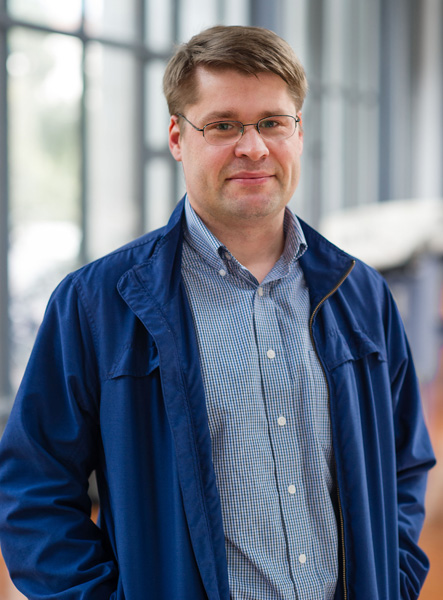
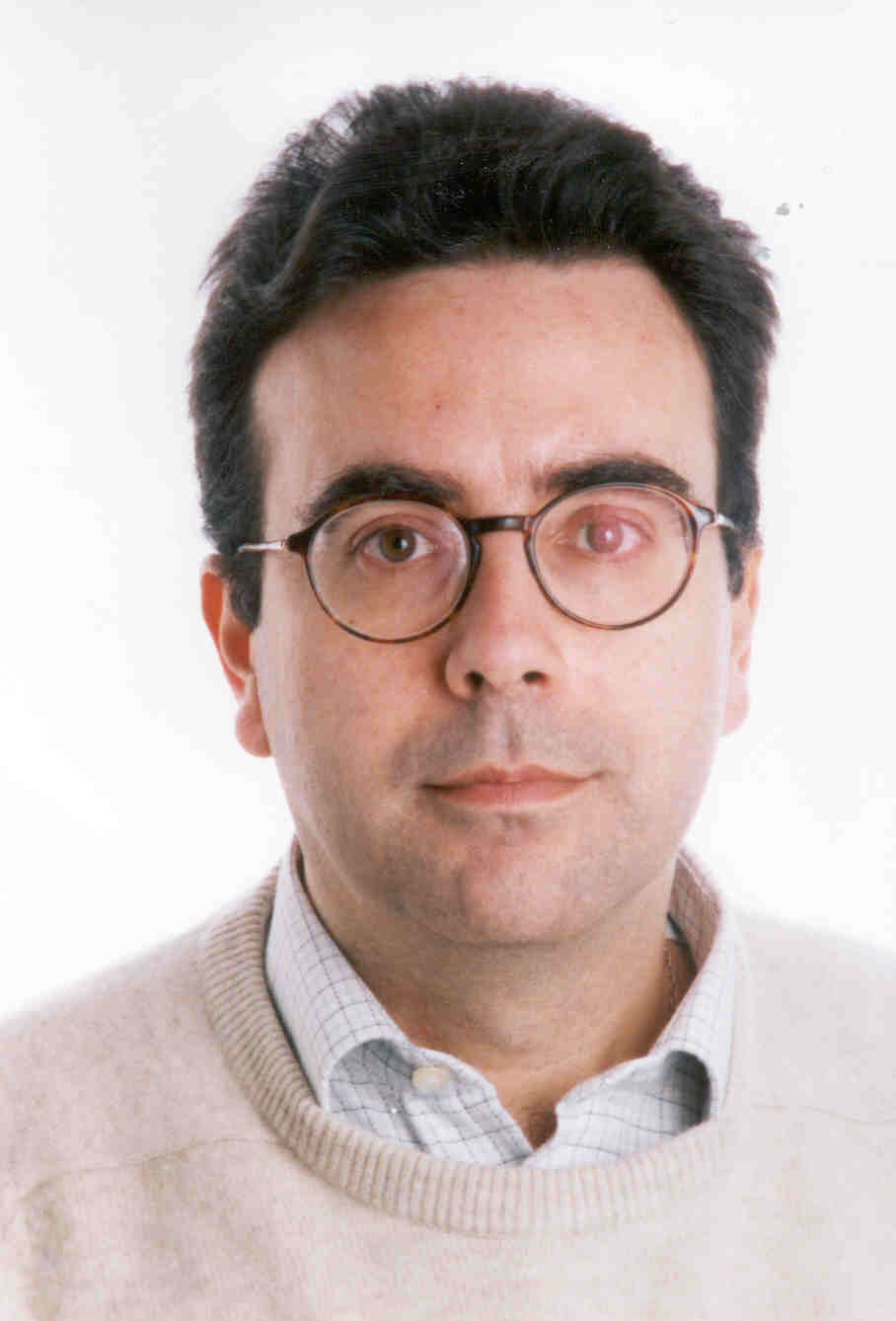
Giles Foody is a Professor of Geographical Information Science at the School of Geography, University of Nottingham, and a member of the Rights Lab in the Faculty of Social Science. He is recognized as the UK’s most prolific and highly cited researcher in remote sensing, with a focus on interdisciplinary applications for real-world impact. Education: BSc (1st class honours) and PhD from the University of Sheffield. His research spans image classification for thematic mapping, particularly in land cover and human-induced changes. He pioneered soft image classifications, object-based methods, neural networks in remote sensing, and citizen sensors in mapping. Current projects include 'slavery from space' and Sargassum beaching analysis to meet UN SDGs. The trends in his publications highlight advancements in remote sensing, citizen science, and land cover mapping. His work integrates machine learning and geospatial analysis for social and environmental challenges. Scientific awards: IEEE Fellowship, David Landgrebe Award, Founder's Award (ISARA), multiple RSPSoc accolades, and SDG-related honors. Giles has supervised 51 research students and contributed to academic service via editorial roles, peer review leadership, and participation in national research assessment panels. His interdisciplinary work extends to European National Mapping Agencies and anti-slavery initiatives.
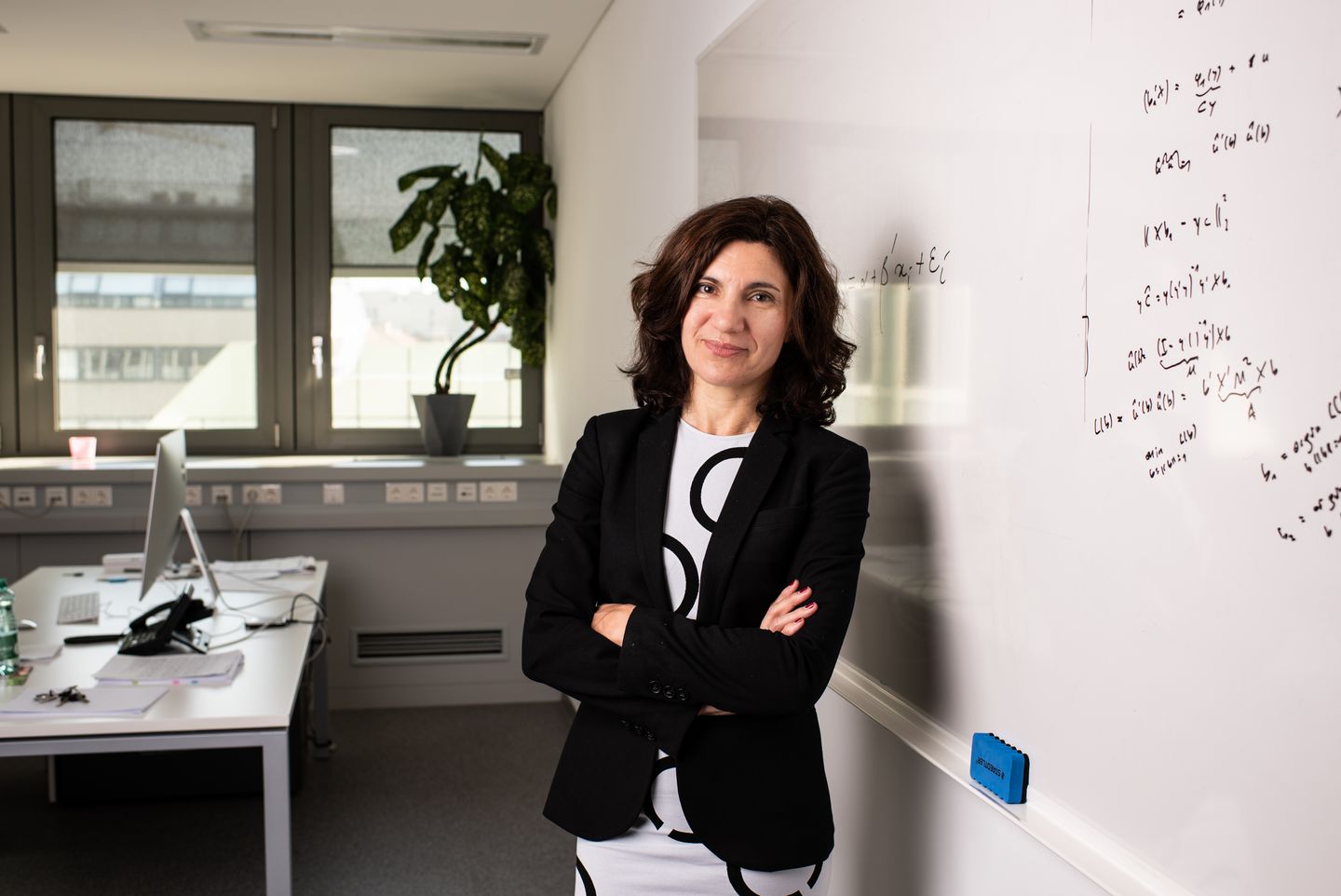
Assoc. Prof. Zehra Eksi-Altay holds a position at the Institute for Statistics and Mathematics at Vienna University of Economics and Business (WU). Her research focuses on financial mathematics, stochastic modeling, and partial information control problems in finance. She has expertise in credit risk modeling, derivatives pricing, and commodity markets. Eksi-Altay has a PhD in Financial Mathematics (2011) and completed her Habilitation in 2017. She has advised one doctoral thesis and has published extensively in top-tier journals like Quantitative Finance and Journal of Computational and Applied Mathematics . Her work bridges theoretical advancements with practical applications in areas such as regime-switching models, optimal portfolio strategies, and liquidity analysis. Education: BSc, MSc (2005), PhD (2011) Habilitation: 2017 Key Research Themes: Partial Information Models, Stochastic Control, Credit Risk, Algorithmic Trading Her recent work explores regime-switching affine term structures, optimal trading strategies under uncertainty, and dark pool liquidity analysis. Eksi-Altay has received one academic prize, though its specific name is not detailed in the provided text. Her contributions span both theoretical developments and applied finance, often collaborating with institutions like WU’s Institute for Statistics and Mathematics.
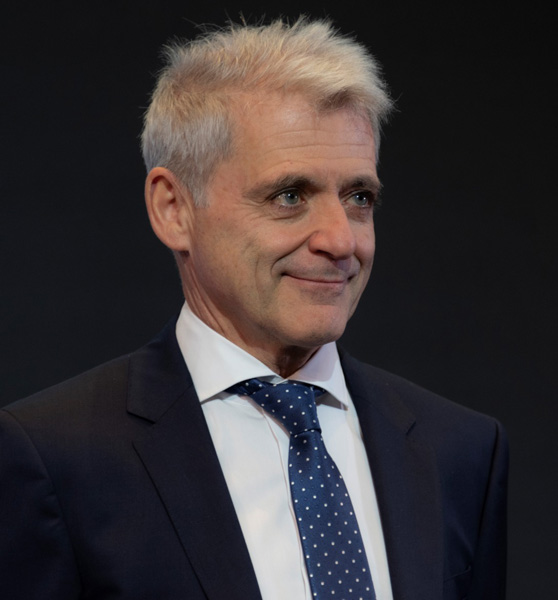
Karl Friston is a renowned neuroscientist and Professor at the Institute of Neurology, University College London . As Scientific Director of the Wellcome Trust Centre for Neuroimaging, he has pioneered transformative methodologies in brain imaging, including statistical parametric mapping (SPM) , voxel-based morphometry (VBM) , and dynamic causal modelling (DCM) . His theoretical work on the free-energy principle and active inference has reshaped understanding of brain function. Key Positions : Scientific Director (Wellcome Trust Centre), Fellowships at MRC units, Keck Foundation Fellow Research Focus : Functional integration in the human brain, computational models of neuronal interactions, schizophrenia, and Bayesian brain theory. Scientific Awards : Wiley Young Investigator Award (1996) Golden Brain Award (2003) Fellow of the Royal Society (2006) Weldon Memorial Medal (2013) EMBO Membership (2014)
Georges Gielen is Full Professor in the Department of Electrical Engineering (ESAT) at KU Leuven, Belgium, and part-time Research Director at imec. He has held multiple leadership roles including Chair of ESAT Department (2012-2013, 2020-2024) and Vice-Rector for Science, Engineering & Technology (2013-2017). His academic career spans over 30 years at KU Leuven, progressing from Assistant to Full Professor. His research focuses on analog and mixed-signal integrated circuit design automation , with expertise in CAD tools, design optimization, sensor interfaces, and neuromorphic systems. His work bridges hardware design with machine learning, particularly in hardware-efficient AI implementations and biomedical applications. He has pioneered techniques for automated analog circuit sizing, topology synthesis, and reliability-aware design in nanometer CMOS. Gielen has received numerous accolades including the IEEE CAS Mac Van Valkenburg Award (2015), IEEE CAS Charles Desoer Award (2020), and EDAA Achievement Award (2021). He holds an ERC Advanced Grant AnalogCreate and is an IEEE Fellow since 2002. As a prolific scholar, he has chaired major conferences including DATE (2006), ICCAD (2007), and ESSCIRC (2017). He has graduated over 55 PhD students through the MICAS research group at KU Leuven, currently supervising 13 doctoral candidates. His research team collaborates extensively with imec and industry partners on cutting-edge projects in carbon-aware AI accelerators, uncertainty-aware design, and neuromorphic sensor interfaces.
Nikolaus Hautsch is a full Professor at the Faculty of Economics, Institute of Statistics and Operations Research. His work focuses on econometrics, finance, and high-frequency data analysis. Research Interests : Market microstructure, volatility modeling, transaction costs, systemic risk, and machine learning applications in finance. Publication Trends (2025–2018): 2025: High-dimensional portfolio optimization, dynamic systemic risk 2024: Blockchain asset arbitrage, DeFi, polarization metrics, jump detection 2023–2022: Microstructural noise, volatility forecasting, neural networks Scientific Awards : Fellow of the Society for Financial Econometrics (2014) Projects : Artificial Intelligence in Rowing (2022–2025) Vienna Graduate School of Finance (2018–2022) Risk management of CCPs
Edgar Erdfelder is a Full Professor of Psychology at the University of Mannheim, Germany, holding the Chair of Cognitive Psychology and Individual Differences since 2008. He is affiliated with the School of Social Sciences and has made significant contributions to cognitive psychology, statistical modeling, and decision-making research. Previously, he served as Full Professor at the University of Mannheim (2002–2008), Associate Professor at the University of Giessen (2001–2002), and Senior Lecturer at the University of Bonn (1987–2001). Ph.D. in Psychology, University of Trier (1986) Habilitation in Psychology, University of Bonn (2000) Diploma (M.Sc.) in Psychology, University of Göttingen (1980) Erdfelder's research focuses on statistical power analysis, multinomial processing tree (MPT) modeling, sequential statistical inference, and cognitive modeling. His work explores judgment and decision-making through mathematical and computational frameworks, integrating signal-detection theory with threshold models. He developed the widely used GPOWER software for statistical power analysis and advanced MPT models to measure cognitive process speeds. His recent publications with students highlight applications of Bayesian sequential methods, meta-analyses of sleep effects on memory, and theoretical extensions of the recognition heuristic. These studies span subfields like cognitive architecture, decision theory, and experimental design. Martin Irle Award (2020) Fellow of the Association for Psychological Science (2016) Heinz Heckhausen Award (1988) Erdfelder has held leadership roles, including Vice President of Research at the University of Mannheim and Academic Director of the Center of Doctoral Studies in Social and Behavioral Sciences funded by the DFG. He mentored numerous Ph.D. students and led the DFG-funded Research Training Group SMiP, focusing on statistical modeling in psychology.
Yuriy Gorodnichenko serves as the Quantedge Presidential Professor in the Department of Economics at the University of California, Berkeley since 2018. His extensive academic affiliations include being a Faculty Research Associate at the National Bureau of Economic Research (2014-present), Research Fellow at the Institute for the Study of Labor (2007-present), International Fellow at the Kiel Institute for the World Economy (2011-present), and Research Consultant for both the European Central Bank (2018-present) and European Investment Bank (2017-present). He also serves as Editor of the Journal of Monetary Economics (2018-present) and Member of the Executive Committee of the Association for Comparative Economic Studies (2019-present). Education: Ph.D., Economics, University of Michigan, 2007 M.A., Statistics, University of Michigan, 2004 M.A., Economics (high honors; valedictorian), Economics Education and Research Consortium at National University of Kyiv-Mohyla Academy, Kiev, Ukraine, 2001 B.A., Economics (honors; valedictorian), National University of Kyiv-Mohyla Academy, Kiev, Ukraine, 1999 Gorodnichenko's research spans multiple subfields of economics with particular emphasis on monetary economics, public finance, international economics, and macroeconomics . His scholarly approach typically combines both macroeconomic and microeconomic data with rigorous theoretical and statistical analyses. His work is organized into five major categories: monetary economics, aggregate implications of informational frictions, business cycles, development/productivity/income differences, and inequality. As an applied macroeconomist, he frequently bridges methodological approaches across different economic subdisciplines. His publication record demonstrates consistent high-impact research across top economics journals including American Economic Review, Journal of Political Economy, and Review of Economic Studies. The trajectory of his work shows increasing focus on the microfoundations of macroeconomic phenomena, particularly how information frictions affect economic behavior and policy transmission mechanisms. His recent publications have increasingly addressed the distributional consequences of monetary policy and the role of cultural factors in economic development. Scientific Awards and Honors: Fellow, Econometric Society (2021) Highly Cited Researcher, Clarivate (2021) Distinguished Teaching Award, Social Science Division, UC Berkeley (2020) World Junior Prize in Monetary Economics and Finance (2018) NSF CAREER award (2012) Sloan Research Fellowship (2013) Multiple #1 rankings among young economists by RePEc (2014-2021) Best paper award, American Economic Journal: Economic Policy (2015) Gorodnichenko has received consistent recognition for his teaching and advising from UC Berkeley's Economics Department, including multiple runner-up positions and a win for the Best Advisor Award (2014). His research has been supported by prestigious grants including the NSF CAREER award and Sloan Research Fellowship. His impact metrics are substantial with over 19,000 citations and an h-index of 54, reflecting significant influence in the economics profession. While the scraped text doesn't specify dedicated research laboratories, Gorodnichenko maintains active research collaborations through his affiliations with major economic research institutions including NBER, IZA, and Kiel Institute. His editorial roles at leading journals position him at the center of contemporary macroeconomic research discourse.
Anja Feldmann is Director at the Max Planck Institute for Informatics in Saarbrücken and Professor of Internet Network Architectures at Technische Universität Berlin (since 2006). Previously she held a full professorship at Technische Universität München (2002–2006) and conducted research at AT&T Labs Research , Saarland University , and Carnegie Mellon University , where she earned her Ph.D. in 1995. Education Ph.D. in Computer Science, Carnegie Mellon University, 1995 M.Sc. in Computer Science, Carnegie Mellon University, 1991 Diplom in Computer Science, Universität Paderborn, 1990 Research Interests Anja Feldmann’s research centers on measurement-driven understanding of the Internet. She tackles challenges such as software-defined networking , cloud-network interactions , performance debugging , and traffic characterization . A growing focus is the privacy and security of networked systems, evidenced by recent studies on online tracking, DNS security, and disinformation ecosystems. Her group designs scalable measurement platforms that combine passive and active monitoring , programmable data planes , and machine-learning analytics to dissect phenomena ranging from terabit-scale traffic to covert tracking on illegal streaming sites. Recent Publication Themes The 2021-2025 publications reveal a methodological evolution toward large-scale, longitudinal measurement . Topics include: Impact of global events (COVID-19, CrowdStrike outage) on Internet traffic Cross-country tracking ecosystems and privacy leaks DNS root and routing plane stability and security ML-driven real-time monitoring at terabit speeds Disinformation campaigns on encrypted messaging platforms Scientific Awards Gottfried Wilhelm Leibniz Prize (2011) – Germany’s highest research honor Berliner Wissenschaftspreis (2011) Elected Member of the German National Academy of Sciences Leopoldina (2009) Advising & Grants While individual student names are not listed, Prof. Feldmann leads a vibrant team at MPI-INF’s Internet Architecture department. She has supervised numerous doctoral candidates and post-doctoral researchers whose work is reflected in the co-authored papers. Funding sources include the German Research Foundation (DFG) via the Leibniz Prize and EU Horizon projects, although explicit grant numbers are not provided in the source material. Labs & Teams She heads the Internet Architecture department at MPI-INF, located at the Saarland Informatics Campus . The department operates state-of-the-art measurement infrastructure—including programmable switches, honeynets, and global vantage points—to support empirical network science.
Efstathia Bura is a Professor heading the Applied Statistics Research Unit (ASTAT) within the Institute of Statistics and Mathematical Methods in Economics at TU Wien's Faculty of Mathematics and Geoinformation. Her research focuses on dimension reduction techniques in regression and classification, high-dimensional statistics, and their applications in biostatistics, econometrics, and legal statistics. She leads projects like ProbInG (WWTF-funded) and the SecInt Doctoral College on statistical verification of cyber-physical systems. Her work integrates advanced statistical methodologies with interdisciplinary applications, emphasizing practical solutions for complex data challenges. Current projects explore probabilistic program analysis, security properties in cyber-physical systems, and dynamic econometric modeling. She collaborates internationally, with notable contributions to statistical theory and applications in law, healthcare, and telecommunications. Key research themes include time-varying regression models, sufficient dimension reduction for mixed predictors, and fusion of statistical methods with machine learning. Her publications bridge theoretical advancements and real-world problem-solving, reflecting her role as a leading academic in modern applied statistics. Her team includes postdocs and assistants working on WWTF and SecInt grants, focusing on probabilistic systems and statistical verification. While no formal student advisees are listed, her collaborative projects engage junior researchers in cutting-edge statistical research.
Georgios B. Giannakis is a Full Professor, Endowed Chair, and Presidential Chair in the Department of Electrical and Computer Engineering at the University of Minnesota since 1999. He directs the Digital Technology Center and has held academic roles at the University of Virginia (1987-1999) and USC (1982-1986). His research spans Data Science, Wireless Communications, Network Science, and Statistical Signal Processing , with applications to IoT and power systems. Diploma in Electrical Engineering, NTUA (1981) MSc in Electrical Engineering, USC (1983) MSc in Mathematics, USC (1986) PhD in Electrical Engineering, USC (1986) His publications (470+ journals, 770+ conferences, 34 patents) focus on fading channel modeling, UWB localization, blind signal estimation, and cross-layer wireless design . Articles emphasize multicarrier systems, time-varying channels, and ultra-wideband communication , with citations exceeding 76,000 (H-index 145). Scientific Awards : EURASIP 'Athanasios Papoulis' Society Award (2020) IEEE Fourier Technical Field Award (2015) Gugliermo Marconi Prize Paper Award (2003) 9 Best Journal Paper Awards (IEEE/SPS & ComSoc) IEEE SPS Technical Achievement Award (2001) He has mentored over 50 PhD students and 25 postdocs, served IEEE as Distinguished Lecturer, and contributed to Greek university accreditation panels. His work bridges theoretical signal processing and practical communication systems .
Manuel Arellano is Professor of Economics at the Center for Monetary and Financial Studies (CEMFI) in Madrid since 1991, with prior appointments at the University of Oxford (1985-89) and London School of Economics (1989-91). A leading econometrician specializing in panel data analysis, his work bridges theoretical econometrics and labor economics applications. He earned his undergraduate degree from the University of Barcelona and Ph.D. from the London School of Economics. Arellano's research focuses on econometric methodology for panel data, particularly dynamic models with heterogeneity. His seminal book Panel Data Econometrics (2003) established foundational frameworks for nonlinear and dynamic panel estimation. Current work extends to distributional analysis of random coefficients and robust inference under uncertainty, maintaining consistent emphasis on labor market applications like unemployment duration and policy evaluation. His publication history reveals a 30-year trajectory advancing panel data econometrics, evolving from specification testing (1987-1995) to sophisticated dynamic and nonlinear models (2003-2014), with persistent focus on practical implementation and labor economics applications. Major honors include: President of the Econometric Society (2014) Foreign Honorary Member of the American Academy of Arts and Sciences (2014) Rey Jaime I Prize in Economics (2012) ISI Highly Cited Researcher status (2010) Fellow of the Econometric Society (2002) No information on student advising or research grants appears in the source materials. Similarly, details about research laboratories or collaborative teams are not documented in the provided texts.
Jean Ponce is a Professor of Computer Science at Ecole Normale Superieure (ENS) in Paris and a Part-Time Global Distinguished Professor at New York University's Courant Institute of Mathematical Sciences and Center for Data Science (CDS). He previously served as Director of the ENS Computer Science Department (2011-2017) and held positions at Inria (2017-2022), University of Illinois at Urbana-Champaign (1998-2006), MIT, Stanford, and Inria (1982-1985). Academic Leadership: Scientific Director of PRAIRIE Interdisciplinary AI Research Institute in Paris Startup Involvement: Co-founder and CEO of Enhance Lab (2022) Editorial Roles: Senior Editor-in-Chief of International Journal of Computer Vision (2019-2022) Conference Leadership: Chair of IEEE CVPR (1997,2000), ECCV (2008), and upcoming ICCV (2023) Research Focus: Computer vision, machine learning, robotics, and AI with applications in exoplanet imaging, 3D reconstruction, and image quality assessment. His work bridges statistical learning and deep learning approaches. Awards: IEEE Fellow (2003) ELLIS Fellow (2019) ERC Advanced Grant (2011) IEEE CVPR Longuet-Higgins Prizes (2016,2020) ICML Test-of-Time Award (2019) Patents & Publications: Co-author of influential textbook Computer Vision: A Modern Approach (translated into Chinese, Japanese, Russian). Holds two US patents and one pending French patent. Google Scholar h-index of 78 with over 55,000 citations.
Enrique Sentana is a Professor of Economics at CEMFI (Centro de Estudios Monetarios y Financieros) in Madrid, Spain. He is also a Research Fellow at the CEPR Financial Economics Programme and a Senior Research Associate at the LSE Financial Markets Group. His academic career spans prestigious institutions including the London School of Economics and the University of Alicante. Degrees: PhD in Economics (LSE, 1991), MSc in Econometrics and Mathematical Economics (LSE, 1987), Licenciado en Ciencias Económicas y Empresariales (University of Alicante, 1985) Dr. Sentana specializes in Econometrics , with a focus on Asset Pricing , Financial Economics , and VIX Derivatives . His methodological contributions include work on ARCH models, indirect estimation, and identification issues in econometrics, advancing volatility modeling and financial risk assessment. His research trends highlight innovations in empirical asset pricing , nonlinear time series , and financial market linkages . Notable achievements include the Rey Jaime I Prize in Economics (2014) , Fellowships at the Econometric Society and Journal of Econometrics , and prestigious prizes from the University of London and LSE. Scientific Awards: Rey Jaime I Prize in Economics (2014) Fellow of the Econometric Society (2012) Fellow of the Journal of Econometrics (2010) Sayers Prize, University of London (1992) Ely Devons Prize, London School of Economics (1987) Dr. Sentana has advised 10 PhD students at CEMFI and held editorial roles including Managing Editor of the Review of Economic Studies and Co-Editor of the Journal of Financial Econometrics . He has also served as Executive Vice-President of the Econometric Society and Treasurer of its European Standing Committee.
Joost-Pieter Katoen is a full Professor at RWTH Aachen University and Head of its Computer Science Department since 2012. He also holds a part-time (20%) Professorship at the University of Twente . His research focuses on model checking , probabilistic verification , formal semantics , and software verification , with applications in aerospace systems. His work has led to significant tools like MRMC (probabilistic model checker), COMPASS (AADL analysis tool-set), and libalf (learning automata library). He has authored over 18 international projects (total €5.2 million) and graduated 12 PhD students. Scientific Awards : Member, German National Academy of Sciences (Leopoldina), 2024 ACM Fellow, 2020 ERC Advanced Grant, 2018 Honorary doctorate, Aalborg University, 2017 Teaching Award, RWTH Aachen, 2010 Philips Early Career Development Award, 1988 Research Trends (from articles): His recent work spans probabilistic program verification , quantitative game theory , Markov chain analysis , and parameter synthesis for stochastic systems, with applications in AI, quantum computing, and fault tree analysis. Leadership & Service : Katoen co-founded the QEST conference , chairs ETAPS steering committee, and has led numerous program committees (CONCUR, TACAS, QEST). He has served on editorial boards and organized conferences/seminars globally.
Sara van de Geer is a Full Professor at the Seminar for Statistics within the Department of Mathematics at ETH Zürich since 2005. She previously held academic positions at the University of Leiden, Université Paul Sabatier (Toulouse), and others. She earned a Master's (1982) and Ph.D. (1987) in Mathematics from Leiden University. Her research focuses on high-dimensional statistics, empirical processes, and mathematical foundations of machine learning. Van de Geer has received prestigious recognitions including the Van Wijngaarden Award (2016), Knight in the Order of Orange-Nassau (2015), and membership in Leopoldina (2013). She served as President of the Bernoulli Society (2015–2017) and Chair of the Seminar for Statistics at ETH Zürich. Her contributions include landmark works on statistical learning theory and high-dimensional inference, with key publications in top journals like Annals of Statistics and SIAM/ASA Journal on Uncertainty Quantification. Her academic leadership includes organizing Saint Flour Lectures, Wald Lectures (2016), and delivering plenary lectures globally. Her research bridges theoretical statistics with applied methodologies, emphasizing rigorous mathematical frameworks for modern data analysis challenges.