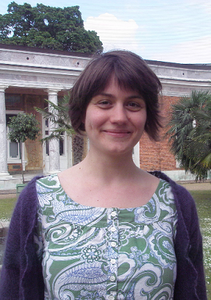
Nicole Radde is a Professor of Mathematical Modeling and Simulation of Cellular Systems at the Institute of Stochastics and Applications , University of Stuttgart. Her research focuses on developing mathematical methods to understand intracellular regulation processes, collaborating closely with molecular and cellular biologists. She leads projects in systems biology, including membership in the Excellence Cluster 'Data-Integrated Simulation Science (EXC 2075)', the Research Unit FOR5151 (QuaLiPerF), and the Stuttgart Research Center for Systems Biology (SRCSB). Radde holds a PhD in Applied Mathematics (2007) from the University of Cologne and has held academic positions at the Institute for Systems Theory and Automatic Control since 2008. Her work integrates computational modeling, statistical inference, and experimental data to address challenges in epigenetics, drug metabolism, and synthetic biology. Her research interests include dynamic modeling of cellular systems, parameter estimation, and network topology analysis. Recent articles highlight contributions to Bayesian modeling of time-series data, epigenetic memory systems, and the impact of process history in bioprocess optimization. Radde has contributed to interdisciplinary teams advancing systems medicine and computational biology, with notable involvement in projects like the Graduate School GRK 3112 (EpiSignal) and the Cell Death & Disease journal. Her work bridges theoretical and applied research, emphasizing reproducibility and translational impact.
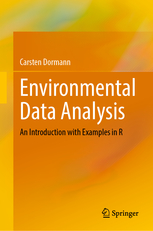
Carsten Dormann is a Full Professor at the University of Freiburg since 2011, working in the Department of Biometry and Environmental System Analysis within the Faculty of Biology. His work bridges statistical methodology with ecological applications, focusing on improving analytical approaches in environmental science. He leads research on statistical ecology, species distribution modeling, and plant-pollinator interactions, with a strong emphasis on methodological rigor and evidence-based environmental science. Professor Dormann completed his Diploma (equivalent to an MSc) in Biology at the University of Kiel (1996), followed by a PhD in Plant Ecology from the University of Aberdeen (2001) under Dr. Sarah Woodin and Prof. Steve Albon. He earned his Habilitation at the University of Göttingen (2008), and worked as a PostDoc and Senior Research Scientist at the Helmholtz Center for Environmental Research-UFZ (2002-2011) before joining Freiburg. Dr. Dormann's research focuses on comparing, challenging and improving the toolbox of statistical ecology . He investigates how ecological datasets, often small but complex, can be properly analyzed when common statistical approaches may fail. His work emphasizes formal statistical integration of ecological models and data , advocating for rigorous representation of ecological understanding through quantitative predictions. He champions an evidence focus in environmental science , drawing parallels with evidence-based medicine to promote transparent evaluation of causal mechanisms. Specific areas include spatial autocorrelation, null models, collinearity, species distribution modeling, and plant-pollinator interactions. His recent publications reveal a strong focus on ecological network analysis, species distribution modeling under climate change, and methodological improvements in ecological statistics. The research spans theoretical developments in network topology and practical applications in conservation, with increasing integration of machine learning approaches while maintaining ecological interpretability. A notable trend is the emphasis on temporal dynamics in ecological systems and developing more robust methods for predicting ecological responses to environmental change. Professor Dormann currently supervises twelve PhD students across various ecological and statistical topics, with an extensive record of past supervision spanning over thirty doctoral candidates. His teaching contributions include authoring the textbook Environmental Data Analysis: An Introduction with Examples in R (2017) and developing statistics courses for environmental sciences. He maintains an active scholarly blog discussing methodological challenges in ecology, with recent posts addressing species richness metrics, bias-variance trade-offs, and the relationship between ecological science and policy. His work bridges theoretical statistical development with practical ecological applications, emphasizing scientific credibility and methodological rigor throughout.
Lennart Oelschläger is a researcher at Universität Bielefeld , affiliated with the Faculty of Business Administration and Economics and specifically the Department of Empirical Methods . He serves as a research assistant to Prof. Dr. Bauer and contributes to the Bielefeld Graduate School in Theoretical Sciences as a member. His work focuses on econometric modeling and financial data analysis, with a particular emphasis on discrete choice modeling and decision-making heterogeneity. His research includes the development of computational tools like the fHMM package for hidden Markov model applications in financial time series analysis and the RprobitB package for Bayesian probit choice modeling. He also serves as an E-Learning Officer in the Faculty of Business Administration, demonstrating his commitment to digital teaching initiatives. His publications highlight innovative applications of hidden Markov models for financial market regime detection, Bayesian estimation techniques, and numerical optimization methods. His work bridges theoretical statistics with practical applications in financial econometrics and behavioral economics.
Dr. Alexander Winkler serves as a Group Leader in the Department of Biogeochemical Integration at the Max Planck Institute for Biogeochemistry in Jena, Germany. His research focuses on the complex interactions between the atmosphere and biosphere, particularly examining energy, water, and carbon exchanges within the Earth system. He leads the research group on Atmosphere-Biosphere Coupling, Climate and Causality, and contributes significantly to the USMILE ERC Project that explores statistical and machine learning applications in Earth system research. Winkler's research interests span land-atmosphere interactions, climate-carbon cycle feedbacks, and the application of modern statistical and machine learning methods to Earth system science. His work particularly emphasizes hybrid modeling approaches that combine process-based and data-driven models to better understand land-atmosphere interactions. He investigates how rising atmospheric CO 2 concentrations affect Earth observations and model simulations through causal inference techniques, and examines constraints on key entities in the climate-biosphere continuum by linking multi-model ensemble simulations with observational data. His recent publications reveal a strong trend toward integrating machine learning with traditional Earth system modeling, with significant contributions in carbon cycle dynamics, climate-carbon feedbacks, and vegetation responses to climate change. His research demonstrates how hybrid modeling approaches can enhance our understanding of complex Earth system processes, particularly in disentangling the effects of rising CO 2 on land-atmosphere exchanges of carbon and water. Winkler actively contributes to academic education, teaching courses such as 'Klimatologie und Klimawandel' at Friedrich-Schiller-Universität Jena's Chemisch-Geowissenschaftliche Fakultät, and has previously taught 'Terrestrial Ecosystem Processes & Carbon Feedbacks within Earth System Models' at Universität Hamburg. His teaching reflects his research expertise, focusing on the intersection of climate science, carbon cycle dynamics, and advanced data analysis techniques.
Tania Kosenkova is a researcher at the University of Potsdam , affiliated with the Department of Mathematics. Her work centers on advanced topics in probability theory and stochastic processes, particularly focusing on Lévy-type processes, statistical inference, and random dynamical systems under Lévy noise. Her research includes functional limit theorems , characterization of Lévy processes , and transportation distances between Lévy measures . She actively teaches courses such as Statistics for Teacher Education , Stochastic Models , and Limit Theorems for School Teaching , reflecting her dual focus on theoretical and pedagogical applications. Her publications reveal a consistent engagement with Lévy-driven SDEs , jump process analysis , and stochastic approximation schemes . While no formal awards are listed, her work has been featured in journals like Journal of Theoretical Probability and Stochastic Processes and their Applications , often in collaboration with researchers such as A. Kulik and J. Gairing.
Prof. Dr. Roland Langrock holds the Chair of Statistics and Data Analysis at the Faculty of Economics, University of Bielefeld . He is a spokesperson for the Center for Statistics and a subproject manager in the Transregio 212 NC³ collaboration. His research spans ecological statistics, sports analytics, and time series modeling. 2026–present: Principal investigator for "Data-based indication of fraud in live betting" (DFG) 2025–present: Subproject manager D06 in TRR 212 NC³ 2021–present: ERASMUS representative for Master of Statistical Sciences Research Interests: His work focuses on hidden Markov models for analyzing animal movement, sports performance, and commercial data. Key applications include marine predator behavior , football match dynamics , and fraud detection in betting . He develops flexible statistical frameworks for state-switching processes across domains. Scientific Awards: Multiple German Research Foundation grants (2017–2026) and participation in EU-funded projects. Notable publications in Journal of the Royal Statistical Society , Ecology Letters , and Science . Additional Roles: Member of the Bielefeld Graduate School in Theoretical Sciences, organizer of advanced statistical methods courses, and contributor to software packages like moveHMM . His collaborations extend to marine biology (blue whales), subterranean rodent studies, and retail demand forecasting.
Prof. Dr.-Ing. Robert Flassig is a Research Professor for Technical Energy Efficiency at the Brandenburg University of Applied Sciences , focusing on interdisciplinary research at the intersection of energy systems, process engineering, and computational methods. With extensive collaborations across institutions like the Max Planck Institute and TU Berlin, his work emphasizes methodological innovation in mathematical modeling, machine learning, and optimization for industrial applications. Research Highlights: Technical Energy Efficiency and Resource Management Machine Learning for Biological and Engineering Systems Reactor Network Synthesis via Flux Analysis Stochastic Modeling of Actomyosin Dynamics Scientific Recognition: 2017 DECHEMA Young Talent Award 2013 Sbv Improver 1st Place (Nature) 2009 DREAM 4 In Silico Challenge 3rd Place Key Collaborations: Rolls-Royce Deutschland, Max Planck Institute, TU Berlin, and Fraunhofer IPK. His recent projects ( VITVI , AutoBlisk ) integrate AI for virtual engine development and multidisciplinary design optimization, securing 1.5M€ in research funding.
Dr. Bracha Laufer is a senior lecturer at the School of Electrical Engineering , part of the Iby and Aladar Fleischman Faculty of Engineering at Tel Aviv University. Her research focuses on acoustic source localization, speech signal processing, and machine learning techniques for audio engineering. Her recent work explores conformal prediction and manifold-based approaches for robust source localization, deep learning architectures for sound source separation, and simplex geometry in multichannel signal analysis. These publications highlight interdisciplinary applications of machine learning and statistical methods in acoustics. Dr. Laufer's research integrates Bayesian inference , probabilistic graphical models , and uncertainty quantification to address challenges in adverse acoustic environments. She has contributed to advancements in multi-microphone speaker localization and speech inpainting .
Prof. Assaf Tal is a faculty member in the Department of Bio-Medical Engineering at The Iby and Aladar Fleischman Faculty of Engineering, Tel Aviv University. His research focuses on developing advanced neuroimaging methodologies using magnetic resonance spectroscopy (MRS) and imaging (MRI) to investigate brain function and disease mechanisms. His primary research interests center on neuroimaging physics and brain disease monitoring , with specific emphasis on: Developing novel MRS/MRI techniques combining spin physics and signal processing Tracking neurochemical changes during cognitive processes Detecting and monitoring neurodegenerative diseases including multiple sclerosis, traumatic brain injury, and Alzheimer's Disease Understanding brain encoding mechanisms across neurochemical, electrophysiological, and structural levels His work bridges biomedical engineering with clinical neuroscience to create improved diagnostic and monitoring tools. Prof. Tal's recent publications (2022-2025) demonstrate strong focus on functional MRS and advanced spectral-temporal analysis , with significant contributions to motion correction, uncertainty estimation, and microstructural modeling in neuroimaging. His research shows increasing integration of computational methods like Bayesian inference and machine learning for precision neuroimaging. His laboratory develops specialized software tools including the Visual Display Interface (VDI) for MRS data processing and simulation, supporting both preclinical and clinical neuroimaging research.
Denny Wu is a Faculty Fellow at the New York University Center for Data Science and affiliated with the Flatiron Institute 's Center for Computational Mathematics. He completed his PhD in Computer Science at the University of Toronto and the Vector Institute for Artificial Intelligence , advised by Assistant Professors Jimmy Ba and Murat A. Erdogdu . Prior, he earned an undergraduate degree in Computational Biology from Carnegie Mellon University as a research assistant under Ruslan Salakhutdinov . His research focuses on Theoretical Machine Learning , particularly Neural Network Optimization , Generalization Performance , and High-Dimensional Statistics . His work has been presented at top conferences like NeurIPS , ICML , and AISTATS , alongside publications in journals such as Nature Protocols and Journal of Statistical Mechanics: Theory and Experiment . Collaborative efforts include partnerships with RIKEN AIP 's Deep Learning Theory Team and Microsoft's Deep Learning Group. Borealis AI Fellowship 2023 UChicago Rising Star in Data Science Denny actively collaborates with institutions like the Vector Institute , RIKEN AIP , and Flatiron Institute , focusing on mathematical frameworks for understanding deep learning systems.
Henryk Zähle is a Full Professor of Stochastics at Saarland University's Department of Mathematics, where he has held a W3 position since 2014. He previously served as a W2 Professor (2013-2014) and W1 Junior Professor (2010-2012) at Saarland, and earlier at TU Dortmund University (2007-2010). He earned his Ph.D. in Mathematics from Technical University Berlin (2004) and a Diploma in Mathematics from University of Göttingen (2000). His research focuses on statistical robustness of risk measures asymptotic theory for empirical processes quantitative risk management Markov decision models insurance and financial mathematics with methodological contributions to bootstrapping, quasi-Hadamard differentiability, and sensitivity analysis. Article trends show sustained engagement with stochastic process theory nonparametric estimation robust statistical functionals applications to insurance and finance asymptotic error distributions time series analysis spanning both theoretical and applied domains. Scientific awards include Marie Curie Fellowship (University of Warwick, 2001) DFG Fellowship (2000-2003) He has supervised numerous Ph.D., Master's, and Bachelor's theses on topics like risk measure asymptotics empirical process convergence copula robustness Markov decision sensitivity nonparametric risk estimation statistical bootstrap methods and serves as Associate Editor for Metrika .
Jörg Breitung is a Professor of Econometrics and Statistics at the Institute of Econometrics and Statistics within the Faculty of Management, Economics and Social Sciences (WiSo Faculty) at the University of Cologne since 2014. He also serves as a Research Professor of the German Bundesbank in Frankfurt since 2002. Research Focus: Panel Data Analysis Time Series Analysis Forecasting Financial Econometrics Scientific Contributions: Developed advanced GMM estimators for spatial regression models Innovative approaches for assessing causality in frequency domains Created robust tests for slope homogeneity in panel data Pioneered methods for serial correlation testing in fixed effects models Contributed to nonlinear panel data modeling and bootstrap techniques Honors and Editorial Roles: Associate Editor of International Journal of Forecasting (2019-) Associate Editor of Journal of Business and Economic Statistics (2017-) Associate Editor of Econometric Reviews (2014-) Contributed to leading journals like Econometrica and Journal of Econometrics
Dr. Julia Moeller is a Junior Professor of Educational Psychology with a focus on Development under Risk Conditions at the University of Leipzig, while also covering the Professorship for Educational-Psychological Diagnostics and Differential Psychology at the Faculty of Educational Sciences, University of Erfurt. Her work bridges educational psychology, developmental science, and methodological innovation in studying moment-to-moment processes in learning and development. Dr. Moeller's research focuses on educational psychology and developmental processes with particular emphasis on how students experience motivation and emotions in learning situations. Her work employs innovative methodologies including the Experience Sampling Method (ESM) to capture in-the-moment dynamics of achievement motivation. She has developed the DYNAMICS Framework for studying moment-to-moment development in achievement motivation, which represents a significant contribution to person-oriented research in educational contexts. Analysis of Dr. Moeller's recent publications reveals a strong focus on understanding the complex interplay between motivation, emotions, and learning outcomes in educational settings. Her work increasingly incorporates advanced statistical approaches including network analysis and causal inference methods to examine momentary processes. She has made substantial contributions to understanding student emotions during the COVID-19 pandemic and how boredom relates to creativity in educational contexts. Her research consistently emphasizes the importance of studying psychological processes as they unfold in real-time rather than relying solely on retrospective assessments. Dr. Moeller has been actively involved in methodological advancements in psychological science, particularly advocating for within-person approaches that can capture individualized patterns of motivation and emotion. Her work on the DYNAMICS Framework represents an important step toward more nuanced understanding of how students' motivational experiences vary across different learning situations. She has contributed to practical guidance for implementing the Experience Sampling Method through her accepted paper 'So you want to do ESM? Ten Essential Topics for Implementing the Experience Sampling Method.'
Prof. Dr. Benedikt Wirth is a Professor of Mathematics at the University of Münster, Germany, affiliated with the Institute for Analysis and Numerics within the Department of Mathematics and Computer Science. He is an active researcher and educator specializing in optimization and calculus of variations, with significant contributions to mathematical imaging and shape analysis. His research interests include image processing, scientific computing, numerical analysis, optimization, shape spaces, geodesics in shape space, variational methods, elastic deformation, and optimal transport. Wirth has developed innovative mathematical frameworks for shape analysis, particularly focusing on Riemannian metrics for shape spaces and variational approaches to shape comparison and optimization. His recent publications (2023-2025) demonstrate continued leadership in mathematical optimization, with particular focus on PET reconstruction, dimension reduction techniques, manifold embeddings, and branched transport theory. His work bridges theoretical mathematics with practical applications in medical imaging and computer vision, showing particular strength in connecting geometric analysis with computational methods. CRC 1450 - A05: Targeting immune cell dynamics by longitudinal whole-body imaging and mathematical modelling CRC 1450 - A06: Improving intravital microscopy of inflammatory cell response by active motion compensation EXC 2044 - C1: Evolution and asymptotics EXC 2044 - C2: Multi-scale phenomena and macroscopic structures EXC 2044 - C3: Interacting particle systems and phase transitions EXC 2044 - C4: Geometry-based modelling, approximation, and reduction Prof. Wirth actively supervises numerous bachelor's and master's students, with over 40 theses completed under his guidance since 2015. His teaching portfolio includes courses on inverse problems, numerical methods for partial differential equations, shape spaces, optimization, and optimal transport. He has consistently maintained an active research program while contributing significantly to the education of the next generation of mathematicians.
Clélia de Mulatier is an Assistant Professor at the University of Amsterdam , affiliated with both the Institute for Theoretical Physics and the Informatics Institute . She leads research at the intersection of statistical physics, information theory, and computer science , focusing on theoretical and numerical methods for complex systems . Her work spans collaborations with experimentalists in neuroscience and biology , and she actively participates in educational programs across multiple Dutch universities. Research Labs : Computational Soft Matter Lab, Computational Science Lab Affiliations : Dutch Institute for Emergent Phenomena (DIEP), Netherlands Platform Complex Systems (NPCS) Her research develops minimally complex spin models for high-order data analysis , applying exact Bayesian model selection to uncover hidden variable communities in binary datasets. This work has produced open-source tools like MinCompSpin and MinCompSpin_Greedy for different system sizes. Publications demonstrate expertise in tensor networks for dimensional reduction , epidemic modeling , and branching random walks in confined environments . Teaching includes Python programming , complex systems theory , and statistical inference for physics students across multiple institutions. She serves as program committee member for International Conference on Computational Science and organizes academic discussions through initiatives like Behind the CV: story from a Physicist .