Refik Soyer is a Professor of Statistics at The George Washington University. His research focuses on Bayesian statistics, reliability modeling, decision analysis, and time series analysis. He has made significant contributions to the application of Bayesian methods in reliability engineering, queueing systems, and adversarial risk analysis. Education: D. Sc. in Statistics (1985), George Washington University His recent publications highlight advancements in Bayesian reliability analysis, adversarial decision frameworks, and computational methods for time series and queueing systems. Areas of emphasis include dynamic INAR processes, accelerated life testing, and software failure modeling. Soyer's work bridges theoretical statistics with practical applications in call centers, healthcare fraud detection, and risk management.
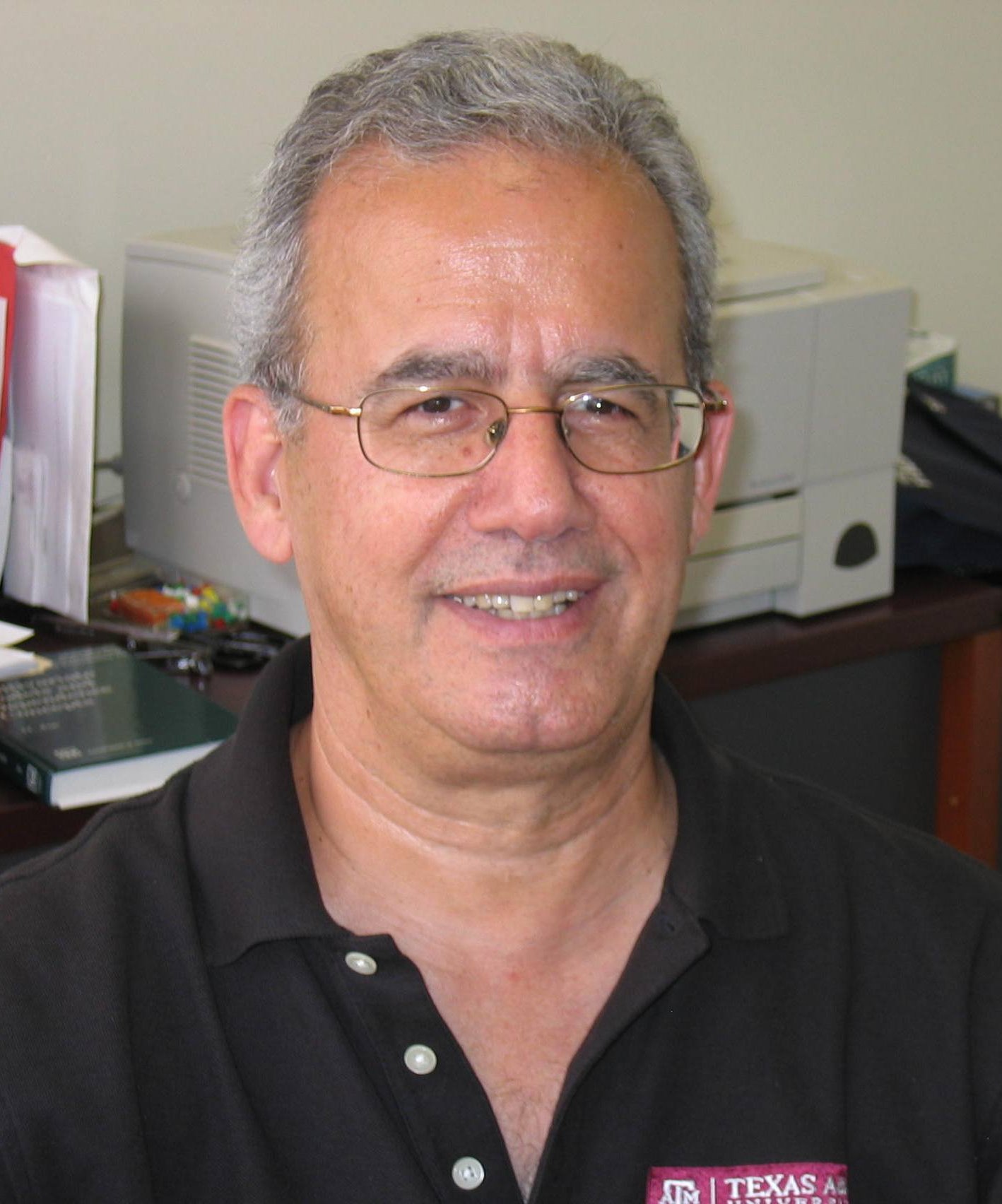
Mohsen Pourahmadi is a Professor in the Department of Statistics at Texas A&M University, part of the College of Arts & Sciences. His research focuses on developing methodologies for modeling covariance matrices in multivariate and time series data, with applications to financial analysis, longitudinal studies, neuroeconomics, and high-dimensional data. Key tools include graphical lasso algorithms, Cholesky decomposition, and Bayesian approaches. He emphasizes extending generalized linear models (GLM) to covariance matrix estimation, leveraging prediction theory and stochastic processes. Education details are not explicitly provided in the text. His work spans theoretical advancements in covariance estimation, such as sparse VAR models, nonstationary process analysis, and regularized multivariate regression. He has contributed to applications like detecting cyber attacks on infrastructure systems and analyzing breast cancer data through Bayesian networks. Research interests include time series graphical models, antedependence models for longitudinal data, and regularization techniques for high-dimensional covariance matrices. His recent work explores fused-lasso penalties, Bayesian correlation matrix estimation, and stationary subspace analysis. Pourahmadi has authored numerous articles on topics ranging from multivariate volatility modeling to nonparametric covariance estimation, emphasizing both computational efficiency and theoretical rigor.
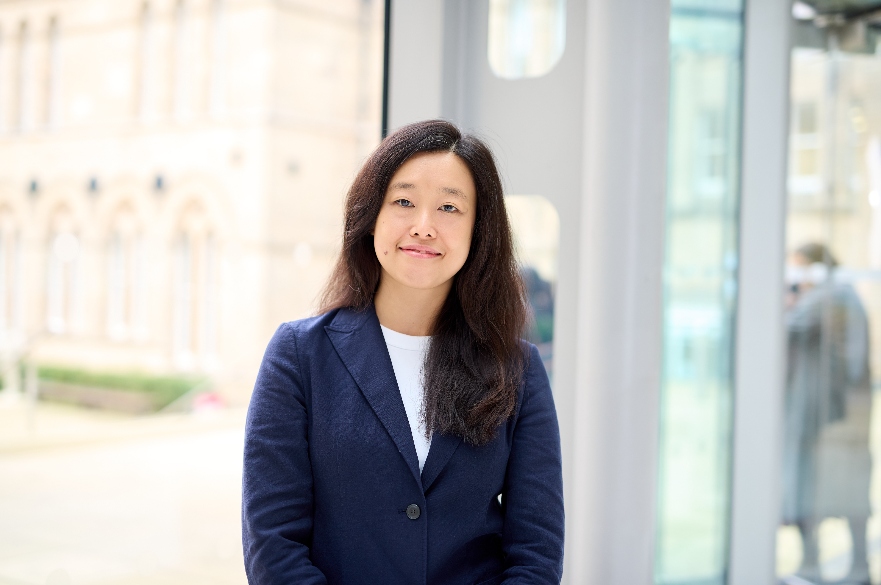
Joshua Loftus is a Professor of Statistics and Data Science at the London School of Economics (LSE), Department of Statistics. His research focuses on improving data science practices to reduce bias and enhance fairness in algorithms, particularly addressing social harms and scientific reproducibility. He develops methods for statistical inference post-model selection and uses causality to analyze algorithm fairness and interpretability. His work bridges high-dimensional statistics, causal inference, and ethical AI, with a strong emphasis on practical applications using R in data science education. Before joining LSE, Loftus earned his PhD in Statistics at Stanford University, served as a Research Fellow at the Alan Turing Institute (affiliated with the University of Cambridge), and was an Assistant Professor at New York University (2017–2020). His research interests extend to the societal implications of technology, advocating for systems that prioritize human values over technical efficiency. Key research themes include counterfactual fairness, causal reasoning in algorithmic systems, and disaggregated interventions to reduce inequality. His recent work explores temporal aspects of fairness, model-agnostic auditing, and the integration of ethical frameworks into machine learning pipelines. While no scientific awards are explicitly listed, his contributions to foundational AI ethics and statistical methodology are widely recognized in academic circles. Advising and grant details are not provided in the source text, but his leadership in interdisciplinary research collaborations, such as the Turing Institute affiliation, highlights active engagement in research networks. Loftus is part of the LSE’s vibrant data science community, contributing to both theoretical advancements and applied solutions for equitable technology deployment.
Ronald Coifman is the Sterling Professor of Mathematics and Professor of Computer Science at Yale University. His research focuses on nonlinear analysis, scattering theory, complex analysis, numerical analysis, and their applications in data science, signal processing, and biomedical imaging. He holds the National Medal of Science and is a member of the National Academy of Sciences and the American Academy of Arts and Sciences. Coifman's work bridges pure mathematics and applied sciences, emphasizing harmonic analysis, manifold learning, and data-driven modeling. His contributions include foundational advancements in wavelet theory, diffusion maps, and nonlinear dimensionality reduction techniques. Key innovations include the development of empirical intrinsic geometry for analyzing complex systems and the use of Wasserstein distances in high-dimensional data analysis. His academic portfolio includes over 250 publications since the 1960s, spanning topics from theoretical mathematics to practical medical diagnostics. Notable applications include methods for stroke detection, medical imaging analysis, and anomaly detection in dynamic systems. Coifman collaborates across disciplines, integrating computational methods with domain-specific challenges in biology, chemistry, and engineering. Education: Ph.D. in Mathematics from the University of Geneva (1965) Awards: National Medal of Science (2001), Member of NAS (1993), Member of AAAS (2006) Key Projects: Development of diffusion maps, manifold learning algorithms, and empirical geometry frameworks Coifman's current research explores the intersection of machine learning and mathematical analysis, with recent focus on intrinsic data organization, emergent dynamical models, and scalable computational methods for large datasets.
Tommi Mäklin is a researcher affiliated with the University of Helsinki, conducting interdisciplinary research at the intersection of bioinformatics, microbiology, and genomic epidemiology. His work focuses on bacterial pathogen analysis, metagenomics, and the application of computational methods to study infectious diseases. Mäklin has contributed to high-impact studies on topics such as colibactin-producing Escherichia coli's link to cancer incidence, hospital-acquired infections during the pandemic, and enhanced metagenomic analysis tools like TRACS and Themisto. Key affiliations include visiting research positions at the University of Oslo (2024) and EMBL European Bioinformatics Institute (2023–2023), where he received the Theory@EMBL Visitor fellowship. His research has been featured in prominent journals like Nature Communications and The Lancet Microbe , with findings highlighted in media such as Yle and HS. Education: Not explicitly stated in provided materials. Research Interests: Genomic epidemiology, bacterial pathogen transmission, metagenomics, antibiotic resistance, and computational methods for microbial analysis. His recent work explores geographical cancer incidence correlations with bacterial exposure, hospital pathogen surveillance, and scalable genomic tools for outbreak analysis. Awards include recognition for methodological advancements in bioinformatics and microbial genomics.
Associate Professor Ahmet Şensoy specializes in Finance at Bilkent University's Faculty of Business Administration. He holds a PhD in Mathematics from Bilkent (2013) and has professional experience at Borsa Istanbul's Research and Business Development Department (2012–2017), with visiting research stints at Nasdaq OMX (2014–2015). His research focuses on Asset Pricing, Market Microstructure, Sustainability, and Corporate Finance. He has received the TÜBİTAK Incentive Award (2018) and TÜBA Young Scientist Award (2020). He serves as an associate editor for journals like International Review of Financial Analysis and a guest editor for Annals of Operations Research . His teaching includes Advanced Empirical Finance and Risk Management. Research Interests: - Asset Pricing Mechanisms - Cryptocurrency Market Dynamics - ESG Integration in Corporate Strategy - Behavioral Finance and Investor Behavior - Regulatory Impact on Corporate Productivity Publications highlight interdisciplinary themes such as pandemic economics (Production and Operations Management), green credit policies (Technological Forecasting and Social Change), and cryptocurrency market structures (Journal of Financial Research). His work bridges theoretical finance with real-world applications in emerging markets and sustainability. Editorial Roles: International Review of Financial Analysis International Review of Economics and Finance Research in International Business and Finance Emerging Markets Finance and Trade Grants and Advising: While specific grants aren't listed, his extensive publication record across top-tier journals indicates substantial research engagement. He collaborates with institutions like the TÜBİTAK and TÜBA.
Myrto Limnios is a Bernoulli Instructor at the Institute of Mathematics at École Polytechnique Fédérale de Lausanne (EPFL), holding dual appointments as Lecturer in the School of Basic Sciences - Mathematics Section and Scientist in the Mathematics Department - Geometry section. Her office is located at CM 1 618 (Centre Midi), Station 10, 1015 Lausanne, Switzerland. Dr. Limnios's academic journey began with her PhD at Centre Borelli, ENS Paris-Saclay, Université Paris-Saclay, under the supervision of Prof. Nicolas Vayatis and Ioannis Bargiotas. Her doctoral thesis, Rank Processes and Statistical Applications in High Dimension , established her expertise in statistical methodology. Following her PhD, she completed a postdoctoral fellowship at the Copenhagen Causality Lab of the University of Copenhagen. Her research program focuses on nonparametric statistics, statistical learning theory, and stochastic processes with biomedical applications. She specializes in causal learning methods for event processes using conditional local independence testing (collaborating with Niels Richard Hansen) and concentration results for k-sample Rank and U-processes (with Prof. Stephan Clémençon of Télécom Paris). Her work bridges theoretical advances with practical implementations in epidemiology, neuroscience, and medical diagnostics. Analysis of her recent publications reveals a strong trend toward developing ranking-based statistical methods with applications to anomaly detection, two-sample testing, and causal inference. Her work demonstrates increasing sophistication in handling high-dimensional event processes while maintaining theoretical rigor in statistical guarantees. Among her notable achievements is the Bernoulli Instructorship at EPFL and organizing the Women in Mathematics conference at EPFL in May 2025, which hosted over 60 participants from Switzerland, France, and Spain. She was also honored with a research visit to the Simons Institute for the Theory of Computing at UC Berkeley in November 2024, hosted by Prof. Peter Bartlett. Dr. Limnios teaches advanced statistical methods at EPFL, including Regression Methods (covering linear regression, analysis of variance, diagnostics, and variable selection) and Empirical Processes (focusing on controlling nonasymptotic behavior of estimator collections). Her GitHub activity shows active development of statistical software for independence testing and anomaly ranking. She maintains active collaborations with the Copenhagen Causality Lab, Télécom Paris, and biomedical research groups, particularly through her work on postural control analysis for Parkinsonian syndromes and epidemiological modeling of infectious diseases.
Sai Praneeth Karimireddy is an Assistant Professor in the Thomas Lord Department of Computer Science at the University of Southern California (USC), with a courtesy appointment in the Ming Hsieh Department of Electrical and Computer Engineering. He previously held an SNSF postdoctoral fellowship at UC Berkeley under Michael I. Jordan and earned his PhD at EPFL advised by Martin Jaggi. He co-leads the Federated Learning and Data Quality working group at MONAI (NVIDIA) and collaborates with researchers at Apple Research. His research lies at the intersection of optimization, machine learning, statistics, and economics, with a strong focus on federated learning, privacy-preserving machine learning, data valuation, and AI for healthcare. He investigates how data quality, privacy, and incentives shape collaborative ML systems, especially in high-stakes domains like medicine. His work has been deployed at companies such as Meta, Google, OpenAI, and Owkin. His recent publications span top-tier venues including NeurIPS, ICML, ICLR, and JMLR, with influential contributions such as the SCAFFOLD algorithm for federated learning. His research shows a consistent trend toward building robust, private, and incentive-compatible collaborative learning systems, with increasing emphasis on real-world deployment in healthcare and decentralized data markets. 2023 SNSF Mobility Fellowship 2022 Patrick Denantes Memorial Prize for best thesis in computer science 2022 EPFL thesis distinction (top 8%) 2021 Chorafas Foundation Prize for exceptional applied research Capitol One Fellow (2025) He is actively mentoring PhD students and leads a research group focused on foundational and applied challenges in federated and privacy-preserving ML. He teaches graduate courses at USC, including CSCI 599 on Optimization for Machine Learning and CSCI 699 on Privacy-Preserving Machine Learning. He serves as an area chair for ICLR 2025 and co-organizes major workshops on incentives in data sharing and federated learning. His lab collaborates with institutions like NVIDIA, Apple, and Argonne National Laboratory, and he is building a research program centered on sustainable, equitable, and trustworthy AI ecosystems.
Haoyi Xiong is an active academic researcher in artificial intelligence, machine learning, and data science, with extensive publications in top-tier journals and conferences including IEEE TPAMI, NeurIPS, ICML, KDD, and AAAI. His work spans explainable AI, graph neural networks, diffusion models, remote sensing, and large language models. Research Interests: Explainable AI (XAI) and model interpretability Graph Neural Networks and contrastive learning Diffusion models and generative AI Medical and remote sensing image analysis Large language models and autonomous agents Learning to rank and web search His recent publications (2023–2025) show a strong trend toward self-supervised learning , model robustness , and integration of LLMs with structured data and knowledge graphs . He frequently collaborates with researchers from major tech and academic institutions. Scientific Awards: No explicit awards mentioned in the provided text. Advising and Grants: While no direct mention of students or grants, his role as a senior author on numerous papers suggests he advises graduate students and likely leads funded research projects in machine learning and AI. His work on frameworks like COLTR , GS2P , and MUSCLE indicates leadership in developing scalable AI systems. Labs and Teams: Though not explicitly stated, his frequent collaboration with Jiang Bian, Dejing Dou, and Dawei Yin suggests affiliation with a well-established AI research lab or industry-academia partnership focused on data mining, intelligent systems, and large-scale learning.
Lukasz Szpruch serves as Professor at the University of Edinburgh's School of Mathematics and Programme Director for Finance and Economics at The Alan Turing Institute. He leads the FAIR research programme on responsible AI adoption in financial services and co-investigates the UK Centre for Greening Finance & Investment (CGFI), directing partnerships with the National Office for Statistics, Accenture, Bill & Melinda Gates Foundation, and HSBC. He maintains affiliations with the Oxford-Man Institute for Quantitative Finance. His research focuses on probability theory , stochastic analysis , and theoretical machine learning , with current investigations into deep learning foundations, mean-field models, reinforcement learning, game theory, multiagent systems, and computational optimal transport. These theoretical frameworks are rigorously applied to financial economics problems including market dynamics, risk modeling, and regulatory compliance, emphasizing mathematical precision in AI system design. Recent publications reveal a strategic shift toward responsible AI deployment in finance , addressing large language model governance, synthetic data privacy, and non-asymptotic sampling theory. His work consistently bridges abstract mathematics with financial sector applications, particularly through the FAIR programme's industry collaborations that translate theoretical advances into practical frameworks for trustworthy AI adoption. As Principal Investigator of FAIR and CGFI co-Investigator, Szpruch manages significant research funding streams focused on AI ethics in financial services and sustainable finance. His academic leadership drives cross-sector initiatives where theoretical research directly informs regulatory policy development and industry best practices, though specific student mentoring details remain unspecified in source materials. Szpruch operates at the nexus of three critical research ecosystems: the FAIR programme's industry partnerships, CGFI's sustainability-focused finance research, and the Oxford-Man Institute's quantitative finance initiatives. These interconnected teams combine mathematical rigor with real-world financial applications, developing frameworks for AI assurance, green finance metrics, and synthetic data validation that address systemic challenges in modern financial systems.
Dr. Elaine Chen serves as Senior Lecturer in Business Analytics and Course Leader for the MSc Business Analytics and Artificial Intelligence at Nottingham Business School, Nottingham Trent University. Her teaching emphasizes practical applications of data and AI technologies for business decision-making, with dedicated focus on accessibility for diverse student backgrounds across technical and strategic domains. Her academic credentials include: PhD in Computing Science MSc in Business Information Technology Postgraduate Certificate in Academic Practice BTech (Hons) in Business Information Systems Chen's research bridges educational and business contexts through data-AI integration: Generative AI adoption in higher education, particularly for neurodivergent/disabled students Human-AI collaboration frameworks in organizational settings SME applications for AI-driven efficiency and competitiveness Workforce analytics and talent management systems Her work consistently connects technical AI capabilities with real-world implementation challenges. Publication analysis (2023-2025) reveals accelerating focus on generative AI's educational impact and business strategy integration, evolving from her foundational work in social recommender systems (2014-2020) which established methodologies now applied to contemporary AI challenges in business contexts. Her professional recognition includes: Senior Fellow of the Higher Education Academy (HEA) Chen actively supervises PhD candidates in AI education, human-AI collaboration, and workforce analytics domains. Her pedagogy leadership includes designing accredited business analytics curricula and securing teaching innovation projects with documented outcomes in student engagement metrics. Prior industry experience as an automation engineer at Intel informs her practical approach to AI implementation. Current initiatives focus on generative AI ethics frameworks and longitudinal SME adoption studies, extending her established research trajectory into emerging business technology challenges.
Curtis Lee Baker is a Professor in the Department of Ophthalmology & Visual Sciences at McGill University's Faculty of Medicine, with an associate appointment in the Department of Biomedical Engineering. His research focuses on understanding human visual perception through neural mechanisms relevant to real-world visual processing. His laboratory investigates how early visual processing detects complex cues like contrast, texture, and motion to establish figure-ground relationships and depth perception. Key research areas include: Neural mechanisms of second-order vision Texture and motion processing Figure-ground segregation Depth perception from motion parallax Computational modeling of visual cortex Dr. Baker employs diverse methodologies including single-unit electrophysiology, optical imaging, human psychophysics, and machine learning. His recent publications (2022-2014) demonstrate consistent focus on neural processing of visual boundaries, texture perception, and motion-based depth cues, with increasing integration of computational approaches like convolutional neural networks. His work bridges neuroscience, engineering, and computational modeling to understand fundamental visual processing mechanisms. Current students include Ana Ramirez Hernandez, Jinani Sooriyaarachchi, and Ethan Pirso, with several alumni having completed graduate work in neuroscience, physiology, and biomedical engineering. The lab actively recruits students with quantitative backgrounds for projects involving signal processing, machine learning, and neurophysiological data analysis.
Ben Domingue is an Associate Professor at Stanford University's Graduate School of Education and, by courtesy, in the Department of Sociology. His research bridges psychometrics, quantitative methods, and interdisciplinary applications in education, psychology, and social sciences. He leads the development of the Item Response Warehouse, a data resource for psychometrics research, and explores how statistical tools can better measure complex educational and psychological outcomes like reading ability and treatment effects. PhD in Education from the University of Colorado at Boulder (2012). MA and BS in Mathematics from the University of Texas at Austin (2006, 2001). His work focuses on advancing psychometric methodologies, including response time analysis, item-level treatment effects, and predictive accuracy metrics (e.g., InterModel Vigorish). He investigates how genetic and environmental factors interact with educational outcomes and social mobility, using large-scale datasets like the Health and Retirement Study and Add Health. Recent articles emphasize AI-driven psychometric tools, cross-cultural validation of medical assessments, and equity in educational testing. 2024–2025: Associate Professor, Stanford GSE. 2015–2022: Assistant Professor, Stanford GSE. Affiliated: Stanford Center for Longevity, Bio-X, Population Health Sciences. Scientific awards include the Jacobs Foundation Research Fellowship (2022–2024) and AERA Open Outstanding Reviewer (2018, 2019). His advising roles span doctoral and master’s students, with a focus on psychometrics and social-genomic research.
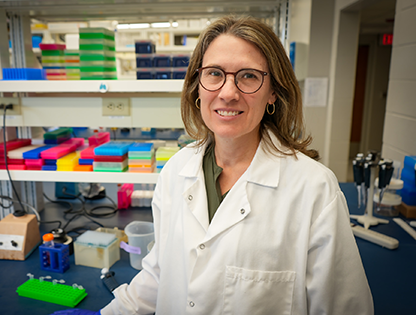
Dr. Mandi de Mestre is a Professor in the Department of Biomedical Sciences at Cornell University's College of Veterinary Medicine. As Director of the Baker Institute for Animal Health and holder of the Dorothy Havemeyer McConville Professorship of Equine Medicine, her research focuses on equine pregnancy biology, placental development, and fetal health. Director, Baker Institute for Animal Health Dorothy Havemeyer McConville Professor of Equine Medicine Affiliated with Cornell's College of Veterinary Medicine Her laboratory investigates: Molecular mechanisms of placental development Genetic causes of early pregnancy loss Congenital musculoskeletal disorders in Thoroughbreds Non-invasive diagnostics for fetal health Comparative studies linking equine and human pregnancy pathologies Recent research trends show strong emphasis on genomic stability, immune interactions during implantation, and epidemiological factors affecting equine pregnancies. Collaborations with institutions like the University of Nottingham and Royal Veterinary College UK highlight her interdisciplinary approach. The Equine Pregnancy Laboratory employs molecular biology, immunology, and genetics to address critical gaps in placental biology, with implications for both veterinary and human medicine.
Gonzalo Manzano Paule is a Ramón y Cajal tenure-track researcher at IFISC (Instituto de Física Interdisciplinar y Sistemas Complejos), a joint research institute of CSIC (Consejo Superior de Investigaciones Científicas) and UIB (University of the Balearic Islands), where he has been working since January 2023. He previously held a Juan de la Cierva Incorporation fellowship (2021-2023), was an ESQ Postdoc at IQOQI Vienna (2020-2021), and a Postdoc at ICTP Trieste (2018-2020) funded by Scuola Normale Superiore. He obtained his PhD in Physics from Universidad Complutense de Madrid in July 2017, followed by a short Postdoc at IFISC (2017-2018). His research interests focus on quantum and stochastic thermodynamics, open quantum systems, information theory, and the foundations of nonequilibrium statistical physics and quantum mechanics. He is particularly interested in applying concepts from nonequilibrium thermodynamics to understand classical and quantum complex systems. While his work is primarily theoretical, he actively seeks collaborations with experimentalists. His research has been featured in popular science journals including Physics, Quanta Magazine, and Diario de Mallorca. He has also collaborated with artist Evarist Torres to merge art and science and has written a popular science article for Investigación y Ciencia (Scientific American). Manzano Paule's recent publications demonstrate a strong focus on quantum thermodynamics, fluctuation theorems, and quantum information processing. His work spans theoretical foundations of quantum thermodynamics to applications in quantum heat engines and molecular motors. A notable pattern in his research is the exploration of how quantum effects can enhance thermodynamic processes and the relationship between information theory and thermodynamics. His scientific achievements have been recognized through prestigious fellowships including the Ramón y Cajal program, Juan de la Cierva Incorporation fellowship, and ESQ Postdoc fellowship. His work has also garnered attention in popular science media, indicating its broader impact beyond academic circles. As an educator, Manzano Paule supervises Master's students and teaches advanced courses including Open Quantum Systems for the Master's Degree in Advanced Physics and Applied Mathematics and the Master's Degree in Physics of Complex Systems. His teaching portfolio also includes Quantum Collective Phenomena, Quantum and Nonlinear Optics, Thermodynamics, and Atomic and Molecular Physics. He currently leads the research project 'QTD-InFlexity Quantum thermodynamics: information, fluctuations and complexity' and participates in the 'CoQuSy Complex Quantum Systems' project. He is also part of the María de Maeztu Unit of Excellence at IFISC, which has received continuous funding since 2008.