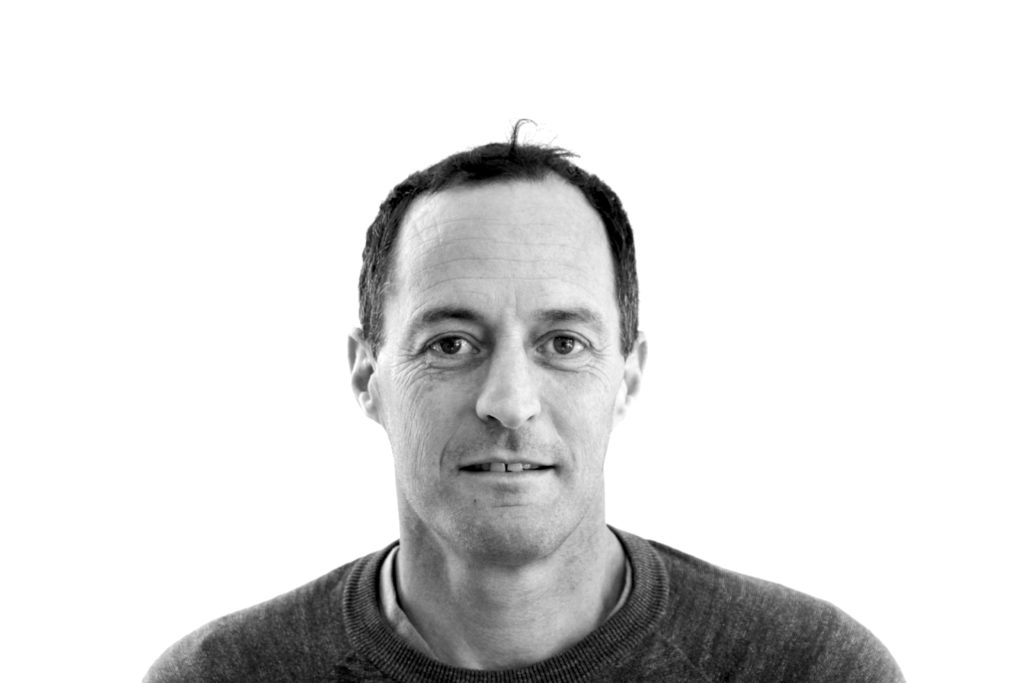
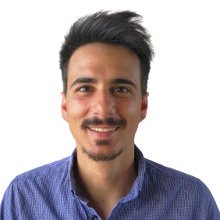
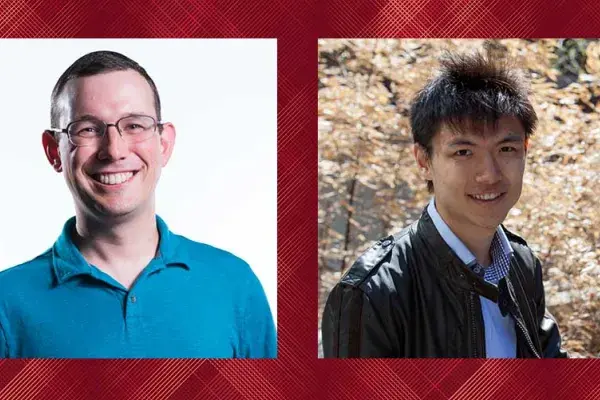
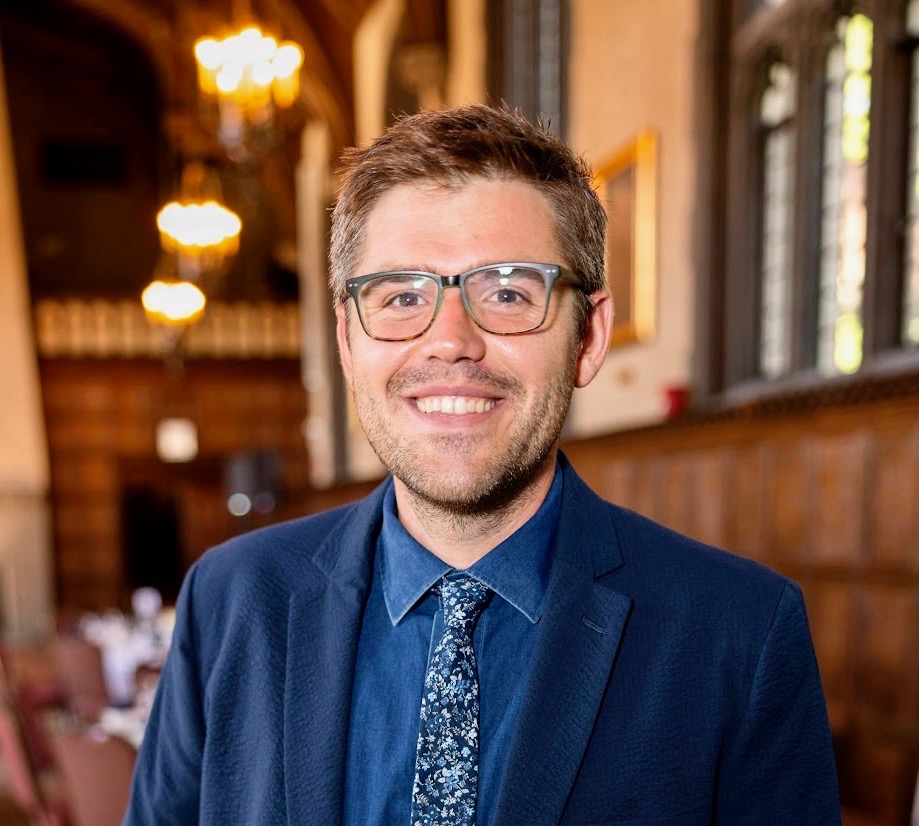
Dan Gutfreund is a Principal Research Scientist and Senior Manager at the MIT-IBM Watson AI Lab, focusing on machine learning with applications to natural language processing and computer vision. He previously held managerial and technical roles at IBM's Haifa Research Lab and was involved in IBM Project Debater. Gutfreund earned his PhD in computer science from the Hebrew University in Jerusalem in 2005. His research spans Neuro-Symbolic AI , Computational Complexity , and Foundations of Cryptography , with notable contributions to datasets like Moments in Time and ObjectNet . His recent work includes multimodal models for the metaverse, generative AI for engineering design, and simulator-assisted training for interpretable systems. Gutfreund's publications reflect expertise in AI applications for supply chain prediction, avatar personalization, and reconciling virtual disputes. He has also explored evolutionary algorithms for software engineering and constraint-based generative models in design tasks.
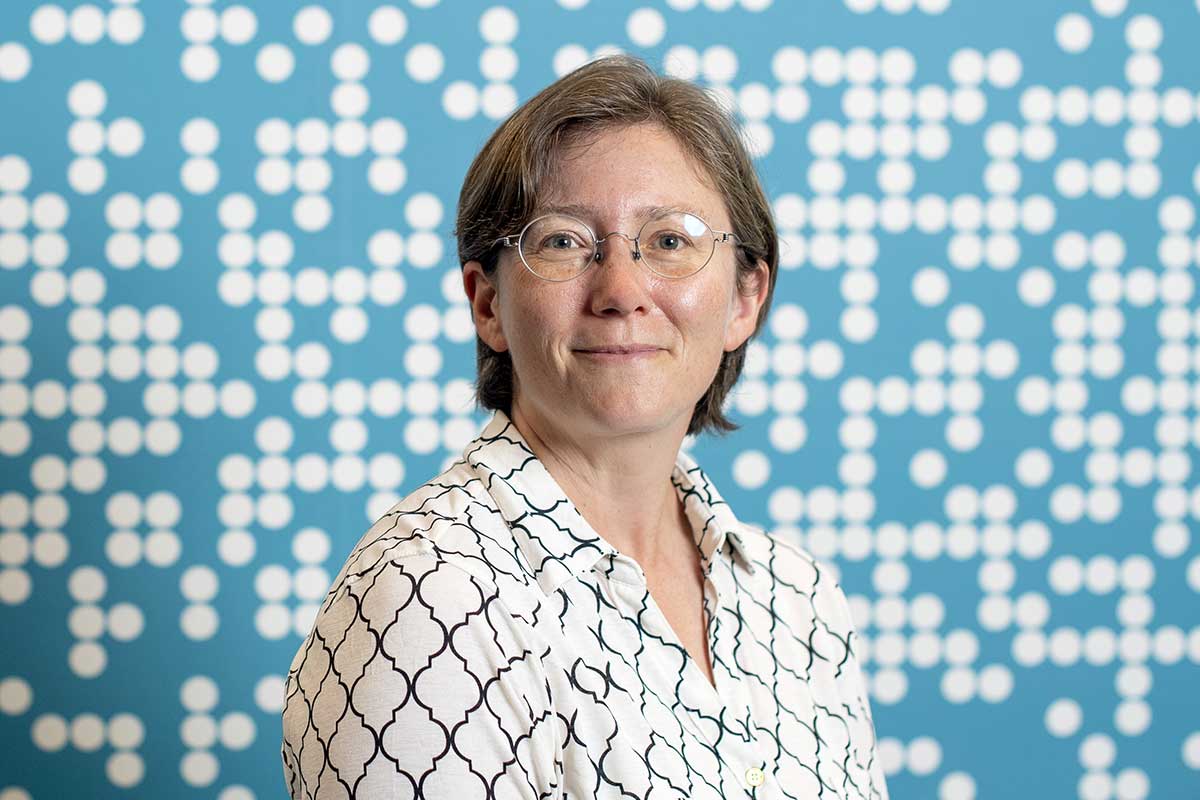
Melanie Tory is a Professor at Northeastern University's Khoury College of Computer Sciences, serving as Professor of the Practice and Director of Data Visualization. Her research focuses on data visualization and human-centered computing, with interdisciplinary applications in healthcare, energy systems, and natural language processing. Her recent work explores the intersection of machine learning and visualization in domains like cardiothoracic care and wind farm optimization. She also investigates conversational interfaces for data visualization, focusing on intent recognition and pragmatic language use in analytical workflows. Key projects include the HEART initiative for real-time medical analytics and schema design for dynamic visualizations. Melanie advises PhD students Carey Barry, Shani Spivak, and Timothy Yim, and contributes to visualization education through research faculty roles. She actively publishes in venues like IEEE PacificVis, addressing challenges in visual utility evaluation, vague command modifiers, and collaborative analysis.
Kathrin Figl is a Full Professor (Tenured) for Human-centric Information Systems Design at the Department of Information Systems, Production and Logistics Management at the University of Innsbruck. Previously, she held positions as an Assistant Professor at WU Vienna University of Economics and Business and as a research associate at the University of Vienna. Her educational background includes a doctoral degree in Information Systems (2008, with honors, awarded the Dr. Maria Schaumayer Prize) and dual master's degrees in Information Systems (2004) and Psychology (2006), all from the University of Vienna. This interdisciplinary foundation bridges technical and psychological perspectives in her research approach. Professor Figl's research centers on human-centered information systems with particular emphasis on cognitive aspects of digital interaction: Human-AI interaction and algorithmic management systems Digital nudging techniques and online manipulation Eye-tracking methodologies in user research Cognitive biases and heuristics in digital environments Fake news perception and detection mechanisms Webpage prototypicality and its effects on user attitudes Business process modeling as cognitive tools Her publication trajectory demonstrates a sophisticated evolution from foundational work on business process modeling to cutting-edge research on device-specific cognitive effects and misinformation perception. A hallmark of her methodology is the rigorous application of empirical approaches, particularly eye-tracking studies, to investigate how screen design, device type, and interface elements influence human cognition and decision-making across digital platforms. Professor Figl has earned significant recognition for her scholarly contributions: Dr. Maria Schaumayer Prize for doctoral excellence Three Best Paper Awards at major international conferences Excellent Teaching Award from WU Vienna Recognition as a top reviewer for Software & Systems Modeling journal Outstanding service awards as associate editor and track chair She has secured substantial research funding including an FWF Lisa Meitner Programme grant (€145,260) on Web Design Prototypicality and an Austrian Nationalbank Research Grant (€55,000) on Cognitive Effectiveness in Business Process Modeling. While specific advisees aren't documented in the provided materials, her extensive publication record with numerous co-authors indicates active mentorship of graduate researchers. Her work with eye-tracking technology suggests leadership of a specialized laboratory environment for studying human-computer interaction, with established collaborations including the Technical University of Denmark and Queensland University of Technology.
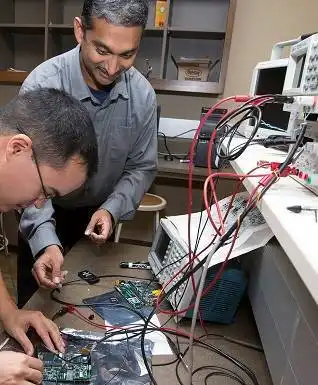
Dr. Edmund Spencer is an Associate Professor in the Department of Electrical and Computer Engineering at the University of South Alabama , with research focused on space plasma physics and space weather . He designs advanced instruments for space science, develops theoretical frameworks for plasma characterization, and applies stochastic optimization algorithms to complex systems. Ph.D. Electrical and Computer Engineering, University of Texas at Austin M.S. Electrical and Computer Engineering, University of Texas at Austin B.S. Electrical and Electronics Engineering, University of Leicester, UK His work bridges space instrumentation with nonlinear magnetospheric dynamics , particularly in geomagnetic substorms and solar wind-earth magnetosphere interactions . Current projects include onboard space weather modules for satellites and advanced antenna systems for CubeSats . Recent research trends from his 15 most recent publications (2019-2025) include: Development of time-domain impedance probes for ionospheric electron density measurements Applications of machine learning in substorm prediction Hybrid physics-black-box modeling for Dst index forecasting Advanced antenna designs for small satellites 3D Particle-in-Cell simulations for RF instruments Collisional effects in plasma probe measurements Scientific contributions include: NSF CAREER Award (2013) for RF impedance probe development Key role in NASA's USIP CubeSat missions (e.g., JAGSAT I) Leveraging WINDMI model for substorm dynamics analysis He teaches graduate and undergraduate courses in electromagnetics and stochastic processes , contributing to the department's space science integration in engineering education.
Md. Abul Hassan Samee is an Associate Professor at Baylor College of Medicine , specializing in Integrative Physiology . He is affiliated with the Computational and Integrative Biomedical Research Center (CIBR) , THINC@BCM , and the Cardiovascular Research Institute (CVRI) . Education: Postdoctoral Fellowship at Gladstone Institutes, University of California San Francisco PhD in Computer Science from University of Illinois Urbana Champaign Research Interests: Development of machine learning algorithms for biological datasets Single-cell and spatial omics analysis Comparative genomics in regeneration and aging Computational models for cancer and neurodegenerative diseases Publications focus on spatial transcriptomics, cardiac regeneration, and interpretable AI in genomic research. Recent projects include SPaSE for pathology scores and GraphAge for epigenetic aging. Grants from the National Institutes of Health support his work on Alzheimer's disease and MYH7 variant interpretation.
Jennifer Kinsley is Professor of Law at Northern Kentucky University's Salmon P. Chase College of Law and serves on the Ohio First District Court of Appeals. She is a leading constitutional law scholar focusing on First Amendment rights, particularly in criminal cases, and advocates for criminal justice reform. Her career bridges academia, litigation, and public engagement, with notable representation of clients including Black Lives Matter protestors and human trafficking survivors. Education: Juris Doctor from Duke University School of Law and Bachelor of Arts in English from the University of Florida. Research Interests: Centered on free expression, political affiliation biases in sentencing, therapeutic approaches to speech, and the intersection of psychology and constitutional law. Her work addresses systemic inequities in criminal justice systems and digital privacy challenges. Scientific Awards: Inaugural Civil Rights and Judicial Advocacy Award (NAACP, 2023) NKU Professor of the Year (2021-2022, 2020-2021) Super Lawyers Rising Star (First Amendment, 2007, 2011-2014) Best Lawyers in America (First Amendment, 2013-2015) Community & Professional Engagement: Active board member of Mutual Dance Theater and volunteer for homeless outreach. Previously served as Associate Dean for Professional Development, overseeing bar exam programs, and developed Chase's field placement initiative for experiential learning.
Lorenzo Farina is a Full Professor at Sapienza University of Rome's Faculty of Information Engineering, Computer Science and Statistics, specializing in Electronic and Computer Bioengineering (ING-INF/06). With over 25 years of academic leadership, he co-founded Italy's first Bioinformatics degree program and established key oncology precision medicine initiatives, maintaining active collaborations with Harvard Medical School's network medicine division. His educational background includes a cum laude Electronic Engineering degree and PhD in Systems Engineering, both from Sapienza University. These foundational studies evolved into pioneering work in positive linear systems theory, evidenced by his highly-cited Wiley textbook Positive Linear Systems: Theory and Applications (2000). Farina's research centers on network medicine – applying complex network science to molecular medicine since his 2004 breakthrough. His work spans cancer mechanisms (breast, glioblastoma, lung), drug repositioning (including COVID-19 applications), and liquid biopsy biomarker development. Current projects focus on miRNA-based network biomarkers for cancer diagnostics and immunotherapy response prediction, integrating multi-omics data through advanced computational frameworks. Analysis of his 15 most recent publications (2024-2025) reveals dominant themes: sexual dimorphism in cancer networks (MIRROR platform), immunotherapy response signatures, and critical examinations of AI's role in precision medicine. His work consistently bridges computational innovation with clinical applications, particularly in oncology diagnostics and therapeutic optimization. His scientific recognition includes: 2001 Guillemin-Cauer Award for best IEEE Transactions on Circuits and Systems article 2014 SysBio Award for annual best publication Farina actively mentors through interdisciplinary programs he established, including the Network Oncology doctoral program. His laboratory collaborations span Sapienza's Oncogenomics and Immunology Laboratories, Harvard's Channing Division of Network Medicine, and clinical departments in oncology and radiology, driving translational research from computational models to patient applications. He leads multiple research teams focused on network-based diagnostics, including the MIRROR platform for cancer disparity analysis and liquid biopsy development teams investigating circulating miRNA networks for early cancer detection across multiple malignancies.
Andrea Cipolato is a Research Fellow at the Department of Humanities, Ca' Foscari University of Venice . His work focuses on the archaeology of the Venetian Lagoon and Upper Adriatic regions during the Roman and Medieval periods, with expertise in amphorae, trade networks, and data analysis. PhD in Ancient Sciences (Archaeology) , Ca' Foscari University of Venice (2023) Lecturer in Classical Archaeology (2023) Visiting Student , UrbNet, Aarhus University (2022) Research Grant , DAIS Department of Environmental Sciences, Computer Science and Statistics (2019) His research integrates quantitative methods with archaeological fieldwork to analyze amphorae distribution, port infrastructure, and economic systems. Recent projects include Aquileia Roman Port excavations and the PRIN 2022 PNRR CUP H53D23010330001 on lagoon economies. Andrea contributes to international collaborations like Port Louis (Mauritius) Archaeological History and the Interreg ADRION APPRODI project. He curates exhibitions and consults on ceramic materials for the Venice Superintendency and ITALFERR. Coordination of Aquileia and Torcello archaeological campaigns (2017-2023) Member of CeSAV - Center for Archaeological Studies of Venice Freelance archaeologist with Viarch editorial team (since 2013)
Helle Sørensen is a Professor at the Department of Mathematical Sciences, University of Copenhagen. Her work bridges theoretical and applied statistics with interdisciplinary applications in biological and environmental sciences. Education : BSc (1993), MSc (1997), PhD (2000) in Statistics from University of Copenhagen. Employment : Professor (2018–present), Head of Data Science Lab (2018–2021), Professor MSO and head of Laboratory for Applied Statistics (2013–2018), Associate/Assistant Professor across multiple departments (2000–2013). Research Interests focus on: Functional data analysis Statistical inference for dependent data and stochastic processes Applications in biology, agriculture, and food science Her recent publications highlight statistical methodologies applied to: Enzymatic degradation of plant material Multivariate analysis in metabolic studies Random forest efficiency in metric spaces Quantile regression for longitudinal data Child food texture preferences and insect acceptance Teaching includes courses in basic probability, statistical theory, and applied statistics for bio/life sciences students. She supervises BSc, MSc, and PhD students in Statistics with co-supervision roles in interdisciplinary fields.
Professor Chike F. Oduoza is a distinguished academic in Process and Manufacturing Engineering at the University of Wolverhampton, Faculty of Science and Engineering, Department of Chemical Engineering. He holds the rank of Professor and serves as the academic lead for chemical engineering, with extensive leadership in research, teaching, and professional service. His educational background includes a PhD in Instrumentation and Control from UMIST (University of Manchester), an MBA from the University of Exeter, and multiple postgraduate qualifications in management, teaching, and chemical engineering. He is a Chartered Engineer, Fellow of the Institution of Chemical Engineers, and Senior Fellow of the Higher Education Academy. His research interests span chemical and manufacturing engineering, with a focus on electroplating, corrosion protection, reactor design, sustainability, life cycle engineering, oil and gas processing, and risk management in industrial and construction sectors. He has developed innovative models for SMEs, particularly in risk assessment and lean-excellence business management. The recent publications reflect a strong trend in sustainable energy systems, risk and safety management, digital transformation in manufacturing and oil & gas, and advanced materials. His work integrates computational modelling, experimental validation, and practical application across industries. Chartered Engineer (CEng), 1996 Fellow, Institution of Chemical Engineers, 2006 Senior Fellow, Higher Education Academy, 2020 Winner, West Midlands Construction Excellence Award (Innovation, 2017) Professor Oduoza has supervised over 30 PhD students and secured significant research funding from EPSRC, EU (FP7, Horizon 2020), and industry. He is currently leading the FLAREMANAGER and PROCEDURE consortia, focusing on flare gas utilization and future process design. His editorial roles include guest editor for Robotics and Computer Integrated Manufacturing and International Journal of Advanced Manufacturing Technology . He has chaired major conferences such as FAIM 2015 and the Electrochemistry and Sustainability Conference (2010). He leads the RiMaCon project, a €1M EU FP7 initiative that developed a risk management software system for SMEs in construction, which won a regional innovation award. His professional memberships include the Engineering Professors Council, SCI Electrochemical and Energy Groups, and the UK Royal Academy of Engineering Ethics Committee.
Steven Wu is an Associate Professor in the School of Computer Science at Carnegie Mellon University, with primary appointments in the Software and Societal Systems Department (S3D) and affiliated roles in the Machine Learning Department, Human-Computer Interaction Institute, CyLab, and Theory Group. Previously, he held positions at the University of Minnesota (Assistant Professor) and Microsoft Research-New York City (post-doctoral researcher). Ph.D. in Computer Science, University of Pennsylvania (co-advised by Michael Kearns and Aaron Roth) His research spans Machine Learning , Algorithms , Privacy , and Fairness , focusing on responsible AI foundations, interactive learning, causal inference, and economic applications. Recent work explores uncertainty quantification and privacy risks in synthetic data. He has received prestigious awards including the NSF CAREER Award and Penn's Rubinoff Award for his dissertation. His group mentors students across Ph.D. , postdoc, and visiting programs, with alumni now at institutions like UC Berkeley, Stanford, and Amazon. Key grants: NSF, Okawa Foundation, Open Philanthropy, Amazon, Google, J.P. Morgan, Meta, Mozilla, Apple, Cisco
Jacob Goldin is a Professor at Stanford Law School, where he conducts research at the intersection of tax law, behavioral economics, and public policy. His work addresses critical questions in tax policy design, judicial behavior, and the economic impacts of government programs. Goldin's research interests center on tax policy, behavioral economics, and law and economics. He examines how individuals respond to tax incentives, the optimal design of tax systems, and the behavioral aspects of tax compliance. His work often combines rigorous empirical analysis with theoretical insights to inform tax policy debates. He has made significant contributions to understanding the Earned Income Tax Credit, child tax benefits, and the behavioral effects of tax salience. His recent publications demonstrate a strong focus on empirical analysis of tax policy impacts, particularly regarding child benefits, tax filing behavior, and the economic consequences of tax design choices. Goldin frequently employs experimental and quasi-experimental methods to provide causal evidence on policy questions, bridging the gap between theoretical tax design and real-world outcomes. Goldin has been actively involved in legal proceedings as an expert, contributing to amicus briefs in significant tax cases including South Dakota v. Wayfair. His scholarly work has appeared in leading law and economics journals including the Yale Law Journal, American Law and Economics Review, and Journal of Public Economics. As an advisor and collaborator, Goldin works with economists and legal scholars across institutions, including the U.S. Department of the Treasury's Office of Tax Analysis. His research often addresses practical policy challenges while maintaining rigorous academic standards, making his work highly relevant to both academic and policy communities.
Dr. Karol Tylmann is an Assistant Professor in the Department of Geomorphology and Quaternary Geology at the University of Gdańsk's Faculty of Oceanography and Geography. He leads research at the Laboratory of Geomorphological Reconstructions, focusing on the dynamics of Pleistocene ice sheets and landscape evolution in Northern Europe. His research integrates glacial geomorphology , Quaternary stratigraphy , and geochronological methods (e.g., cosmogenic nuclide dating, gamma-ray spectrometry) to reconstruct deglaciation patterns, ice-marginal processes, and sedimentary environments across Poland and the Baltic region. Key themes include: Ice sheet behavior during the Last Glacial Maximum and Younger Dryas Subglacial deformation mechanisms Coastal and fluvial responses to climatic shifts Geoheritage conservation in postglacial landscapes Recent publications (2018–2023) demonstrate a methodological emphasis on high-resolution geospatial analysis (LiDAR, object-based image processing), advanced dating techniques (10Be exposure, Bayesian modeling), and sedimentological diagnostics . Predominant research clusters include glacial landform mapping, deglaciation chronology, and geomorphic responses to paleoenvironmental change. Dr. Tylmann contributes to geotourism initiatives by evaluating the educational value of Poland's glacial landscapes. He maintains no listed research grants, awards, or supervised students in the available data.
Hugo Lewi Hammer er professor ved Oslo Metropolitan University, tilhørende Faculty of Technology, Art and Design og Department of Information Technology – Mathematical Modeling . Hans forskning fokuserer på forbedring av pålitelighet og transparens i maskinlæring, forsterkende læring og dyb læringsmodeller gjennom metodikk innen modelltolkning, usikkerhetskvantifisering, robust statistikk og kausal inferens. Hans nylige arbeid inkluderer: AI-drevet optimering i assistert reproduksjonsteknologi (embryoutvalg og sædcelleanalyse) Medisinsk bildebehandling (polypdeteksjon, meibomkertutgang) Neural nettverkstolkning og usikkerhetsmodellering i EEG-analyse Biomekanisk prediksjon av muskelutmatting Hans publikasjoner viser mangfoldige anvendelser av AI i medisin og teknologi, med spesialvekt på: Explainable AI (XAI) i diagnostikk og behandling Usikkerhetskvantifisering i dyb læring Automatisering av medisinske prosedyrer (ICSI, embryoanalyse) Stokastisk simulering og kausal inferens Hammer er engasjert i forskningsgruppene Applied Artificial Intelligence og Mathematical Modeling og har publisert over 130 vitenskapelige artikler og 7 forskningsrapporter.
Fred Morstatter is a Research Assistant Professor at the Thomas Lord Department of Computer Science, University of Southern California. He serves as Principal Scientist at the USC Information Sciences Institute and Associate Director for USC Data Science, bridging academia and applied research in AI ethics and social media analysis. Research Interests include: Mitigating algorithmic bias in NLP systems Developing robust social media content analysis frameworks Creating hybrid human-machine forecasting models for geopolitical events Studying causal relationships in online-offline event dynamics Advancing crowdsourcing methodologies with ethical AI Recent Article Trends examine: Temporal knowledge graph forecasting without explicit training data Gender bias quantification in named entity recognition Characterizing misinformation through network analysis Developing fair decision-making attribution mechanisms Mapping moral valence in crisis-related social media discourse Student Supervision includes advising PhD candidates exploring: Implicit biases in LLMs Computational social science Hate speech detection Persuasion modeling in forecasting systems Contact: fred@isi.edu | Google Scholar | USC ISI