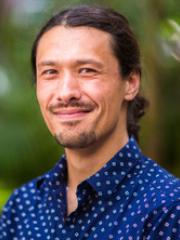
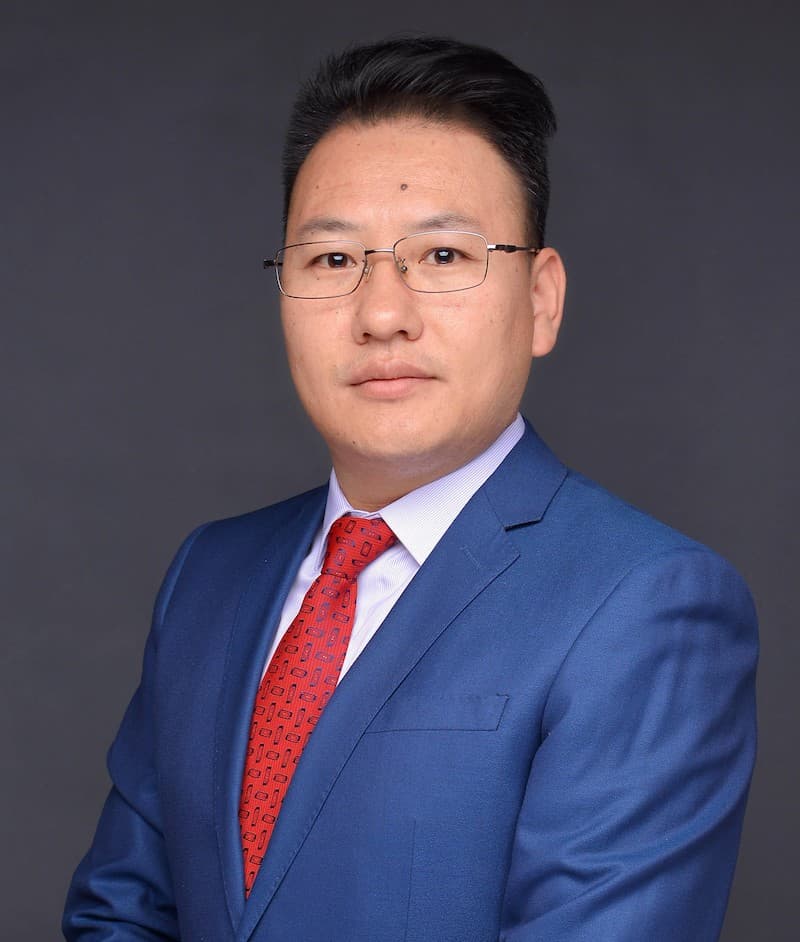
Dr. David Sewell is a Senior Lecturer and Deputy Head of School (Teaching & Learning) at the School of Psychology, The University of Queensland. His research focuses on attention, learning, memory, and decision-making, with a strong emphasis on formal mathematical models of human cognition. He is affiliated with the Centre for Perception and Cognitive Neuroscience within the Faculty of Health, Medicine and Behavioural Sciences. Education: Bachelor (Honours) of Arts and Doctor of Philosophy, both from the University of Western Australia. David's research explores the intersection of cognitive psychology and computational modeling. Key areas include perceptual decision-making, attentional mechanisms, and the application of diffusion models to understand cognitive processes. His work also extends to sustainability and collective self-regulation through cognitive frameworks. The 15 most recent articles highlight his contributions to modeling decision thresholds in memory prioritization, analyzing gaze cueing effects, and investigating neural correlates of confidence in multisensory decisions. Collaborative projects frequently involve interdisciplinary approaches, combining neuroscience, psychology, and computational methods. He has supervised multiple PhD candidates, serving as Principal or Associate Advisor, with research topics ranging from visual categorization to metacognition in children. Current and past funding includes ARC Discovery Projects on collective self-regulation and category learning constraints.
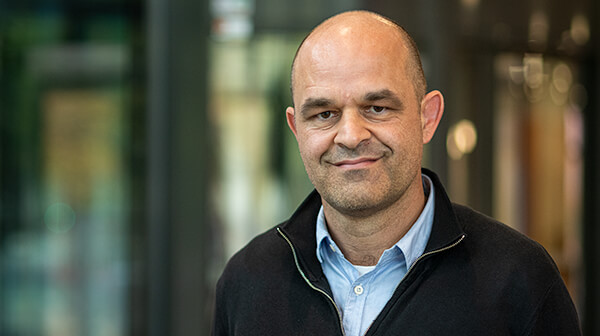
Terje Andreas Eikemo is a Professor at the Department of Sociology and Political Science , Norwegian University of Science and Technology (NTNU) , and Head of the CHAIN research center . His work focuses on the intersection of social inequality , public health , and global policy , emphasizing how socioeconomic factors like education , income , and welfare systems influence mortality , chronic diseases , and mental health . He combines theories from sociology , epidemiology , and medicine to address health disparities across diverse contexts, including pandemics , climate change , and migration . 2009: Prize for Young Researchers in the Humanities 2010: SINTEF Prize for Outstanding Research 2014: NTNU Star Program Eikemo has published extensively in top journals like The Lancet and BMJ Open , with research themes spanning social determinants of health , policy interventions , and global health equity . His work includes GBD studies , European Social Survey analyses , and refugee health assessments. He serves as Editor-in-Chief of the Scandinavian Journal of Public Health and collaborates with international bodies like WHO and UNESCO .
Prof. Dr. Ralf Merz serves as Head of the Department of Catchment Hydrology at the Helmholtz Centre for Environmental Research (UFZ) and holds a Full Professorship in Catchment Hydrology at Martin-Luther University Halle-Wittenberg since 2011. His career bridges hydrological modeling, flood risk assessment, and water quality analysis across diverse climates from Central Asia to Europe. MSc in Civil Engineering (Technical University of Karlsruhe, 1997) PhD in Hydrology (Vienna University of Technology, 2002) Habilitation in Hydrology (Vienna University of Technology, 2009) Research Interests span comparative hydrology, flood generation mechanisms, climate change impacts on water resources, and nitrate dynamics in river systems. His work emphasizes process-based understanding of runoff events and regional flood modeling through innovative approaches like the PHEV distribution framework. Scientific Contributions include over 100 publications (2003-2025) on: Flood frequency analysis in changing climates Groundwater recharge in arid regions Hydrochemical response to droughts Remote sensing applications for groundwater studies Multi-response calibration of hydrological models Key projects involve MOSES observatory development, TRACER research school, and Pamir Mountains glaciological studies. Recognitions : APART research grant (Austrian Academy of Sciences, 2006) Leadership extends to directing the Catchment Hydrology department and participating in European hydrological networks like the Bode Hydrological Observatory and TERENO infrastructure. His methodological advancements include flood time-scale analysis and event runoff coefficient regionalization.
David M. Higdon is a Professor and Department Head of the Department of Statistics at Virginia Tech within the College of Science. He specializes in Bayesian statistical modeling of environmental and physical systems, focusing on integrating physical observations with computer simulations for prediction and inference. Previously, he spent 14 years at Los Alamos National Laboratory as a scientist and group leader in the Statistical Sciences Group. Education: Ph.D. in Statistics, University of Washington, 1994 M.A. in Mathematics, University of California San Diego, 1989 B.A. in Mathematics, University of California San Diego, 1987 Research Interests: Higdon’s work spans space-time modeling , inverse problems in hydrology and imaging , statistical modeling in ecology and environmental science , and multiscale models . He develops methods for parallel processing in posterior exploration , statistical computing , and Monte Carlo simulations . His research addresses critical challenges in uncertainty quantification (UQ), including climate modeling, nuclear density functional theory, and geophysical imaging. Publications Trends: His recent articles emphasize Bayesian methodologies applied to complex systems, such as climate forecasting, materials science, and cosmology. A recurring theme is the development of emulators and surrogate models to handle computationally intensive simulations. Awards: Fellow of the American Statistical Association Advising & Grants: While no specific advisees are listed, Higdon has contributed to interdisciplinary collaborations in UQ and statistical modeling. His work has been supported by grants from agencies such as the National Science Foundation and Department of Energy. Labs/Teams: He leads the Statistics Department’s efforts in UQ and computational statistics, fostering collaborations across engineering, environmental science, and physics.
Dr. Beata Gorczyca is a Professor in the Department of Civil Engineering at the University of Manitoba, affiliated with the Price Faculty of Engineering. Her research focuses on potable water treatment, with expertise in solid/liquid separation, chlorine disinfection by-products control, and fractal analysis of materials. She leads a research group collaborating with Canadian water utilities like Portage la Prairie and Pembina Valley Water Co-op. Education: PhD in Chemical Engineering (2000, University of Toronto), M.Sc. in Civil Engineering (1992, University of Toronto), B.Sc. in Geological Engineering (1986, AGH University, Poland). Active roles: Member of the Particle Specialist Group at the International Water Association, keynote speaker at conferences. Research interests include water purification processes, membrane filtration, and bioremediation. Her work addresses challenges in high-DOC and high-hardness water treatment, with contributions to nanofiltration fouling mechanisms and microbial remediation solutions. She has supervised numerous graduate students and is involved in advancing water treatment technologies through interdisciplinary collaborations.
Ronny Scherer is Center Director and Professor at CEMO (Center for Educational Measurement) and Deputy Director at CREATE (Center for Research on Equality in Education) at the University of Oslo's Faculty of Educational Sciences. His work bridges educational measurement, assessment, and evaluation with a focus on research syntheses and complex sampling surveys. Dr. Scherer's research spans two interconnected domains: substantive areas including digital divides, equity and equality in education, and measurement of complex cognitive skills (such as complex problem solving, adaptability, computational thinking, and executive functioning); and methodological areas focusing on advanced meta-analytic techniques, multilevel structural equation modeling, and spatial analysis of complex survey data. His work frequently utilizes international large-scale assessment data from PISA, ICILS, TIMSS, PIRLS, PIAAC, and TALIS. His publication record demonstrates a clear trajectory toward increasingly sophisticated meta-analytic approaches, with recent work focusing on second-order meta-analyses, AI-assisted screening methods, and advanced techniques for handling complex survey data. His research consistently addresses critical educational challenges related to equity, digital literacy, and measurement of 21st century skills. Dr. Scherer has secured significant research funding for projects including ARISE (Academic resilience in mathematics and science among vulnerable students), DiDiRes (Digital inequalities in education), and ADAPT21 (Educational assessments of the 21st century: Measuring and understanding students' adaptability in complex problem solving situations). Co-director of CREATE (Centre for Research on Equality in Education) since 2023 Professor of Educational Assessment and Measurement at CEMO since 2019 Extensive experience with international large-scale assessments including ICILS, TALIS, and PIAAC As an educator, Dr. Scherer teaches advanced courses in measurement models, multilevel models, meta-analysis, and equity in education. He actively supervises graduate students interested in his research areas and has developed numerous workshops on structural equation modeling and meta-analytic methods for international audiences.
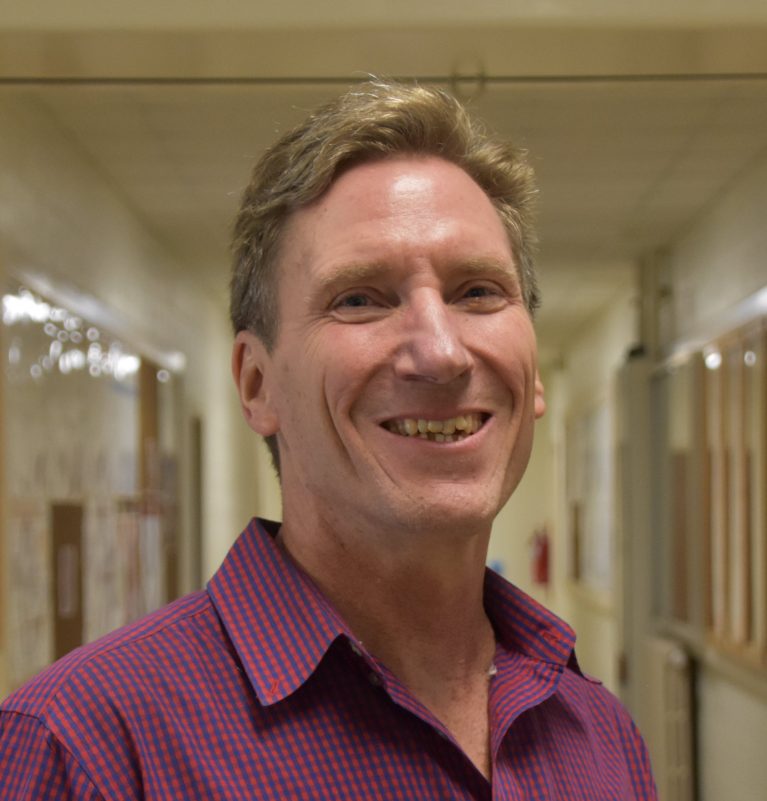
Paul Connolly is a Professor of Atmospheric Physics and Reader in the School of Earth and Environmental Sciences at The University of Manchester. He serves as the Department's Senior Academic Advisor since 2018. His roles include academic leadership, research, and teaching in atmospheric sciences. Connolly holds a BSc (Hons) in Pure and Applied Physics from UMIST (2001) and a PhD in Atmospheric Science from Manchester (2006). His research focuses on cloud physics, ice nucleation, and numerical modeling, including developing the University’s large cloud chamber facility in the Latham Laboratories. Research Interests: Ice nucleation mechanisms and secondary ice production Cloud-aerosol interactions and numerical modeling Unsupervised deep-learning applications in image classification Key Projects: Climate and Weather Impacts on Society (2022–present) RAI Centre for Robotics and Artificial Intelligence (co-investigator) Teaching: Courses include Environmental Modelling (EART22001) and Measuring and Predicting-2 (EART60071). He has over a decade of experience teaching mathematics, statistics, and atmospheric physics to undergraduate and postgraduate students. Impacts: His work contributed to UK responses during the 2010 volcanic ash crisis. Research collaborations span cloud dynamics, microphysics, and fieldwork in Australia, Switzerland, Germany, and New Mexico.
Prof. David Ham is a Professor of Computational Mathematics at the Department of Mathematics, Faculty of Natural Sciences, Imperial College London. His research focuses on high-level abstractions for scientific computation, particularly in geophysical fluids and numerical software. He leads the Firedrake project and co-developed the dolfin-adjoint framework, which received the 2015 Wilkinson Prize for Numerical Software. Ham holds a BSc (Mathematics) and LLB from The Australian National University, and a PhD from TU Delft. His career includes roles as a NERC Independent Research Fellow and Grantham Research Fellow at Imperial College. He is affiliated with the Grantham Institute, Mathematics of Planet Earth, and Software Performance Optimisation groups. His research spans computational science, including finite element methods, adjoint-based inversion, and parallel computing. Recent work emphasizes differentiable programming integration with machine learning and geophysical modeling. Ham has contributed to numerous grants and projects, including EPSRC and NERC-funded initiatives. He leads development of software tools like Firedrake and Thetis, advancing computational methods for oceanography and geodynamics.
Roy Johnsen is a Professor in the Department of Mechanical and Industrial Engineering at the Norwegian University of Science and Technology (NTNU), specializing in corrosion and surface technology. With a Dr.ing. degree from NTH (1984), he has extensive industry experience from Statoil Research Centre (1985-1991) and CorrOcean (1991-2004), where he expanded the company globally. His current research focuses on hydrogen embrittlement, corrosion protection, and integrity management in offshore systems, with collaborations across Europe, Asia, and the Americas.
Christopher John O'Donnell is a distinguished Professor at the School of Economics, University of Queensland, Australia, where he holds a dual affiliation (50% each) with both the main School of Economics and the Centre for Efficiency and Productivity Analysis (CEPA). His research primarily focuses on efficiency and productivity analysis across various sectors including agriculture, fisheries, public services, and healthcare. As a leading scholar in his field, he has published extensively in top-tier economics and operations research journals and is recognized as being among the top 5% of authors globally according to multiple citation metrics. O'Donnell's research interests span several interconnected domains: efficiency analysis, productivity measurement, agricultural economics, econometrics, state-contingent production frontiers, and metafrontier analysis. His work often bridges theoretical methodology with practical applications, particularly in estimating efficiency and productivity changes under various constraints and uncertainties. He has developed innovative approaches for measuring productivity in public service providers, agricultural sectors, and healthcare institutions, with particular attention to how weather, climate change, and demand uncertainty affect performance metrics. His research output demonstrates consistent productivity, with publications spanning from the 1990s to the present, including significant contributions in the last five years. O'Donnell frequently collaborates with researchers internationally, particularly with scholars from Australia, Europe, and Asia, reflecting the global relevance of his work. His publications appear in leading journals such as the American Journal of Agricultural Economics, Journal of Productivity Analysis, European Journal of Operational Research, and Agricultural and Applied Economics journals. Ranked among top 5% authors by citation metrics (Number of Citations) Ranked among top 5% authors by citation metrics (Number of Citations, Discounted by Citation Age) Ranked among top 5% authors by citation metrics (Number of Citations, Weighted by Number of Authors) Ranked among top 5% authors by citation metrics (Number of Citations, Weighted by Number of Authors, Discounted by Citation Age) Ranked among top 5% authors by citation metrics (Euclidian citation score) O'Donnell has supervised numerous graduate students, as evidenced by his 'Record of graduates' noted in his RePEc profile. His research has been supported by various institutions, particularly focusing on agricultural productivity, public sector efficiency, and resource economics. He has contributed significantly to methodological developments in productivity measurement, including nonparametric approaches and metafrontier frameworks that allow for cross-technology comparisons. As a core member of the Centre for Efficiency and Productivity Analysis (CEPA) at the University of Queensland, O'Donnell contributes to one of the world's leading research centers in efficiency and productivity analysis. His work has practical applications for policymakers in agriculture, fisheries management, healthcare, and public service delivery, helping organizations measure and improve their performance in increasingly complex economic environments.
Dieu Tien Bui is a Full Professor in the Department of Business and IT at the University of South-Eastern Norway (USN) School of Business. His research focuses on Geospatial Artificial Intelligence Machine Learning GIS and Remote Sensing Natural Hazard Modeling Environmental Problems (landslides, floods, soil salinity, biomass) . He has contributed to over 15 recent publications in journals like Science of the Total Environment , Remote Sensing , and Geomorphology , emphasizing hybrid AI models for landslide and flood susceptibility. His work spans Vietnam, India, China, and Iran with applications in climate change adaptation and disaster management. Scientific Awards: Global Highly Cited Researcher PhD Supervision: He has supervised 8 PhD students at institutions including USN, NTNU, and Vietnamese universities.
Rafael Perera is a Professor of Medical Statistics at the Nuffield Department of Primary Care Health Sciences (NDPCHS), University of Oxford, where he has been since 2002. He holds leadership roles as Director of the Statistics Group and Director of Graduate Studies , overseeing academic leadership and methodological research. He is also a Statistical Editor of BMJ and BMJ Medicine , and a fellow at St Hugh’s College Oxford . Education : DPhil, MSc, MA Rafael’s research focuses on monitoring for managing long-term conditions (e.g., Type 2 diabetes, hypertension) and complex multimorbidity phenotypes . His work includes impact of extreme temperatures on health , meta-analysis methods , and methodology for infectious diseases . He leads large methodological groups and has been a PI on NIHR-funded infrastructure programs (BRC, ARC, MIC). Recent publications highlight his expertise in clinical prediction models , digital health interventions , and diagnostic test evaluation . His grants span applied research , global health transformation , and ageing research . Scientific Awards : National and international recognition for methodology development in clinical trials (NIHR Progress Report 2008/09) Rafael supervises DPhil and MSc students and leads a fully accredited Clinical Trials Unit . His editorial and policy influence extends to healthcare policy panels and the Centre for Evidence-Based Medicine as Director of Research Methodologies.
Christian Igel is a Professor at the Department of Computer Science, University of Copenhagen, and serves as director of the SCIENCE AI Centre . He is also a co-lead of the Pioneer Centre for Artificial Intelligence in Denmark. His academic journey includes a Doctoral degree from Bielefeld University (2002) and a Habilitation degree from Ruhr-University Bochum (2010). Igel is a Juniorprofessor (2002–2010) and has held editorial roles at journals like KI - Künstliche Intelligenz and Artificial Intelligence Journal . Doctoral degree: Faculty of Technology, Bielefeld University, Germany (2002) Habilitation degree: Department of Electrical Engineering and Information Sciences, Ruhr-University Bochum, Germany (2010) His research spans Machine Learning , focusing on Support Vector Machines , Evolution Strategies , Reinforcement Learning , Deep Neural Networks , and PAC-Bayesian Analysis . He applies these methods to Environmental Monitoring , Medical Diagnostics , and Climate Research . Recent publications highlight work on adversarial machine learning , environmentally sustainable AI , and tree resource mapping using deep learning. His scientific awards include being a ELLIS Fellow . Igel’s software tools like Shark , woody , and Multi-Planar UNet are widely used in research and industry. Notable grants and collaborations involve projects with European Lab for Learning and Intelligent Systems (ELLIS) , SCIENCE AI Centre , and international teams in Denmark , Germany , and France . His lab leadership emphasizes open-source frameworks and reproducible research. Editorial Roles: German Journal on Artificial Intelligence , Evolutionary Computation Journal , Artificial Intelligence Journal Software Projects: Shark , woody , Multi-Planar UNet , U-Time Collaborations: SCIENCE AI Centre , Pioneer Centre for Artificial Intelligence , European Lab for Learning and Intelligent Systems
Dr. Zhibao Mian is a Lecturer in the School of Computer Science at the University of Hull, UK, and previously held an Associate Professor position at Northwest Normal University. He specializes in trustworthy AI, machine learning, and intelligent maintenance systems. His research integrates AI with IoT, blockchain, and digital twins in Industry 4.0/5.0 contexts. He leads projects on predictive maintenance for offshore wind turbines and AI-driven sustainable energy solutions. Dr. Mian holds a PhD from the University of Hull and an MSc from the University of Nottingham. Research interests include AI ethics, model-based safety analysis, and RCM. He has secured grants such as the CPHC-funded study on AI in software education and oversees multiple PhD scholarships. Notable roles include Editorial Board member of the American Journal of Artificial Intelligence and Reviewer for high-impact journals/conferences like JSS and IEEE. He is a Senior Fellow of the Higher Education Academy and received the Royal Academy of Engineering's 2024 Exceptional Talent designation. Recent publications (2023-2025) focus on ordinal networks, outlier detection, Belt and Road trade analysis, and carbon emissions modeling. He actively advises PhD students on topics like UAV-based anomaly detection and predictive maintenance frameworks.
Univ.-Prof. Aiko Voigt is a Professor and Head of the Department of Meteorology and Geophysics at the University of Vienna. Her research focuses on climate dynamics, cloud physics, and atmospheric processes. She leads the Environment and Climate Research Hub and teaches advanced courses like 'Climate Modelling Lab' and 'Cloud Physics.' Her work explores cloud-radiative interactions, climate change impacts, and extreme weather dynamics. Recent studies analyze energy imbalances, high-cloud feedbacks, and tropical precipitation patterns. Voigt's contributions bridge climate modeling with observational data, emphasizing high-resolution simulations and interdisciplinary approaches. Teaching includes courses such as 'Climate System of the Earth,' 'Scientific Communication,' and 'Introduction to Computational Meteorology.' Her research spans from present-day climate to Snowball Earth scenarios, addressing both modern and paleoclimatic challenges. Publications highlight advancements in radiative transfer algorithms, cyclone dynamics under warming, and uncertainties in climate model predictions. Her work underscores the critical role of clouds in amplifying climate sensitivity and reshaping atmospheric circulation patterns.