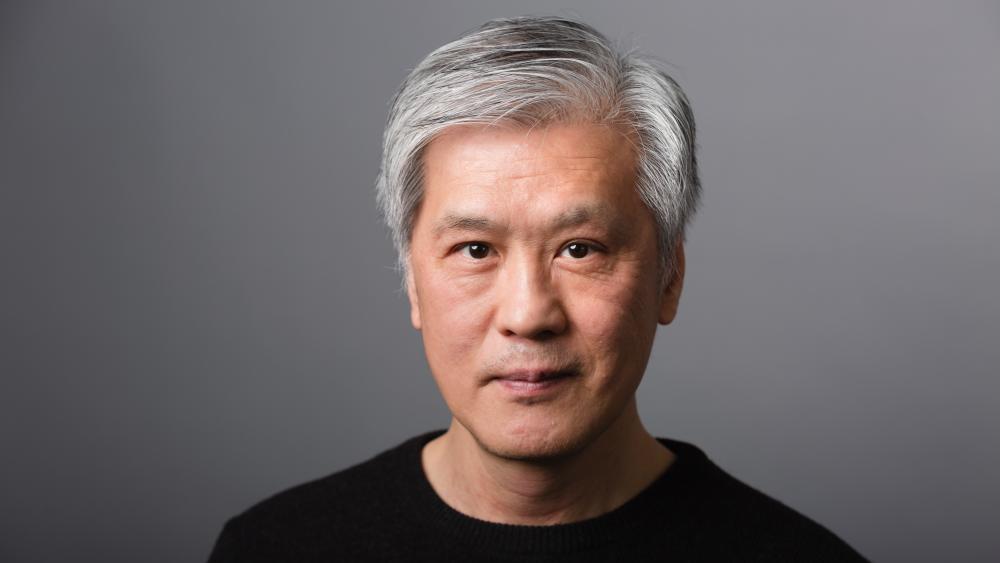
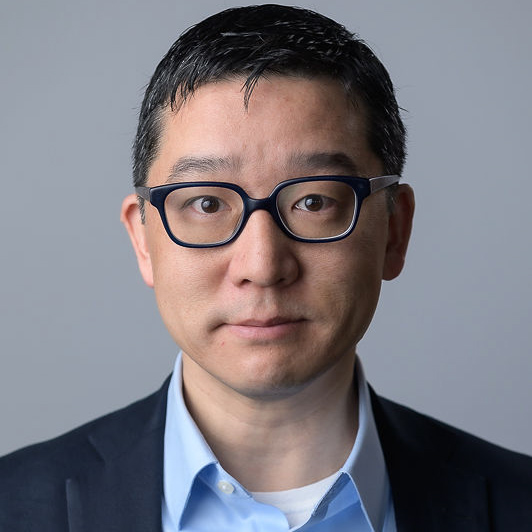
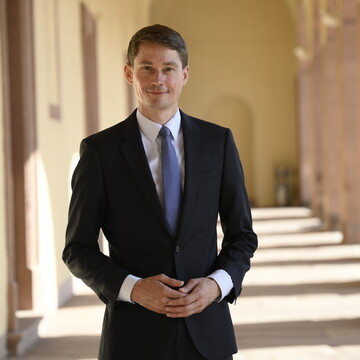
Douglas N. Harris is a Professor and Chair of the Department of Economics at Tulane University, as well as Director of the Education Research Program in The Murphy Institute Center for Public Policy Research and Director of the Education Research Alliance (ERA). He holds the Schlieder Foundation Chair in Public Education and directs the National Center for Research on Education Access and Choice (REACH). Additionally, he is a non-resident Senior Fellow at the Brookings Institution. His research focuses on education policy, particularly charter schools, teacher evaluation, college affordability, and systemic reforms. He has authored influential books such as Charter School City (2020) and Value-Added Measures in Education (2011), the latter nominated for the Grawemeyer Award. With nearly 100 journal articles and $28 million in research grants, his work bridges academia and policy, influencing decisions across six states and advising federal entities like the U.S. Department of Education and the Obama White House. Key areas of impact include analyzing K-12 reforms in New Orleans post-Hurricane Katrina, evaluating free college programs, and studying the effects of charter schools on teacher supply. His findings are widely cited in national media, including the New York Times , Washington Post , and NPR. He emphasizes practical policy solutions rooted in rigorous empirical evidence.
Dr Dic Lo is a Reader in Economics at the Department of Economics, SOAS University of London. His research focuses on China's economic transformation, globalization, industrialization, and comparative political economy. He holds a BSc (Econ) from Hong Kong, MA from University of East Anglia, and PhD from Leeds University. His research interests include the systemic impact of China on late development, Soviet-type economic systems, and East Asian economic institutions. He has supervised numerous PhD students exploring topics like China's Belt and Road Initiative, FDI in the EU, and China's automotive industry restructuring. Dr Lo has authored over 50 publications analyzing China's role in globalization, the Washington Consensus critique, and post-crisis economic models. His work emphasizes institutional functionality and challenges neoliberal narratives, advocating for alternative developmental approaches. He can be contacted via email at dl1@soas.ac.uk or by phone at +44 (0)20 7898 4532.
Darius Chan is an Associate Professor of Law (Practice) and Deputy Director of the Singapore International Dispute Resolution Academy (SIDRA) at Singapore Management University. Ranked as a Global Elite Thought Leader in arbitration, he specializes in international dispute resolution. Qualifications: LL.M. from New York University (Distinction), LL.B. from National University of Singapore (First Class Honours). Admitted to practice in Singapore, New York, and England & Wales. Research & Practice: Focuses on: Arbitration law reform and jurisdictional challenges Cross-border commercial disputes and award enforcement Investment treaty arbitration and sovereign immunity Contract interpretation in international contexts Awards & Recognition: Global Elite Thought Leader in Arbitration (Who's Who Legal) Litigation Star (Benchmark Litigation) Lee Kuan Yew Scholarship and Arthur T. Vanderbilt Scholarship Singapore Business Review Top 40 under 40 lawyers Professional Service: Serves on ICC Arbitration committees, Thailand Arbitration Centre Academic Council, and Singapore's Arbitration Court Users' Committee. Appointed as Amicus Curiae by Singapore Court of Appeal.
Evangelia G. Chrysikou is Associate Professor of Psychological and Brain Sciences at Drexel University, where she serves as Associate Dean for Research in the College of Arts and Sciences and Director of the Applied Cognitive & Brain Sciences PhD Program. Her cognitive neuroscience research examines the neural bases of cognitive flexibility, creative thinking, and semantic memory using fMRI and transcranial electrical stimulation (tES). Dr. Chrysikou investigates how cognitive control mechanisms enable flexible concept use in problem-solving, with applications to design cognition and neuropsychiatric disorders. Her translational work explores tES modulation of prefrontal cortex function in depression. Current projects analyze network connectivity patterns in creative thinkers and conceptual restructuring during insight experiences. Awards & Leadership: McNair Scholars Program Outstanding Mentor Award President, Society for the Neuroscience of Creativity (2022-2024) Co-Leader, B.S. Neuroscience major
Rosalind Blanco Cook serves as an Adjunct Professor in the Department of Political Science at Tulane University, leveraging over a decade of professional communications expertise in strategic planning, media relations, and public information programs. Her career includes orchestrating communications for the post-Katrina restructuring of New Orleans' public transportation system and providing media strategy during the mayoral administrations of Marc Morial and C. Ray Nagin. She teaches POLA4120 - Louisiana Politics and POLA2100 - American Government across multiple New Orleans institutions. Her research focuses on the intersection of political processes and media engagement, with primary interests in Political Communication, Public Relations, and American Politics—particularly State and Local Government dynamics in Louisiana. Her professional experience securing coverage in major outlets like the New York Times, NBC Nightly News, and CNN directly informs her academic perspective on political messaging efficacy and public engagement strategies within governmental contexts. No information was provided regarding scientific awards, academic advising responsibilities, research grants, or laboratory affiliations in the source material.
Mariely Lopez-Santana is an Assistant Professor of Politics and Government at George Mason University. She holds a PhD from the University of Michigan, Ann Arbor (2006), and has held postdoctoral fellowships at the European University Institute (Max Weber Program) and the Erasmus Mundus MAPP program in Barcelona. Her research focuses on comparative federalism, welfare state governance, Europeanization, and multilevel governance. She examines how soft law and policy frameworks influence domestic and transnational policy dynamics, with particular attention to employment policy and intergovernmental coordination. Her academic contributions include a forthcoming SUNY Press book, *The New Governance of Welfare States in the United States and Europe: Between Decentralization and Centralization in the Activation Era*, which analyzes how welfare policies adapt to economic crises and transnational pressures. Her work bridges comparative politics and international relations, emphasizing the interplay between domestic policy structures and supranational frameworks like the EU’s Open Method of Coordination. Lopez-Santana’s research spans social policy evaluation (e.g., child tax credit effectiveness during the pandemic), fiscal federalism responses to crises (Puerto Rico debt crisis, Great Recession), and the mythos surrounding transnational criminal organizations like MS-13. Her recent work engages with emerging issues in regional governance and the evolving architectures of democratic accountability. Awarded prestigious postdoctoral fellowships, Lopez-Santana’s scholarly trajectory reflects a commitment to rigorous qualitative analysis of subnational and transnational policy dynamics. She teaches courses on comparative federalism, welfare policy, and European governance at George Mason University.
Dr. Merrill Johnson is a Professor in the Department of Anthropology and Geography at Colorado State University. Previously, he served as a full Professor of Geography and Associate Vice President for Academic Affairs at the University of New Orleans (UNO) until his retirement in 2015. He transitioned to his current role as Academic Director at INTO CSU. His academic journey includes a Ph.D. in Geography from the University of Georgia (1981), M.A. from Arizona State University (1977), and B.A. in International Relations from West Texas State University (1974). His research focuses on political geography, industrial development in the U.S. South, and applications of GIS/remote sensing in business and economic development. He has contributed to major world regional geography textbooks and co-edited influential works. His career included extensive administrative roles, such as Chair of the Geography Department (1989–2000), Associate Dean of Liberal Arts, and later Associate Provost overseeing academic and student affairs. He was also a NASA JOVE fellow, studying GIS/remote sensing’s role in economic development. Dr. Johnson’s teaching spanned courses in world regional geography, economic geography, political geography, and cartography. He taught thousands of students and emphasized freshman education. His work in Latin American studies included research on Ecuadorian urban development and directed student recruitment programs in the region. His administrative innovations included launching an M.A. program and advancing GIS technology integration in academic curricula.
Stephen J. Ware is the Frank Edwards Tyler Distinguished Professor of Law at the University of Kansas School of Law. He specializes in Arbitration, Alternative Dispute Resolution (ADR), Bankruptcy Law, Commercial Law, and Judicial Selection. His research emphasizes arbitration reform, constitutional implications of arbitration agreements, and state judicial appointment processes. Ware has authored four books including Arbitration (2020) and over 49 law review articles. His work has been cited by the U.S. Supreme Court and numerous state/federal cases. Key research themes include: critiques of the Federal Arbitration Act’s 'arising out of' requirement, analysis of arbitration clauses in bankruptcy proceedings, and empirical studies on judicial impartiality in state court systems. He has taught at six law schools and contributed to foundational ADR textbooks used in law curricula nationwide. Recent publications focus on intersectional topics like arbitration’s role in debt collection law (2025), judicial selection methods (2023), and the legal treatment of arbitration agreements as executory contracts (2022). His work bridges theoretical law and practical policy, addressing issues from consumer protection to constitutional rights in contractual arbitration.
Stephen Park is an Associate Professor of Business Law at the University of Connecticut School of of Business. He serves as Academic Co-Director of MBA Programs (EMBA) and co-director of the Business and Human Rights Initiative and Corporate and Regulatory Compliance Graduate Certificate Program. His research focuses on international economic law, corporate social responsibility, and corporate compliance, with emphasis on sustainability, ESG, and human rights in financial regulation. His publications appear in leading journals such as the American Business Law Journal , American Journal of International Law , and Harvard International Law Journal . He has received multiple honors including the Holmes-Cardozo Award, Ralph J. Bunche Award, and ALSB’s Distinguished Early Career Achievement Award. Areas of Expertise International Economic Law Corporate Social Responsibility Corporate Compliance Education J.D., Harvard Law School M.A.L.D. (International Affairs), The Fletcher School, Tufts University B.A., Ethics, Politics, & Economics, Yale University Key Awards Holmes-Cardozo Award for Best Conference Paper Ralph J. Bunche Award for Outstanding Paper in International Law Kubasek Award for Environmental Sustainability Paper (ALSB) Distinguished Paper Award (Canadian ALSB) Hoeber Memorial Award for Research Excellence ALSB Distinguished Early Career Achievement Award Program Leadership Academic Co-Director of MBA Programs (EMBA) Co-founder & Co-director, Business and Human Rights Initiative Co-academic director, Corporate and Regulatory Compliance Graduate Certificate Program Teaching Roles UConn School of Business MBA, Executive MBA, MS in Financial and Enterprise Risk Management, MS in Accounting, MS in Social Responsibility and Impact in Business, and undergraduate programs Recipient of MSFERM Program’s Outstanding Faculty Member award (twice)
Minqi Li is a Professor in the Department of Economics at the University of Utah since 2006, with prior appointments as Visiting Assistant Professor at Franklin and Marshall College (2002) and Assistant/Associate Professor at York University (2003-2006). He holds a PhD in Economics from the University of Massachusetts Amherst (2002). Political Economy Chinese Economy World System Analysis Climate Change Investment Profitability Global Financial Imbalances His research connects long-term cyclical movements and secular trends in global capitalism, focusing on investment profitability, China-US financial imbalances, and energy/environmental limits. Recent work explores degrowth, secular stagnation, and structural crises. His publications since 2010 include analyses of China's economic trajectory, labor-value theory, and capitalist world-system contradictions. He advocates for state-led investment and socialist transitions to address stagnation. Selected awards: Superior Research Award, University of Utah (2010) Merits Research Award, York University (2006) Superior Teaching Award, UMass Amherst (2002) Wall Street Journal Student Achievement Award (1996) Teaching includes PhD-level political economy, History of Economic Doctrines, China & Global Economy, and Money & Banking courses.
Prof. Dr. Christoph Bode holds the Endowed Chair for Procurement within the Operations Management area at the University of Mannheim Business School. His research and teaching focus on supply chain management with specialized expertise in purchasing and procurement processes. The chair is sponsored by a consortium of nine leading corporations—BASF, BME, CLAAS, Deutsche Bahn, Heidelberger Druckmaschinen, Hilti, OMV, Roche Diagnostics, SAP, and Volkswagen Group—establishing it as a premier hub for procurement innovation and industry collaboration. His research program investigates critical procurement challenges including supplier relationship dynamics, sustainability integration in global supply chains, risk mitigation during disruptions, and AI-driven procurement optimization. Recent work emphasizes the alignment gap between corporate sustainability intentions and actions, agile procurement frameworks for new product development, and resilience strategies for supplier networks facing financial distress or environmental crises. Analysis of his 2022-2025 publications reveals three dominant research trajectories: sustainability accountability (examining social/environmental expectation gaps), disruption management (modeling supplier resilience and recovery), and digital transformation (developing AI tools for requisition bundling and predictive analytics). This work consistently bridges academic rigor with practical relevance through industry partnerships like the Porsche Case Challenge and global forums including ISM World. No individual scientific awards are documented for Prof. Bode in source materials, though his research group's output has received recognition—most notably Dr. Ruth Schültken's runner-up position in the 2025 Best B2B Marketing Management Ph.D. Prize Competition for her dissertation on supply management misalignments. Prof. Bode mentors doctoral and master's students through the University of Mannheim's OPM 692 Strategic Sourcing course and the annual Porsche Case Challenge. The endowed chair structure provides sustained funding through industry sponsorships, enabling long-term research initiatives and student experiential learning. Current projects include the 'State of the Procurement Profession Survey 2025' and BME Symposium collaborations focused on emerging procurement trends. The research group operates as an industry-academia nexus, organizing knowledge transfer events like the BME Symposium Procurement & Logistics 2025. Current activities center on digital procurement transformation—including AI-enabled bundling generators—and sustainable supply chain practices, with recent work presented at POMS 2025 on stakeholder reactions to corporate social irresponsibility.
Dr. Bruce Mabis is a Clinical Assistant Professor of Computer Science at the University of Evansville, affiliated with the College of Engineering and Science. With 46 years in Evansville, he has taught at UE since 1975 and three other regional universities. His expertise spans software engineering, computer science education, and systems modeling. Education: PhD in Computer Science (Vanderbilt University, 1992), M.S. in Electrical Engineering (University of Evansville, 1990), B.S. in Physics (Capital University, 1971). Research interests include curriculum design, simulation modeling, and software engineering methodologies. His work emphasizes educational innovation and practical applications of computer science principles. Key publications focus on systems analysis, programming pedagogy, and simulation frameworks. No scientific awards are listed, but his career spans over four decades of academic contributions. He has advised no named students in the provided texts. Grants and lab affiliations are not explicitly mentioned.
Dr. Colleen Hammelman is an Associate Professor in the Department of Earth, Environmental and Geographical Sciences at the University of North Carolina at Charlotte (UNC Charlotte), where she also directs the Charlotte Action Research Project (CHARP). Her work focuses on social justice in urban food systems, particularly in the Americas. She holds a PhD in Geography and Urban Studies from Temple University, an MA in International Affairs from American University, and a BA in Political Science and Technical Journalism from Colorado State University. Her research spans urban agriculture, migrant foodscapes, and public space dynamics in cities like Rosario (Argentina), Toronto (Canada), Medellín (Colombia), and Charlotte (USA). Key themes include political ecology, gentrification, and food systems governance. She has received a National Science Foundation CAREER Grant to study migrant foodscapes in U.S. gateway cities. Her 2022 book Greening Cities by Growing Food examines urban agriculture’s socio-environmental impacts. Education: PhD in Geography and Urban Studies, Temple University MA in International Affairs, American University BA in Political Science and Technical Journalism, Colorado State University Teaching: Geography of Cities Food, Migration, and Place Qualitative Methods in Geography Urban Identities Grants: NSF CAREER Grant (#1945132) for studying migrant foodscapes in gateway cities Labs/Teams: Director of the Charlotte Action Research Project (CHARP), focusing on community-university partnerships for social justice Her current projects include analyzing pandemic impacts on smallholder farming in Thailand and investigating how global restructuring reshapes migrant foodscapes in U.S. cities.
Nicodemi Mario is a Full Professor at the National Research Council of Italy (CNR), affiliated with the Institute for Superconductors, Innovative Materials, and Devices (SPIN) within the Department of Physical Sciences and Technologies of Matter. His research focuses on the intersection of physics and biology, particularly applying polymer physics to study chromatin architecture, 3D genome organization, and their roles in cellular processes such as viral infections, cancer, and developmental biology. He leads interdisciplinary projects combining computational modeling, experimental data analysis, and biophysical approaches to unravel the principles governing chromatin folding and nuclear organization. His work emphasizes understanding how chromatin structure impacts gene regulation, with notable contributions to studying viral infection effects on genome architecture, the dynamics of chromatin loops under disease conditions, and the development of novel tools like Multiplex-GAM for chromatin contact mapping. Recent studies explore the interplay between chromatin topology and cellular differentiation, leveraging single-molecule and single-cell technologies. Key research areas include polymer models of chromatin, phase separation mechanisms, and the role of structural variants in genomic disorders. His team collaborates widely, contributing to initiatives like the 4D Nucleome Project. Despite no listed awards, his publications reflect a high-impact trajectory in biophysics and molecular biology.
Margit Kirs is a Research Fellow at the Ragnar Nurkse Department of Innovation and Governance within the School of Business and Governance at Tallinn University of Technology. She has been with the university since 2004, progressing from Specialist to her current position as Research Fellow since 2017. She also served as a Visiting Researcher at Seoul National University in 2023. Her academic career spans over two decades with a strong focus on innovation policy, economic development, and technology governance. Education: Doctor of Philosophy in Technology Governance (2011) - Dissertation: "Innovation and High-Technology Policy, Policy-Making and Implementation in Central and Eastern European Countries: The Case of Estonia" Master of Arts in Social Sciences (Technology Governance), cum laude (2007) Bachelor of Arts in Social Sciences, cum laude (2004) Margit Kirs' research focuses on innovation policy frameworks, particularly in Central and Eastern European contexts. Her work examines how innovation systems evolve in transition economies, with special attention to bioeconomy development, value chain dynamics, and business model innovation. She has developed expertise in analyzing how new EU member states integrate into European research frameworks and how they develop competitive advantages in high-tech sectors. Her research methodology combines institutional analysis with empirical investigation of specific sectors, particularly biotechnology and digital innovation. She frequently publishes in leading policy and innovation journals and contributes to national and EU-level policy discussions on innovation and economic development. Her recent publications demonstrate a clear trajectory from analyzing national innovation systems in transition economies to more specialized studies on bioeconomy, circular economy, and value chain dynamics within the European context. She has increasingly focused on the practical implementation of innovation policies and their impact on business models and economic development in Estonia and other new EU member states. Her work bridges theoretical innovation studies with practical policy recommendations. Scientific Awards: Special award of the State Chancellery of the Republic of Estonia for bachelor thesis (2004) Margit Kirs has supervised 18 master's theses on diverse topics including circular economy, bioeconomy, digital transformation, and innovation ecosystems. She has secured significant research funding for projects related to innovation policy, with her current projects focusing on fair transition governance models and green transition opportunities in the Estonian economy. She plays an active role in academic administration, having served as program director for several master's programs and as a member of various academic boards. While not specifically leading a dedicated research lab, Kirs is deeply embedded in the Ragnar Nurkse Department's research ecosystem, collaborating extensively with colleagues on innovation policy projects and contributing to the department's reputation as a leading center for innovation studies in the Baltic region. Her work connects with various research teams focusing on sustainable development, technology governance, and European integration.