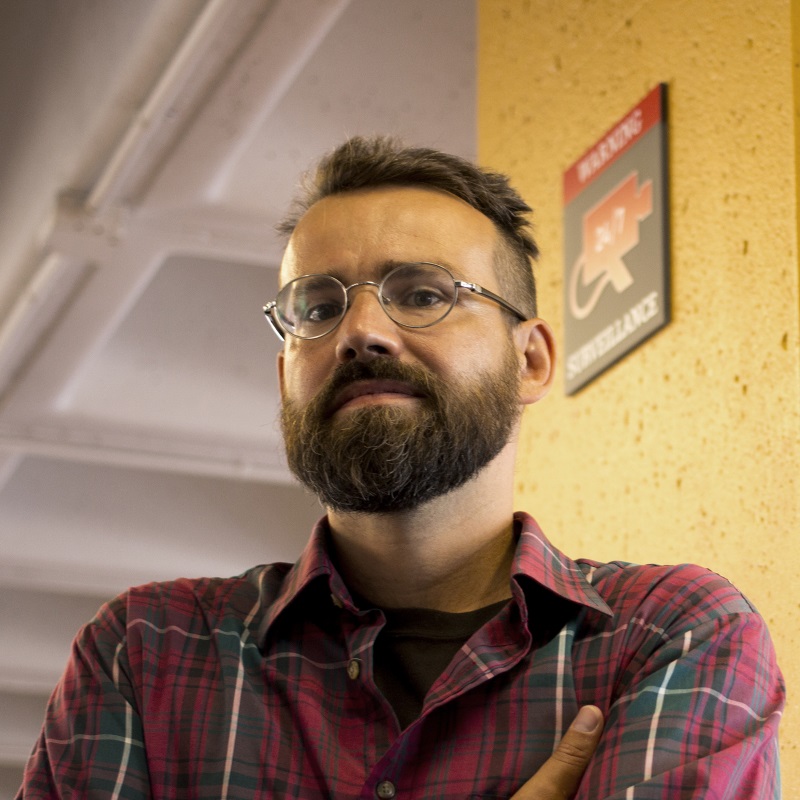
Chris Atkeson is a Professor at the Robotics Institute of Carnegie Mellon University. His research focuses on achieving human-level competence in machines through humanoid robotics and human-aware environments. He explores machine learning techniques such as reinforcement learning, nonparametric methods, and memory-based learning to develop robots capable of complex tasks like manipulation, locomotion, and perception. His work emphasizes bridging the gap between simulation and real-world applications (sim2real transfer), with contributions to tactile sensing (e.g., FingerVision), dynamic walking control, and human-robot collaboration. Notable projects include participation in the DARPA Robotics Challenge with Team WPI-CMU, where his team developed reliable humanoid behavior for disaster response scenarios. Atkeson’s research spans robotics, computer vision, and control systems, with a focus on enabling robots to perceive, learn, and act in unstructured environments. His recent work includes advancements in 3D scene capture, soft robotics, and energy-based planning for compositional tasks.
Andrew Radin is a Senior Political Scientist at the RAND Corporation and Associate Director of the Master of National Security Policy Program at the RAND School of Public Policy. His work focuses on European security, military activities in space, and state-building, with expertise in NATO, Russia, Ukraine, and Afghanistan. Ph.D. in Political Science, MIT B.A. in Political Science and Mathematics, University of Chicago Postdoctoral Fellow, Harvard Kennedy School Postdoctoral Fellow, University of Southern California His research centers on European and Eurasian security , military strategy , and state-building in weak states . He emphasizes the role of local politics in institution-building and has conducted case studies in Bosnia, Kosovo, Iraq, Timor-Leste, and Ukraine. His work explores hybrid warfare, deterrence, security sector reform, and U.S. policy toward Russia and China. His recent publications reveal a strong trend in analyzing space as a domain of military competition , NATO deterrence strategies , and Russian gray-zone aggression . Topics frequently include escalation dynamics, allied cooperation, and the future of the liberal international order. His research combines policy relevance with academic rigor. Scientific Contributions and Recognition: Author of Institution Building in Weak States: The Primacy of Local Politics (Georgetown University Press) Published in Security Studies , Journal of Conflict Resolution , Washington Quarterly , and War on the Rocks Contributor to high-impact RAND reports on Ukraine, NATO, Russia, and international order Andrew Radin has advised on national security policy, including serving as Country Director for Afghanistan in the Office of the Under Secretary of Defense for Policy. He previously taught as an adjunct professor at Georgetown University. He has not received mention of specific grants or student advisees, but his leadership in the Master of National Security Policy program suggests mentorship and program development responsibilities. He is active in shaping U.S. defense and foreign policy through research and commentary. Laboratories, Teams, and Research Groups: He is affiliated with the RAND Corporation’s international security research division and contributes to projects on global competition, military strategy, and political warfare. His work is often collaborative, involving multidisciplinary teams focused on defense policy and strategic stability.
Mariana Gkliati is an Assistant Professor of International and EU Law at Radboud University, Nijmegen. She holds a Graduate Diploma in Law (Magna Cum Laude) from the National and Kapodistrian University of Athens and a Legal Research Master (Summa Cum Laude) from Utrecht University. Her PhD from Leiden University focused on Frontex accountability, supervised by Professors Rodrigues and Besselink, and was supported by the Meijers Research Institute. Education: PhD in Immigration Law, Leiden University (2016-2020) Legal Research Master, Utrecht University (Summa Cum Laude) Graduate Diploma in Law, National and Kapodistrian University of Athens (Magna Cum Laude) Her research interests center on migration, refugee law, and human rights, particularly the accountability of the European Border and Coast Guard Agency (Frontex). She leads the externally funded project 'European Border and Coast Guard Agency: Systemic Accountability in Practice,' involving an 8-member team. Her work emphasizes evidence-based policy-making and anti-smuggling policies. Professional Activities: Research Affiliate, Refugee Law Initiative (RLI), University of London Teaches on the RLI MA in Refugee Protection and Forced Migration Studies Former visiting Research Fellow at the School of Advanced Study (2016) and Amsterdam Centre for Migration and Refugee Law (2019-2020) Awards: Magna Cum Laude, Graduate Diploma in Law Summa Cum Laude, Legal Research Master Her grants and projects include systemic accountability research on Frontex. She advises NGOs, law firms, and the European Parliament, and contributes to expert reports on migration and borders. Labs/Teams: Leads an 8-member research team for her funded project on Frontex accountability.
Jeffrey Monaghan is an Associate Professor at the Institute for Criminology and Criminal Justice (ICCJ) at Carleton University. He holds a Ph.D. in Sociology from Queen’s University and serves on the editorial board of Criminological Encounters . His research focuses on the intersections of policing, surveillance, and systemic inequality, with a particular emphasis on settler colonialism, Indigenous movements, and the global expansion of security practices. Monaghan teaches courses on criminological theories, policing, and justice frameworks. His work examines how security and policing practices criminalize marginalized communities, especially Indigenous peoples and social movements resisting extractive development. Key projects include analyses of counterterrorism strategies, disability injustice in criminal systems, and the securitization of Canadian foreign aid. He has authored/co-authored books like Security Aid: Canada and the Development Regime of Security and Policing Indigenous Movements , and edited volumes such as Protests in the Information Age . Monaghan’s research integrates critical criminology, colonial studies, and sociolegal analysis. He is cross-appointed to Carleton’s Department of Sociology and Anthropology and the School of Canadian and Indigenous Studies, amplifying interdisciplinary engagement with security governance and social justice issues.
Dr. Regina Enjuto Martinez is a Lecturer in International Development at King’s College London, based in the Department of International Development within the School of Global Affairs. She joined the university in 2021 and previously held positions at the London School of Economics (LSE), SOAS, and taught at Peking University. Her research focuses on welfare governance in China, particularly disability rights, HIV/AIDS policies, and migrant workers' welfare, examining state-society relations and NGO roles in welfare provision. Education: PhD in Development Studies (LSE, 2016), MSc in Sociology (National Chengchi University, Taiwan). Research Interests: Chinese politics, social welfare, civil society, migration, labor rights, project management and evaluation. Her work bridges international development theory and China’s unique policy contexts, analyzing how authoritarian governance structures influence welfare service delivery through contracting mechanisms. Collaborations with scholars like Yanchu Qu and Janet A. Howell highlight her engagement in cross-disciplinary research. She has contributed to debates on NGO autonomy, labor rights advocacy, and the convergence/divergence of China’s welfare practices with global models.
Michael McAlpine is a Professor in the Mechanical Engineering department at the University of Minnesota . He also holds affiliations with the Biomedical Engineering and Electrical and Computer Engineering departments. His research focuses on 3D printing functional materials & devices , Nanoscale inks , Biomedical devices , Bioelectronics , and Flexible Microsystems . Research Interests : 3D Printing, Biomedical Engineering, Nanotechnology, Flexible Electronics, Microfluidics Labs : ME 361/363 Contact : mcalpine@umn.edu , (612) 626-3303, ME 117 Recent Research Trends include 3D Printed Biomedical Devices , Flexible Electronics , and Bioprinting Applications . His work spans from Spinal Organoid Formation to Programmable Drug Release Capsules . Scientific Award : Circulation Research 2020 Best Manuscript Award
Apostolos Fasianos is a Lecturer in Economics at Brunel University London, specializing in macroeconomic implications of household financial behavior. Prior roles include economist positions at the Hellenic Ministry of Finance (2017-2020) and Central Bank of Ireland (2016-2017) , with collaborative research spanning the Bank of England and Reserve Bank of New Zealand . PhD in Economics, University of Limerick MSc in Economic Development, University of Glasgow MPhil in Economics, University of Athens Research focuses on household finance , housing economics , monetary policy , and economic inequalities . Recent work explores AI-enabled technological shocks on UK labor markets via Bayesian VAR modeling and textual patent analysis. Publications span topics like wealth inequality , housing market asymmetries , and financialization trends . Selected publications highlight interdisciplinary approaches, merging macroeconomic theory with empirical analysis of crises (e.g., Covid-19 ), housing markets, and historical financial trends. Key methodologies include textual analysis , VAR modeling , and spatial econometrics . Active in policy analysis, Fasianos represented Greece in international forums such as the EPC - Ageing Working Group and OECD Working Party 1 . Current projects include a 2023-2024 BRIEF AWARDS grant on AI’s macroeconomic impacts.
Sandro Ambuehl is the UBS Foundation Assistant Professor of Behavioral Economics of Financial Markets at the Department of Economics, University of Zurich. He holds a PhD in Economics from Stanford University (2016) and previously served as Assistant Professor at the University of Toronto's Rotman School of Business. His research focuses on improving financial decision-making, ethical incentives in repugnant transactions (e.g., organ donation, clinical trials), and foundational decision theory. He employs experimental and theoretical methods, supported by grants like the Swiss National Science Foundation Starting Grant (2022) and the Alfred P. Sloan Foundation (2017). Education: PhD in Economics (Stanford University, 2016); previous roles include Assistant Professor at University of Toronto (Rotman School of Business and Department of Management, UTSC). Research Interests: Behavioral and experimental economics, financial decision-making interventions, ethical policies for repugnant transactions, and welfare economics. His work has been featured in outlets like the Wall Street Journal , Financial Times , and NPR . Articles highlight themes like paternalistic motivations, participation incentives in trials, and welfare state design. His 2021 American Economic Review paper on paternalism earned the Exeter Prize. Recent studies explore blind peer advice in finance and welfare state preferences through experiments. Awards include the Exeter Prize (2022), Alfred P. Sloan Grant (2017), and Swiss National Science Foundation support. Grants focus on behavioral welfare economics and policy interventions. Labs/Teams: Affiliated with the UBS Center for Economics in Society at UZH, contributing to interdisciplinary behavioral economics research.
Professor Jennifer M. Welsh is a leading scholar in global governance and security, holding the Canada 150 Research Chair at McGill University. She previously served as Professor at the European University Institute and the University of Oxford, where she co-founded the Oxford Institute for Ethics, Law and Armed Conflict. Her work focuses on humanitarian intervention, the 'Responsibility to Protect' (R2P), UN Security Council dynamics, and Canadian foreign policy. Welsh advised UN Secretary-General Ban Ki-moon on R2P (2013–2016) and directed a five-year European Research Council project on 'The Individualisation of War.' Education : D.Phil. in International Relations, St. Antony's College, University of Oxford (Oxford, England) Masters and Doctorate from University of Oxford (Rhodes Scholar) BA, University of Saskatchewan (Canada) Research Interests : Welsh examines ethical and legal dimensions of armed conflict, atrocity prevention, and norms governing state sovereignty. Her work bridges theoretical analysis and policy implementation, with key contributions to R2P frameworks and non-state actor engagement in conflict zones. Recent publications explore localization in governance, Canada's geopolitical role, and civilian self-protection mechanisms. Key Awards : Leverhulme Trust Research Fellowship Trudeau Fellowship Grants & Advising : Directed a €2.5M ERC-funded project (2014–2019) Advisory roles include Peace Research Institute Frankfurt, Global Centre for R2P, and Auschwitz Institute Editorial boards: Global Responsibility to Protect , International Journal , and Ethics and International Affairs Labs/Teams : Directs McGill's Centre for International Peace and Security Studies (CIPSS), fostering interdisciplinary research on global security challenges.
Angelika Sjöstedt serves as Professor and Chair of Gender Studies within the Department of Humanities and Social Sciences at Mid Sweden University. Her academic leadership spans teaching across Bachelor's, Master's, and PhD programs in Gender Studies and Sociology, while actively contributing to institutional discourse through roles such as delivering the 2024 academic celebration lecture. She maintains significant engagement with contemporary academic freedom debates, notably co-organizing the 2024 seminar series addressing responsible internationalization amid the Gaza conflict. Her research profile reveals deep expertise in intersectional analysis of gender, settler colonialism, and labor precarity, particularly examining how chronic crises manifest in peripheralized regions. Recent work demonstrates acute responsiveness to geopolitical emergencies, with 2024 publications directly confronting academic complicity in genocide. Her methodological approach bridges ethnographic rigor with activist scholarship, evident in long-term collaborations like the Båskoes Sámi research network and Forum for Gender Research. Sjöstedt's scholarly trajectory shows consistent thematic development from early work on flexible knowledge-work subjectivity (2012) through nuanced examinations of rural resilience (2017-2020) to current urgent interventions in academic freedom. Her publications reveal distinctive geographic focus on Norrland's inland regions while maintaining transnational theoretical relevance, particularly regarding mining resistance movements and crisis management frameworks. The 2021-2024 output demonstrates accelerated engagement with acute political emergencies, signaling scholarly adaptation to escalating global crises. Professional networks constitute a critical dimension of her work, with sustained involvement in the Forum for Gender Research since at least 2015 and leadership in the Båskoes network advancing Indigenous research methodologies. Her editorial work on critical anthologies like Aktivism: En antologi om arbete för social och politisk förändring (2022) demonstrates commitment to bridging academic and activist knowledge production.
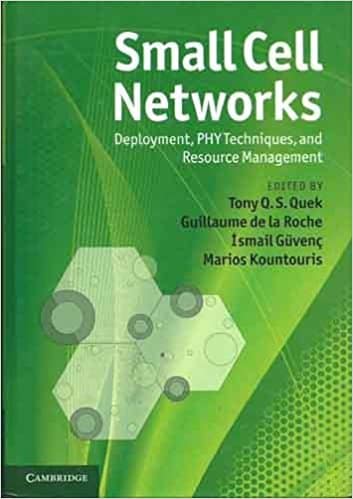
Dr. Ismail Guvenc is a Full Professor in the Department of Electrical and Computer Engineering at North Carolina State University. He holds an IEEE Fellowship and is a Senior Member of the U.S. National Academy of Inventors. His research focuses on 5G/6G wireless systems, UAV communications, heterogeneous networks, and spectrum management. He leads the NSF AERPAW project and serves as the NC State Site Director for the NSF BWAC I/UCRC center. Dr. Guvenc has authored/co-edited four books and holds over 30 U.S. patents. Education: Ph.D. in Electrical Engineering, University of South Florida (2006) Master's in Electrical and Computer Engineering, University of New Mexico (2003) Bachelor's in Electrical Engineering, Bilkent University, Turkey (2001) Research Interests: Dr. Guvenc’s work spans UAV communication systems, 5G/6G networks, spectrum sensing, and machine learning for network optimization. He emphasizes experimental validation through platforms like AERPAW, focusing on drone-based networks, radio dynamic zones, and testbed-driven innovation. His contributions address challenges in UAV localization, interference management, and energy-efficient networks. Grants & Leadership: PI and Director of NSF AERPAW (2019–Present) NC State Site Director for NSF BWAC I/UCRC (2019–Present) Recipient of NSF CAREER Award (2015) and NC State Faculty Scholar Award (2021) Publications & Awards: He has authored over 130 peer-reviewed papers and contributed to standardization efforts. His awards include the R. Ray Bennett Faculty Fellow Award (2019) and the USF Outstanding Dissertation Award (2006). Labs & Teams: Dr. Guvenc directs research in the ECE’s wireless communications group, leveraging AERPAW’s experimental capabilities to advance UAV networks and 6G technologies. His team collaborates with industry and government on spectrum policy and autonomous systems.
Saori N. Katada is a Professor of International Relations at the University of Southern California (USC). She specializes in geoeconomics, Japanese foreign policy, international political economy, regionalism, and Indo-Pacific relations. Her research emphasizes Japan’s strategic engagement in global and regional financial governance, including its responses to crises like the 1997 Asian financial crisis and the 2008 Great Recession. Her academic contributions include seminal works such as Japan’s New Regional Reality: Geoeconomic Strategy in the Asia-Pacific (2020) and Taming Japan’s Deflation (2018). She has held leadership roles at USC, including multiple terms as Director of the International Relations Program and Graduate Director. Katada’s awards include a National Endowment for the Humanities Fellowship and recognition for teaching excellence. Her recent research explores China-Japan competition in infrastructure diplomacy, the role of geoeconomics in Indo-Pacific stability, and the evolution of regional financial architectures. She serves on editorial boards, including Review of International Political Economy , and has contributed to policy debates on monetary policy, trade agreements, and developmentalist ideas.
Professor Masooda Bano serves as William Golding Senior Research Fellow at Brasenose College and Professor of Development Studies at the University of Oxford's Department of International Development. She leads the five-year ERC-funded Changing Structures of Islamic Authority (CSIA) project examining Islamic scholarly debates and their societal impacts. Her academic credentials include an MPhil in Development Studies from Cambridge and a DPhil from Oxford. These qualifications underpin her expertise in development theory and field research methodologies. Bano's research centers on the interplay between ideas, beliefs, and material incentives in development processes . She investigates how psycho-social factors shape individual choices and collective outcomes, with particular focus on Islamic authority structures, female education movements, and aid effectiveness. Her work combines large-scale comparative studies using ethnographic and survey data across Muslim-majority contexts. Recent publications reveal a concentrated focus on education policy in developing nations , especially Pakistan, Nigeria, and Indonesia. Key themes include decentralized education planning, low-fee private tuition markets, community participation models, and Islamic education systems. The research consistently examines religion-development intersections and institutional responses to social change. Her scientific recognition includes: Two competitive ESRC Fellowships A 1.4 million euro ERC Starting Grant for the CSIA project ESRC Best Social Science Impact award for Nigeria education interventions Bano supervises MPhil/DPhil theses at Oxford and has advised major development agencies, notably designing DfID's education reforms in northern Nigeria. Her CSIA project coordinates a multinational team conducting textual analysis, surveys, and ethnographic fieldwork to map evolving Islamic authority structures.
Chris Millora is a Lecturer in the Department of Educational Studies at Goldsmiths, University of London. He serves as Head of Programme for the MA Social Justice in Education and leads critical modules such as Introduction to Social Justice in Education and Global Education: Power, Practice and Policy . His work bridges youth learning, social justice, and international development, with a focus on grassroots activism. Education: PhD in Education and Development (2021), MA in Lifelong Learning Policy and Management (2016) Research Focus: Youth activism, volunteerism, and educational equity in Global South contexts Key Research Areas: Millora investigates youth-led social movements as informal learning spaces, employing ethnographic and participatory methods. His work examines how volunteering, activism, and dissent intersect with development agendas, SDGs, and systemic inequalities. Article Trends: Recent publications analyze bureaucratic literacies in Philippine volunteering, pandemic-era youth organizing, and criminalization of dissent in Southeast Asia. These works emphasize power structures, policy implications, and transformative learning. Scientific Awards: Leverhulme Trust Early Career Fellowship Grants & Collaborations: He has secured funding from UKRI/GCRF and collaborated with organizations like UN Volunteers, International Association for Volunteer Effort, and Global Campaign for Education. His research engages with UNESCO Chairs and BALID associations.
Nathan Nunn is a Professor at the Vancouver School of Economics at the University of British Columbia. He holds a Canada Research Chair in cultural economics and is affiliated with multiple prestigious research organizations including the Canadian Institute for Advanced Research (CIFAR), the National Bureau of Economic Research (NBER), and BREAD. His office is located in the Iona Building 172 at UBC. Professor Nunn's primary research interests span political economy, economic history, economic development, cultural economics, and international trade. His work focuses on the historical and dynamic processes of economic development, particularly examining how institutions and cultures evolve across societies. He has published extensively on historical factors crucial for economic development, including distrust, gender norms, religiosity, conflict, immigration, state formation, and support for democracy. His contemporary research examines the effects of Fair Trade certification, CIA interventions during the Cold War, foreign aid, school construction, climate shocks, and trade policies, with particular emphasis on how local context influences development policy effectiveness. Nunn's recent publications reveal a strong focus on the relationship between culture, institutions, and economic outcomes. His work increasingly examines how zero-sum thinking affects economic behavior and political divides, the persistence of traditional religious beliefs in Africa, and the historical roots of contemporary economic phenomena. His publications frequently appear in top economics journals including the Quarterly Journal of Economics, Econometrica, American Economic Review, and Science. His scientific contributions have been recognized through fellowships and editorial positions, including serving as an editor at the Quarterly Journal of Economics. He has advised numerous PhD students who have gone on to faculty positions at leading universities worldwide. Professor Nunn actively disseminates his research through various media channels, including podcasts, online courses, and public lectures. His teaching includes courses on economic history, development economics, and political economy, with a particular focus on how historical perspectives inform contemporary economic issues.