Paolo Landoni is a Full Professor at the Department of Management and Production Engineering (DIGEP) within the College of Management and Production Engineering at Politecnico di Torino. His research focuses on entrepreneurship, business model innovation, business incubators/accelerators, sustainability, and social impact startups. He serves as Scientific Director/Responsible for numerous EU-funded and commercial research projects including SEED2SCALE, ESSENTIAL, and Open Sustainable Innovation. Key research areas: Entrepreneurship, Business Model Innovation, Incubators, Sustainability Supervises PhD students in topics spanning sustainable procurement, social startups, and innovation ecosystems Recipient of EU Horizon 2020 and MSCA funding Active in teaching courses on Entrepreneurship since 2019/20 His recent publications analyze sustainable public procurement, financial sustainability in microfinance, blockchain for social good, and incubator effectiveness. He collaborates with institutions like the LINKS Foundation and consults for corporate innovation projects.
Dr. Florian Urmetzer serves as Associate Teaching Professor and founding Director of the Ecosystems, Platforms & Strategy (EPS) Research Group at the University of Cambridge's Institute for Manufacturing (IfM). His expertise centers on strategy formulation tools for business ecosystems and platforms within manufacturing and services sectors. He teaches the Business Ecosystem Strategy course and leads IfM Engage consultancy projects for clients including IBM, ATOS, ABN-AMRO, CEMEX, Pearson Education, Leonardo rescue helicopters, and the NHS. Urmetzer holds a distinction MSc in Network Centred Computing and PhD from the University of Reading's School of Systems Engineering. His doctoral research developed real-time usability evaluation methods for distributed collaborative environments. Academically, he has been a visiting researcher at Barcelona Supercomputing Center and Politecnico di Milano. His research investigates industrial ecosystems from strategic and managerial perspectives, encompassing supply chains, digital platforms, and business ecosystem dynamics. This work has been published in leading journals including Journal of Business Research, European Journal of Information Systems, and Journal of Service Research. Analysis of his recent publications reveals dominant trends in technological sovereignty, platform ecosystem governance, and manufacturing relocation strategies. Prior to Cambridge, Urmetzer gained extensive industry experience as a consultant at Accenture in Zürich, Senior Researcher at SAP labs, and roles at Volkswagen AG, Gartner Inc., and IBM. He currently leads the EPS Research Group, which develops frameworks for organizations navigating complex industrial ecosystem dynamics.
Goran Avlijaš is a researcher affiliated with Singidunum University in Belgrade, specializing in project management, operations research, and retail logistics. He holds a Doctorate in Engineering Management (2011–2016) from Singidunum University, a Master’s in Project Management (2008–2009) from the Faculty of Organizational Sciences, and a Bachelor’s in Management (2003–2007) from the same institution. His research focuses on optimizing project schedules through methods like Earned Value Management and Monte Carlo Simulation, analyzing supply chain efficiency, and exploring gig economy impacts on well-being in Balkan countries. Key research areas include: Project Management Innovation: Developing risk analysis tools (e.g., Event Chain Methodology) and applying earned value metrics to construction projects. Retail Operations: Investigating automated replenishment systems and inventory management challenges in retail environments. Social-Economic Dynamics: Studying gig economy effects on workforce well-being and regulatory impacts on entrepreneurship. His work spans 30+ peer-reviewed articles and conference papers, including contributions to Management , Sustainability , and Frontiers in Psychology . He co-authored textbooks like Project Management and Entrepreneurship for Singidunum University’s curriculum. Active in academic events such as Sinteza and FINIZ conferences, he bridges theoretical research with practical industry applications.
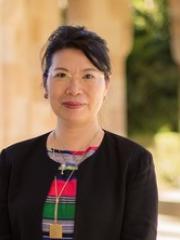
Dongming Xu is an Associate Professor in Business Information Systems at the University of Queensland Business School. She holds a PhD from the City University of Hong Kong in Information Systems and has established herself as a prominent researcher in the field of information systems with over 100 publications in top-tier journals and conference proceedings. Her educational background includes a PhD from City University of Hong Kong in Information Systems, though specific details about earlier degrees are not provided in the available text. Dr. Xu's research focuses on the confluence of information technology use and innovation, with particular emphasis on IT entrepreneurship, social media applications in business contexts, and business intelligence systems. Her work explores how information systems influence society and business performance, with applications spanning disaster management, eFinance, eHealth, and knowledge management. She combines theoretical model building with laboratory and field experiments, often developing prototype systems to validate her research. Her publication record demonstrates consistent high-quality output across multiple domains of information systems research, with recent work emphasizing digital disruption, platform ecosystems, social media in disasters, healthcare technology, and micro-learning applications. Her research shows a clear trajectory from foundational work on intelligent agents and decision support systems toward contemporary topics in digital transformation and platform-based innovation. Associate Editor, Information & Management Associate Editor, Journal of Electronic Commerce Research Associate Editor, Australasian Journal of Information Systems Dr. Xu has supervised numerous PhD students to completion, with research topics spanning digital disruption, IT startup development, social media in disasters, conceptual modeling, and environmental management. She has received multiple research grants, including current funding for 'Empowering Australia's Visual Arts via Creative Blockchain Opportunities' (2023-2026) and past projects on 'Smart micro learning with open education resources' (2018-2022). Her research has been supported by various agencies including the Hong Kong Government Research Grant Council, The National Natural Science Foundation of China, The University of Queensland, and City University of Hong Kong. She leads research in several key areas including IT entrepreneurship, business intelligence systems, and social media applications across multiple domains. Her work often involves developing innovative systems such as web-service-agent-based family wealth management systems, decision support systems for securities exception management, and knowledge management systems for disaster management.
Likoebe Maruping is a Professor of Computer Information Systems and Director of the Ph.D. program at Georgia State University's J. Mack Robinson College of Business. He is a member of the Center for Digital Innovation and serves as a senior editor for MIS Quarterly , having previously held editorial positions at Information Systems Research and the Journal of the Association for Information Systems . Previously, he taught at the University of Arkansas and the University of Louisville. Education: Ph.D. in Information Systems, University of Maryland, Robert H. Smith School of Business B.S. in Information Systems, University of Maryland, Robert H. Smith School of Business B.S. in International Business, University of Maryland, Robert H. Smith School of Business Maruping's research spans digital innovation , open source software development , agile methodologies , and team collaboration in dispersed settings . His work explores how leadership styles, particularly empowering leadership , can mitigate stress and improve performance in software development teams. He examines governance in digital platform ecosystems and investigates the relationship between digital technologies and social justice, as evidenced by his 2024 MIS Quarterly special issue contribution. His research often employs multilevel analysis approaches to connect micro and macro phenomena in information systems. Maruping's recent publications reveal a strategic shift toward examining AI innovation frameworks, platform ecosystem governance, and the social implications of technology. His 2025 work on AI innovation contrasts with traditional IT innovation through patent analysis, while his research on digital skill visibility in open source communities demonstrates practical applications of theoretical frameworks. These publications consistently bridge academic rigor with practical business implications. Editorial Recognition: Senior Editor, MIS Quarterly Former Associate Editor, Information Systems Research Former Associate Editor, MIS Quarterly Former Senior Editor, Journal of the Association for Information Systems As Ph.D. program director and former CIS department Ph.D. coordinator, Maruping has advised numerous doctoral students. His leadership extends to strategic program development, curriculum innovation, and enhancing recruitment of diverse doctoral candidates. He frequently leads workshops on multilevel theorizing, as evidenced by his 2023 workshop at Hong Kong Baptist University. His research has been supported through collaborations with major institutions and has influenced both academic discourse and industry practices in information systems management. Maruping is actively engaged with the Center for Digital Innovation at Robinson College of Business, which serves as his primary research hub. His work often involves cross-institutional collaborations with researchers from leading universities worldwide, reflecting the global nature of contemporary information systems research.
Uwe Cantner is a Full Professor of Economics at Friedrich Schiller University Jena and holds a professorship at the University of Southern Denmark/Odense. He has held significant roles such as Vice President for Young Researchers and Diversity Management at FSU Jena (2014–2024), Chairman of the German Federal Government's Commission of Experts for Research and Innovation (EFI), and Spokesman of the DFG-GRK 1411 Research Training Group. His work focuses on the economics of innovation, evolutionary economics, industrial economics, productivity measurement, and public finance. Education : Dipl.oec. in Business Administration/Economics (1985) from University of Augsburg; MA in Economics (1984) from Wayne State University; Dr.oec.publ. (1990) and Dr.rer.pol.habil. (1996) from Ludwig-Maximilians-University Munich. Cantner's research bridges theoretical and empirical analyses of innovation systems, technological sovereignty, and entrepreneurial ecosystems. He has contributed to debates on missions-oriented innovation policy, productivity dynamics in global value chains, and the role of institutional transparency in regional development. His recent publications analyze industrial policy frameworks (2023), digitalization challenges in European higher education (2022), and corruption-innovation linkages (2020). Articles span evolutionary economics, environmental economics, and policy analysis, with cross-cutting themes in sustainability, governance, and regional development. Cantner actively shapes academic discourse as President of the International Joseph A. Schumpeter Society (since 2015) and editorial roles in journals like the Journal of Evolutionary Economics . He has directed graduate programs and contributed to EU energy transition research through expert surveys.
Ramana Nanda is a Professor of Entrepreneurial Finance at Imperial College London's Business School and Academic Lead at the Institute for Deep Tech Entrepreneurship. He is also a Research Fellow at CEPR and Visiting Scholar at Harvard Business School. His research focuses on financing mechanisms for new ventures, venture capital dynamics, and innovation policy. Education: PhD from MIT Sloan School of Management, BA/MA in Economics from Trinity College, Cambridge. Prior to academia, he worked at Oliver Wyman in capital markets and small-business banking. Research Interests: Financing frictions in entrepreneurship, venture capital syndicates, innovation ecosystems, and policy interventions for high-potential ventures. His work bridges theory and practice, advising startups and investors in deep tech sectors addressing global challenges. Notable Awards: 2020 ERC Consolidator Grant for groundbreaking research, 2015 Kauffman Prize Medal for contributions to entrepreneurship literature. Formerly Sarofim-Rock Professor at Harvard Business School (2007-2020). Grants & Projects: Co-director of Harvard's Private Capital Project, recipient of major research grants. Advises on venture capital strategies and deep tech investments. Labs/Initiatives: Leads Imperial's Deep Tech Entrepreneurship Institute, collaborating with industry and policymakers to scale breakthrough technologies.
Ciarán Mac an Bhaird is an Associate Professor of Business and Management at Dublin City University (DCU), within the Fiontar & Scoil na Gaeilge department. He holds a PhD from Trinity College Dublin, a B.Comm and LL.B from NUI Galway, and an M.Sc. in Finance from DCU. His academic role includes teaching and supervising PhD students focusing on enterprise policy, high-growth firm financing, and entrepreneurship education. Research interests span resourcing small firms, capital structure, alternative finance, and public policy for SMEs. He authored Resourcing Small and Medium Sized Enterprises (Springer-Verlag, 2010), launched by the Irish Minister for Enterprise. His work has been published in journals like Small Business Economics and Venture Capital . He chairs the Entrepreneurial Finance track at the Institute of Small Business and Entrepreneurship Conference and serves as an associate editor for Research in International Business and Finance . Current PhD advisees include Simon Bridge, Nouf Alnasser, Batoul Batoulbanjar, and Sean O Reilly. Professional activities include contributions to policy reports for Enterprise Ireland and the Irish League of Credit Unions, and participation in the U.S. State Department’s International Visitor Leadership Programme.
Stefan Weik is an Assistant Professor of Finance at the University of St. Gallen (HSG), affiliated with the School of Finance and the Center for Financial Services Innovation. His research focuses on private markets, venture capital, private equity, and the economics of entrepreneurship and innovation. He holds a PhD in Finance from the Technical University of Munich (2023). His work examines European startup migration to the US, venture capital dynamics, and the impact of entrepreneurship education. Key contributions include analyses of startup performance disadvantages in Europe, cross-border venture capital flows, and policy implications for innovation ecosystems. Affiliations: Swiss Finance Institute, Center for Entrepreneurial and Financial Studies, European Finance Association Awards: Deutsche Bundesbank Special Prize for Dissertation (2024) Best Doctoral Paper Award at ENTFIN Conference (2023) TUM Research Fest Best Paper (2023) Germany Scholarship (2015) 2nd Place, DZ-Bank Preis for banking/finance theses (2014) His research agenda emphasizes global venture capital landscapes, entrepreneurial ecosystems, and policy solutions to bridge European innovation gaps. Active in academic networks, he contributes to shaping discourse on cross-border capital mobility and startup competitiveness.
Christina Hertel is an Assistant Professor of Entrepreneurship and Director of the Geneva Responsible Entrepreneurship Center (GREC) at the University of Geneva (UNIGE). She holds a PhD from the Technical University of Munich (TUM School of Management) and completed a postdoctoral fellowship at the École Polytechnique Fédérale de Lausanne (EPFL). Her research focuses on the intersection of entrepreneurship, sustainability, and collective action, particularly exploring community-based approaches for sustainable local development and impact measurement for responsible businesses. Christina leads a Swiss National Science Foundation-funded research project on community entrepreneurship and civic wealth creation. Her work bridges academic research with practical applications, collaborating with startups, incubators, and policymakers to design strategies that enhance economic, social, and environmental impact. She aims to establish Geneva and UNIGE as global hubs for responsible entrepreneurship. In teaching, she emphasizes experiential learning, designing courses that empower students to tackle real-world challenges. She organizes GREC events to foster student engagement in responsible entrepreneurship. Her research has been published in top journals like the Journal of Business Venturing and Academy of Management Discoveries, and she actively presents at international conferences such as the Academy of Management Annual Meeting and Social Entrepreneurship Conference. Key initiatives include developing frameworks for community resourcefulness in new ventures and advancing standards for responsible entrepreneurship. Her contributions span academic publications, policy engagement, and educational programs, all aligned with fostering sustainable and impactful business practices.
Professor Simon Deakin is a Fellow and Director of Studies in Law at Peterhouse, University of Cambridge, specializing in private law (tort and contract law) and labour law. He teaches on the undergraduate Law Tripos and the LLM programme, with research focusing on law and economics, artificial intelligence, and historical legal analysis. Current research on Is Law Computable? and AI ethics Co-editor of computational law essay collection Developed Cambridge Leximetric Database for quantitative legal analysis His research spans tort law, corporate governance, digital economy regulation, and sustainability. Recent work explores the Anthropocene's legal implications and labour law's computational approaches. Scientific awards include the Cambridge Students' Union teaching prize (2023) He supervises doctoral students annually and contributes to legal education through widely used textbooks. As a Centre for Business Research (CBR) affiliate, he advances data-driven analysis of global labour regulation.
Roles & Affiliations: King Omeihe is a Senior Lecturer at the School of Business and Creative Industries, University of the West of Scotland, and serves as UoA 17 Associate Research Lead for People, Culture, and Environment. He holds external roles including Chair of African Studies at the British Academy of Management and Chair of Entrepreneurship in Minority Groups at the Institute for Small Business and Entrepreneurship (ISBE). He advises on African economic policy and chairs several parliamentary groups in Scotland. Education: PhD from University of the West of Scotland, MBA from University of Aberdeen, and a diploma from University of Cambridge. Research Interests: Focuses on trust institutions, entrepreneurship in Africa, and the intersection of AI with societal challenges. Recent works include Trust and Market Institutions in Africa (2023), Qualitative Research Methods for Business Students (2024), and Handbook of African Studies (2025). Explores institutional economics, ethical AI applications, and decolonizing business education. Articles Trends: Recent publications emphasize AI ethics in healthcare, institutional resilience in developing economies, and leadership in complex systems. Key themes include sustainable development goals (SDGs), cross-cultural entrepreneurship, and policy interventions for minority entrepreneurs. Awards: Includes the 2025 UWS Innovation Teaching Award, 2022 Entrepreneurial Supporter of the Year, and multiple recognitions for teaching excellence. His work has been highlighted by Bright Red Spark for shaping enterprise education. Grants & Advising: Advises startups, policymakers, and global bodies like UNCTAD. Leads initiatives such as the MSc Entrepreneurship programme and collaborates with organizations like Marcel Advisory and the West African Transitional Justice Centre. Active in cross-party policy groups addressing social enterprise and racial equality. Labs & Teams: Co-leads the Centre for African Research on Enterprise and Economic Development (CAREED) and contributes to Emerald’s African Context of Business and Society as Editor-in-Chief. Oversees the UWS BME Staff Network and Academic Integrity Panel.
Antonios Angelakis is an Assistant Professor at the Department of Political Science, University of Crete. His academic background includes a Ph.D. in Technology and Innovation Policies from the University of Crete, an M.A. in Public Administration and Public Policy from the University of York (UK), and a B.A. in Political Science from the University of Crete. He previously held positions as a post-doctoral Research Associate at Nottingham Business School (UK) and as a Research Associate at the Small Enterprises’ Institute of the Hellenic Confederation of Professionals, Craftsmen and Merchants (IME GSEVEE) from 2013 to 2024. His research focuses on: Technology and innovation policy frameworks Digital transformation in business and governance Innovation management and technology transfer mechanisms Industrial policies and economic development strategies Historical and political economy perspectives on technological change He has contributed to numerous EU-funded and national projects on innovation policy and digital transformation. Angelakis' recent publications predominantly analyze SMEs, innovation ecosystems, and green transition, reflecting a consistent focus on how businesses adapt to economic crises, digitalization challenges, and sustainability imperatives. His work frequently employs empirical case studies and policy evaluations across European contexts. He maintains active roles in policy advisory bodies, including membership in the Attica Region Research and Innovation Council (since 2017) and the European Commission's high-level expert group 'Fit for Future Platform'. His teaching portfolio covers technology policy, innovation management, and digital transformation at institutions including the Technical University of Crete and Hellenic Mediterranean University.
Juan Alcacer is the James J. Hill Professor of Business Administration at Harvard Business School. He holds a PhD in International Business and Strategy from the University of Michigan, an M.A. in Economics, an MBA in Finance, and a Computer Engineering degree. His research focuses on international strategies, location decisions, and agglomeration economies. PhD - University of Michigan (Ross School of Business) MA - Economics, University of Michigan MBA - IESA Computer Engineering - Universidad Simon Bolivar Alcacer’s work examines how firms build competitive advantage through geographic choices, supply chain dynamics, and knowledge transfer. Recent projects analyze Brexit’s impact on investment and the role of internal/external agglomeration economies. His publications span top journals like Strategic Management Journal , Management Science , and Journal of International Business . Awards include the 2024 HBS Student Association Faculty Teaching Award and the 2016 Michigan Ross Distinguished PhD Alumni Award. 2024 HBS Student Association Faculty Teaching Award 2019 Greenhill Award for Field Global Immersion program 2016 Michigan Ross Distinguished PhD Alumni Award 2013 Meritorious Service Award from Management Science At HBS, he teaches required MBA strategy courses, Executive Education programs, and PhD seminars. His consulting spans global corporations on competitive advantage and location strategy.
Stephan Golla is a full-time Professor of Business & Management at the Fulda University of Applied Sciences. His academic focus spans Corporate Management and Entrepreneurship, with an emphasis on venture capital dynamics, entrepreneurial orientation, and lean startup methodologies. He contributes extensively to research in technology commercialization and social identity in entrepreneurship. Ph.D. in Business & Management (2009): Empirical thesis on Corporate Venture Capital M.Sc. in Business & Management (2000): Majors in Banking, Mechanical Engineering, and Innovation Management Golla's research explores intersections between social identity and entrepreneurial performance, startup finance, and innovation ecosystems. His recent publications analyze how founders' identities influence business outcomes and the evolution of entrepreneurial finance frameworks. His awards include the 2018 Sauer Foundation Best Paper Award in Social Entrepreneurship and the 2010 Vice Chancellor’s Award for Excellence at the University of Western Sydney. He has taught courses in Start-up Management, Innovation & Technology Management, and International Management. 2018: Best Paper Award (Social Entrepreneurship) 2010: Vice Chancellor’s Award for Excellence