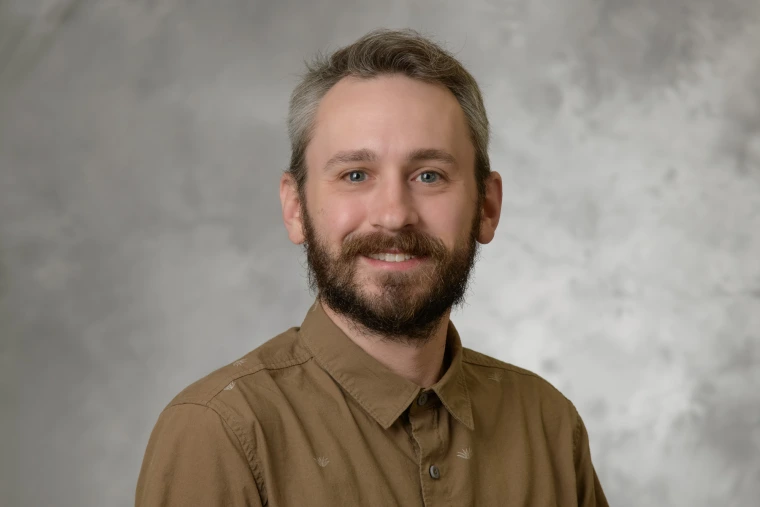
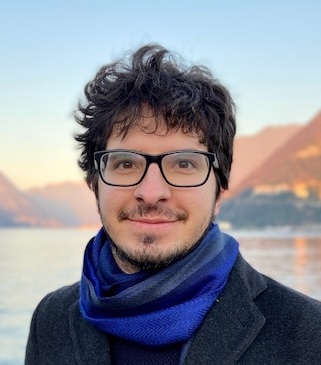
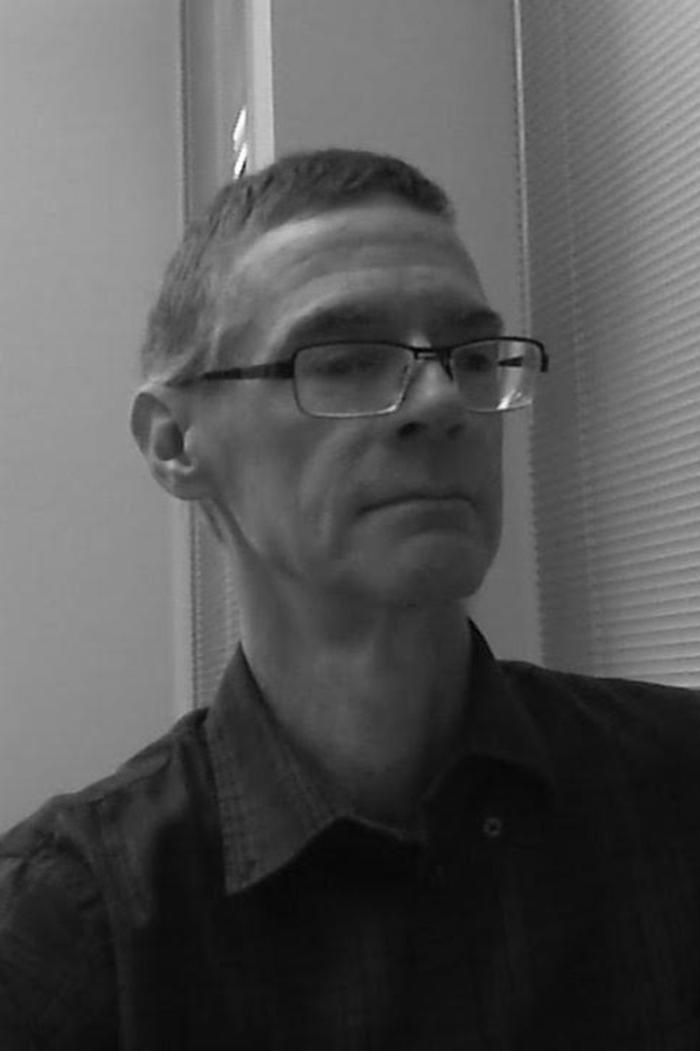
Dr. Gokhan Yilmaz is a Senior Lecturer in Civil Engineering at La Trobe University, Australia. He previously held academic roles at the University of Sharjah, American University of Sharjah, Victoria University, and Heriot-Watt University. His expertise spans climate change, hydrological modeling, flood/drought analysis, and statistical hydrology, with over 60 publications in peer-reviewed journals. Academic Positions: Senior Lecturer, La Trobe University (2020–present) Assistant Professor, University of Sharjah (2017–2020) Assistant Professor, American University of Sharjah (2016–2017) Research Fellow, Victoria University (2012–2016) Lecturer, Heriot-Watt University (2010–2012) Research Focus: His work addresses climate change impacts on hydrological systems, water resources management, and infrastructure resilience. Key areas include: Climate modeling and CMIP6 applications GIS-based flood risk assessment Groundwater recharge strategies Rainwater harvesting efficiency Coastal engineering and urban hydrology Recent Publications Trends: Recent articles focus on climate change adaptation, hydrodynamic modeling of coastal systems, and AI-driven drought prediction. Studies often integrate multi-criteria analysis (e.g., AHP) and geospatial tools (GIS) to address water resource challenges in arid and urban environments. Grants & Advising: No specific grants or student advising details are provided. His research collaborations span universities in Australia, UAE, and international institutions.
Dr. Deniz Turan-Kunter is an Assistant Professor in Food Quality and Design at Wageningen University & Research. She holds a B.Sc. and Ph.D. in Food Engineering from Istanbul Technical University, with a postdoctoral focus on digital twin applications for fresh produce cold chains. Her research bridges food packaging, smart supply chains, and sustainability, addressing food waste reduction through innovative materials and data-driven models. She leads projects on ventilated packaging design for strawberries and physics-based digital twins for refrigerated logistics. Education: B.Sc. (Distinction) and Ph.D. in Food Engineering from Istanbul Technical University (2010 and 2015). Her Ph.D. work on thermosensitive polymers earned the TUBITAK grant and Nestlé Young Scientist Award. She specializes in macromolecular chemistry, machine learning, and sustainable packaging solutions. Research Interests: Food packaging materials, digital twin technology, cold chain optimization, and strawberry quality preservation. She explores machine learning for predictive analytics in food systems and edible coatings from coffee by-products. Scientific Contributions: Over 15 peer-reviewed articles, including work on hygrothermal modeling, ventilated packaging, and smart materials. Key projects include optimizing refrigerated container shipments and developing edible coatings from cascara. Teaching: Coordinates MSc thesis and internship supervision in Food Quality and Design, including courses like Food Data Science and Packaging Design. She integrates industry-relevant challenges into academic training. Labs/Teams: Active in Wageningen’s Food Quality and Design division, collaborating on digital twin applications and sustainable packaging innovations.
Wai Meng Kwok is an Assistant Professor at the School of Mathematical & Computer Sciences, Heriot-Watt University. He holds a Ph.D. in Statistics and a B.Sc. in Actuarial Science. His research focuses on integrating artificial neural networks with Bayesian inference and ordinary differential equations to model epidemiological systems and solve complex mathematical problems. Research interests span neural networks, Bayesian methodologies, and their applications in epidemiology and differential equation models. He has explored topics like epidemic parameter estimation, standardization methods for neural network training, and the impact of public health policies on disease spread. His recent work includes developing time-stepper neural networks for epidemic modeling and applying Laplace-based Bayesian inference to differential equation systems. Collaborations involve interdisciplinary approaches to health and mathematical modeling. No scientific awards are listed. He has advised no named students in the provided texts. His research has been applied to real-world scenarios such as analyzing Malaysia's pandemic response.
Dariia Atamanchuk is a Researcher affiliated with Dalhousie University's CERC.OCEAN initiative. She holds a PhD in Natural Sciences (Marine Chemistry) from the University of Gothenburg, Sweden, and MSc/BSc degrees in Chemistry from Kyiv National University, Ukraine. Her research focuses on advancing autonomous oceanographic sensors, biogeochemical processes in marine systems, and carbon capture and storage (CCS) in oceanic environments. She is a key contributor to projects like SeaCycler and the Ocean Observatories Initiative (OOI), where she develops sensor technologies for high-resolution seawater monitoring. Dr. Atamanchuk's work emphasizes sensor innovation for in situ measurements of parameters like total alkalinity, pCO2, and oxygen dynamics. Her contributions include optimizing sensor stability under extreme conditions (e.g., aquaculture live haul systems) and validating sensor performance in diverse marine environments, including the Labrador Sea and Baltic Sea. She has pioneered methodologies for detecting CO2 leakage from sub-seabed storage sites and contributed to international standards for biogeochemical sensor data through the OOI Best Practices Guide. Her research spans interdisciplinary collaborations, addressing critical challenges in ocean acidification monitoring, deep-ocean oxygen transport, and carbon cycling. Dr. Atamanchuk is actively involved in advancing observational frameworks for ocean carbon removal technologies like Ocean Alkalinity Enhancement (OAE), leveraging high-resolution modeling and multi-platform data integration. Her work bridges sensor engineering, field deployments, and data synthesis to enhance understanding of marine biogeochemical processes and their global implications.
Baris Altunkaynak is an Associate Teaching Professor in the Department of Physics at Northeastern University's College of Science, and serves as the Supervisor of the Introductory Physics Laboratory (IPL). He is actively involved in teaching and laboratory supervision, managing the IPL which serves approximately 1,300 students per term. His research interests span particle physics, high-energy physics, and theoretical physics, with a focus on topics including supersymmetry (SUSY), Higgs boson interactions, dark matter, and LHC phenomenology. Altunkaynak has contributed to studies on collider signatures, mass hierarchies in supersymmetric models, and deflected mirage mediation scenarios. He has also engaged in experimental and theoretical analyses of particle interactions and detector technologies. His work includes collaborations on LHC Run-II benchmarking, Higgs boson mass predictions within supergravity frameworks, and the development of multidimensional phase-space methods for particle decay analysis. Altunkaynak’s research often bridges theoretical models with experimental data, aiming to uncover new physics beyond the Standard Model. His contributions to the physics community include both experimental and computational approaches, such as live-streaming radio-telescope observations and algebraic solutions to optimization problems in rectangle packing. Though no specific grants or student advisement records are listed, his role in the IPL highlights a strong commitment to undergraduate education and hands-on laboratory training. His research trajectory reflects a blend of cutting-edge particle physics with methodological innovations in data analysis and experimental design.
Dan Melconian is Professor at Texas A&M University's Cyclotron Institute, researching fundamental symmetries through precision nuclear physics experiments. His work tests Standard Model predictions using low-energy nuclear techniques. Recent publications include precision measurements of beta decay asymmetries (2018) and gamma-ray intensities (2024). He leads projects investigating neutron β-asymmetry parameters and nuclear decay processes. Awards include Distinguished Achievement in Teaching (2016) and Best Canadian Nuclear Physics PhD Thesis (2005). He currently mentors graduate students Morgan Nasser and Asim Ozmetin.
Professor Lifan Wang is a leading astrophysicist at Texas A&M University, specializing in supernova studies, cosmology, and astronomical instrumentation. He leads the DECam Search for Intermediate Redshift Transients (DESIRT) and is part of the TAMIDS Scientific Machine Learning Lab. His research focuses on dark energy, cosmic distance scale measurements, and spectropolarimetry of supernovae. Wang is a key figure in the Antarctic observatory project at Dome A, aiming to deploy telescopes to study dark energy through distant supernovae observations. Research Team: Includes Peter Brown, Xingzhuo Chen, and Ping Yang Institutional Partnerships: Mitchell Institute for Fundamental Physics & Astronomy His work integrates machine learning with large astronomical datasets to analyze supernova properties. Recent studies include polarization surveys of Type Ia supernovae and radiative transfer modeling of SN 1987A light echoes. Wang’s research bridges observational astronomy with theoretical modeling, contributing to both cosmological parameter estimation and stellar explosion mechanisms.
Suresh Perinpanayagam is Professor of Engineering at the University of York, where he leads transformative research in digital/data-centric engineering, digital twins, and AI. His work aims to revolutionize system design by leveraging data and high-performance computing to provide a more realistic and synergistic approach to complex future systems. He is affiliated with the School of Physics, Engineering and Technology at the University of York, where he has established the Data-Centric Engineering and Digital Twinning Synergy (DACEDITS) research group. Professor Perinpanayagam holds a Bachelor's and Master's degree in Aeronautical Engineering from Imperial College, London, and a PhD in Mechanical Engineering from Imperial College, London (Rolls-Royce Vibration University Technology Centre). His research focuses on harnessing digital technologies to revolutionize engineering design, control, development, and through-life supportability within aerospace, transport, energy and built infrastructure domains. Digital twins form a cornerstone of his work, creating virtual replicas of physical systems that are continually updated with real-time data for remote monitoring and predictive analytics. His team combines advanced modeling and simulation with data analytics and machine learning algorithms to gain actionable intelligence from real-time data, facilitating predictive maintenance and fault detection. Key application areas include fusion energy systems, electric/hydrogen aircraft, and autonomous transport vehicles, where the goal is to minimize extensive testing and validation while addressing global challenges in energy, electrification, circular economy practices, and net-zero emissions goals. Analysis of Professor Perinpanayagam's recent publications reveals a strong focus on applying digital twin technology and machine learning to critical engineering systems. His research spans aerospace applications (particularly for more electric aircraft), railway systems, and power electronics reliability. A notable trend is the increasing emphasis on explainable AI for safety-critical systems in aerospace, addressing certification challenges while maintaining high reliability standards. His work consistently bridges theoretical advancements with practical industrial applications, particularly in collaboration with major aerospace companies. Professor Perinpanayagam has secured research grants exceeding £5 million throughout his career. He has cultivated extensive industrial collaborations with leading companies including Boeing, Rolls-Royce, BAE Systems, Thales, Airbus Group, Safran, Meggitt, UKAEA, Heathrow Airport, Assystem, Awaretag and Chitendai Ltd. He has served as Principal Investigator for significant projects such as the Future Landing Gear Phase 2 project (£2 million) and the LAND One project with Airbus, as well as a £1 million project from Safran/ATI for the OLLGA project. As an educator and mentor, Professor Perinpanayagam has been the principal supervisor for seven PhD candidates and one Master's by Research student, all of whom have successfully completed their degrees. He has also supervised Individual Research Projects for thirty-five Master's students. His teaching encompasses data-centric engineering for intelligent systems, covering machine learning, digital twin technology, intelligent transport systems, IoT/sensory systems, predictive analytics, asset management, resilience engineering, project management, and system availability and maintainability. Professor Perinpanayagam leads the Data-Centric Engineering and Digital Twinning Synergy (DACEDITS) research group at the University of York, which pioneers the integration of digital and data technologies to revolutionize engineering design and support. His team brings together cross-disciplinary expertise in advanced modeling and simulation, data analytics, and artificial intelligence to develop next-generation engineering systems that are highly efficient, reliable, and economically viable. The group maintains strong industry partnerships that facilitate the translation of research into practical applications.
Scott Monroe is an Associate Professor at the University of Massachusetts Amherst in the Department of Educational Policy, Research & Administration (EPRA). His research focuses on latent variable modeling, item response theory (IRT), and structural equation modeling, with applied work in state testing and student growth evaluation. He holds a Ph.D. from UCLA's Graduate School of Education & Information Sciences and an M.S. in Statistics from UCLA. B.A., University of California San Diego, 2000 M.S., Brooklyn College, 2007 M.S., University of California Los Angeles, 2013 J.D., University of California Los Angeles, 2004 Ph.D., University of California Los Angeles, 2014 His research interests emphasize methodological advancements in IRT model evaluation, teacher evaluation frameworks, and statistical computing. He has contributed to global discussions on educational measurement, including work published in Multivariate Behavioral Research and Educational and Psychological Measurement . Prior to academia, Monroe was a high school mathematics teacher in Brooklyn, New York, and Culver City, California. His recent projects include examining learning progressions in middle-school mathematics and evaluating educational interventions like the Green Dot Locke Transformation Project. His work on IRT model fit evaluation and student growth modeling has been influential in shaping assessment practices. He has collaborated on CRESST reports addressing topics like MIRT-based student growth percentiles and diagnostic classification models.
Morten Bech Kramer is an Associate Professor in the Department of the Built Environment at Aalborg University, part of The Faculty of Engineering and Science. His research focuses on wave energy converters, numerical modeling of ocean energy systems, computational fluid dynamics (CFD), and hydrodynamic interactions in marine environments. He leads the Ocean and Coastal Engineering Research Group and contributes to the BLUE – Marine & Maritime Research initiative. Key projects include the Competitive Renewable Energy Platforms Based on Shipbuilding Methods (2023–2026) as PI, and collaborations on the Wavestar and AquaBuOY wave energy converters. His work spans experimental testing, numerical validation, and optimization of renewable energy systems. Kramer has supervised 2 PhD students and contributed to over 117 publications since 2001, including high-impact studies on CFD optimization and wave energy modeling standards. His research has been highlighted in media such as North Sea Region funds ocean energy pilots scale-up (2018) and Danskere bygger verdens største testfacilitet til bølgekraft (2020). Kramer is actively involved in international initiatives like the IEA Ocean Energy Systems Task 10, advancing global standards for wave energy modeling and validation. His technical expertise includes hydrodynamic analysis, power take-off system design, and reliability assessment of offshore energy infrastructure. Kramer’s work bridges theoretical models with practical applications, driving innovation in marine renewable energy technologies.
Andrew Bennett is an Assistant Professor in the Department of Hydrology and Atmospheric Sciences at the University of Arizona. He holds a Ph.D. in Civil & Environmental Engineering from the University of Washington (2021). Research focuses on hydrologic modeling and machine learning, emphasizing large-scale terrestrial hydrology and model-data integration. Current work develops deep learning frameworks for groundwater parameter inversion, HydroLSTM-based catchment modeling, and simulation-based inference for complex watershed simulators. Research addresses spatiotemporal machine learning applications from regional to continental scales, coupled land-atmosphere modeling for Arctic regions, and reproducibility in hydrologic modeling. Bennett creates computational tools including SubsetTools for ParFlow model data processing and advances cyberinfrastructure for reproducible hydrologic research. Methodological innovations include physics-inspired AI approaches, explainable AI for neural network interpretation in flux simulations, and process-conditioned bias correction for streamflow models. Research examines fundamental challenges in model evaluation, data partitioning strategies, and temporal aggregation effects on hydrologic predictions. Educational Background: Ph.D. research developed at University of Washington established foundations in model evaluation, information theory applications, and ice sheet model validation techniques.
Luca Rottoli is an Assistant Professor in Theoretical Particle Physics at the University of Milano Bicocca . He has held prestigious positions including an SNSF Ambizione Fellowship at the University of Zürich (2020-2021, 2022-2024), postdoctoral research at the Lawrence Berkeley National Laboratory (2019-2020), and earlier research roles at University of Milano Bicocca . He earned his DPhil (PhD) at the University of Oxford , preceded by a Bachelor’s and Master’s from the University of Milan .
Ron Workman is a Research Professor of Physics at George Washington University's Department of Physics, where he teaches undergraduate courses including Classical Mechanics (Physics 3161), Principles of Quantum Physics (Physics 3167), and Stars, Planets, and Life in the Universe (Astronomy 1001). His research focuses on nuclear theory with emphasis on the baryon resonance spectrum through analysis of photon-induced reactions on nucleons using global accelerator data. Education background: PhD in Physics from University of British Columbia (1988) MSc in Physics from University of British Columbia (1984) BSc with Honors in Physics from University of Victoria (1981) Workman's research centers on nuclear theory and particle physics , specializing in partial-wave analysis of pion-nucleon and photon-nucleon scattering data. He develops advanced techniques to extract resonance parameters and pole positions in the complex energy plane, with particular focus on baryon transition form factors and the role of inelastic channels in photoproduction processes. His work bridges experimental data from facilities like Jefferson Laboratory with theoretical frameworks for hadron spectroscopy. Analysis of his recent publications (2022-2024) reveals consistent advancement of partial-wave analysis methodologies including the SAID program and Laurent+Pietarinen expansion techniques. These studies predominantly address photoproduction helicity asymmetries, baryon transition form factors, and exotic state investigations, significantly contributing to the global understanding of nucleon resonance spectra and hadronic interactions. Workman actively contributes to the SAID Data Analysis Center for electromagnetic and hadronic interactions and serves as a key member of the Particle Data Group, authoring multiple editions of the biennial Review of Particle Physics. His collaborative work with the CLAS Collaboration at Jefferson Laboratory represents a major component of his experimental engagement. No information regarding student advising or grant funding is available in the provided materials.
Dr. Alison O'Connor is an Assistant Professor at the University of Limerick , affiliated with the Department of Computer Science & Information Systems , Ageing Research Centre , and Lero – the Irish Software Research Centre . Her research bridges machine learning with mechanics of materials and healthcare data analytics , focusing on applications in structural integrity , Industry 4.0 , and medical informatics . Education : PhD in Mechanical Engineering (Imperial College London, 2015-2019), Graduate Diploma in Advanced Materials (2008-2009), and BSc in Aeronautical Engineering (2004-2008). Her research interests span explainable AI for healthcare decision-making, finite element analysis in nuclear steel integrity, and cold rolling process modeling . Recent publications highlight her work on agent-based patient pathway simulations and MRI texture analysis of traumatic brain injury. She contributes to journal peer-review and university committees as a core member. Publication trends show dual expertise: 50% in structural integrity and materials science, 50% in neuroscience and medical diagnostics . Key subfields include dopamine regulation , microdialysis techniques , and computational medicine .
Abdourrahmane ATTO is a Professor at Polytech Annecy-Chambéry, part of Savoie Mont-Blanc University. His research focuses on advanced machine learning techniques, including deep learning theory, stochastic modeling of multi-fractal processes, and time series analysis of images. He specializes in applications such as SAR image processing, environmental monitoring, and geohazard prediction. His work integrates neural networks, wavelet analysis, and explainable AI methods. Research Themes: Deep Learning Theories (Analysis, Explainability) Multi-Fractality and Stochastic Modeling Time Series of Images & Video Analysis Convolutional Neural Networks SAR and InSAR Image Processing Key Contributions: Developed timed-image representations for action recognition in video sequences. Advanced fractional Brownian field models for texture synthesis and analysis. Created the ISSLIDE dataset for landslide detection using machine learning. Pioneered explainable AI methods for hydrological forecasting and SAR image classification. Labs & Affiliations: Active member of LISTIC laboratory, focusing on interdisciplinary research in signal processing and computer science.