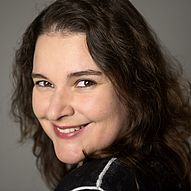
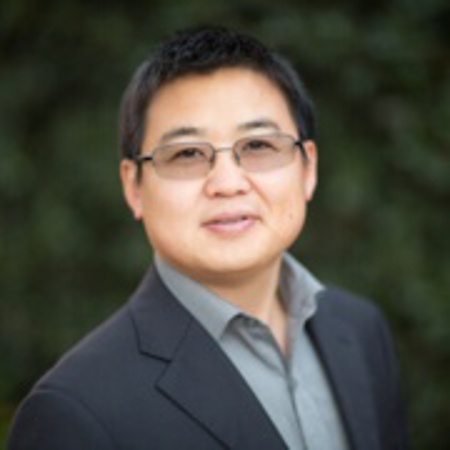
Vedrana Bolic Baric is a Lecturer at Linköping University's Faculty of Medicine, specializing in inclusive learning environments and transition processes for youth with neuropsychiatric disabilities. Her research focuses on universal design for learning, digital health interventions, and occupational therapy applications for educational and health equity. Doctor of Medicine (2016) Master's in Occupational Therapy (2010) Licensed Occupational Therapist (2007) Her research investigates how inclusive pedagogical frameworks and technological interventions (like weighted blankets and digital coaching tools) can improve educational outcomes and life transitions for neurodiverse populations. Current projects include international implementation of Partnering for Change (P4C) and welfare technology studies in elder care. Recent scientific recognition includes: Educator of the Year 2024 by Consensus Principal investigator for RemindMe digital planning tool development Collaborations through ERASMUS+ and Joint Innovation Partnership for Learning (JIP4L) networks
Paul Kempler is an Assistant Professor in the Department of Chemistry and Biochemistry within the College of Arts and Sciences at the University of Oregon. He serves as Director of the Electrochemistry Masters Internship Program and Associate Director of the Oregon Center for Electrochemistry. His academic journey includes a B.S. in Chemical Engineering and Chemistry from Vanderbilt University (2015) and a Ph.D. in Chemical Engineering from Caltech (2020) under Prof. Nathan S. Lewis. Dr. Kempler's research focuses on electrochemical approaches to deep decarbonization , specifically developing electrochemical devices for grid-scale energy storage, electrified manufacturing processes, and sustainable iron production. His work bridges fundamental studies of ion transfer kinetics at electrochemical interfaces with practical applications in green hydrogen production and zero-emissions iron making. Current projects include optimizing electrolyzers for steel decarbonization, studying metal oxide reduction mechanisms, and developing advanced electrochemical stacks for industrial applications. His recent publications reveal a strong emphasis on electrochemical iron production (Chlor-Iron process), alkaline water electrolysis for hydrogen, and fundamental ion transfer kinetics . These works span from fundamental studies of interfacial reactions to applied research on industrial-scale electrochemical processes, consistently targeting climate-critical decarbonization pathways. Dr. Kempler leads a vibrant research group comprising postdoctoral scholars, graduate students, and undergraduates working on diverse electrochemical challenges. His educational initiatives include developing the first industrially-focused Master's program in electrochemistry in the United States, integrating advanced experiments with Python coding. His research is supported by significant funding from: U.S. Department of Energy Basic Energy Sciences Office of Energy Efficiency & Renewable Energy Advanced Research Projects Agency-Energy (ARPA-E) Leidos Southern California Gas Company As Director of the Electrochemistry Masters Internship Program, he has established strong industry partnerships that place students with leading companies in the electrochemical sector, creating a pipeline for skilled electrochemists to address climate challenges.
Simon Barnes-Sadler is a Departmental Lecturer in Korean Studies and Academy of Korean Studies (AKS) Postdoctoral Research Fellow at the University of Oxford. He teaches postgraduate Research Methods for Contemporary Korean Studies and undergraduate/postgraduate Prescribed Texts in Korean Studies courses. Affiliation: University of Oxford, Faculty of Asian Studies Projects: Core member of AKS-funded 'Research and Teaching Hub for K-Wave Korean Studies in Europe'; Partner for Oxford Policy Engagement Network's Korean language education initiative His research focuses on Korean linguistic variation through interdisciplinary methods, including: Traditional, quantitative, and perceptual dialectology Social cognition of language variation Digital humanities (GIS, network analysis, data visualization) Korean Wave's impact on language practices Language pedagogy Recent publications examine English appropriation in K-Pop, translanguaging in BTS fandoms, and Korean dialect divergence in diasporic and inter-Korean contexts. He also serves as corresponding editor for Hallyu: The Korean Wave journal.
Prof. Dr. Attila Németh holds the Professorship for German Linguistics and Language Didactics at the University of Education Upper Austria (PH Oberösterreich), Faculty of Languages, Literatures, and Cultures. His research focuses on language variation, grammar didactics, language contact, dialectology, and sociolinguistic aspects of German minority languages in Hungary. Education : PhD in German Linguistics (Sociolinguistics/Dialectology) from the University of Szeged (2009). Prior Roles : Senior Research Assistant at the University of Veszprém (2009-2016), Editorial Assistant for intercultural Germanistics journals, and Project Assistant for DAAD initiatives. His scholarly output examines morphosyntactic complexity in language contact, code-switching dynamics, and dialect preservation challenges in Central Europe. Notably, he co-authored studies on Hungarian-German linguistic interplay and dialect attrition in Transdanubia. Prof. Németh actively contributes to academic publishing as co-editor of the Zeitschrift für Mitteleuropäische Germanistik and through editorial roles in journals like Beiträge zur Interkulturellen Germanistik . His work bridges theoretical linguistics with practical language teaching frameworks.
Željko Rišner is a Professor of English and German Language and Literature at the Department of Foreign Languages and Sociology, Faculty of Law Osijek, Josip Juraj Strossmayer University. He has been permanently employed since 1994, teaching English and German language courses across multiple study programs. Active faculty member Teaches English for Law, EU Law, and Social Work Co-authored publications in applied linguistics and legal translation Member of Croatian Society for Applied Linguistics (CALS) and UNJSVU Research Focus: Applied linguistics, legal translation, sociolinguistics, and multilingualism. His work examines euphemism functions in political/media discourse, synonymy in translation, minority language challenges in the EU, and dictionary usage in legal translation. He has contributed to projects analyzing Osijek's linguistic history and construction law's societal impact. Publications Overview: His scholarly output spans lexical analysis, translation ethics, language policy, and educational technology. Notably, he co-authored a 2018 interdisciplinary study on new media in social sciences education and a 2021 diachronic analysis of multilingualism in Osijek. Academic Service: Participates in the Lifelong Learning Program for Lawyer-Linguists and has mentored graduate theses. His teaching extends to polytechnics in Požega, Vukovar, and Petrinja.
Professor Jie Sui serves as Chair in Psychology at the University of Aberdeen, where she is a faculty member in the School of Psychology. Her office is located in the William Guild Building (Room S03), King's College, Old Aberdeen, AB24 3FX. She holds several key institutional roles including Chair of the Psychology Ethics Committee, membership on the School REF Output Group, School Research Committee, University Ethics Advisory Group, and University Promotion Committee. Professor Sui's research focuses on cognitive and social neuroscience with particular emphasis on self-processing mechanisms. Her work explores how the self-concept influences cognitive processes, social interactions, and emotional responses. Key areas of investigation include: The neural representation of dynamic selves and self-culture interactions Self-processing in healthy aging populations Virtual reality applications for studying social interactions Behavior change mechanisms through self-referential processing Her recent publications demonstrate a strong focus on self-prioritization effects, self-representation across different populations (including autistic individuals and new mothers), and the application of machine learning approaches to psychological research. She frequently employs cognitive neuroscience methods to investigate how self-relevance modulates attention, perception, and decision-making processes. Professor Sui has secured significant research funding including: Royal Society Leverhulme Trust Senior Research Fellowship (2025-2026): 'Tracing the neural representation of dynamic selves' The Leverhulme Trust grant (2020-2024): 'The ubiquitous self: Testing the enhanced binding account' ARUK grant (2017-2020): 'Self-representation as a probe for mild Alzheimer's dementia' In her teaching role, Professor Sui delivers courses on The Social Self at Level 4, teaches Ethics across multiple programs (Level 1, Level 4, MSc, MRes), and provides tutorials on Social Psychology, Cognitive Neuroscience, and Research Methodology at Level 3.
Heinz Adolf Preisig is a Professor in the Department of Chemical Engineering at the Norwegian University of Science and Technology (NTNU). With an extensive international academic career, Professor Preisig has held positions at Texas A&M University (USA) as Associate Professor, University of New South Wales (Australia) as Senior Lecturer, and Eindhoven University of Technology (Netherlands) as Professor of Chemical Engineering, Physics, and Electrical Engineering before joining NTNU. His research focuses on Process Systems Engineering with particular emphasis on ontology-based computational engineering, multi-scale modeling, and materials modeling frameworks. Professor Preisig has developed systematic approaches for constructing, manipulating, and simplifying process models through hierarchical ontology-based software suites. His work bridges theoretical modeling frameworks with practical industrial applications, with significant contributions to process modeling methodologies that integrate mechanistic reductionism with holistic empirical components. His research spans from fundamental theoretical developments to applied industrial projects across multiple sectors including energy, materials, and chemical processing. Analysis of Professor Preisig's publication record (2017-2022) reveals a clear trajectory toward more sophisticated ontology-based modeling approaches with increasing integration of semantic web technologies with traditional process engineering. His work demonstrates consistent development of frameworks that enable better model interoperability, reusability, and systematic construction across different domains. A significant portion of his recent work focuses on multi-scale modeling applied to complex materials like polyurethane foams and biomass conversion processes, showing his ability to connect fundamental physical principles with practical engineering applications through advanced computational frameworks. Professor Preisig has been instrumental in major European research initiatives: VIPCOAT Horizon2020 Project: Creating an open innovation platform for corrosion protection coatings in the aeronautic industry MarketPlace EC Horizon 2020 project: Developing a Materials Modelling and Collaboration platform as a one-stop-shop for materials modeling MoDeNa Framework 7 Project: Building multi-scale software frameworks for polyurethane foam modeling EcoLodge: Bio fuel production project using coupled bio reactors He teaches core courses at NTNU including TKP4106 Process Modelling, TKP4135 Process Systems Engineering, and supervises chemical engineering specialization projects. His teaching philosophy centers around models as the foundational concept in engineering education, emphasizing multi-scale understanding and systematic model construction. Professor Preisig leads the Process Systems Engineering group at NTNU, which develops computer-aided modeling tools for systematic process model construction, documentation generation, and code implementation across various simulation environments.
Dr. Kerstin Richter is a Lecturer in English and American Studies at the University of Regensburg's Faculty of Languages, Literature, and Cultures. She specializes in neology, dialectology, onomastics, and artificial languages, with a particular focus on pop culture's influence on mainstream language and fictional telecinematic discourse. Academic Affiliation: Department of English and American Studies Research Themes: Neologisms from science fiction and gaming, semantic relevance of fictional terms, and comparative dialect studies Her recent talks and publications explore fictional language didactics, semantic modeling beyond community practices, and pop culture's impact on linguistic constructs. She supervises B.A., M.A., and State Exam theses on topics like forensic linguistics, code-switching in cinema, and language attitudes toward English accents. Dr. Richter serves as a pronunciation examiner and academic counselor, while contributing to the OED Researchers Advisory Group and Forschergruppe NAMEN. Her methodological work includes focus group-based online snowball sampling for dialect research.
Bin Chen is an Associate Professor at Michigan State University with joint appointments in the Genetics & Genome Sciences Program and Department of Computer Science and Engineering . His research combines multi-omics data , electronic medical records , and advanced machine learning to develop novel therapeutic approaches. Key affiliations : Genetics & Genome Sciences Program Computer Science and Engineering Department NIH BDMA Study Section Research focus : OMICS-driven drug discovery Biomarker identification Translational bioinformatics Virtual screening platforms Single-cell & spatial transcriptomics His lab actively develops machine learning models like transfer learning and deep reinforcement learning to analyze bulk/single-cell transcriptomics and EMR/EHR data. The team has made significant contributions to COVID-19 research, diffuse midline glioma , and Alzheimer's disease through computational drug repurposing and biomarker discovery . Selected scientific awards include: NIH R01 Diversity Supplement (2021) Early Career Research Excellence Award (2021) Best Paper Award at KDD Health Day (2022) NIH BDMA Study Section Membership (2025) The lab has trained numerous students and postdocs who have transitioned to academic and industry positions. Current funding includes NIH R01 grants , NCATS Translator program , and MSU-Spectrum Health Alliance collaborations.
Monique Snoeck is a full professor and coordinator of the Information Systems Engineering Research Group (LIRIS) at KU Leuven's Faculty of Economics and Business (FEB). She serves on the FEB Council and Campus Council while contributing to DigiSoc and Leuven.AI institutes as a member focused on digital society and AI initiatives. Her research pioneers conceptual modelling, enterprise modeling, requirements engineering, and model-driven engineering, notably through the MERODE methodology and MERLIN prototyping tool. Current work integrates AI with learning analytics for education and develops automatic UI generation from conceptual models, alongside capacity-building projects for Cuba's software industry using model-driven approaches. Recent publications reveal converging trends in LLM-enhanced conceptual modeling education, XAI applications for credit risk analysis, and digital process twins for business scenario simulation. Key themes include model validation techniques, IoT application patterning, and multi-model integration for domain-process alignment. She supervises PhD candidates Tiukhova, E. (credit risk/XAI) and Verbruggen, C. (multi-modelling), leading grants including 'Explanations in AI for Learning Analytics' (2025-2029), 'Personalized Feedback Generation' (2024-2028), and 'Cuba Software Industry Capacity Building' (2024-2029) as promotor. As LIRIS leader, she drives model-driven engineering research while collaborating with Leuven.AI on AI integration and DigiSoc on digital public service co-creation initiatives.
Michael Moffitt is the Philip H. Knight Chair and Professor at the University of Oregon School of Law, affiliated with the Clark Honors College, Law-JD program, Law-CRES, and the Appropriate Dispute Resolution Center. As former Dean (2011–2017), he leads research in mediation, negotiation, and civil procedure. His seminal work includes The Handbook of Dispute Resolution and Dispute Resolution: Examples & Explanations , co-authored with leading scholars. Recognized with awards like the Dispute Resolution Advancement Award and the Fred C. Zacharias Memorial Prize, his scholarship bridges theory and practice in ADR. Moffitt’s teaching excellence is highlighted by the Herman Award for Specialized Pedagogy. Prior roles include clinical supervision at Harvard Law School, global dispute resolution consulting, and visiting professorships at Harvard. His research emphasizes mediator accountability, settlement ethics, and legal education innovation. Beyond academia, he is an avid snowboarder, tennis player, and hiker. Education & Background JD (specific details not provided) Clerkship at a federal court Extensive international dispute resolution consulting experience Research Focus Moffitt’s work explores mediation ethics , settlement malpractice , and the evolution of ADR in legal systems. Key themes include the role of transparency in mediation, legal accountability for mediators, and pedagogical approaches to negotiation training. His articles critically assess procedural reforms and ethical standards in dispute resolution. Publications Trends Recent articles (2019–2025) emphasize settlement ethics and mediator liability , reflecting his focus on professional accountability. Earlier works address ADR integration into legal education and systemic reforms. His writing spans empirical studies, policy critiques, and practitioner guides. Awards & Recognition 2023 Herman Award for teaching excellence 2022 Dispute Resolution Advancement Award (for Settlement Malpractice ) Multiple best article prizes (2019–2020) Grants & Advising Moffitt’s grants include projects on transparency in mediation and ADR globalization . He advises on negotiation pedagogy and has mentored numerous students in dispute resolution studies. Labs & Collaborations Associated with the School of Law’s Appropriate Dispute Resolution Center, he collaborates on initiatives like the Mediation Accountability Project and Global ADR Standards research group.
Dr. Abigail Fiske is a Lecturer in Neuroscience at Lancaster University, affiliated with the Neuroscience and Neurocognition department within Fylde College. Her research focuses on developmental cognitive neuroscience, particularly early executive function development in infants and toddlers. She employs functional near-infrared spectroscopy (fNIRS) to study neural correlates of cognitive processes and has contributed to understanding the predictive associations of executive function with academic outcomes. Key research interests include self-regulation in early childhood, maternal depressive symptoms' effects on child development, and methodological advancements in neuroimaging. She has supervised 1 postgraduate student, Hambel Willow. Dr. Fiske has received multiple awards, including the BPS Award for Outstanding Doctoral Research (2025) and the Keeley Senior Scholarship (2022). Her work emphasizes interdisciplinary collaboration, evidenced by co-authored articles on fNIRS methodologies and neuroimaging representation challenges. She actively participates in conferences and workshops, such as the “New Tricks in Research Integrity” initiative to foster research culture improvements.
Warren Del-Pinto is a Researcher specializing in Natural Language Processing (NLP) and Health Informatics. His work focuses on ontology-based clinical text annotation, synthetic clinical data generation, and privacy-preserving healthcare technologies. He is affiliated with the Digital Futures Institute for Data Science and AI and the Christabel Pankhurst Institute, where he contributes to interdisciplinary research in healthcare AI and knowledge representation. Del-Pinto earned his PhD in 2022 under the supervision of Professor R. A. Schmidt, with a thesis titled Computing Spaces of Independent Explanations via Abductive Reasoning . His academic journey emphasizes formal logic systems, particularly in the context of medical terminologies like SNOMED CT. His research interests span NLP applications in healthcare, clinical data anonymization frameworks, and the development of standardized patient summary terminologies. He has published extensively on topics such as ontology modularization, conditional transformer models for medical text generation, and automated coding of clinical narratives. Key contributions include the Synthetic4Health framework for generating synthetic clinical letters and the DeIDClinic tool for de-identifying free-text clinical data. His work bridges theoretical computer science (e.g., description logics) with practical healthcare challenges, emphasizing explainability and interoperability in AI-driven systems.
Richard Williams is a Research Fellow at the Centre for Health Informatics, University of Manchester. He is currently funded by the Manchester BRC and GM ARC, and leads a team of software engineers developing healthcare applications that improve patient safety and clinical decision-making. His research focuses on electronic health records in primary care, specifically investigating tools and techniques for robust and reproducible research on healthcare data not originally collected for research purposes. A key interest is how researchers create clinical code sets for interrogating EHRs, which led to the development of the GetSet web application to help researchers create, validate, enhance and share their code sets. Williams also studies how EHR information can be effectively fed back to clinicians to drive positive patient outcomes. Williams has developed several impactful applications including GMCR (Greater Manchester Care Record), SMASH (for identifying patients at risk of hazardous prescribing), FLAG-ME (for identifying vision impairments), PINGR (for finding care improvement opportunities), eADAPT (for lymphoma survivor care), STELAR (asthma and allergies research), and COCPIT (care pathway analysis). John Perry Prize (2017) - Recognizing contributions to primary health care MIE Science Slam (2018) - Award for science communication in medical informatics Williams completed his PhD at the University of Manchester with a thesis titled 'Applying software engineering principles to electronic health records in order to improve research and generate patient-specific actionable information.' He also holds a PGDip in Business and Management Studies from the University of Durham and a BA (Hons) in Mathematics from the University of Cambridge.
Dr. Matthew Sperrin is Senior Lecturer and Programme Director of MSc Health Data Science at University of Manchester. PhD in Statistics from Lancaster University focuses on clinical prediction models intersecting with causal inference. Develops methods for healthcare decision support using routine health data. Research priorities: Prediction under intervention methodologies Handling missing data in predictive models Dynamic model updating across populations Fairness assessment in healthcare AI Current projects include CHARIOT for cardiovascular risk intervention optimization and DynAIRx for polypharmacy management. Contributes to UKRI Causality in Healthcare AI hub. Teaches statistical methods for health data science.