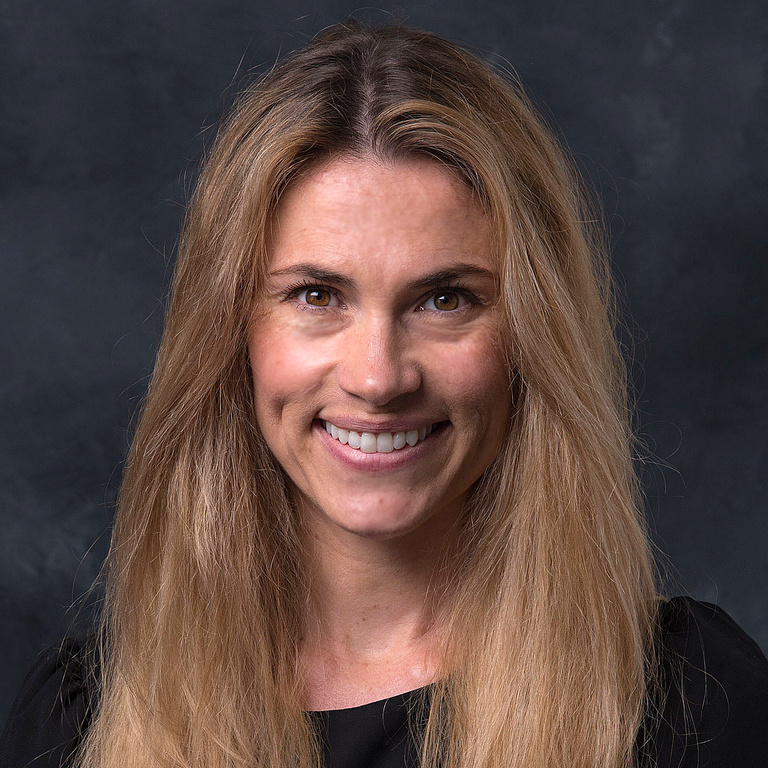
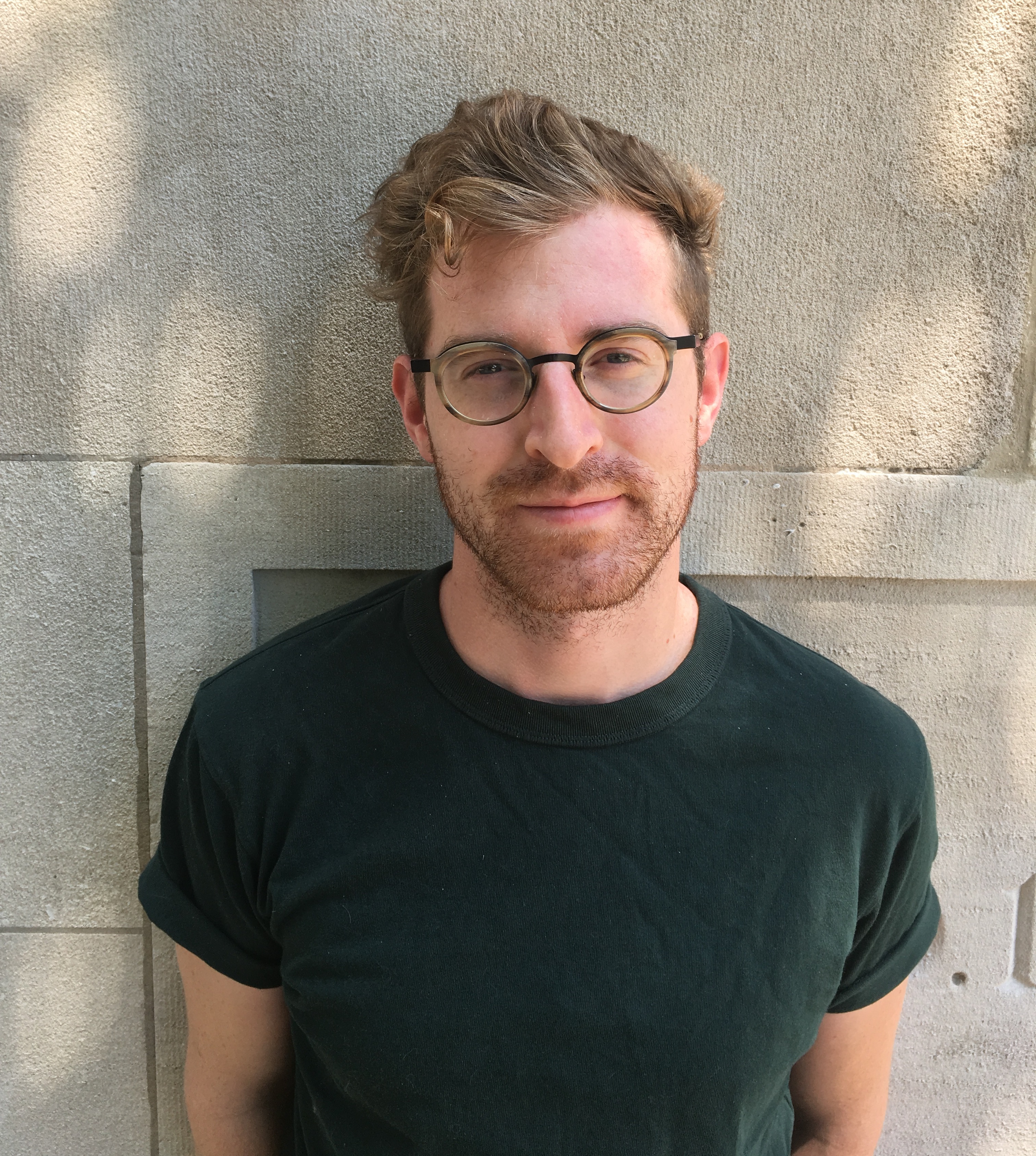
Rehana Omardeen is a doctoral researcher at the Department of German Philology, University of Göttingen, and a member of the Research Training Group (RTG) 2070 'Understanding Social Relationships'. Her work focuses on gestures in spoken and signed languages, sign language typology, iconicity, and the interface between sign and gesture. Bachelor’s degree in Linguistics from Swarthmore College Master’s degree in Linguistics from Radboud University, Nijmegen Her research involves comparative studies of iconicity in sign languages, co-creation methodologies in sign language technology, and documentation of Providence Island Sign Language. She has conducted fieldwork funded by the Endangered Languages Documentation Programme (ELDP) on Providence Island and in Guyana. Her work intersects linguistics, computer science, and accessibility, with a focus on inclusive technology development. Rehana collaborates with the Sign Language team and uses methodologies in human-computer interaction, avatar design, and sociolinguistic analysis. She has contributed to European sign language policy frameworks and explores the typological variation of sign languages globally.
Kristi Hendrickson, PhD, CCC-SLP, is an Assistant Professor in the Department of Speech and Hearing Science at the University of Iowa. Her research focuses on real-time spoken and written word recognition, lexical competition dynamics across populations including children, adults with hearing loss, and dual-language learners. She employs eye-tracking and EEG methodologies to investigate these processes. Research interests include understanding how listeners and readers predict upcoming words using prior sentence context, and how lexical access varies in bilingual and clinical populations. Dr. Hendrickson’s work explores cognitive mechanisms underlying language processing, with special attention to developmental and neurocognitive aspects. Active grants include NIDCD R01 (investigating language outcomes in adults with Developmental Language Disorder) and NICHD R03 (studying word recognition in school-age dual language learners). Her recent articles highlight topics like disfluency processing in older adults, perceptual challenges in speech sound discrimination, and neural dynamics of bilingual lexical competition. Dr. Hendrickson teaches courses such as CSD:3118 Language Acquisition and CSD:6538 Seminar: Hearing Science. She directs the Psycholinguistics Lab and is affiliated with the University of Iowa’s Wendell Johnson Speech & Hearing Center. Contact information includes kristi-hendrickson@uiowa.edu and a physical address in Iowa City.
Tom Lin is an Assistant Professor in the Department of English at the University of Iowa's College of Liberal Arts and Sciences. His research explores the intersection of science fiction, popular culture, and the history of technology, alongside scholarly work on language development and disorders. He authored The Thousand Crimes of Ming Tsu (2021), which won the 2022 Andrew Carnegie Medal for Excellence in Fiction. Current projects include a new novel (2026) and a study on American nuclear tourism. His research investigates how technical systems are shaped by cultural narratives, blending literary studies with technological history. He also studies language processing in children, focusing on genetic and neurodevelopmental factors influencing language abilities. His work addresses conditions like developmental language disorder, reading impairments, and the impact of hearing loss on language outcomes. Tom has contributed to advancements in automated language assessment tools such as the Lingo platform. His research frequently integrates interdisciplinary approaches, combining genetics, neuroscience, and computational methods to understand individual differences in language development. Awards: 2022 Andrew Carnegie Medal for Excellence in Fiction His scholarly contributions emphasize practical applications of linguistic research, including studies on cochlear implants, early intervention strategies for hearing-impaired children, and the role of handedness in language disorders. He collaborates on large-scale genomic studies to identify genetic markers associated with language abilities.
Brittan Barker is an Associate Professor in the Department of Communication Disorders & Deaf Education at Utah State University (USU). She holds a PhD in Speech + Hearing Science (University of Iowa, 2006), an MA in Cognitive Psychology (University of Iowa, 1999), and a BS in Psychology (Louisiana State University, 1997). Her research focuses on auditory perception, cochlear implants, hearing aid use, and narrative medicine, with a particular emphasis on understanding the experiences of families and individuals with hearing loss. Dr. Barker teaches courses such as Aural Rehabilitation, Counseling for Audiological Care, and Advanced Audiology. She directs the Aural Rehabilitation Lab at USU, collaborating with researchers like Kristina Scharp and Emily Elliott. The lab investigates communication strategies for individuals relying on listening and spoken language, including studies on real-time captioning in higher education and parental narratives surrounding cochlear implants. Her recent work explores themes such as hearing aid non-use, the impact of noise on reading skills in autistic children, and healthcare access barriers for those with unexplained hearing concerns. Dr. Barker has mentored over 25 graduate students, fostering their development through clinical research projects and independent studies. She actively seeks community volunteers to advance research on hearing loss experiences and audiological interventions. Dr. Barker’s lab emphasizes interdisciplinary approaches, combining qualitative and experimental methods to address gaps in audiological care and education. Her contributions span clinical practice, educational audiology, and patient-centered narratives, aiming to improve communication outcomes across the lifespan.
Dagmar Barth-Weingarten is a Researcher in the Department of Pragmatics at the Leibniz Institute for the German Language (IDS Mannheim). She holds an M.A. in English Studies, Germanistics, and General Linguistics, and a Dr. phil. She has held research positions at institutions including the Universities of Konstanz, Halle, Potsdam, and is an associated member of the Hermann Paul School of Language Sciences (HPSL) in Freiburg since 2010. Her research focuses on interactional linguistics, corpus methods, language change, and conversation analysis. Key projects include the Verstehen in der verbalen Interaktion (Understanding in Verbal Interaction) and contributions to studies on turn-taking timing and dialogue psycholinguistics. She chairs the Gesprächsforschung e.V. and collaborates on projects integrating corpus linguistics with experimental pragmatics. Her work bridges theoretical and applied linguistics, emphasizing empirical methods to study spoken language dynamics and social interaction. Findings contribute to understanding how context, timing, and linguistic structures shape communication processes.
Walter S. Lasecki is an Associate Professor at the University of Michigan's School of Information, where he leads research at the intersection of Human-Computer Interaction, Crowdsourcing, and Artificial Intelligence. His work focuses on creating systems that integrate human and machine intelligence to solve complex problems in real-time. Dr. Lasecki's research interests center on human-AI collaboration, particularly in developing crowd-powered systems that enhance accessibility, improve programming education, and create more effective human-computer interfaces. His work explores how to effectively integrate human intelligence with AI systems, focusing on real-time applications where speed and accuracy are critical. His research has significant implications for accessibility technologies, educational tools, and conversational AI systems. He has pioneered approaches to real-time captioning, crowd-powered interfaces, and human-in-the-loop machine learning systems that adapt to user needs. Analysis of his recent publications reveals a strong focus on multi-agent conversational AI, human-in-the-loop systems for pose estimation and object recognition, and innovative approaches to programming education through live streaming. His research consistently explores the intersection of human computation and artificial intelligence, with particular attention to how crowd workers can complement and enhance AI capabilities. His work demonstrates a trajectory from foundational crowd-powered systems to more sophisticated integrations of human and machine intelligence in complex tasks. Dr. Lasecki has collaborated extensively with researchers across multiple institutions, particularly with Jeffrey P. Bigham (earlier in his career) and more recently with colleagues at the University of Michigan including Juho Kim. His research has been supported by substantial grants that have enabled the development of systems like Scribe for real-time captioning and Codeon for on-demand programming assistance. He has mentored numerous graduate students who have gone on to contribute to the fields of HCI and AI. His laboratory focuses on developing practical applications of crowd-AI hybrid systems, with particular emphasis on creating tools that can be deployed in real-world settings. Current projects explore how to make conversational AI more robust through multi-agent approaches, improve programming education at scale, and create more accessible interfaces for diverse user populations.
Casey Kennington is an Associate Professor in the Department of Computer Science at Boise State University. His primary research focuses on interactive spoken dialogue systems, semantics, human-robot interaction, and language acquisition. He leads the Speech, Language and Interactive Machines Group (SLIM Group), which explores embodied AI, incremental processing, and multimodal interaction. His work bridges computational linguistics, robotics, and cognitive science, with applications in education and healthcare. Key research areas include: Dialogue Systems: Developing incremental and multimodal dialogue frameworks for real-time human-robot interaction. Language Grounding: Investigating symbol grounding through object permanence and perceptually-driven models. Child Language Acquisition: Improving ASR for children and designing child-oriented spellcheckers like KidSpell. Robotics: Building systems that integrate emotion displays and multimodal learning for social robots. Notable contributions include the OpenDial toolkit for probabilistic dialogue systems and the PentoRef corpus for task-oriented dialogue analysis. His work emphasizes ethical AI design, particularly in child-robot interactions and educational technologies. Awards and recognition are not explicitly listed in the provided texts, though his impactful research in dialogue systems and robotics is widely cited in venues like ACL, SIGDIAL, and LREC. He actively contributes to conferences such as the Workshop on Dialogue and Robots (SLIVAR) and collaborates on interdisciplinary projects with educational institutions and industry partners.
Professor Paul Baker is a distinguished academic at Lancaster University, serving in the School Of Social Sciences within the Faculty of Humanities, Arts and Social Sciences. He has established himself as a leading expert in corpus linguistics, discourse analysis, and the study of language in relation to gender and sexuality. With numerous publications including several influential books, Professor Baker has made significant contributions to his field over several decades. His work bridges theoretical linguistic inquiry with practical applications in understanding media representation, social attitudes, and identity construction through language. Professor Baker's research interests span multiple interconnected areas including corpus linguistics, critical discourse analysis, language and gender studies, language and sexuality, and the study of Polari (a historical gay secret language). His work often examines how language reflects and constructs social identities, with particular focus on marginalized communities. He has conducted extensive research on representations of Islam in media, obesity discourse, masculinity studies, and LGBTQ+ language use. His approach combines rigorous corpus linguistic methods with critical discourse analysis to uncover patterns in language that reveal underlying social attitudes and power dynamics. His recent publications reveal a continued focus on applying corpus linguistic methods to contemporary social issues. Professor Baker has been examining representations of anxiety in online forums, obesity in news media across different countries, and the evolving relationship between masculinity and emotional expression. His work increasingly incorporates multimodal analysis, examining both textual and visual representations in media. The trend shows his research expanding into digital health applications, AI analysis of discourse, and cross-cultural comparisons of language patterns. Professor Baker has received recognition for his scholarly contributions through his extensive publication record and editorial roles. He serves as commissioning editor for the journal Corpora and sits on the editorial boards of several prominent linguistics journals including the Journal of English Linguistics , Journal of Language and Sexuality , and Gender and Language . His work has been influential in establishing corpus-assisted discourse analysis as a robust methodological approach in sociolinguistics. As an educator and mentor, Professor Baker has supervised numerous PhD students whose research spans diverse topics from the construction of Islam in media to language around schizophrenia in British press. His teaching focuses on corpus linguistics at the MA level, and he regularly supervises undergraduate dissertations. He maintains an active research group and collaborates with scholars internationally, contributing significantly to the field through both his own research and by fostering the next generation of linguists.
Alan Cienki is a Full Professor at Vrije Universiteit Amsterdam (Netherlands) in the Faculty of Social Sciences and Humanities, holding the chair in Language Use & Cognition and English Linguistics. He concurrently serves as Personnel Manager for the English Academic Language Programme and has a part-time appointment (currently on hold) at Moscow State Linguistic University’s Multimodal Communication and Cognition Lab. His research focuses on cognitive linguistics, gesture studies, multimodal communication, and metaphor analysis. Cienki earned a PhD in 1988 from Brown University, preceded by a Master’s in Slavic Languages (Brown University, 1983) and a Bachelor’s in Russian Studies (Hamilton College, 1982). Grants & Fellowships: NIAS Fellowship (2009-10, 2024), Russia Science Foundation grants (2014–2021), Netherlands Science Foundation (NWO), DAAD (2006). Teaching: Courses include Multimodal Communication, Spoken Language and Gesture, and Master’s thesis supervision in Communication Studies. Research Contributions: Authored/co-edited works like The Cambridge Handbook of Gesture Studies (2024) and pioneered the Amsterdam Gesture Center and PoliMod Lab in Moscow. His work bridges cognitive linguistics and gesture analysis, emphasizing dynamicity and multimodality in language use. Key projects explore gesture in interpreting, metaphor embodiment, and cross-linguistic communication dynamics.
William S. Clapp is a cognitive scientist and recent Ph.D. graduate from the Department of Linguistics at Stanford University, currently serving as an Affiliated Researcher with the Stanford Phonetics Lab under advisor Meghan Sumner. His research bridges experimental psychology and linguistics to investigate how humans convert sound into meaning through speech perception and language understanding. Clapp's doctoral education culminated in the 2025 dissertation Socially-guided allocation of attention in the memory encoding of spoken language , supported by prestigious fellowships. His research focuses on the interplay of memory, attention, and social context in speech processing, with additional exploration of AI model behavior analysis and AI safety. Methodologically grounded in experimental psychology, his work employs recognition memory paradigms and eye-tracking to dissect cognitive mechanisms. Analysis of Clapp's publications reveals a concentrated research trajectory examining episodic memory encoding of spoken language across diverse contexts. Key themes include talker-specificity effects, social category influences, cross-linguistic variations (notably in Hindi), and bottom-up interference in lexical processing. This body of work demonstrates consistent methodological rigor while expanding into socially contextualized models of speech perception. His scientific achievements have been recognized through significant awards: NSF Doctoral Dissertation Research Improvement Grant William Orr Dingwall Foundations of Language Fellowship (2024-2025) Josephine de Karman Fellowship Research funding includes the NSF grant and named fellowships supporting his dissertation work. Clapp maintains active collaboration with Meghan Sumner and researchers including Charlotte Vaughn, Simon Todd, and Nora Dee. Future directions may extend his social-context frameworks to AI safety applications while continuing cross-linguistic speech perception studies. As an integral member of the Stanford Phonetics Lab, Clapp contributes to a collaborative research environment specializing in speech perception mechanisms, voice attribute encoding, and socially guided attention processes through ongoing experimental investigations.
Casey Kennington, Ph.D., is an Associate Professor in the Department of Computer Science at Boise State University. He specializes in Natural Language Processing (NLP), Robotics, and Human-Robot Interaction. His research focuses on dialogue systems, language model learning, and embodied AI, with a particular emphasis on creating practical applications for educational and healthcare contexts. He leads the Speech, Language, & Interactive Machines (SLIM) research group. Education: B.S. in Computer Science from Brigham Young University, M.Sc. in Computational Linguistics (Saarland University, Germany) and Cognitive Science (University of Lorraine, France), and Ph.D. in Computer Science from Bielefeld University, Germany. Research Interests: Developing language models for efficiency and interpretability, multimodal learning, and improving accessibility of NLP tools for children. His work bridges theory and application, with projects like HADREB (emotional robot behaviors) and KidSpell (child-focused spellchecking). Key Contributions: NSF CAREER Award recipient, creator of the AI Science degree program at Boise State, and developer of the SLIM group's dialogue systems. His publications span computational linguistics, robotics, and educational technology. Grants & Awards: National Science Foundation CAREER Award (research on language models and dialogue systems). Teaching: Courses in NLP, Deep Learning, and Data Science. Labs/Teams: Leads the SLIM Group, advancing research in interactive dialogue systems and robot communication.
Alexander Kain is an instructor in the Computer Science & Engineering and Electrical Engineering Graduate Programs. He holds a Ph.D. from Oregon Graduate Institute (2001). His research focuses on analyzing, processing, and synthesizing biological signals, particularly human speech. Key projects include developing a pronunciation analysis system for children with speech disorders, enhancing Text-to-Speech systems for personalized voices, and creating non-invasive sleep apnea screening methods. He teaches courses such as CS 627 Data Science Programming and EE 658 Signal Processing. His recent work emphasizes improving speech intelligibility for individuals with speech or hearing impairments through voice conversion and acoustic analysis. Notable contributions include studies on bimodal stimulation effects on consonant perception (2024), respiratory event detection using neural networks (2020), and acoustic correlates of speech disorders (2021-2022). Alexander’s research integrates signal processing, biomedical engineering, and machine learning to address clinical challenges. Collaborations involve the Center for Spoken Language Understanding (CSLU), evident in his publications and grant-funded projects like HCC: Medium (2010) and HCC: High-Quality Compression (2007).
Ana María Pérez Martín is a Professor and Doctor at the University of Las Palmas de Gran Canaria, affiliated with the Department of Hispanic Philology, Classics, and Arabic and Oriental Studies. She is a member of the research group GIR Sociolinguistics, Acoustic Phonetics, and Applied Linguistics. Her work focuses on sociolinguistic studies of Spanish variation in Canary Islands regions like Las Palmas de Gran Canaria and El Hierro, with emphasis on discourse markers, phonological patterns, and orthography. Key research interests include analyzing language variation in written and spoken Spanish, particularly focusing on discourse markers (e.g., 'bueno'), vowel elision (/d/ and /s/), and clitic distribution. She has conducted comparative studies across educational levels and regional dialects, contributing to understanding sociolinguistic identity and language change. Her recent projects include studying social determinants of contemporary Spanish in Gran Canaria and Seville (2024–2028), and sociolinguistic patterns in Las Palmas (2012–2015). These projects were funded by Spain's Ministry of Science and Innovation. Her publications span topics from orthography evaluation tools for university students to probabilistic analyses of phonological features in El Hierro. Publications highlight methodological rigor, combining corpus linguistics with quantitative approaches. She has collaborated on interdisciplinary projects linking linguistics to education and sociocultural dynamics. Current work emphasizes applied linguistics applications for teaching and diagnostic tools in multilingual contexts.
Dr. Anika Lenke Kovács is a Senior Lecturer with a PhD in the Department of Catalan Philology and General Linguistics at the University of the Balearic Islands, where she also served as Vice-Dean and Head of Studies of the Degree in Catalan Language and Literature (2020/2021). Her academic career spans multiple prestigious institutions including Universitat Rovira i Virgili (2001-2017), Universität Bremen, Germany (2012-2017), and Universitat Autònoma de Barcelona (2008-2013). Her educational background includes: Bachelor in Catalan Philology (1998) Post-graduate in German Studies (2004, with special award) Master in Foreign Language Teaching (2010) PhD in Catalan Philology (2013, with special doctoral award) Dr. Kovács specializes in Medieval Catalan Drama, with particular expertise in the Majorcan Llabrés Manuscript (Ms. 1139) housed in the Catalan National Library. Her research examines typological interpretation, special effects, female characters, and spiritual dimensions of medieval Catalan plays. She has made significant contributions to understanding the Dance of Death tradition, Memento Mori themes, and religious processions in medieval Iberia. Her interdisciplinary approach combines literary analysis with performance studies, religious history, and cultural anthropology to provide comprehensive insights into medieval theatrical practices. Her recent publications demonstrate sustained scholarly productivity, with a consistent focus on the Majorcan play texts. She analyzes how medieval playwrights depicted angels, represented mortality concepts, and conveyed spiritual dimensions through theatrical performance. Her work often bridges textual analysis with practical considerations of medieval staging, examining how these plays would have been experienced by contemporary audiences through processions, music, and visual elements. Her scientific recognition includes: Special award for Post-graduate in German Studies (2004) Special doctoral award for PhD in Catalan Philology (2013) Dr. Kovács has supervised numerous graduate students and has participated in multiple research projects including 'Theatres of Persuasion in the Long Sixteenth Century' (2017-2020), 'Estudis interdisciplinaris sobre la dansa a l'edat mitjana i moderna' (2014-2015), 'Choreutic Heterotopias' (2018-2020), and 'Monastic Landscapes' (2019-2022). She currently serves as president of the Société Internationale pour l'étude du Théâtre Médiéval (2019-2022) and is part of the Benedictine Oblates of Montserrat since December 2022. She is an active member of the research team FILOHUMSIDOR (Filología y Humanismo en el Siglo de Oro) at the Institut d'Estudis Hispànics en la Modernitat and the Centre de Recerca en Arts Escèniques (UAB). Her work with the research groups 'Literatura, Art i Representació a la llarga edat mitjana' and 'Iconodansa' continues to advance understanding of medieval theatrical traditions and their cultural significance.
Christian Brodbeck is an Assistant Professor in the Department of Computing and Software at McMaster University, with an associate membership in the McMaster School of Biomedical Engineering. His research focuses on computational cognitive neuroscience, neurobiology of language, and speech recognition. He develops computational models and neural data analysis tools, such as the Eelbrain Python toolkit, to study how the brain processes speech and language. His work integrates methods from neuroscience, computer science, and engineering to investigate neural mechanisms underlying speech comprehension, particularly in complex listening scenarios like the 'cocktail party' problem. Brodbeck's team explores topics including predictive coding in speech perception, neural representations of non-native speech, and the impact of aging on auditory processing. Recent publications highlight contributions to neural dynamics of speech feature processing, recurrent neural network models of speech recognition, and cortical tracking under divided attention. His research bridges computational modeling with experimental neuroscience, aiming to advance both theoretical understanding and practical tools for analyzing neural data. Brodbeck actively mentors students and researchers, offering opportunities for postdocs and graduate students in his lab. His work is supported by collaborations in computational methodologies, health, and bio-innovation clusters, reflecting a commitment to interdisciplinary science.