Dr. Anatol Stefanowitsch is a Professor at the Institute of English Philology, Freie Universität Berlin. His work bridges corpus linguistics, cognitive linguistics, and sociolinguistic analysis, with a focus on construction grammar and language's role in societal discourse. He contributes to debates on language policy, gender marking, and digital communication, particularly through public commentary and academic publications. Linguistics (structure of modern English) Corpus Linguistics Cognitive Linguistics Construction Grammar Language Variation and Change Sociolinguistics Recent publications emphasize collocational patterns, metaphor interpretation, and motion event encoding. His research often integrates empirical methodologies with theoretical insights, challenging traditional grammatical paradigms. Key areas include the cognitive basis of language structures and their application to sociopolitical contexts.
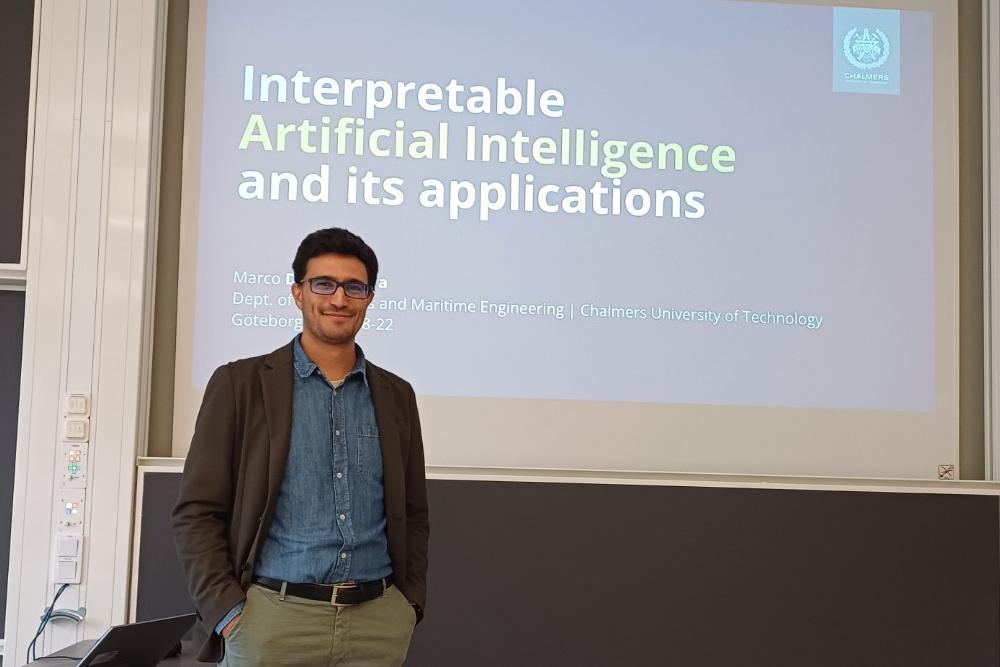
Marco L. Della Vedova is a Senior Lecturer in Applied Artificial Intelligence at Chalmers University of Technology, Sweden. He works in the Vehicle Engineering and Autonomous Systems division within the Department of Mechanics and Maritime Sciences, as part of Prof. Mattias Wahde's research group. Since 2025, he has served as Director of the Data Science and AI master's programme (MPDSC) at Chalmers, where he teaches courses including Introduction to Artificial Intelligence and Digitalization in Sports. Dr. Della Vedova earned his academic foundation at the University of Pavia, Italy, where he completed his BSc (2006), MSc (2009), and PhD (2013) in Computer Engineering. His doctoral research focused on "Real-Time Physical Systems and Electric Load Scheduling" under Prof. Tullio Facchinetti. During his PhD studies, he spent a year at U.C. Berkeley hosted by Prof. Francesco Borrelli at the Model Based Predictive and Distributed Control Lab. His research spans multiple AI domains with a strong emphasis on interpretability. Dr. Della Vedova develops interpretable methods for conversational AI, naturalness evaluation of forests using canopy height models, and geospatial applications. His work bridges theoretical AI with practical societal benefits, particularly in environmental monitoring, transportation systems, and orienteering. He has previously contributed to cloud computing, hate speech detection, and cyber-physical energy systems, demonstrating his interdisciplinary approach to AI research. Dr. Della Vedova's publication record reveals a consistent trajectory of impactful research across multiple domains of artificial intelligence. His recent work shows a strong focus on interpretability in AI systems, with significant contributions to natural language processing, geospatial analysis, and causal inference. The research demonstrates both theoretical depth and practical applications, particularly in environmental monitoring and social media analysis. His methodology often combines traditional machine learning approaches with novel interpretability techniques, creating bridges between complex AI systems and human understanding. Dr. Della Vedova has received several prestigious recognitions for his work: Best PhD thesis award from the Order of the Engineers of Bergamo (2013) Italian champion of Il Cervellone (2012) Top Italian performer in IEEEXtreme 6.0 programming competition (148th overall globally, 2012) Premio Arturo Schena award from Fondazione Credito Valtellinese (2010) With over 50 students supervised through bachelor's and master's theses, Dr. Della Vedova has established himself as a dedicated mentor in the AI community. His current PhD students include Minerva Suvanto working on interpretable NLP and Vivien Lacorre developing AI for railway infrastructure inspection. His supervision spans diverse topics from forest naturalness evaluation to hate speech detection and transportation optimization. Beyond formal supervision, he actively contributes to educational initiatives including serving as Director of Chalmers' Data Science and AI master's program and developing innovative teaching methods that connect theoretical concepts with real-world applications. Dr. Della Vedova is deeply embedded in both academic and professional communities. He leads the Applied Artificial Intelligence research group at Chalmers while maintaining strong connections with European research networks through projects like the ERASMUS+ EUrienteering initiative. His interdisciplinary approach is reflected in collaborations across computer science, environmental science, and social sciences. Notably, he applies his AI expertise to orienteering both as a researcher developing localization methods and as a licensed Event Advisor for the International Orienteering Federation, demonstrating how his professional and personal interests converge in innovative ways.
Sonia Ben Ouagrham-Gormley is an Associate Professor at the Schar School of Policy and Government, George Mason University. She is affiliated with the Biodefense Program, the Center for Global Studies, and the Department of History and Art History’s Master of Arts in Interdisciplinary Studies (MAIS) program. Her work bridges policy, security, and science, with a regional focus on the former Soviet Union. Her research centers on the proliferation of weapons of mass destruction, including nuclear, chemical, and biological weapons. She investigates how tacit knowledge affects weapons development, the effectiveness of export controls, and the challenges of dissuading bioweapons programs. Her work also covers WMD-related trafficking, sanctions, and the redirection of former weapons scientists. She employs qualitative methods and interdisciplinary frameworks from science and technology studies. She has secured research funding from the U.S. Departments of Defense, State, and Energy, as well as from the Nuclear Threat Initiative and the Carnegie Corporation of New York. Her work contributes to programs such as the Department of Defense’s Cooperative Threat Reduction Program, aimed at reducing global WMD risks. Ben Ouagrham-Gormley has held significant research roles, including Senior Research Associate at the James Martin Center for Nonproliferation Studies (CNS), where she directed research at the CNS Almaty office in Kazakhstan. She was also the founding Editor-in-Chief of the International Export Control Observer and served as an Adjunct Professor at Johns Hopkins University School of Advanced International Studies. Her educational background includes a PhD in Development Economics from EHESS in Paris, a graduate degree in Strategy and Defense Policy from the Institute of Higher International Studies in Paris, a Master’s in Applied Foreign Languages (economics, law, Russian, and English) from the University of Paris X-Nanterre, and dual undergraduate degrees in Applied Foreign Languages and English Literature from the same institution. She is fluent in French, English, Russian, and spoken Arabic, with beginner-level Kazakh. Her multilingual abilities support her field research and international collaborations, particularly in post-Soviet states.
Dr. Elizabeth Johnson serves as Professor of Psychology at the University of Toronto Mississauga (UTM), holding the Canada Research Chair in Spoken Language Acquisition. She is cross-appointed to the Graduate Department of Linguistics and directs the University of Toronto's Tri-Campus Graduate Program in Psychology, leading interdisciplinary research on language acquisition through the Child Language and Speech Studies (CLASS) Lab in UTM's Communication, Culture and Technology Building. Her academic foundation includes a B.A. in Brain and Cognitive Sciences from the University of Rochester (with a Take Five program in Developmental Biology & Evolution), followed by M.A. and Ph.D. degrees in Psychological & Brain Sciences from Johns Hopkins University. She completed postdoctoral training at the Max Planck Institute for Psycholinguistics and spent semesters at MIT's Speech Group during her doctoral studies. Dr. Johnson's research examines how perceptual, cognitive, and social mechanisms enable children's rapid language mastery, with emphasis on speech perception, multilingual development, accent processing, and infant speech segmentation. Her work bridges developmental psychology, linguistics, and speech sciences to investigate topics including audio-visual speech perception, word-learning heuristics, prosody acquisition, and voice recognition—all contextualized within UTM's linguistically diverse community. Analysis of her recent publications reveals intensifying focus on real-world applications of language acquisition research, particularly voice assistant technology for children, pandemic impacts on language development, and sociolinguistic factors in educational settings. Her work increasingly explores accent variation effects across development and the cognitive mechanisms underlying talker recognition. Dr. Johnson's scientific recognition includes: Canada Research Chair in Spoken Language Acquisition She actively mentors graduate researchers: PhD Students: Emily Shroads (June and David Scott Fellowship recipient) Recent PhD Graduates: Priscilla Fung (SSHRC Postdoctoral Fellow), Madeleine Yu Undergraduate Support: NSERC USRA (Christopher Khalaf), SSHRC UTEA (Gabriella Di Maio, Alexandra Maracz) Research Funding: SSHRC Insight Grants, NSERC Discovery Grants The CLASS Lab functions as an interdisciplinary hub collaborating with UTM's Developmental Science Cluster, Centre for Biological Communication Systems, and Infant and Child Studies Centre. Its community-engaged research leverages linguistic diversity in the Greater Toronto Area to translate foundational science into practical applications for child development and educational technology.
Dr. Antje Strauß is a Researcher at the Department of Linguistics, University of Konstanz, where she serves as Principal Investigator for a DFG-funded project on theta oscillations and prelexical abstraction since October 2018. Her work bridges speech processing, auditory cognition, and neural oscillations, with a focus on lexical and sublexical mechanisms in noisy environments. PhD in Neural Oscillatory Dynamics of Spoken Word Recognition (2011–2014, Max Planck Institute) Magistra Artium in German Philology and Philosophy (2004–2010, Albert Ludwig University) Her research explores how brain rhythms like alpha and theta oscillations support auditory selective inhibition, speech segmentation, and predictive processing. She has pioneered studies on cued speech applications for enhancing speech-in-noise perception and developed the Fharvard corpus—a phonemically-balanced resource for audiology research. Recent publications highlight her expertise in neural oscillations, auditory perception, and speech-in-noise intelligibility. Collaborative work spans institutions like CNRS, MPI CBS, and Freiburg Institute for Advanced Studies. Post-doctoral fellow at Zukunftskolleg, University of Konstanz (2016–2018) Post-doctoral fellow at CNRS, GIPSA-lab (2015–2016) She contributes to peer review for journals including Journal of Neuroscience , Cortex , and PLOS Biology , and maintains memberships in the Society for the Neurobiology of Language, European Society for Cognitive Psychology, and related organizations.
Grzegorz Chrupała is an Associate Professor at the Department of Cognitive Science and Artificial Intelligence , Tilburg University, where he leads research in computational approaches to multimodal communication. Previously, he was a postdoctoral researcher at Saarland University's Spoken Language Systems group and earned his PhD from Dublin City University's School of Computing. His research bridges biological and artificial computation , focusing on enabling machines to learn language from multimodal data (speech, gestures, visual-auditory stimuli) as children do naturally. This involves developing and interpreting deep learning architectures, analyzing emergent representations, and advancing speech technology for under-resourced languages. Key themes include Visually grounded speech modeling Feature attribution and model interpretability Human-inspired learning paradigms BlackboxNLP workshop leadership His recent publications examine speech model reliability , lexical tone encoding , and contextual dependencies in NLP systems. He mentors a team of PhD candidates and alumni working on topics like user-centric interpretability, bioacoustics, and disentangled speech representations. He also serves on the board of the Dutch Open Speech Technology Foundation, chairs Interspeech 2025 tutorials, and contributes as an Action Editor for TACL.
Ewan Dunbar is an Assistant Professor of Computational Linguistics at the University of Toronto (downtown campus), affiliated with St. Michael's College. He holds appointments in the Department of French, Department of Linguistics, and Department of Computer Science. His research explores human speech perception, technological advancements in speech processing, and related areas such as unsupervised learning and language acquisition. Educational Background: While specific degrees aren't listed, his research and appointments indicate advanced training in linguistics and computational sciences. Research Interests: Dunbar focuses on how humans perceive speech, developing computational models of speech perception, and advancing unsupervised learning techniques. He leads the Perceptimat Research Group and organizes the Zero Resource Speech Challenge, a machine learning competition promoting unsupervised approaches to speech processing. Awards: He has received notable grants including the 2028 NSERC Discovery Grant, 2028 NSERC Discovery Launch Supplement, and 2023 Connaught New Researcher Award, all supporting his work on computational psycholinguistics and speech perception models. Advising & Grants: While specific student names aren't listed, his grants indicate involvement in mentoring undergraduates (e.g., 2024 NSERC Undergrad Studentship Grant). His labs focus on creating speech perception tools and benchmarks like Perceptimatic. Labs/Teams: Director of the Perceptimat Research Group, organizer of the Zero Resource Speech Challenge.
Stuart Shieber is the James O. Welch, Jr. and Virginia B. Welch Professor of Computer Science in the School of Engineering and Applied Sciences at Harvard University. He is a prominent researcher in computational linguistics and natural language processing, with significant contributions across multiple related fields including theoretical linguistics, computer-human interaction, automated graphic design, and the philosophy of artificial intelligence. Professor Shieber's research interests focus primarily on computational linguistics, examining natural language from the perspective of computer science. His work spans scientific and engineering goals, utilizing foundational formal and mathematical tools. He has made significant contributions to grammar formalisms, psycholinguistics, semantics, and synchronous grammars with applications in machine translation and sentence compression. Beyond computational linguistics, his research extends to automatic layout of charts and maps, novel interaction techniques for document reading and diagram layout, online auction mechanisms, library book access prediction, biological evolution tree reconstruction, and the philosophical basis for Turing's test for machine intelligence. His recent publications demonstrate a continued focus on neural language models, syntactic agreement mechanisms, readability assessment, conversational understanding, and bias detection in language models. His research has evolved from traditional grammar formalisms to incorporate modern neural network approaches while maintaining a strong theoretical foundation. The trend shows increasing attention to ethical considerations in NLP, particularly around bias detection and mitigation, alongside continued theoretical work on language structure. Presidential Young Investigator award (1991) Presidential Faculty Fellow (1993) John L. Loeb Associate Professorship in Natural Sciences (1993) Harvard College Professorship (2001) Fellow of the American Association for Artificial Intelligence (2004) Fellow of the Association for Computing Machinery (2014) Fellow of the Association for Computational Linguistics (2017) Professor Shieber has advised numerous PhD students who have gone on to successful careers at institutions including UCSD, Cornell University, Microsoft Research, Google, and various academic institutions. His work on open access and scholarly communication policy, particularly his development of Harvard's open-access policies, led to his appointment as the first director of the university's Office for Scholarly Communication. He is also the founding director of the Center for Research on Computation and Society and a faculty co-director of the Berkman Center for Internet and Society. His laboratory work has focused on advancing computational linguistics through both theoretical and applied research, with numerous patents and co-founding of Cartesian Products, Inc., a high-technology research and development company. His future work appears to be focusing on the intersection of neural network approaches with traditional linguistic theory, particularly in understanding and mitigating bias in language models, while continuing his long-standing interest in the theoretical foundations of language processing.
Valerie San Juan is an Assistant Professor in the Psychology Department at Bradley University's College of Liberal Arts & Sciences. With a Ph.D. in Developmental Psychology and Education from the University of Toronto, she completed postdoctoral research at both the University of Toronto (under Dr. Patricia Ganea) and the University of Calgary (with Drs. Susan Graham and Suzanne Curtin), supported by the Eyes High Fellowship and SSHRC grants. Education: Ph.D. in Developmental Psychology and Education, University of Toronto Her research focuses on children's social cognitive development and language acquisition, particularly how children understand others' mental states and integrate this knowledge into social interactions. Using innovative methods like computer-based games and eye-tracking technology, she investigates perspective taking, desire reasoning, and false-belief understanding in children aged 2-6 years. Recent publications demonstrate her expertise in referential communication, epistemic verb development, and social category inference. Her work appears in top journals including Journal of Experimental Child Psychology , Cognitive Development , and Journal of Child Language . These studies consistently examine how children's cognitive control, language development, and social understanding interact. Scientific Awards: Eyes High Fellowship program (University of Calgary) Social Sciences and Humanities Research Council of Canada (SSHRC) grant As director of the Social Minds and Language Lab (S.M.A.L.L.), she mentors undergraduate researchers and collaborates with local families to conduct community-based developmental studies. Her teaching portfolio includes Principles of Psychology, Experimental Psychology, and Developmental Psychology courses.
Susan Harkness Regli, PhD, serves as Human Factors Scientist for the University of Pennsylvania Health System and is a founder of Penn Medicine’s Center for Applied Health Informatics, driving innovation at the intersection of human factors engineering and healthcare delivery. Her research program focuses on critical healthcare challenges through: Human-Computer Interaction in clinical environments Patient safety systems design Clinical decision support optimization Healthcare applications of AI and machine learning Natural language processing for medical data Human factors in sepsis management and insulin safety Analysis of her 2009-2023 publications reveals consistent emphasis on real-world healthcare human factors, with recent work addressing sepsis diagnosis workflows, insulin pen safety protocols, and augmented reality applications. Her scholarship demonstrates methodological diversity spanning qualitative clinician interviews, heuristic evaluations, and quality improvement projects focused on error prevention in high-stakes medical environments. As co-founder of Penn Medicine’s Center for Applied Health Informatics, Dr. Regli leads strategic initiatives that bridge human factors science with clinical informatics to develop practical solutions for healthcare delivery systems, fostering collaborations between engineers, clinicians, and data scientists to enhance patient safety through technology design.
Professor Tania Avgustinova is a Professor of Slavic and Computational Linguistics in the Department of Language Science and Technology at Saarland University. She serves as Principle Investigator for SFB 1102 - Project C4 (INCOMSLAV) and is Head of the Slavic Lab. Her academic career spans several decades with significant contributions to Slavic linguistics, computational approaches to language, and cross-linguistic studies. Her academic qualifications include: Habilitation venia legendi in General Linguistics (2003) PhD in Slavic and Computational Linguistics (1997) Diploma in Slavistics (1987) Professor Avgustinova's research focuses on the intersection of Slavic linguistics and computational methods. She specializes in microsyntax, intercomprehension among Slavic languages, language contact phenomena, and the processing of non-compositional expressions. Her work examines how speakers of one Slavic language can understand related languages without formal instruction, with particular attention to cognitive and linguistic factors. She has developed computational models to analyze linguistic distances and asymmetries between Slavic languages, contributing significantly to understanding receptive multilingualism. Her recent publications reveal a strong focus on experimental approaches to studying cross-linguistic comprehension using web-based platforms, eye-tracking, and speech processing techniques. There's a clear trend toward investigating microsyntactic units and non-compositional expressions across Slavic languages, with applications in language technology and education. Her work bridges theoretical linguistics with practical applications in natural language processing and language learning. Principle Investigator of SFB 1102 Project C4 (INCOMSLAV) Head of Slavic Lab at Saarland University Contributor to Russian National Corpus project Developer of INCOMSLAV platform for measuring linguistic distances As Principle Investigator of SFB 1102 Project C4 (INCOMSLAV), Professor Avgustinova leads research on mutual intelligibility and surprisal in Slavic intercomprehension. She has been instrumental in developing the INCOMSLAV platform for measuring linguistic distances and asymmetries in receptive multilingualism. Her leadership extends to international collaborations, including contributions to the Russian National Corpus project where she provides expertise on grammatical phenomena at the borderline between lexicon and syntax. Professor Avgustinova heads the Slavic Lab at Saarland University, which focuses on applied, experimental, and computational linguistics. The lab conducts research on Russian corpus grammar, word embedding models, sense frequencies, and microsyntax. Her work has established important connections between theoretical linguistics and practical language technology applications, particularly in the Slavic language context.
Zijian Diao is an Associate Professor in the Department of Mathematics at Ohio University's College of Arts and Sciences, where he contributes to both teaching and research. He is based at the Eastern Campus in Shannon Hall and teaches a wide range of undergraduate mathematics courses. Education: Ph.D. in Mathematics, Texas A&M University, 2001 M.S. in Computer Science, University of Illinois, 2003 B.S. in Automation, University of Science and Technology of China, 1996 His research spans interdisciplinary areas with a strong focus on quantum computation and information theory , where he has made contributions to Grover's algorithm, quantum counting, and quantum circuit design. He has also worked in natural language processing , particularly in multilingual speech-to-speech translation systems like MARS. Additional interests include control theory , partial differential equations , and mathematical modeling . His recent and ongoing publications reflect a blend of theoretical mathematics and applied computational science. The works trend toward quantum algorithms and foundational mathematical proofs, with earlier contributions in NLP and control systems. His research bridges pure mathematics with practical implementations in quantum computing and language technologies. Scientific Awards: Ohio University Regional Higher Education Outstanding Professor Dr. Diao advises undergraduate and graduate students in mathematics and related fields, though specific student names are not listed. He has been involved in research projects supported by academic grants, particularly in quantum computing and interdisciplinary technology development. His curriculum vitae indicates sustained scholarly activity across multiple domains. He is associated with research groups and collaborations in quantum computing, having co-authored works with G. Chen, C. Huang, and others. His work in NLP was part of larger team efforts involving researchers from industry and academia, suggesting active participation in collaborative technical teams.
Hiroshi Shimodaira is a Senior Lecturer in the School of Informatics at The University of Edinburgh, where he has been a faculty member since September 2004. He is affiliated with the Centre for Speech Technology Research (CSTR) and the Institute for Language, Cognition and Computation, contributing to interdisciplinary research in speech and language technologies. His research focuses on lifelike conversational agents with personalities, speech recognition (particularly acoustic models), character recognition, machine learning, and medical-image processing. He is particularly known for his work on anthropomorphic spoken dialogue agents and the development of the Galatea toolkit, an open-source software framework for lifelike conversational agents. His interests also extend to support vector machines and optimization techniques in pattern recognition. The recent publications and projects indicate a strong emphasis on machine learning applied to speech and character recognition, with a trend toward developing intelligent, interactive systems that emulate human conversational behavior. His work bridges theoretical machine learning with practical human-centered applications. Acoustics Society of Japan IEEE Signal Processing Society Japanese Society for Artificial Intelligence (JSAI) IPSJ (Information Processing Society of Japan) Dr. Shimodaira has advised PhD students and led several research initiatives, including the Galatea Project for anthropomorphic dialogue agents and work on handwriting-based communication for the visually impaired. He was previously a co-director of the Intelligent Information Processing Laboratory at JAIST, indicating a sustained record of research leadership. While no specific grants are listed, his project pages suggest involvement in funded research efforts. He leads and contributes to research groups such as CSTR and HCRC, and his lab work focuses on spoken dialogue systems, lifelike agents, and machine learning applications in speech and vision. The Galatea project represents a major software and research output from his team.
FATMA FİLİZ TILFARLIOĞLU is a Professor at Gaziantep University's Faculty of Education, Department of Foreign Language Education, specializing in English Language Teaching. With a distinguished academic career spanning over three decades, she has made significant contributions to the field of foreign language education, particularly through her development and research on the Lean Educational Method. Her academic journey began with a PhD from Çukurova University (1993-1996), followed by her appointment as a Research Assistant at Gaziantep University in 1990, progressing through academic ranks to become a full Professor in 2021. Her research interests focus on innovative approaches to language teaching, including the Lean Educational Method, discourse analysis, language learning strategies, self-efficacy in language learning, and teacher education. Professor TILFARLIOĞLU has supervised 38 master's theses and has an extensive publication record with 46 articles, 5 book chapters, and 66 conference papers. Her work demonstrates a consistent focus on improving language teaching methodologies and understanding the psychological factors affecting language learning. Her recent research has centered on innovative teaching methods such as TRIZ and CDIO in language education, analysis of teacher self-efficacy in distance learning environments, and the psychological aspects of language learning including fear of success and rejection sensitivity. Professor TILFARLIOĞLU has also led projects focused on foreign language education in Turkish society, including 'Hayatta Biz de Varız Hep Beraber Elele' and 'BİK PROJESİ - Biliyor musunuz İngilizceden Korkmuyorum.' TESOL U.S.A. Convention (1999) TEFL Summer School (1996) Yurtdışı Yüksek Lisans ve Doktora Bursu from YÜKSEK SEÇİM KURULU BAŞKANLIĞI (1991) Yurtdışı Yüksek Lisans ve Doktora Bursu from MİLLİ EĞİTİM BAKANLIĞI (1990) Throughout her career, Professor TILFARLIOĞLU has held significant administrative roles including Department Head, Vice Dean, and various committee memberships at Gaziantep University. She has taught numerous courses at both undergraduate and graduate levels, focusing on English Language Teaching Methodology, Materials Evaluation, and Contextual Grammar. Her academic leadership extends to her membership in INGED (İngilizce Eğitim Derneği) since 1995.
Associate Professor Wayne Wobcke is a faculty member in the School of Computer Science and Engineering at the University of New South Wales (UNSW), where he has been employed since 2002. His academic career includes previous positions at the University of Sydney until 1998, British Telecom Labs in the UK for three years, and the University of Melbourne for one year. He holds a PhD in Computer Science from the University of Essex (1989), an MSc from the University of Queensland (1985), and a BSc (Hons) in Mathematics/Computer Science from the University of Queensland (1984). Dr. Wobcke's research spans both theoretical and practical aspects of artificial intelligence and data science. His work encompasses intelligent agents, data mining, agent-based modeling, dialogue management, personal assistants, recommender systems, and computational social science. He has collaborated extensively with industry through three Cooperative Research Centres (Smart Internet Technology CRC, Smart Services CRC, and Data to Decisions CRC), where he served as a Programme Manager and Project Leader for over 10 years. Notable achievements include developing a voice-controlled mobile application for email and calendar interaction (a precursor to Apple's Siri) and deploying a people-to-people recommender system for online dating on one of Australia's largest dating sites. His recent research focuses on data science in humanitarian contexts and machine learning applications in official statistics, conducted in collaboration with BPS (Statistics Indonesia) and STIS (Politeknik Statistika, Indonesia). His publication record shows a consistent trajectory of impactful research, with recent work concentrating on poverty targeting, domain adaptation, natural language processing for recommender systems, and political opinion mining. Scientific Awards: Best Paper Nomination, 11th Workshop on Argument Mining (2024) UNSW Arc Postgraduate Research Supervisor Award (2017, 2018) AAAI Deployed AI Application Award, Twenty-Sixth Annual Conference on Innovative Applications of Artificial Intelligence (2014) Best application paper runner up, 17th Pacific-Asia Conference on Knowledge Discovery and Data Mining (2013) Dr. Wobcke has successfully supervised numerous research students, with Irwan Rahadi currently working on 'Causal Modelling and Machine Learning for Official Statistics'. His grant portfolio includes significant funding from the Australian Research Council and various Cooperative Research Centres, totaling over $3.7 million since 2003. He teaches COMP9414 Artificial Intelligence and COMP9727 Recommender Systems at UNSW.