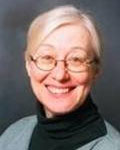
Raina J. León is a faculty member in the Department of Teacher Education at Saint Mary's College of California's Kalmanovitz School of Education. Her work integrates educational technology, poetry, and social justice frameworks, with disciplinary expertise spanning multicultural pedagogy, digital storytelling, literacy development, and anti-racist education strategies. Her research focuses on transformative educational approaches including: Innovative technology integration in K-12 and teacher education Poetry as pedagogical tool for literacy and cultural expression Critical frameworks for addressing race, bullying, and health disparities 21st-century skill development through digital platforms Culturally responsive teaching methodologies Recent scholarly output demonstrates strong emphasis on educational technology implementation, poetry performance pedagogy, and equity-focused teacher training. Her presentations frequently address technology's role in educational transformation, cultural competency development, and narrative-based learning approaches.
Julia Hirschberg is the Percy K. and Vida L. W. Hudson Professor of Computer Science at Columbia University, where she served as Chair of the Computer Science Department from 2012-2018. She received her PhD in Computer Science from the University of Pennsylvania and previously worked at Bell Laboratories and AT&T Laboratories -- Research from 1985-2003 as a Member of Technical Staff and Department Head, where she created the Human-Computer Interface Research Department. Dr. Hirschberg has held numerous leadership positions in professional organizations, including serving as editor-in-chief of Computational Linguistics (1993-2003), co-editor-in-chief of Speech Communication (2003-2006), and on the Executive Boards of the Association for Computational Linguistics, International Speech Communication Association (where she served as President 2005-2007), Computing Research Association, AAAI, and IEEE Speech and Language Processing Technical Committee. She co-chaired the CRA's Committee on Women from 2016-2019 and has been active in working for diversity at AT&T and Columbia. Her research spans Natural Language Processing , Speech Processing , Computational Linguistics , and Human-Computer Interaction , with significant contributions to text-to-speech synthesis, speech recognition, and the analysis of entrainment, empathy, personality, emotion, humor, sarcasm, deception, trust, radicalization, and charisma in spoken language. She teaches Advanced Spoken Language Processing (COMS 6706) covering these topics with applications including dialogue systems and multimodal analysis. AAAI Fellow (1994) ISCA Fellow (2008) ACL Fellow (2011) ACM Fellow (2015) IEEE Fellow (2017) Member, National Academy of Engineering (2017) Member, American Academy of Arts and Sciences (2018) Member, National Academy of Artificial Intelligence Academy of Sciences (2025) Elected to American Philosophical Society (2014) IEEE James L. Flanagan Speech and Audio Processing Award (2011) ISCA Medal for Scientific Achievement (2011) ISCA Special Service Medal (2020) Columbia Engineering School Alumni Association Distinguished Faculty Teaching Award (2009) Janette and Armen Avanessians Diversity Award (2018) Dr. Hirschberg has advised numerous students and has been instrumental in advancing diversity in computing. She has received honorary doctorates from the Royal Institute of Technology (KTH) Stockholm (2007) and Tilburg University (2018). As an Amazon Scholar from 2020-2025, she continues to bridge academic research and industry applications. She leads the Columbia Speech Lab, which focuses on cutting-edge research in spoken language processing using multimodal approaches that integrate acoustic-prosodic features, linguistic analysis, and machine learning techniques.
Jessica Lena Montag serves as Associate Professor in the Department of Psychology at the University of Illinois, with concurrent appointments at the Beckman Institute for Advanced Science and Technology and the National Center for Supercomputing Applications (NCSA), plus affiliate status at the Center for Social & Behavioral Science. Her research investigates language acquisition and processing across developmental stages, specializing in child-directed speech patterns, picture book interactions with infants, bilingual language development, and computational modeling of vocabulary growth. Methodologically, she integrates naturalistic recording (using EAR technology), corpus linguistics, and cognitive experiments to examine how environmental exposure shapes linguistic competence. Recent publications (2022-2025) reveal consistent focus on early language exposure mechanisms, with emerging trends in digital survey methodologies for infant-caregiver interactions and computational approaches to vocabulary acquisition. Her work bridges psychological theory with advanced computational resources through NCSA collaborations. JSMF Scholar Award in Understanding Human Cognition (2018) Psychonomic Society Fellow (2024) Dr. Montag's interdisciplinary collaborations span cognitive science, linguistics, and computer science teams, particularly through Beckman Institute initiatives examining language processing in natural contexts. Her research leverages supercomputing infrastructure for large-scale language data analysis while maintaining developmental psychology foundations.
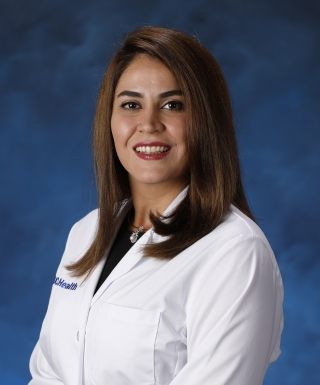
Sanaz Attaripour Isfahani, MD, is an Assistant Professor in the Department of Neurology at the UC Irvine School of Medicine. She serves as Director of the Ataxia Program and Wellness Officer, while also being an active member of multiple professional societies, including the American Academy of Neurology and the International Parkinson and Movement Disorder Society. Her research focuses on advanced treatments for Parkinson's disease, the neurophysiology of movement disorders, and the application of wearable medical technologies. She has contributed to peer-reviewed publications and presented at national and regional conferences. She received her medical degree from Tehran University of Medical Sciences and completed a neurology residency at Drexel University College of Medicine, where she was a chief resident. Her fellowship in movement disorders was undertaken at the National Institute of Neurological Disorders and Stroke. Board Certifications: American Board of Psychiatry and Neurology - Neurology Languages Spoken: Farsi, English Scientific Awards A.B. Baker Teacher Recognition Award (2023) CEO Award, Science (National Institutes of Health Clinical Center) Faculty Teaching Award (2020, 2021, 2022)
Dr. Paula Buttery is a Professor at the University of Cambridge , affiliated with the Faculty of Modern and Medieval Languages and Linguistics and the Department of Theoretical and Applied Linguistics . She serves as the Director of the Automated Language Teaching and Assessment (ALTA) Institute , focusing on computational approaches to language learning and endangered language revitalization. Her research spans Natural Language Processing (NLP) , Computational Psycholinguistics , and Language Acquisition , with particular emphasis on non-canonical language forms (e.g., spoken learner language, aphasics) and low-resource language processing . She has lead projects funded by the Cambridge English Language Assessment , EPSRC , and the Wellcome Trust . Dr. Buttery’s recent publications explore topics such as disfluency detection , lexical diversity , subcategorization frames , and spoken learner language modeling . Her work bridges machine learning and cognitive science to develop tools for language education and endangered language preservation. Scientific Awards : Cambridge University Pilkington Prize for teaching (2015) She has contributed to interdisciplinary collaborations, including the Cambridge Cookie-Theft Corpus for speech analysis in brain-damaged patients and the UKPMC project for biomedical text mining. Her teaching centers on Computational Linguistics and Language Learning .
Philippe Blache is a senior researcher at the Laboratoire Parole & Langage (LPL), a joint research unit of the French National Centre for Scientific Research (CNRS) and Aix-Marseille University. With a career spanning several decades, he has established himself as a leading figure in computational linguistics, natural language processing, and conversation analysis. His work bridges theoretical linguistics with practical applications in language technology. His research focuses on several key areas: Natural language processing and computational linguistics Speech and conversational systems Multimodal interaction analysis Linguistic annotation and corpus development Cognitive modeling of language processing Blache's recent work (2020-2025) has centered on developing methods to evaluate spoken language features in conversational models, studying common ground instantiation through multimodal signals (including brain activity), and investigating how language models process complex linguistic phenomena. His research often involves creating and analyzing large multimodal corpora that capture not just verbal content but also nonverbal cues, prosody, gestures, and neuro-physiological signals. His publication record shows consistent high-quality output in top-tier venues, with numerous papers in LREC, COLING, and SIGDIAL proceedings. His work demonstrates a strong interdisciplinary approach, combining insights from linguistics, computer science, cognitive science, and neuroscience to advance our understanding of language processing. Among his notable contributions is the BrainKT corpus project, which represents an innovative approach to studying the cognitive and neural underpinnings of conversation through simultaneous recording of audio, video, and EEG signals during natural interactions. Blache has received recognition through his sustained research productivity and leadership in major projects. His collaborations span multiple institutions and disciplines, reflecting the interdisciplinary nature of his work and its broad relevance across fields studying human communication.
Michael White is a Professor in the Department of Linguistics at The Ohio State University, specializing in computational linguistics, natural language generation, and spoken language dialogue systems. He holds a Ph.D. in Computer Science from the University of Pennsylvania and has collaborated with interdisciplinary teams in both academia and industry, including roles at CoGenTex, Inc., and visiting positions at Facebook/Meta and Australian universities. His research emphasizes controllable and ethical AI, with a focus on neural language models and their applications in healthcare and conversational systems. Education: Ph.D. in Computer Science, University of Pennsylvania. Professional Background: Former Research Fellow at the University of Edinburgh School of Informatics, and founder of CoGenTex, Inc. Collaborations include researchers in Computer Science and Linguistics at Ohio State, such as Eric Fosler-Lussier and William Schuler. Research Interests: Neural language generation controllability, ethical AI alignment, discourse processing, and conversational systems. Recent projects include developing virtual patient simulators for medical education and exploring knowledge distillation to mitigate AI-generated harm. Articles Trends: Focused on advancing neural NLG techniques, improving dialogue system safety, and leveraging large language models for domain-specific tasks (e.g., healthcare, KBQA). Recent work addresses transparency, data efficiency, and ethical implications in AI. Scientific Awards: Lumley Interdisciplinary Research Award (2023), PRE Accelerator Award. Grants: Supported by interdisciplinary initiatives such as the virtual patient project collaboration with Eric Fosler-Lussier and Laura Wagner. Advising and Grants: Mentors students in computational linguistics and leads projects funded by Ohio State’s interdisciplinary programs. Current work involves neuro-symbolic approaches for patient preparation assistants and data-efficient conversational AI. Labs/Teams: Collaborates with the Ohio State Computational Linguistics Group and industry partners. Active in organizing workshops on discourse-driven NLG and ethical AI challenges.
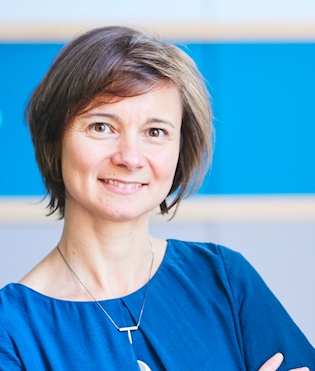
Laurence Meurant is a Qualified Researcher at the University of Namur since 2011, leading the LSFB-Lab - the first and only research team dedicated to French Belgian Sign Language (LSFB). She has been instrumental in establishing sign language linguistics in the French-speaking Belgium region since her 2006 PhD thesis on gaze in LSFB. Her work bridges theoretical linguistics with applied research in bilingual education, serving as scientific expert for Sainte-Marie Inclusive School since 2004. Education: Doctor of Letters (2006) from University of Namur Awards: Van Goethem-Brichant Prize (2004) Beloeil Clinic Prize (2006) Namur Citizen of the Year (2012) Best Educational Book Prize (2022) Her research focuses on LSFB linguistics through corpus studies (including the first representative LSFB corpus), contrastive analysis with French, and multimodal approaches to discourse markers. She leads an 11-member interdisciplinary team working on parallel corpora development and sign language video recognition systems. Recent publications emphasize bilingual education frameworks , sign language technology , and discourse reformulation across spoken and signed modalities. Her scientific activities demonstrate continuous collaboration with educational institutions and technology developers to improve accessibility for deaf communities. As academic spokesperson for technological platforms and member of various university committees, she promotes methodological innovation in human sciences while maintaining active involvement in deaf education policy and sign language recognition .
Ian Lane is an Associate Professor in the Computer Science and Engineering Department at the University of California, Santa Cruz's Baskin Engineering school, serving as Program Director for the Natural Language Processing Professional Master's Degree Program. He joined UCSC in Fall 2022 after an extensive career spanning academia and industry. His research centers on computational systems that understand spoken human language, spanning speech recognition, transcription, meaning interpretation, and contextually appropriate responses. Key research areas include: Natural Language Processing for real-world applications Conversational AI systems development Speech-to-speech translation technologies Multimodal interaction (audio-visual integration) Language technologies that learn through real-world interaction His recent publications demonstrate strong focus on hallucination detection in LLMs, tabular data understanding, explainable AI, and robust speech recognition systems. Current work emphasizes "in the wild" language technologies that adapt through user interaction. Dr. Lane has received recognition through impactful industry applications including Jibbigo (the first mobile speech translation app) and military translation systems deployed in Iraq and Afghanistan. He actively mentors students and collaborates across UCSC's Silicon Valley Campus programs including Games and Playable Media and Human-Computer Interaction. His vision includes integrating NLP with virtual environments for language learning and skill acquisition.
Fiona Farr is Professor of Applied Linguistics and TESOL at the University of Limerick's School of Modern Languages and Applied Linguistics, where she serves as Director of the Centre for Applied Language Studies. She holds adjunct positions including former Adjunct Professor at the University of Inland Norway (2022-2024) and active external examiner roles at Trinity College Dublin, University College Cork, University of Glasgow, and University of Malta. Her research spans applied corpus linguistics , language teacher development , and technology-enhanced language learning , with specific focus on spoken language corpora, intervarietal discourse analysis, Southern-Irish English, and teaching practice feedback mechanisms. She champions reflective practice frameworks and continuous professional development for language educators. Recent publications reveal a concentrated trend toward digital discourse analysis and blended teacher training models , particularly examining virtual workplace communication and hybrid feedback systems in TESOL contexts. Her work consistently bridges corpus linguistics methodologies with practical teacher education applications. Farr leads significant collaborative projects including Digilanguages (2016-2017), Shout4HE (2018-2021), and Interactional Variation Online (2021-2024), securing sustained research funding. She supervises graduate researchers in language education and corpus applications while directing the Centre for Applied Language Studies. Her editorial leadership includes co-editing the EUP Textbooks in TESOL Series and the Routledge Handbook of Language Learning and Technology (2nd ed. 2026), plus serving as Associate Editor for Second Language Teacher Education.
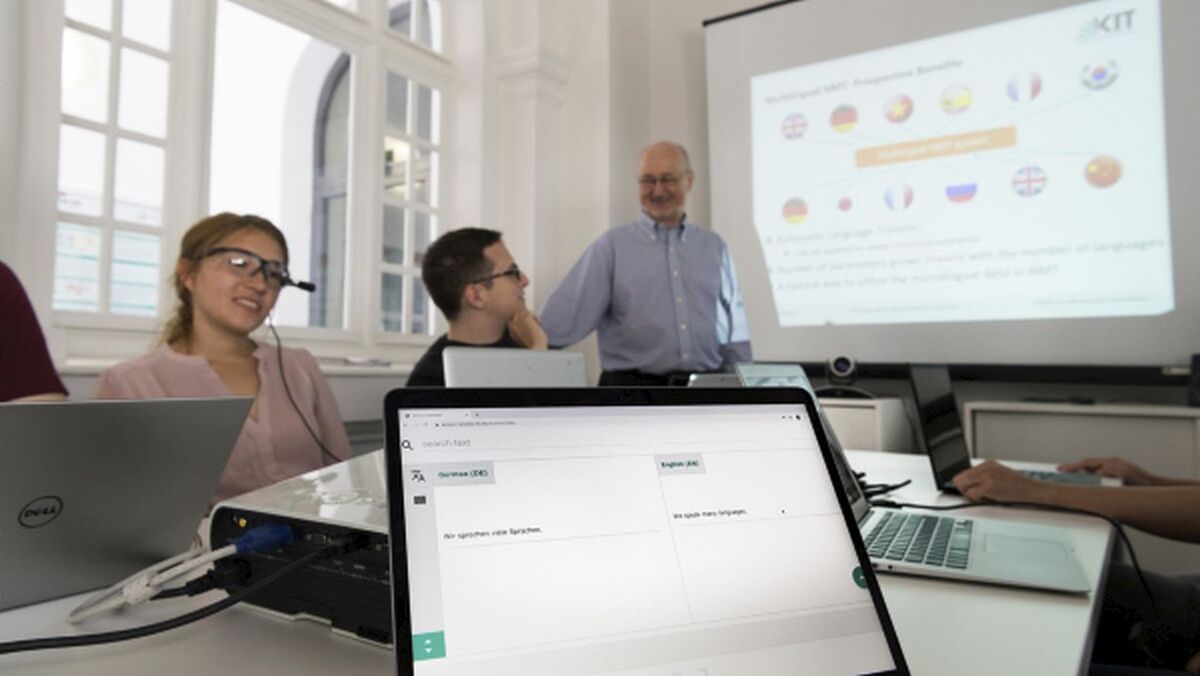
Alex Waibel is a Professor of Computer Science at the Karlsruhe Institute of Technology (KIT) and Carnegie Mellon University in Pittsburgh. As head of the Interactive Systems Lab (ISL) at KIT, he pioneered groundbreaking work in language technology, including the world's first automatic simultaneous translation service for university lectures. His research focuses on speech recognition, speech processing, language translation, and neural networks, aiming to bridge global communication gaps through artificial intelligence. Waibel's innovations include the Time-Delay Neural Network (TDNN) in 1987, the JANUS spoken language translation system (1991), translation glasses (2004), and Jibbigo (2009), the first commercial mobile translation system. These technologies have been applied in humanitarian missions and international education, enabling students with limited German proficiency to access KIT's lectures via real-time translation into English, Spanish, or French. His work emphasizes neural networks' ability to emulate human cognitive processes, significantly advancing machine translation accuracy. Despite noting translation imperfections, he highlights the system's value for international and hearing-impaired students. Waibel's collaboration with Skype in 2015 further demonstrated the mass-market viability of real-time translation systems.
Jan Niehues is a Professor at the Karlsruhe Institute of Technology (KIT), working at the Institute for Anthropomatics and Robotics (IAR). He leads the "Artificial Intelligence for Language Technologies" research group, focusing on developing practical AI systems for real-time language translation and speech processing applications. His research spans Machine Translation, Natural Language Processing, and Neural Networks, with emphasis on building AI assistants that solve real-world communication problems. Niehues views translation software as a human aid rather than replacement, particularly valuable where professional translators are cost-prohibitive. His work targets everyday usability in scenarios like international conferences through real-time spoken language translation. Niehues and his team develop neural network-based systems trained on large datasets including European Union minutes and TED talks. He stresses that AI model quality directly depends on training data quality, with neural networks learning probabilistic language patterns through weighted neuron connections. His research anticipates increased value in personal communication methods as automated systems become ubiquitous.
Mª Angeles Solano Rodriguez is a researcher at the University of Murcia's Department of Language and Literature Teaching. Her work focuses on phraseology, paremiology, and translation studies with a strong emphasis on foreign language pedagogy. PhD in French Phraseology Member of the 'Phraseology, Paremiology and Translation' research group Previously part of 'Fonología y Lectura' research team Her research combines phraseological analysis with didactic strategies to enhance language acquisition. Key areas include: Pragmatic phraseological units Metacognitive learning frameworks Task-based language teaching Translation of literary idiomatic expressions Contrastive phraseology between languages Recent publications analyze phraseological patterns in Daniel Pennac's works, pragmatic markers in foreign language classrooms, and integrated phraseology projects for Spanish teaching. Her methodology emphasizes cognitive-emotional intersections in language learning and digital resource utilization for phraseological instruction.
Laurence Dumortier is a Researcher at the University of Namur working in the ICT unit of the Education and Technology Department since 2003. With a doctorate in mathematics (1998) from FUNDP (now University of Namur), they transitioned from the mathematics department (1992-2000) to focus on educational technology. Their primary role involves assisting faculty teachers with technology integration in teaching through advising, support, and training. Areas of expertise include administration of the WebCampus distance learning platform (established in 2003), IT implementation of student teaching evaluation, optical reading services for exams, development of dynamic educational websites in PHP-MySQL, and creation of multimedia training products using Adobe Director. Their educational background includes a Bachelor's degree and AESS in mathematical sciences (1991), and a Doctorate in mathematics (1998), all from FUNDP. Research interests focus on comparative studies between online and traditional teaching methodologies, particularly in specialized fields like radiological anatomy. Their recent work examines whether online teaching can effectively replace conventional on-site instruction in veterinary medical education. They've also developed tools like CoBRA for bilingual legal text reading and various language learning resources. Their publication trends show a consistent focus on educational technology applications, with recent work emphasizing randomized controlled studies comparing teaching modalities, interactive multimedia for language learning, and digital tools for specialized disciplines. Their research bridges technology implementation with pedagogical effectiveness. Best Contribution Award - Moodlemoot 2018 (awarded twice) Laurence Dumortier actively participates in academic technology conferences and events, particularly Moodle-related forums. They've organized and spoken at the Belgian Moodle Administrators Day events and the SETT Exhibition on teaching with new technologies. Their work involves collaborative projects with faculty across disciplines to develop adaptive language placement tests and other educational technology solutions. They lead development of platforms like WebCampus and specialized educational websites (CoBRA, Sociolog, Physics QCM), working within teams focused on implementing technology-enhanced learning solutions across the university.
Brenda Rapp is a Research Professor at the Krieger School of Arts and Sciences , Johns Hopkins University, affiliated with the Department of Cognitive Science . Her work focuses on cognitive neuropsychology, attention, reading, and writing, particularly in the context of neurological injury and developmental disorders. Education: PhD in Cognitive Science from Johns Hopkins University. Research Interests: Brenda investigates the cognitive processes and neural substrates underlying written and spoken word production and comprehension. She examines how neural injury affects language mechanisms, using cognitive neuropsychology, fMRI, and computational modeling to study recovery and neuroplasticity in post-stroke dysgraphia and primary progressive aphasia. Publications: Brenda's recent work includes studies on transcranial stimulation, neural network reorganization, orthographic learning, and language rehabilitation. Her articles explore topics such as bilingual reading pathways, functional connectivity in aphasia, and the role of expertise in letter perception. Scientific Honors: Elected to the Society of Experimental Psychologists, recognizing her contributions to experimental psychology across cognitive, perceptual, and neuroscientific domains. Advising: She has advised PhD graduates like Kyriaki Neophytou and currently mentors students such as Angela Xu (PhD) and Ata Kolday (MA) in the Cognitive and Brain Sciences Lab.