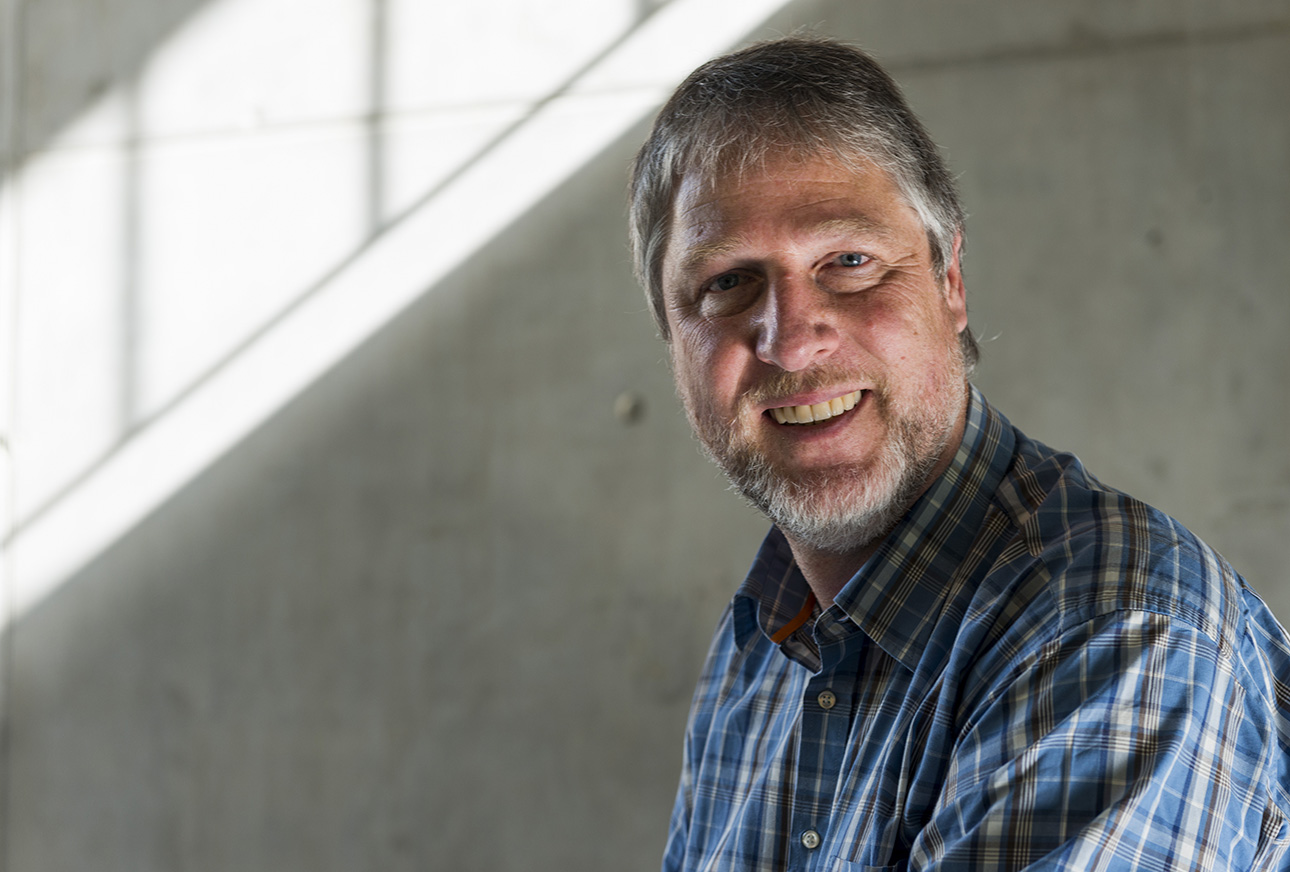
Professor Bernd Möbius is a leading academic in Phonetics and Phonology at the Department of Language Science and Technology, Saarland University. His research bridges phonetic theory with speech technology applications, focusing on text-to-speech systems, prosody modeling, and computational simulations of speech processes. Current research projects: DFG SFB 1102, C1: Information density and phonetic structure predictability DFG SFB 1102, C4: Slavic intercomprehension and surprisal theory (INCOMSLAV) Research Themes: Key areas include text-to-speech synthesis, speech prosody analysis, experimental methods in speech production/perception, information density in phonetics, and cross-linguistic studies of Slavic-Germanic languages. Scientific Contributions: Recent work explores Parkinson-induced dysarthria detection, breath noise acoustics, surprisal-driven speech behaviors, multilingual BERT models for idiomaticity, and perceptual consequences of acoustic adjustments.
Prof. Dr. Pia Knoeferle is a leading academic at Humboldt-Universität zu Berlin , where she serves as a Professor in the Department of German Language and Linguistics . She is a principal investigator in the Collaborative Research Center (CRC 1412) focused on register phenomena and leads the Reaction Time, Eye-tracking, and EEG Laboratories . Her research spans psycholinguistics , cognitive neuroscience , and computational modeling of language , with a central interest in how real-time language comprehension interacts with social context , formality-register congruence , and morphosyntactic processing . Appointments: Professor at Humboldt-Universität (2024), CRC 1412 member Methodologies: Eye-tracking, EEG, Visual World Paradigm, ERP Her work investigates lifespan language processing (children, adults, older adults) through contextual cue integration , including emotional , spatial , and social context such as gender cues , eye gaze , and facial expressions . Key questions include: How do pragmatic and contextual factors modulate lexical and grammatical processing ? What representations underlie register sensitivity in spoken and written comprehension ? Recent articles (2022-2024) focus on register congruence effects in German sentence processing, age-related differences in formality-register anticipation , and interactions between register and morphosyntactic knowledge . Using eye-tracking and visual world paradigms , her team examines incremental integration of socially-situated context with verb-argument relations and grammatical constraints . Findings suggest subtle late-stage register effects and interference between pragmatic and syntactic processing . Her lab collaborates with researchers like Katja Maquate , Valentina Nicole Pescuma , and Camilo Ronderos , contributing to the Frame text of the Second Phase Proposal for CRC 1412 (2020) and subsequent reviews in Frontiers in Psychology (2023). The work emphasizes complementary methods to model register variability across languages , modalities , and cultural contexts .
Dr. Jacek Kudera is a post-doctoral researcher in the Department of Phonetics at the University of Trier, coordinator of the LODinG project at the Trier Center for Digital Humanities, and adjunct faculty at WSB Merito University in Wrocław. His work bridges phonetics, Slavic linguistics, digital humanities, and forensic speech science. Education 2022 – PhD, Department of Language Science and Technology, Saarland University, Germany 2019 – MA (Linguistics), Department of Linguistics, Cognitive Science and Semiotics, Aarhus University, Denmark 2015 – Magister (Slavic Philology), Institute of Slavic Studies, University of Wrocław, Poland Research Interests His research focuses on phonetic and prosodic aspects of Slavic languages , cross-linguistic speech perception , forensic automatic speaker recognition , and human-robot interaction . He employs experimental methods such as eye-tracking, articulatory measurements (EMA), and large-scale digital corpora to investigate how speakers of closely related languages understand one another and how machines can replicate or support this process. Publication Trends Across more than 25 peer-reviewed articles (2014-2025), Kudera has consistently explored Slavic intercomprehension , speech technology evaluation , and digital humanities infrastructure . Recent work (2024-2025) targets voice cloning security , linked open data for linguistics , and mismatch conditions in forensic speaker recognition . Scientific Awards & Fellowships Visegrad Fellowship, University of Presov (2025) Erasmus+ Fellowships (Ostrava 2025, Zagreb 2014, Rijeka 2012-2013) NAWA Fellowship, Polish Academy of Sciences (2022) Nordlys Fellowship, University of Eastern Finland (2018-2019) CEEPUS & additional Central-European mobility grants (2014-2018) Projects & Funding Coordinator : “Mismatch conditions in machine speaker identification” (University of Trier Research Fund, 2024-2025) Coordinator : LODinG – Linked Open Data in the Humanities (Trier Center for Digital Humanities, ongoing) Coordinator : “Patterns: Linguistic Creativity and Variation” (Trier Center for Language and Communication, 2022-2024) Member : SFB 1102 “Information Density and Linguistic Encoding” (Saarland University, DFG, 2019-2022) Member : Digital Atlas of Dialects of Bosnia and Herzegovina (2017-2018) Member : CLARIN-PL & European Roadmap for Research Infrastructures (2014-2017) Labs & Teams He conducts research within the Phonetics Team at the University of Trier , collaborates closely with the Trier Center for Digital Humanities , and maintains affiliations with the Phonetics Group at Saarland University and the WSB Merito University in Wrocław.
Dr. Antje Strauß is a Researcher at the Department of Linguistics, University of Konstanz, where she serves as Principal Investigator for a DFG-funded project on theta oscillations and prelexical abstraction since October 2018. Her work bridges speech processing, auditory cognition, and neural oscillations, with a focus on lexical and sublexical mechanisms in noisy environments. PhD in Neural Oscillatory Dynamics of Spoken Word Recognition (2011–2014, Max Planck Institute) Magistra Artium in German Philology and Philosophy (2004–2010, Albert Ludwig University) Her research explores how brain rhythms like alpha and theta oscillations support auditory selective inhibition, speech segmentation, and predictive processing. She has pioneered studies on cued speech applications for enhancing speech-in-noise perception and developed the Fharvard corpus—a phonemically-balanced resource for audiology research. Recent publications highlight her expertise in neural oscillations, auditory perception, and speech-in-noise intelligibility. Collaborative work spans institutions like CNRS, MPI CBS, and Freiburg Institute for Advanced Studies. Post-doctoral fellow at Zukunftskolleg, University of Konstanz (2016–2018) Post-doctoral fellow at CNRS, GIPSA-lab (2015–2016) She contributes to peer review for journals including Journal of Neuroscience , Cortex , and PLOS Biology , and maintains memberships in the Society for the Neurobiology of Language, European Society for Cognitive Psychology, and related organizations.
Professor Tania Avgustinova is a Professor of Slavic and Computational Linguistics in the Department of Language Science and Technology at Saarland University. She serves as Principle Investigator for SFB 1102 - Project C4 (INCOMSLAV) and is Head of the Slavic Lab. Her academic career spans several decades with significant contributions to Slavic linguistics, computational approaches to language, and cross-linguistic studies. Her academic qualifications include: Habilitation venia legendi in General Linguistics (2003) PhD in Slavic and Computational Linguistics (1997) Diploma in Slavistics (1987) Professor Avgustinova's research focuses on the intersection of Slavic linguistics and computational methods. She specializes in microsyntax, intercomprehension among Slavic languages, language contact phenomena, and the processing of non-compositional expressions. Her work examines how speakers of one Slavic language can understand related languages without formal instruction, with particular attention to cognitive and linguistic factors. She has developed computational models to analyze linguistic distances and asymmetries between Slavic languages, contributing significantly to understanding receptive multilingualism. Her recent publications reveal a strong focus on experimental approaches to studying cross-linguistic comprehension using web-based platforms, eye-tracking, and speech processing techniques. There's a clear trend toward investigating microsyntactic units and non-compositional expressions across Slavic languages, with applications in language technology and education. Her work bridges theoretical linguistics with practical applications in natural language processing and language learning. Principle Investigator of SFB 1102 Project C4 (INCOMSLAV) Head of Slavic Lab at Saarland University Contributor to Russian National Corpus project Developer of INCOMSLAV platform for measuring linguistic distances As Principle Investigator of SFB 1102 Project C4 (INCOMSLAV), Professor Avgustinova leads research on mutual intelligibility and surprisal in Slavic intercomprehension. She has been instrumental in developing the INCOMSLAV platform for measuring linguistic distances and asymmetries in receptive multilingualism. Her leadership extends to international collaborations, including contributions to the Russian National Corpus project where she provides expertise on grammatical phenomena at the borderline between lexicon and syntax. Professor Avgustinova heads the Slavic Lab at Saarland University, which focuses on applied, experimental, and computational linguistics. The lab conducts research on Russian corpus grammar, word embedding models, sense frequencies, and microsyntax. Her work has established important connections between theoretical linguistics and practical language technology applications, particularly in the Slavic language context.
Maciej Klimiuk is a Professor at the Institute of Semitic Studies within the Department of History and Cultural Studies at Freie Universität Berlin, and also holds positions as Privatdozent at Heidelberg University and as second doctoral supervisor at Lund University. His academic journey spans institutions across Poland, Germany, Turkey, Jordan, and Sweden, reflecting his international scholarly profile in Semitic and Arabic linguistics. Dr. Klimiuk specializes in Arabic dialectology with particular focus on Syrian dialects (Hama, Latakia, Damascus), North African varieties (Tunisia), and Maltese dialects of Gozo. His research methodology emphasizes extensive fieldwork across the Middle East, North Africa, and Mediterranean regions, documenting endangered linguistic varieties through community engagement and meticulous documentation. His recent scholarly output shows a clear trajectory toward comprehensive documentation of Arabic dialects, particularly his major 2025 monographs on the Arabic dialect of Hama. The publications reveal strong thematic consistency in linguistic fieldwork methodology, phonological analysis, and documentation of dialect continua, with increasing attention to Maltese dialects in recent years. Thyssen Stiftung grant for conference organization at FU Berlin (2024) Humboldt Foundation Fellowship (2014-2016) START 2014, Foundation for Polish Science SONATA 2 research grant from National Science Centre in Poland AIDA Young Scholars Grant (2013) As co-editor-in-chief of Folia Orientalia and organizer of academic conferences, Klimiuk plays a significant role in advancing Semitic linguistics scholarship. His field research spans numerous countries including Syria, Jordan, Tunisia, Malta, Turkey, and Indonesia, demonstrating a commitment to documenting linguistic diversity across cultural boundaries. His current projects continue to focus on Arabic dialect documentation with particular attention to the Gozo dialect continuum and Syrian urban varieties.
Georgios Coussios is a Researcher at the University of Duisburg-Essen, Faculty of Educational Sciences, Institute for Social Work and Social Policy, specializing in applied conversation research, interactional linguistics, and medical communication. His work focuses on knowledge transfer in oncology, patient-doctor interaction, and social categorization in discourse. Education: MA in Language, Culture, Translation (Mainz), MA in Applied Linguistics (Münster), BA in English Studies and Romance Studies (Bonn). His research explores how linguistic structures and pragmatic strategies shape expert-lay communication, particularly in medical contexts. Recent projects include secondary analyses of social differences in qualitative interviews and optimizing patient understanding in oncology. His publications span monographs on cancer patient communication, contributions to linguistic handbooks, and analyses of ethnic categorization in migrant humor. He has taught seminars on institutional communication and syntax of spoken language at Hamburg and Duisburg-Essen, and participated in international conferences. Coussios co-edits the online magazine fokus:interaktion , contributing to academic discourse on interactional studies.
Christoph Bürgel is a Professor for Didactics of French and Spanish at the Institute of Romance Studies within the Faculty of Cultural Studies at the University of Paderborn since October 2015. He has previously held academic positions at the Universities of Osnabrück (as Junior Professor), Regensburg, and Hamburg. His research primarily focuses on foreign language didactics, particularly lexico-grammar and the development of dialogic speaking competence in French and Spanish language learning. His educational background includes studies in French, Politics, Sociology, and Pedagogy at the University of Hannover, where he completed his first state examination for teaching French and Politics at Gymnasium level. He also pursued studies at the University Charles-de-Gaulle–Lille III in France and earned his PhD on "Generalizations in Language and Texts. Generalization, Globalization, Conceptualization in French" from the University of Hannover. Bürgel's research interests center around the didactics of French and Spanish, with a particular emphasis on lexico-grammar (the interface between vocabulary and grammar), phrasemes (fixed expressions), and construction-based language learning. His work explores how these linguistic elements can be effectively taught to develop learners' communicative competence, particularly in dialogic speaking situations. He has developed approaches for teaching time expressions in appointment dialogues and strategies for promoting natural language use through phrasemes. His recent publications focus on comprehensive grammars of spoken and written French, the acquisition of socio-cultural knowledge through texts (particularly related to Belgium), and methods for developing dialogic speaking competence. These works reflect his consistent interest in bridging theoretical linguistics with practical language teaching applications. Award from University of Hannover for outstanding scientific achievements (1995) Bürgel is actively involved in teacher training, regularly conducting workshops for French and Spanish teachers across Germany on topics such as lexico-grammar and the use of phrasemes for natural language production. He has organized numerous scientific symposia connecting linguistics with foreign language didactics, including the ongoing "Lexikalische Kompetenz" (Lexical Competence) network symposia. He serves as a member of several professional organizations including the German Romanist Association, the General Association for Modern Foreign Languages, and various subject-specific teacher associations. At the University of Paderborn, he teaches courses related to the observation and analysis of French lessons, research-based learning in practical semesters for French and Spanish, and the didactics of lexico-grammar, emphasizing practical application of linguistic theory to language teaching methodology.
Peter Uhrig is a Professor at the Friedrich-Alexander-Universität Erlangen-Nürnberg (FAU), holding the Chair of Digital Linguistics with a Focus on Big Data within the Institute of English and American Studies. He is based in Erlangen, Germany, and actively contributes to research and teaching in computational and cognitive linguistics. His research interests lie at the intersection of linguistics, computation, and cognition, with a strong emphasis on corpus-based analysis , construction grammar , multimodal communication , and digital methods in language research . He investigates phenomena such as collocation, argument structure, creativity in language, and spoken word comprehension using large-scale datasets and advanced computational models. His recent publications reveal a clear trend toward interdisciplinary, data-intensive research. He frequently collaborates on projects involving multimodal corpora , gesture analysis , spoken language processing , and computational modeling , often in collaboration with researchers from computer science and cognitive neuroscience. His work is published in leading journals in linguistics and cognitive science. How Collostructional Analysis Contributes to the Description of Argument Structure Constructions with Slots for that-and Infinitive Clauses (2024) The pluralization palette: unveiling semantic clusters in English nominal pluralization through distributional semantics (2024) World Futures through RT’s Eyes: Multimodal Dataset and Methodology (2024) Prof. Uhrig has co-edited several academic volumes and plays a key role in developing research infrastructure, such as the Red Hen Protocol for anonymizing audiovisual data and tools for multimodal analysis. While specific grant funding is not detailed, his involvement in large collaborative projects indicates active grant-supported research. He also contributes to academic service through editorial work and conference organization. He is involved in building digital infrastructure for multimodal research, including work on gesture retrieval systems and data anonymization protocols. His lab or research group appears to focus on integrating computational tools with linguistic theory, particularly within the framework of construction grammar and cognitive linguistics.
Prof. Dr. Katharina Spalek serves as Professor of Psycho- and Neurolinguistics at Heinrich Heine University Düsseldorf's Faculty of Arts and Humanities within the Institute of Linguistics since her appointment in August 2021. Her research examines human language processing across multiple linguistic levels—from phonetics to narrative discourse—with particular emphasis on focus alternatives and memory mechanisms. Current affiliations include leadership of ERC-funded projects and active participation in international research collaborations. Her educational background spans German linguistics and psychology studies at Heidelberg University, University of Oxford, and Humboldt University Berlin, culminating in a doctoral degree from Radboud University Nijmegen (2005). Postdoctoral research followed in the USA and UK before her 2007 appointment as junior professor at Humboldt University Berlin. Spalek's research trajectory evolved from language production in monolingual/bilingual speakers toward language comprehension, investigating how humans process sounds, words, phrases, and narrative discourse. Recent work integrates electrophysiological (ERP), behavioral, and computational methods to explore focus alternatives, cross-linguistic variation (including Vietnamese tonal systems), and the interplay between linguistic and visual information. Her experimental paradigms frequently employ picture-word interference, recall tasks, and discourse analysis to uncover cognitive mechanisms underlying alternative set representation. Analysis of her 15 most recent publications (2019-2024) reveals three dominant trends: (1) neurocognitive investigation of focus alternatives using ERP methodology, (2) cross-linguistic studies of intonation and tonal processing, and (3) computational modeling of human performance in language tasks. These works consistently bridge theoretical linguistics with experimental validation, emphasizing memory encoding for contextual alternatives and individual differences in processing. ERC Starter Grant for 'focus alternatives in the human mind' (2016) Posterpreis at 17th Herbsttreffen Patholinguistik (2023) Her ERC-funded research program examines how focus particles and pitch accents modulate alternative set representation in production and comprehension. Current projects investigate neural correlates of discourse memory, Vietnamese intonation patterns, and computational models of human language processing limitations. Collaborative work spans institutions in Germany, Netherlands, and Vietnam, with methodological emphasis on controlled experiments and cross-linguistic comparison. Spalek leads the Psycho- and Neurolinguistics research group within the Institute of Linguistics, utilizing facilities for ERP recording, eye-tracking, and behavioral experimentation. Her team conducts interdisciplinary research at the intersection of linguistics, cognitive science, and neuroscience, with particular focus on how information structure shapes language processing and memory.
Britta Thörle is a Professor at the University of Siegen within Faculty I , specifically in the Romance Studies - Applied Linguistics department. Her research focuses on discourse markers , second language acquisition , and language in organizations , with a strong emphasis on French and Spanish as L2 . Research Interests : Discourse Analysis, Corpus Pragmatics, Technical Communication, Sociolinguistics, Multilingualism, and Language Education. Notable Publications : Spanning from 2005 monograph on workplace communication to 2025 contributions on professional discourse, her work explores pragmaticalization, metadiscourse, and crisis communication through comparative and corpus-based lenses. Collaborations : Regularly co-edits and co-authors with scholars like Simona Pekarek Doehler, Christian Koch, and Margarita Borreguero Zuloaga, focusing on multilingualism, L2 discourse particles, and digital public spheres. Contact : Available via thoerle@romanistik.uni-siegen.de or her office in Siegen.
Prof. Dr. Andrea Weber is a full-time professor in the Department of English at Eberhard-Karls-Universität Tübingen, part of the Faculty of Humanities. She leads the English Linguistics research group, focusing on psycholinguistics, spoken language comprehension, and second language acquisition. Her work explores how listeners adapt to foreign accents, idiomatic expressions, and the role of linguistic experience in processing spoken language. Education: PhD from Radboud University (Nijmegen), postdoctoral fellowships at City University of New York and Saarland University. Research highlights include the Otto-Hahn Medal (2001) and leadership in the Max Planck W2 Minerva program (2007–2012). She co-founded the LingTüLab, a state-of-the-art facility for language studies, and is a member of SpeechNet BaWü. Research interests span accent perception, bilingualism, and experimental methods in psycholinguistics. Recent work addresses face mask effects on speech intelligibility and the cognitive mechanisms underlying idiom processing. Key collaborations include studies on Vietnamese-German heritage speech and speaker credibility judgments. Publications focus on foreign-accented speech adaptation, L2 learning, and idiom processing. Her lab actively recruits participants for studies on language use and comprehension. Awards include the 2001 Otto-Hahn Medal for her PhD research on language-specific listening. Advising: Supervises PhD candidates such as Despoina Chalyvidou and Thanh Lan Truong. Collaborates with Sara D. Beck on the Database of Idiom Norms (DIN) for L1/L2 research. Labs/Teams: Directs the LingTüLab (Wilhelmstraße 50, Tübingen), offering paid participation in language experiments. The lab integrates psycholinguistics, cognitive psychology, and speech science to advance understanding of human language processing.
Raili Hilden is a full professor in language didactics (foreign languages) at the University of Helsinki's Department of Education, Faculty of Educational Sciences. Her core activities include research, teaching, and societal impact with a focus on language assessment, particularly in high-stakes testing contexts. She leads research projects like AASIS (Automatic assessment of spoken interaction in second language) and DigiTala, exploring automated assessment tools for speaking proficiency. She chairs the Finnish National Matriculation Examination Board's Swedish section and contributes to national curriculum development. Research Interests : Language assessment methodologies, teacher assessment literacy, educational equity in language education, and the integration of technology in language testing. Current projects emphasize automated scoring systems and multimodal assessment formats. Key Contributions : Directed national evaluations of language learning outcomes (2012-2014), developed grading criteria for Finnish national curricula, and pioneered computer-based language testing innovations. Her work bridges educational policy, technology, and pedagogical practice. Awards : Recipient of top honors including Vuoden kieltenopettaja 2003, Kulturfonden Språkpriset 2004, and The FIPLV International Award 2005. Active in international conferences and serves on boards like the Finnish Matriculation Examination Board. Grants/Projects : Multiple Academy of Finland grants (AASIS: 2023-2027; DigiTala: 2025-2026), DD-LANG (2022-2026) focusing on diagnostic language assessment innovations. Labs/Teams : Leads multidisciplinary teams combining linguistics, computer science, and educational research to advance automated assessment technologies. Collaborates with Scandinavian institutions on teacher assessment literacy initiatives.
Prof. Ines Bose is a Professor of Speech Science and Phonetics at the Department of Speech Science and Phonetics, Institute for Music, Media and Speech Sciences (IMMS) at Martin Luther University Halle-Wittenberg. She has held significant academic leadership positions including Vice Dean of the Faculty of Arts II (2010-2018) and Chair of the Doctoral Committee (2010-2018). Currently, she serves as a Member of the Academic Senate (2018-present) and remains actively engaged in multiple research initiatives focusing on speech science, phonetics, and communication studies. Prof. Bose completed her habilitation in 2003 with a thesis on speech expression in children's play communication and earned her doctorate in 1989 with research on phonetically oriented analysis of freely spoken language. She studied speech science with German studies from 1980-1984. Her academic journey includes leadership roles such as Head of the Vladimir Admoni Doctoral Program "Linguistics and Speech Science" (2020-2022) and she was offered a W2 professorship at Philipps University of Marburg in 2012 (which she declined). Prof. Bose's research spans multiple interconnected domains within speech science. Her primary focus is on the development of children's communication abilities, particularly examining argumentation skills and expressive capabilities in preschool settings through conversation analysis. She investigates temporal structures of spoken utterances and vocal-articulatory expression across various contexts including radio communication. Her work on rhetorical communication in radio explores radio aesthetics, voice characteristics, and news comprehension. Additionally, she develops practical applications of phonetics and rhetoric in foreign language teaching and analyzes the prosodic features of German language. Her recent scholarly output demonstrates consistent focus on child communication development, media speech analysis, and practical applications of speech science. The publications reveal methodological diversity incorporating empirical research, conversation analysis, and cross-cultural comparisons. A notable trend is the increasing interdisciplinary nature of her work, bridging linguistics, psychology, education, and media studies to address complex communication phenomena, particularly in educational settings and media production. Co-editor of "Schriften zur Sprechwissenschaft und Phonetik" (SSP) since 2015 Co-editor of "Reflexionen des Gesellschaftlichen in Sprache und Literatur" since 2012 Board Member of German Society for Speech Science and Speech Training (DGSS e. V.) Her research is characterized by strong practical applications, particularly in educational settings and media production. She has developed training materials for reading aloud, conversational competence, and speech effectiveness in various contexts. Her work with childcare facilities demonstrates commitment to translating theoretical insights into practical communication strategies for educators and children, with ongoing empirical research on conversations between educators and children in kindergartens.
Tim Feldmüller is a Research Associate at the Leibniz Institute for the German Language (IDS) in Mannheim since October 2023, where he contributes to corpus linguistics research and methodology development. His academic journey includes research assistant positions at the University of Leipzig, University of Zurich, and HHU Düsseldorf, where he worked on projects related to spoken scientific language, linguistic inventories of humanities, and language acquisition for foreign students. Feldmüller's research interests center around corpus-driven approaches to discourse analysis, with particular focus on framing theory and extremism discourse. His dissertation examines the framing of extremism variants in media discourse from 1999-2021, developing corpus-driven methods for exploring and visualizing semantic frames. His scholarly work demonstrates strong connections between computational linguistics, discourse analysis, and political communication, with recent publications exploring distributional-semantic approaches to polarized discourses, construction grammar, and academic language acquisition. His current research projects include Methods of corpus analysis and indexing and KoKoKom – Arguing about Sex and Gender, a BMBF cooperation project (2023–2026) with KIT and UTÜ examining conflict and consensus as challenges of science communication. His publications reveal a consistent trajectory from corpus methodology development to application in politically charged discourse domains, with increasing sophistication in combining traditional linguistic analysis with computational approaches.