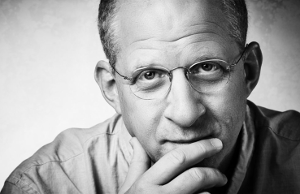
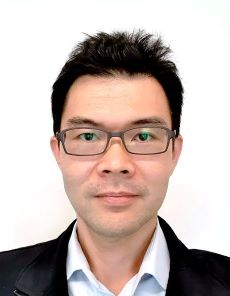
Klaus Mølmer is a Professor at the Niels Bohr Institute, University of Copenhagen, specializing in Quantum Optics and Photonics. His research spans quantum information, entanglement, and cavity QED, leveraging machine learning and Grover's algorithm for quantum state engineering. His recent work focuses on spin squeezing, Rydberg atom interactions, and mechanical resonator cooling. A leader in quantum simulation and superradiance, he collaborates on cavity-mediated emission and quantum network design. The 15 most recent articles highlight advancements in quantum state manipulation, entanglement protocols, and robust differential phase sensing. These studies bridge theoretical frameworks with experimental applications in cavity QED, Rydberg arrays, and zero-photon detection.
Brian Møller Andersen is a Professor in Solid State Physics at the Niels Bohr Institute, University of Copenhagen, where he has maintained continuous academic appointments since completing his PhD. His research spans multiple frontiers of condensed matter physics with significant contributions to superconductivity and magnetism. PhD in Theoretical Physics, University of Copenhagen (2001-2003) PhD studies at Stanford University (2000-2001) MSc in Theoretical Physics, University of Copenhagen (1998-2000) International Exchange at UC Berkeley (1997-1998) BSc in Mathematics and Physics, University of Copenhagen (1994-1997) Andersen's primary research focuses on Superconductivity , particularly high-temperature superconductors where magnetism and superconductivity coexist, and Magnetism in novel quantum materials. His work extends to Quantum Transport phenomena, Ultracold Atoms in optical lattices, Topological Insulators , and Strongly Correlated Systems . Recent publications reveal a growing emphasis on altermagnetism, kagome lattice physics, and topological superconductivity, indicating significant evolution in his research trajectory toward emergent quantum phenomena. Analysis of his 15 most recent publications (2024-2025) shows a clear progression into cutting-edge areas: 60% focus on altermagnetism and novel magnetic states, 40% on unconventional superconductivity in topological materials, and 30% examining quantum confinement effects. His work demonstrates increasing interdisciplinary connections between condensed matter theory, materials science, and quantum information science, with frequent collaborations across Europe and the US. Andersen has received significant research support through prestigious fellowships including the Lundbeck Foundation fellowship (Associate Professor level, 2012-2017) and FNU Steno Stipend (Assistant Professor level, 2009-2013), alongside early career support from the Villum Kann Rasmussen Post. Doc. Stipend. His research group at the Niels Bohr Institute focuses on theoretical modeling of quantum materials, particularly computational approaches to understanding competing orders in correlated electron systems. The group maintains strong connections with experimental teams conducting neutron scattering, STM, and ARPES measurements to validate theoretical predictions.
Kohei Nakajima is an Associate Professor at the Department of Intelligent Mechano-Informatics, Graduate School of Information Science and Technology, The University of Tokyo. He holds concurrent positions at the Department of Creative Informatics and the Next Generation Artificial Intelligence Research Center (AI Center). As an Endowed Chair in Advanced Artificial Intelligence Education, he leads the Physical Intelligence Lab, which focuses on the intersection of soft robotics, nonlinear dynamics, and physical computing. His research interests center on Physical Reservoir Computing (PRC), a paradigm that exploits the natural dynamics of physical systems for computation, with applications in soft robotics, spintronics, and quantum machine learning. Nakajima's work demonstrates how physical systems can inherently process information without traditional digital computation, leveraging phenomena like chaos, bifurcations, and embodied intelligence. Nakajima's publications reveal a strong focus on understanding how physical systems can perform computational tasks. His recent work spans from biological applications (jellyfish cyborgs, ostrich-inspired robotics) to fundamental theoretical advances in reservoir computing. The research demonstrates how physical phenomena can be harnessed for information processing, with implications for energy-efficient computing and novel robotic control paradigms. As the organizer of the Reservoir Computing Seminar, Nakajima has built a vibrant research community exploring the nature of information processing across disciplines. His lab actively recruits graduate students and postdocs, indicating strong research momentum and institutional support for his work in physical intelligence.
Charles Marcus is a Professor at the University of Copenhagen's Niels Bohr Institute, holding the Villum Kann Rasmussen Chair in Quantum Sciences. He directs the Center for Quantum Devices and Microsoft Station Q – Copenhagen, while affiliating with the Niels Bohr International Academy. Education : Stanford University (B.S. 1984), Harvard University (Ph.D. 1990), IBM Postdoctoral Fellow (1990-92) Employment : Faculty at Stanford (1992-2000), Harvard (2000-2011), and UCPH (2012-present) His research focuses on experimental condensed matter physics, particularly quantum coherent electronics in semiconductors/superconductors. Key areas include spin qubits for quantum computing, Majorana modes in nanowires, quantum Hall systems, and superconductor-semiconductor hybrids. Recent work explores topological quantum information schemes and novel magnetic resonance imaging approaches. Scientific publications span quantum devices, Josephson junctions, and topological materials. Awards include the H.C. Ørsted Gold Medal, AAAS Newcomb-Cleveland Prize, and fellowships from AAAS and APS. He serves on advisory boards for quantum technology centers globally. Significant Awards : H.C. Ørsted Gold Medal (2020) Industry Prize, Danish Academy of Natural Sciences (2019) Member, National Academy of Sciences (2018) Award for Research Excellence in Nanotechnology (2014) Professional Roles : Director, Center for Quantum Devices (2012-2019) Lab Director, Microsoft Quantum (2016-2021) Scientific Director, Harvard Center for Nanoscale Systems (2004-2009)
Jesper Nygård is a Professor at the Niels Bohr Institute, University of Copenhagen, specializing in solid state physics, nanophysics, and quantum technology. He leads the Center for Quantum Devices and has held leadership roles including Head of Section for Nanophysics and Solid State Physics (2007–2017) and Deputy Head of Research (2017–present). His research focuses on hybrid superconductor-semiconductor systems, nanowire-based quantum devices, and low-temperature quantum transport. PhD in experimental nanophysics (2000) and MSc/BSc in physics/mathematics from the University of Copenhagen International research experience at Harvard, Berkeley, and CNRS Grenoble His work bridges nanofabrication, quantum electronics, and Kondo physics, with recent publications analyzing nanowire junctions, microwave dynamics in superconducting systems, and heat dissipation mechanisms. He co-founded multiple technology startups and served as a Danish astronaut candidate (2005–2008). Scientific Awards: Member of the Royal Danish Society of Letters Member of the Danish Academy of Sciences
Rasmus Bjørk is a Professor at the Technical University of Denmark (DTU) in the Department of Energy Conversion and Storage. His research focuses on advanced materials for energy systems, particularly in magnetocaloric and elastocaloric cooling, magnetic materials, and additive manufacturing for functional devices. His work contributes to the UN Sustainable Development Goals, especially in affordable and clean energy. PhD Supervision: Active projects include energy storage using topological spin textures, magnetothermal waste heat harvesting, and bio-magnetometers. Key Research Areas: Magnetic refrigeration, energy harvesting, and freeze-casting of functional materials. Recent advancements include 3D-printed elastocaloric coolers and studies on magnetoresistive devices. His team develops novel techniques for optimizing magnetic systems and energy conversion processes. He has published over 160 articles and led projects on regenerator design, magnetic bearings, and sensor technologies. Collaborations span multiple countries and disciplines. Notable contributions include pioneering work on freeze-casting for biomaterials and the MagTense micromagnetic framework. His research bridges theoretical modeling and practical applications in sustainable energy solutions.
Farshad Moradi is a Professor at the Department of Electrical and Computer Engineering at Aarhus University, specializing in neuromorphic engineering, spintronics, and biomedical device design. His work focuses on integrating advanced materials and circuits for applications in neural interfaces, energy-efficient computing, and wireless biomedical systems. Research Interests include: Spintronic-based neuromorphic computing architectures Ultra-low power analog/mixed-signal integrated circuits Ultrasonically powered implantable medical devices Neural signal processing and seizure detection systems Wireless energy transfer and structural health monitoring Key Projects (2016-2026): SPICE: Spintronic-Photonic Integrated Circuit Platform PHOTON-NeuroCom: Photonic-assisted Neuromorphic Computing Neuro-Sense: Flexible bioinspired neuroprostheses CorroSense: Self-powered corrosion monitoring HERMES: Hybrid Enhanced Regenerative Medicine Systems Recent innovations include: Ultrasonically powered optogenetic implants Low-power neural amplifiers for deep-brain interfaces Spin-torque nano-oscillator-based neuromorphic hardware Energy harvesting systems for structural monitoring
Anasua Chatterjee is a researcher at the Center for Quantum Devices, part of the Niels Bohr Institute at the University of Copenhagen. Her work focuses on quantum dot arrays, spin qubits, and semiconductor-based quantum computing platforms. She collaborates with leading quantum research groups and contributes to advancements in quantum device calibration, optimization, and noise mitigation. Affiliation: Center for Quantum Devices, Niels Bohr Institute, University of Copenhagen Her research spans quantum device automation, charge sensing, and real-time control of qubit fluctuations. Recent publications highlight her expertise in radio-frequency reflectometry, gate voltage optimization, and topological superconductivity in hybrid devices. Key article trends include autonomous calibration of quantum dots using evolutionary algorithms, spin qubit control via FPGA-based feedback systems, and integration of superconducting elements with semiconductor platforms. These studies often involve collaborations with institutions in the U.S. and Europe. While no formal awards are listed in the provided texts, her work appears integral to scaling quantum processors and improving qubit coherence for fault-tolerant systems.
Per Hedegård is a Professor in the Condensed Matter Physics group at the Niels Bohr Institute, University of Copenhagen. His research spans multiple areas of theoretical and experimental condensed matter physics with particular emphasis on molecular-scale phenomena. Based at Universitetsparken 5, Building D in Copenhagen, he maintains an active research program with extensive international collaborations. Hedegård's research interests focus on the intersection of quantum physics and molecular systems, with particular expertise in molecular electronics, statistical physics, solid-state physics, superconductivity, magnetism, and electron transport. His work explores how quantum mechanical effects manifest in molecular systems, especially regarding spin phenomena in chiral molecules and magnetic interactions at the nanoscale. Recent work has investigated chirality-induced spin selectivity, spin dynamics in molecular systems, and magnetic properties of metal-organic frameworks. His publication record shows consistent high-impact research output, with significant contributions in the last five years. The research trends reveal a strong focus on spin-related phenomena in molecular systems, particularly the relationship between molecular chirality and electron spin. His 2022 review article in Advanced Materials on 'Theory of Chirality Induced Spin Selectivity' has become a key reference in the field with over 200 citations, demonstrating substantial influence. Other notable work includes studies on molecular junctions, spin coupling mechanisms, and statistical methods for analyzing experimental data. Hedegård's work has received significant attention in the scientific community, with multiple publications featured in high-impact journals including Nature Chemistry, Physical Review Letters, and Advanced Materials. His research has been referenced in patents, Wikipedia pages, and picked up by numerous news outlets, indicating practical relevance and broad scientific impact. The extensive reader metrics across platforms like Mendeley show his work is widely followed by researchers globally. His research program involves substantial international collaboration, as evidenced by co-authorships with researchers from multiple countries. The work spans both theoretical modeling and experimental validation, often involving interdisciplinary approaches that bridge physics, chemistry, and materials science. Current projects appear to focus on spin phenomena in molecular systems, magnetic properties of novel materials, and developing theoretical frameworks for understanding quantum transport at the nanoscale.
Mads Brandbyge is a Professor in the Department of Physics at the Technical University of Denmark (DTU). His research focuses on electronic and thermal transport in nanosystems using quantum mechanical simulations, including molecular-scale contacts, carbon nanotubes, graphene, and nanowires. He develops computational methodologies and tools for atomistic modeling. He supervises and examines multiple PhD students, including Anaya Morales, Sørensen, Rosendal, and Zhao. His work contributes to the UN Sustainable Development Goals, particularly in advancing materials science and nanotechnology. Key research areas include quantum transport in 2D materials, electronic decoupling in graphene, and interfacial chemisorption in heterostructures. Recent publications highlight innovations in carbon nanostructures, topological materials, and nanoscale heat/charge modeling. Brandbyge organizes conferences and workshops on quantum transport, such as the 'Advanced school on Quantum Transport using SIESTA' and 'Tools for electron transport.' His research has been cited widely, with over 205 publications and collaborations across multiple countries.
Jesper Bendix is a Professor in the Department of Chemistry at the University of Copenhagen's Faculty of Science. Born on August 6, 1965 in Copenhagen, Denmark, he has established himself as a leading researcher in inorganic chemistry with a focus on molecular magnetism and bioinorganic systems. His academic journey began with a Cand. scient. degree in chemistry from the University of Copenhagen in 1993, followed by a Ph.D. in 1998. Faculty of Science, University of Copenhagen (2004-present) Department of Chemistry, University of Copenhagen (2004-present) Head of Inorganic Chemistry group (2005-present) Head of Ph.D. school at Department of Chemistry (2007-present) Professor Bendix's research spans bioinorganic chemistry, magnetic chemistry, electronic structure theory, and inorganic synthesis. His work particularly focuses on lanthanide complexes, molecular magnetism, and the design of coordination compounds with specific magnetic properties. He has made significant contributions to understanding the relationship between molecular structure and magnetic behavior in transition metal and rare earth complexes. His recent publications demonstrate a strong trend toward advanced molecular magnetism research, particularly with lanthanide systems and their potential applications in quantum computing and high-density data storage. The research spans fundamental electronic structure investigations to practical applications in molecular electronics and spintronics. Ellen and Niels Bjerrums Chemistry Prize (2006) Professor Bendix has supervised numerous graduate students through his research group, which has included 5 Ph.D. students (1 shared), 1 Masters student, and 3 bachelor-project students. His research has been supported by substantial funding, with total grant amounts reaching approximately 8 million DKK from various sources including the Danish Natural Science Research Council, ELTRA, and Carlsberg Foundation. His administrative contributions include leadership roles in the Inorganic Section of The Danish Chemical Society and organization of international conferences. His research group maintains strong international collaborations, with research visits to institutions including Max-Planck Institut für Strahlenchemie, California Institute of Technology, and University of Berne. The group utilizes advanced instrumentation including EPR spectrometers and SQUID magnetometers, with significant equipment funding secured through competitive grants.
Yu Liu is a researcher at the Center for Quantum Devices within the Niels Bohr Institute at the University of Copenhagen. The Center for Quantum Devices focuses on cutting-edge research in quantum physics, particularly in areas related to spin qubits, topological quantum systems, novel devices, superconducting qubits, and quantum materials. Dr. Liu's research spans multiple disciplines within quantum physics and condensed matter. His primary focus appears to be on quantum devices, particularly investigating superconductivity in hybrid nanowire systems with ferromagnetic components. His work explores spin-split superconductivity, supercurrent transport, and spin-polarized bound states in semiconductor-superconductor-ferromagnetic-insulator hybrid structures. Beyond quantum physics, Dr. Liu has also published work in computer vision, mathematics, particle physics, transportation studies, and medical imaging, demonstrating remarkable interdisciplinary breadth. His recent publications (2021-2025) show a strong focus on quantum transport phenomena in hybrid nanostructures, particularly examining the interplay between superconductivity, ferromagnetism, and spin-orbit coupling in nanowire systems. These investigations have important implications for the development of topological quantum computing platforms and novel quantum devices. The observed phenomena include supercurrent reversal near coercive fields of ferromagnetic insulators, spin-splitting exceeding induced superconducting gaps, and percolative supercurrent flow in bilayer systems. Dr. Liu has collaborated extensively with researchers at the Center for Quantum Devices, including P. Krogstrup, S. Vaitiekėnas, C. M. Marcus, M. Leijnse, and R. Seoane Souto. His work often involves experimental measurements combined with theoretical modeling to explain observed phenomena in quantum transport systems, bridging the gap between fundamental physics and potential quantum technology applications.
William Iain Leonard Lawrie is an Assistant Professor at the Niels Bohr Institute , University of Copenhagen , specializing in Condensed Matter Physics . His research focuses on quantum technologies, particularly semiconductor spin qubits, quantum dots, and low-temperature quantum systems. Recent publications highlight advancements in: Quantum dot engineering in germanium Exciton transport mechanisms High-fidelity two-qubit gates in silicon Charge noise mitigation in semiconductor systems His work intersects quantum computing, nanotechnology, and material science, with applications in fault-tolerant quantum systems and quantum information processing.
Joel Yang serves as the Otto Mønsted Visiting Professor at POLIMA, University of Southern Denmark (SDU), for the 2024-25 academic year, visiting from Singapore University of Technology and Design (SUTD). His appointment as a Visiting Professor confirms active faculty status within SDU's research ecosystem. Yang's research centers on nanophotonics and advanced nanofabrication , with specialization in 3D printing techniques for photonic crystals and metasurfaces. His work bridges fundamental optical physics with applications in structural color generation, infrared photodetection, and quantum emitter systems. Key methodologies include two-photon polymerization lithography and phase change material engineering, targeting visible-to-mid-IR spectral ranges. Analysis of his 2024-2025 publications reveals concentrated innovation in visible-spectrum photonic crystals (e.g., glass/titania 3D printing with complete bandgaps) and ultra-wideband metasurface detectors . Recurring themes include electrical tunability of quantum emitters, interband plasmonics for UV applications, and amorphization-dependent recrystallization processes in phase change materials. This trajectory demonstrates systematic scaling of nanofabrication techniques toward practical optical devices.
Ferdinand Kuemmeth is Professor in Experimental Condensed Matter Physics at the Niels Bohr Institute (NBI), Faculty of Science, University of Copenhagen. He has been instrumental in building the Center for Quantum Devices, an excellence center established from 2012-2023 by the National Danish Research Foundation. Kuemmeth also founded QDevil, a quantum electronics hardware company, in 2016, where he serves as CTO, and joined Quantum Machines as Principal Scientist in 2022. Education and Career: Ph.D. in Physics, Cornell University (2007), under Prof. Daniel C. Ralph Postdoctoral Fellow with Prof. Charles Marcus, Harvard University (2007-2010) Research Associate, Harvard University (2010-2012) Associate Professor, Niels Bohr Institute (2012-2022) Professor, Niels Bohr Institute (2022-present) Kuemmeth pioneered research on spin-orbit coupling in nanostructures and leads a research group focused on semiconducting and superconducting quantum devices. His work spans quantum dots, spin qubits, superconducting resonators, and encoded qubits, with particular emphasis on condensed matter quantum transport measurements and solid-state qubit development. His innovative low-temperature techniques have advanced quantum science globally, recognized by the 2024 Technology Transfer Prize of the German Physical Society. Kuemmeth's research bridges fundamental physics with practical quantum technology applications, making significant contributions to the quantum computing field. His recent publications (2023-2025) reveal a strong progression toward sophisticated quantum hardware implementations, particularly addressing measurement techniques, qubit control systems, and error mitigation strategies essential for scalable quantum computing. The research demonstrates increasing sophistication in quantum dot device engineering and quantum information processing. Scientific Recognition: Technology Transfer Prize 2024 of the German Physical Society SCIENCE business award (2019) Princeton University Dicke Fellowship (2007) Fellowships from German National Merit Foundation and Cusanuswerk (2000) Kuemmeth has successfully leveraged support through the European Innovation Council and Innovation Fund Denmark to grow QDevil into an internationally trusted quantum technology partner. His work demonstrates exceptional impact across academic research and industrial quantum technology development, with 59 research outputs and 51 press/media mentions reflecting his significant contributions to the field. At the Niels Bohr Institute, Kuemmeth leads cutting-edge research in quantum hardware development, particularly focusing on semiconductor-based quantum systems. His group's work on quantum transport measurements and solid-state qubits places them at the forefront of quantum computing research, with practical applications advancing the global quantum technology ecosystem.