معرفی
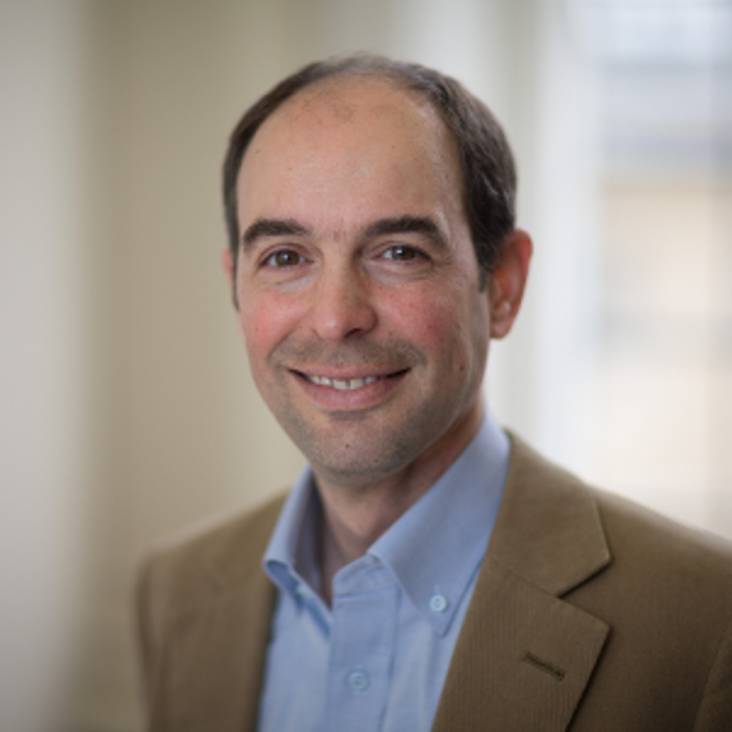
Per Hedegård is a Professor in the Condensed Matter Physics group at the Niels Bohr Institute, University of Copenhagen. His research spans multiple areas of theoretical and experimental condensed matter physics with particular emphasis on molecular-scale phenomena. Based at Universitetsparken 5, Building D in Copenhagen, he maintains an active research program with extensive international collaborations.
Hedegård's research interests focus on the intersection of quantum physics and molecular systems, with particular expertise in molecular electronics, statistical physics, solid-state physics, superconductivity, magnetism, and electron transport. His work explores how quantum mechanical effects manifest in molecular systems, especially regarding spin phenomena in chiral molecules and magnetic interactions at the nanoscale. Recent work has investigated chirality-induced spin selectivity, spin dynamics in molecular systems, and magnetic properties of metal-organic frameworks.
His publication record shows consistent high-impact research output, with significant contributions in the last five years. The research trends reveal a strong focus on spin-related phenomena in molecular systems, particularly the relationship between molecular chirality and electron spin. His 2022 review article in Advanced Materials on 'Theory of Chirality Induced Spin Selectivity' has become a key reference in the field with over 200 citations, demonstrating substantial influence. Other notable work includes studies on molecular junctions, spin coupling mechanisms, and statistical methods for analyzing experimental data.
Hedegård's work has received significant attention in the scientific community, with multiple publications featured in high-impact journals including Nature Chemistry, Physical Review Letters, and Advanced Materials. His research has been referenced in patents, Wikipedia pages, and picked up by numerous news outlets, indicating practical relevance and broad scientific impact. The extensive reader metrics across platforms like Mendeley show his work is widely followed by researchers globally.
His research program involves substantial international collaboration, as evidenced by co-authorships with researchers from multiple countries. The work spans both theoretical modeling and experimental validation, often involving interdisciplinary approaches that bridge physics, chemistry, and materials science. Current projects appear to focus on spin phenomena in molecular systems, magnetic properties of novel materials, and developing theoretical frameworks for understanding quantum transport at the nanoscale.