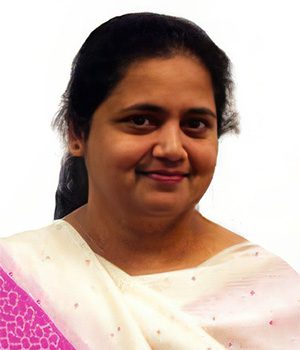
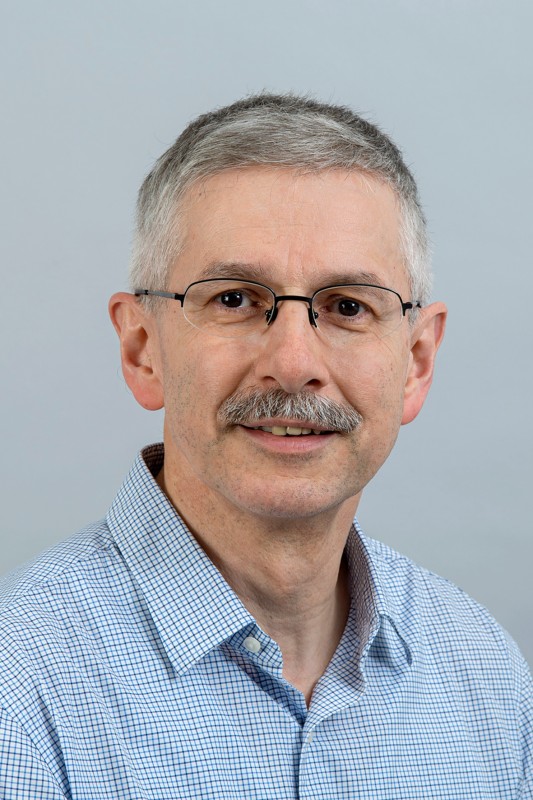
Archana Dubey is a Senior Lecturer at the University of Central Florida (UCF), affiliated with the College of Sciences. She joined UCF in 2001 and holds a PhD in Physics from Bhavnagar University, India (1998). Her postdoctoral research at Rensselaer Polytechnic Institute (RPI) and UCF focused on theoretical and computational studies in physics and materials science. She was promoted to Associate Professor with tenure in 2014 as part of UCF's annual promotions and tenure cycle. Her research interests include electronic structure calculations, nuclear quadrupole interactions, hyperfine interactions, and biomolecular systems such as hemoglobin and rhizoferrin. She employs first-principles methods like Hartree-Fock and density functional theory to investigate material properties at the atomic level. Dr. Dubey's publications span 1998–2013, covering topics such as coordination chemistry of metalloproteins, nuclear magnetic resonance phenomena in biomolecules, and magnetic thin films. Her work has been published in journals like BioMetals , Hyperfine Interactions , and Journal of Applied Physics . She currently supervises graduate and undergraduate students in research projects related to theoretical physics and materials science. Her lab focuses on interdisciplinary studies at the intersection of physics, chemistry, and biology.
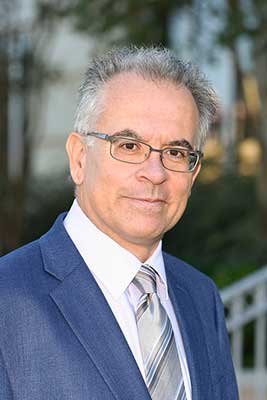
Ilias Perakis is Professor and Chair of Physics at the University of Alabama at Birmingham (UAB), where he leads transformative research in quantum materials and ultrafast phenomena. An OSA Fellow and NSF CAREER awardee, he holds a Ph.D. from the University of Illinois and has held postdoctoral positions at Rutgers University and Bell Laboratories. His research focuses on theoretical condensed matter physics , using quantum many-body theory to model laser-driven superconductors, magnetic systems, and topological materials. Key interests include: Ultrafast optical manipulation of quantum states Terahertz coherence control Multi-dimensional spectroscopy for material design Perakis has restructured UAB's physics curriculum into five career-focused tracks and co-launched Project RAISE to broaden STEMM participation through digital education. His department received the 2023 APS Award for Improving Undergraduate Physics Education for innovative student training. Honors include the NSF CAREER Award and recognition by the Optical Society of America. His research group actively collaborates with national labs on grand-challenge problems in quantum information science.
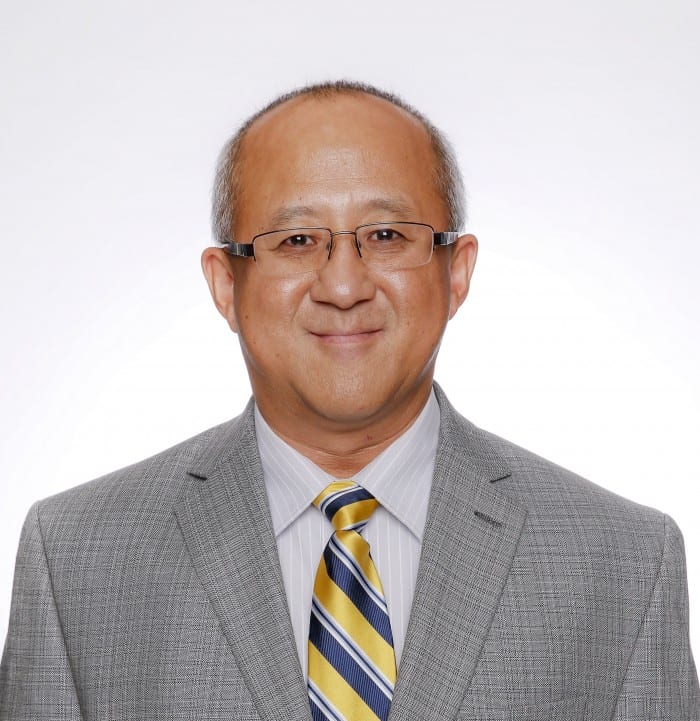
Philip W. T. Pong is an Associate Professor in the Department of Electrical and Computer Engineering at New Jersey Institute of Technology. His research focuses on electromagnetic sensing technologies for smart grid applications and nanotechnology. Education includes: Ph.D. in Engineering from University of Cambridge (2005) B.Eng. in Electrical and Electronic Engineering from University of Hong Kong (2002) Research expertise spans electromagnetic sensors, smart grid monitoring, nanotechnology applications in energy systems, and magnetic materials. Recent publications demonstrate strong focus on current sensing technologies (both contact and non-contact), fault diagnosis in power systems, wind turbine monitoring, and magnetic materials characterization. Article analysis reveals consistent emphasis on magnetoresistive sensors, wireless power transfer, renewable energy systems monitoring, and spintronics applications. Professional distinctions include Fellow status in multiple engineering institutions (IET, Energy Institute, IOM3, NANOSMAT) and chartered engineer credentials. Serves on editorial boards of IEEE journals. No information available regarding scientific awards or current students.
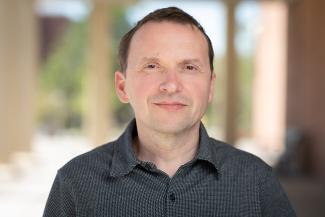
Alexander Volya is a Professor of Physics at Florida State University (FSU), specializing in nuclear theory and mesoscopic physics. His research integrates quantum many-body systems, nuclear structure, and interdisciplinary approaches to explore phenomena such as alpha clustering, quantum chaos, and superradiance. He focuses on bridging nuclear physics with astrophysics, fundamental science, and quantum signal transmission. His work emphasizes computational methods and high-performance computing to address complex problems in nuclear dynamics. He collaborates with experimental facilities like FRIB to study exotic nuclei and their decay processes. Key themes include cross-shell excitations, pairing correlations, and the interplay between collective motion and chaotic dynamics in open quantum systems. Recent studies highlight his exploration of superradiance in alpha-clustered nuclei, the quenching of octupole rotational bands, and the development of novel shell model interactions. His research also addresses astrophysical reaction rates and the impact of nuclear structure on stellar nucleosynthesis. Volya’s contributions span theoretical frameworks for mesoscopic systems, eigenstate thermalization in fermionic systems, and the application of random interaction models to bosonic systems. His work bridges foundational physics with technological advancements in nuclear research.
Sebastian Weber is a Research Fellow at the Institute of Theoretical Physics III, University of Stuttgart. His work focuses on quantum computing, topological states of matter, and Rydberg atom systems. He holds a PhD in Physics (2021) and has conducted research on quantum simulation, error budgeting in quantum gates, and topological phases in atomic arrays. Education: PhD (2021), Master's (2015), Bachelor's (2013) Affiliations: University of Stuttgart, QRydDemo consortium Research interests span Rydberg atom interactions, quantum simulations of topological systems, and the development of quantum algorithms. He has contributed to open-source projects like pairinteraction and Qiskit QRyd Provider . His publications (13+ peer-reviewed articles) address topics such as synthetic gauge fields in Rydberg lattices, error analysis in quantum gates, and coherent control of atomic qubits. He has taught courses in quantum mechanics, electrodynamics, and mathematical physics at the University of Stuttgart. Labs/Teams: Active contributor to quantum computing projects involving Rydberg atoms and topological materials simulations.
Yisong S. Tian is a Professor of Finance at the Schulich School of Business, York University. His primary research focuses on option pricing, volatility estimation, capital market efficiency, and executive compensation. He develops numerical methods for derivative securities valuation, examines managerial incentives through equity-based compensation, and investigates corporate governance dynamics. His expertise spans financial engineering, fixed income markets, and derivative securities. Notable research includes critiques and improvements to binomial option pricing models, analysis of executive compensation mechanisms, and studies on arbitrage opportunities in Canadian bond markets. Yisong has published extensively on topics such as managerial gaming of stock options, director networks in IPOs, and volatility forecasting. His work bridges theoretical finance with practical applications, addressing issues like incentive alignment and market efficiency. Contact: ytian@schulich.yorku.ca | Office: N204E, SSB.
Dr. Georgi Grahovski is a Senior Lecturer in the Department of Mathematical Sciences at the University of Essex, affiliated with the School of Mathematics, Statistics and Actuarial Science (SMSAS). He holds a PhD in Theoretical and Mathematical Physics from the Bulgarian Academy of Sciences (2003) and earlier degrees from Sofia University. His research focuses on integrable systems, nonlinear dynamics, and mathematical physics, with notable contributions to quantum spin systems, affine Toda field theories, and soliton interactions. Dr. Grahovski has held academic positions at Essex since 2013, transitioning from Lecturer to Senior Lecturer in 2018. His work bridges theoretical physics and applied mathematics, emphasizing spectral analysis, Hamiltonian systems, and symmetry reductions. He teaches advanced mathematics courses and maintains office hours during academic terms. His research interests include integrable hierarchies, nonlinear Schrödinger equations on symmetric spaces, and Grassmann extensions of Yang-Baxter maps. He has published extensively on topics such as PT-symmetric systems, soliton interactions, and gauge group actions on integrable equations. Despite no listed awards or grants in the provided texts, his contributions to the field are evident through his prolific publication record. Dr. Grahovski’s academic support includes regular office hours and by-appointment consultations. He is involved in teaching and supervision activities, though no specific student advisees are listed here.
Susan Blessing is a Professor of Physics at Florida State University's College of Arts and Sciences, Department of Physics. She specializes in experimental high-energy particle physics with research focusing on electroweak interactions, top quark studies, and quantum chromodynamics. Her work primarily utilizes proton-antiproton collision data from the DØ experiment at Fermilab. Her research examines fundamental particle interactions including W boson asymmetry, quark structure analysis, and searches for beyond-Standard-Model physics. Recent investigations explore exotic hadronic states and precision measurements of electroweak parameters. Honors include the First Year Assistant Professor Award (1995), Dr. Martha Roberts Award (2000), and Developing Scholar Award (2001). She actively contributes to Fermilab's DØ Collaboration and mentors students in particle physics research methodologies.
Paul D. Cottle serves as Professor and Chair of the Department of Physics at Florida State University (FSU), where he has established himself as a leading researcher in nuclear structure physics and innovative physics educator. His career spans decades of contributions to both fundamental nuclear research and pedagogical advancements. His educational foundation includes a Ph.D. from Yale University (1986), which launched his distinguished career in nuclear physics. Cottle's primary research focuses on exotic nuclei near proton and neutron driplines, challenging established models of nuclear shell structure through experimental investigations at facilities like the National Superconducting Cyclotron Laboratory at Michigan State University. His work on neutron-rich nuclei, particularly the landmark Nature publication on 42 Si, revealed unexpected proton subshells and questioned predictions about shell closure collapse at neutron number 28. His recent publications demonstrate consistent focus on nuclear structure near driplines, with key investigations into shell evolution in isotopes like 42 Si, 43 P, and 44 S. These works collectively advance understanding of how nuclear magic numbers transform in unstable nuclei, with implications for fundamental nuclear theory. Cottle's significant accolades include: National Science Foundation Presidential Young Investigator Award (1987) FSU Developing Scholar Award (1992) FSU University Teaching Award (2001) George B. Pegram Award for Excellence in Teaching (2002) He has secured $29 million in research funding as principal or co-principal investigator and mentored 4 Ph.D. graduates in nuclear physics. His educational leadership extends to developing the FSU Science Studio, an inquiry-based teaching environment designed for 72 students that hosts specialized courses like Physics of Light and Sound for non-science majors and Physical Science for Elementary Education Majors. Cottle maintains active research collaborations with major nuclear facilities while continuing to innovate in physics education through evidence-based teaching methodologies.
Professor Barbaros ÖZYILMAZ is a distinguished faculty member at the National University of Singapore (NUS), holding positions in both the Department of Physics and Department of Materials Science and Engineering. He is also affiliated with the Centre for Advanced 2D Materials (CA2DM) at NUS, where he leads a prominent research group focused on 2D materials science. Dr. ÖZYILMAZ earned his PhD from New York University, USA in 2004. Since then, he has established himself as a globally recognized researcher and inventor in the field of two-dimensional materials. Professor ÖZYILMAZ's research spans both fundamental and applied aspects of 2D materials. His basic research interests include the synthesis of novel 2D materials such as monolayer amorphous carbon (MAC), black phosphorous, and nano-porous graphene foam, as well as fundamental studies of spin, charge and phonon transport in graphene, phosphorene and 2D van der Waals heterostructures. His applied research interests focus on semiconductor device applications, process and synthesis development of 2D materials for scale up, energy storage applications, and graphene-based biomedical applications. His work on monolayer amorphous carbon, published in Nature in 2020, represents a landmark achievement as the world's first atomically thin amorphous carbon film. Professor ÖZYILMAZ's publication record demonstrates a consistent focus on advancing the frontiers of 2D materials science, with particular emphasis on graphene, black phosphorus, and novel amorphous 2D structures. His work spans fundamental physics, materials synthesis, and practical applications across electronics, energy storage, and biomedical fields. A significant trend in his recent work is the exploration of amorphous 2D materials, which represents a paradigm shift from the traditional focus on crystalline 2D materials. Professor ÖZYILMAZ has received numerous scientific accolades, including: Singapore NRF Fellow 4 provisional patent applications and 7 national stage pending applications 36 patents granted (12 unique) His patented work on spin-transfer torque technology was foundational for Spin Memory, Inc. (previously Spin Transfer Technologies), a company established in 2011 that has raised over $122 million in funding. Professor ÖZYILMAZ actively mentors students and researchers, currently seeking new Post-Doctoral Researchers, Ph.D. candidates, and Research Assistants to join his team. His research is supported by multiple grants that enable his group to pursue cutting-edge work in 2D materials synthesis and applications. The group maintains strong collaborations with both academic institutions and industry partners worldwide. Professor ÖZYILMAZ leads the Özyilmaz Group at the Centre for Advanced 2D Materials (CA2DM) at NUS. His team comprises researchers working across multiple projects including large area transfer of 2D materials, magneto-electronic circuit studies, 2D amorphous materials development, advanced supercapacitors, and silicon-anode batteries. The group benefits from state-of-the-art cleanroom facilities at CA2DM and maintains international collaborations with academic and industrial partners.
Prof. Manfred Sigrist is a Full Professor at the Department of Physics, ETH Zurich, specializing in theoretical condensed matter physics with a focus on strongly correlated electron systems, unconventional superconductivity, and topological materials. He has held positions including a Profil2 Fellowship from the Swiss Nationalfonds (1995) and a professorship at Kyoto University's Yukawa Institute for Theoretical Physics (1997). His research explores metallic, magnetic, and superconducting properties of complex materials, often addressing topological features and symmetry-breaking phenomena. Education & Career: PhD in Theoretical Physics under Prof. T.M. Rice at ETH Zurich Postdoctoral studies at Tsukuba University (Japan), MIT (USA), and PSI (Switzerland) Joined ETH Zurich as Full Professor in 2001 Research Interests: Unconventional superconductivity in Sr2RuO4 and other correlated systems Topological superconductors and chiral pairing mechanisms Effects of symmetry-breaking (magnetic fields, strain) on electronic phases Quantum phase transitions and edge state physics Key Contributions: Developed theoretical frameworks for topological superconductors Explored diode effects in non-magnetic topological junctions Studied strain-induced modifications in chiral superconductors Labs/Teams: Active in the Institute for Theoretical Physics at ETH Zurich, collaborating on experimental/theoretical interfaces in quantum materials.
Amir Dembo is the Marjorie Mhoon Fair Professor in Quantitative Science at Stanford University, holding appointments in the Department of Mathematics and Statistics, and adjunct status in the Department of Electrical Engineering. His research focuses on probability theory and stochastic processes, with contributions to random graphs, large deviations, spin glasses, and statistical mechanics. He has authored numerous influential papers on topics such as random cluster models, Gibbs measures, and universality in interacting systems. Dembo teaches advanced probability courses (e.g., STAT310/MATH230) and has explored applications of probability in cryptography, including proof-of-stake blockchain protocols. His work bridges theoretical foundations with interdisciplinary applications in physics and computer science. Education details are not explicitly provided, but his academic trajectory is reflected through his professorial roles and research output. His research interests emphasize probabilistic analysis of complex systems, including random walks, graph structures, and non-equilibrium dynamics. Over 30 years of publications highlight his expertise in large deviation principles, asymptotic analysis of stochastic processes, and the interplay between combinatorics and probability. His recent work (2023–2025) explores cutting-edge topics like regular-tree-like graph models, flow-type scaling limits, and geometric area tilts in Brownian polymers. Earlier contributions include foundational studies on Erdős–Rényi hypergraphs, spectral measures of random matrices, and the universality of Langevin spin glass dynamics. While no explicit awards are listed, his prolific publication record and academic leadership reflect significant scholarly impact. Dembo’s advising and grants are not detailed here, but his teaching and research indicate mentorship in probability theory and stochastic modeling. Collaborations with interdisciplinary teams likely extend into areas like theoretical computer science and statistical physics.
Andrew Goodwin is a Professor of Materials Chemistry and Associate Head of Department (Research) at the University of Oxford, leading a research group focused on structural flexibility and disorder in functional materials. His work bridges fundamental understanding with practical applications in energy storage and smart materials. Education: University of Sydney, University of Cambridge Research in the Goodwin Group revolves around four themes: fundamentals of disorder, advanced characterization techniques, disorder-by-design synthesis, and disorder-property relationships. They specialize in total scattering, PDF, and 3D-ΔPDF methods using X-rays, neutrons, and electrons, with applications in thermoelectrics, magnetocalorics, and adaptive sensing. Recent publications highlight his group's exploration of metal-organic frameworks (MOFs), Jahn-Teller distortions, and disorder-driven properties. Key trends include leveraging correlated disorder for functional materials, developing novel characterization algorithms, and synthesizing hybrid frameworks with unconventional magnetic/electronic states. Royal Society of Chemistry Harrison-Meldola Prize RSC Marlow Prize RSC Corday-Morgan Prize RSC Peter Day Prize Inaugural UK Blavatnik Laureate in Chemistry Andrew has secured both ERC Starting and Advanced Grants, advising roles at the Leverhulme Trust and Max-Planck-Gesellschaft. His group at the Inorganic Chemistry Laboratory collaborates globally on materials synthesis and characterization challenges.
Steve Homer is a Professor of Computer Science at Boston University, affiliated with the Department of Computer Science within the College of Arts & Sciences. He has been on the faculty since 1982 and has held various administrative roles, including department chairman. He co-founded the Center for Reliable Information Systems and Cyber Security in 2002. He was a Fulbright Scholar in Heidelberg (1988-89) and a Visiting Research Professor at Oxford (1996). His research focuses on complexity theory, quantum computation, security, parallel algorithms, and computational learning theory. Education: PhD in Mathematics, Massachusetts Institute of Technology (1978) Research Interests: Homer’s work spans complexity theory (including quantum complexity), security mechanisms, parallel and randomized algorithms, mathematical logic, and learning theory. His contributions address foundational questions in theoretical computer science, with applications to quantum computing and algorithm design. Publications: Over 70 research papers highlight his exploration of quantum algorithms, computational complexity boundaries, and algorithmic efficiency. Recent themes include quantum circuit limitations, historical foundations of complexity theory, and parallel approximation algorithms. Awards: Fulbright Scholar (Heidelberg, 1988-89) Computational Science Undergraduate Teaching Award (Department of Energy, 1994) Grants & Advising: Homer has led projects funded by the Department of Energy and other agencies. Though no specific student names are listed, his advising contributions are reflected in his extensive collaborative research. Labs & Teams: Co-founder and director of the Center for Reliable Information Systems and Cyber Security, focusing on cybersecurity and trustworthy computing systems.
Stella Stopkowicz is an Associate Professor at the Department of Chemistry, University of Oslo (UiO), and a member of the Hylleraas Centre for Quantum Molecular Sciences. Her research focuses on theoretical and computational chemistry, particularly in developing advanced quantum chemical methods for studying molecular and atomic systems under extreme conditions such as strong magnetic fields. She specializes in coupled-cluster theory, Cholesky decomposition techniques, and relativistic quantum chemistry. Her work addresses challenges in calculating magnetic properties, such as magnetizability and optical rotation, using gauge-including atomic orbitals and finite-field approaches. Stopkowicz’s contributions span applications in astrophysics, materials science, and catalytic reaction mechanisms, emphasizing the interplay between computational efficiency and accuracy in large-scale simulations. Key areas of research include the development of relativistic two-component coupled-cluster methods, screening techniques for integrals in quantum chemistry calculations, and the study of paramagnetic materials like scandium and yttrium hydrides. She collaborates extensively with international researchers, advancing both the theoretical foundations and practical implementations of quantum chemistry tools. Her publications highlight advancements in computational methodologies for analyzing magnetic field effects in diverse systems, from white dwarf stars to molecular reactions. Stopkowicz’s interdisciplinary approach bridges theoretical chemistry with applications in physics and materials science, contributing to cutting-edge research in quantum molecular sciences.