معرفی
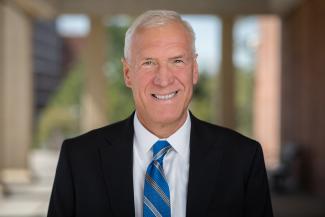
Paul D. Cottle serves as Professor and Chair of the Department of Physics at Florida State University (FSU), where he has established himself as a leading researcher in nuclear structure physics and innovative physics educator. His career spans decades of contributions to both fundamental nuclear research and pedagogical advancements.
His educational foundation includes a Ph.D. from Yale University (1986), which launched his distinguished career in nuclear physics. Cottle's primary research focuses on exotic nuclei near proton and neutron driplines, challenging established models of nuclear shell structure through experimental investigations at facilities like the National Superconducting Cyclotron Laboratory at Michigan State University. His work on neutron-rich nuclei, particularly the landmark Nature publication on 42Si, revealed unexpected proton subshells and questioned predictions about shell closure collapse at neutron number 28.
His recent publications demonstrate consistent focus on nuclear structure near driplines, with key investigations into shell evolution in isotopes like 42Si, 43P, and 44S. These works collectively advance understanding of how nuclear magic numbers transform in unstable nuclei, with implications for fundamental nuclear theory.
Cottle's significant accolades include:
- National Science Foundation Presidential Young Investigator Award (1987)
- FSU Developing Scholar Award (1992)
- FSU University Teaching Award (2001)
- George B. Pegram Award for Excellence in Teaching (2002)
He has secured $29 million in research funding as principal or co-principal investigator and mentored 4 Ph.D. graduates in nuclear physics. His educational leadership extends to developing the FSU Science Studio, an inquiry-based teaching environment designed for 72 students that hosts specialized courses like Physics of Light and Sound for non-science majors and Physical Science for Elementary Education Majors.
Cottle maintains active research collaborations with major nuclear facilities while continuing to innovate in physics education through evidence-based teaching methodologies.