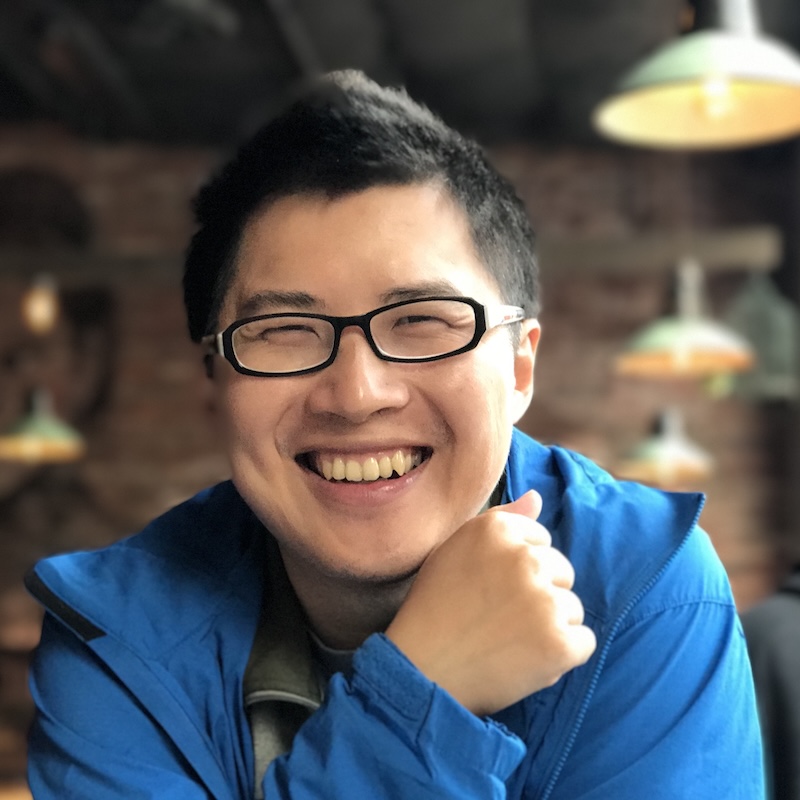
Tianqi Chen is an Assistant Professor at the Machine Learning Department and Computer Science Department of Carnegie Mellon University (CMU), with a courtesy appointment as a Professor in the Electrical and Computer Engineering Department within the College of Engineering. His research focuses on scalable machine learning systems, compiler optimization, and efficient deep learning frameworks. He holds a PhD from the Paul G. Allen School of Computer Science & Engineering at the University of Washington. Key contributions include the creation of XGBoost, Apache TVM, and MLC-LLM—widely adopted systems for machine learning and large language models. His work bridges algorithmic innovation with high-performance computing, emphasizing efficient deployment, quantization, and edge computing. Recent publications highlight advancements in LLM serving (e.g., WebLLM, Flashinfer), compiler-driven optimizations (e.g., TVM, Relax), and low-latency inference techniques (e.g., Magicdec, Tilus). These efforts address scalability, energy efficiency, and cross-platform compatibility in modern AI systems. Chen’s research has been applied to diverse domains, including music AI, browser-based inference, and microservice architectures for LLMs. His work underscores the importance of system-level thinking in advancing AI capabilities.
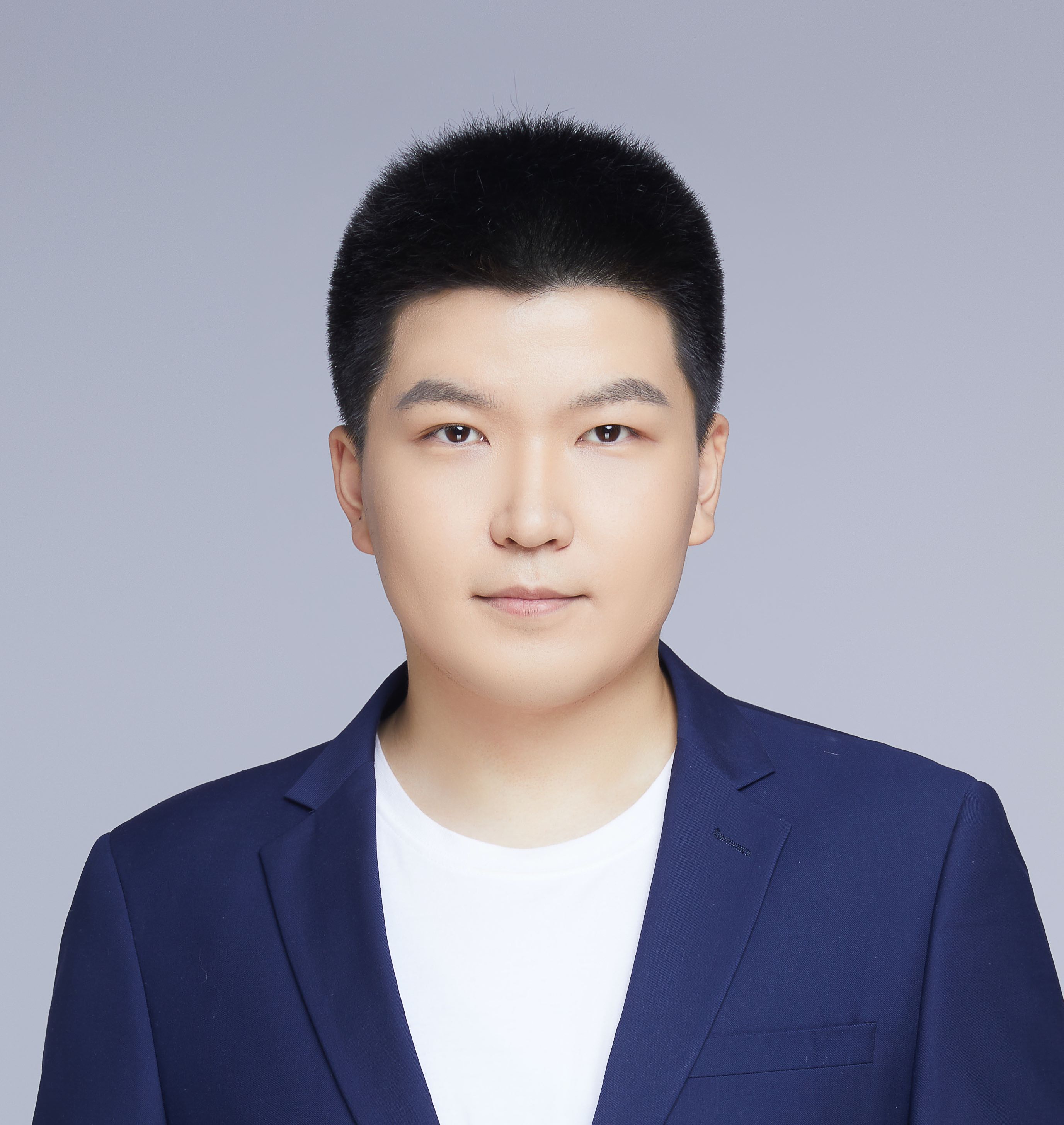
Xupeng Miao is a Visiting Assistant Professor in the Department of Computer Science at Purdue University, holding the Kevin C. and Suzanne L. Kahn New Frontiers Assistant Professorship. Previously, he was a Postdoctoral Fellow at Carnegie Mellon University's Catalyst Group under Professors Zhihao Jia and Tianqi Chen. He earned his Ph.D. in Computer Science from Peking University (2022) and a Bachelor’s degree from Northeastern University. His research focuses on machine learning systems, distributed computing, and data management, with notable contributions to systems like Hetu (a distributed deep learning framework) and innovations in large language model (LLM) serving (e.g., SpotServe, SpecInfer). He has received awards including the 2024 WAIC Yunfan Award and an Outstanding Paper Award at ACL 2024. Current projects emphasize efficient systems for generative AI, including optimizing LLM training and inference on heterogeneous hardware, fault-tolerant distributed training, and scalable graph-based machine learning. He teaches CS 59200-MLS: Machine Learning Systems at Purdue and actively mentors students in PhD/MS programs and internships. Key achievements include NVIDIA Academic Awards, IEEE Micro Top Picks recognition, and leadership in international conference roles (e.g., Artifact Evaluation Co-Chair for KDD 2025 and MLSys 2025). His work bridges system design, algorithmic innovation, and hardware-aware optimizations to advance scalable AI infrastructure.
Prof. Matthias Nießner is a Professor at the Technical University of Munich , where he leads the Visual Computing Lab . Prior to this, he held a Visiting Assistant Professor position at Stanford University . His work bridges computer vision , graphics , and machine learning , focusing on 3D reconstruction , semantic scene understanding , and AI-driven video synthesis . Prof. Nießner has published over 150 works in top venues like SIGGRAPH , CVPR , and ECCV , with several receiving best paper awards (SIGCHI’14, HPG’15, SPG’18, SIGGRAPH’16 Emerging Tech). His research has garnered international media attention, including features in the New York Times , Wall Street Journal , and MIT Technological Review , as well as TV demonstrations (e.g., Jimmy Kimmel Live for Face2Face technology). Awards : TUM-IAS Rudolph Moessbauer Fellowship (2017–ongoing) Google Faculty Award (2017) Nvidia Professor Partnership Award (2018) ERC Starting Grant (2018, €1.5M) Eurographics Young Researcher Award (2019) Research Trends : 3D Gaussian Splatting for real-time rendering Neural Radiance Fields (NeRF) with mesh supervision Audio-driven facial animation via diffusion models Latent space diffusion for 3D scenes Self-supervised and zero-shot methods for 3D and image analysis As a co-founder and director of Synthesia Inc. , he drives democratization of synthetic media. His YouTube channel has over 5 million views, reflecting his impact beyond academia.
Jason Cong is the Volgenau Chair for Engineering Excellence and Distinguished Chancellor's Professor in the Computer Science Department at UCLA's Samueli School of Engineering. He directs the Center for Domain-Specific Computing (CDSC) and the VLSI Architecture, Synthesis, and Technology (VAST) Laboratory, and serves as Associate Vice Provost for Internationalization and Co-Director of UCLA/PKU Student and Scholar Program. Dr. Cong's research spans electronic design automation, customizable computing for machine learning and big-data applications, quantum computing, and highly scalable algorithms. His work has produced over 500 publications with more than 41,000 citations and an H-index of 106. His recent work focuses on quantum computing compilation, domain-specific acceleration for AI workloads, and high-level synthesis optimization techniques that leverage machine learning. His publication trend shows a strong emphasis on quantum computing and machine learning acceleration in recent years, with numerous papers on quantum layout synthesis, LLM acceleration, and high-performance FPGA implementations. His team has developed frameworks like TAPA for task-parallel dataflow programming and RapidStream for automated parallel implementation of FPGA designs. Member of National Academy of Engineering (2017) IEEE Robert N. Noyce Medal recipient (2022) Phil Kaufman Award recipient (2024) ACM Chuck Thacker Breakthrough Award recipient (2024) 18 Best Paper Awards across major conferences Multiple 10-Year Retrospective Most Influential Paper Awards Dr. Cong has graduated 50 PhD students, many of whom are now faculty at major research universities or hold key positions at leading tech companies. He has led over 100 research projects funded by DARPA, NSF, SRC, and industry sponsors. His entrepreneurial activities include founding three successful companies (Aplus Design Technologies, AutoESL, and Falcon Computing Solutions), all acquired by major EDA players. His VAST Laboratory continues to push boundaries in domain-specific computing, with active research in quantum computing, AI acceleration, and high-performance FPGA implementations.
Ion Stoica is a Professor in the Electrical Engineering and Computer Sciences Department at the University of California, Berkeley, where he holds the Xu Bao Chancellor Chair. He serves as Director of the Sky Computing Lab and is Executive Chairman of both Databricks and Anyscale. His research spans distributed systems, cloud computing, and AI systems, with significant contributions to large-scale data processing frameworks. Stoica's research interests focus on the intersection of AI and systems, with emphasis on developing practical implementations that bridge theoretical foundations with real-world deployability. His work addresses fundamental challenges in distributed computing, resource management, and large-scale machine learning systems. Current projects include Ray (a distributed execution framework), vLLM (a high-throughput inference engine for LLMs), Chatbot Arena (an open platform for human preference evaluations), and SkyPilot (a framework for running AI workloads across clouds). His research output demonstrates a consistent trajectory toward more efficient, scalable systems for modern AI workloads, particularly focusing on optimizing inference performance, resource utilization, and cross-cloud deployment. Recent publications reflect growing interest in large language model serving, video generation optimization, and agent-based systems. ACM Fellow SIGOPS Hall of Fame Award (2015) SIGCOMM Test of Time Award (2011) ACM Doctoral Dissertation Award (2001) Member of National Academy of Engineering Honorary Member of the Romanian Academy Stoica has advised an extensive number of doctoral students who have gone on to prominent positions in academia and industry, including assistant professorships at Stanford, MIT, Carnegie Mellon, and other top institutions. He has received significant research funding through his lab activities and startup ventures. His research group has been particularly successful in translating academic research into widely adopted open-source technologies and commercial products. Stoica leads the Sky Computing Lab at UC Berkeley, which focuses on developing systems for AI workloads across multiple clouds. His research group has produced numerous influential open-source projects including Apache Spark, Apache Mesos, and Alluxio, which have become industry standards for large-scale data processing. The lab maintains strong industry partnerships while pursuing fundamental research in distributed systems and AI infrastructure.
Ali Ghodsi is a Professor at the University of Waterloo and Director of the Data Science Lab, with affiliations at the Vector Institute. His research spans machine learning, deep learning, and artificial intelligence, with applications in natural language processing, bioinformatics, and computer vision. His group develops theoretical frameworks and algorithms for analyzing large-scale datasets, focusing on neural network architectures, knowledge distillation, and model efficiency. Current projects include deep learning for identity control, computational antibody design, and generative AI/large language models. Ghodsi has authored influential tutorials on diffusion models, graph neural networks, and large language models. Notable research contributions include computational methods for de novo peptide sequencing from mass spectrometry data, green simulation-assisted reinforcement learning, and efficient natural language processing models. His lab maintains collaborations with industry partners including Google, Amazon, and Roche.
Professor Vincent Y. F. Tan holds dual appointments in the Department of Mathematics and the Department of Electrical and Computer Engineering (ECE) at the National University of Singapore (NUS). He is also affiliated with the Institute of Operations Research and Analytics (IORA) and the Institute of Data Science (IDS). His research focuses on Online Decision Making, Multi-Armed Bandits, Reinforcement Learning, Information Theory, and Statistical Signal Processing. Notably, he has been actively publishing in top-tier conferences like NeurIPS, ICML, and IEEE journals, with recent works exploring topics such as low-rank adaptation, off-policy evaluation, and queueing control. Professor Tan has advised numerous PhD students, including Fengzhuo Zhang, Yujun Shi, and Junwen Yang. He has received recognition for his teaching, including a 4.7/5.0 rating for EE5137 Stochastic Processes. His work has led to impactful publications, such as the best paper award at the ICML 2025 workshop on World Models and an oral presentation at ICLR 2025. He currently serves as a Senior Area Chair for NeurIPS 2025 and an Area Editor for the IEEE Transactions on Information Theory. His research group focuses on advancing theoretical and applied aspects of machine learning, with projects funded by grants in areas like distributed optimization and adversarial robustness. He collaborates widely, including with institutions like IIT Delhi and HKUST Guangzhou. Open positions are available for motivated postdocs and students in his research areas.
Professor Yizhou Sun is affiliated with the University of California Los Angeles (UCLA) and the Henry Samueli School of Engineering and Applied Science . Her academic work focuses on Machine Learning , Artificial Intelligence , and Graph Neural Networks within the Computer Science department. Her research spans High-Level Synthesis , Causal Inference , and Computational Biology , with recent publications addressing neural network compression, language model safety, and dynamical system modeling. The trends in her recent 2025 and 2024 publications emphasize Deep Learning , Graph Theory , and Language Model Optimization , reflecting interdisciplinary applications in Biomedical Data , Hardware Design , and Physical Simulation .
Bryan Kian Hsiang Low serves as Associate Professor in the Department of Computer Science at the National University of Singapore's School of Computing, while simultaneously holding leadership positions as Director of AI Research at AI Singapore and Deputy Director of the NUS AI Institute. His academic journey includes a B.Sc. (2001) and M.Sc. (2002) in Computer Science from NUS, followed by a Ph.D. in Electrical & Computer Engineering from Carnegie Mellon University (2009). His research spans probabilistic machine learning, multi-agent systems, and trustworthy AI, with particular focus on Bayesian optimization , federated learning , and data-efficient methodologies . The Low Lab develops frameworks for collaborative AI, automated machine learning, and AI applications in scientific domains through the Group of Learning and Optimization Working in AI (GLOW.AI), which maintains a multi-disciplinary approach bridging computer science, mathematics, and engineering disciplines. Analysis of his recent publications reveals a consistent emphasis on data valuation , privacy-preserving collaborative learning , and robust optimization techniques , with increasing integration of large language models into his research framework. His work demonstrates strong theoretical foundations coupled with practical applications in computational sustainability and robotics. Andrew P. Sage Best Transactions Paper Award (2006) NUS Overseas Graduate Scholarship (2004-2009) Faculty Teaching Excellence Award (2017-2018) IEEE RAS Distinguished Lecturer (2019) World Economic Forum Global Future Councils Fellow (2016-2018) Dr. Low actively mentors PhD students including Rachael Sim, Quoc Phong Nguyen, and Zhongxiang Dai, while leading major initiatives like the AI Phenome Platform for plant breeding optimization. His research group GLOW.AI operates at the intersection of theory and practice, with strong industry engagement through AI Singapore. Current projects focus on scalable AI systems for scientific discovery and developing frameworks for equitable collaborative machine learning with robust privacy guarantees.
Prof. Jayati Ghosh is a renowned economist and Professor at the Department of Economics, University of Massachusetts Amherst (since January 2021). Previously, she held the rank of Professor at the Centre for Economic Studies and Planning, School of Social Sciences, Jawaharlal Nehru University (JNU), New Delhi (1998–2020). She holds a Ph.D. (1983) and M.Phil. (1979) in Economics from the University of Cambridge, and an M.A. (1977) in Economics from Jawaharlal Nehru University. Her research focuses on development economics, gender studies, macroeconomics, and the political economy of globalization. She has authored/co-authored over 30 books and 300+ articles, including seminal works like *Crisis as Conquest* (2001) and *Demonetisation Decoded* (2017). Her awards include the ILO Decent Work Research Prize (2010), the NordSud Research Prize (2010), and the Lancet Lecture (2011). She has advised numerous international bodies, including the UNDP, WHO, and ILO, and serves on global committees like the UN Secretary-General’s High-Level Advisory Board on Economic and Social Affairs. She has supervised 45 M.Phil. and 34 Ph.D. dissertations. Her work emphasizes equitable development, gender justice, and critical analysis of neoliberal policies. Beyond academia, she has engaged in public policy initiatives, including chairing the Commission on Farmers’ Welfare for Andhra Pradesh (2004) and contributing to the *West Bengal Human Development Report* (2004). She actively advocates for progressive economic reforms and social justice through think tanks like the Economic Research Foundation and the International Development Economics Associates (IDEAS).
Kurt Keutzer is a Professor in the Department of Electrical Engineering and Computer Science at the University of California, Berkeley, and a key member of the Berkeley AI Research Lab (BAIR). He holds a Ph.D. in Computer Science from Indiana University (1984) and was previously Chief Technical Officer at Synopsys, Inc. His research focuses on systems issues in deep learning, particularly for computer vision, speech recognition, NLP, and finance. He has published over 250 refereed articles and six books, and is a highly cited author in hardware and design automation. Keutzer has received multiple IEEE Fellowships, DAC awards, and best paper accolades at conferences like Embedded Vision Workshop and ICPP. Educations: 1984, PhD, Computer Science, Indiana University Kurt Keutzer's research interests span Artificial Intelligence , Computer Architecture , and Scientific Computing , with a focus on computational efficiency in AI systems. His work explores hardware-aware neural architecture search, domain adaptation, and quantization techniques to optimize models from edge to cloud. Recent publications highlight advancements in vision transformers , LLM inference efficiency , and autonomous driving . He also contributes to multimodal AI and self-supervised learning frameworks. Scientific Awards: Institute of Electrical & Electronics Engineers (IEEE) Fellow (1996) DAC's Most Influential Paper Award (2023) Top Ten Cited Author and Paper at DAC Best Paper Awards at Embedded Vision Workshop and ICPP Kurt Keutzer has advised numerous Ph.D. and Master’s students, including Forrest Iandola (co-founder of DeepScale), Sheng Shen, and Michael Murphy. His research teams have pioneered hardware-efficient deep learning solutions like SqueezeNet and FireCaffe. Current projects include optimizing large language models (LLMs) for edge deployment and advancing 3D reconstruction for autonomous vehicles. He is also involved in diffusion models , sparse attention mechanisms , and multi-agent coordination for complex tasks.
Peiyi Wang is an Assistant Professor at Peking University's School of Electronics Engineering and Computer Science, Institute for Artificial Intelligence. With strong research output spanning both natural language processing and robotics, Wang maintains significant collaborations with Southern University of Science and Technology and National University of Singapore, particularly in soft robotics research with Professor Cecilia Laschi. Additionally, Wang is actively involved with DeepSeek-AI, contributing to several major language model initiatives including DeepSeek-R1 and DeepSeek-V2. Peking University, School of EECS, Institute for Artificial Intelligence (Primary) Southern University of Science and Technology (Collaborative) National University of Singapore (Collaborative) DeepSeek-AI Research Organization Dr. Wang's research spans two primary domains with significant intersection points. In natural language processing, Wang focuses on large language model reasoning capabilities, mathematical verification, uncertainty estimation, and preference alignment. The robotics work centers on soft robotics, particularly origami-inspired designs, strain-based modeling, and control systems for continuum manipulators. These domains converge in Wang's work on vision-language models, embodied AI, and multimodal reasoning systems. Recent work demonstrates particular innovation in mathematical reasoning verification (Math-Shepherd), soft robotic control systems, and red teaming frameworks for language model safety. Wang's publication record shows remarkable productivity, with over 40 publications between 2021-2025 across top-tier venues including ACL, EMNLP, CVPR, and IEEE Transactions on Robotics. The work demonstrates consistent progression from foundational NLP tasks to increasingly sophisticated multimodal and reasoning systems. The most recent publications (2024-2025) show particular emphasis on mathematical reasoning verification, soft robotics control, and language model safety evaluation. While specific awards aren't documented in the provided materials, Wang's work has clearly gained significant recognition through acceptance at top-tier conferences and collaborations with leading researchers in both NLP and robotics fields. Wang's research demonstrates strong interdisciplinary connections, bridging theoretical NLP work with practical robotics applications. The work with DeepSeek-AI suggests active industry collaboration while maintaining strong academic research output. Current research directions appear focused on improving language model reasoning reliability while developing novel soft robotic systems that can interact safely and effectively with complex environments.
James Tuck is a Professor and Senior Associate Department Head for Undergraduate Affairs in the Department of Electrical and Computer Engineering at NC State University. He holds a BE from Vanderbilt University, and MS and PhD from the University of Illinois at Urbana-Champaign. His research focuses on computer architecture, compiler design, and DNA-based data storage, with notable contributions to chip multiprocessors and speculative execution. He has been recognized with two IEEE Micro Top Picks Paper Awards and the William F. Lane Outstanding Teaching Award. Education: Ph.D. in Computer Science, University of Illinois at Urbana-Champaign (2007) MS in Electrical and Computer Engineering, University of Illinois at Urbana-Champaign (2003) BE in Computer Engineering, Vanderbilt University (1999) Research Interests: Computer Architecture and Systems Compiler Design for Multiprocessors Hardware Support for Speculative Execution Advances in DNA Data Storage Non-Volatile Memory Systems Recent work emphasizes DNA storage scalability and security, including frameworks like FrameD and innovations in nanopore decoding. His articles span hardware optimization, persistent memory security, and biochemical storage solutions. Awards highlight both technical and pedagogical excellence. Advising and Grants: Leadership in Undergraduate Engineering Affairs NSF grants for DNA storage and memory systems Labs/Teams: Member of Undergraduate Affairs Team in NC State ECE Collaborations with Chemical and Biomolecular Engineering
Alvin Cheung is an Associate Professor in the Computer Science Division at UC Berkeley's EECS department. He is affiliated with the Data Systems and Foundations group, Programming Systems group, Sky Lab, and SLICE Lab, and serves as a faculty affiliate at the Berkeley Institute for Data Science. He advises the Data Science Discovery Program and provides technical guidance to industry partners. His research spans data management, programming languages, and scalable software systems, with emphasis on helping users process large datasets efficiently. Key innovations include verified lifting (applying formal methods and ML to infer program properties) and systems for optimizing database-backed applications and geospatial analytics. Recent work explores LLM-driven code optimization and transpilation techniques. His publications (2023-2025) show strong trends in ML-enhanced systems, verified compilation, and data management tools. Articles frequently integrate formal methods, program synthesis, and hardware-aware optimizations across domains like databases, distributed computing, and HCI. Scientific Awards: ACSIC Rock Star Award (2025) Dahl-Nygaard Junior Prize (2024) VLDB Early Career Research Contribution Award (2023) IEEE TCDE Rising Star Award (2020) Sloan Fellowship (2019) NSF CAREER Award (2017) 20+ additional honors Advising & Grants: He mentors PhD/MS students (e.g., Lily Liu at OpenAI, Chenglong Wang at Microsoft Research). Research is funded by: NSF DOE ONR ARO Intel Notable grants include ONR Young Investigator Award and ARO Early Career Program Award. Labs & Teams: Leads projects in Berkeley's Data Systems/Programming Systems groups and collaborates with Sky Lab/SLICE Lab. Manages labs focused on verified compilation (e.g., Tenspiler) and data infrastructure (e.g., Spatialyze).
Georgios Portokalidis is an Associate Research Professor at IMDEA Software Institute and Visiting Research Professor at Stevens Institute of Technology. He leads research in software systems security with focus on binary analysis, software hardening, and operating system security. His research develops practical defenses against software vulnerabilities through techniques like binary debloating, system call filtering, and hardware-assisted security. Current projects explore Rust language security, processor-assisted protection mechanisms, and vulnerability mitigation through code reduction. Publication trends show evolution from foundational binary analysis to applied security hardening, with recent emphasis on Rust security, hardware-assisted defenses, and real-world system protection. Work demonstrates consistent focus on practical, deployable security solutions. He has supervised numerous PhD students and postdocs, currently mentoring researchers at IMDEA. His group investigates binary analysis, software debloating, and system hardening techniques. Major grants include DARPA YFA (2021-2023) and ONR funding (2017-2022) supporting adaptive binary debloating research. Leads the systems security research group at IMDEA Software Institute, collaborating with international partners. Maintains active research partnerships and regularly contributes to top security conferences as program committee member.