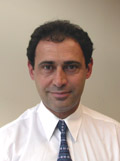
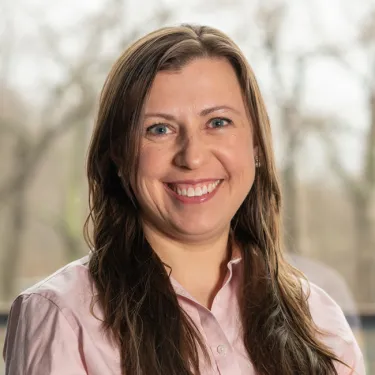
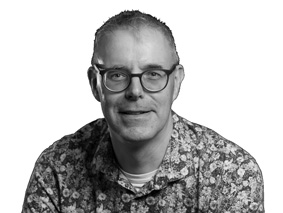
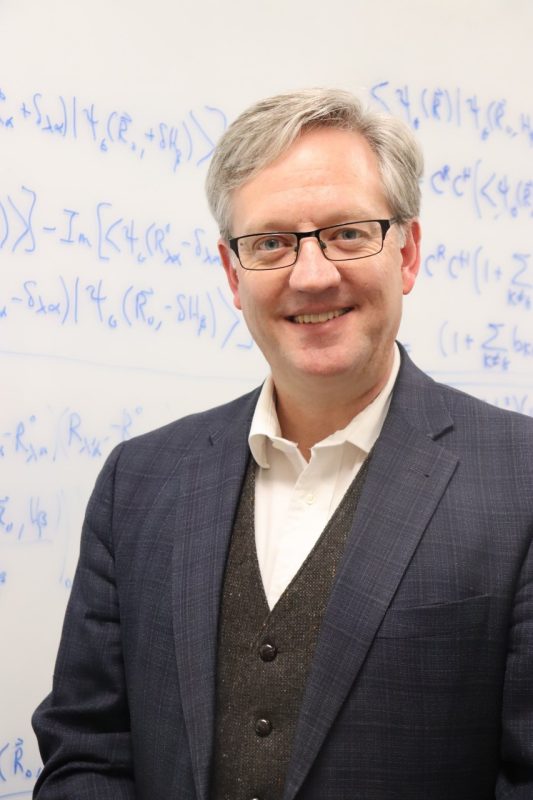
Professor Josep Sulé-Suso is an Associate Specialist and Professor in Oncology at Keele University's Institute for Science & Technology in Medicine, with clinical duties at the Royal Stoke University Hospital. His research focuses on cancer diagnostics using vibrational spectroscopy, FTIR microspectroscopy, and volatile organic compound analysis for early cancer detection. Research expertise includes cancer immunotherapy, translational research, and clinical trials. He has led projects on lung cancer diagnosis through breath analysis and infrared spectroscopy funded by EPSRC, Diamond Light Source, and cancer charities. Professor Sulé-Suso serves on international advisory boards for spectroscopic conferences and has examined PhD theses across Europe. His team develops novel spectroscopic methods for single-cell cancer detection and treatment monitoring. Publications demonstrate consistent innovation in spectral pathology applications.
Prof. Ivo Leito is a prominent analytical chemistry professor at the University of Tartu's Faculty of Science and Technology. Renowned for his innovative flipped learning teaching methods, he emphasizes student engagement and accessibility, offering 24/7 support. His research focuses on acidity/basicity studies, chromatography optimization, and pKa measurement in diverse solvents. He leads the EACH Erasmus Mundus program, promoting global analytical chemistry education. Notably awarded the 2025 Faculty Teaching Award for his transformative pedagogy, he actively advises students on thesis development and bridges academia with industry through collaborative research. Education: Not explicitly detailed in text. Research interests span analytical chemistry fundamentals and applications, including environmental analysis, material science for cultural heritage, and educational methodology innovation. His work addresses challenges in non-aqueous solvent chemistry, ion-selective sensors, and superacid catalysis. Over 50 publications since 2021 reflect his contributions to spectroscopy, chromatography, and thermodynamic modeling. Scientific achievements include advancing unified pH scales, developing fluorinated derivatives for basicity studies, and creating novel derivatization reagents for amino compound analysis. His work intersects computational chemistry with experimental validation, emphasizing reproducibility and standardization in analytical measurements.
Jeff Terry is a Professor of Physics and Materials Science and Engineering at the Illinois Institute of Technology, serving as Vice President of Research. He holds dual affiliations with the Lewis College of Science and Letters and the Armour College of Engineering. Terry earned his B.S. in Chemistry from the University of Chicago (1990) and his Ph.D. in Chemical Physics from Stanford University (1997). His research focuses on energy systems, radioactive waste management, radiation damage mechanisms, and synchrotron radiation techniques. He previously worked at Los Alamos National Laboratory on projects like the Waste Isolation Pilot Plant (WIPP) and served as Scientific Director of the Advanced Test Reactor National Scientific User Facility. Research interests include biomaterials chemistry using synchrotron techniques, surface chemistry analysis, and electronic structure studies. His expertise spans electronic structure analysis, radiochemistry, and materials characterization. Terry’s work addresses challenges in energy storage, nuclear materials, and radiation effects. He has led interdisciplinary projects involving synchrotron-based experiments and advanced materials characterization tools. As VP of Research, he oversees institutional research initiatives and collaborations. His team develops novel materials for energy applications and investigates radiation damage in nuclear systems. Terry’s contributions to the field include advancements in X-ray photoelectron spectroscopy (XPS) methodology and data analysis. He is affiliated with the Center for Synchrotron Radiation Research and Instrumentation (CSRRI) and has participated in high-profile projects like the Versatile Test Reactor (VTR) initiative.
Pierre-Gilles Henry, PhD is an Associate Professor in the Department of Radiology at the University of Minnesota. His work focuses on advancing neuroimaging and magnetic resonance spectroscopy (MRS) techniques to study neurological disorders such as Friedreich ataxia (FA), Huntington disease (HD), and type 1 diabetes. He leads the Center for Magnetic Resonance Research (CMRR) and collaborates with global initiatives like ENIGMA-Ataxia and TRACK-FA to develop MRI biomarkers for neurodegenerative diseases. Key research areas include: Development of motion-corrected MRS protocols for brain and spinal cord studies Quantitative analysis of CNS structural and metabolic changes in FA and HD Application of deep learning for automated image segmentation (e.g., dentate nucleus in FA) Neurochemical profiling using 1H/13C MRS to understand disease mechanisms His recent work emphasizes: Tracking FA progression via spinal cord and brain MRI biomarkers Investigating glucose metabolism in diabetes-related neurological complications Standardizing neuroimaging protocols through multi-center collaborations He has contributed to over 80 peer-reviewed publications and holds leadership roles in professional organizations like the International Society for Magnetic Resonance in Medicine (ISMRM).
Eva Rose M. Balog is an Associate Professor in the Department of Chemistry at the University of New England. Her research focuses on protein biochemistry, biomaterials, and biophysics, with a particular emphasis on developing stimuli-responsive polymers for biosensor applications. She currently teaches chemistry and biochemistry courses and is on sabbatical. Dr. Balog’s work integrates electrochemical methods, computational modeling, and thermodynamic analysis to advance smart polymer systems capable of real-time environmental or biochemical monitoring. Her research interests include engineering elastin-like polymers (ELPs) for biosensors, investigating phase behavior of multistimuli-responsive materials, and optimizing temperature-responsive polymer surfaces. Recent studies explore insulin-binding peptides, interleukin-6 responsive biopolymers, and bacterial production systems for biomaterials. Dr. Balog’s interdisciplinary approach bridges biochemistry, materials science, and engineering to address challenges in biomedical diagnostics and environmental sensing. Her publications highlight advancements in ELP surface characterization, electrochemical tagging of polymers, and flow imaging microscopy techniques for high-throughput evaluation of self-assembling protein polymers. While no explicit awards are listed, her invited talks and collaborative proposals (e.g., EAGER grant on ELP-based biosensors) reflect recognition of her contributions to the field. Current work continues to explore the integration of redox mediators, voltage-driven polymer modifications, and programmable binding affinities in artificial matrices.
Marcel Swart is a Full Professor and ICREA Professor of Theoretical Chemistry at the University of Girona (UdG), affiliated with the Institute of Computational Chemistry and Catalysis (IQCC) and the Faculty of Science. He holds a PhD from the University of Groningen and completed postdoctoral research in Amsterdam. His research focuses on theoretical and computational chemistry, particularly transition-metal reactivity, catalysis, and spin-state effects in bioinorganic systems. He has led the IQCC as Director (2015–2023), served as Editor for Inorganica Chimica Acta , and pioneered software like the Amsterdam Modeling Suite (AMS) and MSXC system. Affiliations: IQCC, Department of Chemistry (UdG), and multiple editorial roles. Education: PhD in Theoretical Chemistry (Groningen, 2002), postdocs at University of Amsterdam. Research interests include computational catalysis , metal-oxo intermediates , spin-state effects , and method development . His work bridges theory and experiment, with applications to energy and environmental chemistry. Key contributions include the MSXC computational framework and studies on high-valent iron and copper systems. Awards: Fellow of the Royal Society of Chemistry (2015), Member of Academia Europaea (2019), MGMS Silver Jubilee Prize (2012). Swart has supervised numerous PhD students and collaborates globally on predictive computational chemistry for confined-space catalysis. His labs focus on open science practices, including reproducible data sharing and open-access publishing.
Wendy Meulebroeck is a Professor and post-doctoral researcher at the Faculty of Engineering, Vrije Universiteit Brussel (VUB). She leads the 'optical spectroscopy' research unit under B-PHOT Brussels Photonics, chaired by Prof. Hugo Thienpont. Her work focuses on three core areas: bio photonics for healthcare and animal model replacement, food safety, and archaeometry. She holds a PhD in Applied Sciences (2004) and a degree in Electrotechnical Engineering with Photonics from VUB (1998). Education: PhD in Applied Sciences, Vrije Universiteit Brussel (2004) Electrotechnical Engineering (Photonics), VUB (1998) Mathematics-Sciences, Royal Athenaeum Deurne (1993) Research Interests: Wendy’s research integrates photonics across interdisciplinary fields. Her bio photonics work aims to develop non-animal testing models, while food safety projects focus on optical sorting and quality control. Archaeometry involves spectroscopic techniques for cultural heritage preservation. She coordinates projects like the liver-on-a-chip system (FWOTM1150) and photonics innovation (IOF3019). Recent Contributions: Publications span tunable light sources, SERS sensors, and opto-acousto-fluidic chips. Her work bridges lab-scale innovations with industrial applications, emphasizing reproducibility and practical implementation. Grants & Collaborations: Active in EU-funded projects (e.g., HERC65, HERC55), leading interdisciplinary teams. Collaborations include institutions like the Royal Belgian Institute of Natural Sciences and industry partners for photonics applications. Labs/Teams: Part of B-PHOT’s Optical Spectroscopy unit and the GEAR initiative driving photonics innovation. Her lab develops portable optical systems for in situ cultural heritage analysis and biomedical applications.
Cai Ytsma is a Research Fellow and Health Data Scientist specializing in Clinical Epidemiology at University College London. They also hold an Affiliate position at Mount Holyoke College in the United States since September 2019 and serve as a Collaborator on the NASA VERITAS Science Team since June 2023. Ms. Ytsma's research spans multiple interdisciplinary domains with a focus on: Machine learning applications in health data analysis Electronic health records (EHR) and phenotyping for genetic associations Analytical spectrometry including Laser-Induced Breakdown Spectroscopy (LIBS), X-ray fluorescence, and absorption Planetary geology and data analysis for space missions Statistical data science and software engineering for data curation and analysis Ms. Ytsma's recent publications demonstrate a strong interdisciplinary approach, bridging health data science with planetary science. Their work shows expertise in developing computational frameworks for disease phenotyping in large datasets like the UK Biobank while simultaneously advancing analytical techniques for geological and planetary materials. A notable trend is the application of machine learning across both medical and geological domains, particularly in improving accuracy of spectroscopic measurements and disease prediction models. While specific scientific awards are not mentioned in the available information, Ms. Ytsma's work has gained significant attention, with publications picked up by numerous news outlets and cited across various platforms. Ms. Ytsma actively mentors students across disciplines in data science principles despite not having formal teaching responsibilities. They founded Cai Consulting in September 2019, providing data science consultation for diverse research projects. As a Collaborator on the NASA VERITAS Science Team (2023-2026), they contribute to planetary science missions, particularly in calibration and data verification for Venus exploration.
Brian Cullum is a Professor and Chair of the Department of Chemistry & Biochemistry at the University of Maryland, Baltimore County (UMBC). He holds a Ph.D. in Chemistry from the University of South Carolina (1998) and a B.S. in Chemistry from Frostburg State University (1994). Previously, he conducted post-doctoral research at Oak Ridge National Laboratory (1999). Research Focus: Development of advanced optical and spectroscopic tools for biomedical and environmental sensing at both nano- and macro-scales. Labs: Cullum Lab specializes in THORS (Thermally-induced Optical Reflection of Sound), SERS (Surface Enhanced Raman Scattering) nano-imaging, intracellular sensors, and defense-oriented chemical detection. Recent research emphasizes real-time clinical diagnostics for cancer and nanoscale cellular monitoring . His work spans implantable sensors for single-cell analysis to macro-scale spectroscopic techniques. Publications highlight interdisciplinary applications in synthetic bone materials, kidney stone dissolution, and gamma-ray sensing nanocomposites. Scientific Honors: 2017 FACSS Innovation Award Fellow of SPIE (2014) 2004 Eli Lilly Analytical Academic Award 2003 R&D 100 Award Promising Analytical Chemist Award (2003–2005) Teaching: Courses in analytical chemistry, instrumental methods, and advanced spectroscopy (CHEM 300, 461, 662, etc.).
Raheleh Ravanfar serves as an Assistant Professor in the Department of Chemistry and Biochemistry at Texas Tech University, where she established the Ravanfar Research Group in August 2023. Her interdisciplinary program bridges biochemistry, biophysics, and materials science to investigate protein mechanisms and develop disease-targeted solutions. Education: Ph.D. in Chemistry, Cornell University (2019) M.S. in Chemistry, Ball State University (2016) M.S. in Chemistry, Shiraz University (2012) B.S. in Chemistry, Shiraz University (2009) Research Interests: The Ravanfar Research Group pioneers work in bioinorganic chemistry (metal-protein interactions), soft matter chemistry (biomaterials design), spectroscopy (protein conformational analysis), and biology (disease mechanisms). Current projects focus on enzyme engineering for enhanced stability, development of amino acid crystal-based drug delivery systems, and structural analysis of viral proteins. This integrated approach enables breakthroughs in antiviral strategies, targeted cancer therapies, and functional food formulations. Publication Trends: Analysis of 15 recent articles (2019-2024) reveals three dominant trajectories: (1) Protein stability mechanisms (cytochrome P450, SARS-CoV-2 protease), (2) Novel biomaterials for drug delivery (amino acid crystals, peptide hydrogels), and (3) Food science applications (vitamin stabilization, protein processing). Methodologically, spectroscopic techniques dominate 68% of studies, while interdisciplinary collaboration spans chemistry, biology, and engineering disciplines. Scientific Awards: Cornell Technology Acceleration and Maturation (CTAM) Fund Award Deep Graduate Excellence Award "Think Like a Molecule" Award, American Chemical Society International Dairy Foods Association Award Turkiye Burslari Merit Scholarship Advising and Grants: Dr. Ravanfar mentors students in interdisciplinary protein research through the Ravanfar Research Group. While specific grant details aren't provided, her receipt of the CTAM Fund Award demonstrates success in securing translational research funding. Current work shows strong potential for commercialization in therapeutic delivery systems and enzyme stabilization technologies. Labs and Teams: The Ravanfar Research Group operates within Texas Tech's Chemistry and Biochemistry Department, utilizing advanced spectroscopy and protein characterization facilities. The team maintains active collaborations with Caltech (Harry B. Gray Group) and food science researchers, reflecting its commitment to cross-disciplinary innovation in protein science.
Josef Štěpánek is a Professor at the Institute of Physics, Charles University , with a focus on optical spectroscopy and biomolecular structural analysis . He has led projects on DNA-protein interactions , metal-nucleic acid binding , and nanophotonic biosensors . His work bridges experimental and computational approaches to study nucleic acid dynamics and modified oligonucleotides . Research Highlights : Analysis of vibrational stages in nucleic acids via Raman and absorption spectroscopy Development of statistical methods for physico-chemical property extraction Design of optical measurement systems for surface-enhanced spectroscopy Article Trends reflect his expertise in nucleic acid conformational changes , porphyrin interactions , and SERS/SPR biosensor applications . Collaborations span institutions in Paris , Stockholm , and Moscow , with long-term stays at labs like BioMoCeTi and Laboratoire de Physicochimie Biomoléculaire et Cellulaire. Grants include leadership in projects such as Nanobiophotonics for future health care (GACR) and Nucleic Acid Regulatory Sequences (GACR), advancing plasmonic nanostructures and gene expression regulation .
Dr. Mark Biesinger serves as the Director of Surface Science Western (Western University), Canada's leading surface analysis and materials characterization facility, and holds the position of Adjunct Research Professor in the Department of Chemistry. With over 30 years of experience operating and maintaining XPS, SEM/EDX, optical microscopes, and SIMS instruments, he is internationally recognized as an expert in X-ray photoelectron spectroscopy (XPS). Dr. Biesinger has authored or co-authored over 90 peer-reviewed publications, including numerous seminal works that have significantly advanced XPS methodology and data interpretation techniques, particularly for transition metals. His recent research (2023-2025) focuses on resolving persistent challenges in XPS analysis such as peak fitting errors, oxygen spectra interpretation, and chemical state analysis of low-Z elements. He maintains the widely-used X-ray Photoelectron Spectroscopy (XPS) Reference Pages, a comprehensive resource for researchers worldwide. His work bridges fundamental surface science with practical applications in corrosion, mineral processing, and biomedical materials. Dr. Biesinger has received prestigious recognition including the 2025 UKSAF Vickerman Prize, the 2025 Chemistry Research Excellence Award from Western University, and the 2022 American Vacuum Society Peter M.A. Sherwood Mid-Career Professional Award. He has been listed among Stanford's Top 2% Scientists since 2018. As Secretary-Treasurer for the Surface Science Division of the Chemical Institute of Canada, Dr. Biesinger actively contributes to the scientific community. He currently collaborates with Natural Resources Canada (CanmetMINING) on research projects related to temperature effects on collector performance for lithium ore flotation, demonstrating his commitment to applied research with industrial relevance.
Giampaolo Barone is a Full Professor (CHEM-03/A) at the University of Palermo within the Biological, Chemical and Pharmaceutical Sciences and Technologies school. His office is located at Viale delle Scienze, Building 17, 90128 Palermo, where he holds office hours on Wednesdays from 3:00 PM to 5:00 PM. His teaching responsibilities include General Chemistry (3 CFU) for Prevention Techniques in the Environment and Workplace, General and Inorganic Chemistry (8 CFU) for Pharmaceutical Chemistry and Technology, Inorganic Chemistry (6 CFU) for Chemistry, Inorganic Chemistry with Laboratory (10 CFU) for Chemistry, and Chemistry for Elementary and Kindergarten Schools (4 CFU). Professor Barone's research focuses on bioinorganic chemistry, particularly the interaction of metal complexes with DNA structures. His work spans from fundamental studies of DNA binding mechanisms to applications in anticancer drug development. He employs both experimental techniques (spectroscopy, fluorescence titration) and computational methods to investigate how metal complexes interact with DNA, especially G-quadruplex structures that play crucial roles in gene regulation and cancer pathways. His research demonstrates consistent productivity with numerous publications each year across high-impact journals in chemistry, biochemistry, and pharmacology. Analysis of his recent publications (2024-2025) reveals several key research trends: 1) Development of metal-based compounds (particularly copper, nickel, and ruthenium complexes) as anticancer agents targeting DNA structures; 2) Investigation of G-quadruplex DNA stabilization and its implications for oncogene regulation; 3) Creation of novel sensors for environmental and biological applications; 4) Exploration of marine biomolecules for therapeutic uses; and 5) Methodological improvements in measuring DNA binding constants. Throughout his career, Professor Barone has supervised numerous graduate students across Chemistry, Pharmaceutical Chemistry, and Biological Sciences programs. His edited theses cover diverse topics including DNA-metal complex interactions, spectroscopic studies, synthesis of bioactive compounds, and applications in medical diagnostics. His research has significant implications for developing new anticancer therapies, environmental monitoring tools, and fundamental understanding of biomolecular interactions.
William Clarke is a Research Fellow at the University of Oxford , affiliated with the Nuffield Department of Clinical Neurosciences and the Wellcome Centre for Integrative Neuroimaging (WIN). His work focuses on developing advanced magnetic resonance spectroscopy (MRS) methodologies for neurochemical quantification and cell-type-specific microstructure mapping in the human brain. He has established the FSL-MRS analysis package and other open-source tools as key resources for the MRS community, cofounding the educational platform MRSHub . Prior to his current role, Clarke contributed to the UK7T Network and conducted doctoral research on cardiovascular MRS. His recent research explores applications in 7 Tesla neurochemical profiling Chronic disease biomarkers (ME/CFS, long COVID) Neuroplasticity monitoring Pharmacological neurochemical effects Developmental neuroimaging with a focus on open science frameworks. Scientific Awards : Wellcome Career Development Award He leads the WIN spectroscopy group and collaborates with the Physiological Neuroimaging Group and UK7T Network, emphasizing multi-site protocol harmonization.
Daniel Crawford is a University Distinguished Professor and Ethyl Chair of Chemistry at Virginia Tech's College of Science, Department of Chemistry. He serves as Director of The Molecular Sciences Software Institute (MolSSI) and Deputy Editor of the Journal of Physical Chemistry A. His academic background includes a B.S. from Duke University (1992), Ph.D. from University of Georgia (1996), and postdoctoral research at University of Texas (1996-2000). His research focuses on developing advanced quantum chemical methods, particularly many-body techniques like coupled cluster theory and perturbation theory. Key areas include: Computational approaches for chiroptical properties (optical rotation, circular dichroism) Reduced-scaling methods for excited states and response properties Photochemical reactions of radical species High-performance computing implementations Development of the PSI4 quantum chemistry software suite His recent publications demonstrate consistent focus on methodological advancements in coupled cluster theory, spectroscopic simulation techniques, and computational software infrastructure, with emerging interests in machine learning applications and FAIR data principles. Honors and Awards: Cottrell STAR Award (2023) Fellow of the American Chemical Society (2015) 2024 SCHEV Outstanding Faculty Award Dirac Medal, WATOC (2010) NSF CAREER Award (2002) Dreyfus New Faculty Award (2000) Multiple teaching awards including Jimmy Viers Teaching Award and VT Teaching Excellence He leads the Crawford research group and directs the Molecular Sciences Software Institute, which develops sustainable software infrastructure for the computational molecular sciences community.