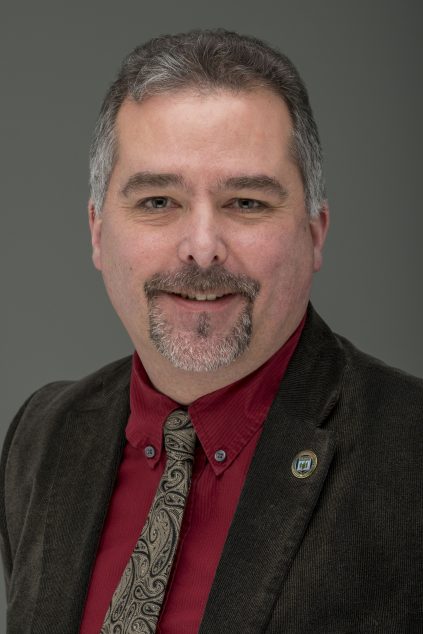
Dr. Iain Smellie is a Lecturer in the School of Chemistry at the University of St Andrews, specializing in chemistry education. His role focuses on teaching practical chemistry techniques to undergraduate students across all levels and developing new laboratory courses and experiments. His pedagogical research interests include creating accessible laboratory experiences, chemical education methodologies, and spectroscopic analysis techniques. He has developed innovative teaching experiments such as photocycloaddition reactions in NMR tubes and natural dye-based invisible ink systems. Recent publications reflect his commitment to chemical education, featuring practical experiments for undergraduate laboratories that emphasize spectroscopy, crystallography, and color chemistry. His work integrates fundamental chemical principles with hands-on learning experiences.
R. (Roan) Fraser, PhD is a Lecturer in Practical Organic Chemistry at the University of Groningen's Faculty of Science and Engineering, affiliated with the Department of Chemistry. He contributes to undergraduate laboratory education and conducts research in organic and inorganic chemistry, computational methods, and spectroscopic analysis. His work emphasizes practical synthetic techniques and catalytic mechanisms. Research interests include developing novel synthetic methodologies, computational modeling of chemical systems, and applications of NMR spectroscopy. He has published in the Journal of Chemical Education and European Journal of Inorganic Chemistry , focusing on undergraduate laboratory innovations and iridium-based catalytic systems. Fraser is part of the Education & Lab Team Chemistry at the University of Groningen and teaches courses like Practical Skills in Organic Chemistry. His research collaborations involve studies on hyperpolarization transfer catalysts and amino acid interactions.
Dr. Ellery Ingall is a Professor in the School of Earth & Atmospheric Sciences at Georgia Institute of Technology, part of the College of Sciences. His research focuses on astrobiology, atmospheric chemistry, biogeochemistry, and geochemical processes in extreme environments. He holds a Ph.D. in Geology from Yale University (1991), M.S. from University of Utah (1985), and B.S. from UC Santa Barbara (1981). His work explores microbial habitability in hypersaline lakes, biosignature preservation in evaporitic systems, and iron solubility dynamics in aerosols and marine environments. Key projects include studies of Western Australian transient lakes as Mars analogues, Arctic atmospheric chlorine chemistry, and zinc incorporation in Antarctic diatoms. Ingall has contributed to NASA-funded initiatives like the Oceans Across Space and Time collaboration with Indigenous Australian groups. His lab develops novel techniques like electrodialysis for isolating organic molecules from brines and aerosols. Awarded the 2009 Sigma Xi Best Faculty Paper Award at Georgia Tech, his research bridges geochemistry, microbiology, and planetary science. He advises students on topics ranging from marine dissolved organic phosphorus to trace metal cycling in ocean sediments. Ongoing projects include subsurface sampling technologies for ocean worlds and investigating microbial metabolism in polyextreme environments. Labs/Teams: ES&T Building rooms 2125 (Lab) and 2130 (Office). Collaborates with synchrotron facilities and field sites in Antarctica, Arctic, and Australia.
Amanda Langørgen is a **Research Fellow** at the University of Oslo's Department of Physics , affiliated with the **Centre for Materials Science and Nanotechnology (SMN)** and the **Solid-state Physics and Quantum Technology** research group. She holds a Master's in Nanotechnology from NTNU (2015-2020). Her work focuses on defects in gallium oxide (Ga2O3), combining experimental techniques like deep-level transient spectroscopy and computational methods for semiconductor analysis. She collaborates on projects such as GO2DEVICE, exploring Ga2O3 thin films for electronic devices. Research interests include semiconductor physics, defect engineering, and material characterization. Her recent publications (2022–2024) analyze defects in β- and κ-Ga2O3 using advanced spectroscopic methods. She contributes to the development of two-dimensional electron gas devices through defect-level insights. No scientific awards are explicitly mentioned. She is part of the Faculty of Mathematics and Natural Sciences and conducts research at the Kristen Nygaards hus campus in Oslo.
Professor Antonin Vlcek is a Professor of Inorganic Chemistry at Queen Mary University of London, affiliated with the School of Physical and Chemical Sciences. He leads research in the Centre for Chemical Research and the Centre for Experimental and Applied Physics. His work focuses on photophysics, photochemistry, electron transfer, and ultrafast spectroscopy of transition metal complexes, with applications in energy conversion and protein dynamics. Research Interests: - Photophysics and photochemistry of transition metal complexes - Electron/hole transfer in proteins and materials - Ultrafast spectroscopic methods (e.g., femtosecond stimulated Raman) - Energy conversion mechanisms in metalloproteins and synthetic systems Key Projects: - Structural Dynamics And Photoinduced Electron Transfer (EPSRC Grant, £649,756, 2018–2022): Explored light-driven electron transfer in transition metal complexes using advanced spectroscopic techniques. Publications Highlight: Recent studies include real-time tracking of metal-metal bond formation in iridium complexes, tryptophan-mediated electron transfer in azurin proteins, and solvent-dependent dynamics of rhenium complexes.
Professor Paola Borri is a full Professor and Head of the Molecular Biosciences Division at Cardiff University's School of Biosciences. Her research focuses on biophotonics at the interface of life and physical sciences, with a primary emphasis on developing next-generation optical microscopy techniques. She leads projects such as the EU-funded MUSIQ consortium, advancing label-free imaging methods using Coherent Raman Scattering (CRS) and plasmonic sensing with metallic nanoparticles. Her lab's innovations include quantitative optical extinction microscopy, interferometric tracking of nanoparticles, and background-free four-wave mixing microscopy. Currently, a fully funded PhD scholarship is available in her lab investigating ZEB1's role in neural stem cells. Collaborations include the School of Physics and Astronomy, and her work spans interdisciplinary applications in nanotechnology, biomedical imaging, and materials science. Education: Advanced degrees in Physics/Physical Chemistry (not explicitly detailed in text). Affiliations: Cardiff University, EU MUSIQ consortium, international collaborations in photonics and nanobiology. Research interests include developing optical methods for single-nanoparticle analysis, plasmonic biosensors, and quantitative morphometric analysis. Key achievements include advancements in coherent anti-Stokes Raman scattering (CARS) microscopy, four-wave mixing interferometry, and label-free cellular imaging. Her lab's techniques have been applied to study lipid domains, nanoparticle-cell interactions, and biophysical properties of biological membranes. The group also explores quantum dot applications and ultrafast carrier dynamics in semiconductor systems. Publications highlight innovations in nanoparticle tracking, melanin nanoparticle analysis, and hybrid plasmonic structures for single-molecule detection. Her work bridges fundamental physics with biomedical applications, emphasizing interdisciplinary collaboration. Grants include EU funding and partnerships with industry for plasmonic sensor development. Lab activities involve PhD and postdoctoral training, with a focus on mentoring researchers in optical microscopy, nanotechnology, and biophysical analysis. The Molecular Biosciences Division hosts cutting-edge facilities for correlative light-electron microscopy and advanced spectroscopic imaging.
Lex Kemper is an Assistant Professor of Physics at the NC State College of Sciences, specializing in applying quantum computing to solve complex problems in condensed matter physics. His work focuses on advancing quantum simulation techniques, studying quantum materials like cuprate superconductors, and developing noise-resilient quantum algorithms. He has contributed to theoretical frameworks for understanding electron interactions, quasiparticle dynamics, and the optimization of quantum circuits. His research bridges quantum computing, condensed matter physics, and theoretical chemistry, with applications in quantum machine learning and fault-tolerant quantum systems. Key research interests include quantum state preparation, error mitigation in quantum simulations, and the classification of dynamical systems. He has published extensively on topics such as eigenvector continuation, barren plateaus in quantum circuits, and the simulation of strongly correlated systems using the Fermi-Hubbard model. His work often involves collaborations with experimental physicists to validate theoretical models with advanced spectroscopic techniques like RIXS and ARPES. Notable contributions include frameworks for efficient ground-state preparation, denoising response functions, and the development of geometric quantum machine learning algorithms. His research aligns with the broader goals of leveraging quantum computing to tackle unresolved challenges in condensed matter physics and materials science.
Maria Helguera is an Adjunct Professor in the Department of Electrical and Computer Engineering at the Hajim School of Engineering & Applied Sciences, University of Rochester. Her research focuses on biomedical imaging technologies, including ultrasound characterization, image registration algorithms, and biomechanical modeling of vascular systems. She has contributed to advancements in lung nodule tracking, abdominal aortic aneurysm severity assessment, and brain atrophy detection in Alzheimer's disease. Her work spans multiple interdisciplinary areas: medical imaging (e.g., CT/MRI fusion, quantitative ultrasound), material science (edible coatings, collagen analysis), and optical engineering (diffraction-based sensors, coherence elastography). Key themes include developing automated methods for clinical image analysis and translating engineering principles to biomedical applications. Publications reflect a strong emphasis on translational research, with applications in cancer monitoring, vascular disease modeling, and food preservation. Though no awards are explicitly listed, her prolific output (over 40 publications since 1990) indicates sustained academic contribution. Advising and grant details are not provided in available materials.
Elon Ison is a Professor in the Department of Chemistry at North Carolina State University. His research focuses on developing novel organometallic complexes for catalysis, particularly in catalytic oxidation reactions and green chemistry applications. He holds a B.S. from Kean University, a Ph.D. from the University of Florida, and a postdoctoral fellowship from Purdue University. His work integrates synthetic, mechanistic, and computational approaches, utilizing techniques such as NMR spectroscopy, stopped-flow kinetics, and density functional theory calculations. Ison leads the Ison Group, which explores organometallic mechanisms and catalytic oxidations, emphasizing sustainable methodologies. Key research areas include frustrated Lewis pairs, rhenium-based catalysts, and the design of bioconjugation systems. His publications span over two decades, addressing topics like oxorhenium complexes, hydrosilylation, and CO insertion mechanisms. Ison has been involved in REU programs fostering undergraduate research at the interface of computation and experimentation. His contributions bridge fundamental inorganic chemistry with practical catalytic applications. Education: B.S. Chemistry, Kean University (1999) Ph.D. Chemistry, University of Florida (2004) Postdoctoral Fellow, Purdue University (2006) Research Highlights: Development of oxorhenium(V) catalysts for selective oxidation reactions. Studies on transition metal oxos as components of frustrated Lewis pairs. Design of green chemical processes using organometallic mediators. Grants & Programs: REU Site: Integrated Computational and Experimental (ICE) Research Experiences for Undergraduates. CAREER: Rational Design of Green Catalysts for Chemical Oxidations. His lab emphasizes interdisciplinary training, combining synthetic organic/inorganic chemistry with advanced analytical techniques. Current projects explore novel ligand systems to enhance catalytic efficiency and sustainability.
Marion Martin is an Associate Teaching Professor and co-Director of Undergraduate Programs in the Department of Chemistry at North Carolina State University. They are affiliated with the College of Sciences and hold offices in Fox Hall 250. Their research focuses on chemistry education innovation, materials science, and surface chemistry, with a particular interest in automated feedback systems for student learning and structure-property relationships in introductory chemistry education. Education history includes a BS and MSc in Chemistry from Furman University (2000–2001), a PhD in Physical Chemistry from Stanford University (2007), and postdoctoral research in Materials Science at Caltech (2009). Their work bridges educational technology and traditional chemistry research, addressing both pedagogical advancements and material characterization challenges. Publications emphasize curriculum development in group projects, AI-driven assessment tools, and surface analysis of self-assembled monolayers. They are a key member of the Department of Chemistry’s leadership, contributing to undergraduate program coordination and academic advising.
David Bryce is a Full Professor in the Department of Chemistry and Biomolecular Sciences at the University of Ottawa, Canada. His research focuses on advancing solid-state nuclear magnetic resonance (NMR) spectroscopy to study chemical bonding in materials, with an emphasis on non-covalent interactions such as halogen bonds, pnictogen bonds, and chalcogen bonds. He leads the Bryce Lab, which specializes in NMR crystallography, quantum chemistry, and mechanochemical synthesis. His work bridges fundamental research with applications in materials characterization and biochemistry. Professor Bryce's research interests include developing novel NMR methods for studying low-frequency quadrupolar nuclei, exploring the role of halogen bonding in supramolecular systems, and applying mechanochemistry for rapid crystal engineering. His lab has developed software tools like QUEST and EFGShield to aid in spectral analysis and quantum chemical calculations. Notable contributions include defining the halogen bond via NMR techniques and being elected a Fellow of the Royal Society of Canada in 2022. His lab collaborates internationally, and he mentors a team of graduate students, postdoctoral fellows, and undergraduates. Recent work includes studies on Zeeman-perturbed NQR spectroscopy, NMR crystallography of pharmaceutical solvatomorphs, and the quantification of halogen bond strength in solids.
Terri Lovell is an Assistant Professor in the Department of Chemistry and Biomolecular Sciences at the University of Ottawa, part of the Faculty of Science. Her research focuses on designing fluorophores for biological applications, including super-resolution microscopy and single-molecule imaging. She holds a PhD in Organic Chemistry from the University of Oregon and completed a postdoctoral fellowship in super-resolution microscopy at McGill University. Education: PhD in Chemistry, University of Oregon (2016-2020) NSERC Postdoctoral Fellow, McGill University (2020-2024) MSc in Polymer Science, University of Oregon (2015-2016) BSc in Chemistry, Memorial University of Newfoundland (2011-2015) Research Interests: Dr. Lovell develops fluorophores with enhanced photostability, designs novel fluorescent scaffolds (e.g., nanohoops), and establishes methods for analyzing protein dynamics at the single-molecule level. Her work bridges organic synthesis, computational modeling, and microscopy to advance biological imaging techniques. Recent Work Trends: Her publications emphasize fluorophore design for viral RNA analysis (e.g., SARS-CoV-2), photoprotection strategies for cyanine dyes, and biocompatible nanohoops for live-cell imaging. These studies address critical challenges in high-resolution microscopy and biomedical diagnostics. Awards: Natural Sciences and Engineering Research Council PostDoctoral Fellow Award (2021) Knight Campus Transitioning Scholar Fellowship (2020) Qalipu Mi’kmaq First Nation Band Post-Secondary Support (2015) Lab & Team: The Lovell Lab at the University of Ottawa focuses on advancing fluorophore technology and microscopy methods. Current projects include developing probes for thick-tissue imaging and improving signal-to-background ratios in super-resolution setups. Students and postdocs in the lab work on synthesis, computational modeling, and microscopy applications.
Prof. Martin Suhm is a Professor of Physical Chemistry at Georg-August-Universität Göttingen since 1997, affiliated with the Institute for Physical Chemistry. He holds a Dr. sc. nat. from ETH Zurich and conducted postdoctoral research at JILA (USA) and ETH Zurich. His research focuses on intermolecular interactions, particularly hydrogen bonding in molecular clusters, using vibrational spectroscopy (IR/Raman) to study systems like water, alcohols, and peptides in the gas phase. Key contributions include benchmarking quantum chemical methods, exploring dispersion forces, and understanding molecular aggregation. He coordinates the DFG graduate school on spectroscopy and molecular dynamics, and serves on editorial and award committees. His lab uses supersonic jet expansions to isolate clusters, enabling precise experimental data for computational validation. Education: 1985: Diploma in Chemistry, University of Karlsruhe (TH) 1986: DAAD-funded research at ANU Canberra 1990: Dr. sc. nat., ETH Zurich 1995: Habilitation (Physical Chemistry), ETH Zurich Research Interests: Experimental and theoretical studies of hydrogen bonds, molecular aggregation, vibrational spectroscopy, and quantum chemistry benchmarking. His work bridges gas-phase experimental methods with computational models, emphasizing benchmark datasets for weak interactions. Notable projects include the HyDRA challenge for computational vibrational spectroscopy and studies on chirality recognition in organic molecules. Awards & Grants: Member of selection committees for Humboldt Foundation Research Awards and Swiss Chemical Society grants. Coordinator of DFG graduate school (since 2002). Extensive funding via collaborative research initiatives. Labs/Teams: Operates advanced FTIR and Raman spectroscopy facilities for molecular cluster analysis, leading a research group focused on intermolecular forces and spectroscopic techniques.
David Neivandt is a Professor at the Graduate School of Biomedical Science and Engineering at the University of Maine. His research focuses on interfacial phenomena in biological and industrial systems, utilizing advanced spectroscopic techniques like Sum Frequency Spectroscopy (SFS) and Atomic Force Microscopy (AFM). B.Sc. (Hons), University of Melbourne Ph.D., University of Melbourne Dr. Neivandt’s work examines how surface-active molecules such as lipids and polyelectrolytes alter interface properties, with applications in biomedical engineering, pulp and paper industries, and membrane biophysics. His research combines experimental and theoretical approaches to characterize interfacial structures at molecular resolution. His recent publications highlight studies on protein secretion mechanisms, cellulose-lipid interactions, and sensor development. Collaborative projects span lipid bilayer dynamics, laser-induced material structuring, and adhesion phenomena in composites. He mentors graduate students including Nick Carter and contributes to science education outreach initiatives.
Galain Williams is a Research Fellow in the Department of Microbiology at the Monash Biomedicine Discovery Institute, Monash University. His research focuses on understanding bacterial conjugation mechanisms, particularly how bacteria share DNA via plasmids. He works in Professor Dena Lyras's laboratory, investigating horizontal gene transfer processes relevant to antibiotic resistance and bacterial pathogenesis. Education: Not explicitly stated in provided texts. Research Interests: Dr. Williams specializes in Horizontal Gene Transfer (HGT), bacterial genetics, and the molecular mechanisms underlying bacterial pathogenesis. His work explores how plasmids facilitate genetic exchange between pathogens, with applications to combating antibiotic resistance. Key areas include conjugation dynamics, toxin regulation in Clostridioides difficile , and virulence factor modulation in pathogens like Pasteurella multocida . Research Trends: Recent publications highlight investigations into carbapenem-resistant bacteria, Gram staining alternatives using spectroscopy, and the role of endolysins in pathogen control. His work bridges microbiology with clinical applications, contributing to UN Sustainable Development Goals related to health and innovation. Labs & Collaborations: Active in the Lyras Lab at Monash, collaborating with institutions in Australia and internationally. His research integrates genomic analysis, molecular biology, and spectroscopic techniques.