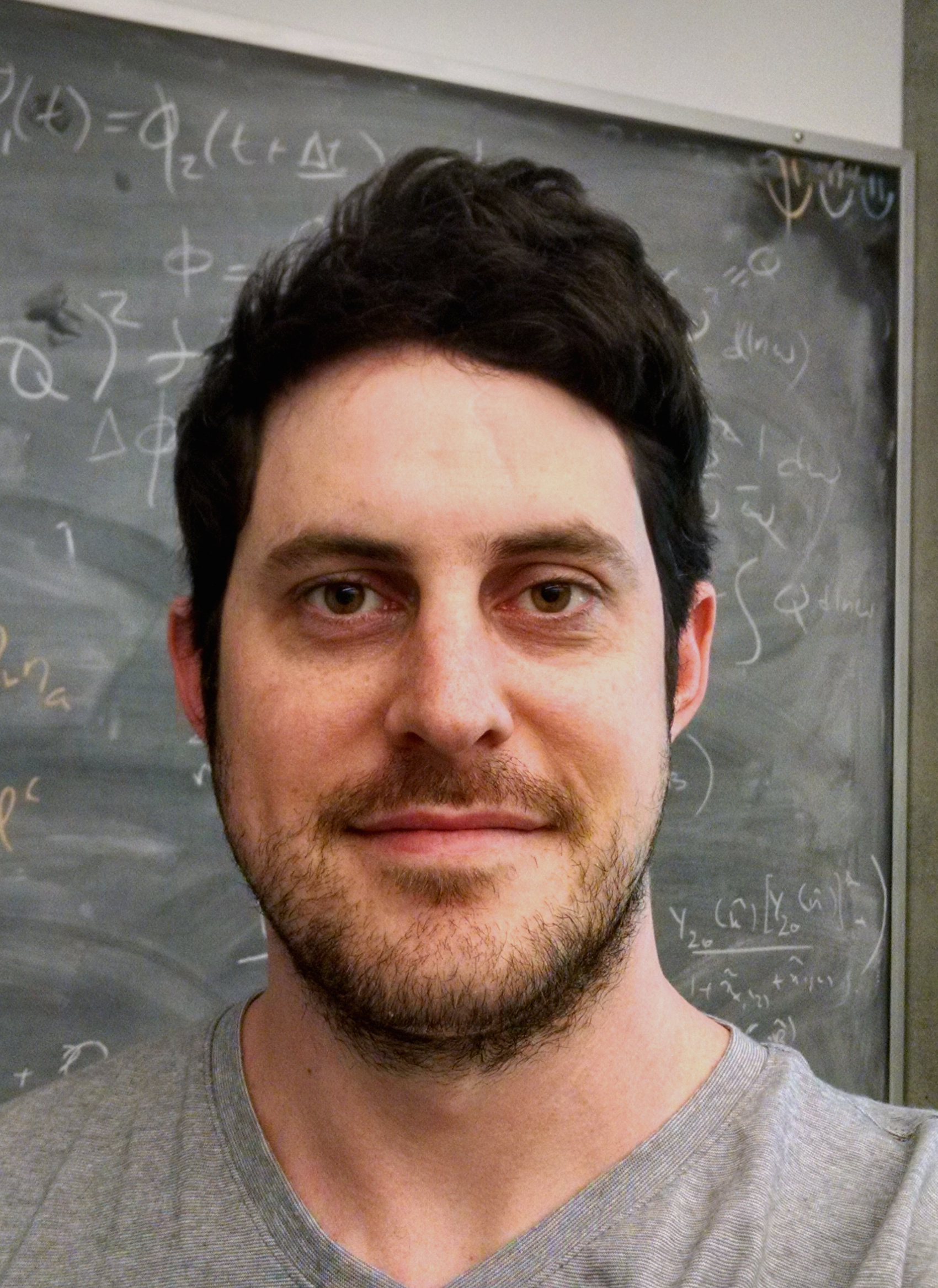
Matthew Giesler is a postdoctoral scholar in the TAPIR group at the California Institute of Technology (Caltech), specializing in computational and theoretical astrophysics. His research focuses on numerical relativity, particularly using the Spectral Einstein Code (SpEC) as part of the Simulating eXtreme Spacetimes (SXS) collaboration to study black holes and gravitational waves. He contributes to large-scale simulations of binary black hole mergers and neutron star collisions, emphasizing high-precision modeling and waveform analysis. His work involves advancing numerical methods like discontinuous Galerkin techniques and investigating topics such as black hole ringdown overtones, small mass-ratio corrections, and gravitational wave parameter estimation. Giesler collaborates extensively with international teams including LIGO, Virgo, and KAGRA to analyze observational data from gravitational wave detectors. Key projects include the SXS Collaboration's catalogs of binary black hole simulations and studies of extreme mass ratio systems. His research bridges theoretical predictions with observational data, contributing to tests of general relativity and cosmological parameter constraints. Despite no listed formal awards, his contributions to gravitational wave astronomy are highlighted through high-impact publications and collaborative efforts in multi-messenger astrophysics. His work supports the development of SpECTRE, a multi-physics simulation framework, and informs future gravitational wave detectors' data analysis methods.