

Prof. Dr. Ahmet Tutar is a faculty member in the Department of Chemistry at Sakarya University . His academic activities include teaching courses such as Organic Chemistry I/II , Organic Synthesis Design , and Stereochemistry , alongside supervising numerous master's theses in organic synthesis and humic substance applications. Research Interests: Focus on bromination reactions , BODIPY dye synthesis , humic/fulvic acid characterization , computational chemistry , and pharmaceutical applications of organic compounds. Key Article Trends: Recent publications emphasize photobromination methods , metal-organic frameworks , and biological activity of brominated derivatives , with keywords spanning organic synthesis , biochemistry , and environmental chemistry . Thesis Supervision: Guided 35+ master's theses (2007-2013) on topics like synthesis of brominated indan derivatives , humic acid extraction , and photobromination of terpenes .
جستوجوی استاد و پژوهشگر
استاد راهنما، استاد دانشگاه یا پژوهشگر مناسب برای مسیر پژوهشیتان را پیدا کنید و با او ارتباط بگیرید.
نمایش ۳۱-۴۵ از ۹٬۰۱۴ استاد راهنما
اطلاعات این پروفایلها از صفحات عمومی دانشگاهها جمعآوری شده و ممکن است بهروز نباشد.
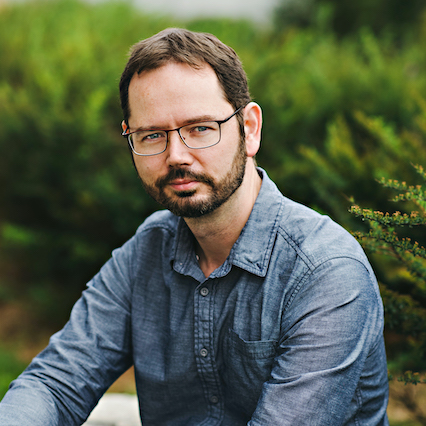
Mark Crowleyمشاهده پروفایل
دانشیار
- Reinforcement Learning
- Deep Learning
- Manifold Learning
- +۱۲ مورد دیگر
Mark Crowley is an Associate Professor in the Department of Electrical and Computer Engineering at the University of Waterloo, with a cross-appointment in the Cheriton School of Computer Science. He is a member of the Waterloo Artificial Intelligence Institute (WAII) and the Waterloo Institute for Complexity and Innovation (WICI), and serves as National Secretary of the Canadian Artificial Intelligence Association (CAIAC). His educational background includes a Ph.D. and M.Sc. in Computer Science from the University of British Columbia, where he worked in the Laboratory for Computational Intelligence, and a B.A. in Computer Science from York University. He completed a postdoctoral fellowship at Oregon State University working with Tom Dietterich's machine learning group. Crowley's research focuses on developing dependable and transparent algorithms to augment human decision-making in complex domains with multiple agents, spatial structure, or uncertainty. His work spans Reinforcement Learning , Deep Learning , Ensemble Methods , and Manifold Learning . He frequently collaborates with researchers in applied fields including Computational Sustainability, Sustainable Forest Management, Autonomous Driving, Medical Imaging, and Material Design. His research is motivated by both theoretical opportunities and real-world challenges such as forest fire management, automotive applications, and medical imaging. His recent publications demonstrate a strong focus on addressing challenges in reinforcement learning, particularly around observation costs, multi-agent systems, and causal representation learning. His work on ChemGymRL provides a significant contribution to digital chemistry and material design through reinforcement learning frameworks. The textbook Elements of Dimensionality Reduction and Manifold Learning represents a major contribution to the theoretical foundations of machine learning. Crowley actively supervises graduate students, with recent thesis completions including Shayan Shirahmadi Gale Bagi (PhD, Feb 2025) and Oleksandra Nahorna (MASc, Dec 2024). His lab, UWECEML (Waterloo ECE Machine Learning Lab), focuses on developing new algorithms at the intersection of Machine Learning, Optimization, and Probabilistic Modeling. He teaches courses including ECE 457C (Reinforcement Learning), ECE 657A (Data & Knowledge Modelling & Analysis), and ECE 457B (Fundamentals of Computational Intelligence). His blog Computationally Thinking explores AI, machine learning, and the societal impact of these technologies.
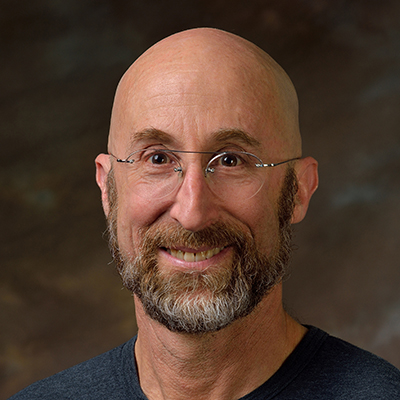
Lyle Ungar is a Professor at the Department of Computer and Information Science at the University of Pennsylvania . He is affiliated with multiple graduate groups, including Genomics and Computational Biology in the School of Medicine , Operations, Information and Decisions in the Wharton School , and Psychology in the School of Arts and Sciences . His research focuses on explainable machine learning , deep learning , and natural language processing for psychology and medical research , analyzing social media and sensor data to understand well-being, empathy, and stress. His work spans bioinformatics , applied economics , and group decision-making . Recent publications examine LLM-based tutoring , cross-cultural translation , and AI in palliative care , showing trends in reinforcement learning , mobile health , and health data analytics . He has contributed to Google Scholar , PubMed , and DBLP with over 15 papers since 2023. Scientific Awards : 2019 Alan I. Leshner Leadership Institute Public Engagement Fellow His students include Vitoria Aquino Guardieiro , Yihao Li , and co-advised researchers like Shreya Havaldar with Eric Wong. He leads projects at interdisciplinary centers such as the Annenberg Public Policy Center , Center for Cognitive Neuroscience , and Institute for Translational Medicine .
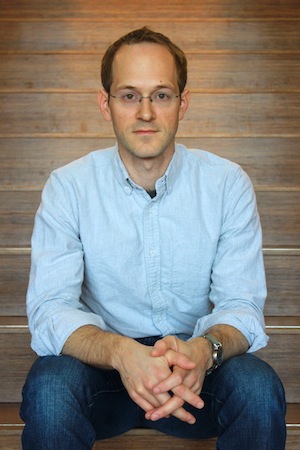
Andrew Childs is a Professor at the University of Maryland, affiliated with the Department of Computer Science and the Institute for Advanced Computer Studies (UMIACS). He serves as Director of the NSF Quantum Leap Challenge Institute for Robust Quantum Simulation (RQS) and is a Fellow at the Joint Center for Quantum Information and Computer Science (QuICS). His research focuses on quantum algorithms for simulating physical systems, algebraic problems, and quantum walk protocols, with applications in quantum computing and computational complexity. University of Maryland Institute for Advanced Computer Studies (UMIACS) Joint Center for Quantum Information and Computer Science (QuICS) NSF Quantum Leap Challenge Institute for Robust Quantum Simulation Childs' research spans quantum simulation, quantum Fourier transform, phase estimation, and Hamiltonian dynamics. He has developed techniques to reduce quantum computational resources for simulating quantum systems and explored limitations of quantum computers through hidden subgroup problems and non-unitary dynamics. His publications cover diverse areas including quantum walk optimization, Hamiltonian simulation methods, and applications to cryptography and condensed matter physics. Recent works address spatial search algorithms, product formulas for commutators, and quantum routing protocols. As an educator, Childs has taught courses on quantum algorithms and information processing at both the University of Maryland and University of Waterloo, with lecture notes and materials spanning multiple years. Contact: amchilds@umd.edu | Office: ATL 3359 | Affiliated with University of Maryland's quantum research institutes.
Mikhail (Misha) Belkin is a Professor at the Halicioglu Data Science Institute (HDSI) at the University of California San Diego , with an affiliated appointment in the Department of Computer Science and Engineering . He is also an Amazon Scholar , reflecting his impactful industry collaboration. Since January 2024, he has served as the Editor-in-Chief of the SIAM Journal on Mathematics of Data Science (SIMODS) . Research Interests: Belkin's research centers on the theoretical foundations of machine learning, particularly the mathematical understanding of modern deep learning. His work investigates interpolation , over-parameterization , and feature learning in neural networks. He is renowned for introducing the double descent risk curve, which reconciles classical bias-variance trade-offs with the success of overfitted models. His recent work identifies the Average Gradient Outer Product (AGOP) as a fundamental mechanism of feature learning, applicable across architectures like CNNs and transformers. Scientific Contributions and Trends: His recent publications, appearing in Science , PNAS , and NeurIPS , demonstrate a strong trend toward unifying theories of generalization and optimization in over-parameterized systems. He explores how interpolating models can be statistically optimal, how gradient descent converges in non-convex landscapes via the PL* condition, and how kernel methods can be enhanced to perform feature learning. ACM Fellow (2023) Editor-in-Chief, SIAM Journal on Mathematics of Data Science (2024–present) Advising and Grants: Belkin actively mentors students and collaborators such as Adityanarayanan Radhakrishnan , Daniel Beaglehole , and Chaoyue Liu , who are frequent co-authors. He is a Principal Investigator (PI) in the Collaboration on the Theoretical Foundations of Deep Learning , funded by the NSF and Simons Foundation. He is also an external collaborator with the Eric and Wendy Schmidt Center at the Broad Institute and part of the NSF-funded TILOS AI Institute . Laboratories and Teams: While not explicitly named, his research group at UCSD is deeply involved in theoretical machine learning, focusing on the intersection of statistics, optimization, and deep learning. His work often involves large-scale collaborations and is closely tied to initiatives like SIMODS and TILOS.
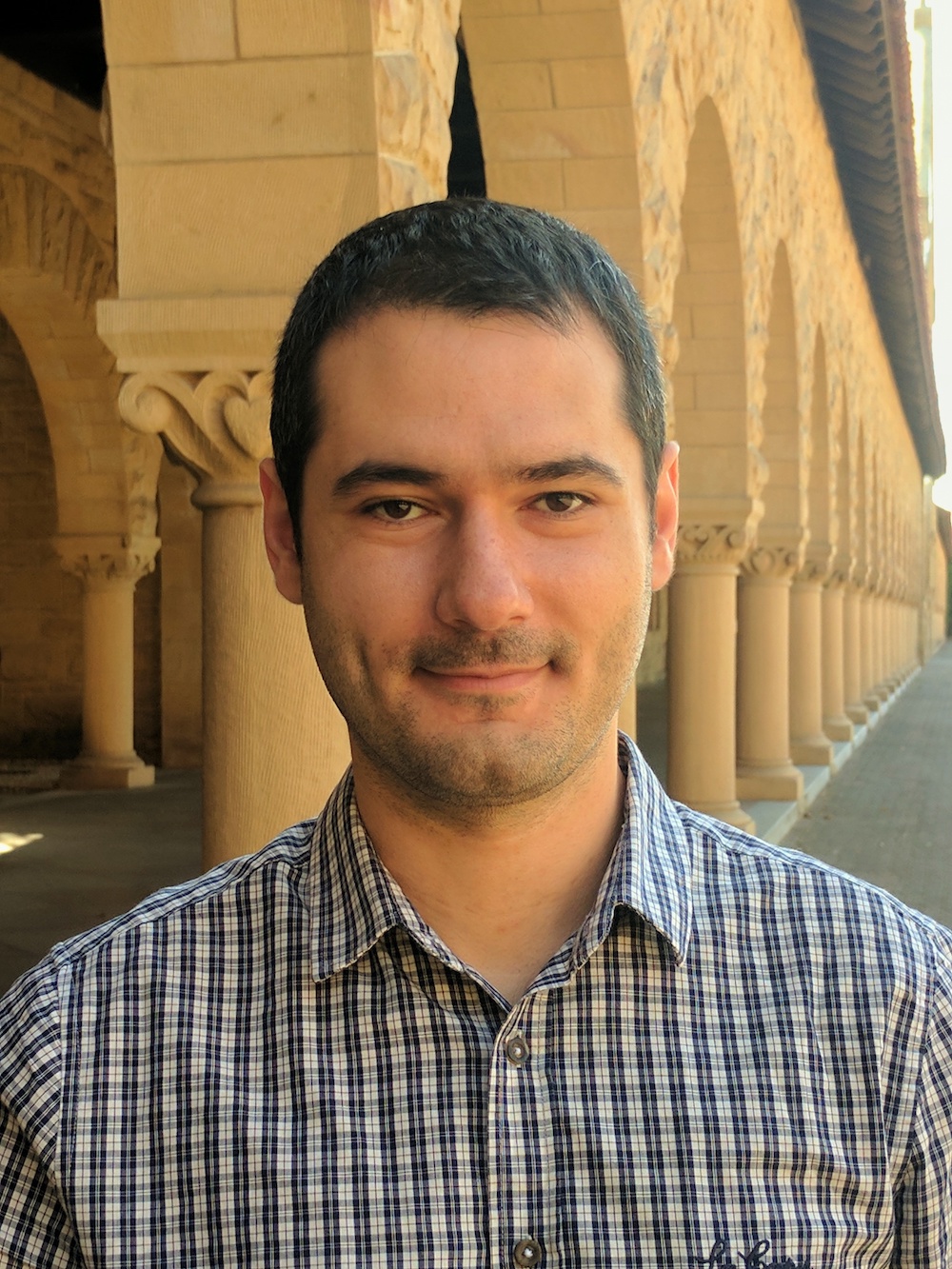
Murat Erdogduمشاهده پروفایل
استادیار
Murat Erdogdu is an Assistant Professor at the University of Toronto, jointly appointed in the Department of Computer Science and Department of Statistical Sciences . He is also a faculty member at the Vector Institute and holds the CIFAR Chair in Artificial Intelligence . PhD in Statistics, Stanford University (advised by Mohsen Bayati and Andrea Montanari) MSc in Computer Science, Stanford University BSc in Electrical Engineering and Mathematics, Bogazici University His research focuses on machine learning theory , high-dimensional statistics , and optimization . He has contributed to understanding gradient-based algorithms, sampling methods, and feature learning in structured data. Recent publications address problems in: Heavy-tailed sampling Mean-field Langevin dynamics Robust feature learning Minimax regression Stochastic optimization under infinite noise Scientific Awards: CIFAR Chair in Artificial Intelligence ICLR 2023 Spotlight NeurIPS 2019 & 2021 Spotlights He teaches graduate courses like STA 414/2104 (Statistical Methods for Machine Learning II) and STA 4273 (Modern Learning Theory) , emphasizing probabilistic modeling and theoretical analysis.

Kimon Fountoulakis is an Associate Professor at the University of Waterloo. His research focuses on Machine Learning on Graphs and Numerical Optimization, with a strong emphasis on algorithmic methods for graph-structured data. He holds a Ph.D. from The University of Edinburgh (2015), an M.Sc. from The University of Edinburgh (2010), and a B.Sc. from Athens University of Economics and Business (2009). His work spans theoretical foundations and practical applications in graph algorithms, optimization, and machine learning. Research interests include graph neural networks, local graph clustering algorithms, and algorithmic reasoning. His contributions address challenges in graph representation learning, message-passing architectures, and scalable optimization methods. Notable themes in his publications include improving counting abilities of vision-language models, analyzing graph convolutions, and developing flow-based clustering techniques with statistical guarantees. His work often bridges theory and practice, with applications in network analysis, pandemic containment strategies, and high-performance computing. While no specific grants or awards are listed, his research demonstrates significant contributions to graph-based machine learning and optimization. He maintains a research group at the University of Waterloo, with a focus on developing open-source tools and frameworks for graph algorithms. His lab’s work emphasizes local graph clustering methods and their scalability in real-world networks.
Zongyi Liمشاهده پروفایل
پژوهشگر ارشد
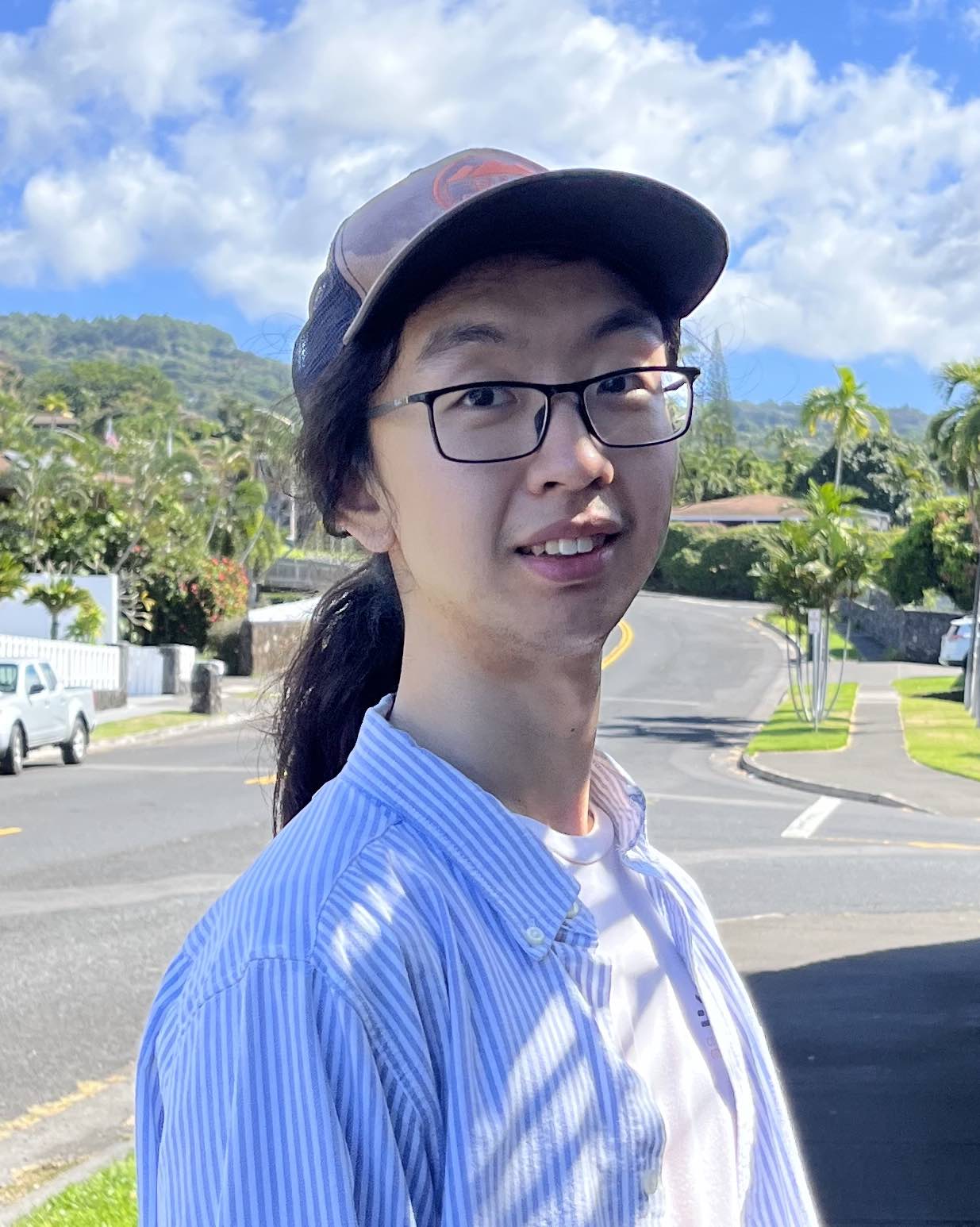
Zongyi Li is a Research Fellow at Massachusetts Institute of Technology , hosted by Kaiming He. They are currently pursuing a Ph.D. in Computing and Mathematical Sciences at Caltech (2019-2025), mentored by Anima Anandkumar and Andrew Stuart. Ph.D. candidate: Computing and Mathematical Sciences, Caltech (2019-2025) B.Sc. in Computer Science and Mathematics with a Jazz minor from Washington University in St. Louis (2015-2019) They focus on Neural Operators for learning solution operators in Partial Differential Equations (PDEs) , particularly in fluid mechanics and earth science . Their work models physical simulations with chaotic behaviors and complex geometries, showing applications in weather forecasting , carbon storage , and aerodynamics simulation . Publications emphasize resolution-invariant models , chaotic systems , and zero-shot super-resolution capabilities. Their research combines Fourier analysis , graph networks , and physics-informed loss functions to achieve state-of-the-art performance in PDE solving with up to 1000x speedup over traditional solvers. Fellowships: Kortschak Scholarship PIMCO Fellowship Amazon AI4Science Fellowship Nvidia Fellowship MIT Novo Nordisk AI Fellowship Code & Open-Source: Co-developer of the NeuralOperator library Implementations for Fourier Neural Operators , Graph Neural Operators , and Tensorized Neural Operators Media Recognition: Quanta Magazine MIT Tech Review NVIDIA Features Towards Data Science

Tengyu Maمشاهده پروفایل
استادیار
Tengyu Ma is an Assistant Professor of Computer Science at Stanford University. His research focuses on machine learning, deep learning, optimization, and theoretical computer science. He is particularly known for work on neural networks, reinforcement learning, and algorithmic guarantees in AI systems. His email is tengyuma@stanford.edu . Ma's research interests span foundational aspects of machine learning, including generalization theory, optimization algorithms, and the theoretical underpinnings of deep learning. He has contributed to areas such as self-play theorem provers, learning rate schedules, and robustness in low-light vision tasks. His work often bridges theoretical insights with practical algorithm design. His recent publications emphasize advancements in large language models (LLMs), theorem proving via self-play, and understanding training dynamics in deep networks. Despite prolific output, no specific scientific awards are explicitly mentioned in the provided texts. Ongoing work includes exploring in-context learning mechanisms, formal verification of AI systems, and efficient pretraining techniques. His research has implications for both theoretical understanding and real-world applications of AI.
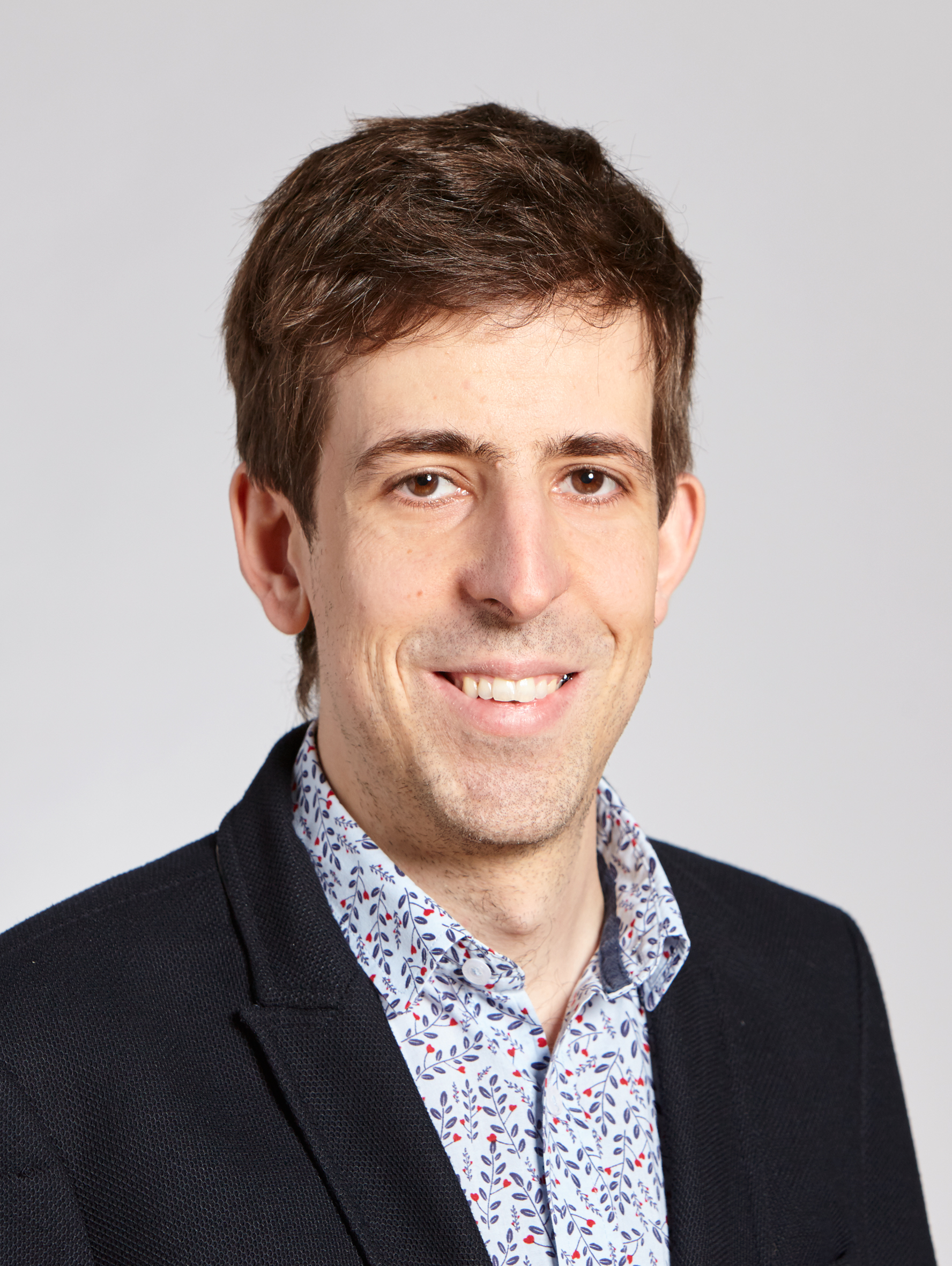
Afonso S. Bandeira is a Professor in the Department of Mathematics (D-MATH) at ETH Zurich, where he conducts research at the intersection of mathematics, statistics, and computer science. He maintains strong affiliations with several interdisciplinary research centers including the Institute For Operations Research (IFOR), the Max Planck ETH Center for Learning Systems, the ETH Foundations of Data Science, and the ETH AI Center, with a courtesy appointment at D-ITET. Bandeira actively teaches courses including Mathematics of Signals, Networks, and Learning, and Mathematics of Data Science. His research focuses on High Dimensional Probability, Random Matrices, Mathematical Statistics, Theoretical Computer Science, Combinatorics, and Mathematical Optimization. Bandeira's work often explores the theoretical foundations of data science, examining phase transitions in statistical problems, computational barriers, and the geometry of high-dimensional spaces. He maintains a research group blog called Randomstrasse101 that emphasizes open problems in his field. Analysis of his recent publications reveals a strong focus on matrix and tensor concentration inequalities, synchronization problems, nonconvex optimization landscapes, and computational-statistical tradeoffs in high-dimensional inference. His work bridges theoretical mathematics with practical applications in machine learning and data analysis, particularly examining where computational limitations arise in statistical problems. Bandeira actively mentors students and researchers, currently supervising several doctoral candidates including Daniil Dmitriev, Konstantin Donhauser, Anastasia Kireeva, Kevin Lucca, Chiara Meroni, Gil Kur, Petar Nizic-Nikolac, and Almut Roedder. He emphasizes that students working with him should participate in the DACO seminar and group meetings, and encourages prospective students to have completed his Mathematics of Signals, Networks, and Learning or Mathematics of Data Science courses. He leads a research group focused on the mathematics of data science, with regular group meetings and seminars. Bandeira has developed comprehensive lecture notes including 'A Tour Through the Mathematics of Signals, Learning, and Networks' (2025) and 'Mathematics of Machine Learning' (2021), and previously authored 'Ten Lectures and Forty-Two Open Problems in the Mathematics of Data Science' (2015).

Ali Mostafazadeh is a Professor at the Department of Mathematics, College of Sciences, Koç University. His research spans Mathematical Physics, focusing on Quantum Mechanics, Scattering Theory, and PT-Symmetry. He has made significant contributions to understanding non-Hermitian Hamiltonians, electromagnetic wave propagation, and geometric scattering phenomena. Education: PhD in Physics (1994) from The University of Texas, BA in Physics and Mathematics (1989) from Boğaziçi University His work explores the intersection of mathematics and physics, particularly through spectral singularities, transfer matrix methods, and nonlinear optical systems. Recent publications highlight advancements in broadband directional invisibility, exact Born approximations, and time-dependent Hilbert spaces in quantum systems. 2011 Outstanding Success Award 2007 TÜBİTAK Science Award 2006 Werner-von-Siemens Excellence Award 2001 TÜBA Outstanding Young Scientists Award 2001 Parlar Foundation Research Incentive Award
Connor Coleyمشاهده پروفایل
استادیار
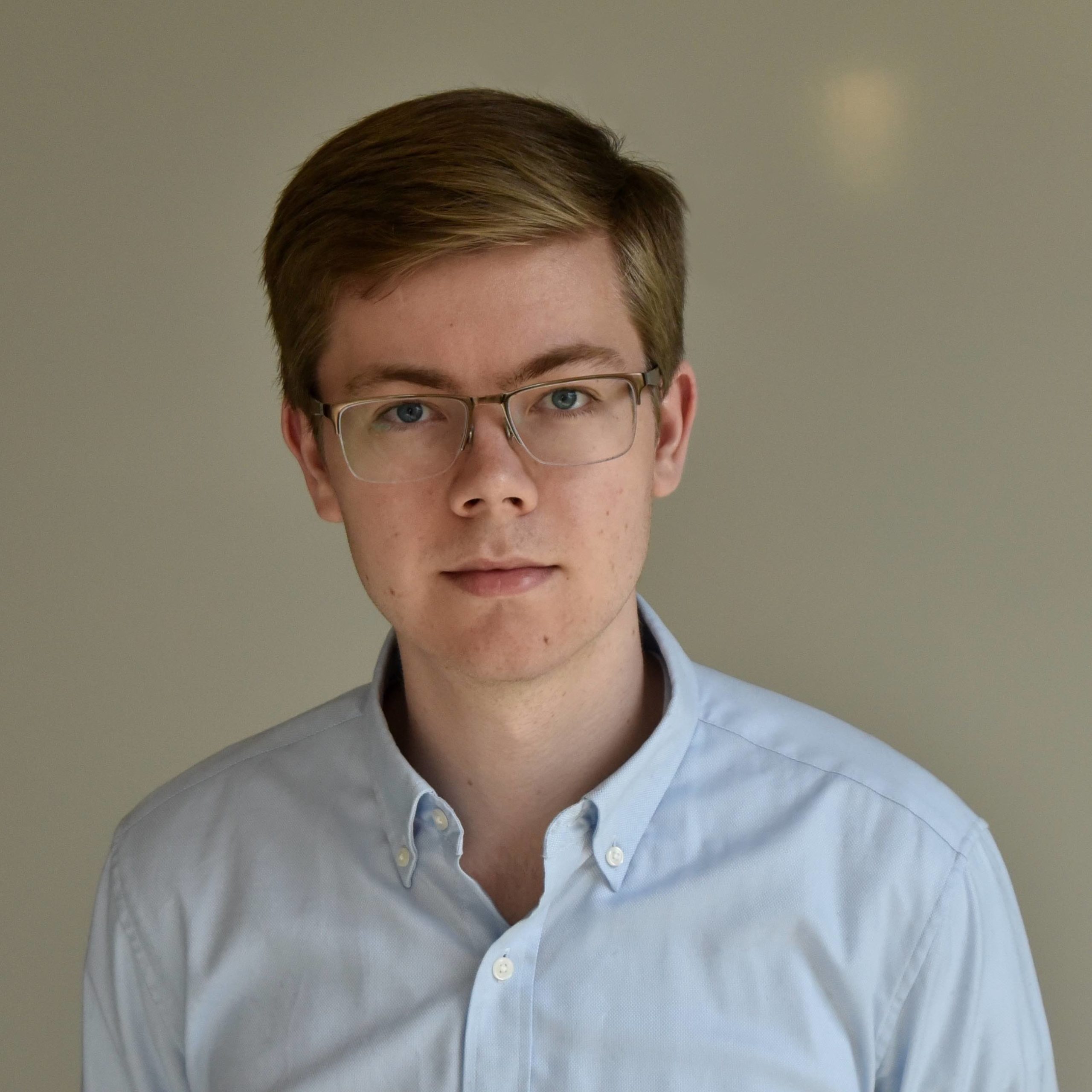
Connor Coley is the Henri Slezynger (1957) Career Development Assistant Professor at the Massachusetts Institute of Technology (MIT) School of Engineering. His research bridges chemistry and machine learning, focusing on autonomous molecular discovery, predictive chemistry, and laboratory automation. Education: Ph.D., MIT (2019) M.S.CEP., MIT (2016) B.S., Caltech (2014) Research Interests: Dr. Coley’s work centers on domain-informed machine learning for chemistry, computer-aided molecular design, and autonomous laboratories. Key themes include predictive modeling of chemical reactivity, optimization of synthesis pathways, and integration of AI with experimental data for drug discovery and materials science. Publications: His recent articles highlight advancements in AI-driven reaction prediction, molecular representation learning, and laboratory automation. Trends include applications of Bayesian optimization, contrastive learning, and diffusion models to chemical discovery. Scientific Awards: Camille Dreyfus Teacher-Scholar Award (2025) James W. Swan Outstanding Faculty (2025) Schmidt Futures AI2050 Early Career Fellow (2022) NSF CAREER Award (2021) Forbes 30 Under 30: Healthcare (2019) Software & Tools: He leads the open-source ASKCOS software suite for synthesis planning, adopted by 35,000+ chemists and deployed at 15+ pharmaceutical companies. His team also develops tools for metabolomics and molecular representation learning.

Sanjay Purushothamمشاهده پروفایل
استادیار
- Machine Learning
- Data Mining
- Optimization Theory
- +۵ مورد دیگر
Sanjay Purushotham is an Assistant Professor in the Department of Information Systems at the University of Maryland Baltimore County (UMBC), with a PhD in Electrical Engineering from the University of Southern California (USC) and a postdoctoral background in Computer Science at USC's Integrated Media Systems Center (IMSC). His research focuses on machine learning, data mining, and their applications in biomedical informatics, social network analysis, and multimedia data mining. Key contributions include survival analysis models using pseudo values and federated learning frameworks for healthcare data. He has received awards including the Best Paper Award at SIGSPATIAL 2014 and a Best Poster Runnerup at SCMLS 2016. Education: PhD in Electrical Engineering (USC), Postdoc in Computer Science (USC) His work spans interdisciplinary areas such as domain adaptation for remote sensing, thermal face translation, and interpretable neural networks for medical applications. Recent projects include federated survival analysis models and climate-informatics frameworks for cloud property retrieval. He teaches courses in artificial intelligence, healthcare informatics, and statistical learning at UMBC. Research highlights include developing MedFuseNet for multimodal medical question answering and VDAM for multi-sensor cloud data analysis. His work on fair survival analysis models addresses algorithmic bias in healthcare predictions. Current grants include a NSF CAREER award for trustworthy federated learning in computational healthcare.
Mengliang Zhang is an Associate Professor in the Department of Chemistry and Biochemistry at Ohio University, College of Arts and Sciences. He leads an interdisciplinary research group focused on mass spectrometry and chemometrics, with applications in forensic, food, agricultural, environmental, and material sciences. His lab develops innovative analytical strategies for detecting toxicants, characterizing nanomaterials, and profiling metabolites in botanicals and food systems. Ph.D., Chemistry, Ohio University, 2015 Dr. Zhang’s research integrates instrumentation, chemometrics, and computational tools to address complex analytical challenges. His group works on forensic fiber and ignitable liquid analysis, plant metabolomics, nanomaterial surface chemistry, and environmental toxicant monitoring. His work is highly interdisciplinary, bridging chemistry, data science, and real-world applications in forensics and public health. His recent publications demonstrate a strong trend in advancing ambient ionization mass spectrometry (especially DART-MS), chemometric modeling, and metabolite profiling across diverse matrices—from fire debris to broccoli microgreens. His work increasingly emphasizes automation, quantitation, and database development for botanical phytochemicals. Scientific honors include the MTSU Distinguished Research Award (Early Career), and his students have received prestigious awards such as the Goldwater Scholarship and multiple URECA recognitions. He is actively supported by federal grants from NSF, USDA, DOE, DOJ (NIJ), and FEMA. Dr. Zhang mentors a vibrant research team of graduate and undergraduate students, guiding them in publishing high-impact research and presenting at national conferences like ASMS, Pittcon, and AAFS. He has organized sessions at SciX and served on editorial boards of Journal of Forensic Sciences and Journal of AOAC INTERNATIONAL . His lab recently relocated to Ohio University in August 2024, equipped with advanced instrumentation including UHPLC-QTOF-MS and DART-MS systems.
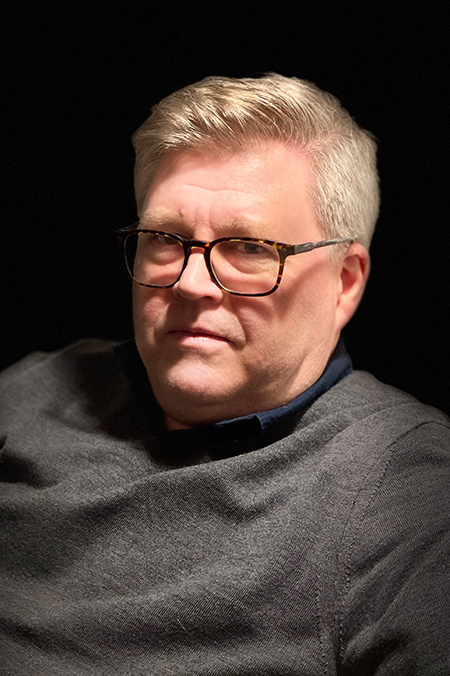
Ian Frigaard is a Professor in the Department of Mechanical Engineering at the University of British Columbia (UBC), affiliated with the Faculty of Applied Science. He also holds an appointment in the Department of Mathematics. His research group operates in UBC's Complex Fluids Lab, focusing on interdisciplinary studies combining mathematical, experimental, and computational approaches. Education: B.Sc. (University of Wales) M.Sc. (University of Oxford) D.Phil. (University of Oxford) C.Math. (Certificate in Mathematics) Research Interests: Professor Frigaard specializes in non-Newtonian fluid mechanics, particularly the mechanics of visco-plastic (yield stress) fluids. His work addresses industrial challenges in petroleum engineering, including well cementing, leakage prevention, and abandonment techniques related to GHG emission control and environmental protection. Research methodologies span theoretical modeling, experimental validation, and computational simulations. Publication Trends: Recent work (2021–2023) emphasizes bubble dynamics in complex fluids, displacement flows in annular geometries, wellbore integrity modeling, and stochastic risk assessment for oil/gas operations. Publications frequently appear in top-tier journals like the Journal of Fluid Mechanics and Journal of Non-Newtonian Fluid Mechanics . Awards & Honors: CSME Fluid Mechanics Medal (2024) Stanley G. Mason Award, Canadian Society of Rheology (2022) Killam Research Prize, UBC (2019) Academic Leadership: Leads a research group of 10+ graduate students and postdocs. Provides summer internships and collaborates extensively with the petroleum industry. Research is supported by industrial partnerships and institutional grants. Facilities: Conducts experiments in UBC's Complex Fluids Lab, equipped for advanced rheological measurements and flow visualization.