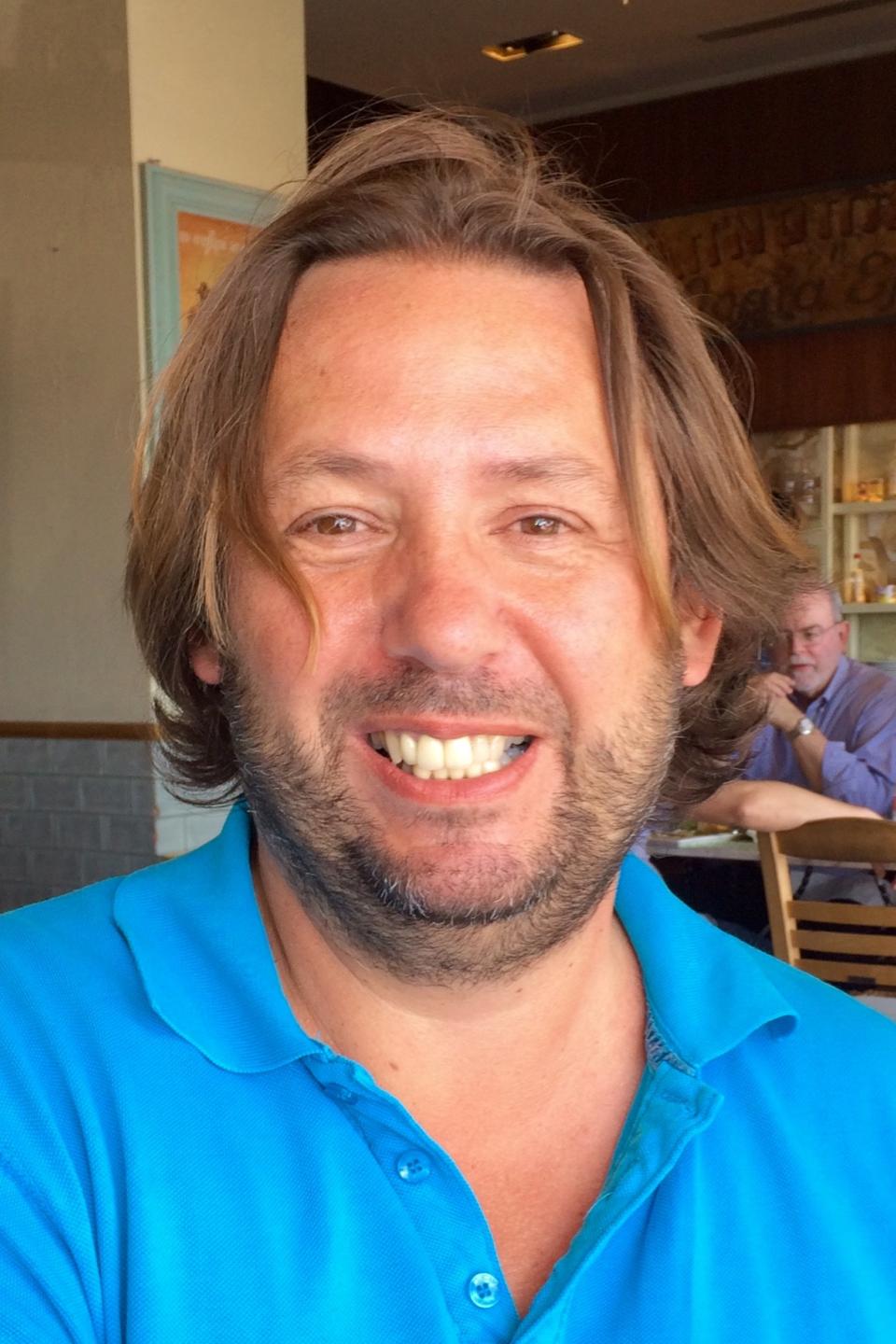
Leonardo Ricci is an Associate Professor at the Department of Physics, University of Trento , with a 28-year teaching career spanning 56 courses (31 in English) and extensive roles in the Interdepartmental Center for Mind/Brain Sciences - CIMEC (30% affiliation). His research bridges nonlinear dynamics , information theory , and neuroscience , focusing on chaos detection in time series and entropy analysis. Academic Career : From 1994 post-doc at Max-Planck-Institut to 2022 promotion to Associate Professor Teaching : Courses in Experimental Physics, Advanced Electronics, and Statistical Methods across Physics and Computer Science programs Ricci leads the NSE Lab (Nonlinear Systems and Electronics) , developing hardware/software systems for experimental research. His 2022 Entropy cover story on permutation entropy highlights his impact in information theory. Scientific Contributions : 20 patents (visibility measurement devices), collaborations with international researchers on complex systems Editorial Roles : Associate Editor for Chaos, Solitons & Fractals and Frontiers in Network Physiology
Mathieu Fontaine is an Associate Professor in Machine Listening at Télécom Paris , affiliated with the LTCI Lab within the IDS Department (Information, Data, Signal). His research focuses on machine listening for speech and audio signal processing. PhD in Informatics (2019), Lorraine University Master in Applied and Fundamental Mathematics (2015), Poitiers University BSc in Fundamental Mathematics (2013), Rennes University Fontaine's research spans speech enhancement , speaker separation , source localization , and music source separation using heavy-tailed probabilistic models and deep Bayesian networks , with applications in augmented reality . He has expertise in Python , signal processing , and machine learning (80% proficiency). His recent publications (2024) include work on diffusion models for speech synthesis , room acoustics estimation from 3D meshes , robust audio scene analysis , and direction-aware speech processing . Earlier publications (2022-2023) explore flow-based NMF , alpha-stable representations , and adaptive beamforming in multiparty environments. Fontaine collaborates with the S2A team and ADASP group at LTCI Lab. His work integrates probabilistic modeling with deep learning to address challenges in real-world audio processing, including reverberation, noise, and complex acoustic environments.
Markus Richter serves as Professor of Horticultural Plant Production and Production Technology at the Berlin University of Applied Sciences (BHT), within Department V - Life Sciences and Technology. His academic career combines extensive industry experience with scholarly research, focusing on the practical application of botanical knowledge to solve horticultural challenges. Since joining BHT in 2008, he has established himself as a specialist in ornamental plant cultivation technology and precision irrigation systems. Prof. Richter earned his foundational education as a Horticultural Engineer from the Technical University of Applied Sciences Berlin (1987-1990), followed by an MSc in Technology of Crop Protection from the University of Reading (1990-1991). He completed his doctorate (Dr. rer. hort) at Humboldt University of Berlin between 1996 and 2001. Prior to his academic appointment, he gained valuable industry experience as a test engineer at the Chamber of Agriculture Westphalia-Lippe (1991-2003), and later as Head of the Horticultural Research Center in Münster-Wolbeck (2003-2006) and Head of ornamental plant trials at GBZ Straelen/Cologne-Auweiler (2006-2007). His research interests center on ornamental plant cultivation , technology in horticulture , and irrigation systems , with a particular emphasis on developing sensor-based solutions for resource-efficient plant production. Prof. Richter has pioneered work in photogrammetric monitoring systems for irrigation management, with applications spanning both greenhouse and field production environments. His expertise bridges plant physiology, engineering, and practical horticulture, addressing critical challenges in water conservation and plant health monitoring. Analysis of his recent publications reveals a dominant focus on the PLANTSENS research initiative, which has evolved through multiple phases (2017-2023). This work demonstrates a consistent trajectory toward increasingly sophisticated multi-sensor systems for detecting plant water stress and automating irrigation. His research spans agricultural engineering, plant physiology, and computer vision, with applications in both ornamental and vegetable production systems. A secondary research thread examines nutrient management issues in specialty crops like Helleborus and Hydrangea. At BHT, Prof. Richter actively supervises student theses on topics including sensor systems for irrigation management, growth control of ornamental plants, and sustainable production methods. His research has been supported through multiple projects, including the PLANTSENS project (2017-2020), PlantSens II (2020-2023), and ongoing doctoral research on Helleborus cultivation. He serves on the Training Commission and Audit Committee, and acts as an academic advisor and officer for recognition of academic achievements.
Professor Thomas Huber is a distinguished academic at the Australian National University's Research School of Chemistry, where he was appointed Professor in 2013 after serving as an ARC Future Fellow (2010-2014). His career spans appointments at ETH-Zurich, ANU Supercomputer Facility, University of Queensland (Mathematics and Molecular Bioscience departments), and the Research School of Chemistry. Education: Diploma of Chemistry, Technical University Munich PhD, ETH-Zurich Huber's research focuses on structural bioinformatics and computational structural biology , developing innovative tools to determine 3D structures of biological macromolecules using sparse experimental data. His work targets understanding molecular interactions fundamental to life processes and pharmaceutical intervention. Key research areas include NMR spectroscopy, protein structure determination, genetically encoded non-canonical amino acids, and paramagnetic probes for distance measurements. Analysis of his recent publications (2022-2025) reveals dominant trends in protein engineering through genetic code expansion, fluorogenic labeling techniques, and advanced NMR methodologies for probing protein dynamics and ligand binding. His work bridges computational modeling with experimental structural biology, emphasizing cost-efficient solutions for macromolecular structure determination. Scientific Awards: ARC Future Fellow (2010-2014) Huber actively supervises research students and leads multiple collaborative projects including "Protein Structure and Dynamics by Electron/Nuclear Paramagnetic Resonance" and "Non-Canonical Amino Acids for Protein Analysis." His research is supported by significant grants from the Australian Research Council, focusing on protein characterization, drug discovery platforms, and advanced spectroscopy instrumentation. He leads the Huber Group within the Research School of Chemistry, collaborating extensively with researchers like Gottfried Otting and Christian Nitsche on protein analysis and therapeutic development.
Dr. Carolina Euan is a Lecturer in Statistics at the School of Mathematical Sciences, Lancaster University, with affiliations to the Data Science Institute and STOR-i Centre for Doctoral Training. Her research focuses on time series analysis, spatio-temporal modeling, and their applications in environmental data science and brain data analysis. School of Mathematical Sciences Data Science Institute STOR-i Centre for Doctoral Training Biostatistics Research Group Centre of Excellence in Environmental Data Science Her work spans multiple disciplines: Environmental Data Science: Marine heatwaves, solar irradiance modeling, particle number size distribution Brain Data Analysis: Neural connectivity, brain signal clustering, coherence-based inference Statistical Methodology: Spatio-temporal extremes, spectral estimation, functional data analysis Recent publications demonstrate expertise in: 2025: Neural connectivity modeling, functional data analysis, particle distribution 2024: Virtual collaboration frameworks, precipitation regime modeling, spectral estimation 2023: Brain signal clustering, source apportionment, directional wave spectra Supervision includes: Kajal Dodhia: STOR-i (extreme sea temperatures) Jordan Hood: Bayesian modeling (COVID prevalence) Carla Pinkney: STOR-i
Stephanie Werner is a Professor at the University of Oslo's Department of Geosciences and serves as Co-Centre Leader of the Centre for Planetary Habitability since 2023. She has held various significant positions including Director of the Norwegian Research School for Dynamics and Evolution of Earth and Planets (2016-2024) and Team Leader of Earth and Beyond/Comparative Planetology at the Center for Earth Evolution and Dynamics (2013-2023). Her educational background includes: Dr. rer. nat. (PhD) from Free University of Berlin, Germany (2005) with thesis: "Major Aspects of the Chronostratigraphy and Geologic Evolutionary History of Mars" Diplom in Geophysics from the University of Kiel, Germany (1999) Professor Werner's research focuses on comparative planetology, planetary dynamics, exoplanet systems, and planetary geophysics . Her work spans the formation and evolution of planets and planetary systems, cratering chronology and processes, remote sensing of Earth and planets, and potential field data interpretation. She has made significant contributions to understanding the geological evolution of Mars, lunar cratering chronology, and the dynamics of planetary systems. Her recent publication trends reveal a strong focus on cratering chronology across solar system bodies , with particular attention to the Moon, Mars, and outer solar system satellites. She has led important revisions to lunar cratering chronology models and has investigated impact rates on Jupiter's, Saturn's, and Uranus' moons. Another major theme is the study of exoplanets around K-dwarf stars , examining their composition and formation processes. Her work also includes significant contributions to Mars exploration , particularly through the Planetary Terrestrial Analogues Library project supporting the ExoMars mission. Professor Werner holds several prestigious appointments: Co-Lead, ESA - Ariel Science Team Norwegian representative and Co-I, ESA - PLATO Consortium Member of the European Space Agency's ExoMars Rover Science Operations Working Group Member of the ESA - NASA Mars Sample Return Science Planning Group EGU Division President of Planetary and Solar System Sciences (2017-2021) She has supervised numerous students through the Norwegian Research School for Dynamics and Evolution of Earth and Planets, which she directed from 2016-2024. Her research has been supported by multiple grants from the European Space Agency and Norwegian research councils, enabling participation in major space missions including ExoMars, PLATO, and Ariel. Professor Werner leads the Planetary Terrestrial Analogues Library (PTAL) project, which provides crucial support for Mars missions by creating a comprehensive database of terrestrial analogues for Martian environments. She also contributes to the Mars Missions Analogue Sample Library (MM ASL) and the CRATER CLOCK project focused on calibrating cratering chronometers for planetary evolution studies.
Dootika Vats is an Associate Professor in the Department of Mathematics & Statistics at Indian Institute of Technology Kanpur (IIT Kanpur). She earned her PhD in Statistics from the University of Minnesota, Twin-Cities, and her research focuses on advancing Monte Carlo and Bayesian computational methods, especially Markov chain Monte Carlo diagnostics. Education: PhD, Statistics, University of Minnesota, Twin-Cities, Feb 2017 MS, Statistics, University of Minnesota, Twin-Cities, Nov 2016 MS, Statistics, Rutgers University, New Brunswick, May 2012 BA (honors), Mathematics, University of Delhi, Lady Shri Ram College, May 2010 Research Interests: Her work lies at the intersection of computational statistics and Bayesian inference, with core emphases on: Markov chain Monte Carlo (MCMC) methodology Monte Carlo variance estimation and output analysis Bayesian computation and diagnostics Geometric ergodicity and convergence rates of MCMC algorithms Recent Publications Trend: Across her recent articles and preprints, Dr. Vats has consistently tackled open problems in MCMC output analysis, introducing new diagnostics, optimal batch-size selection, and visualization tools that directly impact practical Bayesian computation. Her contributions bridge theoretical rigor—such as proving strong consistency of spectral variance estimators—with immediately applicable software and graphical methods. Awards & Honors: Director’s Award, University of Minnesota School of Statistics, 2016 Graduate Research Partnership Program Fellowship, Summer 2016 Louise T. Dosdall Fellowship for Women in STEM, 2016–2017 School of Statistics Alumni Fellowship, 2015–2016 Martin–Buehler Fellowship in Statistics, Fall 2015 Bernard W. Lindgren Graduate Student Teaching Award, Spring 2014 Lynn Lin Fellowship in Statistics, Summer 2014 Teaching & Mentoring: At IIT Kanpur she continues to teach and mentor within the statistics curriculum. Earlier, at the University of Minnesota, she served as Instructor for STAT 3011 and as a teaching assistant across multiple undergraduate and graduate courses; at Rutgers University she was a part-time lecturer in calculus and pre-calculus. Labs & Collaboration: While no specific lab is named, her research is computational and collaborative; she has worked with James M. Flegal, Galin L. Jones, and other leading MCMC methodologists, and her Google Summer of Code participation demonstrates engagement with the open-source statistics community.
Niclas Jansson is a researcher at the PDC Center for High Performance Computing at KTH Royal Institute of Technology. He holds an M.S. in Computer Science (2008) and a Ph.D. in Numerical Analysis (2013) from KTH. His career spans roles such as postdoctoral researcher at RIKEN Advanced Institute for Computational Science (2013-2016) and visiting scientist at RIKEN (2018-2021), where he contributed to the Japanese exascale program Flagship 2020. A core focus of his research involves extreme-scale computing and numerical method development. He is a key developer of RIKEN's multiphysics framework CUBE , the HPC branch of FEniCS , and the spectral element flow solver Neko . His work is currently supported by a Swedish Research Council Starting Grant aimed at enhancing high-order spectral element methods for exascale fluid simulations. Niclas has published extensively on topics such as GPU acceleration , adaptive finite element methods , in situ visualization , and extreme-scale turbulence modeling . He also teaches Computational Fluid Dynamics (SG2212) at KTH.
Immo Trinks is Associate Professor (Privatdozent) at the University of Vienna and Head of the Vienna Institute for Archaeological Science . He coordinates a comprehensive teaching programme in archaeological prospection, archaeometry and scientific documentation, and leads large-scale geophysical projects across Europe. Education & qualifications: Dipl.-Geophys. (Diploma in Geophysics) PhD (awarded) Habilitation (Privatdozent, Austrian post-doctoral lecturing qualification) Research interests revolve around non-destructive mapping of buried archaeological landscapes . He specialises in ground-penetrating radar , magnetometry and multi-sensor robotic platforms , developing workflows that fuse high-resolution geophysical data with 3D archaeological interpretation. Coastal wetlands, Roman towns, Viking harbours and prehistoric pile dwellings serve as key study areas. Recent publications demonstrate a clear trend toward automated, large-coverage surveys and multi-method data fusion . Papers in 2022-2025 report motorised GPR arrays on snow-covered fields, semi-autonomous driverless systems, and integrated interpretation frameworks that combine magnetics, GPR and remote sensing to reveal Roman military compounds, Etruscan cities, Swedish war camps and Neolithic monumental landscapes. Scientific awards & honours: No specific awards are listed in the supplied text; however, his continuous funding and invited keynote contributions (e.g., ArchaeoProspection conference series) indicate international recognition. Teaching & student supervision: Regular courses: Introduction to Archaeological Prospection, Archaeometry, Magnetic Prospection, GPR Practical, Underwater Prospection, Human Evolution & Archaeological Science, LaTeX for Archaeologists Excursions: 2-day field schools at Alpine pile-dwelling sites and around Vienna Thesis seminars: continuous Master Thesis Topic Search & Exposé and final thesis colloquia every semester Labs & facilities: Trinks heads the Vienna Institute for Archaeological Science (VIAS), operating several motorized multi-channel GPR systems, high-resolution magnetometer arrays, electromagnetic induction sensors, underwater sonar and multi-spectral cameras. The institute maintains dedicated GIS/visualisation labs and field vehicles for pan-European surveys within the international ArchPro and Stonehenge Hidden Landscapes initiatives.
Caroline Margaux Gevaert serves as Associate Professor in the Department of Geo-information Processing at the University of Twente's Faculty of Geo-Information Science and Earth Observation (ITC), while also holding an appointment at the Digital Society Institute. Her academic career spans geospatial information systems, remote sensing, and the ethical applications of AI in geographical contexts. Dr. Gevaert earned her PhD in Informal Settlement Mapping with Unmanned Aerial Vehicles from the Faculty of Geo-Information Science and Earth Observation (ITC) in 2018, following Master's degrees in Geospatial Information Systems from Lund University (2014) and Remote Sensing from Universitat de Valencia (2013), and a Bachelor's in International Land and Water Management from Wageningen University & Research (2011). Her research focuses on the intersection of artificial intelligence and geospatial science, with particular emphasis on ethical dimensions of AI, algorithmic fairness in geo-intelligence workflows, and applications of machine learning for environmental monitoring. She has developed expertise in UAV applications for informal settlement mapping and flood vulnerability assessment, bridging technical innovation with societal impact. Analysis of her recent publications reveals a strong trend toward addressing ethical challenges in geospatial AI, with increasing focus on algorithmic fairness, explainable AI systems, and accountability frameworks. Her work demonstrates a consistent evolution from technical remote sensing applications toward socio-technical systems that consider both technological capabilities and societal implications. PhD Cum Laude (2018) Professor J.M. Tienstra Onderzoeksprijs 2020 Student Paper Competition Finalist (2017) Dr. Gevaert serves as Chair of De Jonge Akademie (2022-2027) and the International Society for Digital Earth (ISDE), while participating in the Frontier Technology Livestreaming Programme. Her external engagement includes consultancy for the World Bank and presentations on accountability in digital humanitarianism, demonstrating her commitment to applying geospatial intelligence for global development challenges. Her research activities center around geo-intelligence workflows, with particular focus on developing accountable and fair AI systems for spatial analysis. Current projects investigate causality frameworks for bias detection in flood vulnerability assessments and explainable workflows for ecological monitoring, positioning her at the forefront of ethical geospatial AI research.
Joachim Wambsganss is a Full Professor at the Faculty of Physics & Astronomy of the University of Heidelberg and serves as Director of the Astronomisches Rechen-Institut (ARI) and former Director of the Zentrum für Astronomie der Universität Heidelberg (ZAH) until 2015. Studied at Ruprecht-Karls-University Heidelberg, Ludwig-Maximilians-University Munich, and Princeton University Doctorate in 1990 with supervisors Peter Schneider and Rudolf Kippenhahn Research Interests: Extrasolar planets via microlensing Quasar studies and dark matter distribution Gravitational lensing techniques eScience and open-access astrophysical data His group has advanced microlensing planet detection and lensed quasar analysis. He led the German Astrophysical Virtual Observatory (GAVO) within the International Virtual Observatory Alliance and organized public outreach projects like the 70-lecture series "Uni(versum) für alle!". Publications span exoplanets, gravitational lensing, dark matter, and quasars, with major contributions in microlensing techniques and planetary system demographics.
Scott Diddams is the Robert H. Davis Endowed Chair and Professor of Electrical Engineering and Physics at the University of Colorado Boulder. He leads the Quantum Engineering Initiative in the College of Engineering and Applied Science. His research focuses on precision spectroscopy, quantum metrology, nonlinear optics, and ultrafast lasers, with pioneering contributions to optical frequency combs for applications in optical clocks, fundamental physics tests, and astronomy. He holds over 750 publications and has received prestigious awards including the Department of Commerce Gold Medal and PECASE. **Education**: PhD in Physics from the University of New Mexico (1996). Postdoctoral work at JILA, NIST, and CU Boulder. Former NIST Fellow and Group Leader. **Research Interests**: Frequency comb technology for astrophotonics and metrology Exoplanet detection via advanced spectroscopy Ultrafast laser systems and high-harmonic generation Quantum engineering and integrated photonics **Awards**: Distinguished Presidential Rank Award IEEE Rabi Award C.E.K. Mees Medal (OPTICA) **Grants & Labs**: Directs the Quantum Engineering Initiative and maintains active collaborations with NIST. His lab develops cutting-edge instrumentation for space science and precision measurement. **Current Projects**: Focuses on miniaturized Fabry-Pérot cavities, quantum-enhanced dual-comb spectroscopy, and exoplanet characterization via the GEMS survey.
Alain Hecq is a Full Professor in the department of QE Econometrics at the School of Business and Economics, Maastricht University. His research focuses on econometric methodologies, particularly in time series analysis, noncausal models, and financial econometrics. He has contributed significantly to the understanding of volatility dynamics, cryptocurrency markets, and inflation targeting regimes. His work often addresses policy-relevant questions in macroeconomics and financial markets. Key research interests include mixed causal-noncausal autoregressive models, volatility modeling with MARMA-GARCH frameworks, and the application of these techniques to real-world phenomena such as oil price bubbles and cryptocurrency volatility. He has also explored the credibility of central banking policies during crises, such as the Brazilian inflation-targeting regime during the pandemic. His recent work emphasizes methodological advancements in high-dimensional time series analysis, including spectral estimation, hierarchical regularizers for mixed-frequency data, and reduced-rank matrix autoregressive models. These contributions reflect a blend of theoretical rigor and practical applicability in addressing complex economic and financial problems. While no formal awards are listed, his extensive publication record and focus on cutting-edge econometric techniques underscore his scholarly impact. Advising and grant activities are not detailed in the provided information, but his research demonstrates sustained engagement with both academic and policy-oriented audiences.
Marinko Sarunic is an Adjunct Professor at the School of Engineering Science , Simon Fraser University . He holds a PhD in Biomedical Engineering from Duke University and has been recognized as a Michael Smith Foundation for Health Research Scholar . His research focuses on biomedical imaging , particularly optical coherence tomography (OCT) , microscopy , and low-coherence interferometry , with applications in diabetic retinopathy , Alzheimer’s disease , and age-related macular degeneration . Dr. Sarunic's work spans adaptive optics , deep learning , and sensorless OCT systems , emphasizing clinical translation and open-source software development (e.g., OCTAVA ). His Google Scholar publications highlight multimodal imaging , vascular heterogeneity analysis , and AI-driven diagnostics for retinal diseases. His contributions include the Michael Smith Foundation for Health Research Scholar award. Though not currently teaching courses, his collaborations and leadership in retinal imaging and medical device innovation are pivotal for advancing non-invasive diagnostics in neurodegenerative and diabetic conditions .
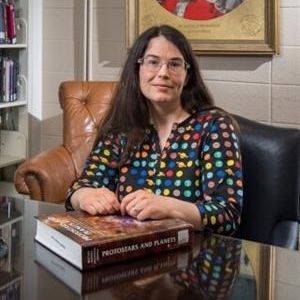
Sarah Dodson-Robinson is a Professor of Physics & Astronomy at the University of Delaware, part of the College of Arts & Sciences. She joined UD in 2014 and holds a Ph.D. from the University of California, Santa Cruz (2008) and a B.S. from Rochester Institute of Technology (2002). Her research focuses on observational and theoretical astrophysics, particularly planet formation mechanisms, exoplanet detection, and frequency-domain analysis of stellar activity. She develops advanced statistical methods to analyze time-series data from telescopes and spacecraft, addressing challenges like stellar variability in exoplanet searches. Her work spans protoplanetary disks, debris disks, and the interplay between planetary systems and their host stars. Notable contributions include studies on dust dynamics in disks, the role of magnetized turbulence in disk evolution, and the use of spectral line diagnostics to identify planetary signals. She collaborates with NASA missions and leads projects like the EXPRES Stellar Signals initiative, aiming to refine radial velocity techniques. Publications highlight her expertise in analyzing binary star systems, detecting Earth-mass exoplanets, and modeling giant planet formation. Her research bridges astrophysics and data science, with applications to upcoming NASA missions targeting exoplanet habitability.