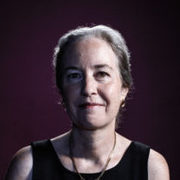
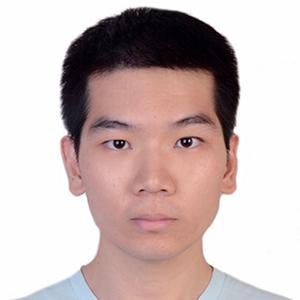
Chantal Stern is Professor and Department Chair at Boston University's College of Arts and Sciences, where she directs the Cognitive Neuroimaging Laboratory and Cognitive Neuroimaging Center. Her research uses fMRI to study memory formation, spatial navigation, and neurodegenerative conditions. Research examines neural mechanisms underlying visual/spatial information processing, memory encoding/retrieval dynamics, and cognitive changes in normal aging and dementia pathologies. Current projects investigate navigation systems, attentional networks, and computational models of reasoning. Publications demonstrate consistent methodological innovation in neuroimaging, particularly in mapping temporal aspects of navigation and developing predictive models integrating perceptual and abstract reasoning systems.
Dr. Judith Verstegen is an Assistant Professor in the Department of Human Geography and Spatial Planning at Utrecht University's Faculty of Geosciences. Her research focuses on geosimulation modeling and spatial optimization, with applications in urban planning, environmental vulnerability assessment, and policy analysis. She leads projects such as HEADS 4 Health (2023-2024), which integrates agent-based models into urban digital twins, and coordinates the GeoSIM research group. Her work emphasizes interdisciplinary collaboration, including projects analyzing linguistic diversity in South America and environmental threats to Amazonian indigenous lands. She is the Program Chair of the MSc Geographical Information Management and Applications (GIMA) program and serves as Editor-in-Chief of the Journal of Spatial Information Science. Notable contributions include methodologies for spatial optimization under uncertainty and agent-based modeling of pedestrian behavior in urban environments. Key research areas include applied data science, complex systems analysis, and the PtS - Transforming Cities initiative. She has advised PhD students on topics ranging from fire prevention optimization to indigenous land vulnerability. Her lab at the University of Münster previously focused on spatial modeling frameworks, and she collaborates internationally with institutions like Leiden University and the PBL Netherlands Environmental Assessment Agency. Recent projects highlight innovation in computational methods, such as Python-based open-source tools for land-use modeling (IMAGE-land) and immersive video experiments for behavioral studies. Her work bridges theoretical modeling with practical policy applications, addressing challenges in sustainable urban development and environmental conservation.
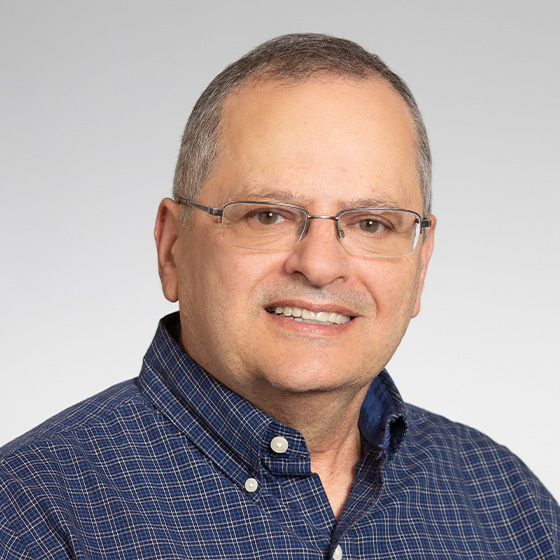
Arno Siebes is Professor of Algorithmic Data Analysis in the Department of Information and Computing Sciences at Utrecht University's Faculty of Science. His research focuses on data mining methodologies, particularly pattern mining and Minimum Description Length (MDL) principles. Key research areas include: Developing efficient algorithms for pattern discovery Applying MDL to data characterization Creating interpretable models for complex datasets Addressing challenges in data science education Recent publications demonstrate applications in diverse domains including mobility analysis, genomic screening, and pandemic response. His work combines theoretical foundations with practical implementations for knowledge discovery.
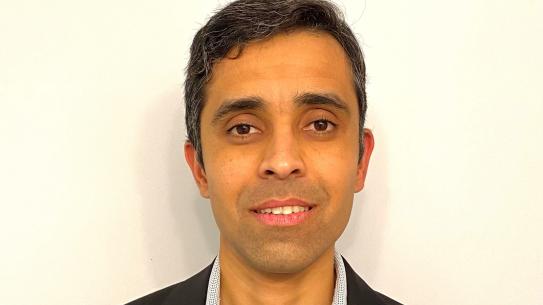
Dr. Dharik Mallapragada is an Assistant Professor in the Department of Chemical and Biomolecular Engineering at NYU Tandon School of Engineering, affiliated with the Center for Advanced Technology in Telecommunications (CATT). His research focuses on mathematical modeling to analyze low-carbon technologies and their integration into energy systems, emphasizing decarbonization pathways for developed and developing economies. He holds a B.Tech from IIT Madras and a Ph.D. in Chemical Engineering from Purdue University. Key research areas include optimizing energy infrastructure planning, electricity market designs for decarbonization, and techno-economic assessments of hydrogen production and storage. Recent work explores repurposing coal plants into thermal storage, evaluating rate structures for renewables-dominant grids, and analyzing India’s energy transition challenges. Mallapragada’s work bridges computational techniques like optimization modeling and data analytics with real-world policy and geographical contexts. Publications highlight infrastructure synergies between power and gas systems, hydrogen production pathways, and electrification barriers in heavy industries. His research underscores the importance of flexible energy systems and equitable policy frameworks, particularly for emerging economies. The Sustainable Energy Transitions (SET) group he leads collaborates globally to address climate mitigation challenges through analytical tools and cross-sectoral solutions.
Kostalena Michelaki is an Associate Professor in the School of Human Evolution and Social Change at Arizona State University. Her research focuses on integrating geochemical, archaeological, and anthropological approaches to understand material culture production, exchange networks, and human-environment interactions across diverse geographic and temporal contexts. Her work spans prehistoric Europe, Mesoamerica, and North America, with particular emphases on ceramic technology, provenance studies, and the application of archaeometric methods. Methodologically, she specializes in elemental analysis of materials (ceramics, lithics, and metals), spatial analysis of archaeological landscapes, and experimental archaeology. She critiques traditional typological approaches by emphasizing the importance of integrating physico-chemical data to reconstruct ancient production systems and social dynamics. Recent projects include geochemical sourcing of Stonehenge sarsen stones, analysis of La Quemada ceramics in Mexico, and investigations into European copper distribution in 17th-century Canada. Her research consistently highlights how material objects encode histories of human creativity, resource management, and cultural exchange. Michelaki's publications emphasize methodological rigor in data interpretation, advocating for transparent analytical frameworks to avoid over-interpretation of archaeological materials. She collaborates extensively with geologists, chemists, and Indigenous communities to contextualize technical data within socio-cultural narratives.
Dr. Takahiro Yabe is an Assistant Professor at the Department of Technology Management and Innovation (TMI) and the Center for Urban Science + Progress (CUSP) within New York University's Tandon School of Engineering. His research focuses on computational social science and network science approaches to model urban resilience against disasters, pandemics, and technological disruptions. He holds a Ph.D. from Purdue University (2021) and degrees from the University of Tokyo (BS 2015, MS 2017). Previously, he was a Postdoctoral Associate at MIT's IDSS and Media Lab under Sandy Pentland and Esteban Moro. Research interests include urban resilience, human mobility, socioeconomic networks, inequality, and computational modeling. He leads the Resilient Urban Networks (RUN) Lab, an interdisciplinary group developing data-driven tools for urban systems analysis. His work has been published in top journals like Nature Human Behaviour, PNAS, and Nature Machine Intelligence. Recent grants include NSF funding for EV charging infrastructure planning (SAI 2024) and post-disaster mobility governance (HDBE 2024). Notable awards include the NICE STEP Researchers recognition (2024). His lab collaborates with urban planners, policymakers, and global institutions to advance equitable urban resilience strategies. Current projects involve open mobility data standards, disaster recovery policy assessment, and AI-driven urban modeling. Students supervised include PhD candidates Vaidehi Raipat (urban policy), Callie Clark (mobility equity), and DongHak Lee (socioeconomic networks). The lab also hosts visiting scholars like Mavin De Silva (EV charging systems) and supports master's students in mobility analysis and disaster response.
Simon Spencer is a Professor of Statistics at the University of Warwick, affiliated with the Zeeman Institute for Systems Biology and Infectious Disease Epidemiology Research (SBIDER) and the Warwick Analytical Sciences Centre (WASC). His research focuses on Bayesian inference applied to epidemiology, stochastic epidemic models, and statistical methods for analytical science. He has held previous positions at the University of Nottingham and Massey University in New Zealand. His teaching includes advanced courses such as CH923: Statistics for Data Analysis , ST925: Graduate Topics in Statistics , and MA4M1/MA6M1: Epidemiology by Example . His research group currently includes PhD students Matthew Adeoye and Richard Haughey, and MSc students Olli Smith and Sangavi Pirabakaran. He collaborates extensively with global health institutions on projects addressing infectious disease modeling and public health policy. Spencer’s work bridges statistical methodology and real-world applications, with a focus on outbreak detection, model comparison, and the integration of geostatistical data with transmission models. His recent contributions include frameworks for lymphatic filariasis elimination projections and analyses of HIV transmission dynamics in Uganda. He actively contributes to interdisciplinary research in systems biology and analytical chemistry, leveraging advanced statistical techniques to address complex health challenges.
Badi H. Baltagi is a Distinguished Professor of Economics and Senior Research Associate at the Center for Policy Research, Maxwell School of Citizenship and Public Affairs, Syracuse University. He previously served as the George Summey, Jr. Professor of Liberal Arts at Texas A&M University (1993–2005) and has held visiting positions at the University of Arizona and the University of California, San Diego. He currently holds a part-time chair position in Economics at the University of Leicester, United Kingdom. Ph.D. in Economics, University of Pennsylvania, 1979 Baltagi’s research focuses on econometrics, particularly panel data, spatial econometrics, health econometrics, and theoretical econometrics. His work has significantly advanced methodologies in fixed and random effects models, spatial dependence, and network effects in panel data. He is renowned for his authoritative textbooks, including Econometric Analysis of Panel Data and Econometrics , which are standard references in graduate econometrics courses worldwide. His recent publications (2021–2025) demonstrate a strong trend toward integrating spatial and network structures into panel data models, with applications in health, labor, and international trade. He frequently publishes in top journals such as Journal of Econometrics , Econometric Reviews , and Economics Letters , emphasizing robust estimation, specification testing, and dynamic modeling. Kuwait Prize for Economics and Social Sciences (2018) Distinguished Achievement Award in Research, Texas A&M University (2002) Multa and Plura Scripsit Awards, Econometric Theory Distinguished Authors Award, Journal of Applied Econometrics Fellow, Journal of Econometrics Fellow, Econometric Reviews Fellow, International Association for Applied Econometrics Fellow, Spatial Econometrics Association Fellow, Society for Economic Measurement Research Fellow, IZA (since 2002) Research Fellow, CESifo (since 2003) Global Labor Organization (GLO) Fellow Lifetime Fellow, Economic Research Forum (MENA region) Baltagi has held major editorial roles, including co-editor of Economics Letters (2011–present), former editor of Empirical Economics (1999–2018), and replication editor for Journal of Applied Econometrics (2003–2018). He is the series editor for Contributions to Economic Analysis (Emerald Publishing) and Advanced Studies in Theoretical and Applied Econometrics (Springer). He has advised numerous Ph.D. students and collaborates extensively with researchers globally, particularly in spatial and health econometrics. He is actively involved in organizing and presenting at major conferences such as the International Panel Data Conference and the International Association of Applied Econometrics. Baltagi is a founding member and former director of the International Association for Applied Econometrics and serves on the board of directors and advisory boards of the Spatial Econometrics Association and the Journal of Spatial Econometrics , respectively. His leadership in establishing and promoting specialized econometric fields underscores his influence in shaping modern econometric research.
Dorsa Sadigh is an Associate Professor of Computer Science and Electrical Engineering at Stanford University, and a Senior Fellow at the Stanford Institute for Human-Centered AI. Her work focuses on advancing robotics , particularly in areas such as human-robot collaboration , reinforcement learning , and vision-language models . She explores how robots can learn from human demonstrations, adapt to dynamic environments, and safely interact with humans in caregiving and assistive tasks. Her research interests span autonomous systems , improving robot generalization , and foundation models for robotics . Key projects include developing policies for dexterous manipulation, proactive human-robot teamwork, and scalable data collection methods. She emphasizes ethical considerations in robotics, including perceived safety and human trust. Recent work highlights include the ProVox framework for personalized collaboration, HoMeR for mobile manipulation, and Octo —an open-source generalist robot policy. Her contributions bridge theoretical advances in AI with real-world robotic applications, leveraging large language models and vision-language integration. Dr. Sadigh’s research is funded by grants from NSF, DARPA, and industry partnerships. She collaborates with interdisciplinary teams to address challenges in assistive robotics, autonomous driving, and socially intelligent AI systems.
Dana Vaux is an Associate Professor in the Department of Industrial Technology at the University of Nebraska at Kearney, within the College of Business & Technology. She specializes in Interior and Product Design, with a strong emphasis on interdisciplinary research connecting people and environments. Education: Ph.D., Interdisciplinary: Architecture, Design, Environmental History – Washington State University M.A., Interior Design – Washington State University B.A., Interior Design – Washington State University Her research focuses on the intersection of culture, history, and the built environment. Key areas include place theory , design pedagogy , and the cultural-historical meanings of interior spaces . Dr. Vaux explores how interiors shape human experience and identity, integrating environmental history and ethical considerations into design practice. The 15 most recent publications reflect a consistent trajectory in interdisciplinary design research , spanning ethics, pedagogy, sustainability, and cultural identity. Her work bridges architecture, interior design, and environmental psychology, often emphasizing qualitative and historical methodologies. Themes of human well-being , historical continuity , and educational innovation recur across her scholarship. Scientific Awards: 2022 Midwest Regional Best of Award for Scholarship of Teaching and Learning-Pedagogy (IDEC) 2021 Midwest Regional Best of Award for Scholarship of Design Research-History and Theory (IDEC) 2019 Best Paper in Family Studies/Human Development (AAFCS) 2021-2022 College of Business & Technology Outstanding Faculty Award: Scholarship Dr. Vaux is an active researcher and educator, contributing significantly to design scholarship and pedagogy. She has co-authored influential books used in classrooms and published in top journals. While specific grant details are not listed, her sustained output and recognition suggest successful funding and institutional support. She mentors future designers through curriculum development and research integration in teaching, emphasizing the importance of research for ethical and effective design. Though no formal lab or research team name is mentioned, her interdisciplinary approach suggests collaboration across departments, particularly in architecture, environmental studies, and family sciences. Her work continues to influence both academic and professional practices in interior design.
Selina Heppell is a Professor and Department Head in the Department of Fisheries, Wildlife, and Conservation Sciences at Oregon State University, College of Agricultural Sciences. She holds an adjunct appointment and is based in Nash Hall, Corvallis, OR. Her research focuses on marine ecology, conservation biology, and fisheries science, particularly on long-lived marine species such as sea turtles, sharks, sturgeon, and rockfish. She leads the Heppell Lab, which conducts interdisciplinary research across global ecosystems. Education: BSc in Zoology, University of Washington (1991) MSc in Zoology, North Carolina State University (1993) PhD in Zoology, Duke University (1998) Her research interests center on population ecology, climate change impacts, habitat assessment, and human perturbations on marine species. She uses computer models and simulations to guide conservation and management policy, with a focus on recovery strategies for threatened species. Her lab integrates biological organization levels—from cells to ecosystems—in rigorous conservation science. The 15 most recent publications reflect a strong emphasis on sea turtle ecology, fisheries modeling, marine protected areas, and interdisciplinary conservation. Key themes include climate effects on sex ratios, growth modeling, telemetry studies, and policy-relevant science for fisheries and marine species management. Scientific Awards and Honors: President, Faculty Senate, OSU (2021) Aldo Leopold Leadership Program Scholar (2006) Roy G. Arnold Leadership Award (2017) Fishery Worker of the Year, Oregon AFS (2016) Multiple awards for student advising and teaching excellence Editorial roles at Ecological Applications and ESA She has mentored 8 PhD and 14 MSc students. She teaches courses including FW 320 (Intro Pop Dyn), FW 520 (Ecology and Mgmt of Marine Fishes), and FW 524 (Stock Assess Fish Mgrs). She has received grants and led projects with NOAA, USFWS, and the Lenfest Ocean Program. She collaborates internationally and with Indigenous communities, emphasizing inclusive science. The Heppell Lab fosters collaborative, enthusiastic science, with members working from Oregon to the Caribbean and beyond. The lab addresses local to global conservation challenges, emphasizing applied research and policy engagement.
James O. Fiet is a Professor of Management and the Brown-Forman Chair in Entrepreneurship at the University of Louisville College of Business . His work bridges strategy and entrepreneurship , with over 175 publications and leadership roles in academia. Education : PhD in Entrepreneurship & Strategic Management (Texas A&M), MBA in Entrepreneurship (USC), BA in English (Brigham Young University) His research spans entrepreneurship theory , strategic management , and social enterprises , focusing on institutional logics, poverty alleviation, and time-space dynamics. Recent publications include Time, Space and Entrepreneurship (2021) and Poverty Alleviation and the Science of What's Possible (forthcoming 2022). Scientific recognition includes being ranked 5th most productive U.S. entrepreneurship researcher (2009) and 8th globally . He served as editor of Entrepreneurship Theory and Practice , the #2 cited business journal globally. Awards: Top 1% entrepreneurship researcher (2021), Top 2% scientist worldwide (2021), Emerald Certificate of Excellence (2017).
Pejman Lotfi-Kamran is an Associate Professor at the School of Computer Science, Institute for Research in Fundamental Sciences (IPM), Tehran, where he also serves as the head of the school and director of Turin Cloud Services. His research focuses on computer architecture, systems, approximate computing, and cloud computing, with an emphasis on performance and energy efficiency for big-data applications. His educational background includes: Ph.D. in Computer Science, EPFL (2013) M.Sc. in Electrical and Computer Engineering, University of Tehran (2005) B.Sc. in Electrical and Computer Engineering, University of Tehran (2002) Lotfi-Kamran's research spans computer architecture innovations, including data and instruction prefetching, networks-on-chip, coherence protocols, and many-core processor design. He has pioneered work on scale-out processors, neural acceleration for GPUs, and approximate computing frameworks. His publications appear in top venues such as ISCA, HPCA, MICRO, and IEEE/ACM journals. His recent articles reflect a strong trend in improving system performance through intelligent prefetching, efficient NoC designs, and energy-aware architectures. Key themes include reducing frontend bottlenecks, optimizing cache behavior, and enhancing data delivery in large-scale systems. His work often combines cross-stack insights with hardware-software co-design for real-world impact. Scientific awards and recognitions include: 2017 CADS Best Paper Award 2016 Young Faculty Award from Iran's National Elites Foundation 2012-2013 Intel Ph.D. Fellowship 2012 and 2011 HiPEAC Paper Awards 2011 HPCA Best Student Paper Finalist Multiple academic honors from University of Tehran He has advised several graduate students including Paria Darbani, Ali Ansari, Mohammad Bakhshalipour, and Farid Samandi, many of whom have co-authored significant papers. His teaching spans institutions like Sharif University of Technology, Iran University of Science and Technology, and EPFL, covering advanced computer architecture and multiprocessor systems. He has led research projects such as AxBench and CloudSuite on Simics, and contributed to national initiatives like Iran’s National Grid. He is actively involved in tool development and continues to shape research in next-generation computing systems. He leads the Turin Cloud Services initiative at IPM and is deeply engaged in both theoretical and applied aspects of computer systems research, with ongoing work in neural acceleration, approximate computing, and scalable architectures.
Wenzheng Li is a Visiting Lecturer in the Department of City and Regional Planning at Cornell University’s College of Architecture, Art, and Planning. He earned his Ph.D. in City and Regional Planning from Cornell in August 2024, following a Master’s in Regional Planning from the same institution and a Bachelor’s in Remote Sensing from China University of Geosciences. His research centers on regional-scale land use planning, sustainable urban forms, polycentric development, and environmental sustainability, with applications in Germany, China, and Sub-Saharan Africa. He employs GIS, remote sensing, spatial econometrics, and urban data analytics to investigate urban dynamics and planning policy impacts. His recent publications and conference presentations focus on topics such as the urban heat island effect, polycentric development, and regional equity. These works reveal consistent trends in analyzing spatial configurations for sustainability and equity, particularly through quantitative modeling and cross-national comparisons. C.V. Starr Fellowship, the Einaudi Center of Cornell University, 2023 Li teaches courses in GIS, urban data science, and quantitative methods, emphasizing the integration of machine learning and GeoAI with planning theory. His professional experience includes work on equitable transportation solutions in Tompkins County. He has not advised any students yet, and no grant details beyond the fellowship are mentioned. He is actively involved in research projects on sustainable urban forms in Sub-Saharan Africa, regional governance in China and the U.S., and environmental amenity valuation, reflecting a strong interdisciplinary and global approach to urban and regional planning challenges.
Alejandro Henao is a Researcher in Civil Engineering at the National Renewable Energy Laboratory (NREL), specializing in on-demand mobility systems. His work focuses on optimizing emerging transportation modes, curb management, and performance metrics for mobility and energy efficiency. He has presented extensively at national and international conferences. Current Research Areas: On-demand mobility, ride-sourcing, ride-hailing (e.g., Uber/Lyft), curb management, mobility optimization, energy efficiency metrics Geographic Focus: Texas (Houston, Arlington, Austin), Denver, Colorado Methodologies: Case studies, spatial-temporal modeling, behavioral analysis, policy frameworks His publications and presentations demonstrate a consistent focus on understanding transportation network companies' impacts on urban mobility, vehicle ownership, and energy consumption. Henao also explores sustainable public transport solutions using clean energy technologies. Recent research outputs (2023-2025) emphasize automated and electrified on-demand mobility, curb space allocation optimization, and energy productivity metrics for transit systems. Key trends include integration of renewable energy in transportation, resilience planning for mobility networks, and behavioral responses to shared mobility services. Henao's work combines empirical studies with analytical modeling to provide actionable insights for cities seeking to reduce auto dependence and improve mobility efficiency. His collaborations span academic institutions, municipal governments, and transportation agencies across the United States. At NREL, he leads technical reports and presentations on mobility innovation, focusing on sustainable infrastructure adaptation for evolving transportation needs. His research often involves multi-disciplinary approaches to transportation challenges.