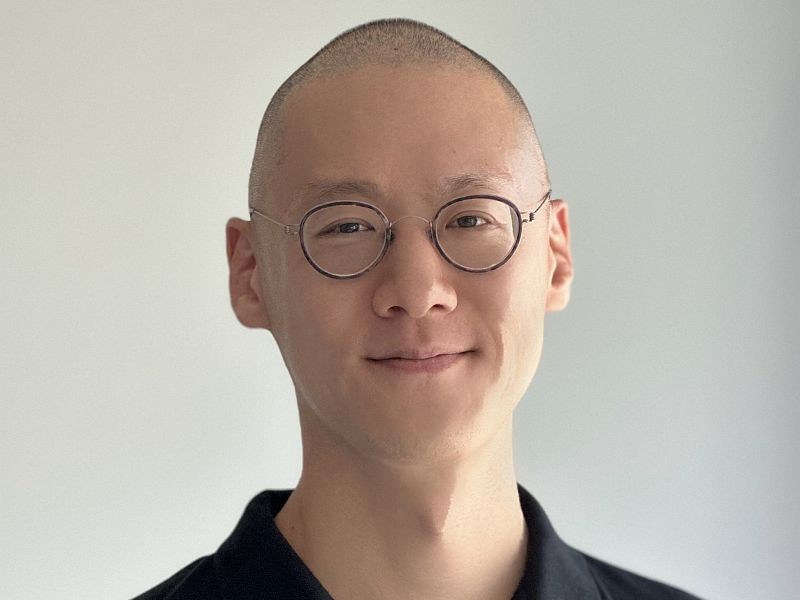
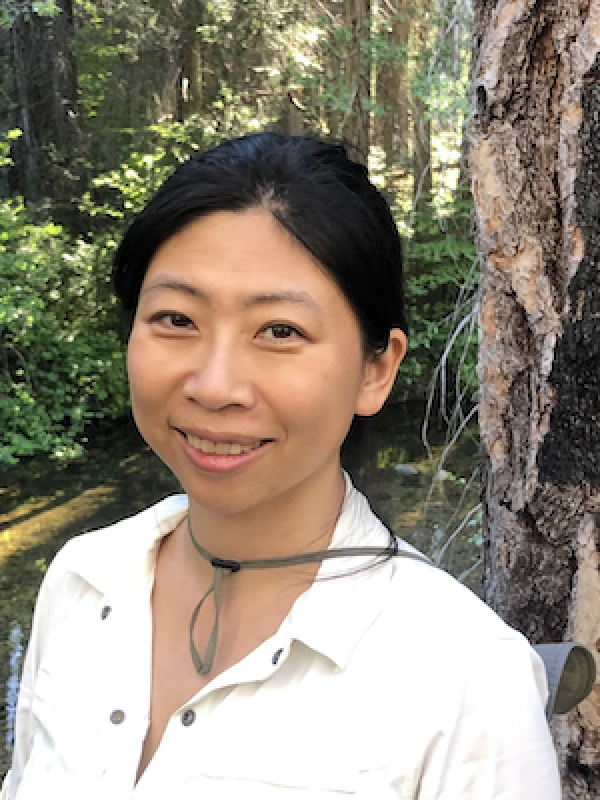
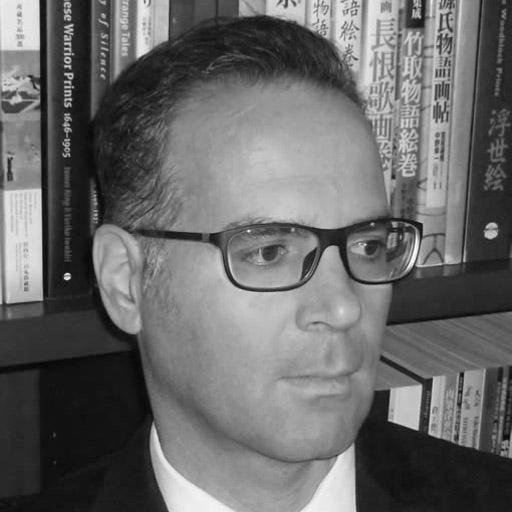
Dr. Michael Chang is a Senior Lecturer and Program Director of Spatial Information Sciences at Macquarie University's School of Natural Sciences. He specializes in remote sensing and GIS applications for environmental monitoring, including vegetation dynamics, land use change, and disaster mitigation. His affiliations include the Data Horizons, Smart Green Cities, and Lifespan Health and Wellbeing Research Centres. Research Interests: Earth observation data integration 3D modeling and change detection Biodiversity conservation and wetland monitoring Spatial analysis of multilingualism and transport planning Awards: 2017 BHERT Award for Outstanding Collaboration 2019 Faculty Teaching Excellence Award 2017 Research Excellence Recognition Projects: Leads multi-sensor fusion initiatives for vegetation monitoring and collaborates on disaster resilience frameworks. Active in interdisciplinary work spanning ecology, geophysics, and urban planning. Labs/Teams: Core member of Macquarie's Planetary Research Centre and collaborates internationally on port city resilience projects in Africa.
Xinfeng Gao is a Professor of Mechanical & Aerospace Engineering at the University of Virginia, leading the CFD & Propulsion Laboratory. She specializes in high-performance computing (HPC) algorithms for fluid dynamics, combustion, and plasma systems. Her work integrates numerical methods, parallel computing, and data analytics to address complex engineering challenges. Prior to UVA, she held a professorship at Colorado State University from 2011 to 2023, establishing the CFD and Propulsion Lab there. She earned her PhD in Aerospace Engineering from the University of Toronto in 2008, followed by postdoctoral research at Lawrence Berkeley National Laboratory (LBNL). Her research focuses on three core areas: high-order CFD methods for high-speed flows, parallel adaptive algorithms for spatial and temporal domains, and HPC combined with data analytics for aerospace design optimizations. Applications include reduced-order models for turbulence, propulsion device innovation, and quantum computing for fluid simulations. She collaborates with national labs (LLNL, LBNL), aerospace industries (Boeing), and software companies to translate research into practical solutions. Her recent grants include the NSF Mid-Career Advancement Award (2022–2025) for CFD+DA integration in commercial tools and UVA’s RIG Award (2025–2026) for gas-surface material studies under extreme conditions. She teaches MAE 6720 (Computational Fluid Dynamics) and MAE 3420 (Computational Methods). Key awards include the 2023 University of Virginia Research Achievement Award and the 2022 NSF MCA Award. Her work emphasizes cross-disciplinary innovation, blending computational science with experimental validation through initiatives like the Gas-Surface-Materials RIG project, involving experts from MAE, MSE, Chemistry, and Physics.
Dr. Callum Atkinson is a Senior Lecturer in Mechanical & Aerospace Engineering at Monash University, specializing in turbulent flow dynamics and experimental fluid mechanics. His research focuses on understanding and controlling turbulent shear flows in pipes, boundary layers, jets, and rocket engines, combining high-fidelity numerical simulations with advanced optical diagnostics like holographic PIV and tomographic techniques. He has developed novel methodologies for 3D velocity and density measurements, contributing to drag reduction studies, heat transfer analysis, and flow control in aerospace and mechanical systems. His work addresses UN Sustainable Development Goals related to energy efficiency and sustainable transport. Current roles include leading collaborative projects on adverse pressure gradient boundary layers and flow mixing, and he actively participates in peer review for journals like Journal of Fluid Mechanics and Physics of Fluids . He supervises PhD students in topics such as hybrid rocket engine optimization and turbulence modeling, leveraging Monash's engineering research infrastructure. Notable contributions include one of the world's largest adverse pressure gradient simulations and pioneering volumetric flow visualization techniques. His experimental toolkit includes laser diagnostics, tomographic PIV, and background-oriented schlieren systems. Recent work has explored superhydrophobic surface drag reduction, thermal jet behavior, and the dynamics of high-speed jet flows. He maintains a strong focus on bridging experimental and computational fluid dynamics to advance fundamental understanding and industrial applications.
Dr. Bon Woo Koo is an Assistant Professor at the School of Urban and Regional Planning , Toronto Metropolitan University. His expertise lies in geospatial urban analytics, walkability, and GIS applications, focusing on urban design for public health equity and innovative data science tools. He holds a PhD in City & Regional Planning from Georgia Institute of Technology, a Master’s in Landscape Architecture from Seoul National University, and a Bachelor’s in Interior Design from Kookmin University. Education: PhD in City and Regional Planning, Georgia Institute of Technology Master of Landscape Architecture, Seoul National University Bachelor of Interior Design, Kookmin University Research Interests: Dr. Koo investigates urban environments’ impact on health and well-being, equity in environmental amenities (e.g., tree canopies), and advanced GIS techniques. He develops automated audit methods for walkability and explores spatial modeling for urban sustainability. His work bridges data science with policy, contributing to CDC health surveillance and smart city initiatives. Publications: His research appears in journals like Landscape and Urban Planning , Environment and Behavior , and Health and Place , with a focus on walkability audits, urban tree equity, and audio-based pedestrian sensing. Recent work addresses post-pandemic mental health and broadband equity strategies. Professional Engagement: He has advised the CDC’s technical panel on leveraging big data for health policy, presented at conferences like the Association of Collegiate Schools of Planning, and collaborated with institutions like Universitas Gadjah Mada and the Atlanta Regional Commission.
Univ.-Prof. Dr. Claudia Lauer is a Professor of Old German Studies specializing in Medieval German literature at the Rheinische Friedrich-Wilhelms-Universität Bonn. She holds a dual focus on poetry of the Middle Ages and Early Modern periods, courtly epic, and historical narratology. Her work bridges German-French literary relations and cultural studies, with significant contributions to understanding medieval semantics and reception history. Current Position: Chair for Old German Studies (since September 2023) Prior Roles: Junior Professor at the University of Mainz, Acting Professorships at Mainz and Frankfurt, and Research Fellowships at the Heidelberg Academy Her research encompasses interdisciplinary projects such as the GRK 1876 'Early Concepts of Man and Nature' and the 'Middle High German Dictionary'. Key topics include historical semantics, medieval performance spaces, and poetic innovation in works like Frauenlob's literature. She supervises doctoral projects on medieval textual semantics and collaborates on teaching initiatives like LehrFoRM_KuMed. Publications span monographs (e.g., The Art of Intrigue ), edited volumes, and essays on topics ranging from color symbolism in medieval poetry to narrative structures in courtly epics. Her pedagogical work emphasizes integrating medieval cultural patterns into modern German teaching. Recent projects include analyzing rhyme cultures in medieval literature and exploring the aesthetics of pain in medieval lyric poetry. She actively contributes to scholarly discourse through editorial roles and international collaborations, reflecting her commitment to advancing medieval studies through both traditional and innovative methodologies.
Dr. Hung Cao is an Assistant Professor of Computer Science at the University of New Brunswick, where he directs the Analytics Everywhere Lab. His work focuses on interdisciplinary research in Cyber-Physical Systems (CPS), IoT, Edge/Fog/Cloud Computing, and Explainable AI, addressing societal challenges through data-driven solutions. Prior roles include PostDoc Fellow and Data Scientist at the People in Motion Lab, UNB, and Lecturer/Researcher at Vietnam National University. He holds a Ph.D. in Geomatics Engineering (specializing in Data Science) from UNB (2020), an M.Sc. in Computer Science from University College Dublin (2015), and a B.Eng. from Vietnam National University (2011). Research interests span Smart Cities, Embedded AI, TinyML, Federated Learning, and Real-time Systems. He has led projects with Cisco, NB Power, and other industry partners to develop scalable analytics frameworks for IoT applications. Dr. Cao actively contributes to technical communities (IEEE Smart City, Edge Computing, etc.), serving as a reviewer for journals and conferences, and a Topic Editor for Electronics Journal . His innovations include the Analytics Everywhere framework for spatio-temporal data analysis, MACeIP platform for smart cities, and energy-efficient IoT systems for environmental monitoring. Current work emphasizes human-centered AI for healthcare diagnostics and industrial inspection systems.
Ellen Robey is a Professor of Immunology and Molecular Medicine at the University of California, Berkeley, serving as Division Head of the IMM Division. Her research focuses on signaling pathways controlling T cell fate decisions, using mouse models to study T cell development and immune responses, including mechanisms of thymic selection and CD4/CD8 lineage commitment. She employs 2-photon imaging to analyze T cell behavior in situ, particularly during parasitic infections like Toxoplasma gondii . Robey’s lab investigates how self-reactivity influences thymic selection timing and develops collaborative projects combining multi-omics approaches with spatial and temporal analyses of thymic development. Key research areas include understanding negative/positive selection mechanisms in the thymus, immune response dynamics during chronic infections, and the role of unconventional T cell subsets recognizing non-classical MHC molecules. The lab has pioneered studies on Qa1-restricted T cells and their role in host defense against pathogens. Her work bridges basic immunology with cutting-edge imaging and systems biology tools to unravel complex immune processes. Lab collaborations include projects with Nir Yosef and Aaron Streets to create high-resolution thymic developmental maps using single-cell multi-omics. Current efforts also explore how ERAAP downregulation alters antigen presentation, influencing T cell responses. The Robey Lab emphasizes diversity in its team, fostering an inclusive environment for scientific innovation.
Ioannis Theodoridis is a Professor at the Department of Informatics, University of Piraeus, and Director of the Data Science Laboratory under the School of Information and Communication Technologies. His research focuses on data science, particularly large-scale data management and analysis, with applications in maritime informatics, spatiotemporal data, and mobility patterns. He holds editorial roles at ACM Computing Surveys and has contributed to numerous international conferences and journals. As a project leader in Horizon 2020 initiatives, he has coordinated research on data-driven solutions for maritime safety and urban mobility. He earned his Diploma (1990) and PhD (1996) in Electrical and Computer Engineering from the National Technical University of Athens (NTUA). His work includes developing scalable systems for maritime route forecasting (e.g., GMSA), frameworks for vessel trajectory prediction (e.g., VesselVision), and platforms like i4sea for fisheries monitoring. Contact: ytheod@unipi.gr .
Dr. Wenjing Jia is an Associate Professor at the University of Technology Sydney (UTS), affiliated with the School of Electrical and Data Engineering within the Faculty of Engineering and IT. She holds a PhD in Computing Sciences (UTS, 2007), Master's in Communications and Information Systems (Fuzhou University, 2002), and a Bachelor's in Communications Engineering (Jilin University, 1999). Her research focuses on image analysis, computer vision, and AI applications in healthcare, transport, and defense. Key areas include text detection in challenging environments, medical image super-resolution, and crowd surveillance systems. She leads projects with industry partnerships, securing over $900K in funding. Dr. Jia is also a recognized educator with 12+ years of teaching experience, specializing in internetworking subjects. She organizes international conferences (e.g., ICDAR2019, TrustCom-2017) and serves as a Cisco Certified Instructor Trainer. Awards include the Science and Technology Award and a finalist spot in the Cisco Women in IT Academia Award. Education: PhD in Computing Sciences, UTS (2007) MSc in Communications and Information Systems, Fuzhou University (2002) BEng in Communications Engineering, Jilin University (1999) Research Highlights: Developed algorithms for low-light text detection and medical image enhancement Advanced crowd counting and violence detection in surveillance systems Contributions to OCT image super-resolution and LiDAR point cloud analysis Teaching & Leadership: Lead CI of Teaching & Learning grants Legal Main Contact for UTS Cisco Networking Academy Deputy Head - Teaching and Learning (secondee) Awards: Excellent Thesis Award, Science and Technology Award (2019), and recognition in Women in IT Academia. Her work bridges academia and industry, with over 130 publications and active roles in conference organization and technology transfer.
Kate Hu is an Assistant Professor in Statistics at Ohio State University's College of Arts and Sciences. She previously served as Head of Data Science at Aclima, Inc. and Senior Data Scientist at Climate LLC. Research Focus: Develops methodologies for causal inference using environmental data, spatial-temporal analysis, and proximal causal inference. Applications include precision agriculture, epidemiology, climate hazards, and environmental monitoring design. Education: PhD in Biostatistics from University of Washington, Seattle (2014) BS in Biochemistry from University of Hong Kong (2006) Professional Recognition: Led Aclima's data science team honored as #1 Most Innovative Company in Data Science by Fast Company (2021).
Dr. Nusha Keyghobadi is a Professor in the Department of Biology at Western University, specializing in population genetics, conservation biology, and landscape ecology. Her research examines how landscape modification and climate change impact genetic diversity and spatial structure of populations, with a focus on butterflies and other insects. She leads a lab investigating alpine ecosystems, endangered species reintroduction (e.g., mottled duskywing), and the genetic resilience of populations under extreme weather conditions. Dr. Keyghobadi teaches courses in molecular ecology and environmental biology, and collaborates globally on conservation genetics projects. Her lab includes current students Aaya Aboulnaga, Laura Bax, and Evan Bennett, among others. Education details are not explicitly stated, but her extensive research history indicates advanced training in ecology. Her work integrates field studies, molecular techniques, and spatial analysis to address applied conservation challenges. She has supervised over 30 students, many of whom have advanced to postdoctoral positions or professional roles in conservation, medicine, and policy. Her lab's current projects include: 1) studying Rocky Mountain Apollo butterflies to assess climate impacts on alpine populations; 2) monitoring genetic diversity in reintroduced mottled duskywing populations; and 3) exploring edge effects and dispersal in fragmented landscapes. Collaborations span institutions like the Carolinian Canada Coalition and the Queensland Institute of Medical Research. Lab alumni have pursued diverse careers, including conservation biology, medical research, and policy roles. Dr. Keyghobadi emphasizes interdisciplinary training and ethical scientific practice.
Zachary Chase is Associate Professor of Archaeology at BYU, specializing in Andean archaeology and history. His research examines Inca state formation, ritual landscapes, and colonial transitions in Peru. Publications demonstrate particular focus on integrating archaeological and historical methods to reinterpret Inca and colonial period sites. Notable works analyze the relationship between imperial structures and local ritual practices during the Inca expansion.
Giorgia Dona is Professor at the University of East London's Business and Law school, specializing in forced migration, refugee studies, and decolonial approaches to displacement. Her research examines asylum systems in Italy, France and the UK, digital equity in humanitarian contexts, and psychosocial impacts on displaced youth. Recent work explores carceral aspects of asylum accommodation, mental health outcomes for young migrants in Iceland, and the emotional labor of digital service provision. She critically engages with technologies of border governance while advocating for ethical participatory research with displaced communities. Her publications demonstrate sustained focus on child protection frameworks, diaspora knowledge production, and decolonization of refugee paradigms through collaborative methodologies.
Anandamayee Majumdar is an Assistant Professor in the Department of Mathematics at San Francisco State University (SFSU), part of the College of Science & Engineering. She holds a Ph.D. and M.S. in Statistics from the University of Connecticut and Michigan State University, respectively, and earlier degrees from the Indian Statistical Institute (I.S.I.). Her research focuses on spatial and spatio-temporal processes, Bayesian computation, and their applications in biology, health, environmental sustainability, ecology, economics, finance, and industry. She has developed robust statistical models for handling missing data, multivariate processes, and expert-informed modeling, particularly in contexts like tuna catch estimation during the pandemic and financial risk analysis. She is currently exploring expert-integrated spatio-temporal models and public health trends. Professional experience includes roles as Senior Statistician at the Inter-American Tropical Tuna Commission (2021–2023), Professorial positions at universities in Bangladesh and China, and visiting research at UC Davis. She serves as Associate Editor for Applied Stochastic Modeling in Business and Industry and reviews for journals like Computational Statistics and Data Analysis and Biostatistics . Majumdar has contributed to interdisciplinary collaborations, including soil property modeling in urban ecosystems, and has held leadership roles in academic committees, such as the Interdisciplinary M.S./Ph.D. programs at Arizona State University. She actively mentors students and seeks to involve undergraduates and graduates in research projects.
Lorenzo DiTommaso serves as Professor in the Department of Religions and Cultures at Concordia University, Montreal, where he has progressed from Assistant Professor (2004) to full Professor (2013), including service as Department Chair. His academic home encompasses Jewish Studies and Christianity programs, with biennial teaching of the graduate religion and popular culture seminar. Ph.D. in Religious Studies, McMaster University (2002) Postdoctoral Fellow, Yale University Divinity School (2001-03) NEH Postdoctoral Fellow, Center for Medieval and Renaissance Studies, Saint Louis University (2003-04) DiTommaso's research constitutes a comprehensive exploration of apocalyptic speculation across temporal and cultural boundaries, from ancient Near Eastern traditions to contemporary digital media. His work uniquely bridges textual scholarship on biblical apocrypha and medieval manuscripts with cutting-edge analysis of apocalyptic expression in video games, anime, and popular music. The intellectual scope spans apocalyptic historiography , manuscript studies , apocalyptic and millenarian movements , and religion in contemporary media , with distinctive expertise in Japanese cultural intersections. His methodological approach combines rigorous textual analysis with interdisciplinary cultural theory, particularly examining how apocalyptic frameworks shape human responses to crisis across historical periods. Analysis of his recent publications reveals a pronounced shift toward contemporary apocalyptic manifestations, with nearly half of his 2021-2024 output focusing on digital media, video games, and modern cultural phenomena. Simultaneously, he maintains deep engagement with medieval manuscript traditions and early Jewish-Christian apocalyptic literature, demonstrating remarkable versatility across historical periods. The thematic through-line remains apocalyptic determinism versus human agency , examined through diverse lenses from ancient prophecy to interactive gaming environments. Bibliographical Society of America - Pine Tree Foundation Fellowship in Hispanic Bibliography (2019) Nicky Carpenter Fellow in Manuscript Studies Marilyn Hollinshead Visiting Scholar (2023) Research Fellow at Herzog August Bibliothek (2024) DiTommaso has supervised over 20 graduate students since 2019 across diverse apocalyptic topics including disability studies in biblical interpretation, Satanism in virtual communities, and environmental apocalypse in radical movements. His research has been continuously supported by four major SSHRC grants (2004-07, 2007-11, 2011-16, 2018-24), supplemented by specialized fellowships at premier manuscript repositories including the Vatican Film Library, Herzog August Bibliothek, and special collections at Michigan State and Minnesota universities. He co-organizes the biennial 'Through a Glass Darkly' Symposium on Apocalyptic with Colin McAllister, now in its eighth year, rotating between Colorado Springs and Montreal. The 'Through a Glass Darkly' symposium serves as his primary collaborative platform, fostering international scholarly exchange on apocalyptic themes. He maintains active research partnerships with institutions including the Enoch Seminar and Azrieli Institute for Israel Studies, while leveraging special collections access at major libraries for manuscript-based projects. Current work on apocalyptic comic art involves collaboration with special collections at Michigan State and Minnesota universities, demonstrating his commitment to bridging traditional textual scholarship with contemporary cultural analysis.