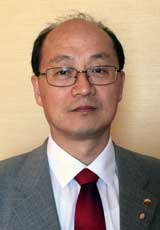
Dr. Yun Zhang is a Professor and Canada Research Chair in the Department of Geodesy and Geomatics Engineering at the University of New Brunswick. He holds a PhD from the Free University of Berlin and has pioneered research in remote sensing, image processing, and computer vision since 2000. His patented technologies are licensed to global companies including PCI Geomatics and DigitalGlobe. Research Focus: Optical/radar image processing, digital photogrammetry, AI applications in geomatics, and sensor fusion for UAV systems. His work enables advanced geospatial analysis across environmental, urban, and defense sectors. Distinctions: First Giuseppe Inghilleri Award (ISPRS 2012) NSERC Synergy Innovation Award from Governor General of Canada (2011) ASPRS Talbert Abrams Grand Award (2005) Featured in CFI 20th Anniversary Book for breakthrough innovations Technology Impact: Solutions deployed by NASA, USGS, Google Earth, and DND Canada across five continents. Recognized among top 9 Canadian research achievements in AUTM's global case studies alongside MIT and Stanford innovations.
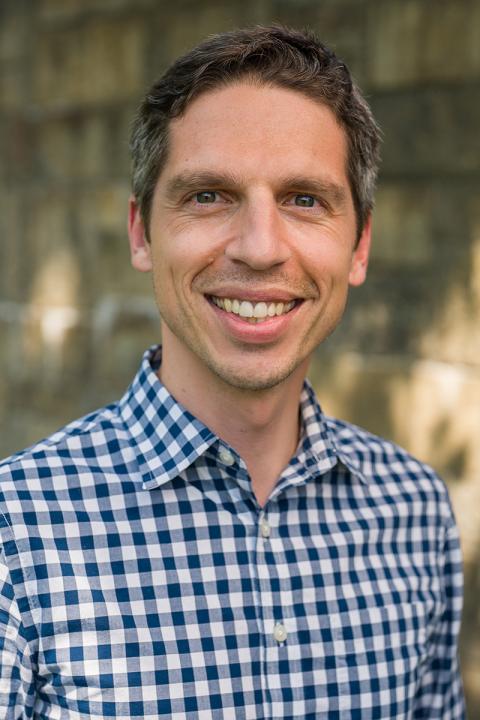
Anton Bekkerman is a Professor in the Department of Agriculture, Nutrition, and Food Systems at the University of New Hampshire, serving as Associate Dean for Research and Director of the New Hampshire Agricultural Experiment Station. He holds a Ph.D. and M.S. in Economics from North Carolina State University and a B.B.A. from Loyola University Maryland. His research spans agricultural marketing, price forecasting, policy analysis, and risk management, with specific expertise in: Commodity price dynamics (grain and fertilizer markets) Agricultural insurance and policy design Farm decision-making and risk analysis Spatial economic modeling Recent publications examine quality-based wheat pricing, biofuel policy impacts on fertilizer markets, crop insurance distributions, and economic dimensions of pest management. His work integrates economic theory with empirical analysis of agricultural systems. Dr. Bekkerman leads research initiatives addressing agricultural sustainability and economic resilience in changing climates.
Bithin Datta is a Senior Lecturer in the Discipline of Civil Engineering at James Cook University (Australia), part of the College of Science and Engineering and the Division of Tropical Environments and Societies. He is affiliated with TropWATER (Centre for Tropical Waters and Aquatic Ecosystem Research), the Economic Geology Research Unit (EGRU) at JCU, and the CRC-for Contamination Assessment and Remediation of the Environment (CRC-CARE) at the University of Newcastle. Previously, he held Professor and Senior Professor positions at IIT Kanpur, India (1995-2009), and served as Head of the Civil Engineering Department and Head of the Postgraduate Environmental Engineering and Management Program. He has held Visiting Professorships at Dalhousie University (Canada), Denmark Technical University (Copenhagen), and the Asian Institute of Technology (Bangkok). Education: B.Tech (Hons) in Civil Engineering from IIT Kharagpur (India), Master’s degree in Civil Engineering (first rank in specialization), and a PhD in Civil Engineering from Purdue University (USA), specializing in Hydraulics and Systems Engineering. He is a Fellow of Engineers Australia (FIEAust). Research interests include water resources systems management, groundwater and surface water modeling, reservoir operation optimization, saltwater intrusion control, AI-driven environmental predictions, and ecological flow assessment. His work integrates simulation-optimization frameworks, machine learning (e.g., ANFIS, SVM), and hydraulic engineering principles to address contamination, climate change, and infrastructure challenges in tropical and coastal regions. His publications (178+ entries) focus on computational tools for groundwater contamination source identification, sustainable aquifer management, and reservoir environmental impacts. Notable projects include a $629,000 CRC-CARE-funded initiative for contamination monitoring networks and AI-based drought prediction models in tropical Queensland. Advising: Coordinated the Master of Engineering (Water Resources Management) at JCU and supervised over 30+ Master’s and 19 Ph.D. students across IIT Kanpur, JCU, and the University of South Australia. His research has been ranked #1 globally by ScholarGPS in Groundwater Pollution, Surrogate Models (AI/ML), and Saltwater Intrusion management. Labs/Teams: Core member of TropWATER, EGRU, and CRC-CARE, leading interdisciplinary projects on tropical water systems and geochemical contamination modeling in mine sites.
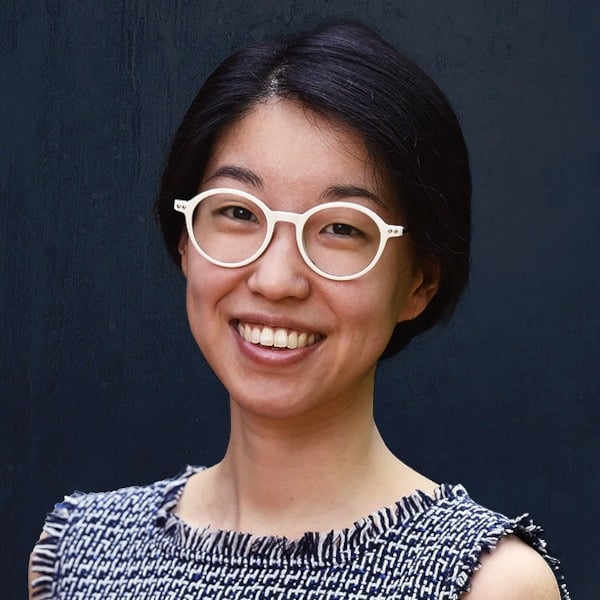
Jean Fan, PhD is an Assistant Professor of Biomedical Engineering at Johns Hopkins University, affiliated with the Center for Computational Biology and Institute for Computational Medicine. Her research focuses on developing machine learning methods to analyze spatially resolved and single-cell omics data. Her team, the JEFworks Lab, creates open-source tools for analyzing high-dimensional biological data to understand cellular identity, tissue organization, and disease progression. Dr. Fan's work bridges computational biology with clinical applications, particularly in leukemia and pediatric brain cancers. Education: BS in Biomedical Engineering & Applied Math from Johns Hopkins (2013); PhD in Bioinformatics from Harvard Medical School (2018); Postdoc in Chemical Biology/Physics at Harvard (2018–2020) under Xiaowei Zhuang, focusing on spatial transcriptomics. Research emphasizes spatial genomics and computational tool development, with key contributions to spatial alignment algorithms (STalign), normalization techniques, and cell-type deconvolution methods. Her lab's work has advanced understanding of kidney ischemic injury, glioblastoma spatial dynamics, and CLL pathogenesis. Awards include Forbes 30 Under 30, NSF CAREER Award, and 2025 PECASE. She founded CuSTEMized, a nonprofit providing STEM storybooks for girls. Recent collaborative projects include HuBMAP 3D reference atlas construction and Discovery Award-funded interdisciplinary initiatives. Labs/Teams: JEFworks Lab (primary); active collaborations with Dana-Farber Cancer Institute and Harvard Medical School. Current efforts focus on spatially resolved multi-omic integration and clinical translation of computational tools.
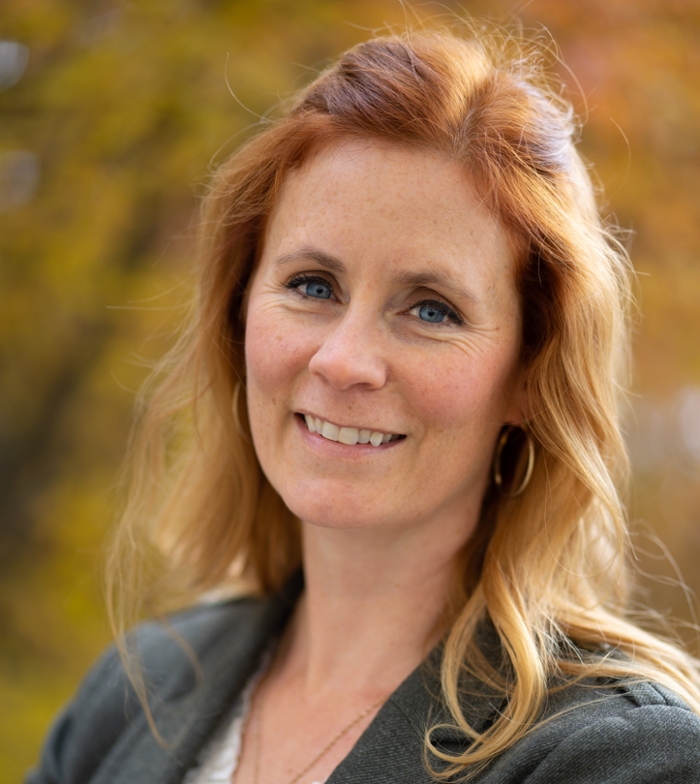
Dr. Alison Oates is an Associate Professor at the University of Saskatchewan's College of Kinesiology, specializing in biomechanics and motor control. Her research focuses on neuromuscular adaptations, healthy aging, and managing chronic conditions through gait analysis and balance control. She holds a PhD from the University of Waterloo, with postdoctoral training at McGill University on locomotor rehabilitation post-stroke. Her academic background includes a B.Sc. in Kinesiology from Waterloo, followed by advanced studies in dynamic stability during gait termination in Parkinson's patients. She teaches advanced courses such as Motor Control of Neurological Conditions (KIN 422.3) and Sensorimotor Control of Posture & Locomotion (KIN 822.3). Dr. Oates' research explores biomechanical and neuromuscular aspects of balance and gait, particularly in neurologically impaired populations and older adults. Recent work includes studies on haptic feedback systems, sex-and-gender-based analysis in balance research, and fall prevention strategies. Her articles highlight innovative methods like IMU-based motion capture and clinical applications for spinal cord injury and stroke rehabilitation. While no formal academic awards are listed, her contributions to gait rehabilitation and biomechanical measurement techniques are widely recognized. She currently oversees research projects investigating the efficacy of haptic input on walking stability and neuromuscular adaptation mechanisms. Her work bridges clinical practice and biomechanical theory to improve rehabilitation outcomes for individuals with neurological disorders.
Andrea Maurino is a Full Professor at the University of Milano-Bicocca and leads the Insid&s LAB. His research focuses on data quality, knowledge graphs, machine learning, and their applications in healthcare, finance, urban planning, and organizational analysis. He explores cutting-edge techniques like Large Language Models (LLMs) for decision support systems and semantic annotation of tabular data. Key research interests include improving data quality frameworks for large RDF datasets, developing enterprise knowledge graphs for organizational insights, and applying AI to social media analysis and hate speech detection. His work bridges theoretical advancements with real-world applications such as smart city mobility prediction and nutritional strategies for healthy aging. Notable contributions include scalable tools like ABSTAT-HD for knowledge graph profiling and the 3d-clost mobility prediction model. Maurino’s interdisciplinary approach integrates data science with fields like psychology (ICD-11 decision support) and environmental science (ESG activity detection in financial texts). His lab collaborates on projects like Food NET, combining nutrition science with social network analysis. While no formal awards are listed here, his prolific publication record reflects sustained innovation in data-driven methodologies.
Stephanie Burt is the Donald P. and Katherine B. Loker Professor of English at Harvard University's Faculty of Arts and Sciences (FAS). Her office is located at Barker 270, and she holds regular office hours. She earned a B.A. from Harvard in 1994 and a Ph.D. from Yale in 2000. Her research focuses on 20th- and 21st-century poetry, science fiction, literature’s relationship with geography, contemporary writing, comics, and intersections between literature and other arts. She hosts the podcast Team-up Moves and teaches a creative writing workshop on poetry. Burt’s publications include critical works like The Poem Is You (2016) and poetry collections such as We are Mermaids (2022). Her writing explores formal innovation, interdisciplinary approaches, and the public role of poetry. She is currently on leave for Spring 2025.
Dr. Bon Woo Koo is an Assistant Professor at the School of Urban and Regional Planning , Toronto Metropolitan University. His expertise lies in geospatial urban analytics, walkability, and GIS applications, focusing on urban design for public health equity and innovative data science tools. He holds a PhD in City & Regional Planning from Georgia Institute of Technology, a Master’s in Landscape Architecture from Seoul National University, and a Bachelor’s in Interior Design from Kookmin University. Education: PhD in City and Regional Planning, Georgia Institute of Technology Master of Landscape Architecture, Seoul National University Bachelor of Interior Design, Kookmin University Research Interests: Dr. Koo investigates urban environments’ impact on health and well-being, equity in environmental amenities (e.g., tree canopies), and advanced GIS techniques. He develops automated audit methods for walkability and explores spatial modeling for urban sustainability. His work bridges data science with policy, contributing to CDC health surveillance and smart city initiatives. Publications: His research appears in journals like Landscape and Urban Planning , Environment and Behavior , and Health and Place , with a focus on walkability audits, urban tree equity, and audio-based pedestrian sensing. Recent work addresses post-pandemic mental health and broadband equity strategies. Professional Engagement: He has advised the CDC’s technical panel on leveraging big data for health policy, presented at conferences like the Association of Collegiate Schools of Planning, and collaborated with institutions like Universitas Gadjah Mada and the Atlanta Regional Commission.
Univ.-Prof. Dr. Claudia Lauer is a Professor of Old German Studies specializing in Medieval German literature at the Rheinische Friedrich-Wilhelms-Universität Bonn. She holds a dual focus on poetry of the Middle Ages and Early Modern periods, courtly epic, and historical narratology. Her work bridges German-French literary relations and cultural studies, with significant contributions to understanding medieval semantics and reception history. Current Position: Chair for Old German Studies (since September 2023) Prior Roles: Junior Professor at the University of Mainz, Acting Professorships at Mainz and Frankfurt, and Research Fellowships at the Heidelberg Academy Her research encompasses interdisciplinary projects such as the GRK 1876 'Early Concepts of Man and Nature' and the 'Middle High German Dictionary'. Key topics include historical semantics, medieval performance spaces, and poetic innovation in works like Frauenlob's literature. She supervises doctoral projects on medieval textual semantics and collaborates on teaching initiatives like LehrFoRM_KuMed. Publications span monographs (e.g., The Art of Intrigue ), edited volumes, and essays on topics ranging from color symbolism in medieval poetry to narrative structures in courtly epics. Her pedagogical work emphasizes integrating medieval cultural patterns into modern German teaching. Recent projects include analyzing rhyme cultures in medieval literature and exploring the aesthetics of pain in medieval lyric poetry. She actively contributes to scholarly discourse through editorial roles and international collaborations, reflecting her commitment to advancing medieval studies through both traditional and innovative methodologies.
Dr. Hung Cao is an Assistant Professor of Computer Science at the University of New Brunswick, where he directs the Analytics Everywhere Lab. His work focuses on interdisciplinary research in Cyber-Physical Systems (CPS), IoT, Edge/Fog/Cloud Computing, and Explainable AI, addressing societal challenges through data-driven solutions. Prior roles include PostDoc Fellow and Data Scientist at the People in Motion Lab, UNB, and Lecturer/Researcher at Vietnam National University. He holds a Ph.D. in Geomatics Engineering (specializing in Data Science) from UNB (2020), an M.Sc. in Computer Science from University College Dublin (2015), and a B.Eng. from Vietnam National University (2011). Research interests span Smart Cities, Embedded AI, TinyML, Federated Learning, and Real-time Systems. He has led projects with Cisco, NB Power, and other industry partners to develop scalable analytics frameworks for IoT applications. Dr. Cao actively contributes to technical communities (IEEE Smart City, Edge Computing, etc.), serving as a reviewer for journals and conferences, and a Topic Editor for Electronics Journal . His innovations include the Analytics Everywhere framework for spatio-temporal data analysis, MACeIP platform for smart cities, and energy-efficient IoT systems for environmental monitoring. Current work emphasizes human-centered AI for healthcare diagnostics and industrial inspection systems.
Ioannis Theodoridis is a Professor at the Department of Informatics, University of Piraeus, and Director of the Data Science Laboratory under the School of Information and Communication Technologies. His research focuses on data science, particularly large-scale data management and analysis, with applications in maritime informatics, spatiotemporal data, and mobility patterns. He holds editorial roles at ACM Computing Surveys and has contributed to numerous international conferences and journals. As a project leader in Horizon 2020 initiatives, he has coordinated research on data-driven solutions for maritime safety and urban mobility. He earned his Diploma (1990) and PhD (1996) in Electrical and Computer Engineering from the National Technical University of Athens (NTUA). His work includes developing scalable systems for maritime route forecasting (e.g., GMSA), frameworks for vessel trajectory prediction (e.g., VesselVision), and platforms like i4sea for fisheries monitoring. Contact: ytheod@unipi.gr .
Dr. Shima Hamidi is Assistant Professor in the Department of Environmental Health and Engineering at the Bloomberg School of Public Health, Johns Hopkins University. She is also a core faculty member of the Bloomberg American Health Initiative and holds the Bloomberg Assistant Professorship in American Health in Environmental Challenges. Her academic background includes a PhD from the University of Utah (2015), an MSc from the Technological University of Malaysia (2009), and a BA from Shiraz University (2005). PhD, University of Utah, 2015 MSc, Technological University of Malaysia, 2009 BA, Shiraz University, 2005 Dr. Hamidi's research centers on the built environment, transportation, housing, and social determinants of health, with a strong focus on equity and urban sprawl. Her work explores how urban form influences public health outcomes such as life expectancy, traffic safety, food access, and upward mobility. She utilizes geospatial data and longitudinal analysis to assess the impacts of urban planning policies. Her recent publications (2020–2024) reflect a sustained focus on transportation equity, urban form, and public health. Key themes include ride-hailing versus fixed-route transit preferences, cycling safety in bikeshare cities, high-tech cluster geography, and the effectiveness of growth management policies. These works demonstrate interdisciplinary engagement with urban economics, environmental health, and policy analysis. Dr. Hamidi has received numerous honors, including: Endowed Chair in Environmental Challenges, Bloomberg American Health Initiative (2020–) Eno Fellow, Future Leaders Development Program (2015) Ivory Medal for Doctoral Scholarship, University of Utah (2015) Best Poster Award, Association of Collegiate Schools of Planning (2017) Presidential Fellow, University of Texas at Arlington (2017) She has advised students, such as Ahoura Zandi, and previously led the Center for Transportation Equity, Decisions and Dollars (CTEDD) at the University of Texas at Arlington, directing a multi-university consortium on transportation and health. Her research has been supported by the US Department of Transportation and widely cited in national media including the Wall Street Journal and CNN Money. Dr. Hamidi leads research initiatives that integrate urban planning with public health, contributing to policy-relevant science on sustainable and equitable urban development.
Professor TAN Ah Hwee is a Full-time Faculty member and Lee Kong Chian Professor of Computer Science at the School of Computing and Information Systems (SCIS) at Singapore Management University (SMU). He serves as the Associate Dean (Research) in SCIS and leads research in Artificial Intelligence, Machine Learning, and Health Informatics. His work spans neural networks, multi-agent systems, and healthcare applications such as Mild Cognitive Impairment prediction. He holds a PhD from Boston University (1994). Research Focus: His research integrates adaptive resonance theory, federated learning, and spatial-temporal modeling. Key areas include knowledge graph refinement, episodic memory systems for Activity of Daily Living (ADL) prediction, and explainable AI in multi-agent reinforcement learning. He also develops technologies for aging-in-place support and social media analytics. Recent Contributions: Recent work emphasizes hierarchical multi-agent models (HiSOMA), federated learning frameworks (FedART), and AI-driven health monitoring systems. His publications address challenges in self-organizing neural networks, context-aware reinforcement learning, and medical diagnostics through ambient sensing. Advising & Impact: Advises students like TEH Seng Khoon and Cassandra TAN Hui Ming. His projects include the eHealthPortal for elderly support and Silver Assistants for aging-in-place solutions. Research outputs bridge theoretical advancements in AI with real-world applications in healthcare and smart environments.
Thomas R. Dunn serves as Associate Professor of Communication Studies in Colorado State University's College of Liberal Arts, holding office A235 in the Behavioral Sciences Building. He directs the Queer Memory Project of Northern Colorado and the Humanities Baseline at the Joe Blake Center for the Engaged Humanities, while participating as a WICHE Leadership Fellow in the Mellon Foundation-supported Academy for Leaders in the Humanities. His educational credentials include a Ph.D. in Communication and Certificate in Women, Gender, and Sexuality Studies from the University of Pittsburgh (2011). Previously honored as Monfort Professor (2020-2023) and Presidential Leadership Fellow (2023-2024), he maintains active teaching responsibilities in rhetorical theory and queer studies. Dunn's research investigates the intersection of LGBT/queer culture, politics, and rhetoric through the lens of public memory and visual/material rhetorics. His scholarship examines how LGBTQ+ communities deploy historical narratives to drive social change, with particular focus on monuments, visual artifacts, and spatial representations. Key projects analyze the Memorial to the Murdered Jews of Europe, Oscar Wilde's legacy, Matthew Shepard's commemoration, and the visual rhetoric of hate crimes. His publication trajectory reveals consistent engagement with queer memory politics across eight significant articles (2010-2019), culminating in the forthcoming book The Pink Scar: How Nazi Persecution Shaped the Struggle for LGBTQ+ Rights (Penn State University Press, October 2025). This body of work demonstrates interdisciplinary reach spanning rhetoric, gender studies, visual culture, and political communication. Dunn's scholarly contributions have earned multiple prestigious awards: 2011 National Communication Association's Stephen E. Lucas Debut Publication Award 2012 Gerald R. Miller Outstanding Doctoral Dissertation Award 2014-2015 Excellence in Teaching Award from CSU's College of Liberal Arts 2016 B. Aubrey Fisher Outstanding Journal Article Award 2017 New Investigator Award from Critical/Cultural Studies Division of NCA 2018 Book of the Year Award from GLBTQ Communication Studies Division of NCA As an educator, he teaches undergraduate courses including History and Theory of Rhetoric and Communicating the Queer Past, while mentoring graduate students in rhetorical criticism and queer rhetorics. His administrative leadership extends to the Queer Memory Project, which preserves Northern Colorado's LGBTQ+ heritage through oral histories and community exhibits. Current initiatives include developing the Humanities Baseline curriculum and advancing his research on Nazi persecution's legacy for LGBTQ+ rights movements. The Queer Memory Project of Northern Colorado (QMPNoco) operates as a community-driven archive documenting regional LGBTQ+ history through digital collections, physical exhibits, and educational partnerships with local schools and cultural institutions.
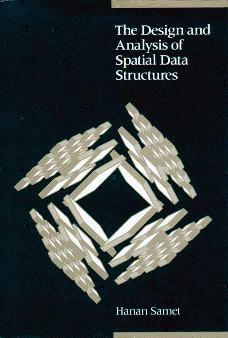
Hanan Samet is a Distinguished University Professor at the University of Maryland's Computer Science Department, affiliated with the Institute for Advanced Computer Studies (UMIACS) and the Center for Automation Research. He holds a Ph.D. from Stanford University (1975) and specializes in spatial databases, data structures, and geographic information systems. His research bridges computer science and geospatial analytics, with applications in image databases, computer vision, and spatio-temporal data management. Education: Ph.D., Computer Science, Stanford University, 1975 Research Interests: Focuses on spatial data structures, GIS, spatio-textual systems like NewsStand and CoronaViz, trajectory analysis, and metric indexing. His work emphasizes scalable algorithms for spatial networks and multimedia databases. Notable Projects: CoronaViz : Tracks disease spread via spatio-temporal data visualization NewsStand : Maps news articles geospatially SAND: Spatial browser for digital government Awards: ACM Paris Kanellakis Award (2014), IEEE McDowell Award (2015), UCGIS Research Award, and Fellowships in ACM/IEEE/AAAS. Recognized for advancing spatial database theory and practice. Grants/Advising: Leads NSF-funded projects on spatio-textual extraction and similarity search. Advises graduate students (e.g., Nicole Schneider, Montana Hoover) and undergraduate researchers. Labs/Teams: Active in UMIACS and the Center for Automation Research, collaborating on projects like VASCO (spatial visualization tools) and MARCO (image database systems).