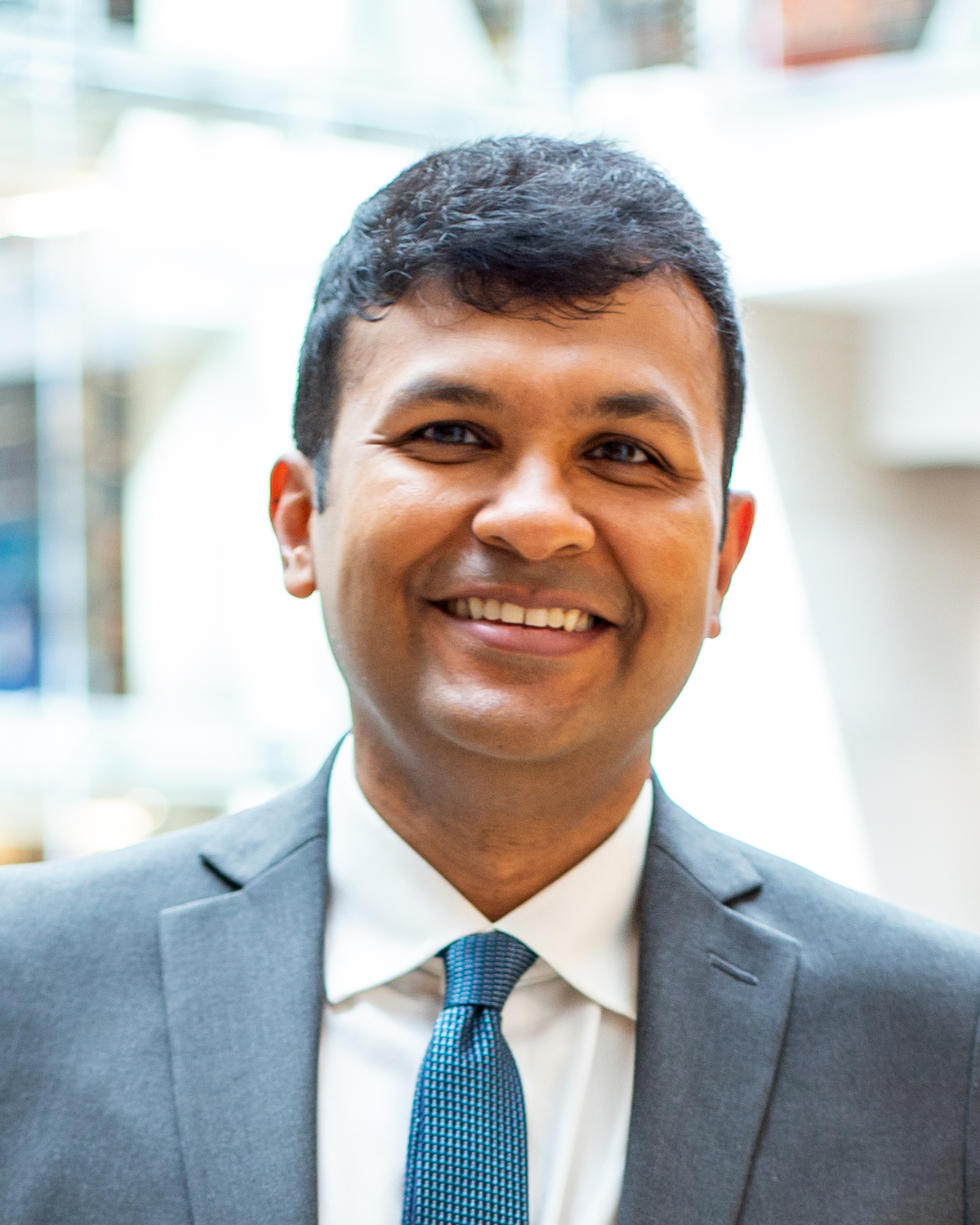
Matti Minkkinen is a Docent at the Turku School of Economics (University of Turku) and a Postdoctoral Researcher in Information Systems Science at the Department of Management and Entrepreneurship. His work bridges futures studies with ethics, privacy, and socio-technical systems in digital transformation. Recent roles focus on responsible AI governance and foresight methodologies. University: University of Turku School: Turku School of Economics Department: Department of Management and Entrepreneurship His research explores how digital technologies reshape organizational practices, emphasizing Futures Consciousness as a human capacity. Key themes include responsible AI , privacy protection , and causal layered analysis in scenario planning. Publications highlight ethical governance frameworks and EU policy debates. Recent articles address generative AI ethics , ML system integration , and AI auditing across journals like Communications of the Association for Information Systems and Information and Management . Topics cluster around socio-technical systems, digital ethics, and institutional adaptation to AI. Teaching and editorial roles include co-curating student research collections at Finland Futures Research Centre. No explicit scientific awards are listed, but his work contributes to foresight theory and practice.
Grant Parker is an Associate Professor at Stanford University , with appointments in the Department of Classics and African and African American Studies . He also holds a courtesy appointment in Comparative Literature . Since joining Stanford in 2006, he has led projects like Aftermaths of Enslavement: Curating Legacies , Egypt in South Africa , and Voortrekker Monumentality , focusing on colonial ideologies and legacies of enslavement through digital databases. Education : B.A. in English and Latin, University of Cape Town (1987) B.A. (Honours) in Latin, University of Cape Town (1988) M.A. in Latin, University of Cape Town (1991) Ph.D. in Classical Philology, Princeton University (1999) His research integrates Roman imperial culture with postcolonial and comparative frameworks, examining memorialization , public history , and historical cartography . He works across the ancient Mediterranean and South Africa, comparing imperial legacies. Recent publications analyze monumentality (e.g., obelisks), myth in late antiquity , and subaltern voices in Latin . His edited volume South Africa, Greece, Rome: Classical Confrontations (2016/7) bridges classical and African studies. Honors : Nominated as 'Standout Scholar' under forty, Black Issues in Higher Education (2003) He advises doctoral candidates and leads CESTA projects on South African museums and historical memory. Current teaching includes courses on empire-building , slavery narratives , and classical California .
Crystal Bae is an Assistant Professor of Geographic Information Science at the University of Chicago’s Center for Spatial Data Science since 2021. She earned her Ph.D. in Geography from the University of California, Santa Barbara, and completed a postdoctoral fellowship under Somayeh Dodge in the MOVE Lab, focusing on geographic visualization and spatial cognition. Research Interests: spatial cognition, wayfinding, geovisualization, travel behavior, and urban built environments. Teaching Roles: Courses include Spatial Cognition, Introduction to GIS, Cartographic Design, and Social Science Inquiry at UChicago; Urban Geography and Human Geography at UCSB. Scientific Awards: Certificate in College and University Teaching (CCUT), UCSB Excellence in Teaching Award, and recognition for innovative GIS lab design in ArcUser. Her work examines how individuals and groups cognitively process spatial environments through static and animated visualizations, collaborative navigation, and urban neighborhood boundaries. She has contributed to NSF-funded projects on movement ecology and spatial cognition, with publications in Movement Ecology, COSIT, and Built Environment. Crystal also co-hosts a jazz radio show, maintains a travel blog, and engages in bicycling adventures, reflecting her interdisciplinary approach to geography and personal connection to spatial experiences.
Arnab Nandi is a Professor in the Department of Computer Science & Engineering at The Ohio State University. His work bridges human interaction with data infrastructure, focusing on database systems, LLM-augmented analytics, and immersive query interfaces. Education: PhD in Computer Science & Engineering from the University of Michigan Leadership: Co-founder of OHI/O Hackathon Program and STEAM Factory interdisciplinary network Research spans human-in-the-loop data analytics , vibe querying (natural language + gestural interfaces), LLM integration into education, and climate response systems . Key projects include Omni (multimodal exploration), GestureDB , and Icarus (clinical pipelines). Recent publications analyze LLM-driven query stacks (HILDA 2025), video analytics (SIGMOD 2022), and data sunglasses for cognitive limits (HILDA 2025). Awards include NSF CAREER Google Faculty Research Award IEEE TCDE Early Career Award ACM Distinguished Member Advises students in database innovation , with alumni at Amazon, AWS, Roblox, and Meta. Teaches CSE 3241 (Database Systems), CSE 5889 (Software Startups), and CSE 5242 (Advanced Databases).
Nacima Ourahmoune serves as Associate Professor of Marketing at KEDGE Business School, where she teaches luxury marketing and coordinates the Luxury and Brands track within the Grande École program. With over a decade of strategy and marketing consultancy experience, she bridges academic rigor with industry practice in consumer culture research. PhD from ESSEC/IAE Aix-en-Provence Master's in Marketing Research (Paris 1 Sorbonne) MBA in Luxury Branding Grande École Diploma (HEC Paris) Sciences Po Aix degree Her research interrogates consumer culture through branding and behavior lenses, with persistent focus on power dynamics, gender equity, social justice, and bodily experiences. She examines these themes across established and emerging markets, particularly investigating how luxury consumption intersects with feminist theory and decolonial frameworks. Her work challenges conventional marketing paradigms through transformative consumer research methodologies. Analysis of her 15 most recent publications reveals three dominant trajectories: (1) Inclusive and sustainable luxury innovation (25% of output), (2) Gender justice frameworks applied to marketing contexts (40%), and (3) Consumer behavior in culturally specific settings like Algerian women's movements and rural culinary spaces (35%). Her scholarship consistently connects micro-level consumer experiences to macro-level social structures, with increasing emphasis on decolonial perspectives since 2020. Nacima actively shapes marketing discourse through advisory roles with GENMAC, IFPASA American Research Foundation, Ownyourcash.fr (Paris), and WomWork (Algeria)—all organizations advancing women's entrepreneurship. Her media presence in national and international press amplifies research findings to broader audiences, particularly regarding gender equity in luxury markets and post-Arab Spring consumer culture. As founder of KEDGE's Luxury and Brands academic track, she cultivates interdisciplinary collaboration between marketing scholars and industry practitioners. Her leadership extends to feminist academic networks that challenge systemic sexism through research mobilization and curriculum development, reflecting her commitment to transforming both marketing practice and academic institutions.
Professor Jordan Taylor is affiliated with Princeton University as a faculty member in the Department of Biomedical Engineering within the School of Engineering and Applied Science. His research focuses on unraveling computational processes in motor control and learning, with particular emphasis on interactions between explicit cognitive strategies and implicit motor adaptation during skill acquisition. Taylor leads the Intelligent Performance and Adaptation Laboratory , aiming to develop optimal training protocols for motor rehabilitation post-stroke or disease. Research Interests : Taylor investigates how humans learn motor skills through dual mechanisms of declarative strategy formation and implicit neural adaptation. His work explores the neural systems underlying these processes and their functional consequences, especially in pathological conditions like cerebellar degeneration. Current studies examine working memory constraints, reward modulation of implicit adaptation, and plan-based generalization of motor learning. Publication Trends : Recent articles analyze dual mechanisms in sensorimotor learning, reward-driven adaptation, and contextual influences on motor memory. His computational neuroscience approach combines behavioral experiments, neural imaging, and theoretical modeling to study cognitive-motor interactions across various tasks.
Dr. Colin Palmer is a Visiting Fellow in the School of Psychology at the University of New South Wales (UNSW), where he conducts research on visual perception with a focus on social features of our sensory environment. His work examines how the brain processes elements like eyes, faces, and behaviors of people around us using visual psychophysics, computational modeling, and 3D graphical rendering. Dr. Palmer completed his Ph.D. in 2016 and Bachelor of Behavioural Neuroscience (Honours) in 2009, both at Monash University. His doctoral research explored how neurocognitive models of sensory processing relate to differences in sensory integration and social cognition in autism. His primary research interests center on understanding the perceptual and neural mechanisms underlying our sensitivity to dynamic social cues, particularly eye and head movements. Dr. Palmer investigates how the visual system extracts basic environmental elements (color, shape, motion) and develops a mechanistic understanding of how our experience of the social world arises from nervous system activity. His work has clinical applications for understanding sensory and social difficulties in conditions like autism and schizophrenia. Dr. Palmer's recent publications reveal a consistent focus on social vision, particularly gaze perception, face processing, and animacy detection. His research increasingly incorporates computational modeling approaches to understand visual perception mechanisms. There's a strong emphasis on how lighting and shading affect face and gaze perception, with growing attention to clinical applications for neurodevelopmental conditions. Dr. Palmer has received recognition for his work through several awards: Emerging Investigator Award, Australasian Cognitive Neuroscience Society, 2017 Postdoctoral presentation award, Australasian Cognitive Neuroscience Society, 2016 Dr. Palmer is actively involved in research supervision and teaching. He teaches PSYC 3221 Vision and Brain and is available to supervise research students. His research is supported by significant funding: ARC Discovery Project (2020-2022): "Extracting meaning from motion" ($492,000) ARC Discovery Early Career Researcher Award (2019-2021): "Human sensitivity to the dynamics of other people's eye movements" ($356,000) Experimental Psychology Society Study Visit Grant (2017): "Testing computational theories of autism spectrum disorder in the social domain" (£2,580) Dr. Palmer collaborates extensively with Professor Colin Clifford at UNSW and maintains international collaborations with researchers in the UK and Australia, particularly on projects related to autism spectrum disorders and social cognition.
Ben K. Grunwald serves as Professor of Law at Duke University School of Law, where he has been a faculty member since 2017 after completing a Bigelow Fellowship at the University of Chicago Law School. His scholarly work bridges legal theory and empirical analysis to address critical issues in criminal justice systems. JD, PhD in Criminology, AM in Statistics, and BA from the University of Pennsylvania Clerked for the Honorable Thomas Ambro on the U.S. Court of Appeals for the Third Circuit Bigelow Fellow at the University of Chicago Law School (2016-2017) Professor Grunwald's research program centers on evidence-based criminal justice reform, with particular emphasis on prosecutorial power dynamics, sentencing fairness, juvenile justice boundaries, and police accountability mechanisms. His methodological approach integrates advanced statistical techniques with legal scholarship to produce actionable insights for policymakers. Current projects examine racial bias in criminal records, optimal decarceration strategies, and the labor market consequences of police discipline. His recent publications demonstrate a consistent focus on translating empirical findings into practical legal reforms, particularly in law enforcement practices and juvenile justice systems. Through interdisciplinary collaborations with criminologists and statisticians, his work challenges conventional wisdom using rigorous data analysis while maintaining strong connections to constitutional principles and procedural justice. Professor Grunwald teaches foundational courses including Criminal Law and Criminal Procedure: Investigation, along with specialized seminars in Criminology and Criminal Procedure that emphasize empirical methodologies. His curriculum development reflects his commitment to training future lawyers in evidence-based legal practice and policy analysis.
Dr Jonna Nyman is a Senior Lecturer in International Relations at the University of Sheffield, affiliated with the Department of Politics and International Relations within the School of Sociological Studies, Politics and International Relations. Her academic career is centered on critical approaches to security studies with particular expertise in Chinese security politics and energy security. Her research interests span multiple dimensions of security politics, with two primary focuses: Chinese security and foreign policy (particularly examining changes since Xi Jinping took office), and energy security with climate politics. Dr Nyman adopts critical theoretical approaches to examine how security is conceptualized, practiced, and experienced in different contexts. Her publication record demonstrates significant scholarly contributions, including the monograph The Energy Security Paradox (Oxford University Press, 2018) and co-editing Ethical Security Studies: A New Research Agenda (Routledge, 2016). Her recent work explores global security concepts through Chinese perspectives and methodological innovations in security research. Leverhulme Trust Early Career Fellowship for 'Securing China: Understanding security politics beyond the West' Academy of Finland research funding Economic and Social Research Council support Dr Nyman has held prestigious research positions including Associate-in-Research at Harvard University's Fairbank Center for Chinese Studies and visiting fellowships at the University of Copenhagen and Swedish Institute for International Affairs. Her teaching philosophy emphasizes active learning, critical thinking, and creating space for questioning assumptions in international relations.
Imma Petito is a PhD student at the University of Salerno (UNISA) and a Research Fellow at the Vrije Universiteit Brussel (VUB) within the Faculty of Arts and Philosophy. Her work focuses on medieval institutional, cultural, and diplomatic history across Italy, Europe, and the Mediterranean. She collaborates with institutions like the University of Naples Federico II (UNINA) and participates in the SHOC research group. Education: Master's in Historical Sciences (cum laude, UNINA, 2017); trained at State Archives of Naples and Vatican Secret Archives (2019) Key Research: Diplomatic ties between England and Italy (1463-1483), patrimony of medieval cathedrals, transnational archival evidence Her projects analyze discursive and cultural dimensions of medieval diplomacy, emphasizing languages, communication, and spatial perception. Recent outputs include critical editions of Sforza diplomatic correspondence and comparative studies of Aragonese geopolitics. Scientific Awards: Academic scholarship (2017) Italian Renaissance research grants (2018) Antico Del Libro fellowship (2019) She contributes to editorial committees like Serie I, Dispacci Sforzeschi da Napoli and participates in conferences on New Diplomatic History. Her work bridges medieval and early modern historiography through interdisciplinary methodologies.
Ayşe Zeynep Aydemir is an Assistant Professor of Architecture at MEF University's Faculty of Arts, Design and Architecture since 2017. She earned her PhD in 2017 from a joint program between Istanbul Technical University and KU Leuven, focusing on architectural design studio practices. Her academic journey includes a TÜBİTAK 2219 Research Fellowship at Royal College of Art (2019–2020) and a TÜBİTAK 2214 fellowship at KU Leuven (2014–2016). Her research interests span architectural education, design studio pedagogy, adaptive reuse of urban structures, and the intersection of architectural humanities with practice-based research. She emphasizes process-driven design, horizontal learning, and the role of spatial experience in education. Key publication trends include studies on adaptive reuse of office buildings for housing practice-led research in small architectural firms parallax views in metropolitan analysis Her work bridges academic theory with real-world applications, particularly in Istanbul's urban context. Scientific awards include TÜBİTAK 2219 and 2214 fellowships. She also led the Kilyos Boathouse design-build studio (2018), which won recognition in Turkey.
Jeffrey S. Smith is a Professor of Geography and Lead Undergraduate Advisor at Kansas State University's Department of Geography and Geospatial Sciences within the College of Arts and Sciences. His career spans 30 years of teaching and research focused on emotional attachment to place and restorative environments. Education : Ph.D. in Cultural-Historical Geography (1997), Arizona State University; M.A. (1990) and B.A. (1988) in Geography from Bowling Green State University and University of Northern Colorado respectively Research Interests include cultural landscapes, migration studies, and community development. His work examines topics such as acequias in the Upper Rio Grande, rural health care improvements in Central America, and cognitive mapping methodologies. Scientific Contributions feature 27 refereed journal articles, 10 book chapters, 19 book reviews, and the 2018 book Explorations in Place Attachment . He co-edited the 2016 textbook World Regions and Places . Scientific Awards : 2001 Editor's Choice Award for 'Los Hermanos Penitentes' 2006 Mexico-North Research Network Transnational Fellow 2004 Presidential Award for Excellence in Undergraduate Teaching 2017 Iman/K-State Alumni Outstanding Teaching Award Dr. Smith has served as Book Review Editor for Journal of Cultural Geography and advised 11 graduate students (8 Masters, 3 Ph.D.) during his career. His work on transnational migration from rural Mexico and community development in Central America has secured 22 research grants.
Simanti Banerjee is a Professor in the Department of Agricultural Economics at the University of Nebraska-Lincoln, where she joined in August 2014. She previously served as a Visiting Assistant Professor in the Economics Department at Oberlin College (2013-14) and as a post-doctoral researcher at the University of Stirling in Scotland UK (2010-13). She earned her Ph.D. from Pennsylvania State University in 2010. Her research focuses on analyzing coordination within groups, inter-personal bargaining, and the impact of information, communication and social networks on human decision making. She uses experimental and behavioral economic methods to study conservation policies, technology adoption, and decision making under risk & uncertainty. Her work has been funded by grants from USDA and NSF, and she has established the Behavioral and Experimental Economics Lab (BEEL) at UNL. Professor Banerjee teaches Environmental & Natural Resource Economics (AECN-NREE 265) at the undergraduate level and co-teaches Behavioral & Experimental Economics (AECN 818) at the graduate level. Her publication record shows consistent research in spatial coordination, conservation auctions, behavioral economics, and agricultural policy, with a particular emphasis on how information and communication affect environmental decision making in agricultural contexts. Her recent work has increasingly focused on regenerative ranching practices, soil health, and ecosystem services valuation. She has received significant research funding from USDA and NSF to support her work on environmental and agricultural economics. Her collaborative network includes researchers from multiple institutions across the United States and internationally. Professor Banerjee has advised numerous graduate students, including current PhD candidates Abdelmalek Hammami, Hanin Hosny, and Diya Ganguly, as well as MS students. Her research program demonstrates a strong commitment to understanding how economic principles can be applied to solve environmental challenges in agricultural settings.
Dr. Sahani Pathiraja is a Lecturer (tenure track assistant professor) at UNSW Sydney , specializing in Data Science . Her research bridges mathematical and statistical foundations with practical applications in environmental and biomedical sciences. Research Focus : Sequential Bayesian inference, Monte Carlo methods, stochastic analysis of non-linear filtering, uncertainty quantification, and real-time parameter estimation. Current Projects : Co-investigator in the ARC Industrial Transformation Training Centre: Data Analytics for Resources and Environment (DARE) and the Next Generation Graduate Program (NGGP) in Sports Data Science and AI . Research Supervision : Dr. Pathiraja supervises PhD students in areas including: Bayesian inference Stochastic differential equations Data assimilation Non-linear filtering Scientific Collaborations : Her work intersects with environmental science, biomedical applications, and machine learning. Projects include stochastic hydrology, SDEs, and operator learning for environmental systems. Contact Information : Email: s.pathiraja@unsw.edu.au Phone: +61 2 8065 0836 Office: Room 2070, Level 2, The Red Centre, UNSW Sydney
Asli Niyazioglu is an Associate Professor in Ottoman History at the University of Oxford's Faculty of Oriental Studies and a Fellow by Special Election. Originally from Istanbul, she taught there for nearly a decade before joining Oxford. She completed her studies at Harvard University and held a research fellowship in Berlin. Her research focuses on cultural history of the early modern Ottoman Empire, with special emphasis on three interconnected domains: Dream narratives and their role in historical biography Urban imaginaries and community formation in Istanbul Life writing practices among Ottoman scholars and poets She is currently developing a monograph exploring how imagination shaped urban communities in early modern Istanbul, examining how poets, scholars and Sufis created shared cultural spaces through dream interpretation and biographical traditions. Her publications demonstrate consistent focus on Ottoman cultural history with recent work examining: Cosmographical interpretations of Istanbul's ancient monuments (2023) Sufi spatial practices and urban experience (2021) Biographical traditions as community-building tools (2017)