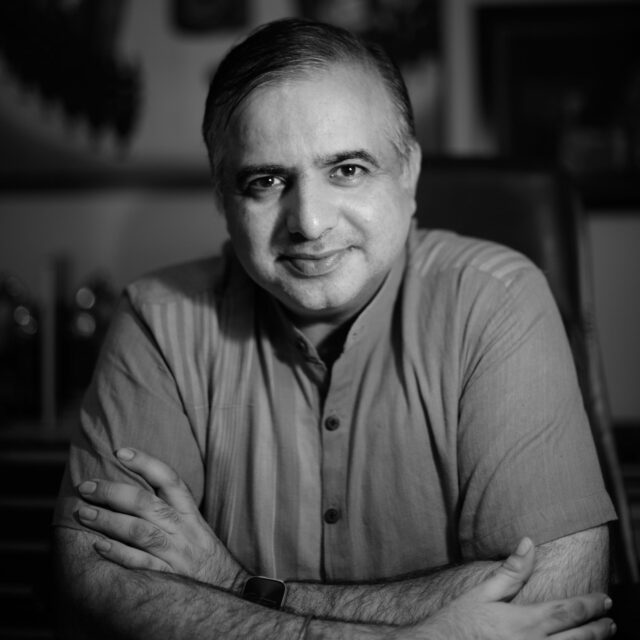
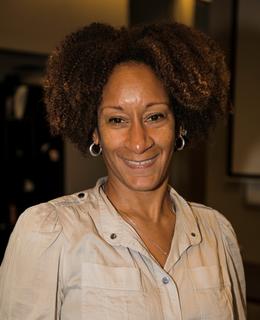
Lauren Hall-Lew is a Professor and Personal Chair of Sociolinguistics at the University of Edinburgh's School of Philosophy, Psychology and Language Sciences. She holds a BA from the University of Arizona (2002) and MA/PhD from Stanford University (2009). Her research focuses on phonetics, social meaning, language change, and sociopolitical identity. She has pioneered projects like the Lothian Diary Project, studying linguistic impact of the pandemic, and analyzed Scottish political speech, tourist language attitudes, and ethnicity-linked variation in San Francisco. Teaching contributions include courses on sociophonetics and language variation/change, earning her EUSA Teaching Award (2013). She has supervised over a dozen PhD students and is involved in EDI initiatives, including founding the Staff BAME Network Mentoring Programme (2019-2021), recognized via CAHSS Award and Principal's Medal nominations. Active in grant work, she leads projects on homelessness and linguistic variation (British Academy-funded), Scottish tour guide discourse, and political identity in phonetics. Awards include teaching accolades and EDI recognition. Her publications span sociolinguistic theory, phonetic analysis, and applied linguistic methods.
Ramana Nanda is a Professor of Entrepreneurial Finance at Imperial College London's Business School and Academic Lead at the Institute for Deep Tech Entrepreneurship. He is also a Research Fellow at CEPR and Visiting Scholar at Harvard Business School. His research focuses on financing mechanisms for new ventures, venture capital dynamics, and innovation policy. Education: PhD from MIT Sloan School of Management, BA/MA in Economics from Trinity College, Cambridge. Prior to academia, he worked at Oliver Wyman in capital markets and small-business banking. Research Interests: Financing frictions in entrepreneurship, venture capital syndicates, innovation ecosystems, and policy interventions for high-potential ventures. His work bridges theory and practice, advising startups and investors in deep tech sectors addressing global challenges. Notable Awards: 2020 ERC Consolidator Grant for groundbreaking research, 2015 Kauffman Prize Medal for contributions to entrepreneurship literature. Formerly Sarofim-Rock Professor at Harvard Business School (2007-2020). Grants & Projects: Co-director of Harvard's Private Capital Project, recipient of major research grants. Advises on venture capital strategies and deep tech investments. Labs/Initiatives: Leads Imperial's Deep Tech Entrepreneurship Institute, collaborating with industry and policymakers to scale breakthrough technologies.
Edward Lank was a Professor at the Cheriton School of Computer Science, University of Waterloo, and held an Inria International Research Chair at Inria Lille-Nord Europe (2019–2023). His research focused on Human-Computer Interaction (HCI), including intelligent user interfaces, mobile/multi-touch interaction, gesture recognition, and mathematical software design. He earned a BSc from the University of Prince Edward Island and a PhD from Queen's University. Research Highlights: Pioneered work on gesture-based interaction, including MathBrush for mathematical expression recognition. Explored large-display interaction, powerwall design, and mass user engagement with public displays. Investigated kinematics of user input, endpoint prediction, and mode inference in interfaces. Collaborated on persuasive technology for energy demand management and health-related serious games. Awards & Recognition: National Science Foundation Career Award (2004) Best of CHI Nominee (2008) Inria International Research Chair (2019–2023) Grants & Funding: Supported by Google, NSERC, GRAND NCE, and the ORF Program. His research addressed challenges in wearable tech, VR/AR, and sustainable HCI practices. Legacy: Edward Lank passed away on March 21, 2022. His contributions to HCI, including foundational work on gesture recognition and user-centered design, continue to influence the field. His courses, such as CS 889 (HCI Seminar) and CS 449 (HCI Fundamentals), emphasized user-centered design and empirical methods.
Aravind Rajeswaran is a Research Scientist at Meta AI (FAIR) and Visiting PostDoc/Collaborator at Berkeley AI Research Lab (BAIR) at UC Berkeley's College of Engineering, Department of Electrical Engineering and Computer Sciences. He completed his PhD in Computer Science at the University of Washington under Profs. Sham Kakade and Emo Todorov, with additional collaborations with Sergey Levine and Chelsea Finn, and previously earned his bachelor's degree with the best undergraduate thesis award from IIT Madras working with Balaraman Ravindran. His research focuses on building generalist AI agents that operate in open worlds, combining reinforcement learning, representation learning, and world models. Key projects include Locate 3D for real-world object localization, OpenEQA for embodied question answering with foundation models, VC-1 as an artificial visual cortex for embodied intelligence, and R3M as a universal visual representation for robot manipulation. His work demonstrates how pre-trained visual representations can significantly enhance robotic capabilities with minimal supervision. Rajeswaran's publication record shows consistent high-impact contributions across premier AI conferences including NeurIPS, ICML, CVPR, and RSS from 2018 through 2025, with research spanning reinforcement learning, representation learning, robotics, and computer vision. His work on Decision Transformer demonstrated how sequence modeling frameworks can effectively train reinforcement learning policies. Best Paper Award, Scaling Robot Learning Workshop at ICRA 2022 best undergraduate thesis award from IIT Madras As an educator and mentor, Rajeswaran has guided numerous PhD students who have gone on to positions at Stanford, MIT, CMU, Berkeley, and top AI companies including Meta, DeepMind, and Anthropic. He designed and co-taught the Deep Reinforcement Learning course (CSE599G) at UW in 2018, with materials adopted by courses at MIT and CMU, and served as lead TA for Machine Learning for Big Data (CSE547). His research has been supported through his role as Principal Investigator for the Cortex Team at FAIR.
Zoran Đukanović is a Professor at the Faculty of Architecture, University of Belgrade. His work focuses on urban design, cultural heritage, and sustainable development, with a particular emphasis on participatory methods and community engagement in urban planning. His research explores the intersection of architecture, public spaces, and social dynamics, addressing challenges such as climate change adaptation, heritage conservation, and urban regeneration. Notable projects include studies on Belgrade’s urban policies, waterfront revitalization, and the role of cultural sites in tourism and placemaking. He has contributed to interdisciplinary initiatives linking education, urban planning, and place branding, advocating for inclusive and equitable urban development.
Andrea Stevenson Won is a researcher at Cornell University in the Department of Communication , focusing on virtual reality (VR), human-computer interaction, and social dynamics in immersive environments. Her work explores avatar embodiment , nonverbal behavior , and accessibility in VR for users with disabilities. Research Themes : Virtual embodiment and its psychological effects Accessibility solutions for blind and low-vision users in social VR Nonverbal communication analysis in immersive environments Pro-social behavior through VR interventions Collaborative VR systems and AI integration Recent Article Trends : 2024: Investigated avatar behavior transformation in mixed reality ( MRTransformer ), AI-guided accessibility tools, and nonverbal cue adaptations 2023-2022: Focused on educational VR applications, 360° video narratives, and longitudinal team dynamics 2021-2014: Pioneered avatar embodiment studies, anxiety detection via movement tracking, and homuncular flexibility in VR
Dr. Sheng Yang is an Assistant Professor in the School of Engineering at the University of Guelph. He leads the Design Innovation and Intelligent Manufacturing (DIIM) lab, focusing on advancing additive manufacturing, generative design, and smart manufacturing technologies. His research integrates IoT, big data analytics, and bio-inspired design to address challenges in aerospace, green energy, and healthcare. Key areas include computational design for additive manufacturing, data-driven mass customization, and digital twin-based optimization. Education: Ph.D. in Mechanical Engineering from McGill University (2019), followed by a Postdoctoral Fellowship at McGill (2019–2020). Joined University of Guelph in 2020. Research interests span energy efficiency, complex system optimization, and personalized healthcare products. Recent work emphasizes digital twin synchronization in robotics, machine learning for quality prediction, and sustainable additive manufacturing processes. Notable awards include the 2019 Association of Commonwealth Universities Blue Charter Fellowship and 2018 ASME Best Paper Award. His lab actively seeks partnerships in personalized healthcare, product design, and smart manufacturing. Grants and collaborations focus on advancing manufacturing technologies and sustainability. No formal advisees listed, but active in graduate training through lab projects. The DIIM lab explores cutting-edge solutions for industrial and societal challenges through interdisciplinary approaches.
Ulrich Tallarek serves as Professor of Analytical Chemistry in the Faculty of Chemistry at Philipps University of Marburg, where he has held a W3 professorship since 2011. He also serves on the Board of Directors for the Materials Science Center at the university, a position he has held since 2007. His research group focuses on the fundamental understanding of transport phenomena in porous media with applications spanning chromatography, battery technology, and microfluidic systems. The group maintains strong collaborations with institutions worldwide and secures substantial research funding for advanced computational and experimental work. Professor Tallarek's research interests center on functional porous solids, with specific focus on morphology-transport-performance relationships. His work bridges multiple scales from molecular dynamics simulations of solute behavior in nanopores to macroscopic transport in chromatographic columns and battery electrodes. Key research areas include diffusion in hierarchical porous media, electrokinetic phenomena in microfluidic systems, molecular simulation of chromatographic processes, and advanced characterization of porous materials using tomography and other techniques. His group has pioneered multiscale simulation approaches that connect molecular-level surface chemistry to macroscopic transport properties. The research output demonstrates consistent focus on understanding fundamental transport mechanisms in porous systems, with recent publications emphasizing multiscale simulation techniques, molecular dynamics studies of solvent effects in chromatography, advanced characterization of mesoporous structures, and applications to separation science and energy storage. The work shows strong integration of computational modeling with experimental validation across multiple length scales. 2003: Desty Memorial Prize for Innovation in Separation Science, The Royal Institution of Great Britain, London 2006: Young Scientist Award from DECHEMA e.V. 2011: Named Discussion Leader at the 2011 Gordon Research Conference on Physics & Chemistry of Microfluidics 2011–2012: Chairman of the German Chemical Society (GDCh), Marburg 2013: Finalist, World Technology Awards, for category Environment 2013: Named as one of the 100 most influential analytical scientists in the world (The Analytical Scientist Power List) 2017: Recipient of the Silver Jubilee Medal 2017, The Chromatographic Society, UK Professor Tallarek's research has been supported by numerous grants enabling high-performance computing resources, advanced instrumentation, and international collaborations. His group maintains strong ties with industry partners in separation science and analytical instrumentation. The Tallarek Research Group includes postdoctoral researchers, PhD students, and technical staff working across experimental and computational domains. Current projects focus on molecular simulation of chromatographic processes, advanced characterization of porous battery electrodes, and development of novel separation methodologies. The Tallarek Research Group operates state-of-the-art facilities for computational modeling, including access to high-performance computing resources at Forschungszentrum Jülich. The group also maintains experimental capabilities for chromatographic analysis, materials characterization, and microfluidic device development. Their work on physically reconstructed porous media has established new standards for connecting microstructure to transport properties in complex materials systems.
Dr. George Allen O. Villanueva is an Associate Professor in the Department of Communication and Journalism at Texas A&M University, affiliated with the Race & Ethnic Studies Institute and Latinx/o/a & Mexican American Studies programs. His research focuses on how marginalized communities of color navigate structural oppression through communication, media, activism, and expressive culture. His interdisciplinary work integrates critical theories from communication, anthropology, and sociology. Dr. Villanueva holds a PhD in Communication from the University of Southern California and has taught at Loyola University Chicago before joining Texas A&M. Education: B.A. in Black Studies and History (UC Santa Barbara), M.Sc. in Global Media and Communications (London School of Economics), and PhD in Communication (USC Annenberg School). Research Interests : Urban equity advocacy, communication infrastructure, critical hip hop pedagogy, anti-displacement strategies, and engaged scholarship. His methods emphasize participatory and autoethnographic approaches to address systemic inequities in cities. Notable projects include the Chinatown anti-displacement map and walking tour, the Hollywood Community Studio, and the Northeast Los Angeles Riverfront Collaborative. His 2022 book Promoting Urban Social Justice won the 2023 Jane Jacobs Book Award for its contribution to urban communication studies. Community Engagement : Over 20 years of experience in community organizing, urban planning, and social change advocacy, including roles in electoral politics and strategic communication consulting.
Professor Kylie Peppler is a dual Professor of Informatics and Education at the University of California, Irvine, leading the Creativity Labs and the Connected Learning Lab. Her research focuses on leveraging hands-on creativity—such as e-textiles, robotics, and traditional fiber crafts—to enhance STEM education, particularly for marginalized populations. She emphasizes the role of materiality in fostering systems thinking and equity in learning environments. Education: PhD in Education (UCLA), Postdoctoral training at UC Irvine, and prior roles at Indiana University. Her academic journey bridges psychology, art, and technology. Research Interests: Maker culture, computational thinking, STEAM integration, workforce development, and the impact of arts in education. She explores how tools like e-textiles and looms democratize access to STEM while addressing gender disparities. Key Projects: NSF-funded work on computational construction kits, Re-Crafting STEM initiatives, and Future of Work research using AR/VR for manufacturing training. Collaborations include Boeing, Inner-City Arts, and NYSCI. Awards: NSF Early CAREER Award, Mira Tech Educator of the Year, and Indiana Governor's Award. Her work is supported by NSF, Wallace Foundation, and industry partners. Grants & Labs: Over $10M in grants; directs labs advancing connected learning and equity through technology. Recent studies include virtual reality welding simulators and culturally sustaining arts practices. Labs/Teams: Creativity Labs (designing maker tools), Connected Learning Lab (digital equity), and partnerships with museums and industry to scale inclusive learning.
Will Perkins is an Associate Professor in the School of Computer Science at Georgia Institute of Technology. Previously, he held faculty positions at the University of Illinois at Chicago, the University of Birmingham (UK), and was an NSF Postdoc at Georgia Tech. He earned his PhD in 2011 from New York University's Courant Institute under Joel Spencer. His research focuses on algorithms, statistical physics, and discrete mathematics, particularly exploring algorithmic tractability of random computational problems, statistical physics spin models, and combinatorial methods derived from algorithmic intuition. Research Interests : Algorithms, statistical physics, combinatorics, phase transitions, random graphs, and Gibbs measures. His work bridges theoretical computer science and statistical mechanics, addressing questions about sampling, phase coexistence, and algorithmic barriers. Recent Activities : Director of the Algorithms and Randomness Center at Georgia Tech, Managing Editor of Combinatorial Theory , and Associate Editor of Random Structures and Algorithms and SIAM Journal on Discrete Mathematics . Upcoming engagements include the Rocky Mountain Summer Workshop (2024), Park City Mathematics Institute (2024), and conferences on Random Structures and Algorithms (2025). Teaching : Courses include Design and Analysis of Algorithms (CS 3510), Advanced Algorithms (CS 4540), and specialized topics like Statistical Physics in Algorithms and Combinatorics (CS 8803). He has taught across institutions, including at the University of Birmingham and University of Illinois at Chicago. Key Contributions : His work on phase transitions in combinatorial structures, algorithmic sampling in statistical physics models, and rigorous analysis of Gibbs measures has been published in top venues like FOCS, STOC, and Communications in Mathematical Physics. Notable results include hardness of sampling for anti-ferromagnetic Ising models and novel contour methods for Pirogov-Sinai theory.
Prof. Gaurav Raheja is a Professor at the Department of Architecture & Planning, IIT Roorkee, and Co-coordinator of the Design Innovation Centre. He holds joint faculty positions at the Centre for Transportation Systems and is Professor-in-charge of Inclusion and Accessibility Services. His academic journey includes a PhD (2008) and M.Arch (2002) from IIT Roorkee, and a B.Arch from PTU Jalandhar (2000). His research focuses on universal design, inclusive mobility, urban sustainability, and accessibility for marginalized groups such as persons with disabilities, children, and the elderly. He leads the Laboratory of Inclusive Design (LID) and advises India’s government on accessibility policies. Notable awards include the Mphasis Universal Design Award (2010) and DAAD Research Ambassadorship (2018–2022). He has authored over 50 publications, including books on universal design and accessibility. His recent work explores children’s independent mobility in urban areas, inclusive urban futures, and accessibility in pilgrimage towns. He collaborates with global institutions like TU Berlin and TU Dresden through DAAD-funded programs. His teaching spans courses on universal design, architectural theory, and sustainable urban planning.
Assoc Prof Haoming Liu is an Associate Professor in the Department of Economics at National University of Singapore. His research focuses on applied economics, econometrics, and labor economics, with a particular emphasis on labor and demographic economics, health, education, and welfare, as well as economic development and technological change. His work often examines the intersections between environmental factors (e.g., heat, pollution) and economic outcomes, such as labor productivity, crime rates, and educational attainment. He has also contributed to studies on minimum wage policies, housing markets, and fertility-education trade-offs in developing economies. Education: PhD in Economics from the University of Western Ontario, Canada. Research highlights include analyzing the impact of heat on economic activity in tropical cities like Singapore, the effects of air pollution on labor productivity in China, and the role of discount rates in long-term housing market decisions. His teaching interests span labor economics, income distribution, and applied econometrics. Key contributions include demonstrating how heat influences workplace attendance and student performance in air-conditioned versus non-air-conditioned environments, and how minimum wage increases reduce urban crime disparities between low- and high-income communities. His articles frequently employ innovative econometric methods to address policy-relevant questions, such as optimal contest design, microgrid energy trading mechanisms, and urban density pricing in housing markets.
Dr. Jennifer Adams is a Professor at the University of Calgary with dual appointments in the Werklund School of Education and the Faculty of Science’s Department of Chemistry. She holds a Tier II Canada Research Chair in Creativity, Equity, and STEMM. Her work focuses on equity in STEM education, postsecondary faculty education, and transdisciplinary approaches. Dr. Adams earned her PhD in Urban Education from The Graduate Center, CUNY, and has prior roles including Associate Professor at Brooklyn College and leadership in informal science institutions like the American Museum of Natural History. Education: PhD Urban Education (2006), MS Nutrition (1996), MA Education (1995), BA (not specified) Her research emphasizes anti-deficit and justice-oriented pedagogies, with a focus on marginalized communities. Key areas include racial equity in STEM, sociocultural theory, and critical transdisciplinary methods. Dr. Adams leads the Creativity, Equity, and STEM Lab, advancing equity through community-based and arts-infused approaches. She edits academic journals such as the International Journal of Informal Science and Environmental Learning and has collaborated on projects like the Resilient Schools Consortium (RiSC). Recent publications explore belonging in STEM, anti-racist education frameworks, and transdisciplinary methodologies. Her work bridges formal and informal learning environments to address systemic inequities. Dr. Adams actively engages in policy advocacy and community partnerships to foster inclusive STEM ecosystems globally.
Volker J Schmid is a Professor of Bayesian Imaging and Spatial Statistics at the Department of Statistics, Ludwig Maximilian University of Munich. He leads the Bayesian Imaging and Spatial Statistics group and contributes to interdisciplinary initiatives like the Munich Center of Machine Learning. His work bridges statistical theory with applications in medical imaging and biology. PhD in Statistics (2004), LMU Munich Diploma in Statistics (2000), LMU Munich Abitur, Joseph-von-Fraunhofer-Gymnasium Cham (1993) His research focuses on Bayesian computational methods for high-dimensional data, particularly in medical imaging (MRI, DCE-MRI) and biological microscopy (e.g., 3D nuclear architecture analysis via super-resolution microscopy). Key applications include disease mapping , image segmentation , and spatio-temporal modeling . His software tools (e.g., nucim , bioimagetools , BAMP ) enable quantitative analysis in nuclear imaging and age-period-cohort modeling. His 15 most recent publications span Bayesian modeling for medical imaging , spatio-temporal epidemiology , and computational biology . Topics include co-localization metrics in fluorescence microscopy, nuclear architecture analysis, and dynamic Bayesian frameworks for MRI data. Collaborations extend to neuroimaging, oncology, and nuclear biology.