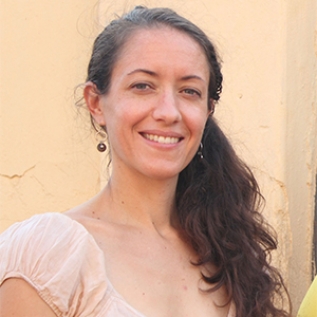
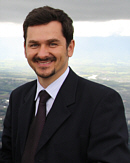
Vicky Angelaki is a Professor at Mid Sweden University’s Department of Humanities and Social Sciences since January 2020. With 15 years of full-time academic experience in the UK (University of Reading, University of Birmingham, Birmingham City University), she specializes in interdisciplinary literary and theatre studies, focusing on societal/political intersections, environmental humanities, cultural sociology, and contemporary British drama. BA (Hons) English, Aristotle University of Thessaloniki (2003) MA Drama & Theatre, Royal Holloway (2005) PhD Drama & Theatre, Royal Holloway (2009) Her research explores theatre’s role in addressing climate crisis , digital environments, and sociopolitical issues. Recent projects include Performing Interspaces: Social Fluidities in Contemporary Theatre (RJ-funded monograph, 2022) and co-editing the Palgrave Macmillan series Adaptation in Theatre and Performance . She leads the Political Literatures research network at Mid Sweden University. Recent publications and presentations analyze environmental dystopias , gendered geopolitics in classical adaptations, and pandemic-era theatre pedagogy. Her work synthesizes ecocritical frameworks with performance studies, emphasizing interdisciplinary methodologies and international collaboration . RJ Sabbatical Grant (2022) Fellow of the Higher Education Academy (2018) She teaches courses on Literature and Crisis , Contemporary Anglophone Theatre , and Political Literatures , supervising PhD candidates in collaboration with the University of Reading. Professional affiliations include the European Theatre Research Network, International Federation for Theatre Research, and assessment roles for Uppsala University’s KoF24 research evaluation.
Prof. Dr. Tobias Bonhoeffer serves as Director and Head of the Department of Synapses – Circuits – Plasticity at the Max Planck Institute for Biological Intelligence in Munich, Germany. His research focuses on synaptic plasticity, learning and memory, and the structural and functional dynamics of the visual system and hippocampus. Institution: Max Planck Institute for Biological Intelligence Department: Synapses – Circuits – Plasticity Academic Rank: Professor Research Interests encompass cellular and systems neurobiology, with specialized investigations into: Synaptic plasticity mechanisms Structural changes in dendritic spines Experience-dependent cortical circuit formation Memory relearning efficiency Functional mapping in visual cortex Neural adaptation in behaving animals Publications demonstrate expertise in neuroscience, particularly synaptic biology and neural circuit dynamics, with notable contributions to understanding cortical plasticity and hippocampal function. His lab has trained students like Sandra Reinert and Matthew McCann through the GSN program.
Maurizio Marinelli is a Teaching Professor of China and Global Prosperity at University College London's Institute for Global Prosperity, where he co-leads the Asia Prosperity Research Hub. His research intersects history, geography, politics, and society through Global China and urban studies. With academic training from University of Bologna, Tongji University, and University of Rome 'La Sapienza', his comparative approach connects historical analysis with contemporary urban challenges. BA in Oriental History (1988) - University of Bologna MA in Chinese Language and Culture (1989) - Tongji University PhD in Modern and Contemporary African and Asian History (1996) - University of Rome 'La Sapienza' and Cagliari His interdisciplinary work examines China's socio-spatial transformation through lenses like: Urban aesthetic regimes and heritage conservation Colonial/global space regeneration Ecological civilization and sustainable development Living heritage practices East-West cultural encounters Recent publications focus on Tianjin's hyper-colonial-globalizing heritage, Hong Kong's socioeconomic divides, and transcultural Italy-China dynamics. His research appears in journals like Built Heritage , Journal of Chinese Political Science , and China: A Historical Geography of the Urban (2018). Distinguished Visiting Professor - Tianjin University's School of Architecture Teaching modules: 'China and Global Prosperity' and 'Urbanizing China' Fluent in Chinese, Italian, French, Spanish, Portuguese, and Latin
Anni Vartola serves as Senior University Lecturer in the Department of Architecture at Aalto University, Finland. Her academic profile encompasses architectural history, theory, and education with emphasis on 1970s Finnish architecture, urban vitality, and sensory design dimensions. She maintains an active research trajectory through publications and nationally recognized thesis supervision. Vartola's research explores architectural history through socio-political lenses, examining 1970s Finnish architecture's cultural legacy, socialist ideals in bourgeois contexts, and urban vitality emerging from local experiences. Her theoretical work positions architecture as dynamic action ('Architecture is a verb') while investigating tactile dimensions ('TUNTU - TOUCH') and interdisciplinary connections with film. Sustainability manifests through works like Emma Komi's bird extinction prevention thesis and explorations of culturally durable ultraviolet architecture. Her publication portfolio reveals strong historical-theoretical foundations focused on 1970s Finnish architecture, evolving into contemporary applications in urban vitality, sensory design, and pedagogical innovation. Key thematic threads include the political dimensions of architecture, materiality in spatial experience, and critical analysis of architectural discourse across historical and modern contexts. Scientific awards and honors: Knight of The Order of the White Rose of Finland (2022) Oskari Vilamo Award for George Michelin's Master's Thesis (2023) Oskari Vilamo Award for Emma Komi's Master's Thesis (2023) Wuorio Award for Emma Komi's Master's Thesis (2023) Oskari Vilamo Award for Sanna Tegel's Master's Thesis (2020) Oskari Vilamo Award for Diploma Work (2001) Vartola has advised multiple nationally awarded master's theses including George Michelin's culturally durable ultraviolet architecture research and Emma Komi's Wuorio-winning bird extinction prevention study. Her grant portfolio includes the SKR Uusimaa Fund-supported Munkkiniemi Architecture Guide (2022) and Taiteen edistämiskeskuksen-funded book project on architect interviews (2019), demonstrating sustained engagement with architectural documentation and public dissemination.
Joycelyn Moody is the Sue E. Denman Distinguished Chair in American Literature at the University of Texas at San Antonio (UTSA), where she teaches African American literature and directs the African American Literatures and Cultures Institute. Her academic career spans institutions including the University of Washington, Saint Louis University, Hamilton College, and Harvard Divinity School. Her research focuses on African American literatures and cultures, particularly 19th-century slave narratives, Black feminist theory, and print culture. She has authored foundational works like Sentimental Confessions: Spiritual Narratives of Nineteenth-Century African American Women and contributed to pedagogical guides such as The Norton Anthology of African American Literature . Her scholarly output reveals trends in life writing, intersectional methodologies, and the politics of memory. Notably, she served as Editor-in-Chief of African American Review from 2004 to 2008, advancing critical discourse on race, gender, and literary history. Scientific Awards: Sue E. Denman Distinguished Chair in American Literature Moody’s work bridges literary scholarship, feminist theory, and cultural studies, emphasizing marginalized voices in American history.
Professor Philip Steinberg is a distinguished academic at Durham University, serving as a Professor in the Department of Geography within the Faculty of Social Sciences and Health. He also holds leadership positions as the Director of the Northern Ireland / Northeast England Doctoral Training Partnership (NINE DTP) and Durham Arctic Director. Additionally, he is an Associate Fellow in the Institute of Advanced Study at Durham. Steinberg earned his MA and PhD from Clark University's Graduate School of Geography (1990-1996). Prior to joining Durham in 2013, he spent sixteen years at Florida State University's Department of Geography, with research interludes at the New York Public Library's Cullman Center (2002-2003), the University of California, Santa Cruz (2005-2006), and Royal Holloway, University of London (2012-2013). He also taught briefly at Bucknell University in 1997. His research focuses on the historical and ongoing projection of social power onto spaces resistant to state territorialization, particularly the world-ocean, the Arctic, and electronic communications. Steinberg explores how these spaces challenge conventional notions of territory, sovereignty, and governance. His current research concentrates on Wet Ontologies and Ocean Governance and Arctic Politics and the Liveliness of Sea Ice , examining how liquid and frozen maritime environments complicate traditional geopolitical frameworks. Analysis of Steinberg's recent publications reveals a sophisticated interdisciplinary approach that bridges political geography, ocean studies, and Arctic research. His work consistently challenges conventional land-based territorial concepts by examining fluid, dynamic maritime spaces. Key themes include the politics of ocean privatization, Arctic sovereignty complexities, oceanic epistemologies, and the interplay between technological imaging and marine governance. His scholarship demonstrates a commitment to rethinking spatial concepts through watery and frozen environments, with significant implications for international law, environmental policy, and geopolitical theory. Among his notable professional contributions, Steinberg served as editor-in-chief of Political Geography (2016-2019) and has directed several significant research centers including IBRU: Durham University's Centre for Borders Research, the Durham Arctic Research Centre for Training and Interdisciplinary Collaboration (DurhamARCTIC), and the Northern Ireland / Northeast England Doctoral Training Partnership (NINE DTP), which supports approximately 150-200 PhD students annually across seven universities. Steinberg has supervised numerous doctoral students, including Joaquim Gaignard. His leadership in interdisciplinary doctoral training, particularly through DurhamARCTIC and NINE DTP, has secured substantial funding for Arctic research and social science doctoral education. His work with IBRU has facilitated boundary dispute resolution and advanced understanding of border areas through professional training and research initiatives. As Director of IBRU, Steinberg leads Durham University's Centre for Borders Research, which offers training courses on boundary delimitation and supports research on sovereignty, territory, and the political organization of space. His leadership of DurhamARCTIC has facilitated Arctic research collaborations across disciplines, building on a six-year grant that trained 15 PhD students across seven disciplines. Through these centers, Steinberg fosters innovative approaches to understanding geopolitical spaces that challenge conventional land-based territorial frameworks.
Professor Michael Crang is a leading scholar in Cultural Geography at Durham University, holding a professorial chair in the Department of Geography . His work bridges social memory , identity , and globalization through interdisciplinary lenses of critical theory , heritage studies , and waste economies . Key research areas: Swedish heritage construction, ethical consumption, urban smart grids, and waste valorization Major projects: ESRC 'Waste of the World', AHRC/ESRC 'Counterfeit Trade Finance', and Leverhulme 'Visual Cultures' His methodological expertise in visual ethnography and qualitative research has produced influential publications including the edited collections Cultures of Mass Tourism (2009) and Doing Ethnographies (2007). Recent work explores digital geohumanities and transnational food networks . Scientific achievements include: CHOICE Outstanding Academic Title (2010) for International Encyclopedia of Human Geography Leadership roles: Chair of ESRC International Research Team, Director of Research (2003-6, 2008-10) Editorial board memberships: Geography Compass , Mondes du Tourisme , and Cultural Geographies He has supervised numerous PhD students in urban spatial governance , digital city studies , and cross-border material flows , while directing MA programs in 'Space, Place and Culture' and 'Geography and Cities'.
Julia R. Brown is an Assistant Professor of Spanish in the Department of Languages, Linguistics, and Comparative Literatures at Florida Atlantic University in Boca Raton, Florida. Her academic work bridges literary studies, visual culture, and Indigenous representation in Latin America. Dr. Brown completed her doctorate at the University of California, Santa Barbara, where she wrote a dissertation on geocritical aesthetics and Indigenous territories in Mexican Nuevo cine of the 1970s. Her academic journey was initially sparked by NGO work in Intibucá, Honduras; Boaco, Nicaragua; and Guairá, Paraguay. Her research focuses on Mexican visual cultures, particularly examining how photographers from marginalized perspectives challenge dominant narratives of Mexican modernity. Brown investigates Indigenous representation across various media forms including photography, film, and literary production. Her work employs decolonial methodologies to analyze how visual culture shapes and contests notions of belonging, Mexican identity, and artistic creation. Dr. Brown's publications reveal a consistent focus on how visual media represent Indigenous territories and identities in Mexico. Her scholarship demonstrates growing attention to digital media platforms and their role in shaping contemporary environmental and Indigenous discourses, as seen in her work on Amazonia representation across social media and streaming services. Her scientific achievements include: Fulbright-García Robles award recipient Associate editor for Mexican Studies/Estudios Mexicanos (2017-2020) Dr. Brown teaches courses including LAS 2000: Introduction to Latin American Studies, SPN 3501: Latin American Culture and Civilization, SPN 6939: Mexican Literature and Film, and SPN 3400: Advanced Grammar. Her research has been supported by competitive grants that have enabled her to conduct significant scholarly work in Mexican visual culture studies.
Wang Dongdong is a Professor and doctoral supervisor at Tongji University's School of Art and Media, serving on the University Academic Affairs Committee and holding leadership roles in national academic societies including the Chinese Sociological Association and Chinese Society of Journalism History. His extensive career bridges academic scholarship with award-winning creative practice in documentary filmmaking and television production. His educational background spans engineering, management, and media: Bachelor of Engineering in Automatic Control from Harbin Institute of Technology (1993) Master of Management from Northeast Forestry University (2000) PhD in Technological Economics and Management from Harbin Institute of Technology (2008) Wang's research focuses on urban-rural communication dynamics, integrated media production, and documentary film theory. His work examines how digital convergence reshapes media practices, with particular attention to city branding, documentary ethics, and the poetics of cinematic expression. He investigates the intersection of traditional Chinese cultural forms with contemporary media technologies, exploring how new narrative frameworks emerge in networked societies. Analysis of his recent publications reveals strong thematic continuity in media convergence research, with evolving emphasis from technical production aspects (2016-2017) toward sociocultural implications (2018-2019). His work consistently bridges film theory, urban studies, and communication practice, demonstrating how media forms mediate social relationships in Chinese contexts. His scientific recognition includes: Third National Top 100 Advanced Individuals in Radio and Television Theory (2010) 11th National Radio and Television Academic Paper Award Second Prize (2010) Wang has supervised over 40 award-winning student projects that have earned international recognition at festivals including Berlin, Amsterdam, and Toronto. His research portfolio includes 19 major grants from national and municipal sources, notably leading the National Radio and Television Administration's 'Belt and Road Cross-Cultural Communication Strategy' project and Shanghai's 'Cultural Brand Core Identity' initiative. He directs the Documentary Creation Teaching Team and develops curriculum through Tongji's Media Experiment and Practice Teaching Center. He actively shapes media education policy as Executive Director of Shanghai's Arts Master's Teaching Steering Committee and leads the 'All-Media Research Institute' focusing on urban cultural communication strategies. His work integrates creative practice with academic research through the 'Lifestyle Research Committee' examining contemporary Chinese social transformations.
Siri Lamoureaux is an anthropologist and Assistant Professor in the Sociology Department (Workplace Studies) at the University of Siegen, Germany. She is affiliated with the SFB 1187 project "Media of Cooperation" and participates in the "Technoscapes in Africa" project with Richard Rottenburg and other members of the Law, Organisation, Science and Technology (LOST) network. She is also an associate of the Max Planck Institute for Social Anthropology and the Centre d'études et de documentation économiques, juridiques et sociales (CEDEJ Khartoum) based in Sudan, and an active member of AOEN, the Africa Off-Earth Network. Her educational background includes: PhD in Social Anthropology (2017), Martin Luther University / Max Planck Institute for Social Anthropology, with dissertation titled "Virtuous language: gendered morality and ethnonational politics among Moro Christians in Khartoum" MPhil in African Studies (2009), Leiden University, with thesis "Message in a Mobile: mixed messages, tales of missing and mobile communities at the University of Khartoum" Master of Arts in Linguistics (2004), University of Oregon, with thesis "Applicative Constructions in Maasai" Bachelor of Arts in Linguistics (1999), University of California, Santa Barbara Lamoureaux is an anthropologist drawing inspiration from pragmatist approaches in linguistic and semiotic anthropology, Science and Technology Studies (STS), and moral and feminist philosophy. Since 2008, she has conducted extensive fieldwork in Sudan, particularly in the Nuba Mountains, focusing on digital technologies and activism, gender, social and religious movements, morality, language and literacy, sexual violence, and ethnic identity. Her current research extends these interests into the field of space science, studying how spatial and terrestrial scientific objects are identified, documented, categorized, and made actionable through sensory media technology. She examines satellite assemblages in desertification projects in the Africa Sahel and the Square Kilometer Array, a radio telescope observatory spanning Africa and Australia. Her publication record shows a clear trajectory from early work on mobile phone communication in Khartoum to sophisticated analyses of complex technoscientific assemblages in space science projects. While maintaining a consistent theoretical grounding in linguistic anthropology and STS, her research has expanded to address how values, norms, chronotopes, spirituality, emotions, and cognitive models figure in knowledge construction across diverse contexts—from the streets of Khartoum to astronomical observatories spanning continents. Dr. Lamoureaux is actively involved in multiple research projects: Technoscapes in Africa : Examines the coproduction of technicisation and spatial orders across Africa by focusing on datafication and remote sensing in health and environment domains Visualizing the electromagnetic spectrum : Explores how spatial and terrestrial scientific objects are identified, categorized and made actionable by scholars, technicians, and sensory media technology Nuba Mountains Studies : Provides a platform for research on the Nuba Mountain region Adaptation and Creativity in Africa (Completed): Examined how technologies and significations are entwined while traveling Virtuous Language (Completed): Explored identity and gendered moral enactment through Christianity among the Moro Nuba in Sudan Her teaching portfolio reflects her interdisciplinary approach, including courses such as "Artificial Intelligence: promises and practices," "Language, Media and Technology," "Telescopes, satellites, drones and the sociology of 'seeing'," and "Black Lives Matter," demonstrating her commitment to connecting anthropological theory with contemporary technological and social justice issues.
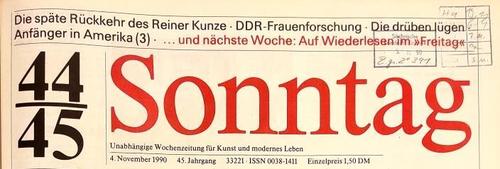
Bénédicte Terrisse is an Associate Professor in Germanic Literature at the University of Nantes, Faculty of Foreign Languages and Cultures, Department of Germanic Studies. She specializes in contemporary German-language literature with a particular focus on East German and post-East German literary production, working within the CRINI research center. Her educational background includes: Doctorate in Germanic Studies from Paris IV-Sorbonne University (2008-2012) under Bernard Banoun External Agrégation in German (2007) Master's degree in Germanic Studies from Paris IV-Sorbonne University (2005) Admission to École Normale Supérieure (2003) Preparatory literary classes at Lycée Chateaubriand in Rennes (2000-2003) Professor Terrisse's research focuses on contemporary German-language literature, particularly East German and post-East German literary production. Her work examines cultural transfers between France and Germany, editorial phenomena including collections and anthologies, literary history writing and canon theories, library studies, and the history of German studies as a discipline. She has developed significant expertise in the literary production of the German Democratic Republic, with special attention to poetic collections like the "Poesiealbum" series, the cultural weekly "Sonntag," and authors such as Wolfgang Hilbig, Thomas Brasch, and Sarah Kirsch. Her current Humboldt Fellowship research examines transnational models of literary history writing through the lens of the East German poetry series "Poesiealbum." Her recent publications demonstrate a consistent focus on East German literary production, particularly examining how literary canons were formed in the GDR through editorial practices. She has published extensively on Wolfgang Hilbig, exploring authorship models, literary transfers, and the relationship between literature and political systems. Her work increasingly incorporates digital humanities approaches to analyze literary collections and periodicals from the East German context, as evidenced by her involvement in the PERARTEM research program. Her notable awards and recognitions include: Humboldt Foundation Research Fellowship (2023-2025) Louis Forest/Thiessé de Rosemont Prize from the Chancellery of the Universities of Paris DAAD Research Mission grant CIERA mobility grant for research at the Academy of Arts in Berlin Doctoral grant from École Normale Supérieure, Paris Prime d'Encadrement Doctoral et de Recherche Professor Terrisse has supervised doctoral students and has been actively involved in research projects examining East German literary production. She currently leads research on the "Poesiealbum" collection and co-organizes an international conference on literary canons in the transnational context. She serves as deputy director of CRINI (2019-2023) and has held various administrative responsibilities including head of German aggregation and German literature courses at the University of Nantes. She is an active member of several scholarly societies including the Wolfgang-Hilbig-Gesellschaft, the Association of Germanists in Higher Education (where she served as general secretary 2018-2021), the International Association for German Studies, and the KOF - Koordinationsstelle Ostdeutschland - Frankreich. She serves on the editorial board of the journal Germanica and provides expertise for multiple academic publications.
Clarissa Monteiro Borges is a Brazilian Professor of Visual Arts at the Federal University of Uberlândia (UFU) , where she has been employed since 2008. She holds a Bachelor's Degree in Fine Arts (UnB) , Master's Degree in Arts (UnB) , and PhD in Social History (UFU) . Her research focuses on feminist perspectives in visual arts , particularly childbirth and motherhood representation . Academic affiliation: Federal University of Uberlândia (UFU) Research leadership: Feminisms in the Visual Arts research group Key fields: Feminist art, gender studies, birth imagery, media representation Her artistic and theoretical work is documented in the Birth Rites Collection and virtual exhibitions like Through the Eyes of the Other . While no scientific awards are explicitly mentioned, her contributions are evidenced through numerous publications and interviews.
Professor Marek Więckowski serves as Head of the Department of Urban and Population Geography and Deputy Director for Scientific Affairs at the Institute of Geography and Spatial Organization of the Polish Academy of Sciences (IGiPZ PAN) in Warsaw. With a distinguished career spanning over three decades, he has established himself as a leading expert in border studies, tourism geography, and spatial development, particularly focusing on Central European border regions. His research interests center on political borders and cross-border cooperation, tourism geography, transport geography, spatial mobility, and regional development. Professor Więckowski's work demonstrates how geopolitical transformations, particularly Poland's integration into the European Union and Schengen area, have reshaped border regions and created new opportunities for cross-border cooperation and tourism development. His research methodology combines spatial analysis with historical and social perspectives to understand the complex dynamics of border regions. His scholarly output reveals a consistent focus on the transformation of border spaces, with particular emphasis on Polish-Slovak and Polish-German borderlands. The publication trend shows increasing attention to sustainable tourism development in border regions, the impact of geopolitical changes on spatial organization, and the evolving relationship between borders, heritage, and tourism. His most recent work explores cutting-edge topics such as border memorialization, the spatial dimension of tourism in the Anthropocene, and the tourism potential of border tripoints. 2004: Honorable Mention in the competition for the best textbook in Europe (4th place for the 'Odkrywamy Świat' geography textbook series) 2002: Scholarship from French Ministry of Science for post-doc at ENS-LSH (extended in 2003) 2000: Scholarship from MUG Commission on Population Geography for International Geographical Union Congress in Seoul 2000: Nomination for H. Steinhaus Award for popular science books ('Polskie naj...') 1994: Honorable Mention in Master's Thesis Competition of Polish Geographical Society 1984 & 1989: Laureate of Geography Olympiads (2nd and 4th place) Professor Więckowski has actively supervised numerous research projects focusing on cross-border cooperation, tourism development in border regions, and spatial planning. His international collaborations, particularly with French and Slovak scholars, have significantly contributed to the understanding of European border dynamics. He has also been instrumental in developing educational materials, including geography textbooks that received international recognition. His current research explores the intersection of geopolitical changes, environmental challenges, and tourism development in border regions, with increasing attention to sustainability and heritage preservation in the Anthropocene era.
Lorenzo Fabbri is an Associate Professor in the Department of French and Italian at the University of Minnesota's College of Liberal Arts. His work intersects cinema studies, political theory, and feminist futures, with a focus on Gilles Deleuze's philosophy and media archaeology. Specializes in Italian cinema and media theory Engages with feminist futures and biopolitical aesthetics Active in translation studies and postcolonial critique Recent research explores digital media's impact on archival practices and the re-editing of film history. He has presented internationally on topics ranging from De Sica's genre complexities to affect theory in biopolitical contexts. Publications span journals like Italian Culture and the Journal of Italian Cinema and Media Studies , with a strong emphasis on interdisciplinary approaches. His scholarly contributions align with United Nations Sustainable Development Goals through cultural analysis and knowledge dissemination, though specific awards remain unlisted. Professional engagements include invited presentations and keynote speeches at academic conferences since 2017.
Ivana Pajic is an Assistant Professor at the Faculty of Philosophy, University of Novi Sad , specializing in German Studies and Literary Studies. She holds a PhD in Philological Sciences and has been actively contributing to intercultural research through teaching, publications, and international collaborations since 2009. Focus areas: Modern German Literature, Intercultural Narratology, Literary Translation, Postcolonial Studies Key projects: International DAAD-funded initiatives on parallel biographies (2018-2020), war violence literature processing (2016-2017) Exhibitions: Co-organized Parallel Biographies Serbia/Germany: Identity and Work in Budapest (2019) and Novi Sad (2019) Her research explores transcultural dynamics in post-Yugoslav contexts, including migrant narratives, Kiezdeutsch dialect formation, and German-Austrian cultural recognition. She has led translation workshops and contributed to educational resources for German studies in Serbia.