Dr. Pratheepa Jeganathan is an Assistant Professor in the Department of Mathematics and Statistics at McMaster University. Her research focuses on developing statistical methods for multi-view learning, particularly in modeling dependencies across heterogeneous data sources. Applications span molecular microbiology, spatial omics, sensor-based traffic data, and loss reserving. Her methodological work includes generative models, Bayesian sampling, constrained clustering, and spatio-temporal statistics. Education: PhD in Mathematics (Statistics) from Texas Tech University (2016), Postdoctoral Fellowship at Stanford University (2016–2020). Research Interests: Spatial statistics, statistical learning, high-throughput data methods, and statistical theory. Recent work includes analyzing microbiome interventions using transfer functions, studying vaginal microbiota communities, and applying recurrent neural networks to multivariate loss reserving. She has published in journals like PLoS Computational Biology and Genome Biology . Teaching: Instructs courses in data science (STATS 3DA3, CSE 780), statistical research projects, and graduate-level topics in statistics.
Dr. Songnian Li is a Professor and Associate Chair (Graduate Studies) in the Department of Civil Engineering at Toronto Metropolitan University. He holds a B.Eng. from Wuhan Technical University of Surveying and Mapping (now Wuhan University) and a PhD from the University of New Brunswick. His research focuses on geocollaboration systems, big geospatial data analytics, human mobility patterns, and digital twins for smart cities. He leads the GIS and GeoCollaboration Lab and has contributed to over 50 peer-reviewed publications. Dr. Li has received numerous accolades including the ISPRS Fellow (2020), 2023 Career Achievement Award, and multiple best paper awards. He serves as Editor-in-Chief of the Canadian Journal of Remote Sensing and holds editorial roles in several international journals. He actively supervises PhD and MASc students in geomatics engineering and related interdisciplinary programs. His professional memberships include leadership roles in the International Society for Photogrammetry and Remote Sensing (ISPRS), Canadian Society for Remote Sensing (CSRS), and the Canadian Institute of Geomatics. He has delivered keynote lectures globally and pioneered research in geosocial media analytics and spatio-temporal dynamics.
Amir Shabani is a Lecturer in the School of Sustainable Energy Engineering at Simon Fraser University (SFU). He holds a Ph.D. in System Design Engineering from the University of Waterloo (2011), an M.Sc. in Electrical and Electronics Engineering from Iran University of Science and Technology (2004), and a B.Sc. in the same field (2001). His research focuses on Artificial Intelligence, Machine Learning, Computer Vision, and Smart City technologies, with emphasis on applications in interactive robotics, affective computing, and IoT systems. Dr. Shabani teaches courses such as SEE 231 (Electronic Devices and Systems), SEE 332 (Power Systems Design and Analysis), and SEE 333 (Network and Communication Systems). His academic interests span System Design (e.g., AI, Robotics, Data Structures) and Electronics (e.g., Embedded Systems, IoT). He actively contributes to smart building automation, renewable energy systems, and human-centric technologies like social robotics for elderly care. His publications address advanced topics including edge computing for social robots, facial emotion recognition, and intelligent occupancy detection in smart environments. His work bridges theoretical computer vision with practical engineering solutions for sustainable energy and urban infrastructure.
Xin Tang is an Assistant Professor at the Michael Smith Laboratories and the Department of Computer Science in the Faculty of Science at the University of British Columbia. He leads the Tang Lab, which focuses on developing AI models to advance biological understanding at multiple scales and modalities. PhD in Engineering Sciences from Harvard University and the Broad Institute of MIT and Harvard Xin Tang's research spans computational cell biology, brain-computer interfaces, and in silico cellular digital twins. His work integrates explainable and interpretable AI with biological systems to address fundamental questions from molecular interactions to animal behaviors. Key areas include computational omics, multi-modality cell biology, spatio-temporal gene regulation, neuroengineering, and biological large language models. His lab develops autonomous AI approaches that serve as digital twins for biological systems, enabling in silico experiments that guide wet lab research. Analysis of Tang's recent publications reveals a strong focus on bridging AI and biology across multiple scales. His work spans from molecular and cellular levels (single-cell biology, multi-omics, spatial transcriptomics) to neural systems (brain-computer interfaces, neural activity tracking) and organ-level applications (cardiac interfaces). A consistent theme is the development of explainable and interpretable AI methods that provide mechanistic insights rather than just predictive power. His research has significant implications for understanding development, aging, and diseases like neurodegeneration. NSERC Discovery Grant (2025) Resource Allocation Competition of Digital Research Alliance of Canada (2025) Professor Tang actively supervises multiple graduate students, postdoctoral fellows, and undergraduate researchers across UBC's Computer Science, Bioinformatics, and Genome Science and Technology programs. His lab has received significant research funding including an NSERC Discovery Grant. He is committed to interdisciplinary collaboration and has established research partnerships with biologists, engineers, and clinicians to address complex biological questions related to neurodegenerative diseases, heart disease, and aging. The Tang Lab, located in the Michael Smith Laboratories at UBC, fosters a collaborative environment for researchers interested in AI for biology. The lab actively recruits dry-lab researchers with strong coding and machine learning backgrounds to work on projects spanning computational biology, neuro-inspired AI, explainable AI, biological LLMs, computational omics, and brain-computer interfaces. The lab has a remote work policy that allows flexible arrangements while maintaining strong collaborative ties.
Masoud Ataei is an Assistant Professor, Teaching Stream in the Department of Applied Statistics at the University of Toronto's Mathematical and Computational Sciences school. His research spans statistical geometry, financial chaos indices, neural network optimization, and spatio-temporal systems analysis. He holds a position focused on teaching excellence within the applied statistics discipline. Research interests include developing mathematical frameworks for complex systems analysis, with applications in finance, materials science, and biomedical signal processing. His work emphasizes interpretable machine learning models and optimization algorithms for high-dimensional data. Key contributions involve the Financial Chaos Index for market volatility modeling and the GEOM-BP algorithm for bin packing problems. Publications demonstrate interdisciplinary impact across mathematics, computer science, and finance. No scientific awards are listed, but his active publication record reflects ongoing research productivity. Advising and grant activities are not detailed in available information.
Colin Robertson is an Associate Professor in the Department of Geography and Environmental Studies at Wilfrid Laurier University, where he previously served as Director of the Cold Regions Research Centre. He also leads data science initiatives at Boeing Vancouver, focusing on aerospace analytics. His research spans spatial-temporal analysis for ecosystem and human health, citizen science, and environmental monitoring. Robertson holds a Ph.D. in Geography from the University of Victoria, with earlier degrees from Simon Fraser University and BCIT. Education: B.A. (Honours) in Geography, Simon Fraser University, 2002 Advanced Diploma (Honours) in GIS, BC Institute of Technology, 2004 M.Sc. in Geography, University of Victoria, 2007 Ph.D. in Geography, University of Victoria, 2011 Research Interests: Spatial analysis of environmental and health systems, disease surveillance, climate change impacts, and geospatial data science. His work bridges traditional spatial analysis with machine learning, emphasizing practical applications in conservation, public health, and aerospace. Key Contributions: Founded the Spatial Lab to advance geospatial research, developed frameworks for emerging disease surveillance (e.g., RinkWatch citizen science project), and contributed to maritime intelligence systems at GSTS. His research integrates interdisciplinary methods to address real-world challenges in environmental systems. Labs & Collaborations: Director of Cold Regions Research Centre, leading projects on Arctic ecosystems and climate change. Collaborates with governments, NGOs, and industry on spatial data solutions, including Boeing’s aerospace maintenance analytics. Awards & Recognition: No specific awards listed, but recognized for innovative applications in spatial data science across academia and industry.
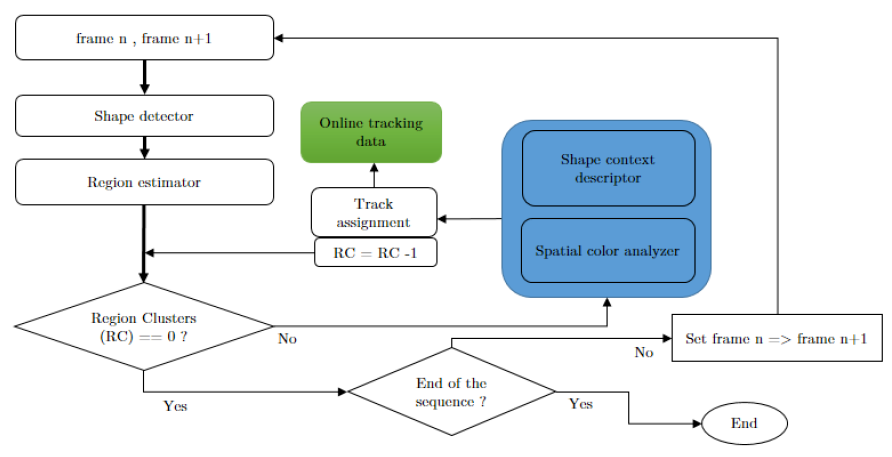
James Peters is Professor in Electrical and Computer Engineering at the University of Manitoba's Price Faculty of Engineering. His research explores computational proximity, digital topology, and computer vision, developing frameworks for signal analysis and shape detection. Key innovations include near set theory for perceptual similarity, optical vortex nerve analysis, and quaternion-based fMRI interpretation. He leads the Computational Intelligence Laboratory, focusing on topological data analysis for video tracking, neuroimaging, and pattern recognition. His 700+ publications span proximal Voronoï tessellations, fuzzy topology, and geometric realizations of cell complexes. Collaborations extend to Turkey, Italy, and India through visiting professorships.
Dr. Songnian Li is a Professor and Associate Chair of Graduate Studies in the Department of Civil Engineering at Toronto Metropolitan University. His expertise spans geocollaboration systems, big geospatial data analytics, and digital twins for smart cities. He holds a PhD from the University of New Brunswick and a BEng from Wuhan Technical University of Surveying and Mapping. Dr. Li's research focuses on human mobility patterns, spatio-temporal dynamics, and geosocial media analysis. He has pioneered techniques for extracting real-time traffic insights from social media data and developed frameworks for urban solar energy mapping. His work emphasizes leveraging geospatial technologies for societal decision-making. Education: PhD (2002, UNB), BEng (1983, Wuhan) Professional Memberships: ISPRS Fellow, Editor-in-Chief of Canadian Journal of Remote Sensing Key achievements include the 2023 Career Achievement Award and 2020 ISPRS Fellowship. He supervises PhD and MASc students in geomatics, data science, and environmental management programs. His GIS and GeoCollaboration Lab explores cutting-edge applications like 3D urban modeling and cultural heritage preservation through point cloud analysis. Dr. Li advocates for student-driven research, evidenced by a supervisee's ultra-prestigious award-winning paper.
Mark-David Hosale is an Associate Professor and Chair of Computational Arts at York University's School of the Arts, Media, Performance & Design (AMPD). He holds a BA in Music Composition from UC Santa Barbara. His work bridges computational art, performance, and architecture, focusing on worldmaking through interdisciplinary collaborations. Education: BA - Music Composition (UC Santa Barbara) Key Roles: Chair of Computational Arts, nD::StudioLab Director Research Labs: nD::StudioLab Research interests include the intersection of virtual and physical worlds, using digital fabrication and hardware/software integration to create immersive art. His theoretical practice centers on worldmaking —artworks that propose ontological alternatives through sensory experiences. Notable collaborations include the IceCube Neutrino Observatory and the PACIS project. His exhibitions span venues like SIGGRAPH, Dutch Electronic Art Festival, and Venice Biennale. Labs/Teams: nD::StudioLab, PACIS collaboration Grants: Multiple undisclosed research grants Labs include the nD::StudioLab, an experimental space for ArtScience research-creation.
Dr. Omid Isfahani Alamdari serves as Assistant Professor in the Master of Data Analytics program at the University of Niagara Falls Canada, bringing expertise in mobility data analytics and big data systems developed through international research experience. Education PhD in Computer Science, University of Pisa, Italy MSc in Computer Engineering - Software (Distributed Systems), Iran University of Science and Technology BSc in Computer Engineering - Software, Urmia University, Iran Research Focus His research centers on developing efficient trajectory analysis methods and advanced indexing techniques for massive mobility datasets. Key applications include sustainable transportation solutions (electric vehicle adoption, carpooling optimization) and explainable event prediction systems combining historical patterns with real-time data streams. He actively explores generative AI applications for mobility challenges and time series analysis. Publication Trends Publications from 2018-2023 reveal consistent contributions to transportation analytics, with dominant themes in trajectory processing (40%), sustainable mobility (30%), and prediction systems (30%). His work appears in top transportation venues (IEEE Transactions on ITS) and data science conferences (IEEE BigData, SIGSPATIAL), featuring strong international collaboration patterns. Academic Activities Teaching: Agile Software Development, Python for Data Analytics, SQL Databases, and Data Analytics Case Studies Research: Currently leads EU-inspired projects on sustainable mobility and event prediction Specialization: Trajectory analysis, spatio-temporal indexing, EV simulation, graph embedding