Eric Van Young is a distinguished Professor of History at the University of California, San Diego (UCSD), specializing in colonial and 19th-century Latin American history, particularly Mexico. He has held significant roles, including Chair of the Department of History (2000-2004) and Interim Dean of the Division of Arts and Humanities (2007-2008). His research focuses on rural history, peasant movements, cultural history, and biographical studies of key figures like Lucas Alaman. He earned his B.A. from the University of Chicago (1967), M.A. and Ph.D. from UC Berkeley (1968, 1978). Education: B.A. (University of Chicago), M.A. & Ph.D. (UC Berkeley) Roles: Professor of History, Department Chair, Interim Dean His research explores Mexico’s colonial and early national periods, emphasizing rural economic structures, popular rebellions, and the intersections of culture and politics. Current projects include a biography of Lucas Alaman and a synthetic history of Mexico (1750-1850). He has authored numerous books, including Writing Mexican History (2012) and The Other Rebellion (2001), alongside over 100 articles. His work bridges economic and cultural historiography, offering critical insights into regional dynamics and the construction of national identity. Van Young’s scholarly contributions include editorial roles for journals and book series, as well as extensive peer review for academic publishers. His interdisciplinary approach addresses themes like messianic movements, state formation, and the legacy of colonial institutions in modern Mexico.
Ramsey McGlazer is an Associate Professor specializing in twentieth-century European and Latin American literature, film, and critical theory. His research engages with poetry, politics-aesthetics intersections, critical carceral studies, and feminist/queer/psychoanalytic frameworks. He holds a Ph.D. in Comparative Literature and Critical Theory from UC Berkeley (2015) and previously taught at the University of St Andrews and Brown University’s Pembroke Center. McGlazer’s work interrogates modernist critiques of progress, radical psychiatry movements, and the interplay between aesthetic practices and institutional critique. His acclaimed monograph Old Schools: Modernism, Education, and the Critique of Progress (2020) won the American Association for Italian Studies First Book Prize. Current projects include The Clinic and its Double , exploring mid-century radical psychiatry and avant-garde art. He serves as Senior Editor of Critical Times and Coeditor of Italian Culture , and has translated key works like Rita Segato’s The War Against Women . McGlazer’s writing appears in venues such as Los Angeles Review of Books and n+1 . Research interests span Surrealist provocations, Brazilian artist Lygia Clark’s propositions, and transnational feminist solidarities. His scholarship bridges literary analysis with critical engagements in carceral studies, postcolonial theory, and decolonial thought.
Katherine Brickell is Professor of Human Geography at Royal Holloway, University of London (RHUL), where she serves as Research Lead for the Department of Geography. She is editor of the journal Gender, Place and Culture and former Chair of the RGS-IBG Gender and Feminist Geographies Research Group. Her work spans social, political, development, urban and legal geography with a feminist orientation. Brickell's research centers on three interconnected themes: home and home unmaking, labor precarity, and feminist legal geographies. Her longstanding interest in the domestic sphere and home unmaking aims to reaffirm the home as a political entity. Her monograph Home SOS: Gender, Violence and Survival in Crisis Ordinary Cambodia brings together 15 years of research on domestic violence and forced eviction. Since 2017, she has conducted collaborative work in London and Dublin on modular housing for homeless families. She has also led significant research on labor conditions in Cambodia, including the ESRC-DFID funded 'Blood Bricks' project (2016-2019) studying climate change impacts on rural families migrating to brick kilns. Her recent publications reveal a strong focus on debt, microfinance, and climate vulnerability in Cambodia, with multiple 2022-2024 articles examining how over-indebtedness intersects with social reproduction and climate adaptation. Her work consistently applies feminist lenses to understand spatial dimensions of power, particularly in Southeast Asia. Brickell has published in top journals including Transactions of the Institute of British Geographers , Progress in Human Geography , Antipode , and Annals of the American Association of Geographers . Gill Memorial Award (2014) Philip Leverhulme Prize (2016) Times Higher Education Research Project of the Year (2020) Brickell has supervised numerous doctoral students and mentored postdoctoral fellows working on topics including remittances during COVID-19, climate mobilities, moral geographies of garment work, and women's experiences with domestic violence. Her research has been funded by ESRC-DFID, UKRI GCRF, and the Urban Studies Foundation, among others. She collaborates extensively with colleagues in Cambodia and across Europe, with current projects examining climate resilience, credit-taking, and nutrition in Cambodia and South India, as well as the economic impacts of the pandemic on Cambodian garment workers.
Professor Stephen Graham at Newcastle University is a leading scholar in critical urban studies, focusing on the intersections of militarism, surveillance, and urban infrastructure. His work explores how cities are shaped by and become sites of geopolitical conflict, technological control, and social inequality. Research spans urban verticality , military urbanism , and digital surveillance . Key themes include infrastructure disruption , elite spatial practices , and post-conflict urbanism . Recent publications analyze the militarization of urban space , robotic imperialism , and surveillance societies . His "Splintering Urbanism" framework remains foundational for understanding fragmented urban networks. Current work investigates vertical geopolitics , elite bunkering , and smart city security , with a focus on planetary-scale urban systems and their vulnerabilities.
Professor Martin Doevenspeck is a distinguished scholar of Political Geography at the University of Bayreuth, where he holds a professorship in the Department of Political Geography within the Faculty of Biology, Chemistry & Earth Sciences. Since 2019, he has served as a Principal Investigator in the Cluster of Excellence "Africa Multiple" and as Spokesperson of the Research Section Mobilities. Previously, he was Managing Director of the Institute of Geography at the University of Bayreuth (2018-2022) and a member of the Executive Board of the Institute of African Studies Bayreuth. Professor Doevenspeck earned his "Diplom" in Geography from the University of Bonn and completed his PhD thesis entitled "Migration in rural Benin – Studies in social geography at an African border" at the University of Bayreuth in 2004. His academic journey includes positions as a Teaching and Research Assistant at the University of Bayreuth (2005-2011), Post-doc at the University of Bonn (2004), and various research and teaching roles focused on African geography and development. At the intersection of migration studies and political geography, Professor Doevenspeck's research focuses on (forced) im/mobilities, conflict, and border studies, with particular emphasis on African contexts. His current work centers on the project "Oil movements: the production and government of petro-(im)mobilities in East Africa" within the Bayreuth Cluster of Excellence "Africa Multiple," where he serves as Spokesperson of the Research Section Mobilities. His research spans West Africa (particularly Benin), Central Africa (Democratic Republic of Congo, Rwanda), and East Africa, examining how borders, conflicts, and resource extraction shape human mobility and territorial control. Analysis of Professor Doevenspeck's recent publications reveals a consistent focus on migration, borders, and conflict in African contexts, with increasing attention to environmental factors and resource extraction. His work demonstrates interdisciplinary approaches combining political geography, migration studies, and African studies. Recent publications particularly emphasize petro-mobilities, terrorism impacts on education, and migration control in West African borderlands, reflecting evolving research interests in the interplay between infrastructure development, security concerns, and human mobility. Professor Doevenspeck has supervised numerous doctoral and master's students, including Jaana M. Janßen, Fabian Liedl, Clemens Romankiewicz, Morgane Anziani-Vente, Muhire Blaise Mwanga, and Daniela Boß. His academic leadership extends to serving as Vice Dean of the Bayreuth International Graduate School of African Studies (BIGSAS) from 2012-2021, where he played a significant role in shaping graduate education in African studies. As a Principal Investigator in the Cluster of Excellence "Africa Multiple," Professor Doevenspeck leads research initiatives examining diverse manifestations of "Africa" across the continent and diaspora. His work involves collaboration with researchers from multiple disciplines and institutions, focusing particularly on mobilities as a key research section within the cluster. This collaborative research environment has produced significant insights into migration patterns, border dynamics, and conflict resolution in African contexts.
Monica Trieu is an Associate Professor in the School of Interdisciplinary Studies at Purdue University, where she focuses on the intersection of race, ethnicity, and immigration with particular emphasis on children of immigrants. Her scholarly work bridges sociology and Asian American studies through critical examination of identity formation and systemic inequalities. Education: Ph.D. in Sociology, University of California, Irvine (Asian American Studies emphasis) Master's in Sociology, University of California, Irvine Research Focus: Professor Trieu's expertise spans International Migration, Post-1960s Immigrants and Refugees, 1.5 and Second-Generation Identity, Transnational Ties, and Historical/Contemporary Asian American Experiences. Her scholarship critically analyzes internalized racism, regional identity formation (particularly in the Midwest), and the psychological impacts of anti-Asian violence during the pandemic. She employs intersectional frameworks to explore how refugee experiences, cultural adaptation, and transnational connections shape ethnic identity among Southeast Asian Americans and other immigrant communities. Publication Trends: Her 2013-2024 publications reveal evolving engagement with contemporary crises—from pandemic-induced mental health challenges and anti-Asian violence to structural invisibility of Midwest Asian American communities. While maintaining core focus on identity negotiation among second-generation immigrants, her recent work expands into comparative analyses of Asian American/Latina/o transnational patterns and refugee resettlement experiences, demonstrating methodological versatility across ethnographic, survey, and media analysis approaches. Professional Impact: As author of Identity Construction among Chinese-Vietnamese Americans: Being, Becoming, and Belonging (2009) and publications in Journal of Ethnic and Migration Studies and Journal of Asian American Studies , Trieu has established herself as a key voice in Midwest Asian American scholarship. Her research directly informs institutional responses to rising anti-Asian sentiment and contributes foundational frameworks for understanding regional ethnic identity formation beyond coastal enclaves.
Tina Dacin is a Professor of Strategy and Organizational Behavior at the Smith School of Business, Queen's University, Canada. She holds the Stephen J.R. Smith Chair and serves as Director of the Community Impact Research Program. Her roles include former Director of the Smith School’s Centre for Social Impact, former University Senate member, and former Chair of the Principal’s Innovation Fund Committee. She co-founded the Community of Social Innovation Chair and holds affiliations with the Academy of Management and Informs. Education: Ph.D. (1993) in Business Administration from the University of Toronto and M.A. in Psychology from the University of New Brunswick. Research focuses on cultural heritage, social innovation/entrepreneurship, strategic alliances, and globalization. Key themes include custodianship, tradition preservation, place-making, and institutional dynamics. Recent work explores craft-based ventures, place-sensitive organizational practices, and institutional renewal in crises like the Detroit water wars. Awards: None explicitly listed, though her chair position reflects academic distinction. Teaching includes courses on global social impact and analytics/ethics policy. Labs/Teams: Leadership in the Community Impact Research Program and the Scotiabank Centre for Customer Analytics.
Aleksander Madsen is a Researcher at the University of Oslo (UiO), affiliated with the Department of Sociology and Human Geography under the Faculty of Social Sciences. His primary research interests include social stratification, immigrant assimilation in labor markets, welfare state policies, and statistical methods. He holds a PhD from Oslo Metropolitan University and an MA from UiO. Education: PhD in Sociology, Centre for the Study of Professions, Oslo Metropolitan University (2014–2018) MA in Sociology, University of Oslo (2013) His research explores labor market integration of immigrants, gender disparities in male-dominated workplaces, and the impact of education-occupation mismatch on health outcomes. He has conducted longitudinal studies on long-term sickness absence and labor market trajectories using sequence analysis. Dr. Madsen has held postdoctoral and research positions at UiO and NIFU, and was a visiting scholar at Stanford University's SCANCOR (2024) funded by the Fulbright Foundation. His work spans interdisciplinary collaborations, including projects on workplace diversity, ethnic stratification, and policy evaluations. Awards: U.S. - Norway Fulbright Foundation Grant (2023–2024) His research group affiliations include the Social Inequalities and Population Dynamics team and the ORGMIGRANT project, investigating work organizations and immigrant assimilation. Recent publications address residential networks among immigrants, workplace ethnic diversity, and women’s attrition from male-dominated sectors.
Noah Nathan is an Associate Professor of Political Science at Massachusetts Institute of Technology , with faculty affiliation at MIT’s Global Diversity Lab . He previously taught at the University of Michigan and earned his PhD in Government from Harvard University (2016) . Research Interests: Political economy of development Comparative political behavior Urban politics State-building Distributive politics and clientelism Political parties African political systems Article Trends: His recent work integrates urban built environments into political behavior analysis, with empirical studies across African cities. Key themes include state-building legacies in inequality, clientelist electoral systems, and architectural impacts on political engagement. Earlier work (2013-2020) focused on ethnic politics, leadership dynamics, and institutional design. Scientific Awards: 2024 William Riker Award for Best Book in Political Economy 2024 African Politics Conference Group Best Book Award 2023 Foreign Affairs Best Books recognition 2015 Heinz I. Eulau Award (APSR) 2024 Political Ties Best Paper Award (APSA) Advising & Grants: He has advised multiple published studies in top journals and secured research funding for field experiments in Ghana. Current work explores vernacular architecture’s political impact and state capture mechanisms. Labs & Teams: Affiliated with MIT’s Global Diversity Lab and collaborative networks across African politics research institutions.
Professor Adam Yuet Chau is a Fellow and Director of Studies at St John's College and holds the Professor of the Anthropology of China position at the Faculty of Asian and Middle Eastern Studies, University of Cambridge . His academic journey includes training at Stanford University (PhD in Anthropology, 2001) and teaching roles at Oxford and SOAS before joining Cambridge in 2008. Focus on Chinese religions and their social dimensions Specializes in ritual theory and cultural transformations Develops comparative frameworks for understanding religious practices His research spans religion under socialism , hosting in political/religious contexts , and ritual polytropy . Recent projects include editing Chinese Religious Culture in 100 Objects and analyzing 'spheres' (界) in Chinese society . Publications like Miraculous Response (2006) and Religion in Contemporary China (2011) establish him as a key figure in religious anthropology. Current and past PhD/MPhil students explore topics from temple festivals in Taiwan to religious subjectification . He actively reviews for leading presses (Cambridge, Oxford, Harvard) and journals ( Ethnos , Modern China ), and participates in international academic workshops.
Anastasia Loukaitou-Sideris is a Distinguished Professor of Urban Planning and Interim Dean of the UCLA Luskin School of Public Affairs. She holds a Ph.D. in Urban and Regional Planning from the University of Southern California. Her research focuses on the intersection of urban design, public spaces, and social equity, emphasizing user-centered perspectives in urban environments. Key research areas include public space utilization by diverse ethnic groups, transit security, gentrification impacts on transit neighborhoods, and urban regeneration strategies. Her work has been funded by entities like the U.S. Department of Transportation and the Mellon Foundation. She has authored/co-authored influential books such as Sidewalks: Conflict and Negotiation over Public Space (2009) and Transit-Oriented Displacement or Community Dividends? (2019). Dr. Loukaitou-Sideris has served as a consultant for organizations including the Transportation Research Board and the Greek Government, advising on urban design, land use, and transportation policy. She co-leads the UCLA Urban Humanities Initiative, blending interdisciplinary approaches to urban challenges. Her professional service includes roles as former Associate Dean at Luskin and leadership in academic programs. She actively engages in policy-relevant research, addressing issues such as parklet development, inner-city commercial corridors, and sexual harassment in transit environments.
Kyle Treiber is a University Professor in Neurocriminology at the Institute of Criminology, University of Cambridge , with a focus on integrating psychological, neuroscientific, and criminological theories to explain criminal behavior. She serves as Deputy Director of the Peterborough Adolescent and Young Adult Development Study (PADS+) and has developed its neurocognitive dimensions and theoretical foundation, Situational Action Theory (SAT) . Education: BS in Psychology (University of North Carolina at Chapel Hill, 2001, Phi Beta Kappa), MPhil (2003), and PhD (2008) in Criminology (University of Cambridge). Leadership: Director of Criminological Research Programmes (2016–2019), Editor-in-Chief of the European Journal of Criminology , and member of the European Society of Criminology Executive Board. Her research examines how neurocognitive machinery (e.g., prefrontal brain functioning, self-control) and social environments interact to shape crime propensities. She specializes in multi-method longitudinal studies, dual process models of decision-making, and cross-comparative research grounded in SAT. Key themes include: Neurocognitive and moral decision-making in criminal behavior Gene-environment interactions in crime causation Space-time budgets and criminogenic environments Policy implications of integrated biosocial frameworks Recent publications highlight SAT’s application to diverse contexts like corruption , intimate partner abuse during the pandemic , and gender gaps in juvenile crime . She emphasizes refining theoretical models through empirical testing and advancing analytical criminology. Awards: Lopez-Rey Graduate Prize (2008), Nigel Walker Prize (2008). Dr. Treiber contributes to teaching programs in criminological theory, research methods, and neurocriminology. She leads the Centre for Analytic Criminology and collaborates on international comparative studies of crime causation.
Adam Wickberg is a researcher in the Division of History of Science, Technology and Environment at KTH Royal Institute of Technology in Stockholm. He serves as co-director of the VR Excellence Centre for Anthropocene History and deputy director of the KTH Environmental Humanities Lab . His work critically examines the intersections of digitalization, sustainability , and the Anthropocene , focusing on their social, political, and historical dimensions. He leads the research project The Mediated Planet: Claiming data for environmental SDGs and has held visiting positions at the Max Planck Institute for the History of Science in Berlin. Education : Not explicitly stated His research spans media studies, environmental history, critical data studies , and postcolonial science and technology studies . Key themes include: Digital twins and marine futures AI ethics for climate justice Colonial histories of environmental data Temporal dimensions of Anthropocene governance Environing media as epistemological tools Planetary datafication systems Recent publications explore how data infrastructures shape environmental governance and how historical media practices inform contemporary sustainability challenges. He has contributed to journals like New Media and Society , Nature , and Critical Inquiry , while engaging in public debates through op-eds in Dagens Nyheter and Aftonbladet . Teaching : Courses include Artificial Intelligence and Sustainable Development (AK122V), Environmental History (AK2210), and The Anthropocene (AK126V). Labs/Teams : Leads the Environmental Humanities Lab and collaborates with the WASP-HS Community .
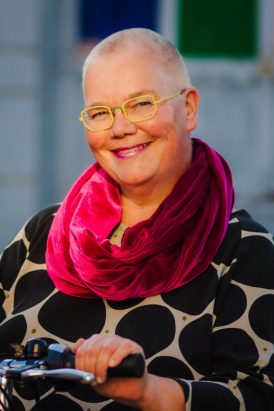
Petra Kuppers is a Professor at the University of Michigan, specializing in disability culture, performance art, and ecocriticism. She holds a PhD from Falmouth College of Art/Plymouth University (1999) and is affiliated with multiple departments, including English, Drama, and Gender Studies. Her work bridges academic research with community-based performance, emphasizing socially just futures through art. Key roles include Artistic Director of The Olimpias, co-founder of Turtle Disco, and a Just Tech Fellow (2024–2026) for 'Planting Disabled Futures,' a VR project blending disability culture and environmental ethics. She teaches graduate courses on disability studies and creative writing, advising students through a monthly 'Research Coven.' Kuppers has authored influential books like *Disability and Contemporary Performance* (2003) and *Eco Soma* (2022), recognized with awards such as the Guggenheim Fellowship and ATHE Book Prize. Her poetry collections, including *Gut Botany* (2020) and *Diver Beneath the Street* (2024), explore intersections of disability, ecology, and true crime. Her research spans crip ecologies, archival activism, and somatic methods, with recent projects including *Crip/Mad Archive Dances* and participatory events like 'Crip Drifts.' She emphasizes accessibility in performance, digital art, and public engagement, often collaborating with Indigenous communities and global disability collectives.
Dr. Auzeen Shariati is an Associate Professor and Director of Undergraduate Programs in the Department of Criminology, Law and Society at George Mason University. She holds a Ph.D. in Public Affairs and Criminal Justice from Florida International University (2017), an M.A. in Criminal Law and Criminology from Allameh Tabataba’I University (2010), and a B.A. in Judicial Law from the University of Tehran (2006). Prior to academia, she practiced as a defense attorney at the Iranian Bar Association. Her research focuses on environmental criminology, crime prevention, victimization, policing strategies, and comparative criminal justice systems. Key areas include pandemic impacts on domestic violence, school safety through Crime Prevention Through Environmental Design (CPTED), and policy evaluation in criminal justice. She has published extensively in journals like American Journal of Criminal Justice , Journal of Family Violence , and Security Journal . Recent work examines how the Covid-19 pandemic and social upheavals like the murder of George Floyd influenced domestic violence reporting and victim experiences. Her studies combine quantitative and qualitative methods, emphasizing real-world policy implications. Dr. Shariati teaches courses such as Introduction to Criminology , Law and Justice Around the World , and Evaluation of Crime and Justice Policies . She actively presents at conferences like the American Society of Criminology and has contributed to public discourse on campus safety and criminal justice reform through media engagements.