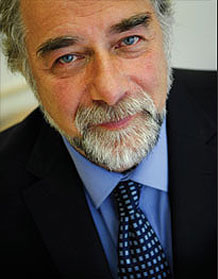
Bruce Brown is Pro-Vice-Chancellor for Research at the University of Brighton , overseeing research across life, physical, social sciences, and arts and humanities. He previously served as Dean of the Faculty of Arts and Architecture (1989–2006) and Head of the Department of Design (1984–1989). Administrative Leadership : REF2014/RAE2008 Chair, International Governor at Shenkar College, and advisor to academic bodies in Hong Kong, Portugal, and Italy. Research Interests : Visual memory, arts education, and research leadership, with publications spanning design history, spatial design, and cultural policy. Scientific Awards : 2007 WHO’s WHO (A&C Black) 2005 Honorary Fellow (University for the Creative Arts) 2004 Honorary Fellow (Royal College of Art) 1985 Elected Member (Designers and Art Directors Association) 1978 Sanderson and Herbert Read Awards (Royal College of Art) 1970 Elected Fellow (Royal Society of Arts) Articles focus on visual communication, design policy, and cultural memory, reflecting his expertise in design research and higher education leadership . He is currently an Editor of Design Issues: Research Journal (MIT Press).
Gernot Stöglehner is a Full Professor at the Institute of Spatial Planning, Environmental Planning and Land Rearrangement , part of the Department of Landscape, Water and Infrastructure at the University of Natural Resources and Life Sciences, Vienna (BOKU) . He holds a doctorate and habilitation in environmental planning, with a career spanning research, teaching, and applied consultancy. His research focuses on sustainable spatial planning, land use efficiency, integrated spatial and energy planning, climate resilience, and environmental assessment . He investigates how urban and regional development patterns impact energy demand, environmental quality, and climate adaptation, advocating for land-saving strategies and resilient settlement structures. His work bridges planning theory with practical policy tools. The recent publications reflect a strong trend in spatial resilience, energy transition, climate change adaptation, and sustainable land use . Articles cover topics such as flood recovery, urban energy modeling for electric vehicles, bioeconomy spatial aspects, and methodological foundations of planning. His research is highly applied, often contributing to policy frameworks and strategic planning instruments. Preis der Prof. Anton-Kurir-Stiftung zur Unterstützung des wissenschaftlichen Nachwuchses (2004) Stöglehner has led or participated in over 60 research projects, many as principal investigator, funded by the Austrian Research Promotion Agency (FFG), the European Commission, and Austrian federal and regional governments. His projects often involve interdisciplinary teams and knowledge transfer to municipalities and planning authorities. He actively advises on spatial and energy strategies for communities and regions. He leads a research group focused on spatial planning and environmental policy, contributing to doctoral programs and major initiatives like the BOKU Energy Cluster. His work is central to the university’s efforts in sustainability and climate action.
Univ.-Prof. Dr. Pierre Sachse is a Professor of General Psychology at the University of Innsbruck, Austria, where he holds the Professorship for General Psychology within the Faculty of Psychology. His office is located at Universitätsstraße 5-7 (Grauer Bär), Room 2S20, with postal address at Universitätsstraße 15, A-6020 Innsbruck. His research spans multiple domains of cognitive and experimental psychology, with particular emphasis on visual perception, memory processes, and psychophysiological measures. Professor Sachse's research interests focus on eye movement patterns, attentional mechanisms, memory consolidation processes, and sensory processing sensitivity. His work employs sophisticated methodologies including eye tracking, psychophysiological measurements, and experimental cognitive paradigms to investigate fundamental cognitive processes. He has made significant contributions to understanding how post-learning activities affect memory retention, how gaze behavior influences social interactions, and the relationship between sensory processing sensitivity and cognitive performance. His research bridges theoretical cognitive psychology with practical applications in work psychology and human-computer interaction. Analysis of his recent publications reveals a strong trend toward interdisciplinary research combining cognitive psychology with social, business, and historical perspectives. His work increasingly integrates advanced data analysis techniques with traditional experimental methods, as evidenced by the development of tools like SPBView for eye movement analysis. There's a clear progression from basic cognitive processes to their application in real-world contexts including team performance, leadership, and interpersonal communication. His research maintains a consistent focus on individual differences, particularly how sensory processing sensitivity moderates cognitive and emotional responses. Professor Sachse has supervised numerous doctoral and postdoctoral researchers, with Martini, Maran, Furtner, Hoffmann, and Büsel appearing frequently as co-authors on his publications. His collaborative network extends across multiple institutions and disciplines, reflecting the interdisciplinary nature of his research. While specific grant information isn't detailed in the provided materials, his extensive publication record suggests successful funding for multiple research projects over his career. His research group appears to focus on experimental cognitive psychology with specialized equipment for eye tracking, psychophysiological measurements, and behavioral experiments. The group conducts both laboratory and naturalistic studies, including mobile eye tracking in real-world environments. Their work spans basic cognitive mechanisms to applied contexts in business, leadership, and social interactions.
Cecilia Furlan is an Assistant Professor at the Institute of Landscape Architecture , part of the Department of Landscape, Water and Infrastructure at the University of Natural Resources and Life Sciences, Vienna (BOKU). She holds a joint PhD in Engineering and Urbanism from KU Leuven and IUAV Venice. Landscape Urbanism Circular Economy Urban Metabolism Spatial Research Resource Scarcity Her research focuses on systemic design approaches for circular economy transitions in urban and regional contexts, particularly through projects like ATLANTES and REPAiR . She explores material flow mapping, post-industrial landscape regeneration, and urban wasteland transformation. Recent publications examine geodesign methods for circular construction hubs, ecosystem services in urban cemeteries, and spatial parameters for sustainable development. She contributes to international discourse through presentations at institutions in Austria, Belgium, Italy, Netherlands, and South Africa. 2020: Knowledge Frontiers Symposium grant 2019: EUROPAN 15 Runner-Up 2018: Premio Giovanni Ferraro PhD award 2014: Lisbon Open Room Competition honorable mention As a project leader for initiatives like Reindustrialisation Following the Brownfield Principle , she combines academic research with practical applications. She participates in peer-review activities for journals like Sustainability and Landscape Research , and organizes educational workshops on circular design.
Dr. Marta Brkovć Dodig is an Assistant Professor at the Faculty of Media and Communications, Singidunum University, Serbia . She was an Alexander von Humboldt Fellow (2018-2020) at TU Berlin and Founding Director of NGO ARQubator , promoting sustainability through academia-community partnerships. Her roles include Principal Investigator on €150,500+ projects and research partner on €3,960,000+ initiatives. PhD in Architecture from University of Sheffield (2013) Postdoctoral Fellow at TU Munich (Climate-Friendly Building) Architect at G+O Architekten (Munich) and M-House Design (Belgrade) Research focuses on Built Environment Education , leveraging games and participatory methods for sustainability. She explores spatial pedagogy and cultural heritage as educational resources, with case studies across Europe. Her work bridges architecture, urban planning, and climate literacy. Notable awards include: Alexander von Humboldt Fellowship Civil Society Scholar Award Weiser Professional Development Award Robert’s Fund KTP Santander Research Award
Yvonne Franz is a Senior Lecturer and Postdoc Researcher at the Department of Geography and Regional Research (University of Vienna), with dual affiliation to the Department of Sociology. She directs the postgraduate program Cooperative Urban and Regional Development , serves as vice director of geography studies, and coordinates the Erasmus Mundus Joint Master in Urban Studies (4CITIES). As a core member of the Urban Futures research platform, she investigates multi-scalar urban transformation, focusing on neighborhoods, gentrification, super-diversity, and social innovation. Urban Futures Research Platform INTERREG Central Europe project "GEtCoheSive" (Vienna, Berlin, Bologna, Ljubljana) Urban Sustainability Living Lab Her research emphasizes participation in governance, urban living labs, and interdisciplinary methodologies. She has co-authored over 89 publications and contributed to 3 projects (including INTERREG) since 2010, with recent work on Ukrainian refugee housing in Europe and climate-resilient urban development. Franz has received 8 scientific prizes and actively engages in policy-oriented research, citizen science, and comparative urban studies across New York City, Vienna, and Slovenian contexts. Editorial roles in academic collections Radio/web interviews on urban exclusion and DIY urbanism Teaching focus on urban fieldtrips and living lab design Her scientific awards include recognition for impactful research in urban studies, with over 168 Mendeley readers for her 2022 student housing article. Franz's work bridges academic inquiry with practical urban interventions, emphasizing equity in housing, governance, and social infrastructure.
Juan Pro is Full Professor of Modern and Contemporary History at the Autonomous University of Madrid (UAM), currently on secondment as Senior Researcher at the School of Hispano-American Studies (Escuela de Estudios Hispano-Americanos) of the Spanish National Research Council (CSIC) in Seville, Spain. He has been teaching History since 1988 and was elected to the Academia Europaea in 2020. His academic career spans over three decades: 2020-Present: Senior Researcher on secondment, Escuela de Estudios Hispano-Americanos, CSIC 2019-2020: Full Professor, Universidad Autónoma de Madrid 1996-2019: Associated Professor, Universidad Autónoma de Madrid 1993-1996: Adjunct Professor, Universidad Autónoma de Madrid 1988-1993: Assistant Professor, Universidad Autónoma de Madrid Pro specializes in transnational approaches to cultural history of politics and comparative history of Spain and Latin America, with a current focus on utopian studies. His research explores how utopian thinking shaped political and social developments across the Atlantic world, particularly examining intentional communities, Fourierist experiments, and alternative political models in Hispanic contexts. His extensive publication record shows a clear evolution from state-building studies toward utopian thought, with recent works analyzing Hispanic utopian traditions, transatlantic anarchist movements, and the spatial dimensions of utopian communities. The publications reveal a methodological shift toward cultural and emotional history approaches within political history. Notable achievements include: 1990 Extraordinary History Ph.D. Award, Universidad Autónoma de Madrid 1985 Extraordinary History Degree Award, Universidad Autónoma de Madrid Pro has supervised 11 completed doctoral theses and currently mentors 3 additional doctoral candidates. He has directed 5 major research projects and participated in 21 total research initiatives, including the current DECOLONHIST network (2025-2027) focused on decolonizing Atlantic history. He leads several significant academic initiatives as coordinator of the Transatlantic Network of Utopian Studies, director of the HISTOPIA Research Group, and member of the international U2 network studying utopian uses across cultures.
Univ.-Prof. Dr. Jan Guido Grünwald is a Professor of Art Education Didactics at Mozarteum University Salzburg (Innsbruck campus) and Head of the Institute for Equality & Gender Studies. He leads Austria-wide educational research initiatives like ProQ-STEAM, focusing on teacher professionalization in STEAM disciplines. His work bridges art education with gender studies, post-digitality, and youth cultural analysis. Key roles include managing the Braunschweig University of Art’s art teacher training (2019–2020) and teaching at Leibniz Gymnasium Offenbach. Research interests span visual cultures, media didactics, and critical pedagogy, with projects like the Dank Images interdisciplinary network exploring algorithmic imagery. He chairs panels at global events (e.g., Ars Electronica 2023) and publishes widely on topics like TikTok’s social impact, pandemic-era cultural expression, and archaic masculinity in Black Metal aesthetics. Grünwald advocates engaged pedagogy integrating digital tools and youth cultural artifacts into education. Current projects include editing volumes on Dank Images’ role in digital culture and youth subcultures’ educational relevance. He collaborates across six institutions in the ProQ-STEAM consortium, addressing teacher shortages in STEAM fields through qualitative-quantitative research. His work emphasizes inclusive education, sustainability, and leveraging digital innovation while critiquing systemic barriers.
Mag. Günther Schreder is a Lecturer at the Department for Knowledge and Communication Management at the University for Continuing Education Krems. His research focuses on usability design, information visualization, collective intelligence, and cognitive aspects of organizational communication. He has led and contributed to multiple interdisciplinary projects, including the 'Co-Mind' initiative exploring boundary objects in innovation processes and the 'Isotype goes Data Journalism' project analyzing historical visualization techniques. His teaching includes courses on Usability Design Methods and Cognitive Psychology, emphasizing practical applications of design thinking and collaborative learning frameworks. Key research projects include developing system models for organizational improvisation, analyzing risk factors for refugee mental health, and advancing synoptic visualization approaches for cultural heritage collections. He has collaborated on EU-funded initiatives like the 'INNOMAT' project on barrier-free ticket vending machines and contributed to the 'Schema Processing in Organizational Culture' study. Schreder's work bridges cognitive science with practical design solutions, aiming to enhance user-centered systems and public engagement through innovative visualization strategies.
Günter Maresch is a full Professor at the University of Salzburg's Department of Mathematics within the Faculty of Natural and Life Sciences, where he leads the research group 'Mathematics Education and Technology'. He currently serves as Vice Dean of the Faculty of Digital and Analytical Sciences (2022-2024). Previously, he held positions at the university's School of Education as Associate Professor and Assistant Professor for Mathematics and Geometry Didactics. His research focuses on: Mathematics and geometry education pedagogy Spatial intelligence development (creator of the RIF learning platform) Curriculum design for STEM subjects Integration of digital tools like CAD in mathematics teaching Strategies for solving geometric problems He coordinates the €4.12M EU-funded Sell-STEM project, training 15 PhD researchers across Europe to develop spatial skills interventions for students. He also edits two academic journals: Informationsblätter der Geometrie and Mathematik im Unterricht .
Bernhard Zagel is a Senior Scientist in the Department of Geoinformatics at the Paris Lodron University of Salzburg . Holding the degrees Mag. and Dr., he has built a prolific career at the intersection of geoinformatics, glaciology and sustainable mobility, leading more than 37 research projects and authoring or co-authoring 87 scholarly publications since 1998. Education & Academic Standing While the exact details of his doctoral studies are not reproduced in the supplied text, his long-standing affiliation with the University of Salzburg since 1998 and his current rank of Senior Scientist testify to a robust academic trajectory in geosciences and geoinformatics. Research Interests Cryosphere & Climate: multi-decadal glacier mass-balance series for Stubacher Sonnblickkees and other Austrian glaciers; glacier–climate interactions; sea-level-rise implications. Geoinformatics & GIScience: spatial data infrastructures, GIS-based environmental monitoring, network analysis and mobility modelling. Sustainable Urban Mobility: digital-twin frameworks for 15-minute-city concepts, bike-sharing system planning, urban logistics and city-scale innovation labs. His work is explicitly aligned with UN Sustainable Development Goals, especially SDG 13 (Climate Action) and SDG 11 (Sustainable Cities and Communities). Publication Landscape Recent outputs (2020–2025) concentrate on three thematic pillars: (1) annual glaciological monitoring reports for the LTER Stubachtal site, (2) methodological advances in GIScience for transport and mobility, and (3) open-data repositories of glacier mass-balance records now hosted on PANGAEA. These contributions collectively advance both scientific understanding and practical tools for climate adaptation. Scientific Awards VCÖ Mobility Award 2019 (shared) for Sustainable Mobility research Esri UC Map Gallery People’s Choice Award 2009 (twice) Austrian Eco-label for Green Meetings (2015–2019 & 2019–2023) Leadership & Funding Zagel has secured and directed numerous third-party-funded projects, including the ongoing CITWIN and UML 2.0 initiatives (digital twins for sustainable mobility), and the short-term GlacierMonitorTalent 2023 project. He has served as project manager or scientific coordinator for >35 completed projects since 2006. Laboratories & Field Sites He acts as lead scientist and data manager for the LTER Site Sonnblickkees | Stubachtal , a flagship long-term ecological research platform in the Hohe Tauern National Park. The site integrates automated weather and ablation stakes, UAV surveys and participatory science for continuous glacier and permafrost monitoring.
Sabine Flach is a Professor for Modern and Contemporary Art at the Institute for Art and Musicology within the Faculty of Humanities at the University of Graz. She leads the Center for Contemporary Art and coordinates international research teams such as 'Visual Thinking' and 'Art and Knowledge Production' at institutions like the School of Visual Arts (New York City). Her work bridges art history, aesthetics, and interdisciplinary research with neuroscience, ecology, and media studies. Education : Magisterprüfung in Art Sciences (1993, University of Kassel), Habilitation (2010, University of Graz) with thesis on 'Sensing Senses'. Flach's research explores the intersection of art, epistemology, and sensory cultures. She investigates contemporary art's engagement with nonhuman life , spatial concepts in modern art , and media theories across the 19th–21st centuries. Her work emphasizes embodiment, aesthetics, and the cognitive dimensions of visual thinking, often integrating ecological and neuroscientific frameworks. Her recent publications focus on entangled histories of art and science , sensory media , and artistic knowledge production . These works highlight interdisciplinary methodologies and the role of art in addressing global challenges like hypernaturalism and ecological crises. Scientific Awards : Emily Harvey Foundation Stipendium (2011), DFG Funding for Dissertation Printing Costs (2003). Flach has served on juries for art acquisition and light-themed competitions, co-founded the Journal for Artistic Research , and leads editorial projects like the Art, Knowledge, Theory book series. She established transcontinental collaborations with the University of Cincinnati and School of Visual Arts (NYC), focusing on 'Art between Scene and Scenario' and curriculum development for art education. She founded and leads research teams such as 'Art and Embodiment' and co-developed the KUWI Graz (interdisciplinary art sciences platform). Her projects include 'Naturally Hypernatural' and 'Epistemology and Aesthetics of Visual Thinking'.
Magdalena Boucher is an Assistant Professor in Creative Computing (BA) and Media Technology (BA) at the Department of Media and Digital Technologies, University of Applied Sciences St. Pölten. She holds a Master's degree in Digital Media Technologies and a Bachelor's in Media Technology from the same institution. Her research focuses on data visualization education , interactive media , and creative computing . She designs playful learning activities like the Comic Construction Kit and VisToon to enhance visualization literacy through data comics. Projects such as Vis4Schools and Dataskop address educational technology and data economy challenges. Her work integrates gamification, multimedia storytelling, and mobile visualization tools to foster engagement in technical education. She also explores AI-driven audiovisual documentation and user-centered interface design for media retrieval systems. Her recent publications emphasize playful learning strategies , data visualization empowerment , and cross-disciplinary educational frameworks . She actively contributes to workshops like EduVis and IEEE VIS to advance visualization education standards.
Peter Kurz is a University Professor ( HS-Prof. ) at the University of Teacher Education Upper Austria (PH Oberösterreich) based in Linz, Austria, and is affiliated with the Institute for Secondary Education . His work integrates teacher education, sustainability research, and interdisciplinary landscape studies. Education & Academic Training: While specific degrees are not detailed in the source text, his composite title HS-Prof. Dipl.-Ing. Dr. BEd Prof. indicates advanced qualifications in engineering (Dipl.-Ing.), a doctorate (Dr.), teacher education (BEd), and professorial status. Research Interests: Professor Kurz’s scholarship spans three intertwined domains: • Education for Sustainable Development (ESD): designing and evaluating university-level professional development courses that integrate action research into schools to advance sustainability curricula. • Cultural Landscape Science: analysing vegetation, land-use history, and management strategies in alpine and rural landscapes, often focusing on hedgerows, mountain forests, and traditional farming systems. • Environmental & Geography Education: developing pedagogical approaches that use real landscapes as learning laboratories for climate change education and spatial planning in primary and secondary schools. Publication Profile: Across more than 30 peer-reviewed outputs (2000–2025), his work clusters around (1) curriculum innovation for ESD, (2) phytosociological descriptions of alpine and riparian vegetation, and (3) socio-ecological analyses of Austrian cultural landscapes under policy change (CAP, UNESCO designations). Recent articles highlight participatory action research models and the EduScape project that turns landscapes into climate-education labs. Scientific Awards & Distinctions: No specific awards or honours are mentioned in the provided text. Teaching, Grants & Supervision: Professor Kurz directs the in-service university course “BINE – Education for Sustainable Development” , which employs action research to foster whole-school sustainability innovations. Details of funded projects or doctoral students are not supplied. Laboratories & Teams: He is located at the Institute for Secondary Education, University of Teacher Education Upper Austria, Linz, where he collaborates on interdisciplinary projects linking ecological fieldwork with educational practice.
Univ.-Prof. Urs Leonhard Hirschberg is a Professor at the Institute of Architecture and Media at Graz University of Technology. His work bridges architecture , parametric design , and digital fabrication , focusing on sustainable systems and interactive physical spaces . Academic Rank: Professor Department: Institute of Architecture and Media Institution: Graz University of Technology Hirschberg's research explores parametric design , deep learning methods , and creative processes in architecture. His recent publications highlight the integration of AI-infused design and collaborative learning in architectural education. He received the Österreichischer Baupreis in 2005 and 2006. His projects include AUGMENTED PARAMETRICS (2012-2015), Non-standard architecture (2009-2012), and ongoing work on interactive environments (2006-2024).