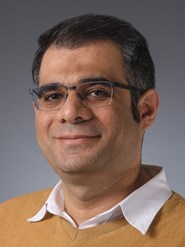
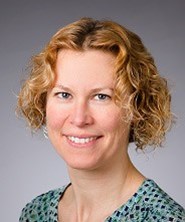
Frida Lind is an Assistant Professor at the Department of Supply and Operations Management, Chalmers University of Technology. Her work focuses on business networks, digital transformation, and sustainable logistics, with a particular emphasis on startups, resource renewal, and collaborative innovation. Research Themes : Digital-physical resource integration, circular economy, networked business models, and sustainable freight transport. Notable Contributions : Studies on university spin-offs, geofencing in urban logistics, and resource development in heavy industry networks. Recognition : Recipient of the Outstanding Article of the Year–2014 award in 2015. Frida's recent articles explore trends in circular product development, smart products, and renting models in the textile industry. Her work bridges digitalization with sustainability, emphasizing value creation through collaborative strategies. Contact: frida.lind@chalmers.se
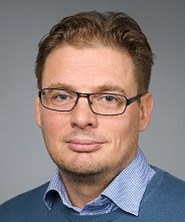
Gunnar Elgered is a Professor at Chalmers University of Technology, specializing in space geodesy and atmospheric research. His work is centered at the Onsala Space Observatory, where he utilizes radio telescopes and Global Navigation Satellite Systems (GNSS) for geodetic and atmospheric studies. Previously serving as department head from 2000 to May 2017, he continues active research and teaching in engineering measurements with innovative examination methods. His research focuses on: Space geodesy using GNSS and VLBI techniques Atmospheric water vapor monitoring via microwave radiometers Climate research through long-term GNSS data analysis Tropospheric delay modeling for weather forecasting improvement Development of error correction models for geodetic applications Recent publications (2023–2025) demonstrate sustained leadership in atmospheric parameter assessment using co-located instrumentation at Onsala. His work shows increasing emphasis on climate model evaluation, with key contributions to GNSS interferometric reflectometry for sea level monitoring and tropospheric error modeling. The research integrates multiple geodetic techniques to address atmospheric variability and climate change impacts. Professor Elgered actively contributes to international geodetic infrastructure through the International VLBI Service (IVS), particularly via Onsala Space Observatory's Analysis Center activities. His projects focus on enhancing geodetic observing systems for climate monitoring, including the VGOS (VLBI Global Observing System) and co-location of geodetic techniques.
Ali Sharifi is a Research Fellow at the Department of Mathematics and Mathematical Statistics, Umeå University. He holds a postdoctoral position focusing on spatio-temporal statistical methodologies. His work is affiliated with MIT-huset, located in Umeå, Sweden. Research Interests: Specializes in advanced statistical techniques for analyzing spatio-temporal data on linear networks, integrating mathematical frameworks with real-world applications. His expertise bridges theoretical statistics and practical modeling challenges in network-based spatial analysis. Publications: Recent work includes a 2024 publication in Spatial Statistics (Elsevier), co-authored with Mehdi Moradi, addressing summary statistics for spatio-temporal point processes on linear networks. Grants & Advising: No specific grants or advisees listed in available texts.
Elisa Tattersall Wallin holds a PhD in Library and Information Science from the Swedish School of Library and Information Science, affiliated with the University of Borås. Her research focuses on information practices, digital cultures, and reading habits, particularly exploring how climate change information circulates online and the evolving landscape of audiobook consumption among young adults. She teaches courses on research methods, thesis writing, and digital information practices. Her 2022 doctoral thesis Sound Reading investigated audiobook practices through a temporal and spatial lens, analyzing subscription platforms like streaming services. This work earned her the iSchools doctoral dissertation award (runner-up, 2023). She actively engages in collaborative projects such as the Mistra Environmental Communication initiative, studying public engagement with renewable energy topics. Her publications span academic journals and edited volumes, addressing themes like climate change communication, audiobook infrastructure, and digital literacy. She contributes to initiatives like the Programming Historian to democratize digital research tools.
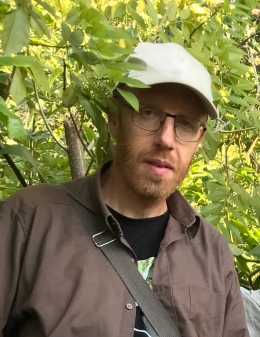
Kristoffer Hylander is a Professor in Plant Ecology at Stockholm University’s Department of Ecology, Environment and Plant Sciences. His research focuses on landscape ecology in boreal forests and tropical mosaic landscapes, emphasizing microclimate dynamics, climate change adaptation, and biodiversity conservation in human-modified ecosystems. He leads projects on forest biodiversity resilience, invasive species management, and coffee agroforestry systems in Ethiopia. Current research themes include forest microclimate buffering under climate change Agroforestry biodiversity and ecosystem services Climate refugia identification and management Species interaction dynamics in fragmented landscapes Recent publications analyze boreal forest fungal responses to drought, microclimate-driven plant community shifts, and Ethiopian coffee agroforestry systems. His work integrates field experiments with multi-scale modeling, emphasizing practical conservation strategies in managed forest landscapes.
Patric Jensfelt is a full-time Professor at the Robotics, Perception and Learning (RPL) division within the School of Electrical Engineering and Computer Science (EECS) at KTH Royal Institute of Technology . He contributes to robotics and autonomous systems through research, teaching, and industry collaboration. Academic Rank: Professor Department: Robotics, Perception and Learning (RPL) School: School of Electrical Engineering and Computer Science (EECS) University: KTH Royal Institute of Technology His research focuses on robotics and autonomous systems , particularly spatial cognition for enabling robots to understand and model their environments. He integrates sensor data with high-level symbolic reasoning to advance navigation, mapping, and system integration. Recent work includes applications in service robotics, 3D foot scanning (via the company Volumental ), and drone-based perception. The 15 most recent articles highlight advancements in scene flow estimation, autonomous driving, LiDAR processing, and domain adaptation. They emphasize self-supervised learning , dynamic environment modeling , and robust spatial representations for autonomous systems. Patric supervises Master’s and PhD students, particularly in project courses like DD2410 Introduction to Robotics , DD2419 Project Course in Robotics and Autonomous Systems , and the doctoral course FDD3356 System Integration for Robotics . He is actively involved in the WASP Graduate School , teaching Autonomous Systems annually. He leads the Robotics, Perception and Learning (RPL) division, which fosters innovation in robotics through experimental projects and industry partnerships like Intelligent Machines . The division supports internships (unpaid) and encourages applicants to demonstrate prior engagement with his research.
Miguel A. Martínez is Professor in Sociology, especially Housing and Urban Sociology, at Uppsala University, where he is affiliated with both the Institute for Housing and Urban Research and the Department of Sociology. His academic work bridges rigorous scholarly research with direct engagement in social movements, particularly those focused on housing justice and urban rights. His research interests encompass a wide range of urban sociology topics including social movements, housing policies, socio-spatial segregation, sustainable mobility, local governance, gentrification, and urban politics. His methodological approach emphasizes qualitative methods and activist research, reflecting his commitment to public sociology that directly engages with social struggles. His work often examines how marginalized communities resist neoliberal urban policies and develop alternative practices of urban living. The analysis of Professor Martínez's recent publications reveals a strong thematic focus on housing movements, particularly in Spain, with increasing attention to transnational connections between urban struggles in Europe and Latin America. His work consistently interrogates the relationship between social movements and urban governance, examining how movements challenge housing financialization, develop alternative housing models, and navigate complex political landscapes. A distinctive feature of his scholarship is the integration of theoretical analysis with practical movement strategies, often drawing on his own experiences as both researcher and participant in urban social movements. Professor Martínez leads significant research projects including 'The intersectional and sustainable impacts of housing movements: the Spanish case' (2020-2023, funded by FORMAS) and 'Urban Struggles for the Right to the City and Urban Commons in Brazil and Europe' (2019-2024, funded by STINT-CAPES). His work demonstrates how academic research can directly inform and be informed by social movement practices, creating a productive dialogue between scholarly analysis and grassroots activism. His teaching at Uppsala University includes courses on Urban Sociology and Qualitative Research Methods, where he incorporates both theoretical frameworks and practical case studies of urban movements. His pedagogical approach reflects his broader scholarly commitment to connecting academic knowledge with real-world social struggles.
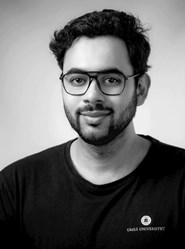
Arka Ghosh is a doctoral student and knowledge engineer at Umeå University , Department of Computing Science. He is affiliated with the AI for Data Management research group led by Prof. Dr. Diego Calvanese. Research focus: Virtual Knowledge Graphs (VKGs), heterogeneous data integration, and management of geospatial/raster data Email: arka.ghosh@umu.se Research Areas: Ontology-based data access (OBDA), semantic querying with SPARQL and NLP, Description Logic formalisms, raster/vector data processing, and temporal-spatial data modeling. Publications: Recent work presented at RuleML+RR 2024 and 2023 conferences includes extending VKG systems to handle large-scale satellite raster data and reformulating queries across heterogeneous data sources.
Patrik Rydén is a Professor of Mathematical Statistics at the Department of Mathematics and Mathematical Statistics, Umeå University, where he applies statistical methods to complex datasets. He also directs the Industrial Doctoral School for Research and Innovation , fostering academia-industry collaboration. His research spans healthcare (ambulance logistics, cancer diagnostics), industrial optimization (automotive quality control), and bioinformatics. Research Focus Rydén develops data-driven methodologies for: Healthcare : Optimizing ambulance deployment, predicting patient care times, and modeling disease spread. Industry : Statistical process control for manufacturing and quality improvement. Bioinformatics : Cancer subtype identification and vaccine efficacy modeling. Publication Trends His recent work emphasizes applied statistics in healthcare (40%), industrial machine learning (30%), and genomic analysis (30%), with strong themes in predictive modeling, spatio-temporal analysis, and high-dimensional data interpretation. Leadership & Projects As director of the Industrial Doctoral School, he bridges academic research with industry needs. Key projects include: Predicting post-anesthesia care time using ML (2022–2027) Data-driven prehospital care optimization (2018–2028) Statistical learning for industrial defect detection (2017–2023)
Åsa Berglund is an Associate Professor in the Department of Ecology, Environment and Geoscience at Umeå University, where she serves as program director for the bachelor’s program in Environmental Science with sustainability profile. Her research and teaching focus on ecotoxicology, particularly the effects of metal contamination on ecosystems and wildlife. Research Qualifications: Docent Educational Qualifications: Recognised university teacher Her primary research lies in ecotoxicology, with a special focus on metal-contaminated environments and their effects on biota. She investigates the transport of metals from aquatic to terrestrial environments, mediated by aquatic insects, and the subsequent impacts on bird populations. Additionally, she studies the long-term effects of mining and the recovery of ecosystems in mining-impacted areas, employing a holistic approach that combines paleolimnological, ecological, and ecotoxicological tools. By analyzing lake sediment records, she monitors historic mining impacts and assesses environmental effects through benthic communities and long-term bird population records. Her recent publications (2015-2023) predominantly focus on the effects of metal contamination, particularly lead and zinc, on ecosystems. Key themes include the bioaccumulation of metals in birds and small mammals, the role of aquatic-terrestrial linkages in contaminant transfer, and the recovery of ecosystems after reduced industrial emissions. Her work often employs field studies, mesocosm experiments, and long-term monitoring, with a strong emphasis on northern Sweden’s mining-affected regions. As program director for the Environmental Science bachelor’s program, she oversees a transdisciplinary curriculum aimed at solving global environmental and sustainability challenges. Her research is supported by projects such as “Cross-ecosystem boundary effects of metal contamination” (2016-2021) and “Transport of contaminants across ecosystem boundaries” (2016-2021), indicating active grant funding for her work on metal contamination and ecosystem boundaries. She is an active member of multiple research groups at Umeå University, including Freshwater Ecology, Paleolimnology, and Terrestrial Ecology. These groups facilitate interdisciplinary collaboration on projects examining the impacts of contaminants across ecosystem boundaries and the recovery of ecosystems from historical mining activities.
Bengt-Gunnar Jonsson is a Professor in the Department of Biology at Mid Sweden University's School of Natural Science, Design and Sustainable Development. With over 25 years of research experience, he specializes in boreal forest ecology, deadwood dynamics, and biodiversity conservation. His work focuses on wood-inhabiting fungi , lichen communities , and forest fragmentation effects , particularly in northern Sweden's high conservation value forests . Jonsson has been pivotal in developing green infrastructure models and climate-adaptive forestry strategies . Key research themes: forest conservation, fungal ecology, climate change mitigation, deadwood management Research tools: presence-absence sampling, Bayesian modeling, long-term ecological monitoring Policy contributions: EU Biodiversity Strategy evaluations, IPBES initiatives His recent publications (2025-2020) demonstrate sustained expertise in forest carbon dynamics , saproxylic community analysis , and landscape-scale conservation . Jonsson frequently collaborates with international researchers on temperate and boreal forest biodiversity , with notable work on functional ecology and ecosystem service trade-offs . Current projects include 'Climate - collaborative learning initiative' and 'Functional green infrastructure in boreal forests' . Scientific contributions span multiple systematic reviews in environmental management, including Forest Ecology and Management and Environmental Research Letters . He has co-authored Cambridge University Press 's Biodiversity in Dead Wood and contributed to IPBES policy frameworks. Jonsson's research integrates empirical forest monitoring with theoretical ecological modeling , particularly in wood decomposition processes and fungal community dynamics .
Anna Siverskog is an Associate Professor at Södertörn University's Department of Culture and Learning. Her work focuses on intersections of age, gender, sexuality, and power dynamics within elderly care systems, particularly examining LGBTQ aging experiences in Sweden and the Nordic region. LGBTQ aging in heteronormative contexts Dementia care policy analysis Life course perspective on transgender aging FORTE-funded projects (2022-2025) Collaborations with Karolinska Institutet and Nordic Council of Ministers Her research employs qualitative methodologies including life story interviews and policy document analysis. Key themes include gender identity negotiation , queer resistance in institutional care , and embodied aging experiences . Projects examine both macro-level policy frameworks and micro-level personal narratives. Notable contributions include: 2025 Journal of Gerontological Social Work analysis of Swedish dementia care policies 2023 Sexualities work on heteronormative silences in eldercare 2019 International Journal of Aging & Human Development study on queer spatial practices Current projects include: LGBTQ and dementia care (2022-2025) - Analyzing policy implementation and lived experiences Mental health of older LGBTQ people (2024-2026) - Quantitative survey with Karolinska Institute Nordic LGBTI aging overview - For NIKK/Nordic Council of Ministers
David Black-Schaffer is a Professor at Uppsala University's Department of Information Technology, specializing in computer systems research. As of 2023, he serves as Dean of Research for the Faculty of Science and Technology. His work bridges software and hardware innovations to enhance data movement efficiency in computer systems, with applications commercialized through a startup and integrated into industry standards like OpenCL. Black-Schaffer earned his PhD in Electrical Engineering from Stanford University in 2008, focusing on many-core processor programming. His career spans roles at Apple Inc. (contributing to OpenCL standards), postdoctoral research at Uppsala University, and academic progression from assistant to full professor (2010–2017). He has held leadership roles including Head of the Division of Computer Systems (2022) and department representative on the faculty Advisory Committee for Research (2021). His research spans computer architecture, memory systems, parallel programming, and simulation techniques. Recent publications (2024–2020) explore garbage collection, cache optimization, memory contention, NUMA systems, and instruction scheduling. Key trends include software-hardware co-design for power efficiency, reuse-aware data placement, and machine learning for performance modeling. Knut & Alice Wallenberg Foundation: Wallenberg Academy Fellowship Prolongation (2020–2025), Wallenberg Academy Fellow (2016–2021) Swedish Research Council (VR): Project Grant (2019–2024), Young Researcher Grant (2015–2018), Framework Grant (2012–2017) European Research Council: ERC Starting Grant (2017–2022) Teaching Awards: Uppsala Engineering and Science Student Union Pedagogical Prize (2012), Uppsala University Pedagogical Prize (2016), Uppsala Technical Physics Students' Teaching Award (2019) Other Grants: ScalableLearning flipped classroom project (2012–2020), Arm Ltd. collaborations on memory system designs He pioneered flipped-classroom teaching through the ScalableLearning project, impacting over 80,000 students. His research is conducted in collaboration with institutions like Arm Ltd., with past contributions to Apple's OpenCL implementation and UPMARC research center.
Mats Lindegarth is a Professor at the Department of Marine Sciences, University of Gothenburg, and serves as scientific coordinator at the Swedish Institute for the Marine Environment. Based at the Tjärnö Marine Laboratory, his work focuses on coastal ecology and environmental assessment. Role: Professor & Scientific Coordinator Location: Tjärnö Marine Laboratory (Strömstad, Sweden) Collaborations: Works with Swedish Institute for the Marine Environment and international researchers Research Interests: Coastal zone management Aquaculture sustainability Benthic ecology Statistical and GIS-based ecological modelling Marine biodiversity mapping (PREHAB project) Environmental indicator development Scientific Contributions: Mats has published extensively on bivalve ecology, aquaculture impacts, and marine monitoring methods. His work includes species distribution models for oyster conservation, nutrient flux studies in mussel farms, and uncertainty analysis for ecological indicators. Current research focuses on policy-driven marine environmental assessment, particularly through the PREHAB and WATERS programs.
Per Åberg serves as Project Coordinator and Vice Dean for first and second cycle education at the Faculty of Science, University of Gothenburg, Department of Marine Sciences. His work integrates academic leadership with active research in marine population ecology. Research focuses on population ecology with emphasis on demography, life-history evolution, and plant-animal interactions in rocky shore ecosystems. Åberg specializes in using Ascophyllum nodosum and seagrasses as model organisms, developing Integral Projection Models (IPMs) to analyze continuous phenotypic traits like size. His work examines chemical defense mechanisms in brown seaweeds and their trade-offs with growth, often in collaboration with colleagues at the Department of Marine Sciences. Recent publications reveal strong trends in climate change impacts on range-edge populations, disturbance ecology in intertidal zones, and trophic dynamics in seagrass ecosystems. Åberg teaches population ecology in undergraduate biology and marine science programs, including an internet-based Marine Biology course open to qualified students. His advising activities include supervising PhD students on topics related to marine population dynamics, though specific student names aren't listed in available materials. While no major scientific awards are documented in the provided text, his extensive publication record demonstrates significant contributions to marine ecology. His laboratory work centers on rocky shore ecosystems with particular focus on fucoid algae and seagrass meadows. Current projects involve modeling chemical defense scenarios in Ascophyllum populations and analyzing century-scale changes in intertidal communities across the North-East Atlantic.