معرفی
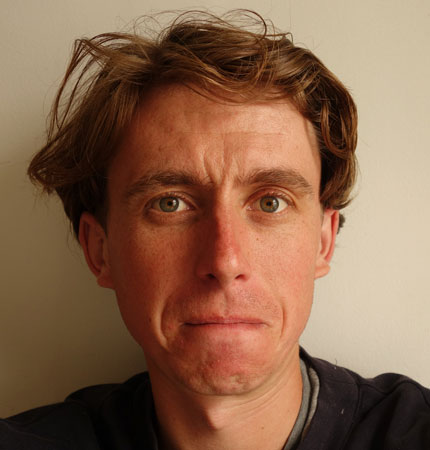
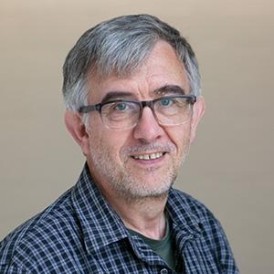
Per Åberg serves as Project Coordinator and Vice Dean for first and second cycle education at the Faculty of Science, University of Gothenburg, Department of Marine Sciences. His work integrates academic leadership with active research in marine population ecology.
Research focuses on population ecology with emphasis on demography, life-history evolution, and plant-animal interactions in rocky shore ecosystems. Åberg specializes in using Ascophyllum nodosum and seagrasses as model organisms, developing Integral Projection Models (IPMs) to analyze continuous phenotypic traits like size. His work examines chemical defense mechanisms in brown seaweeds and their trade-offs with growth, often in collaboration with colleagues at the Department of Marine Sciences. Recent publications reveal strong trends in climate change impacts on range-edge populations, disturbance ecology in intertidal zones, and trophic dynamics in seagrass ecosystems.
Åberg teaches population ecology in undergraduate biology and marine science programs, including an internet-based Marine Biology course open to qualified students. His advising activities include supervising PhD students on topics related to marine population dynamics, though specific student names aren't listed in available materials. While no major scientific awards are documented in the provided text, his extensive publication record demonstrates significant contributions to marine ecology.
His laboratory work centers on rocky shore ecosystems with particular focus on fucoid algae and seagrass meadows. Current projects involve modeling chemical defense scenarios in Ascophyllum populations and analyzing century-scale changes in intertidal communities across the North-East Atlantic.