Vidhyasaharan Sethu is an Associate Professor at the School of Electrical Engineering and Telecommunications, UNSW Sydney. His educational background includes a PhD from UNSW, a Master of Engineering Science in Signal Processing from UNSW, and a Bachelor of Engineering in Electronics and Communication Engineering from Anna University. His research focuses on speech signal processing with emphasis on machine learning applications. Primary interests include: Speech-based emotion and mental state recognition systems Affective computing and voice biometrics Integration of machine learning with signal processing Uncertainty quantification in speech systems Adaptive audio front-ends and acoustic modeling Recent publications (2021-2025) demonstrate strong focus on: Ambiguity-aware emotion recognition using advanced ML techniques Speaker verification and biometric security systems Novel acoustic modeling frameworks Applications of large language models in speech processing Cross-disciplinary work in materials science via ML approaches Research Funding: ARC Discovery Projects (2020, 2019) ARC LIEF Grant (2019) UNSW Research Infrastructure grants (2018-2019) Huawei Innovation Research Program (2018) ARC Linkage (2017) NICTA International Postgraduate Award (2006-2009) Teaching includes courses in: Data Science for Electrical Engineers (ELEC9741) Speech Processing (ELEC9723) Digital Signal Processing (ELEC3104) Electrical Systems Design (ELEC2117)
Dr. Anthony Kimpton is a Lecturer in Urban and Regional Planning at the University of Southern Queensland's School of Surveying and Built Environment. He holds a BA, BA(Hons), and PhD from the University of Queensland and is affiliated with multiple research centers including the Institute for Resilient Regions, Centre for Health Research, and Centre for Heritage and Culture. His research focuses on leveraging big data, spatial analysis, and digital technologies to address urban challenges. Primary interests include: Urban and transport planning systems Spatial modeling and data visualization Social sustainability and equity in development Crime prevention through environmental design Green space accessibility and community resilience Kimpton's recent publications demonstrate strong thematic coherence around sustainable mobility solutions, spatial inequality in environmental impacts, and innovative applications of administrative data for urban analysis. His work consistently integrates spatial science with policy-relevant urban research. Awards and recognitions: Dean's Award for Outstanding Thesis (UQ, 2018) Multiple early career research grants (2019-2020) Australian Postgraduate Award (ARC, 2014) He currently supervises doctoral research on active transport, micromobility in events logistics, and architectural heritage preservation. His industry experience includes leading data science teams at the Australian Bureau of Statistics and developing national transport data infrastructure.
Dr Raj Mehrotra is a Senior Research Fellow at the Water Research Centre, School of Civil and Environmental Engineering, University of New South Wales. He holds a PhD from UNSW, M.E. from Indian Institute of Technology Roorkee, and B.E. from Jiwaji University. His work focuses on statistical applications in hydrology and hydroclimatology, particularly on multivariate bias correction and stochastic downscaling of climate model simulations. Education: PhD: University of New South Wales M.E.: Indian Institute of Technology, Roorkee B.E.: Jiwaji University, Gwalior Raj develops innovative methodologies for climate data processing, including the Multivariate Bias Correction (MBC) and Multisite Rainfall Downscaling (MRD) software. His research addresses climate change impacts on water resources, reservoir management, and flood/drought risk assessment, with applications in Australia, India, and Thailand. Recent publications reveal a focus on climate projections, bias correction frameworks, and hydrological modeling. Key topics include CMIP5 decadal predictions, stochastic rainfall generation, and uncertainty quantification in climate simulations. His work has been supported by ARC Linkage projects, WaterNSW, Bureau of Meteorology, and international collaborations like the Australia-India Strategic Research Fund. He contributes to climate-hydrology software development and has advised on projects related to water infrastructure, agricultural productivity, and groundwater sustainability. Current projects include multivariate bias correction of regional climate simulations, development of the MINBC package, and ensemble modeling for ungauged catchments.
Dr. Badal Pokharel is a Research Associate at the Research Centre for Integrated Transport Innovation (rCITI) within the School of Civil and Environmental Engineering at the University of New South Wales (UNSW), Faculty of Engineering. She holds a PhD in Civil and Environmental Engineering from UNSW (2023) and an M.Sc. in Engineering Geology from Tri-Chandra Multiple Campus, Tribhuvan University, Nepal (2018), where she was the university topper. Her research focuses on the assessment of natural and human-induced disasters, particularly earthquake-triggered landslides and climate change-induced floods, using advanced geospatial approaches. Dr. Pokharel has extensive expertise in Geographic Information Systems (GIS), remote sensing (RS), and implementing geospatial systems for geohazards, agriculture, climate change, land administration, and geomorphology projects. Her methodological expertise integrates machine learning techniques with traditional geospatial methods, showing particular focus on the Himalayan region, especially Nepal. Dr. Pokharel's publications demonstrate strong expertise in landslide susceptibility mapping, earthquake-triggered landslides, and geospatial analysis of natural disasters. Her recent work includes innovative approaches using random forest methods, Persistent Scatterer Interferometry, and slope-unit-based assessments for disaster risk management, with a geographical focus on Central Nepal and the Himalayan region. Early Career Academic Social Impact Award 2023, UNSW Early Career Network (ECAN), Sydney Australia Best Talent Award, 2021 Young Generation Forum/Young Professional Forum hosted by the Korean Academy of Scientists and Engineers in Australasia University topper for Master of Science in Engineering Geology, Tri-Chandra Multiple Campus, 2018 Dr. Pokharel has secured multiple research grants including UNSW Seed funding (AUD 25000), Global Partnership Project Grant from Virginia Tech University (AUD 7200), HPC-Europa3 Transnational Access Programme research grant (AUD 3630), and PhD Research Support Grant from UNSW (AUD 3000). She is passionate about interdisciplinary and transdisciplinary research that contributes towards disaster risk reduction and management, bridging engineering, geoscience, and data science to develop practical solutions for natural disaster prediction and management.
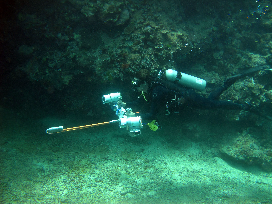
Jordan Goetze is an Adjunct Research Fellow at Curtin University's School of Molecular and Life Sciences, part of the Faculty of Science and Engineering. He holds a PhD in Marine Ecology from the University of Western Australia (2016) and has extensive postdoctoral experience, including work on the Global FinPrint project and Australia-wide baited video data synthesis. His research focuses on fisheries management, marine conservation strategies, and the application of stereo video technology to study fish assemblages. He has collaborated globally and contributed to over 30 peer-reviewed articles. Education: PhD in Marine Ecology, University of Western Australia (2016); earlier research roles at UWA and Curtin from 2007 onwards. Research Interests: Fisheries assessment, conservation management of marine species, ecological impacts of climate events (e.g., ENSO), and the use of advanced sampling techniques like stereo-ROV and diver-operated video. His work emphasizes bridging ecological science with practical management solutions, particularly in coral reef and coastal ecosystems. Awards: 2016 Australian FameLab finalist, 2015 John Glover Award, and multiple scholarships/awards for research and teaching excellence. Grants/Advising: Collaborates with the Department of Biodiversity, Conservation and Attractions and maintains academic ties via his adjunct position. His work includes projects on shark conservation (e.g., Nature Ecology and Evolution 2024), coral reef biodiversity, and fisheries policy. Labs/Teams: Active member of global networks including the Global FinPrint consortium and the Coral Reef Futures initiative, contributing to large-scale ecological syntheses.
Dr. Ayalsew Zerihun is a Research Fellow at Curtin University's School of Molecular and Life Sciences (MLS), affiliated with the Muresk Department of Applied Biosciences and the Centre for Crop Disease Management (CCDM). Their work focuses on integrating molecular biology, remote sensing, and ecological modeling to address challenges in crop disease management, water resource dynamics, and climate change impacts. Key areas include fungal pathogen resistance mechanisms, precision agriculture strategies, and environmental hydrology. Dr. Zerihun has collaborated extensively on projects involving wheat pathogens ( Pyrenophora teres ), water storage dynamics in wetlands, and the ecological implications of agricultural practices. Research interests span plant-pathogen interactions, remote sensing applications in agriculture, and climate-driven ecosystem responses. Recent work emphasizes optimizing fungicide resistance management, quantifying gene flow in pathogen populations, and leveraging satellite data for hydrological modeling. Their interdisciplinary approach bridges laboratory-based molecular studies with field-scale environmental assessments. Publications highlight contributions to understanding spatial-temporal patterns of crop diseases, the socioeconomic dimensions of fungicide use in developing regions, and the environmental impacts of large-scale infrastructure like the Grand Ethiopian Renaissance Dam. Collaborations include institutions such as the University of Western Australia, CSIRO, and international partners in Africa and Asia.
Scientia Professor Dennis Del Favero is an ARC Laureate Fellow and Chair Professor of Digital Innovation at the Faculty of Arts, Design and Architecture , University of New South Wales. He serves as Executive Director of the iCinema Research Centre and Director | Research of EPICentre , with visiting positions at IUAV University of Venice and University of California Santa Barbara . Major research areas include interactive cinema , digital innovation , AI aesthetics , and immersive visualization systems Current projects: iFIRE (wildfire visualization), iDESIGN (theater design), netARCHIVE (ephemeral art archiving), memorySCAPE (war commemoration), and iMODEL (operatic rehearsal systems) Collaborations with Royal College of Art , Stanford University , Fire and Rescue NSW , and European Network on Extreme Fire Behavior (NERO) Scientific recognition includes 22 ARC grants, 29 international grants, and presentations in 116 first-tier international venues. His work has been praised by Clare Stewart (BFI London Film Festival) as "positioning Australia as a creative and technological leader." Research supervision includes PhD and MA candidates like Frank Wu , Mario Flores Gonzalez , and Nagida Helsby-Clarke . He co-developed iDATA (360° 3D museum browser) and Retrospect: War, Family, Afghanistan (interactive defense heritage database).
Rory Verhagen is a Research Fellow at the Queensland Alliance for Environmental Health Sciences (QAEHS) within the Faculty of Health, Medicine and Behavioural Sciences at The University of Queensland. His work bridges environmental science and public health through advanced wastewater analysis methodologies. His educational background includes: Bachelor of Zoology from University of Applied Sciences Masters (Extended) of Toxicology from Utrecht University PhD in Environmental Chemistry from The University of Queensland Verhagen's research centers on wastewater-based epidemiology with specialized expertise in innovative sampling strategies for environmental contaminants. He investigates chemical and biological hazards in Australian wastewater systems, focusing on PFAS exposure, pharmaceutical residues, illicit drug consumption patterns, and pathogen monitoring. His methodology integrates passive sampling techniques with advanced analytical chemistry to assess contaminant fate in water cycles. Recent work examines pandemic-related shifts in drug use and develops novel biomarkers for human fecal pollution tracking. His publication record reveals consistent contributions to environmental toxicology, particularly in wastewater analysis for public health surveillance. Key trends include expanding wastewater epidemiology beyond drug monitoring to include chemical hazards and pathogens, with increasing emphasis on spatial/temporal contaminant modeling across Australian catchments. Verhagen actively secures research funding through: Current projects: MOBSTER antimicrobial resistance study (Universities Australia-Germany), Queensland correctional facility drug monitoring (Corrective Services), National Wastewater Drug Monitoring Program (ACIC) Past projects: Nitazene surveillance (NSW Health), Contaminants of Emerging Concern study (Queensland Water Directorate) He supervises postgraduate students through QAEHS HDR programs and collaborates with Seqwater, Queensland Corrective Services, and Minderoo Centre initiatives.
Dr. Jim Radford is an Associate Professor at La Trobe University , where he leads the Landscape Ecology Lab and co-directs the Research Centre for Future Landscapes . His work focuses on natural capital accounting , conservation biology , and sustainable agriculture , addressing global challenges in sustaining ecosystems under climate change. Current Research: Farm-scale natural capital metrics, fire regime impacts on biodiversity, AI-driven ecological monitoring, and bird community condition indicators. Funded Projects: Includes National Landcare Program grants , Bushfire and Natural Hazards CRC projects , and Australian Department of Climate Change initiatives . Teaching: Coordinates Water Management (AGR3WMT) and teaches Landscape Ecology and Conservation (ENV3LEC) and Issues in Conservation (WBC2IC) . Scientific Awards: Fellow of Birdlife Australia (2024) for ornithological contributions.
Dr. Robin Smit is an Adjunct Professor at the School of Civil and Environmental Engineering , University of Technology Sydney (UTS), and serves as Director/Founder of Transport Energy/Emission Research (TER). With nearly 30 years of experience across Europe, Australia, and Asia, he specializes in transport emissions modeling, remote sensing, and statistical analysis. Education: MSc in Air Quality (Wageningen University, 1994), PhD in Transport Emissions (Griffith University, 2007) Research Focus: Measurement/modeling of transport emissions, dynamic fleet modeling, software development, and air quality assessment using remote sensing and portable measurement systems. Key areas include diesel particulate filter malfunction analysis, NOx/NO2 discrepancies in Euro standards, and integration of AIS data for shipping emissions. Recent Publications demonstrate trends in real-world emission factors, validation of international models (COPERT) in Australian contexts, and methodological improvements in remote sensing data accuracy. Awards: CASANZ Distinguished Service Medal (2022) Collaborations: Member of the European Research Group on Mobile Emission Sources (ERMES), founder of the Transport Special Interest Group at CASANZ, and contributor to environmental policy development.
Associate Professor Binghao Li leads the MIoT & IPIN Lab at the School of Minerals and Energy Resources Engineering, University of New South Wales, Sydney. He holds a PhD in Spatial Information Systems from UNSW and advanced degrees in Civil and Electrical/Mechanical Engineering from Tsinghua University and Beijing Jiaotong University. Expertise in indoor/outdoor positioning systems Pioneering mine IoT applications Leader in pedestrian navigation research His research spans indoor positioning technologies, satellite navigation, and mining IoT solutions. Key grant projects include: 2021 CRC-P grant ($2m) for underground mine LoRa networks 2020 ARC Research Hub ($5m) for connected sensors 2018 Digital Grid Seed Funding for indoor navigation 2015-2019 ARC Linkage grants for positioning systems Award highlights: 2019 Best Paper & Presentation Awards 2010 VC's Post-Doctoral Fellowship 2004-2005 student research awards He supervises research in indoor positioning and mine IoT, and teaches courses including ENGG1000 Engineering Design and MINE8710 Mine Slope Stability.
Professor Raina MacIntyre is NHMRC Leadership 3 Fellow and Professor of Global Biosecurity at the University of New South Wales, Faculty of Medicine & Health. She heads the Biosecurity Program at the Kirby Institute, conducting research in epidemiology, bioinformatics, health intelligence, vaccinology, bioterrorism prevention, mathematical modelling, and public health. As of 2024, she is ranked #1 globally on Respiratory Protective Devices and highly ranked in Smallpox research according to Expertscape, with an H-index of 81/64 and over 30,000 citations. Her educational background includes: MBBS (1st Class Honours), University of Sydney, 1988 Master of Applied Epidemiology, Australian National University, 1992 PhD (Epidemiology), Australian National University, 1998 Fellow, Royal Australasian College of Physicians (FRACP), 1994 Fellow, Australian Faculty of Public Health Medicine (FAFPHM), 1995 Professor MacIntyre's research spans four key areas: Personal protective equipment, Vaccinology, Epidemic response and emerging infectious diseases, and bioterrorism prevention. Her innovation, EPIWATCH®, is an advanced AI system for real-time global health intelligence that uses NLP, prioritization algorithms, and LLMs to scan open-source data for early epidemic signals. She has a 31-year track record in pandemics and respiratory virus control, with particular expertise in mask research, having published the largest body of clinical trials on face masks for healthcare workers internationally. Her research publications demonstrate strong focus on emerging infectious disease modeling, vaccine effectiveness, and biosecurity threats. Recent work emphasizes AI-driven health intelligence systems, airborne transmission mitigation, and preparation for re-emergent pathogens like smallpox. Her articles consistently address practical applications of epidemiological research to inform public health policy and emergency response. Professor MacIntyre has received numerous prestigious awards including the Eureka Prize for Leadership and Innovation in Science (2022), the Frank Fenner Award for Research in Infectious Diseases (2003), and the Sir Henry Wellcome Medal and Prize (2007). Her work has been globally recognized, with a quote from her mask research featured on the cover of Lancet in 2020. She currently supervises PhD, ILP, and Masters students in infectious diseases epidemiology and biosecurity. Her research is supported by significant grants including an NHMRC Investigator grant (2023-2027), an MRFF grant for aerosol transmission of SARS-CoV-2, and a $5.39 million gift from Vitalik Buterin's Balvi Philanthropic Fund for EPIWATCH expansion in low and middle-income countries. Professor MacIntyre leads a multidisciplinary team at the Kirby Institute including analysts, epidemiologists, AI specialists, and software engineers developing EPIWATCH® into a global hub for epidemic detection and mitigation. She also co-founded the ARM network for Australian outbreak response and serves on multiple WHO committees including the Technical Advisory Group on COVID-19 Vaccine Composition and the SAGE Ad Hoc Working Group on Smallpox and Monkeypox.
Distinguished Professor Chin-Teng Lin is a leading academic at the University of Technology Sydney (UTS) , where he serves as Co-Director of the Australian AI Institute (AAII) and Director of the Computational Intelligence and Brain Computer Interface Lab . With a career spanning decades, he has pioneered advancements in artificial intelligence (AI) and brain-computer interfaces (BCI) , focusing on human-machine collaboration, wearable EEG systems, and neuroergonomics. School of Computer Science, UTS Co-Director, Australian AI Institute Director, Computational Intelligence and BCI Lab Lin’s research interests are deeply rooted in machine-intelligent systems , cognitive neuroscience , and human-centric AI . He has developed groundbreaking technologies like fuzzy neural networks (FNNs) in 1992, which revolutionized AI by integrating human-like reasoning. His work extends to multi-agent reinforcement learning for cybersecurity, wearable EEG devices for real-world applications, and neurofeedback interventions for chronic pain management. His research outputs include over 950 peer-reviewed publications , with a focus on deep learning , transformer models , and clustering algorithms . Articles like the MGRW-Transformer (2025) and Autonomous Clustering (2025) highlight his leadership in interpretable AI and parameter-free methods. Scientific awards and recognitions include: IEEE Fellow (2005) IFSA Fellow (2012) IEEE Fuzzy Systems Pioneer Award (2017) Outstanding Achievement Award, Asia Pacific Neural Network Assembly Lin has supervised 72 PhD candidates , 30 postdoctoral fellows , and 237 research Masters students since 1992, mentoring notable alumni such as Dr. Zehong Cao (ARC DECRA Fellow) and Prof. Chia-Feng Juang (IEEE Fellow). His funding portfolio includes $10M+ from the US Army Research Lab , $3.8M from the Australian Defence Innovation Hub , and $30.2M in industry collaborations .
Minh Hoai Nguyen is a Professor at the School of Computer and Mathematical Sciences and the Australian Institute for Machine Learning (AIML) at the University of Adelaide. Previously, he was a tenured Associate Professor at Stony Brook University (2014-2024) and worked at VinAI Research in Vietnam. He holds a Bachelor of Software Engineering from the University of New South Wales (2006) and a PhD in Robotics from Carnegie Mellon University (2012). His research focuses on computer vision and machine learning, with specialization in human attention modeling, gaze prediction, action recognition, and object counting. Recent work explores applications in educational technology, driver monitoring, and multimodal interaction systems using advanced deep learning approaches. Publication analysis reveals strong emphasis on attention mechanisms across domains, with recent works exploring: (1) Gaze and scanpath prediction using transformer architectures, (2) Few-shot learning for action counting and personalized modeling, (3) Multimodal analysis of cognitive states, and (4) Efficient scene-adaptive vision systems. His research consistently bridges theoretical machine learning with practical applications in human behavior analysis. Scientific Awards: Best Student Paper Award at IEEE CVPR (2012)
Fang Wang is a Research Fellow at the School of Medical Sciences , University of Sydney , and a member of the Charles Perkins Centre . Her research integrates microbial genetics, evolutionary biology, and bioinformatics to analyze the human oral microbiome and its role in childhood oral diseases. PhD in Genetics, University of Cambridge (UK) Postdoctoral work on molecular evolution of Amoebozoa, Spelman College (US) Her current work leverages a longitudinal Australian twin cohort with oral metagenomic data to investigate how host and environmental factors influence microbiome dynamics. Key research questions include the evolution of oral microbial communities in childhood, early prediction of dental caries via microbial features, and environmental impacts on oral health. Recent publications focus on Amoebozoa gene trafficking, oral resistome development, and deep learning applications in stochastic analysis. She has received the FMH Researcher Accelerator Scheme 2025 Grant for her research. Member, Society for Molecular Biology and Evolution