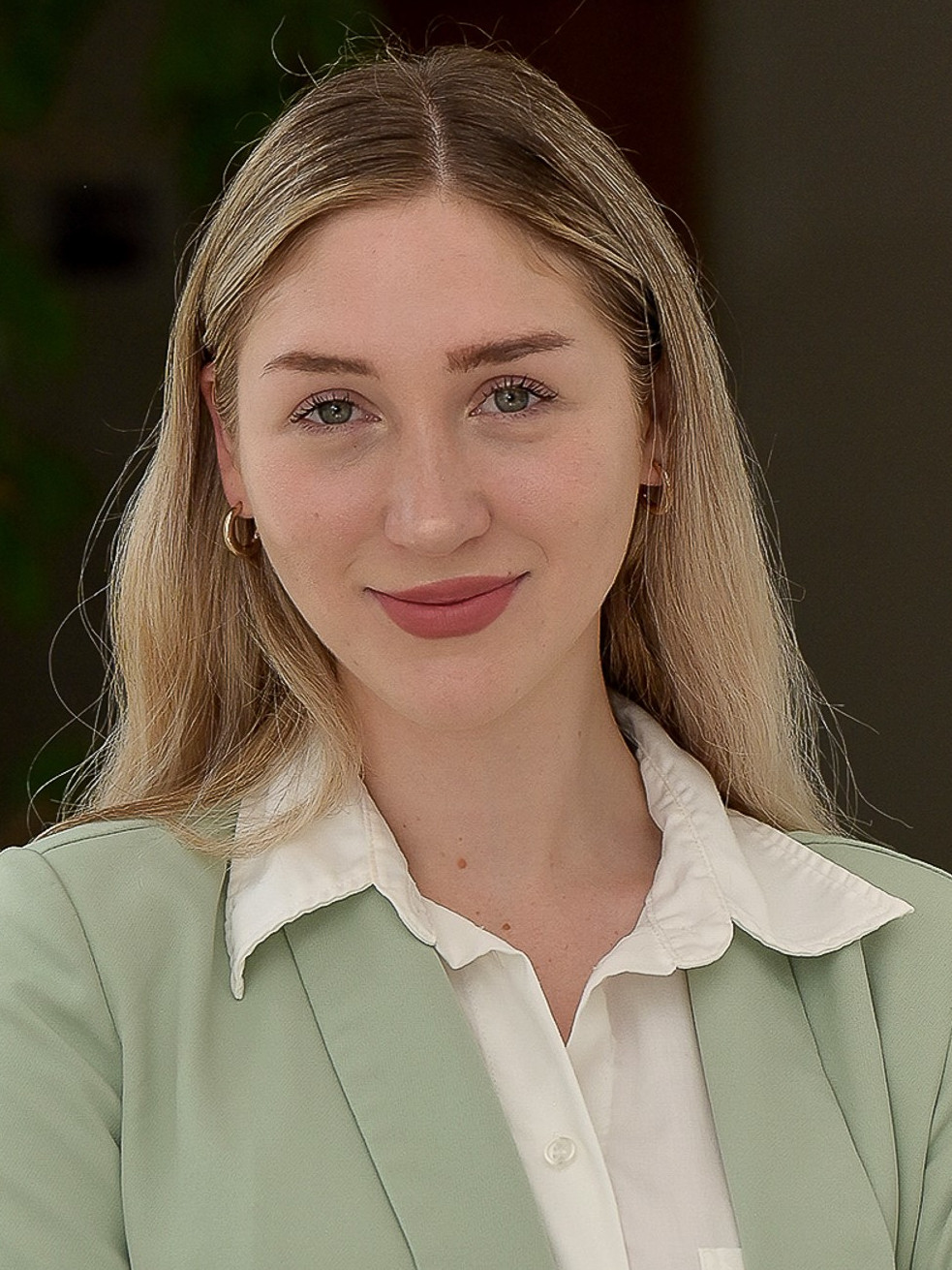
Lara Zwittlinger is a PhD Researcher in comparative politics at the University of Salzburg's Department of Political Science, part of the Faculty of Social Sciences. She completed her bachelor’s (2020–2022) and master’s (2020–2024) degrees in political science at the same institution. Her research focuses on gender equality, the societal impact of the COVID-19 pandemic, and the political consequences of the 'cultural backlash.' She holds the title of Researcher as part of her doctoral program. Her bachelor’s thesis explored the gender equality paradox and its implications for women’s representation in STEM fields, while her master’s thesis analyzed pandemic-related shifts in political attitudes and party preferences. Her ongoing dissertation investigates the causes and political repercussions of cultural backlash phenomena. Lara’s work bridges gender studies, political behavior, and public policy, with a focus on societal structures and crises. Her recent publications include analyses of lockdown impacts on gender roles, conspiracy beliefs, and STEM gender disparities. She is based at Rudolfskai 42, Salzburg, and can be contacted via email at lara.zwittlinger@plus.ac.at .
Dr. Christian Dorninger is a researcher at the Institute for Social Ecology , part of the Department of Economic and Social Sciences at the University of Natural Resources and Life Sciences, Vienna (BOKU) . He holds a doctorate in Sustainability from Leuphana University Lüneburg and has held postdoctoral and visiting scholar positions at institutions including the Konrad Lorenz Institute and the University of Maryland. His current research focuses on socio-ecological metabolism, climate justice, and transformative sustainability pathways. His educational background includes a Mag. in International Development and a BA in Sociology from the University of Vienna, and an M.Sc. in Social and Human Ecology from Alpen-Adria University Klagenfurt. His interdisciplinary training supports his work at the nexus of environmental sociology, ecological economics, and sustainability science. Dorninger’s research centers on structural drivers of environmental degradation , including ecologically unequal exchange, global supply chains, and the social dimensions of climate policy. He investigates how industrialization, globalization, and consumption patterns impact resource use and emissions, with a particular focus on urban and national-level footprints. His work emphasizes transformative change , exploring leverage points in food and energy systems, the role of time use in sustainability, and the potential for circular and regenerative economies. His 15 most recent publications reveal a strong trend toward interdisciplinary sustainability science , integrating political economy, ecological modeling, and social theory. Key themes include imperial appropriation in the global economy, socio-ecological niche construction, and the integration of precautionary principles in pandemic response. His research consistently addresses global environmental justice and systemic inequality. Dorninger is an active contributor to scientific discourse, serving as a reviewer for leading journals such as Nature Sustainability , Global Environmental Change , and Ecological Economics . He is involved in several externally funded research projects, including those focused on regionalized energy transitions, carbon footprinting for Austrian states, and circular economy strategies for Vienna. He is engaged in knowledge transfer through policy-oriented reports and public outreach, including contributions to initiatives like the APCC Special Report on climate-friendly living structures. He collaborates with interdisciplinary teams across BOKU and European institutions, contributing to large-scale research efforts on sustainable development and climate justice.
Martin Steskal is an Associate Professor and Head of the Department of Historical Archaeology at the Austrian Academy of Sciences (ÖAI) in Vienna, Austria. He has led the "Historical Archaeology in the Mediterranean" research group since 2023 and serves as director of the Ephesus excavation since 2024. A graduate of Classical Archaeology and Ancient History from the University of Vienna, Steskal has participated annually in Ephesus excavations since 1999 and received his habilitation in Classical Archaeology in 2012. Current roles: Department Head, Ephesus excavation director ÖAW Turkey board member (since 2024) Deputy director of Ephesus excavation (since 2015) Research Focus : Steskal specializes in death in antiquity , migration patterns , settlement archaeology , and Greek/Roman bathing culture . His work examines ancient government buildings, Roman Eastern provinces, and Hellenistic-Roman Croatia. Recent publications address Ephesian mortuary landscapes, hybrid Roman-Greek architectural forms, and bioavailable isotope mapping for mobility studies. Key Publications (2025-2011) include bioarchaeological analyses of Ephesian burials, Roman infrastructure studies in Egypt, Late Antique art in Anatolia, and systematic research on Mediterranean funerary practices. His 2025 Scientific Reports article on the Octagon cranium in Ephesos represents ongoing paleoanthropological research.
Thomas Einwoegerer is a researcher at the Austrian Academy of Sciences and head of the Quaternary Archaeology Research Group since 2017. He has taught at the Institute of Prehistory and Historical Archaeology at the University of Vienna since 2003, focusing on Paleolithic studies. Affiliation: Austrian Academy of Sciences (since 2000), University of Vienna (since 2003) Education: Doctorate in Prehistory and Early History from the University of Vienna (2009) His research centers on Paleolithic settlement structures, artifact morphology, and experimental archaeology. Key projects include long-term excavations at Krems-Wachtberg (2005–2015) and Kammern-Grubgraben (since 2015), with a focus on loess stratigraphy and subsistence strategies during the Last Glacial Maximum. Recent publications analyze geochemical proxies, radiocarbon chronologies, and osseous industries at LGM sites in Lower Austria. His work bridges archaeological data with Quaternary science to understand environmental impacts on hunter-gatherer societies. He leads the Quaternary Archaeology Research Group and contributes to public archaeology through excavations and outreach. Collaborations span institutions in Austria, Germany, and international venues.
Dr Darko Stojanovski is a prehistoric archaeologist from North Macedonia who currently works as a post-doctoral researcher in the Prehistoric Phenomena Research Group of the Austrian Archaeological Institute (OeAI, Austrian Academy of Sciences, Vienna). In parallel he has served since 2022 as Lecturer in Prehistoric Archaeology at Goce Delčev University in Štip. Since 2019 he directs excavations at the Neolithic site of Amzabegovo (Barutnica) and since 2017 co-directs the Paleolithic Research in Eastern Macedonia project. Education BA in Archaeology, University of Veliko Tarnovo (2007) MA in Quaternary and Prehistory (Erasmus Mundus), University of Ferrara (2010–2012) PhD in Quaternary and Prehistory (Erasmus Mundus), joint programme University of Ferrara / Polytechnic Institute of Tomar / University of Trás-os-Montes e Alto Douro (2014–2017) Research Interests Dr Stojanovski’s work centres on Neolithic socio-economic and cultural change in the Balkans , integrating ceramic technology, human-environment interaction and GIS-based spatial analysis. He explores how pottery production, subsistence strategies (especially dairying) and settlement patterns articulate with broader processes of Neolithization, using cutting-edge methods such as organic residue analysis and geo-spatial modelling. Current projects apply high-resolution GIS to reconstruct activity areas at Amzabegovo and Svinjarichka Chuka along the Vardar–Morava Neolithic Corridor , while his earlier Bristol-based research produced ground-breaking data on lipid residues in Iberian Neolithic ceramics. From 2018 he contributed to the ERC BIRTH project at the Biosense Institute, examining Neolithic human nutrition across the Balkans. Publication Trends Between 2018 and 2025 Stojanovski has authored or co-authored more than twenty articles. The corpus is dominated by site reports and technological analyses of Middle Palaeolithic and Neolithic locales in Macedonia, Portugal and the wider Balkans. A clear trajectory is visible from descriptive excavation reports to methodologically advanced residue and isotope studies that illuminate prehistoric diet, dairying and ceramic technology. Recent works increasingly integrate geo-spatial and bioarchaeological datasets , reflecting his dual expertise in field archaeology and laboratory science. Awards & Fellowships Erasmus Mundus Master Scholarship (2010–2012) Erasmus Mundus PhD Fellowship (2014–2017) ERC BIRTH Project Post-doctoral Fellowship, Biosense Institute, University of Novi Sad (2018) Grants & Field Projects Project Director, Excavations at Amzabegovo (Barutnica) (2019–present) Co-Director, Paleolithic Research in Eastern Macedonia (2017–present) Principal Investigator, The Vardar–Morava Neolithic Corridor: Embedding Data and Building Narratives Principal Investigator, NEOSOL: Soil Archives of Neolithization along the Vardar–Morava Laboratory & Team Affiliations At the Austrian Archaeological Institute he works within the Prehistoric Phenomena Research Group , collaborating closely with colleagues in Vienna on comparative Neolithic studies. Field teams under his direction include graduate students and volunteers from Goce Delčev University and international partner institutions, ensuring vibrant training opportunities and cross-border scientific cooperation.
Ana Mercedes Herrero Corral is a Spanish prehistoric archaeologist and Marie Curie Postdoctoral Fellow at the Austrian Academy of Sciences' Department of Prehistory and WANA Archaeology. Her research focuses on bioarchaeology, childhood studies, family relationships, and social complexity during the Copper and Bronze Ages in Iberia. Research Highlights: Specializes in bioarchaeological analysis of burial records Investigates gender systems and social hierarchization in Bell Beaker societies Current project 'SKIN' explores kinship through DNA, isotope, and peptide analyses Active in the Humanejos research project since 2017 Scientific Contributions: 15+ publications on prehistoric childhood, burial practices, and kinship Recipient of Marie Curie Postdoctoral Fellowship Expert in integrating biological and archaeological variables
Jesús Crespo Cuaresma is a Professor of Macroeconomics at the Department of Economics of WU Vienna University of Economics and Business . He also serves as the Head of the Department of Economics and leads the Competence Center for Empirical Research Methods and the Competence Center for Sustainability Transformation and Responsibility . His research focuses on applied econometrics , macroeconomics , and economic growth and development , with significant contributions to climate policy evaluation, human capital dynamics, and international economic interdependencies. He has published extensively, with over 260 peer-reviewed articles and chapters, including work on structural breaks in greenhouse gas emissions, fiscal multipliers, and climate change adaptation. His research has been supported by grants from institutions like the European Union and the World Bank. Crespo Cuaresma has also contributed to policy reports, such as analyses on the economic impact of the COVID-19 pandemic in Austria and studies on global hunger and sustainable development. His academic leadership includes roles in the Research Institute for Cryptoeconomics and collaboration with the International Institute for Applied Systems Analysis (IIASA). He holds an ORCID identifier and maintains an active Research Database (PURE) profile.
Gergely Hajdu is an Assistant Professor at the Department of Economics, WU Vienna University of Economics and Business. He specializes in behavioral economics and experimental economics, with a focus on decision-making processes and belief formation. Currently teaching Microeconomics and Bridging Courses in Applied Microeconomics, he is set to join Masaryk University's Faculty of Economics and Administration in Fall 2025. His research explores how individuals form beliefs and make decisions in economic contexts, particularly in areas of market structures, inequality, and gender pay gaps. Hajdu employs both theoretical models and experimental methods, collaborating internationally on topics like organizational inequality and labor market dynamics. Recent courses include Microeconomics (VUE5462, VUE0994, VUE1682) and Bridging Course in DigEcon: Applied Microeconomics (AG1484), offered during summer and winter university sessions. His work addresses contemporary issues such as digitalization's impact on markets and ecological transformation. Key research themes include decision-making under uncertainty, cognitive biases, and the socioeconomic implications of labor market trends. Hajdu’s contributions span academic publishing and pedagogical innovation, bridging theoretical insights with practical applications in economics education.
Halla Martin is a Professor of Economics of Health and Digitization at WU Vienna University of Economics and Business. She holds additional roles as a Permanent Scientific Consultant at the Austrian National Public Health Institute (GÖG), an Associate at the Austrian Institute of Economic Research (WIFO), and a Research Fellow at the Institute for the Study of Labor (IZA) in Bonn. Her research interests focus on applied microeconometrics in family, labor, and health economics, with additional work on political economy and tax evasion. She utilizes historical data from the Austro-Hungarian Empire in her studies. Her notable affiliations include membership in the scientific advisory board of the Austrian Socio-Economic Panel (ASEP) and three Standing Field Committees of the Verein für Socialpolitik. She serves as Co-Editor of Empirica , the journal of the Nationalökonomische Gesellschaft. Current research includes the OeNB Project exploring intergenerational mobility in Alpine regions and the long-term effects of parental divorce on children. Recent articles highlight studies on health care utilization, pandemic policy impacts, and intergenerational mobility. Her media contributions include columns in Oberösterreichische Nachrichten addressing economic and social issues. She actively participates in academic presentations and policy discussions on topics ranging from labor market dynamics to mental health penalties of parenthood. Her work integrates quantitative methods with policy analysis, emphasizing descriptive research and causal inference limitations. Collaborative projects span multiple countries and institutions, reflecting her interdisciplinary approach to economic challenges.
Univ.Prof. Dr.Dr. Ingrid Kubin is a Professor of Economics at the Department of Economics of WU Vienna University of Economics and Business. She holds a dual doctorate (Dr.Dr.) with expertise in International Economics, Economic Dynamics, and Labor Economics. Her research focuses on the intersection of economic geography, nonlinear dynamics, and policy analysis, exploring topics such as regional agglomeration, tax policy implications, and credit cycle dynamics. Dr. Kubin is actively involved in academic leadership, serving on editorial boards (e.g., Computational Economics , Structural Change and Economic Dynamics ), organizing international conferences (e.g., Nonlinear Economic Dynamics 2023 ), and participating in scientific committees for institutions like the Austrian National Bank. She has contributed to over 147 publications and 116 academic activities since 1999, including peer reviews for top journals like the Journal of Economic Dynamics and Control and the International Economic Review . Her work bridges theoretical and applied economics, addressing real-world issues such as Brexit's impact on trade patterns, the dynamics of international taxation, and the role of human capital in credit-driven economies. She has held leadership roles in professional societies including the Nationalökonomische Gesellschaft Österreichs and the Verein für Socialpolitik. Key Roles: Editor of Computational Economics , Member of the Habilitation Committee at WU, Co-organizer of major conferences in economic dynamics. Research Themes: New Economic Geography, Nonlinear Dynamics, Tax Competition, Credit Cycles. Awards: None explicitly mentioned, but distinguished by her extensive peer-reviewed contributions and editorial roles.
Christian Dorner is a Professor of Mathematics Education and Head of Studies at the Department of Mathematics Education, Pädagogische Hochschule Steiermark. His work focuses on procedural knowledge development, financial mathematics in education, and student perspectives in mathematics teaching. He leads curriculum design initiatives and assessment frameworks for secondary mathematics education. Research interests include: Procedural knowledge measurement and deficiencies Integration of technology in mathematics classrooms Financial literacy education Student-centered lesson analysis Recent work emphasizes cross-national comparisons of financial education systems and the role of technology in procedural skill development. His research often involves collaborative projects with Austrian secondary schools and teacher communities. Notable contributions include the AmadEUs project analyzing classroom dynamics from student perspectives, and curriculum materials like 'Mathematik verstehen' series integrating GeoGebra tools. His work bridges theoretical educational research with practical classroom implementation.
Peter Schreiner is a Senior Lecturer in Photography & New Media / Art Education at the Department of Fine Arts & Design, Mozarteum University Salzburg. He holds a Mag.phil. in History from the University of Vienna and a Master of Arts in Photography from the Muthesius Academy of Fine Arts in Kiel. His work interrogates the intersections between event and interpretation, historiography and poetry, employing photography, video, and text to explore latent realities and the dissolution of traditional documentary ties. He is a member of Galerie Fotohof and serves on its board. Education : MA in Photography, Muthesius Academy of Fine Arts, Kiel Mag.phil. in History, University of Vienna Research Interests : Schreiner’s practice centers on the ambiguity of photographic representation, historical narratives, and the construction of mythologies. He recontextualizes images to create enigmatic works that challenge fixed interpretations. Key themes include: Latent imagery and temporal layers Artistic reinterpretation of historical documents The phenomenological role of photography Key Projects : Notable works include Patterns of Nature (2016), an installation based on a Salzburg scholar’s raindrop measurement project, and Travelogue (2023), a book exploring microscopic journeys. His Miscellanea Analytica (2015) reinterprets a 14th-century manuscript’s cryptic symbols. Awards : 2023: Jahresstipendium für Fotografie, Landes Salzburg 2016: Muthesius Prize, Kunsthalle Kiel Grants/Residencies : Includes stays at Kunsthaus Essen (2020) and Raketenstation Hombroich (2022). Labs/Teams : Collaborations include Vice Versa with Nadine Weixler and curatorial projects at Fotohof Salzburg.
Sarah Nemtsov is a renowned Professor of Composition at the Mozarteum University since 2022, leading the Department of Composition & Music Theory. She holds a dual academic role as Deputy Department Head and Full Professor. Previously, she taught as a guest lecturer at the Hochschule für Musik Köln (2014) and Haifa University (2018). Her compositional work spans over 150 pieces across genres, including orchestral works, operas, and interdisciplinary projects. Key influences include literature, social themes, and avant-garde experimentation. Notable collaborations involve ensembles like Ensemble Intercontemporain, Klangforum Wien, and the WDR Orchestra. Research interests focus on electroacoustic integration, instrumental timbre exploration, and narrative-driven music theater. Awards include the Busoni Composition Prize and memberships in the Saxon and Berlin Academies of Arts. Her works are published by Ricordi since 2016. Education: Master's in Composition (Dipl.-Mus.-Päd.) from Hannover and Berlin Universities Studies in Oboe Performance with Klaus Becker and Burkhard Glaetzner Key Works and Themes: Known for complex textures, electronic/acoustic interplay, and socially engaged compositions like the opera Sacrifice . Recent projects include the orchestral tetralogy TZIMTZUM (2020–2023) and chamber works such as K'lipot (2023). Awards and Recognition: Busoni Composition Prize GEMA German Music Author Prize DAAD Short-Term Lectureship (2018) Member of Berlin Academy of Arts (2021) Teaching and Mentorship: Advises students in composition and electroacoustic practices at Mozarteum University. Her pedagogical focus emphasizes creativity and interdisciplinary approaches. Labs/Initiatives: Engaged with the Interstring Project and collaborates with ensembles like Nikel and Ensemble Adapter to innovate in contemporary performance practices.
Johannes Maria Staud is a University Professor (Univ.-Prof.) of Composition at the Department of Composition & Music Theory, Mozarteum University in Salzburg. His work integrates interdisciplinary influences from literature, film, and visual arts, often addressing philosophical, social, and political themes through structured dramaturgical compositions. Education: Studied composition, musicology, and philosophy in Vienna, followed by composition studies in Berlin under Hanspeter Kyburz. Joined Mozarteum University in 2015/16 as composition professor, becoming Univ.-Prof. in 2018. Research interests focus on cross-artistic collaborations and socio-political narratives in music, exemplified by works like Die Weiden (2018 opera addressing European political fragmentation) and Contrebande (inspired by Bruno Schulz's writings). Notable commissions include pieces for Berlin Philharmonic, Vienna Philharmonic, and Cleveland Orchestra. Key awards: Erste Bank Composition Prize (2002), International Rostrum of Composers Prize (2003), Ernst von Siemens Music Foundation Prize (2004), and Paul Hindemith Prize (2009). Teaching & Legacy: Succeeds former teacher Michael Jarrell at Mozarteum, mentoring composition students while maintaining active commission relationships with major orchestras. His works explore avant-garde techniques while retaining narrative cohesion.
Matthias Neumann is an Assistant Professor at the Institute of Statistics, Graz University of Technology . He completed his PhD in 2020 at Ulm University under Prof. Volker Schmidt, earning the PhD prize of Ulm University . His research focuses on stochastic 3D modeling and statistical analysis of micro- and nanostructures for functional materials, including battery electrodes , fuel cells , and paper-based materials . He has received start-up funding from ProTrainU (2020-2022) and served as principal investigator in the POLiS Cluster of Excellence (2022-2023). Research Interests: His work integrates mathematical morphology , machine learning , and spatial statistics to develop methods for microstructure quantification , estimation of geometrical descriptors (e.g., tortuosity, constrictivity), and data-driven models linking morphology to effective physical properties . He utilizes random fields , point processes , and copulas for virtual microstructure generation and parameter estimation. Teaching: He lectures on Applied Statistics , Statistical Modeling , and Mathematical Statistics at Graz University of Technology, with prior teaching experience at Ulm University in Multivariate Stochastic Modeling , Point Processes , and Spatial Statistics . Scientific Achievements: PhD prize of Ulm University (2020) ProTrainU start-up funding (2020-2022) POLiS Cluster of Excellence grant (2022-2023) Publications: His 15 most recent articles (2023-2025) emphasize machine learning techniques for microstructure segmentation , stochastic 3D modeling of nanoporous materials , and data-driven quantification of transport-property relationships . Key topics include random forests , neural networks , and R-vine copulas applied to fuel cells , sodium-ion batteries , and polymer electrolytes .