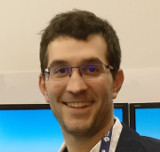
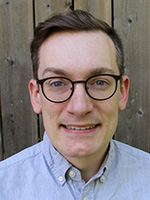
Bojan Mijatovic is a Lecturer at Sarajevo School of Science and Technology with expertise in VR/AR technologies for cultural heritage preservation. His work combines cinematography, 3D reconstruction, and interactive storytelling. Research focus areas: VR applications for historical site reconstruction 360° video production techniques Interactive museum experiences He has contributed to European projects including iMARECULTURE and Hidden Galleries, developing VR experiences for cultural institutions.
Armin Taghipour is a Professor in Signal Processing and Acoustics at the Institute of Electrical Engineering, Lucerne School of Engineering and Architecture. He leads the Research Group Waves & Signal Processing and oversees Continuing and Executive Education in Innovation & Technology. His roles include MSE Advisor in the HSLU Master of Science program and President of the Swiss Acoustical Society SGA-SSA. Education: B.Sc. Microelectronics (University of Guilan, Iran), M.Sc. Telecommunications (University of Hanover, Germany), Dr. Eng. in Psychoacoustics (International Audio Laboratories Erlangen, Germany). Professional expertise spans audio signal processing, psychoacoustic modeling, noise annoyance evaluation, and acoustic comfort design. He has conducted research at Empa, Fraunhofer IIS, and the Hanover Medical School. Research focuses on urban acoustics, noise mitigation, room acoustics optimization, and psychoacoustic experiments. Recent work addresses soundscape quality in residential areas, cognitive impacts of noise, and AI-driven odor classification systems. Over 50 publications span environmental acoustics, audio engineering, and multidisciplinary applications. Lab leadership: Head of Research Group Waves & Signal Processing Key projects: Soundscape design, autonomous acoustic measurement systems, and green healthcare building acoustics Grants: IDN Performance Lab project leadership (2022) Labs/Teams: Active in the Institute of Electrical Engineering's Autonomous Systems & Robotics division, collaborating with DAGA, EAA, and SGA-SSA.
Dr. Marc Serra Garcia leads the Hypersmart Matter group at AMOLF, pioneering research in physical computing systems. His work bridges metamaterials, acoustics, and unconventional computing paradigms to develop matter that processes information through its intrinsic physical properties. The group's current research focuses on designing metamaterials that perform computations passively, including recent breakthroughs in speech classification using phononic crystals and acoustic cloning techniques. This work enables zero-energy computational devices for specialized tasks. Serra Garcia's team continues to advance mechanical cognition concepts, exploring how physical systems can embody intelligence through nonlinear dynamics and topological properties. Their research has implications for energy-efficient computing and adaptive material systems.
Axel Ahrens is an Assistant Professor in the Department of Health Technology at the Technical University of Denmark (DTU), specializing in Hearing Systems. His research focuses on audiovisual perception, virtual reality environments, and speech perception in complex acoustic scenes. He holds a PhD in audiology from DTU, completed between 2014 and 2019, under the supervision of Professor Torsten Dau. Key research areas include: Audio-visual scene analysis in virtual reality Spatial audio and sound localization Effects of noise on decision-making in group interactions Speech perception in multitalker environments Human behavior in reverberant acoustic settings Applications of beamformer technology in hearing aids Recent work emphasizes the interplay between auditory and visual cues in complex environments, with notable studies on how noise impacts triadic conversations and decision-making outcomes. He currently supervises PhD students in projects like 'Speech Intelligibility in Realistic Listening Environments' (2024-2027) and 'Interpersonal Temporal Dynamics of Group Interaction' (2023-2026). Ahrens actively contributes to academic activities, including peer reviewing for journals like Hearing Research and Journal of the Acoustical Society of America , and organizing workshops on communication dynamics. His work aligns with UN Sustainable Development Goals related to health and innovation. Labs/Teams: Hearing Systems Section at DTU Health Tech.
Jason Bolte is a Professor and Director of the School of Music at Montana State University, within the College of Arts & Architecture. He specializes in Music Technology, Composition, Electroacoustic Music, and Art/Science intersections. He holds a D.M.A. in Music Composition from the University of Missouri-Kansas City, and degrees from Ball State University. His research explores the Mountain West, modular synthesis, and intersections of music, art, and science. He teaches courses in Electronic Composition and Music Technology. Awards include nominations from SEAMUS and ASCAP, and recognition from the Ball State Alumni Achievement Citation. Grants include 'ArtSci Nexus' and 'Scoring Einstein’s Symphony.' He serves on boards for Intermountain Opera and National Music Executives. His music is featured on labels like New Focus and ABLAZE, and his work spans live electronics, fixed media, and collaborative art-science projects.
Mats Scheidegger is a Professor at the Lucerne School of Music, which is part of the Lucerne University of Applied Sciences and Arts (HSLU). He teaches guitar and chamber music at the Institute of Classical and Church Music. His career spans several decades with a focus on contemporary music performance. Scheidegger has been deeply engaged with the interpretation of contemporary guitar music since the 1980s. His performance career as a soloist has taken him to major international festivals including Lincoln Center Festival New York, Festival D'automne à Paris, ENO London, Lucerne Festival, Wien Modern, Festspiele Berlin, and RuhrTriennale. He maintains sustainable collaborations with composers such as Helmut Lachenmann, Brian Ferneyhough, Franck Bedrossian, Nadir Vassena, Beat Furrer, and Tiziano Manca. His artistic work is documented through numerous premieres of works by composers like Luciano Berio, Brian Ferneyhough, Sam Hayden, Hans Ulrich Lehmann, and Nadir Vassena, as well as multiple CD recordings with labels including NMC, Harmonia Mundi, and Grammont. In recent years, he has increasingly focused on the electric guitar and live electronics in numerous concerts. From 1999 to 2011, he served as artistic director of the "Tage Für Neue Musik Zürich" festival and has designed concepts for the ensembles Soyuz21 and Cattrall Zürich. Scheidegger's publications demonstrate a consistent focus on contemporary guitar music, with particular emphasis on new compositions, experimental techniques, and integration of electronic elements. His work bridges classical guitar traditions with avant-garde practices, showing particular interest in the intersection of acoustic instruments and electronic processing. He has cultivated significant artistic partnerships with leading contemporary composers and has premiered numerous works that have expanded the guitar repertoire. His festival direction and ensemble work demonstrate leadership in promoting new music within the Swiss and international music scenes. Scheidegger is actively involved with the ensembles Soyuz21 and Cattrall Zürich, for which he has designed performance concepts. These groups serve as platforms for exploring contemporary music, particularly works that combine traditional instruments with electronic elements.
Michaela Schweiger is a Professor in the Time-based Arts discipline at Burg Giebichenstein University of Art and Design Halle since 2011, and served as Pro Rector from 2014 to 2018. She holds a Master's degree from Berlin University of the Arts and postgraduate studies in audio-visual Media from the Academy of Media Arts Cologne. Her work explores social, architectural, and urban spaces alongside media influence, blending factual scenarios with imaginative outcomes through installations, film, and drawings. Education: Free Art Studies: Art University Kassel and Berlin University of the Arts Master's Student (1998) Postgraduate Audio-Visual Media Studies, Academy of Media Arts Cologne (2004) Research Interests: Schweiger interrogates the interplay between physical and media-driven spaces, focusing on television, cinema, and digital platforms. Her practice merges socio-architectural critique with immersive installations, aiming to provoke reflection on spatial and cultural narratives. Awards: 14th Marl Video Art Prize (2010) Exhibitions & Events: Extensive solo and group exhibitions globally, including major installations like Sound installation ‘Dreamworld’ (2025) and WEAR WE MEET (2025). Active in academic governance, organizing events such as the BURG Summer School and collaborations with institutions like the Grassi Museum. Labs/Teams: Leads the Time-based Arts department at BURG, fostering interdisciplinary projects across media, performance, and design strategies.
Natalie Kirschstein is a Lecturer at the Lucerne School of Music (Lucerne University of Applied Sciences and Arts), specializing in ethnomusicology and music education. Her research bridges music, identity, social justice, and sustainability, with focus on Uruguay’s murga tradition, ecomusicology, and musicking in forced migration contexts. She holds a BSc from Keele University, and MA/PhD in Ethnomusicology from Harvard University, plus a Diploma in Movement and Dance Education from Lucerne. Education: Bachelor of Science in Music & Psychology, Keele University Masters and PhD in Ethnomusicology, Harvard University Diploma of Advanced Studies in Musik, Bewegung und Tanz, HSLU Research Interests: Ethnomusicology with emphasis on cultural identity and social justice Ecomusicological explorations of soundscapes and ecological activism Musical practices among refugees/asylum-seekers Intersection of music education and migration experiences Key Projects: ITC - Music as Empowerment: Social immersion through music with young refugees Seeking Birdscapes: Exploring avian soundscapes and ecological awareness Performing, Engaging, Knowing: Interdisciplinary applied ethnomusicology Mobile Identities: Impact of forced mobility on musicking practices Advocacy & Grants: Lead researcher in multiple funded projects addressing refugee integration Collaborations with institutions like the Natur-Museum Luzern and EPTA Organizer of conferences on music and ecology Labs/Teams: Part of the CC Music Education Research (MER) group at HSLU, focusing on innovative pedagogical approaches in multicultural contexts.
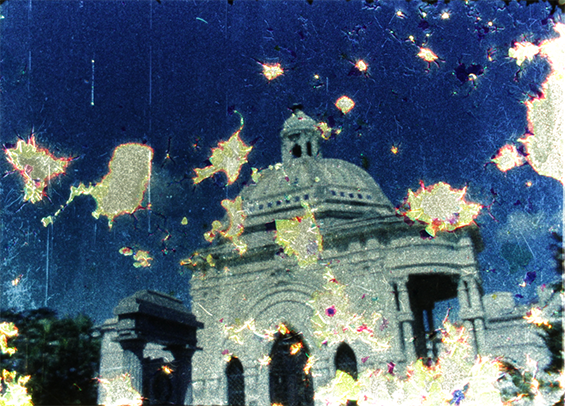
Jennifer Todd Reeves is an Adjunct Professor at The Cooper Union School of Art, specializing in experimental film and avant-garde cinema. Her work explores themes such as mental health, socio-political critique, feminism, and ecological decay through innovative techniques like optical printing and direct film manipulation. Reeves has exhibited globally at institutions including MoMA, Sundance, and Berlinale, and her films have garnered awards including the Barbara Hammer Feminist Filmmaker Award (2023). Her current projects include the expanded cinema work THE GLORIA OF YOUR IMAGINATION (premiering in 2024) and the Princess Grace Award-supported feature YANQUIS GO SOUTH . Reeves has collaborated with composers such as Marc Ribot and performed live with musicians like Skúli Sverrisson at venues like the Sydney Opera House. Teaching since 1997, she has instructed at Cooper Union, Bard College, and Yale, emphasizing hands-on film production and interdisciplinary creativity. Her technical expertise spans cinematography, editing, and sound design, with a focus on analog film preservation.
Cliona Harmey is a Part-Time Lecturer in the Department of Fine Art Media and Sculpture at the National College of Art and Design (NCAD). Her practice focuses on public art , contemporary sculpture , and the integration of technology with artistic expression. She explores themes like infrastructure, ephemeral data, and audience engagement through installations that blend electronics, software, and live data streams. Key Projects: Dublin Ships (2015): A real-time public artwork displaying ship movements in Dublin Port, using Automatic Identification System (AIS) technology. Installed at North Wall Quay, it combines LED screens, live data, and community engagement with primary schools. Troposphere (2014): An exhibition of systems-based sculptures examining atmospheric phenomena, exhibited at Pallas Projects, Dublin. In Public in Particular (2016): An EU-funded collaborative project exploring contextual research methodologies across Zagreb, Turku, Antwerp, and Dublin. Research Interests: Harmey’s work engages with historical and contemporary technologies, infrastructure, and the tangible representation of data. She frequently collaborates with engineers, programmers, and educators to bridge art and technical disciplines. Exhibitions: Her works have been featured in venues like the Butler Gallery (Kilkenny), Pallas Projects (Dublin), and the Hugh Lane Gallery. Recent group shows include 'Telling Lies' (2016) and 'Lacuna' (2016). Grants & Funding: Projects like Dublin Ships received support from Dublin City Council, Dublin Port Company, and the EU. The Media Dept Open Lab projects were funded by UCD’s Spatial Arts and Visualization Fund. Labs & Teams: Collaborations include the Open Lab at NCAD, focusing on environmental and spatial art research, and partnerships with institutions like the Dublin Docklands Development Authority.
Jérémie Garcia is an Assistant Professor in the Interactive Informatics Team at the French Civil Aviation University (ENAC) in Toulouse, France. His academic career spans research positions at Goldsmiths University, Paris-Sud University, and IRCAM, with a consistent focus on Human-Computer Interaction applied to specialized domains including music technology and aviation systems. Garcia completed his Ph.D. at the in|situ| team at LRI and in the Music Representation group at IRCAM, followed by postdoctoral positions at Goldsmiths University and IRCAM. His educational background bridges computer science and music technology, providing a unique interdisciplinary foundation for his research. Dr. Garcia's research focuses on developing innovative interaction techniques that enable users to express, develop, and evaluate ideas effectively and creatively. He employs participatory design methodologies and explores the potential of augmented reality, visual programming, auditory feedback, and interactive paper technologies. His work has evolved from music composition interfaces to drone control systems and aviation safety applications, demonstrating a consistent thread of applying HCI principles to domain-specific challenges. Garcia has made significant contributions to accessible drone interfaces through projects like CandyFly and HandiFly, which address the needs of pilots with visual impairments. His recent publications reveal a strong focus on aviation safety, particularly in drone operations and pilot assistance systems. Garcia has pioneered work in augmented reality displays for drone inspections (SafeSpect), tactile feedback systems for pilots (Tactilient), and tools for improving mission planning safety. His research increasingly addresses accessibility challenges, with several publications focusing on making drone technology usable for people with disabilities. The interdisciplinary nature of his work bridges computer science, human factors engineering, and aviation safety, with a clear trajectory from music technology applications to practical aviation solutions. Dr. Garcia teaches Human-Computer Interaction, design techniques, and programming courses for undergraduate and graduate students at ENAC since 2016, including Interactive Web Programming, Creativity Bootcamp, JAVA-FX, Interaction Design, and Python programming. Previously, he taught at Goldsmiths University (2015-2016) and Paris-Sud University (2011, 2015), covering subjects from introductory programming to advanced HCI design. He actively develops research software tools including Dronible (operating drones with tangible objects), Trajectoires (mobile/web app for sound spatialization control), and MetaOSC (Bluetooth to OSC bridge). Garcia participates in numerous research projects related to drone interaction and aviation interfaces, with recent work focusing on safety-critical applications such as SafeSpect and FOCUS. His GitHub profile shows ongoing collaboration with students and colleagues on interactive systems development, demonstrating his commitment to translating research into practical tools.
El Putnam is an Associate Professor of Digital Media in the Department of Media Studies at Maynooth University, Faculty of Arts and Humanities. She teaches digital media practice and theory courses, including BA Media Studies and BA Media and Cultural Studies. Prior roles include Programme Director of the MA in Digital Media at the University of Galway and work at TU Dublin. She holds a PhD from the Institute for Doctoral Studies in the Visual Arts in Visual Arts: Aesthetics, Art Theory, and Philosophy. As a practicing artist, she exhibits nationally and internationally, focusing on digital media, performance, and wearable technology. Research interests include digital studies, philosophy of technology, aesthetics, maternal philosophy, gender studies, and critical race theory. She explores creative coding, generative media, and digital performance through an interdisciplinary lens. Notable projects include the 'Under the Feet of Shadows' multimedia collaboration with Mike McCormack, addressing data centre impacts in Ireland through speculative art. Publications span books like Livestreaming: An Aesthetics and Ethics of Technical Encounter (2024) and The Maternal, Digital Subjectivity, and the Aesthetics of Interruption (2022), along with peer-reviewed articles in Gender, Work and Organization and Frontiers in Communication . Her work critiques technology's societal role, maternal labor, and embodied experience. Advising PhD students focuses on practice-based digital art and media research. She co-leads the Motherhood Project and collaborates with institutions like Harvard University and the National University of Ireland. Exhibitions include solo shows at Emerson Contemporary (2023) and group displays worldwide, highlighting her exploration of technology’s intersections with human experience.
Julie Rose Bower is a sound artist, designer, and researcher affiliated with Queen Mary University of London’s School of English and Drama as a Lecturer. Her practice-based research PhD explores the gender politics of sound in performance, alongside a career creating immersive soundscapes in site-specific and gallery contexts. University: Queen Mary University of London School: School of English and Drama Department: Drama Academic Rank: Lecturer Bower’s research sits at the intersection of Sound Art , Gender Studies , and Interactive Performance , with a focus on how ASMR , Foley , and Sensory Anthropology can deepen audience engagement. She develops custom sound libraries that map the tactile and affective qualities of objects, spaces, and bodies. Her recent works, including ASMR at the Museum (2024) and Symphony of a Missing Room (2024), explore first-person sensory experiences through museum artifacts and binaural audio. Earlier projects like the Dress Performance Triptych (2011-2013) and Joe Meek – 304 Holloway Road (2017) combine sound design with historical narratives and feminist themes. Scientific awards include: National Housing Federation’s Community Impact Award (2012) for the TEA project Julie Rose Bower regularly teaches DRA271 Culture, Power, Performance and supervises research with co-directors Martin Welton and Jen Harvie . She collaborates with collectives like Chroma , Smashlab Live Art Laboratory , and Lundahl & Seitl , and has directed immersive performances for institutions such as Secret Cinema and The Science Museum .
Matt Rogalsky is an Associate Professor at the Dan School of Drama and Music, part of Queen's University's Faculty of Arts and Science. He holds cross-appointments in the Department of Film and Media and the School of Graduate Studies' Cultural Studies program. His research focuses on late 20th-century electronic and experimental music, including reconstructions of works by composers like David Tudor and John Cage. He collaborates with Dr. Laura Cameron on SSHRC-funded projects exploring Canadian sound recordist William WH Gunn's legacy. Education: BA (Simon Fraser University), MA (Wesleyan University), PhD (City University London) Rogalsky's work bridges composition, performance, and sound art, with recent projects including the surround-sound piece From The Pen and an installation based on Gunn's 1950s/60s birdsong recordings. He frequently presents at galleries and festivals globally, blending academic inquiry with creative practice. His collaborations include interdisciplinary projects with the Agnes Etherington Art Centre, merging sound art with historical documentation. Current research emphasizes environmental sound studies and the social networks shaping avant-garde music practices.
Jonathan De Souza is an Associate Professor of Music Theory at Western University's Don Wright Faculty of Music. He also serves as Director of the Graduate Collaborative Specialization in Music Cognition. His research integrates music theory, cognitive science, and philosophy, focusing on embodiment, instrument interaction, and performance practices. He holds a PhD from the University of Chicago and has held faculty roles since 2013. De Souza is an Associate Member of the Centre for Brain and Mind and a Core Member of the Centre for the Study of Theory and Criticism. Education: PhD in Music Theory and History, University of Chicago MMus, Royal Holloway, University of London BMus, Western University Research Interests: Embodied cognition in music performance Instrument design and player interaction Music psychology and phenomenology Interdisciplinary collaborations in music cognition Awards: Emerging Scholar Book Award (Society for Music Theory, 2020) Faculty Scholar Award (2020) Teaching & Leadership: Directs Music, Cognition, and the Brain initiative Teaches undergraduate and graduate courses in music theory, pedagogy, and cognition Collaborations: Core member of the Centre for the Study of Theory and Criticism Associate member of the Centre for Brain and Mind