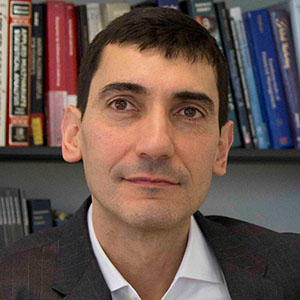
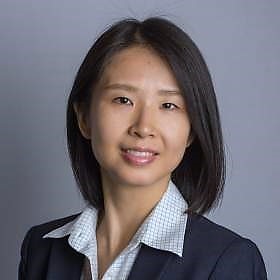
Dr. David Luna is a Professor of Marketing at the University of Central Florida's College of Business. His research explores how language and culture influence consumer behavior and marketing communication effectiveness. Education: Ph.D. in Marketing/Consumer Behavior MBA Research interests span language processing in marketing communications, cross-cultural consumer psychology, human-machine interactions with chatbots, and bilingual consumer behavior. His work examines linguistic mechanisms underlying persuasion and decision-making. Recent publications investigate linguistic markers in chatbot interactions, grammatical influences on persuasion, ethnic identity motivations, and multisensory brand experiences. His research consistently bridges theoretical linguistics with practical marketing applications.
Alan Baker is a Professor of Philosophy at Swarthmore College, with affiliations in Philosophy and Cognitive Science. He holds a Ph.D. from Princeton University and has held positions globally, including at the University of Cambridge and Kyoto University. His research focuses on the intersection of philosophy of mathematics and science, particularly mathematical explanation and the enhanced indispensability argument. He has explored case studies like periodical cicadas' life cycles to argue for mathematical platonism. His work also addresses scientific methodology, complexity science, and the role of simplicity in theory choice. He has received a New Directions Fellowship from the Mellon Foundation. Baker teaches logic, philosophy of science, and philosophy of mind. Beyond academia, he is a U.S. Shogi champion and team captain, and has resided at the Whitehall Museum House to promote philosophy. Research interests include the metaphysics of mathematics, mathematical explanation in science, and the methodological use of experimentation in mathematics. Key contributions include co-authoring Indispensability (2023) and analyzing the explanatory role of prime numbers in cicada life cycles. His Mellon-funded work in 2008–09 investigated complexity science's conceptual foundations, focusing on emergence and network approaches. He critiques traditional views on a priori/a posteriori knowledge, as seen in his lecture Experimental Mathematics, Armchair Physics . Awards include the Mellon Fellowship, and his outreach spans international academic collaborations and public philosophy initiatives. He has advised no formal students listed here but has influenced through teaching and interdisciplinary projects. His work bridges philosophy with scientific practice, emphasizing the indispensability of mathematics to scientific understanding.
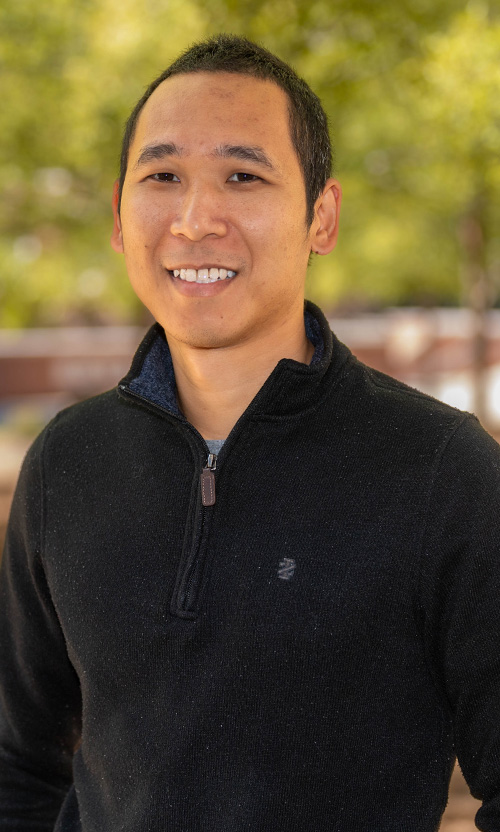
Anh Nguyen is an Associate Professor in the Department of Computer Science and Software Engineering at Auburn University, affiliated with the Samuel Ginn College of Engineering. His work focuses on deep learning, computer vision, and explainable AI. He holds a Ph.D. from the University of Wyoming and a B.S. from Assumption University. Research highlights include developing methods to improve AI robustness, analyzing biases in large language models, and creating tools for visual correspondence in image processing. He leads the Center for Artificial Intelligence and Cybersecurity Engineering and directs Auburn's first K-6 AI education program through his AI Club after-school initiative. Recipient of a $460,736 NSF CAREER Award for AI innovation Developed the AI@AU lecture series and multiple benchmark datasets (e.g., ImageNet-Hard) Collaborates with industry partners on real-world AI applications Recent projects explore multimodal model limitations (Zerobench), medical imaging (LiteGPT for chest X-rays), and interactive AI systems that incorporate human feedback. His work bridges theoretical advancements with practical implementations in healthcare, wildlife monitoring, and education.
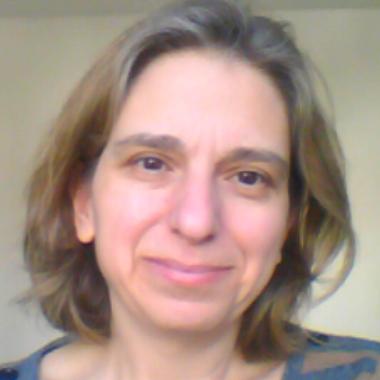
Alexandra Psarrou is a Reader in the School of Computer Science and Engineering at the University of Westminster, serving as Head of School from 2002-2019. She holds a BSc and MSc from Queen Mary University of London and a PhD from Queen Mary, London (1996). Her research focuses on dynamic vision, explainable AI, hyperspectral analysis, and image quality metrics. Education: BSc (1987), MSc (1988), PhD (1996) Roles: Reader, former Head of School, member of multiple University committees Research interests include deep learning, reinforcement learning, and applications in cultural heritage. She founded the Computational Vision Research Group (CVRG) in 1997, advancing techniques like recurrent neural networks and kernel PCA models. Awards include Best Paper Awards at BMVC (1999), IMECS (2008), and IS&T (2020). She led major grants like the NOESIS project (€709k) and diARTgnosis (€518k). Supervised 10+ PhD students in areas like gesture recognition and medical imaging. Labs/Teams: Computational Vision and Imaging Technologies Research Group Grants: NOESIS, diARTgnosis, HISTORIA, HEFCE NFF
Deepthi Kamawar is a Professor in the Department of Psychology at Carleton University, affiliated with the Faculty of Arts and Social Sciences. She holds degrees including a B.Sc. in Cognitive Science (University of Toronto), B.Ed. (York University), M.A. and Ph.D. in Psychology (University of Toronto). Her research focuses on young children’s cognitive development, particularly future-oriented cognition, executive function skills, and theory of mind. She investigates how children develop abilities like saving, inhibition, cognitive flexibility, and understanding others’ mental states. Her lab examines symbolic representation, intentionality in moral evaluations, and developmental progression of cognitive skills. Research interests include children’s understanding of knowledge change over time, symbolic communication, and the role of executive functions in decision-making. Her work bridges developmental psychology and cognitive science, addressing topics like numerical cognition, language specificity in number processing, and task-based assessments of cognitive flexibility. Dr. Kamawar’s studies often involve innovative experimental designs, such as the Multidimensional Card Selection Task and token savings tasks. She has contributed to debates on scalar implicature interpretation in children and the role of working memory in symbolic reasoning. Her research emphasizes applied and theoretical insights into early childhood development.
Zhoulai Fu is a tenured Associate Professor at the State University of New York (SUNY), Korea, specializing in programming languages and software security. He also holds joint appointments as a Research Associate Professor at Stony Brook University and is affiliated with the Electrical and Computer Engineering Department at Virginia Tech. His educational background includes: Ph.D., 2009-2013, INRIA – Université de Rennes 1, France M.Eng., 2008-2009, Télécom ParisTech, France M.S, B.S, and French engineer degrees (Ingénieur), 2005-2008, École Polytechnique, France Professor Fu's research focuses on the intersection of Programming Languages, Software Security, and Large Language Models, with special emphasis on improving software reliability through formal methods, numerical error analysis, and scalable verification techniques . His work spans abstract interpretation, automated testing, and verification tools development. He has made significant contributions to floating-point analysis and program verification, with publications at top-tier conferences including PLDI, POPL, OOPSLA, ICSE, and CAV. His publication record shows a consistent trajectory in programming language theory with increasing practical applications. Early work focused on foundational aspects of abstract interpretation and floating-point analysis, while recent papers address security concerns through programming language techniques and incorporate modern approaches like incorrectness logic. Key themes across his publications include formal verification of low-level code, numerical error analysis, and developing scalable analysis tools for real-world software systems. His notable achievements include: Principal Investigator for DARPA E-BOSS Program funding Sole Principal Investigator for National Research Foundation of Korea funding Program Committee membership for POPL 2026, FSE 2024, and PLDI 2023 Professor Fu actively mentors students and has taught courses including Foundations of Computer Science, Programming Abstractions, and Research in Computer Science. His research is supported by significant grants from DARPA and NRF, enabling him to lead the Data & Intelligent Computing Lab at SUNY Korea. He is currently seeking postdocs, PhD, and graduate students to join his research team. He leads the Data & Intelligent Computing Lab, which focuses on advancing programming language techniques for software reliability and security. The lab collaborates with institutions including Virginia Tech, Stony Brook University, and international partners across Europe, working on projects that bridge theoretical computer science with practical software engineering challenges.
Dr. Anna Borghi investigates how concepts are grounded in sensory-motor and social experiences through the lens of embodied cognition. Her Words As social Tools (WAT) theory proposes that abstract concepts rely more heavily on linguistic and social experiences than concrete concepts. Central research themes: Neural and behavioral foundations of abstract concepts Role of language and inner speech in conceptual processing Social dimensions of conceptual representation Cross-cultural differences in concept formation Development of abstract thought in children Recent work employs multimodal methodologies including thermal imaging, motion tracking, and computational modeling. Publications demonstrate growing interest in real-world applications such as autism interventions and AI communication systems. Current projects examine conceptual processing during the COVID-19 pandemic and politeness strategies in human-chatbot interactions.
Emmanuel Stefanakis is a Professor and Department Head of Geomatics Engineering at the Schulich School of Engineering, University of Calgary. He holds a PhD in Electrical and Computer Engineering (National Technical University of Athens, 1997), an MScE in Geodesy and Geomatics Engineering (University of New Brunswick, 1994), and a Dipl.Eng in Rural and Surveying Engineering (National Technical University of Athens, 1992). His research focuses on Geospatial Data Science, Discrete Global Grid Systems (DGGS), GeoAI, and applications of Geomatics in natural hazards, transportation, and climate change . He has led over 140 student projects and authored/co-authored five textbooks and 150+ articles. Notable awards include the 2023 Canadian Cartographic Association’s Award of Distinction and the 2023 UCalgary Teaching Excellence Award. Recent articles emphasize high-performance trajectory analysis, DGGS integration, and geospatial quantum computing . His work bridges theoretical advancements with practical tools for flood modeling, epidemiology, and urban planning. Grants include NSERC Discovery Grants and collaborations with industry partners like McElhanney Ltd. Professional memberships span the Canadian Institute of Geomatics, Canadian Cartographic Association, and APEGA. He served as Editor-in-Chief of Cartographica (2014–2022) and actively contributes to international conferences on geoinformatics. His educational initiatives include innovative course designs in online and distance learning. Current roles include leadership in the HALOS and Geospatial Quantum Computing projects, advancing geomatics engineering education in the digital era.
Ari Stern is a Professor of Mathematics at Washington University in St. Louis , specializing in Geometric Numerical Analysis . His work bridges geometry, applied analysis, and computational mathematics, focusing on numerical methods that maintain global accuracy for differential equations through modern geometric principles. He earned his B.A. and M.A. in Mathematics from Columbia University and a Ph.D. in Applied and Computational Mathematics from Caltech (2009), advised by Jerrold E. Marsden and Mathieu Desbrun. Prior to WashU (2012), he was a postdoc at UCSD with Michael Holst. Research Interests : Geometric integration, finite element exterior calculus, symplectic geometry, and applications to physics and machine learning. His recent publications address multisymplecticity, functional equivariance, and hybrid finite element methods. Collaborations span topics from Alzheimer’s disease modeling via machine learning to Hamiltonian mechanics and geometric electrodynamics. Awards : NSF Grant (2019). Teaching : Courses include Numerical Methods for Differential Equations, Measure Theory, and Honors Mathematics.
Dr. Lael Parrott is a Professor in Sustainability and Dean pro tem of the Irving K. Barber Faculty of Science at the University of British Columbia, Okanagan campus. She leads research in complex human-environment systems, focusing on landscape management, ecological resilience, and sustainable land-use planning. Her work integrates multi-disciplinary approaches to address 'wicked' environmental problems, emphasizing stakeholder collaboration and policy-relevant outcomes. Dr. Parrott holds a PhD in Agricultural and Biosystems Engineering from McGill University (2000). Her academic experience includes roles as Director of the BRAES Institute (2013–2023), Associate Dean positions, and prior faculty roles at Université de Montréal. She has secured over $24M in research funding and published 150+ peer-reviewed works. Her research spans ecosystem services valuation, wildlife corridor design (e.g., Okanagan Valley), and innovative solutions for marine mammal conservation (e.g., St. Lawrence Estuary whale management). She is a Fellow of the Royal Canadian Geographical Society (2019) and has been recognized as a 'Mover and Shaker' in Quebec (2009). Teaching includes courses on complex adaptive systems, environmental sustainability, and dynamic modelling. Current projects focus on Indigenous climate resilience, functional connectivity of ecosystems, and cumulative effects assessments. She advises on conservation initiatives through roles with the Alpine Club of Canada and the Okanagan Basin Water Board. Dr. Parrott’s lab, the Complex Environmental Systems Lab, emphasizes interdisciplinary collaboration and real-world impact. Key outputs include the State of the Mountains Report and decision-support systems for sustainable land-use planning.
Jeong Joon Park is an Assistant Professor in the Department of Computer Science and Engineering at the University of Michigan, part of the College of Engineering. His research focuses on advancing 3D vision, artificial intelligence, and generative models, with applications in computer vision, machine learning, and robotics. He emphasizes collaborative research culture and student-driven innovation. Research Interests : 3D scene generation and reconstruction Generative models for multi-modal perception Language-driven vision and robotics Diffusion models and PDE-solving Recent Research Trends : His work spans 3D/4D generation (e.g., LIFT-GS , 4d-fy ), robust sensor fusion ( Cocoon ), and novel view synthesis using diffusion models. Themes include multimodal integration, physics-informed learning, and scalable generative architectures. Advising & Grants : Students are expected to lead independent projects, publish as first authors, and engage in teaching (GSI roles). Lab funding covers conference travel (e.g., CVPR, NeurIPS). Internships are encouraged for real-world alignment. Labs/Teams : Part of the CSE department’s vibrant research community, fostering interdisciplinary collaboration and innovation in AI-driven 3D technologies.
Jingjing Meng is a Senior Scientist affiliated with the Computer Science and Engineering Department at the University at Buffalo, SUNY, and Amazon. She holds a Ph.D. from Nanyang Technological University (NTU, Singapore), advised by Prof. Yap-Peng Tan, along with an M.S. from Vanderbilt University and a B.E. from Huazhong University of Science & Technology, China. Her research focuses on multimedia, large multimodal models, product recommendation/search, and computer vision applications. Notable contributions include work on surgical triplet recognition, 3D object representation, and video summarization. She has received the 2016 IEEE Transactions on Multimedia Best Paper Award. Service Roles: Technical Program Co-Chair (ICME 2024), Tutorial Co-Chair (ACM MM 2024), Area Chair (AAAI 2021-2025), and Associate Editor for IEEE TMM, Signal Processing: Image Communication, and others. Leadership: Member of IEEE IVMSP TC, VSPC TC, and MSA TC committees, and a Senior Member of IEEE. Teaching includes courses like Multimedia Systems (CSE 534), Computer Graphics (CSE 410/580), and Discrete Structures (CSE 191). Her work bridges theoretical advancements and practical applications in multimedia and AI.
Mehmet Orgun is a Professor at the School of Computing, Macquarie University. He holds a BSc and MSc from Hacettepe University (Turkey) and a PhD from the University of Victoria (Canada). His research spans artificial intelligence, biomedical image processing, multi-agent systems, and secure systems. He has supervised over 30 PhD and master's students and led multiple ARC-funded projects totaling over $4M. His professional service includes roles at PRICAI 2010 and SIN 2019. Research Interests: Artificial Intelligence Quantum Cryptography Trusted Systems Medical Imaging Recommender Systems Awards: Best Student Runner Up Award (ADMA'23) Best Paper Award (MoMM2020) Best Student Paper Award (ICWS2016) Advising & Grants: 30+ PhD/Master's students ARC grants exceeding $4M Labs/Teams: Collaborations include Australian Taxation Office and DSTO. Projects focus on trust-oriented data analytics and secure systems.
Eric Top is an Assistant Professor at the Department of Human Geography and Spatial Planning, Utrecht University. His research focuses on the semantics of quantity representations in geographic information systems (GIS), including theoretical foundations of geo-analytical processes and quantitative measurement philosophy. Areas of Expertise: Geographic Information Science Conceptual Semantics Geocomputation Spatial Modelling Transport Geography He is affiliated with the Utrecht Platform for Applied Data Science, emphasizing interdisciplinary research at the intersection of data science and human geography. No specific scientific awards, published articles, or advising records are listed in the provided text.
Wolfgang Hürst is an Associate Professor at Utrecht University's Department of Information and Computing Sciences, where he also serves as program leader for the MSc in Game & Media Technology. Previously, he was Education Director of the department from 2020-2024. His research focuses on immersive technologies including augmented/virtual reality, human-computer interaction, and multimedia systems, with applications in gaming, healthcare, and neuroscience. Education includes: PhD in Computer Science from University of Freiburg, Germany Master's in Computer Science from University of Karlsruhe/KIT Visiting researcher at Carnegie Mellon University (1996-1997) Postdoctoral work at University of Freiburg (2005-2007) Research interests span virtual/augmented reality systems, mobile interaction design, multimedia methods, and gaming technology. His work explores how immersive technologies can enhance human perception, information visualization, and accessibility in domains ranging from neuroscience research to cultural heritage preservation. Publications demonstrate strong focus on AR/VR interface innovation, particularly in 360° video interaction, lifelog visualization, and neuroscience applications. Recent work emphasizes ethical AI integration in extended reality and inclusive design for diverse user populations. Research consistently combines technical development with rigorous human-centered evaluation methodologies. Scientific awards: No major awards reported in provided materials. Research involves collaborations through the Game Research group and Applied Data Science initiatives. Current projects include immersive literature exploration tools for neuroscientists and accessible VR museum experiences. Extramural funding sources not detailed in available documentation.