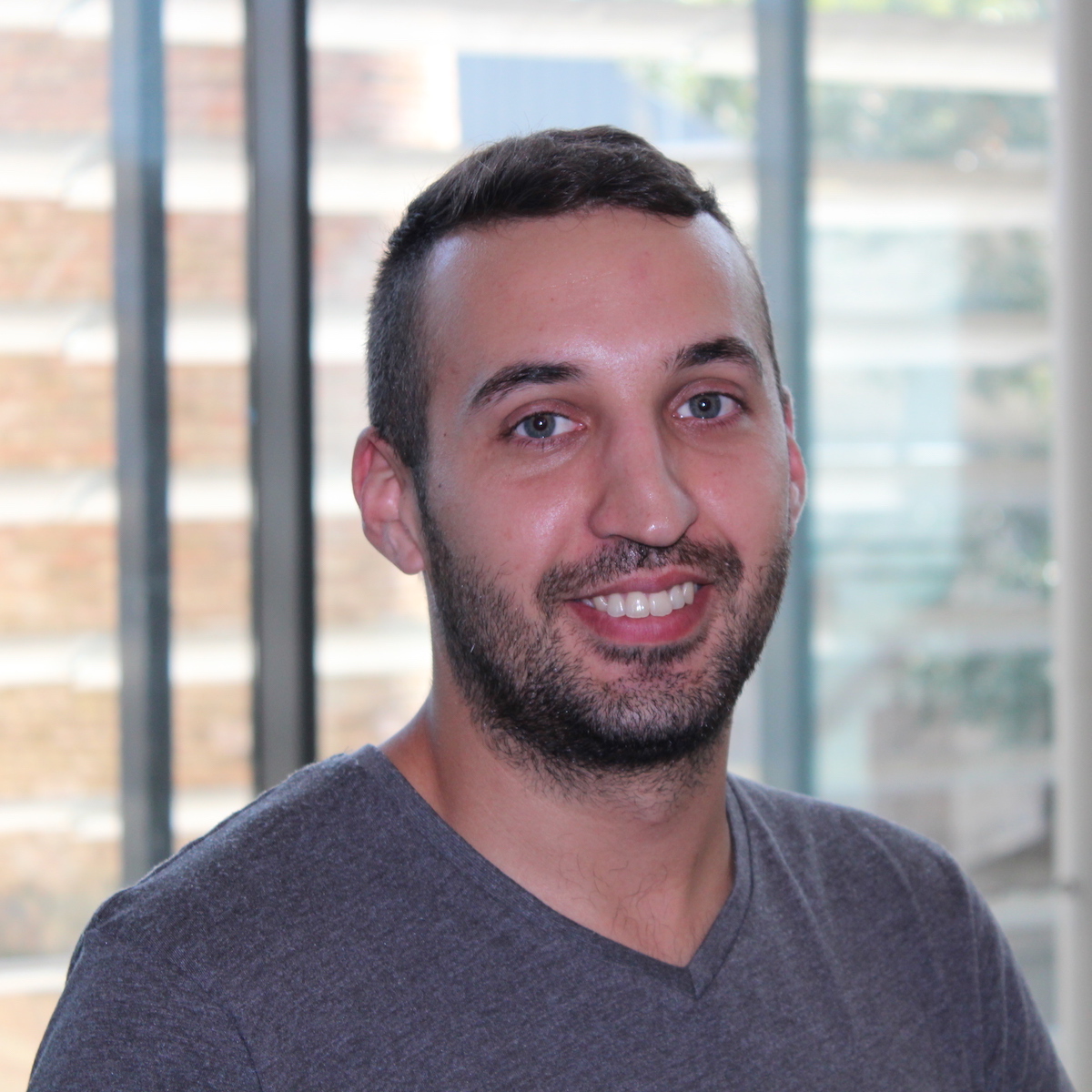
Giovanni Geraci is a Tenured Professor at the Department of Information and Communications Technologies, Universitat Pompeu Fabra. Specializing in applying AI/ML to wireless communications, he focuses on GenAI for data augmentation and LLMs for telecom applications. His expertise spans 5G/6G cellular and Wi-Fi (IEEE 802.11be/bn) technologies, informed by roles at Nokia Standards, Telefónica, and Bell Labs. He holds the IEEE Communications Theory Early Achievement Award (2023) and the IEEE Outstanding Young Researcher Award (2018). Research interests include AI-driven network design, UAV communications, and next-generation wireless standards. He has authored over 100 publications, including Best Paper Awards at IEEE ICC (2025), Globecom (2022), and PIMRC (2019). Geraci has led academic roles like Head of Telecommunications Engineering and is an IEEE Distinguished Lecturer, delivering over 100 keynotes globally. He created the IEEE course 'Fundamentals of Wi-Fi' and teaches Signals and Systems, praised for his 'fantastic, passionate, and supportive' teaching style. Geraci’s work bridges academia and industry, addressing challenges in cellular networks for UAV corridors, millimeter-wave channel modeling, and integrated terrestrial/non-terrestrial networks. His recent research explores AI/ML applications for 6G, Wi-Fi 7/8, and data-driven optimization of telecom infrastructure.
Professor David P Connolly is a leading academic in Civil Engineering at the University of Leeds, serving as the Programme Leader for the 'Railway Engineering with Project Management' MSc. He holds a PhD and first-class honours in Civil Engineering from the University of Edinburgh, and is a chartered professional engineer with prestigious fellowships from the Institution of Civil Engineers (CEng FICE), Permanent Way Institution (FPWI), and Higher Education Academy (FHEA). His research focuses on transportation systems , climate resilience , artificial intelligence , computer vision , and geotechnical engineering . Notable projects include Hyperloop aerodynamics modeling, railway track dynamics under extreme conditions, and sustainable infrastructure design. He has secured significant industry and governmental grants, supervising numerous PhD and postdoctoral researchers. Key contributions include the development of InSAR and satellite monitoring for infrastructure health, energy harvesting systems for railways, and climate change mitigation strategies for built environments. His work bridges theoretical modeling (e.g., FEM/DEM simulations) with practical applications like geotextile analysis and railway transition zone optimization. Professor Connolly actively mentors international scholars, advising on CSC/ Commonwealth Scholarship applications and co-authoring Marie Skłodowska-Curie fellowship proposals. His research themes emphasize net zero and sustainability , with innovations in recycled materials for construction and smart sensing technologies.
Saija Toivonen is an Assistant Professor at Aalto University's School of Business, specializing in the Built Environment. Her work bridges real estate dynamics, urban resilience, and futures-oriented planning. Institution: Aalto University Research Groups: Real Estate, Urban Futures Her research explores: Future real estate trends (co-working spaces, hybrid workplaces) Urban resilience strategies (climate adaptation, crisis management) Circular economy in construction Digital transformation in facility management Impacts of remote work on productivity Land-use planning under demographic shifts Recent publications analyze: Virtual communities in co-working spaces Productivity in remote work environments Resilience frameworks for Finnish cities Contact: saija.toivonen@aalto.fi
Sondra Miller is an Associate Professor in the Department of Civil Engineering at Boise State University, where she focuses on environmental engineering and contaminant transport. Her research examines the fate of organic pollutants in natural systems and engineered solutions, with active projects funded by the FAA, Hewlett-Packard, and Boise State's Office of Sponsored Projects. She holds a Ph.D. in Environmental Engineering from the University of Iowa and a professional engineering license in Idaho. Ph.D. in Environmental Engineering (University of Iowa) M.S. in Environmental Engineering (SUNY Buffalo) B.S. in Civil Engineering (SUNY Buffalo) Dr. Miller's research spans three core areas: Contaminant Transport: Investigating organic pollutants in aquatic systems like Lake Michigan Environmental Modeling: Leading projects on particulate matter and aviation emissions Sustainable Infrastructure: Developing water reuse monitoring systems and educational modeling initiatives Her recent publications show increasing emphasis on educational innovation, including: STEM communication pedagogy Low-cost educational interventions First-year design curriculum development Professional activities include: $73,000 FAA grant for air quality modeling $68,000 HP-sponsored educational initiative $5,000 university-funded water reuse project Co-investigator in multiple interdisciplinary studies
Xiaolin Hu is a Professor in the Department of Computer Science at Georgia State University within the College of Arts & Sciences. His research focuses on modeling and simulation theory with applications in complex systems science, agent-based systems, and advanced computing environments. Ph.D. in Electrical and Computer Engineering, University of Arizona (2004) NSF CAREER Award recipient Senior member of IEEE and Society for Modeling and Simulation International (SCS) Associate editor for ACM Transactions on Modeling and Computer Simulation (TOMACS) and other journals SIMULATION: Transactions journal and International Journal of Modeling, Simulation, and Scientific Computing (IJMSSC) Dr. Hu's research spans three major areas: Dynamic Data-Driven Simulation (DDDS): Development of simulation frameworks that assimilate real-time data, particularly applied to wildfire spread prediction and autonomous systems. Multi-Agent Systems: Study of adaptive behaviors and coordination mechanisms for unmanned aircraft and social/public health systems. Advanced Computing: Implementation of parallel and cloud computing solutions for large-scale simulations. His recent publications (2025-2023) demonstrate a strong focus on integrating real-time data from UAVs and satellite systems into wildfire simulations, utilizing Bayesian methods for sequential data assimilation, and developing cloud-based simulation services. These works bridge computational modeling with environmental science applications. Scientific recognitions include: National Science Foundation (NSF) CAREER Award Dr. Hu has chaired multiple international conferences in modeling and simulation and leads the SIMS Lab at Georgia State University, which specializes in simulation technologies and their applications in diverse domains.
Stefania Monica is an Associate Professor at the Department of Engineering Sciences and Methods, University of Modena and Reggio Emilia. She specializes in Artificial Intelligence, Multi-Agent Systems, Robotics, and Programming Languages. Her research focuses on topics such as agent interaction protocols, indoor positioning algorithms, and agent-oriented programming (Jadescript). She teaches courses on Artificial Intelligence, Data Science, Web Technologies, and IoT. Recent work includes studies on stigmergic interactions in multi-agent systems and 3D indoor positioning using optimization algorithms. Her contributions span theoretical frameworks (e.g., kinetic models) and practical implementations (e.g., Jadescript language enhancements for robustness and interoperability). Research interests emphasize synergy between AI and robotics, with applications in localization, swarm intelligence, and neural-symbolic learning. Teaching responsibilities include managing engineering courses on data science, information systems, and IoT development. She actively contributes to academic conferences and journals, curating special issues on computational logic and agent-based systems.
Cecilia Furlan is an Assistant Professor at the Institute of Landscape Architecture , part of the Department of Landscape, Water and Infrastructure at the University of Natural Resources and Life Sciences, Vienna (BOKU). She holds a joint PhD in Engineering and Urbanism from KU Leuven and IUAV Venice. Landscape Urbanism Circular Economy Urban Metabolism Spatial Research Resource Scarcity Her research focuses on systemic design approaches for circular economy transitions in urban and regional contexts, particularly through projects like ATLANTES and REPAiR . She explores material flow mapping, post-industrial landscape regeneration, and urban wasteland transformation. Recent publications examine geodesign methods for circular construction hubs, ecosystem services in urban cemeteries, and spatial parameters for sustainable development. She contributes to international discourse through presentations at institutions in Austria, Belgium, Italy, Netherlands, and South Africa. 2020: Knowledge Frontiers Symposium grant 2019: EUROPAN 15 Runner-Up 2018: Premio Giovanni Ferraro PhD award 2014: Lisbon Open Room Competition honorable mention As a project leader for initiatives like Reindustrialisation Following the Brownfield Principle , she combines academic research with practical applications. She participates in peer-review activities for journals like Sustainability and Landscape Research , and organizes educational workshops on circular design.
Srinivasa Raghavendra Bhuvan Gummidi is an Assistant Professor at the Department of Green Technology (IGT) within the University of Southern Denmark . His research focuses on Circular Economy , Building Stock Modeling , and Environmental Impact Assessment through advanced Geographical Information Systems (GIS) and Deep Learning techniques. Recent work includes high-precision building material identification and spatiotemporal tracking of urban material stocks. Research Keywords : Algorithms for Geographical Information Systems, Optimization Algorithms, Building Stock Modeling, Circular Economy, Deep Learning, Environmental Impact Assessment His peer-reviewed publications (2025–2015) span topics from urban material sustainability to spatial crowdsourcing systems . He teaches Geographic Information Systems for Engineering Sustainability (2024) and collaborates internationally on urban development and resource management projects.
Professor Ulrich Nikolaus serves as a Professor of Multimedia Publishing and Communication Design at the Faculty of Computer Science and Media at Leipzig University of Applied Sciences (HTWK Leipzig). He has held this position since his appointment in December 2002 and currently serves as Chairman of the Examination Board for technical degree programs within the faculty. His academic journey began with computer science studies at Saarland University in 1988, followed by a degree in computer science in 1996, and culminated in his doctorate on 'Multimedia Learning in Companies' in October 2001. Nikolaus's research spans multimedia publishing, interface design, electronic publishing, and digital accessibility. His work emphasizes creating inclusive digital experiences, particularly through his longstanding collaboration with the German Central Library for the Blind (since 2011). He has directed significant projects including the redesign of the Egyptian Museum website in collaboration with Leipzig University, where students under his supervision developed design, content, and technical concepts. His scholarly contributions focus on advancing accessible digital publications, voice user interfaces, eye-tracking analyses for media research, and cross-media publishing workflows. Nikolaus has been instrumental in developing digital teaching strategies at HTWK Leipzig, serving on the 'Steering Committee for Inclusion' since 2018 and as a founding member of the Institute for Digital Teaching and Learning since 2019. Among his notable recognitions are membership in the Accessibility in Education Working Group of the IAAP-DACH since 2022, and his role as co-organizer of Leipzig's first World Usability Day in 2017. He has also contributed to international standards through his participation in the DAISY 2009 International Technical Conference. Nikolaus teaches across multiple courses including Media Production, Interface Design, Electronic Publishing, and Media Management at the Master's level. His educational philosophy integrates theoretical knowledge with practical application, evident in his supervision of student projects that address real-world challenges in digital media and accessibility.
Georg Freitag is a Professor at HTW Dresden within the Faculty of Computer Science/Mathematics , specifically affiliated with the Department of Mathematics . He leads the Multimodal Immersion and Interaction (mimig) research group, focusing on immersive environments and novel human-technology interfaces. His work bridges technical, aesthetic, sociological, and psychological aspects of human-computer interaction. Teaching Activities: I361 - Development tools for MM systems (Summer semester 2025) I366 - Design and implementation of interactive applications (Summer semester 2025) I268 - Programming of user interfaces (Winter semester 2025/26) I561 - Development Tools for Rich Internet Applications (Winter semester 2025/26) I561 - Design of haptic user interfaces (Winter semester 2025/26) Research Interests: Georg Freitag's research emphasizes the conceptualization and development of human-computer interfaces, extending from current graphical interfaces to future multimodal interactions. Key areas include immersive environments, vibrotactile feedback systems, and sustainable haptic design practices. Research Group: The mimig research group specializes in creating immersive environments for advanced human-technology interactions, with applications in safety systems, educational simulations, and collaborative prototyping. Publication Trends: Recent articles highlight advancements in vibrotactile pattern taxonomy (VibTacX), collaborative haptic design tools (TactJam, CollabJam), and multimodal interfaces for specialized contexts like firefighter support and cycling navigation. These works integrate sensory illusions, elastic display interactions, and sustainability principles in haptic design.
Johannes Natterer is a Lecturer and Scientist at École polytechnique fédérale de Lausanne (EPFL) in the School of Architecture, Civil and Environmental Engineering, specializing in structural engineering with a focus on timber construction systems. His work bridges theoretical research and practical application in wood engineering, particularly in innovative structural forms like geodesic shells and multi-layer beam systems. Natterer's research interests center on the structural behavior of timber elements, with particular emphasis on stability analysis, connection systems, and the development of advanced wood construction techniques. His work explores both traditional timber engineering approaches and innovative solutions for modern architectural challenges, including high-rise timber buildings, pedestrian bridges, and large-span spatial structures. He has made significant contributions to understanding the behavior of multi-layer beams with interlayer slips and the stability characteristics of geodesic shell structures with semi-rigid joints. Natterer has supervised numerous student projects focusing on practical timber construction applications, including high-rise timber buildings, stadium tribunes, pedestrian bridges, and the implementation of BIM methodologies in timber construction. His research demonstrates a consistent progression from fundamental structural analysis to practical implementation in real-world construction projects. NATTERER, J.; BURGER, N.; MÜLLER, A.; NATTERER, JOH. Tragwerksplanung Dreidimensionale Rechenmodelle Schalengeometrie NATTERER, J.; BURGER, N.; MÜLLER, A. Bautechnik 77, Heft 11, 2000, 783-792 Roof of the main mall at EXPO 2000 in Hanover, Germany NATTERER, J.; BURGER, N.; MÜLLER, A. Bautechnik 78, Heft 10, 2001, 693-705 Das EXPO-Dach in Hannover als Pilotprojekt für den Holzbau - Entwicklung und Einsatz nicht geregelter Bauweisen NATTERER, J.; BURGER, N.; NATTERER, JOH. World Conference on Timber Engineering, Whistler, BC, Kanada, August 2000 The "EXPO-roof" in Hanover - A new dimension for ripped shells in timber Natterer has advised numerous students on timber construction projects, guiding research on high-rise timber buildings, pedestrian bridges, and innovative structural applications. His teaching focuses on the fundamental and practical aspects of timber structure design, covering beams, columns, assemblies, structural systems, and stability problems. He also helps students understand and design innovative, architecturally and structurally interesting wood constructions through the study of built examples. His professional experience includes significant engineering projects such as the Sauvabelin observation tower in Lausanne, the Hotel Palafitte in Monruz with mixed wood-glass beams, and the Expo 2000 spatial structure in Hanover. These practical experiences inform his academic work, creating a strong connection between theoretical research and real-world application in timber engineering.
Francesc Wilhelmi is a Tenure-Track Professor at Universitat Pompeu Fabra (UPF) and a Research Engineer at Nokia Bell Labs . He holds a Ph.D. in Information and Communication Technologies (2020) and an M.Sc. in Intelligent and Interactive Systems (2016), both from UPF. His research focuses on Wi-Fi technologies , machine learning , decentralized learning , and blockchain applications in telecommunications . He previously served as a researcher at CTTC and taught at UPF (2015–2020) and Universitat Oberta de Catalunya (2020–2022), specializing in networking courses. Key contributions include the Komondor wireless network simulator and standardization work at ITU-T , notably editing recommendation Y.3181 on Machine Learning Sandboxes. Active in FG-ML5G , organizing problem statements for the ITU AI/ML in 5G Challenge. Explores blockchain for O-RAN sharing and AI-driven spatial reuse in 5G/6G networks. His work bridges network simulation with machine learning to address challenges in dense wireless environments, emphasizing practical implementations and open-source tools.
Professor Adam Sobey holds the Chair of Data-Centric Engineering at the University of Southampton's Maritime Engineering Group. He is currently on an 80% secondment as Director of the Data-Centric Engineering Programme at The Alan Turing Institute, funded by Lloyd's Register Foundation. His research focuses on applying AI and Machine Learning to improve engineering safety, reduce emissions, and advance sustainable practices. He also serves as a Non-Executive Director of Theyr Ltd, a maritime software company. Education: MEng in Aerospace Engineering (2006), PhD in Maritime Engineering (2010). Professional milestones include the 2015 Royal Institute of Naval Architects Jeom Paik Award for structural safety research. Research Interests: Reinforcement Learning in continuous environments, Evolutionary Computation, AI in scenarios with incomplete physics understanding. Key projects include optimizing wind-assisted ship technologies and advancing offshore wind energy systems. Awards: Royal Institute of Naval Architects Jeom Paik Award (2015). Editorial Roles: Editor of Data-Centric Engineering and Associate Editor of Ship and Offshore Structures . Supervision: Advising nine PhD students across engineering and environmental themes. Active in training the next generation of engineers through interdisciplinary collaboration and policy influence.
Florian Idenburg is Professor of the Practice in the Department of Architecture at Cornell University's College of Architecture, Art, and Planning (AAP). He is also a co-founding partner of SO–IL, a globally recognized architecture firm based in New York. His work bridges architectural practice, installation, exhibition, and furniture design, with projects spanning the United States, Europe, Asia, and Latin America. Idenburg's research and practice focus on reimagining the built environment through intellectual rigor, spatial innovation, and social engagement. His work explores themes such as urban density, sustainable living, public space, and the intersection of architecture with art and culture. He is particularly known for projects that challenge conventional housing typologies, enhance environmental quality, and promote human connection in cities. His architectural publications and curated exhibitions, including Human(s) Work (2020) and Solid Objectives: Order, Edge, Aura (2017), reflect a deep theoretical engagement with contemporary design challenges. The selected works reveal a consistent interest in light, air, modularity, and communal space—particularly in urban housing and cultural institutions. Emerging Voices, Architectural League of New York (2013) Charlotte Köhler Prize, Prince Bernhard Culture Fund (2010) MoMA PS1 Young Architects (2009) Idenburg mentors emerging architects through his academic role and professional practice. While no formal students are listed, his leadership at SO–IL and Cornell involves extensive teaching, studio direction, and public lectures. He has secured recognition through competitive awards and high-profile commissions, including the Amant Art Campus and Las Americas Social Housing. His recent collaboration on 144 Vanderbilt in Brooklyn continues his focus on redefining multifamily housing with privacy, light, and community in mind. His work is often developed in interdisciplinary teams at SO–IL, where design innovation is fostered through collaborative processes. Projects like Breathe – MINI Living and L'air pour l'air highlight a lab-like approach to material experimentation and environmental responsiveness.
Peyman Akhgar is a Lecturer in Architecture and Design at Griffith University's School of Engineering and Built Environment. He holds a PhD in Architecture (2021, University of Queensland), an M.Sc. in Architecture (2016, Politecnico di Milano), and a B.Arch (2013, Shahid Bahonar University of Kerman). His research focuses on architecture as an agent of change, particularly in socio-political spaces across the Global South and Australia. Awards & Grants: National Industry PhD Award (2025) Early Career Development Fellowship (2022) People’s Choice Prize & Runner-up, Three Minute Thesis Competition (2020) Taylor & Francis Group Library Excellence Award (2019) Resilient Net Zero Living Grant (2025) Research Trends: Peyman’s work bridges architectural history, modernist construction in the Global South, and contemporary strategies for suburban retrofitting, energy-efficient housing, and off-grid design. His articles emphasize socio-political contexts, gender representation in architecture, and the evolution of pedagogical systems. Professional Involvement: He serves as Treasurer of the Society of Architectural Historians (Australia and New Zealand) and is a member of Griffith's Board of Graduate Research (2024–present). His supervision includes doctoral projects on eco-pods, timber floor vibration, and modernist architecture in the Global South.